
Golf Dress Code Explained: The Essential Rules That Matter
This post contains affiliate links. As an Amazon Associate, we earn from qualifying purchases.
A standard golf dress code requires a collared shirt, tailored trousers or Bermuda-length shorts, and proper golf shoes. Denim, cargo shorts, t-shirts, and athletic wear are almost universally prohibited. The real variance comes in specific measurements, like a skirt’s hem being no shorter than 4 inches above the knee, and in subtle clubhouse rules that catch travelers off guard.
That “mid-thigh” or “4-inch” measurement is where clubs enforce their identity. A policy isn’t just a list of banned items; it’s a set of physical dimensions your wardrobe must meet before you step onto the first tee. Get the length wrong, and the pro shop sends you back to change regardless of how expensive your shirt is.
What follows is the breakdown of the four universal rules, the exact measurements from real club documents, and the critical split between what’s allowed on the course versus inside the clubhouse. By the end, you’ll be able to read any club’s policy in ten seconds and know if your outfit passes.
Key Takeaways
- Collars are non-negotiable, but mock necks and certain untucked button-downs are allowed if they meet specific design criteria.
- Bottoms have a tape measure rule: “mid-thigh” or “no shorter than 4 inches above the center of the back of the knee” are the most common standards.
- Golf shoes are mandatory on the course, but “spikeless” designs with rubber nubs are now the norm; metal spikes are banned at most facilities.
- Clubhouse rules are often looser but specific: Denim might be allowed if it’s clean and intact, but hats must come off indoors.
- When in doubt, overdress. A classic polo shirt and tailored chinos will never get you turned away.
The Universal On-Course Standard
This is the base layer every top course builds from. It’s consistent from St. Andrews to Pebble Beach because it prioritizes tradition, practicality, and a certain formality. The rules aren’t arbitrary, they’re about preserving the course and the game’s aesthetic.
You need three things right: your top, your bottom, and your feet. Miss one, and you’re not playing.
The on-course dress code at virtually every leading club mandates a collared golf shirt, tailored trousers or knee-length shorts worn with golf socks, and approved golf shoes. Denim, cargo pants, athletic wear, and t-shirts are prohibited.
Shirts: Collars, Sleeves, and Tucks
Your shirt must have a collar. Full stop. This is the single most enforced rule in golf. A t-shirt, a tank top, or a rugby jersey won’t make it past the starter.
But “collared” has nuance. A standard polo shirt is the default and always safe. A mock neck or turtleneck is also acceptable at many clubs, provided it looks tailored and not like athletic gear. The Hershey Country Club policy, for instance, specifies that men’s mock necks must have a collar of 1¼ inches or more.
Sleeves are required for men at most traditional clubs. Women often have the option of sleeveless tops, but those must still have a collar. The Victoria Golf Club rules are clear on this point.
The tuck rule is where travelers get tripped up. Most clubs require shirts to be tucked in. However, some modern policies offer an exception for button-down shirts designed to be worn untucked, meaning they have a straight, even hem. The Victoria Golf Club explicitly allows this. Your standard polo, though, gets tucked.
This is why focusing on shirt fit is crucial. A baggy polo won’t tuck cleanly; a slim-fit performance fabric will.
Bottoms: The Tape Measure Test
This is where generic advice fails. “Bermuda shorts” or “tailored trousers” aren’t enough. You need to know the actual length.
Clubs use two main measurements: 1. “Mid-thigh”: Defined as midway between the hip bone and the knee. 2. The “4-inch rule”: The hem must be no shorter than 4 inches above the center of the back of the knee.
The Victoria Golf Club uses the mid-thigh definition for shorts, skirts, and skorts. The Palos Verdes Golf Club uses the precise 4-inch rule for both men and women. “Mini” skirts or shorts are explicitly banned.
Cargo pants or shorts, with their external pockets, are almost always prohibited. The fabric must be tailored, think golf-specific slim-fit pants or classic cotton chinos, not joggers or jeans.
| Bottom Type | Generally Allowed? | Key Length Rule | Common Prohibition |
|---|---|---|---|
| Tailored Trousers | Yes | N/A | Cargo, denim, joggers |
| Bermuda Shorts | Yes | Mid-thigh or 4″ rule | Cargo, athletic, “short shorts” |
| Skorts / Skirts | Yes (Women) | Mid-thigh or 4″ rule | Tennis skirts, minis |
| Leggings / Yoga Pants | Only if worn under a skirt/shorts | N/A | Worn alone as pants |
For hot climates, the right golf shorts for hot weather will be both breathable and meet these length requirements.
Shoes & Headwear
Your footwear matters for both etiquette and course health. The wrong shoes damage greens and mark you as a novice.
Golf shoes are mandatory on the course and practice areas. The definition has shifted. Traditional metal spikes are now banned at nearly all courses because they tear up greens. Modern “spikeless” shoes with rubber nubs or textured soles are the standard. They look like casual sneakers but provide the necessary grip.
Running shoes or sneakers are a gray area. Some clubs allow them if they are clean and have a non-marking sole; many do not. Street shoes, sandals, or flip-flops are an absolute no on the course.
Hats must be worn with the bill forward. It’s a simple rule born from tradition. Wearing your hat backwards is a quick way to get a polite correction from a member or marshal. Indoors, the rule flips: remove your hat in the clubhouse, especially in dining areas.
Where the Rules Bend: Exceptions & Edge Cases
The universal standard is rigid, but real-world policies have deliberate cracks. These exceptions exist for specific scenarios, and knowing them keeps you compliant when the basic rules don’t seem to fit.
Where this goes sideways: Assuming a rule is global. The IGF’s Olympic rules permit men’s tailored shorts on practice days but ban them entirely during competition. A club’s exception is not a universal pass.
The Untucked Shirt Exception
We covered the tuck rule. The exception proves it. Some clubs, like Victoria Golf Club, allow button-down shirts to be worn untucked only if the shirt is “evenly finished around the hem and designed to be worn untucked.” This is a design-based allowance, not a free pass to untuck your polo. The shirt itself must signal the intent.
Practice vs. Competition Attire
The highest level of the game demonstrates the starkest difference. The International Golf Federation standards for the Paris 2024 Olympics prohibited men from wearing “shorts of any kind” on competition days. However, the same document allowed “solid-coloured, knee-length tailored shorts without collars” on practice days. This shows that even at the pinnacle, context changes the code.
Layering and Athletic Wear
Can you wear yoga pants? At Hershey Country Club, the answer is yes, but only if they are “worn under a skirt or shorts.” Worn alone, they are prohibited. This is a common allowance for women. Similarly, women’s leggings are often acceptable at clubs like Victoria Golf Club when worn under a dress or skort. The garment alone is athletic wear; the layer above makes it golf attire.
Clubhouse vs. Course: A Different Standard
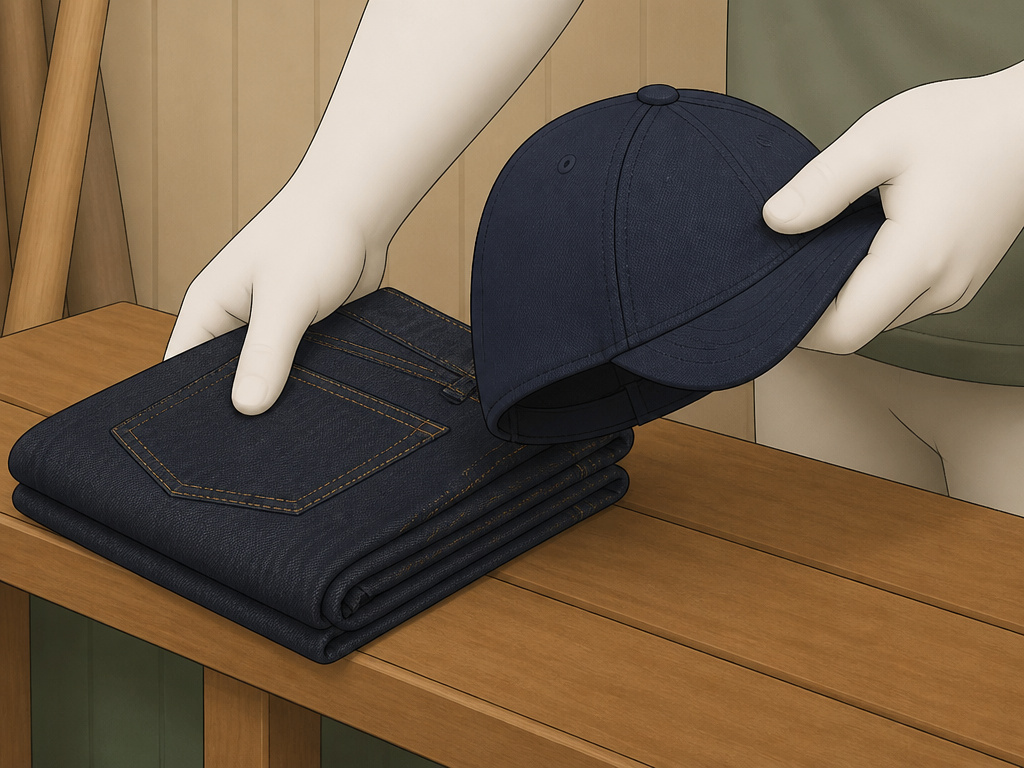
You can breathe a little once you step off the 18th green. Clubhouse dress codes are almost always more relaxed, but “relaxed” has its own specific limits. This is where denim typically makes its allowed appearance.
Denim is frequently permitted in clubhouses, but with caveats. The jeans must be clean, intact, and not faded or tattered. “Designer” or dark-wash denim is safest. Ripped jeans, overalls, or acid-wash are still likely to be turned away.
The hat rule reverses. Headwear must be removed indoors, particularly in dining rooms and bars. It’s a sign of respect.
Athletic wear might be tolerated in casual breakfast areas or when walking directly to/from the locker room, but it’s not acceptable for lunch or dinner service. When assembling complete golf outfits, consider the clubhouse transition. A sharp leather belt and a clean, untucked button-down can take you from the 19th hole to the dining room without a change.
| Area | Shirt Rule | Bottom Rule | Footwear Rule | Denim Allowed? |
|---|---|---|---|---|
| On Course | Collared, tucked (usually) | Tailored, length-specific | Golf shoes mandatory | No |
| Clubhouse (General) | Collared, often untucked okay | Smart casual, tailored | Clean shoes, no spikes | Often, if not frayed |
| Clubhouse (Dining) | As above, neater | As above, neater | As above | Sometimes, check event rules |
Dressing for Different Courses & Cultures
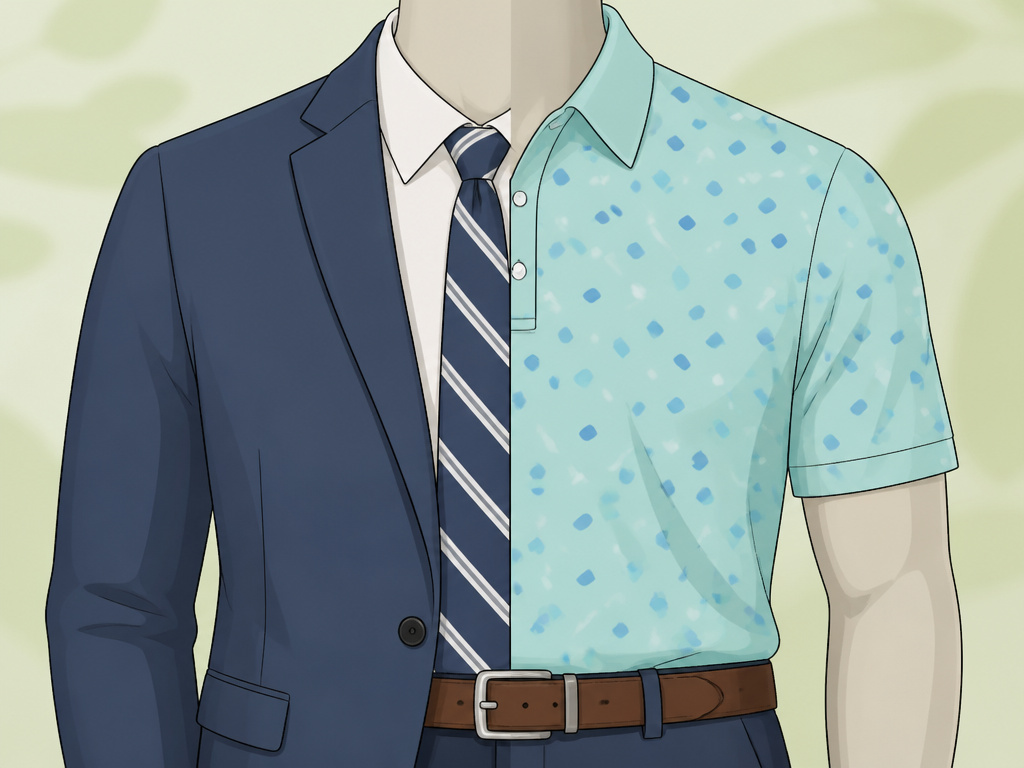
A resort in Arizona doesn’t dress like a private links in Scotland. The core rules hold, but the fabric, color, and formality shift with the environment.
Traditional UK & Irish Links Clubs: Formality is highest. Think conservative colors, navy, white, khaki. Tailored golf trousers are preferred over shorts, especially in the clubhouse. A jacket and tie might still be required for lunch at places like Muirfield.
American Resort Courses (e.g., Pebble Beach): “Resort smart casual” is the mantra. Brighter colors and patterns are acceptable. Performance fabrics shine. The focus is on neat, golf-appropriate attire that can go from course to patio.
Private Member Clubs Everywhere: When in doubt, overdress. Stick to the most conservative interpretation of the rules. A classic white polo, navy trousers, and a leather belt is a uniform that never fails. Your golf accessories should be understated.
Hot & Humid Climates: This is where technical fabrics prove their worth. Look for performance golf shirts with UV protection and moisture-wicking. Lightweight, breathable shorts or ladies’ golf pants in stretchy fabrics are essential.
Frequently Asked Questions
Can you wear a mock neck shirt for golf?
Yes, at many clubs. It is generally considered a valid collar. Specific policies, like Hershey Country Club’s, may require the mock neck to have a minimum collar height (e.g., 1¼ inches). It should look like a golf shirt, not a thermal undershirt.
Are golf dresses acceptable?
Absolutely. Golf dresses for women are a standard and popular option. They must still adhere to length rules (typically mid-thigh or longer) and be made of appropriate, tailored material. Sleeveless designs are usually fine.
What happens if I violate the dress code?
You will be asked to change. The pro shop will usually have a selection of polos, pants, or shoes for rent or purchase to get you onto the course. If you cannot or will not comply, you will not be permitted to play and may forfeit your tee time and fee.
Do the rules apply to children and juniors?
Yes, but often with more leniency on practice areas or during junior clinics. Once a junior is playing on the main course, they are typically expected to follow the full adult dress code. Check the specific club’s junior policy.
Can I wear a hoodie on the golf course?
It depends. “Golf-specific” hoodies made from performance material are increasingly allowed, especially in cooler weather. However, sweatshirt-material hoodies with large logos are often prohibited. Always check the club’s policy first.
Before You Go
The golf dress code isn’t a mystery. It’s a short list of measurable requirements: a collar, a specific inseam, and the right soles on your shoes. The goal isn’t to exclude, but to maintain a standard that respects the course and the players.
Pack for your trip with these anchors: a few solid men’s golf shirts, a pair of tailored trousers, Bermuda-length shorts, and spikeless golf shoes. That core golf outfit will work at 95% of the courses you’ll ever want to play. When you see a rule about “4 inches above the knee,” you’ll know they’re not joking, they have a tape measure. And now, so do you.
