
The Royal and Ancient Golf Club History & Its Enduring Legacy
This post contains affiliate links. As an Amazon Associate, we earn from qualifying purchases.
This post contains affiliate links. As an Amazon Associate, we earn from qualifying purchases.
The history of the Royal and Ancient Golf Club of St Andrews is the story of golf’s formalization. It began on May 14, 1754, when 22 local gentlemen each paid five shillings to fund a Silver Club for an annual competition. This society evolved into a private club of 2,500 global members and, for over a century, served as the game’s governing authority before spinning off those duties to The R&A group in 2004.
That five-shilling entry fee is the first detail most summaries miss. It wasn’t a grand endowment; it was a practical buy-in from a group of players who wanted to bring order to their matches on the St Andrews links. The club’s journey from that modest start to a global institution is a 270-year lesson in how informal play becomes codified sport.
What follows is the timeline that matters: the founding purchase, the royal endorsement that changed its name, the slow, sometimes messy accumulation of governing power, and the final, clean split between the private club and the public-facing governing body. By the end, you’ll know why the clubhouse sits where it does and what the Captain’s ceremonial drive actually means.
Key Takeaways
- The club was founded by 22 specific subscribers who each paid five shillings for the original Silver Club prize.
- It gained the “Royal and Ancient” title in 1834 when King William IV became its patron, not at its founding.
- For most of its history, the club itself governed the Rules of Golf and ran The Open, a role it formally handed to a separate corporate entity, The R&A, in 2004.
- The club never owned the Old Course; the famed links are public land managed by the St Andrews Links Trust.
- Membership was exclusively male until a 2014 vote, with the first female honorary members announced in 2015.
The 1754 Founding: More Than Just a Silver Club
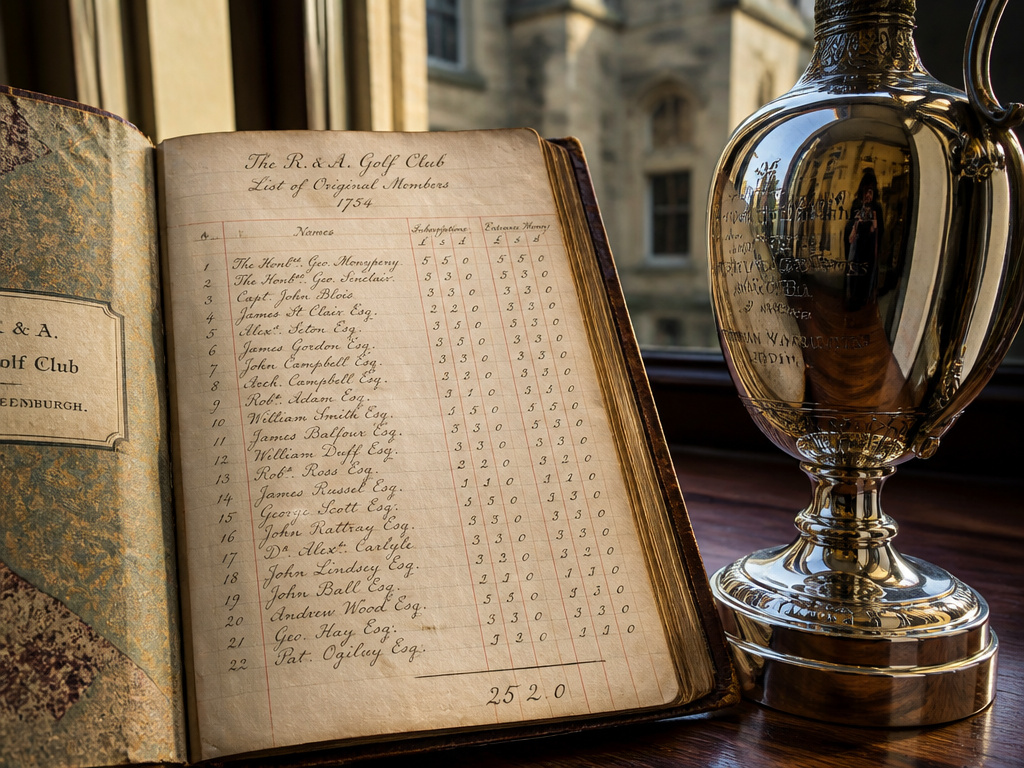
The story doesn’t start with an abstract love of the game. It starts with a receipt. On May 14, 1754, twenty-two “Noblemen and Gentlemen” interested in “the Ancient and healthful exercise of the Golf” contributed five shillings each. That pooled sum purchased a Silver Club, to be played for annually on the links. The winner would be Captain for the year and hang a silver ball from the club, a tradition that continues today.
This was the birth of the Society of St Andrews Golfers. Its first recorded minute shows a pragmatic goal: to help the “interest and prosperity of the ancient city of St Andrews.” The early competition was open to all comers, a community event. They copied their initial rule set from the older Edinburgh golfers, a nod to the existing golfing culture they were formalizing.
The 22 founding members of the Society of St Andrews Golfers each contributed five shillings in 1754 to purchase the Silver Club, the prize for an annual competition that also determined the group’s Captain. This practical, member-funded beginning marked the formal start of organized golf at St Andrews.
The club’s early home wasn’t a grand building. Meetings rotated between local taverns like Baillie Glass’s Inn and the Cross Keys Hotel. The “Golf House” mentioned in early minutes has never been definitively located. For nearly a century, the society was a nomadic group with a prized silver artifact, not an institution with a fixed address. This grounding in pubs and public links is a far cry from the imposing clubhouse image we have today.
From Society to Royal & Ancient (1834)
For eighty years, the society grew in local stature but remained one of several clubs. That changed in 1834 with a single royal act. King William IV agreed to become the Patron of the Society. With that endorsement, the group renamed itself The Royal and Ancient Golf Club of St Andrews.
The “Royal” prefix was a status symbol. The “Ancient” claim was a nod to St Andrews’s golfing history, which predated the club by centuries. This new name projected an authority the club would spend the next seventy years growing into. An imposing clubhouse, a symbol of this cemented status, was built behind the first tee of the Old Course around 1854.
| Key Milestone | Year | What Changed |
|---|---|---|
| Founding as Society of St Andrews Golfers | 1754 | First Silver Club competition; winner becomes Captain. |
| Royal Patronage from King William IV | 1834 | Name changed to The Royal and Ancient Golf Club of St Andrews. |
| Clubhouse Construction | ~1854 | Permanent home built adjacent to the Old Course’s first tee. |
| Captaincy Becomes Elected Office | By 1806 (fully by 1825) | Winner of Silver Club no longer automatically Captain; position elected. |
The Captain’s role evolved separately. Originally, the Silver Club winner took the title. But by 1806, possibly earlier, the Captaincy became an elected office. The Silver Club competition became symbolic. The elected Captain’s “Driving-in” ceremony, a single shot from the first tee, started in 1863 for the Prince of Wales. It turned a administrative choice into public spectacle.
The Accidental Governing Body (1897-2003)
The club didn’t set out to rule global golf. The responsibility was handed to it, piece by piece, because it was the oldest and most prominent club playing over the game’s most historic ground. In 1897, at the request of other UK clubs, the R&A formed a Rules of Golf Committee and became the game’s supreme rules authority.
Where this goes sideways: Assuming the club always owned the Old Course. It never has. The links are common land. The club paid for maintenance and built the New Course in 1895, but ownership and public access were guaranteed. This tension led to legal challenges and the eventual formation of the St Andrews Links Trust in 1974.
The governing duties snowballed. In 1919, the club took over sole management of The Open and Amateur Championships. It governed amateur status and selected Walker Cup teams. For most of the 20th century, the R&A (the club) and the USGA were the twin pillars of golf governance, a partnership formalized in the 1951 unified Rules of Golf code.
This period created a confusing duality. The Royal and Ancient Golf Club was a private, members-only social club. It was also the de facto government of golf everywhere except the U.S. And Mexico. The same body that set the rules for billions of shots also curated a members’ wine list and managed tee times for its 2,500 members. That inherent conflict had a shelf life.
The Modern Era: Club vs. Governing Body (2004-Present)
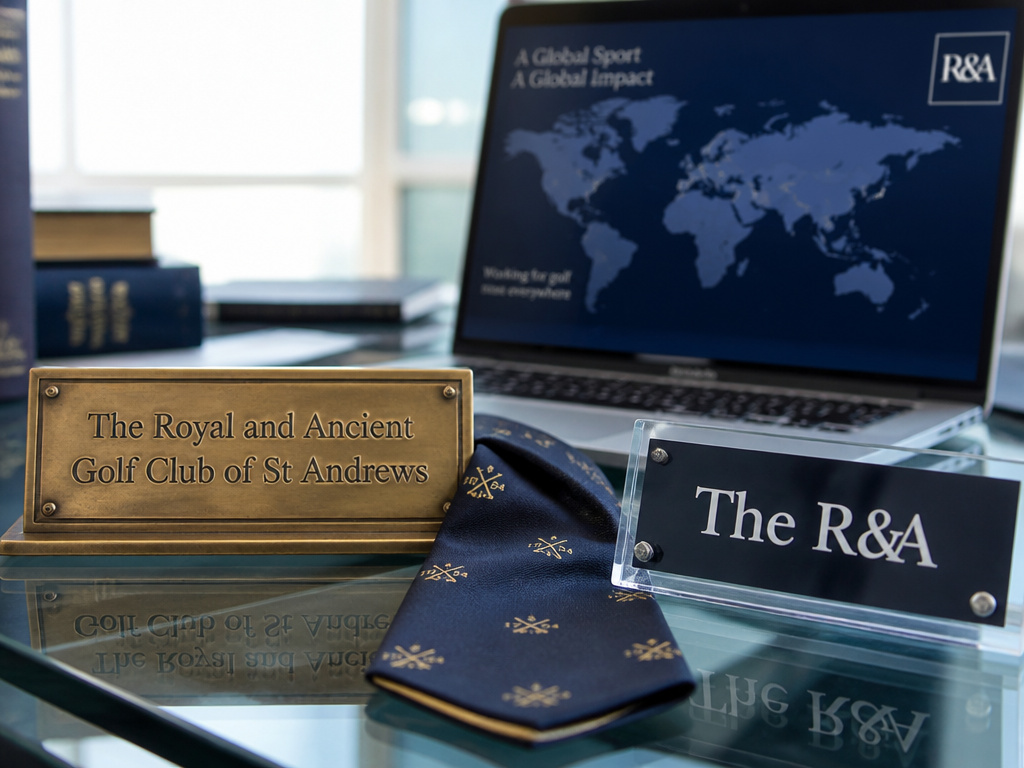
The solution arrived in 2004. In a major reorganization, the club devolved all its governing functions, rules, championships, development, to a newly formed group of companies named The R&A. This legally separated the private club from the public-facing governing body.
- The Club: The Royal and Ancient Golf Club of St Andrews. A private club with global membership focused on member facilities, history, and supporting The R&A.
- The R&A: The corporate entity. Governs the rules (with the USGA), runs The Open and AIG Women’s Open, and develops the game worldwide.
This was a necessary modernization. It let the governing body operate with professional, corporate efficiency while allowing the club to focus on its members and heritage. A further consolidation came in 2017 when The R&A merged with the Ladies’ Golf Union (LGU), unifying the administration of the men’s and women’s amateur game.
The most visible modern change was membership. In 2014, the club voted to admit women. The first female honorary members, including Princess Anne and Annika Sörenstam, were announced in 2015. The club now has a mixed membership, though the process remains invitation-only.
The Club, The Course, and The Legacy
A persistent myth is that the R&A owns the Old Course. It does not. The clubhouse sits directly behind the first tee, but the seven courses of St Andrews are public trust land, managed by the St Andrews Links Trust. Members have playing privileges, but so do locals and any visitor who books a time. This public-access model is central to the St Andrews ethos and a direct legacy of the links’ common-land origins.
The club’s legacy is preserved in the R&A World Golf Museum opposite the clubhouse and in its immense archive. Its ongoing role is dual: as a custodian of history and as a partner, through its members, to The R&A’s global work. When you see the clubhouse during an Open broadcast, you’re seeing the historic home of the club, not the headquarters of the governing body, that’s down the road at the R&A’s offices.
I’ve seen more than one player who practices beautifully but falls apart when the moment feels too historic, too weighted with tradition. Standing on the first tee at St Andrews, looking back at that clubhouse, can do that. Understanding that this place began with 22 guys chipping in for a trophy takes the weight off. It wasn’t built by gods of the game. It was built by players, for players. That’s a legacy anyone can step into.
Frequently Asked Questions
When was the Royal and Ancient Golf Club founded?
The club was founded on May 14, 1754, as the Society of St Andrews Golfers. The first act of the 22 founders was to fund a Silver Club for an annual competition.
Does the R&A own the Old Course at St Andrews?
No. The Royal and Ancient Golf Club has never owned the Old Course or any of the St Andrews links. The courses are public and have been managed since 1974 by the St Andrews Links Trust, a charitable organization. The club’s famous clubhouse is built on adjacent private land.
What is the difference between The R&A and the Royal and Ancient Golf Club?
Since 2004, they are separate entities. The Royal and Ancient Golf Club is the private, members-only social club based in St Andrews. The R&A is the corporate group that governs the rules of golf worldwide (with the USGA), runs major championships like The Open, and oversees global golf development.
When did the club start allowing female members?
The club’s membership voted to admit women in September 2014. The first female honorary members were announced in February 2015. The club now has a mixed membership, though the total number of members remains around 2,500 worldwide.
Why is St Andrews considered the “Home of Golf”?
St Andrews is considered the Home of Golf primarily because the game has been played on its links since the 15th century, and because the Royal and Ancient Golf Club, founded there in 1754, evolved into the game’s preeminent governing authority for most of the world for over a century. The historical continuity and the club’s rule-making role cemented the title.
The Bottom Line
The Royal and Ancient Golf Club’s history is a case study in institutional evolution. It moved from a tavern-based society to a royal club, from a rule-making committee to a global governing authority, and finally to a focused private club partnered with a modern sports body. The through-line isn’t imperial decree. It’s the persistent, practical organization of a game by the people who loved playing it on a specific stretch of Scottish coastline. Every time a Captain hits that ceremonial drive, they’re echoing a 270-year-old tradition that started with a five-shilling buy-in. That’s a legacy built stroke by stroke, not proclaimed from on high.
