
Data Reveals Real Differences in Women’s Golf Equipment
This post contains affiliate links. As an Amazon Associate, we earn from qualifying purchases.
This post contains affiliate links. As an Amazon Associate, we earn from qualifying purchases.
The differences in women’s golf equipment boil down to three engineered adaptations for typically slower swing speeds and different average physical dimensions: lighter overall club weight, shorter shaft lengths (about 1 inch), and more flexible shafts (usually marked “L”). However, the real answer is that these are starting points, not rules, your individual swing speed, height, and strength dictate the right gear, not your gender.
Let’s be clear about this. The industry’s “women’s” category is a statistical average, a convenient box for marketing and manufacturing. Strip it back, and you’re left with physics: a club is a lever. Its weight, length, and stiffness must match the force and motion you apply. A 2019 peer-reviewed study in the Journal of Sports Sciences quantified the average gap, finding women’s clubhead speed averaged 41.5 m/s versus 50.8 m/s for men. That 20% difference in energy input is what the equipment is designed to compensate for, not a gender itself.
What follows is a breakdown of those three core specs, weight, length, flex, why they matter, the data behind them, and how to move past the label to find what actually works for your swing.
Key Takeaways
- “Ladies” or “L” flex is not a standardized measurement; one brand’s L can be another’s senior flex. The label is less important than how the shaft loads and unloads with your specific tempo.
- Standard women’s clubs are about one inch shorter than men’s to suit an average height between 5’4″ and 5’9″. Clubs that are too long force a heel strike and a pull; clubs too short cause a toe strike and a weak slice.
- Nearly all off-the-rack women’s sets use graphite shafts for weight savings, but modern lightweight steel is a viable, often more consistent, option for players with moderate swing speeds.
- The most important factor is individual launch conditions, not the “women’s” label. A taller woman with a faster swing may fit better into a men’s “Senior” or “Regular” flex clubhead with a longer shaft.
- Good fitting focuses on dynamic results, ball flight, strike location, and feel, not just static measurements like height.
The Core Three: Weight, Length, and Flex
Forget the pink paint and slimmer grips for a moment. The substantive engineering differences live in weight, length, and shaft flex. These three variables are dialed to help a player with a slower swing speed generate more clubhead speed and a higher launch angle.
A 2019 biomechanics study published in the Journal of Sports Sciences provided “extremely strong evidence” for the speed gap, noting women’s average clubhead speed was 41.5 m/s compared to 50.8 m/s for men. This kinetic difference is the “why” behind the lighter, more flexible equipment profile.
Getting one of these wrong has an immediate, mechanical consequence. A shaft that’s too stiff for your swing speed won’t load properly; you’ll lose both distance and feel, often resulting in low, screaming line drives. A club that’s too long forces you to stand too upright, moving your swing arc’s low point and making consistent ball-striking a lottery.
| Spec | Typical Women’s Adaptation | Physical Reason | Fitting Priority |
|---|---|---|---|
| Total Weight | Lighter (graphite shafts, lighter grips) | Reduces overall mass to increase swing speed with same effort. | High – Affects tempo and fatigue. |
| Shaft Length | ~1 inch shorter than men’s standard | Matches average female height (5’4″–5’9″) for proper posture and low point. | Critical – Wrong length guarantees off-center strikes. |
| Shaft Flex | More flexible (“L” or “Ladies”) | Allows shaft to bend and “kick” through impact at slower swing speeds, boosting launch. | Highest – Directly controls trajectory and distance. |
The goal is to match the equipment’s resistance to your available power. This isn’t about strength; it’s about efficient energy transfer. A lighter, softer club helps maximize output when the input speed is lower.
Shafts: The Great Graphite Myth and the “L” Flex Lie
Here’s the truth nobody sells: the “L” on a shaft is virtually meaningless as a standard. Each manufacturer defines its own Ladies flex profile. One company’s L might be another’s Senior (A) flex, or even a soft Regular. You’re buying a label, not a calibrated measurement.
This lack of standardization is why buying clubs off the rack is such a gamble. You might pick a great complete sets for women that feels perfect, or you might get one that plays like a board. The shaft is the engine, and if it’s not tuned to your swing tempo, nothing else matters.
Where this goes sideways: Choosing a shaft based solely on the “L” label. The wrong flex won’t just cost you distance; it will disrupt your timing, making solid contact feel unpredictable. You’ll subconsciously adjust your swing to try and feel the load, creating a new flaw.
Nearly all standard women’s golf clubs come with graphite shafts. The reason is simple: weight. Graphite is lighter, helping to boost swing speed. But there’s a pervasive myth that women “aren’t strong enough” for steel. Modern lightweight steel shafts can weigh within 10 grams of a graphite model. The difference is feel and vibration. Steel often provides more consistent feedback and tighter dispersion, which is why some better players and tour pros prefer it, even in clubs for intermediate women.
So, how do you cut through the noise? You need one piece of data: your approximate swing speed. If you don’t have access to a launch monitor, a PGA professional can estimate it based on your carry distance with a 7-iron. That number, not your gender, points to the correct shaft family.
Clubhead Specs: Loft, Lie, and the Forgiveness Factor
 While shafts get the attention, the clubhead’s specifications are where launch conditions are fine-tuned. Loft is your friend, especially if you struggle to get the ball airborne. Many women’s clubheads have slightly stronger loft progressions than men’s game-improvement irons, but individual models vary wildly.
Take the PING G Le2 irons as a specific example. Its 6-iron has a 27.0° loft (which can be adjusted to 25.5° or 28.8°), a 61.1° lie angle, and is built with COR-Eye Technology for flex and forgiveness. This isn’t just a lighter men’s head. The design prioritizes a high launch and stability on off-center hits, which is ideal for the target player.
Lie angle is critical and is directly tied to your height and wrist-to-floor measurement. A standard women’s lie is often more upright. If you’re taller or have a more athletic swing, a flatter lie might be necessary. A lie angle that’s off by even 3 degrees will send your ball 10-15 yards offline.
The forgiveness story is real. Women’s clubheads, especially in starter sets for women, typically have larger sweet spots, more perimeter weighting, and wider soles. This helps maintain ball speed and direction on strikes that aren’t perfect. For a player developing consistency, this is an essential benefit.
Why Static Measurements Aren’t Enough: The Fitting Imperative
 You can know all the averages, slower swing speed, shorter average height, and still get the wrong clubs. I’ve seen a 5’10” junior girl with a powerful transition fit perfectly into a men’s “Senior” flex driver, and a strong senior man benefit from a women’s “L” flex hybrid. The label on the box is a starting guess, not a prescription.
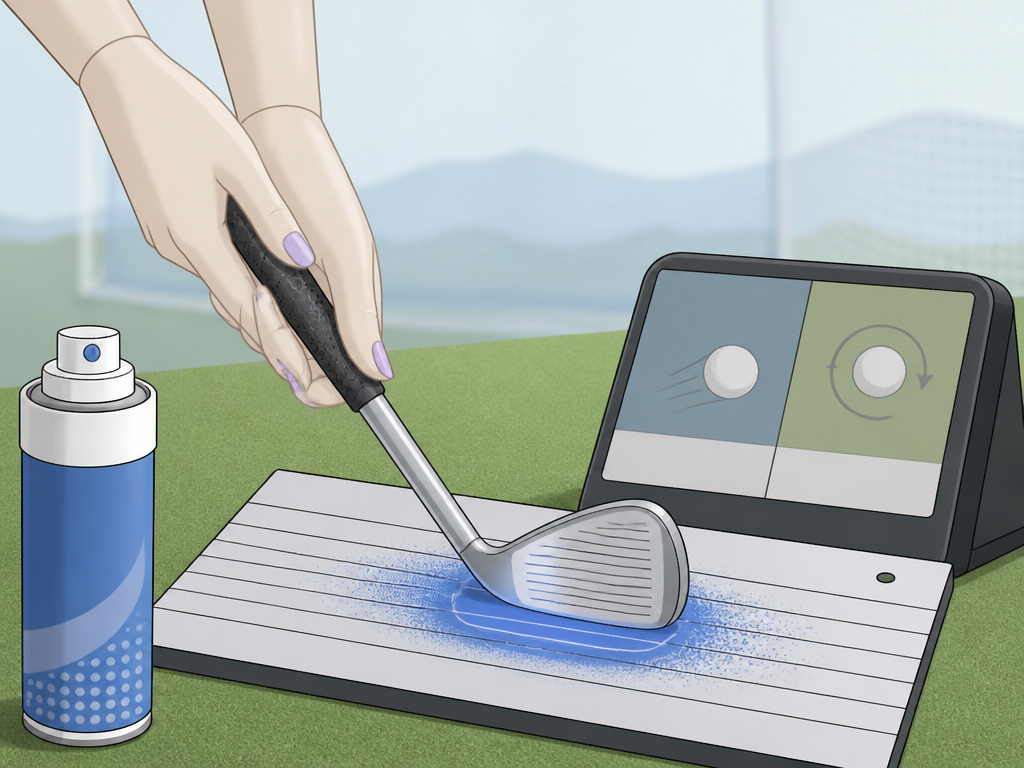
A proper fitting measures your swing speed and launch angle. It looks at: * Dynamic Lie: Using impact tape or a lie board to see if the sole is grounding evenly. * Launch Monitor Data: Ball speed, launch angle, spin rates, and most importantly, smash factor (efficiency). * Strike Pattern: Using foot powder spray to see where on the face you’re actually making contact.
This process might reveal you need a clubs for petite women length even if you’re average height, because your posture or arm length demands it. Or, it could show that a women’s golf balls with a lower compression suits your driver speed better than a standard tour ball. The USGA launch conditions report itself notes that data for female golfers is “less accessible,” which makes finding your own baseline through fitting even more valuable.
The LPGA Proof: Performance Beyond the Spec Sheet
If you want to see what optimized women’s equipment looks like in the hands of the best, watch the LPGA Tour. This is the best pure ball-striking tour in the world. The precision with their irons and wedges is a masterclass. Their relative golf performance analysis shows they hit more fairways and often demonstrate superior course management compared to the PGA Tour.
Their equipment is ruthlessly customized. While their clubs fall into the “women’s” category by length and flex, every spec is fine-tuned, loft, lie, swingweight, grip size. They prove that the goal isn’t to swing like a man or chase men’s distance numbers. The goal is to maximize your own potential with the tools that match your mechanics. Obsessing over the distance gap, as highlighted in the PLOS One study, completely misses the artistry and skill on display.
Navigating the Buying Decision: A Practical Roadmap
So, you’re not a tour pro, but you want clubs that work. Let’s strip it back to a practical sequence.
- Get a Baseline. Before you buy anything, try to get a rough swing speed reading. Many retail stores have demo bays. Knowing if you’re at 65 mph or 85 mph with a driver changes everything.
- Start with the Right Category, but Don’t Stop There. If you’re new to the game or have an average swing speed, begin your search with standard women’s golf club sets. This is your highest-probability pool.
- Test Graphite AND Lightweight Steel. When you try clubs, ask for a 7-iron in a graphite option and a lightweight steel option (like a 80-gram steel shaft). The feel difference is immediate. One will feel “quieter” and smoother; the other might feel more direct and controlled.
- Check Length and Lie First. Before you fall in love with a club’s look, make sure its length lets you stand athletically. Your 7-iron should allow your arms to hang naturally from your shoulders, not reach out or cramp in. A quick lie check with impact tape is invaluable.
- Prioritize Consistency Over One Great Shot. The best club for you is the one you can hit the same way three times in a row. Don’t be seduced by the one shot that went 10 yards farther; look at the dispersion of the five shots that followed.
For many, especially [women beginners](https://golfworldtrips.A Callaway pre-packaged set is the perfect start. For players looking to upgrade, like those seeking the best drivers for women or recommended putters for women, a professional fitting is the only path that makes financial sense.
Frequently Asked Questions
Are women’s golf clubs just shorter men’s clubs?
Sometimes, but not always. While some manufacturers simply put a lighter, softer shaft in the same clubhead, many dedicated women’s lines (like PING’s G Le2) have distinct head designs with different loft progressions, center of gravity placement, and forgiveness features tailored to moderate swing speeds.
Can a woman use men’s golf clubs?
Absolutely, if the specs fit her. A taller woman with a faster, more aggressive swing may be better suited to a men’s “Senior” or “Regular” flex club, possibly at standard length. The driver performance gender differences study shows speed is a spectrum, not a binary. The decision should be based on her launch data, not the gender label.
What is the most important difference in women’s golf equipment?
The shaft flex and weight. A shaft that is too stiff or heavy for a player’s swing speed is the single biggest performance killer. It robs distance, makes consistent contact difficult, and can force swing compensations. Getting this right is more important than brand, model, or color.
Do I need a different putter as a woman?
Putters are the most personal club in the bag and are not gendered by performance. However, many women’s putters are offered at shorter standard lengths (33-34 inches vs. 35 inches) and may have lighter head weights to match a smoother tempo. The best women’s putters are the ones that help you start the ball on your intended line, regardless of the spec sheet.
Is custom fitting worth it for a high-handicap female golfer?
Yes, especially if you plan to play regularly. An hour with a fitter can prevent you from buying clubs that actively hinder your development. Even a basic fitting that gets your length, lie, and general flex correct will pay dividends in enjoyment and improvement faster than any swing tip. It’s the foundation everything else is built upon.
The Bottom Line
The differences in women’s golf equipment exist to solve a physics problem, not to define a player. They are a collection of averages, in swing speed, in height, in strength, packaged for convenience. Your job is to use that category as a starting point for a search, not as the final answer.
Good golf equipment should feel like an extension of your intention. If a club fights you, if you have to manipulate your swing to make it work, it’s wrong for you. That’s true whether it’s labeled for men, women, or seniors. Let the data from your swing, the strike pattern, the ball flight, the launch monitor numbers, make the final decision. The right club doesn’t care what section of the store it came from.
