
History of Golf Fashion & Its Evolution Into Modern Style
This post contains affiliate links. As an Amazon Associate, we earn from qualifying purchases.
This post contains affiliate links. As an Amazon Associate, we earn from qualifying purchases.
Golf fashion history and evolution is a story of practicality slowly winning out over decorum. From thick tweed jackets to two-tone shoes and finally to synthetic polos, the clothes got lighter, looser, and finally, designed for the sport itself.
Strip it back. The original golf outfit was simply what a gentleman wore on a brisk Scottish walk in the late 1800s, tweed trousers, a waistcoat, a jacket, and a cap. For women, it was their everyday dress, often with a skirt shortened a few inches. The goal wasn’t performance; it was to look respectable while engaging in a leisurely pastime. This meant fabric was heavy, layers were many, and movement was severely limited. The swing of that era, a short, compact motion with a bent left arm, wasn’t a technical choice. It was the only physical possibility.
What does the shift from wool to polyester tell us about the game? It shows when golf stopped being a social activity you dressed for and became a sport you equipped yourself for. The biggest leaps, waterproof shoes, synthetic moisture-wicking fabrics, trousers that actually allowed a full turn, arrived decades after the modern swing was invented. The clothes spent a century catching up to the athlete inside them. We’ll trace that awkward, often garish, journey from restrictive uniforms to today’s scripted sportswear.
Key Takeaways
- The earliest golf attire was simply everyday clothing, with tweed suits and long skirts restricting movement and dictating a short, compact swing.
- The 1920s introduced dedicated sportswear like “plus fours” and cardigans, a first step towards function, championed by stylish figures like the Prince of Wales and Bobby Jones.
- True performance materials like synthetic fabrics arrived in the 1970s, with pivotal inventions like waterproof golf shoes debuting as late as 1989.
- Television and sponsorships in the 1990s transformed golf wear into a marketing platform, leading to today’s “scripted” professional outfits focused on brand identity.
- Despite modern technology, golf fashion retains a strong link to tradition, balancing performance with the sport’s ingrained sense of decorum.
What Did the First Golfers Wear?
They wore their street clothes. In the 18th and early 19th centuries, a golfer’s uniform was a bright red coat, knee breeches, white stockings, and buckled shoes. The red coat served a practical purpose: it warned pedestrians on common land of flying golf balls. This wasn’t sportswear; it was a hazard vest with tailoring.
By the late 1800s, the uniform settled into the classic tweed suit, jacket, waistcoat, and trousers or knickers, topped with a flat cap. The fabric was dense wool. The fit was snug. A full shoulder turn was physically constrained by the jacket’s armholes and the waistcoat’s tight cut.
A 1958 USGA journal article noted the “bent left elbow” visible in old photographs of top players wasn’t a technique. It was a necessity; the restrictive cut of their jackets and waistcoats made a straight left arm at the top of the swing impossible.
The sensory reality was one of constriction and warmth. You’d feel the scratch of the wool, the binding across the shoulders on the backswing, and the accumulating dampness of sweat with no way to wick it away. Your swing was literally tailored by your tailor.
The 19th Century: A Study in Restriction
For women, the challenge was even more extreme. The Victorian ideal of the “New Woman” on the course meant a shirtwaist blouse, jacket, hat, gloves, and of course, a corset, all under a skirt shortened a mere four to six inches off the ground. The goal was to look “conservative but comfortable for the time” while interacting publicly with men.
The physical limitation was absolute. A full swing with the voluminous sleeves and layered skirts of the era was unthinkable. This is a primary reason women’s early golf focused so heavily on putting and short approach play, those strokes didn’t require a full arm swing. A Scottish law lord in 1902 even opined women shouldn’t hit the ball more than 70 yards, citing the “unseemly nature” of a full swing in fashionable dress.
Here’s the truth nobody sells: the clothes didn’t adapt to the sport; the sport adapted to the clothes. Men developed a short, choppy action. Women were steered towards less dynamic play. The evolution of women’s golf attire was a slow, grudging negotiation for basic mobility.
The 1920s Revolution: Sportswear is Born
The 1920s broke the mold. This was the first era where clothing was consciously adapted for golf, not just worn to golf. The catalyst was style icon Edward, Prince of Wales. He popularized the Fair Isle sweater, argyle socks, and, most famously, “plus fours.”
These were knickerbockers cut four inches longer than previous versions, creating a baggier fit around the knee that allowed for much greater freedom of movement. The name literally came from the extra four inches of fabric.
| 1920s Innovation | Function | Stylistic Impact |
|---|---|---|
| Plus Fours | Allowed full knee bend and hip rotation. | Defined the “golfer” silhouette for two decades. |
| Cardigan Sweaters | Replaced restrictive jackets; easier to swing in. | Introduced knitwear as a stylish, practical layer. |
| Two-Tone Spectator Shoes | Often featured a fringed “kiltie” flap over the laces. | Added a flashy, dapper element to the ensemble. |
American star Bobby Jones codified this look, pairing plus fours with crisp shirts and sleek sweaters. For the first time, golfers were athletes in dedicated sportswear, not gentlemen in slightly modified suits. The sound of the game changed, too, the snap of a wool sweater stretching at the shoulders replaced the creak of tight tweed.
The Modern Era: Scripted Sportswear
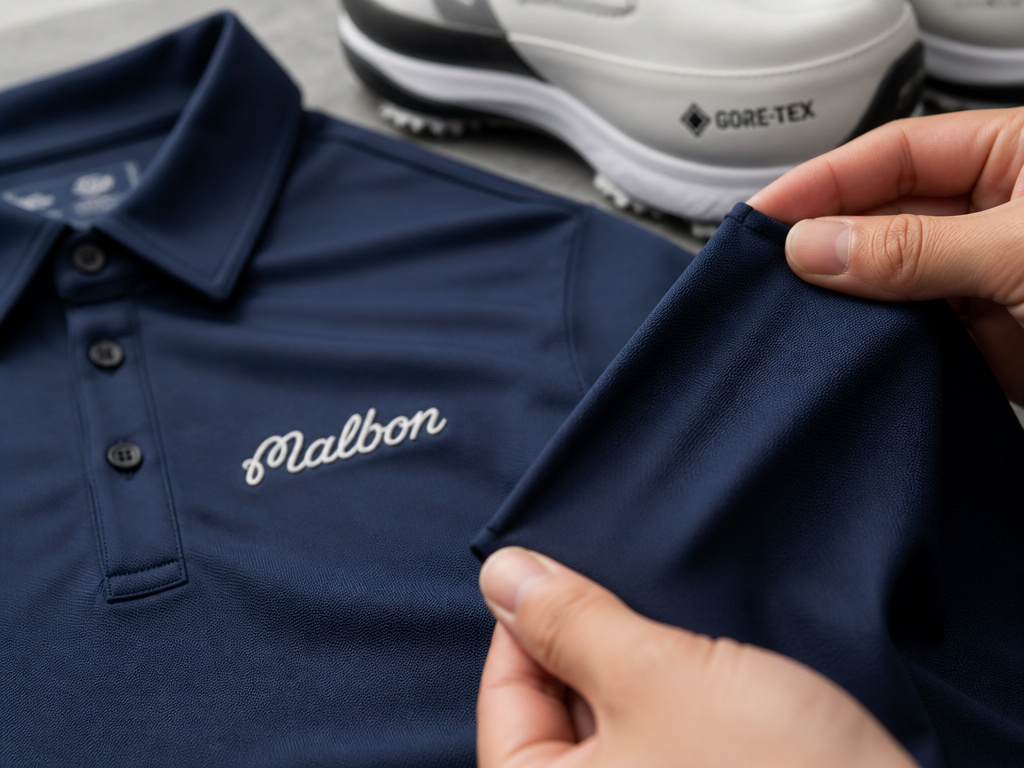
The post-war era saw a slow march toward the modern uniform: collared shirts and trousers or Bermuda shorts. But the real revolution was invisible, the fabric.
- 1970s: Synthetic polyester blends hit the course. They were “no-care” and ushered in garish, loud colors and patterns. Performance improved (less weight, some wrinkle resistance), but style often suffered.
- 1989: A pivotal, under-reported innovation: the first waterproof golf shoes were introduced. Before this, wet feet were simply part of the game.
- 1990s: Big-name apparel brands like Nike entered golf, turning the pro’s outfit into a moving billboard. Sponsorships meant logos grew, and outfits became “scripted”, planned in advance by marketing teams.
The 2000s saw a correction towards muted, performance-focused tailoring. Then the 2010s brought back bold patterns and athletic-inspired shoes. Today’s pro, like Rory McIlroy or Justin Thomas, wears a technologically advanced uniform: moisture-wicking, stretch-woven, UV-protective fabrics cut for a full range of motion.
The sensory experience is now one of engineered comfort. The fabric feels slick and light, not scratchy. It doesn’t soak through. Your swing isn’t hindered by your shirt. This is the culmination of a century’s progress.
How TV and Sponsors Changed the Game
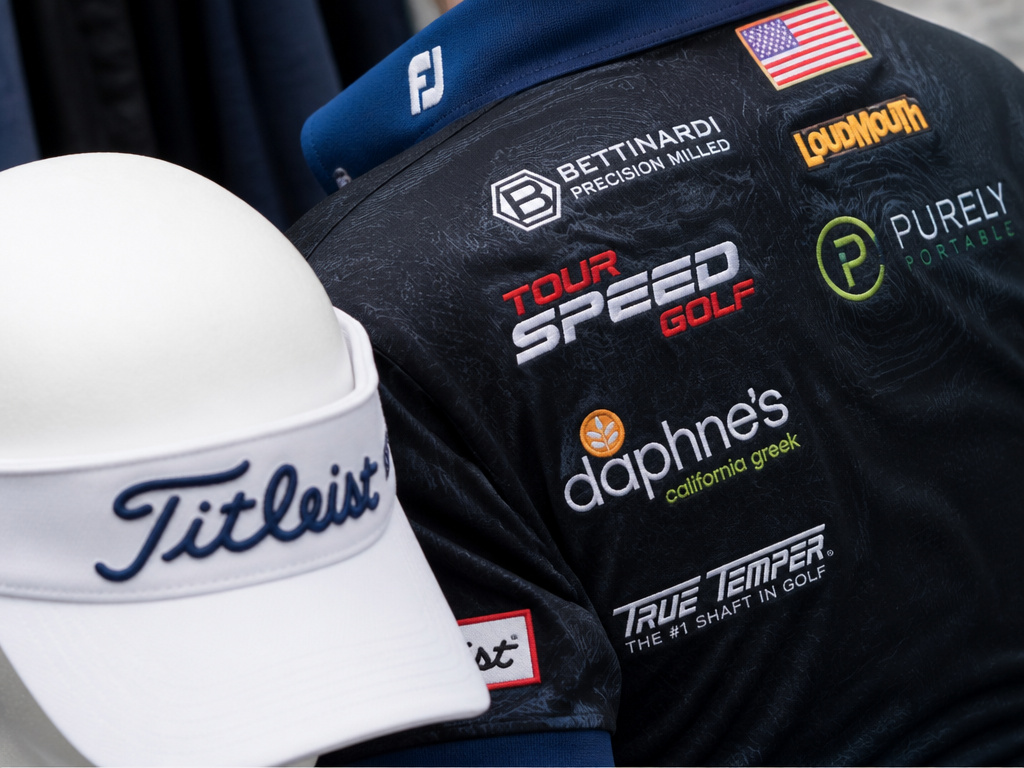
Television didn’t just broadcast golf; it commercialized the golfer’s silhouette. In the 1960s, players like Julius Boros stenciled a sponsor’s name (“Amana”) on his visor. By the 1990s, every square inch of a top pro’s outfit was branded territory.
This created a new dynamic: the player as a mannequin. Outfits are now designed months in advance, coordinated by a team from the apparel company. Rickie Fowler’s head-to-toe orange on Sundays isn’t just school spirit; it’s a branded signature moment. The “script” ensures maximum brand exposure across a four-day tournament.
Where this goes sideways: Amateurs see these scripted, logo-heavy outfits and mistake them for pure performance gear. They’re buying the brand story, the athlete’s association, not always the most functional or appropriate golf outfits for their own game.
It’s a world away from Bobby Jones choosing his own sweater. The modern pro’s wardrobe is a business asset, a key part of their endorsement portfolio. This commercial pressure is why golf fashion can sometimes feel more about standing out than fitting in.
Icons, Rebels, and the Push for Comfort
Every era has its trendsetters and rebels who pushed the boundaries of what was acceptable.
- Walter Hagen (1920s): The flamboyant pro wore loud colors and two-tone shoes, embodying a new, professional confidence.
- Gloria Minoprio (1933): She shocked the golf world by wearing trousers, a navy sweater and cropped slacks, during the English Ladies Championship. The Ladies Golf Union issued a statement deploring it. By the next year, more competitors were wearing trousers.
- Johnny Miller (1970s): Perhaps the low point, fashion-wise, with hideously checked pants and neon sweaters that became a cautionary tale.
- Payne Stewart (1980s/90s): Revived the plus-four look, connecting modern skill with traditional style.
- Tiger Woods (2000s): Made the black pants and red Sunday shirt a symbol of focused dominance, influencing amateurs worldwide.
These figures show the tension at the heart of golf fashion: the pull between tradition and progress, between club decorum and personal expression. The rebel’s choice often becomes the norm a generation later, as Minoprio’s trousers proved.
Golf Fashion Today: Tradition vs. Technology
Today’s course is a clash of aesthetics. You have the traditionalist in tailored men’s pants and a classic polo, the tech-wear fan in a jogger-style pant and hoodie, and the fashion-forward player in bold, patterned matching outfits.
The through-line is that performance is now essential. Fabrics must breathe, stretch, and repel water. Stylish golf shoes are expected to be as stable and comfortable as they are photogenic. The best golf belts now are elastic and non-pinching, prioritizing comfort over the stiff leather of the past.
Yet, the tradition persists. The collared shirt remains a nearly universal club rule. It’s a vestigial nod to the sport’s formal origins, a line that separates golf from other athletic pursuits. The modern game is played in a uniform that straddles two centuries, its technology firmly in the 21st, its etiquette often lingering in the 20th.
TL;DR: Golf fashion evolved when the sport’s economic incentives changed. Amateurs dressed for respectability until pros could earn more from sponsorships than prizes, making the outfit a revenue stream and pushing innovation from marketing budgets, not just player demand.
Frequently Asked Questions
Why do golfers have to wear collared shirts?
It’s a direct holdover from the sport’s origins as a gentleman’s pastime. The collared shirt was standard daytime attire in the early 20th century. The rule persists as a symbol of the sport’s decorum and tradition, distinguishing it from more “casual” athletic activities.
What was the most restrictive era for golf fashion?
The late Victorian era (late 1800s) was arguably the worst. Men wore full tweed suits with tight waistcoats, while women played in long skirts, petticoats, bustles, and corsets. The clothing physically prohibited a full, athletic swing for both sexes.
When did golf shoes become waterproof?
The first waterproof golf shoes were introduced in 1989. Before this, golfers relied on treated leather or simply dealt with wet feet, making this a surprisingly late innovation in performance gear.
Who was the first woman to wear trousers in a major golf event?
British champion Gloria Minoprio wore navy trousers and a sweater during the 1933 English Ladies Championship, causing a minor scandal. She is credited as the first to break the skirt-and-blouse standard in major competition.
How has television influenced golf fashion?
Television amplified sponsorships, turning players into walking billboards. This commercial pressure fueled innovation in fabrics and design (for visibility and branding) and led to the modern “scripted” outfit, where a player’s weekly wardrobe is planned by their apparel company for maximum marketing impact.
Before You Go
The arc of golf fashion bends toward practicality, but it bends slowly. It took a prince to popularize comfy sweaters, a rebel to legitimize trousers, and the sheer force of television revenue to fund the technical fabrics we have today. The next time you slip on a moisture-wicking polo, remember it’s the product of a 150-year negotiation between looking the part and playing the game.
The one threshold that matters now? If your outfit actively restricts your swing or distracts from your round, you’ve missed the point of the last century of progress. Choose comfortable belts, shoes that support your walk, and clothes that move with you. The game is hard enough without your wardrobe working against you.
