
Master Your Game: Learn Precisely When to Regrip Golf Clubs
This post contains affiliate links. As an Amazon Associate, we earn from qualifying purchases.
This post contains affiliate links. As an Amazon Associate, we earn from qualifying purchases.
Replace your golf grips every 40 rounds or 12 months, whichever comes first. For casual players under 20 rounds a year, environmental wear means replacement every 18-24 months, regardless of use. A Golf Pride study found that worn, two-year-old grips cost the average player 3-4 strokes per round by causing micro-slips and forcing tighter grip pressure.
That 3-4 stroke figure isn’t a guess. It’s the quantified consequence of a grip that has lost its ability to dampen vibration and provide secure traction. The club twists imperceptibly at impact, and the ball lands yards off target. Your hands work harder to compensate, and your entire swing tightens up.
What follows: a breakdown of the two replacement schedules, calendar versus physical signs, the specific tools for a DIY job, and the one storage mistake that ages grips faster than a season of play.
Key Takeaways
- Worn grips cause a measurable performance drop. A Golf Pride study links two-year-old grips to a loss of 3-4 strokes per round due to micro-slip and increased grip tension.
- Use the 40-round/12-month rule for regular play. For casual golfers, environmental factors like UV and heat are the primary killers, demanding replacement every 18-24 months.
- Cleaning only fixes dirt, not wear. Warm, soapy water can restore tackiness to a dirty grip, but it won’t revive rubber that’s hardened, shiny, or cracked.
- Putter grips last 3-5 years. They experience less friction and force, so replace them when the feel deteriorates or visible wear appears under your thumbs.
- DIY regripping a full set costs $60-$90 and takes 30-45 minutes. You need grips, double-sided tape, solvent (or mineral spirits), and a utility knife.
The Simple Calendar Rule vs. The Physical Test
Most advice gives you a vague range. The real answer is two parallel tracks: a schedule based on your volume of play, and a physical inspection that overrules the calendar.
For the weekend player logging 30-40 rounds a year, the benchmark is every 40 rounds or 12 months, whichever comes first. This aligns with manufacturer recommendations and is the easiest schedule to follow. If you play or practice heavily, three or more times a week, that interval shrinks to 6-8 months. At the far end, a tour pro regrips every six weeks because they can feel a change in surface texture that would be invisible to you.
Where this goes sideways: Assuming casual play means longer grip life. For golfers playing under 20 rounds a year, environmental degradation (UV exposure, heat, humidity) wears your grips more than actual use. A set left in a hot car trunk through a summer will age years in months. For this group, replace grips every 18-24 months, full stop.
The calendar is a guide. The physical test is the law. Run this three-point check at the start of each season:
- The Visual and Touch Test. Look for a glossy, shiny patch where your top hand rests. Run your thumb over it. A fresh grip has a matte, slightly tacky feel. A worn grip feels hard and slick, like polished plastic. Check for cracks, especially near the butt end.
- The Tension Test. During your next range session, pay attention to your forearms. Are you gripping the club tighter than usual to prevent it from twisting? That unconscious pressure is a direct feedback loop from a failing grip.
- The Performance Test. Notice a loss of short-game feel or an increase in off-center strikes, especially with your wedges? Worn grips dampen vibration poorly, making feedback harsher and less informative.
| Player Profile | Recommended Interval | Primary Wear Factor |
|---|---|---|
| Tour Pro / Heavy Practice | Every 6 weeks | Friction & feel sensitivity |
| Avid Player (30-40 rds/yr) | 40 rounds or 12 months | Friction from use |
| Casual Player (<20 rds/yr) | 18-24 months | UV, heat, environmental decay |
| Putter Grip | 3-5 years | Feel degradation |
Why Old Grips Cost You Strokes (The 3-4 Stroke Study)
It’s not just about comfort. A slick grip changes your mechanics. When traction fails, your hands instinctively clamp down. This tension travels up your forearms and shoulders, turning a relaxed, rhythmic swing into a forced, steering motion. Distance drops because you can’t release the club freely. Consistency vanishes.
The Golf Pride research puts a number on it: 3-4 strokes per round. The mechanism is the micro-slip at impact. Even a millimeter of twist from a slick surface opens or closes the clubface, sending the ball offline. On a 150-yard approach, that can mean missing the green entirely. For players using older, less forgiving game improvement clubs, the margin for error is even smaller.
This is why regripping is the single most cost-effective performance upgrade in golf. For the price of a dozen premium balls, you can renew the connection point for every club in your bag. It makes a set of custom golf clubs or a quality set of golf clubs under $500 feel new again.
Grip Selection: Material, Size, and Feel
Regripping is your chance to optimize, not just replace. The right grip can quiet hands, improve moisture management, or simply feel better.
Material is your first choice. Standard rubber compounds like the Golf Pride Tour Velvet offer a classic, all-around feel. Cord grips (Golf Pride Tour Velvet Cord, Lamkin Crossline Cord) weave cotton or synthetic cord into the rubber for superior traction in wet conditions or for players with sweaty hands. They last longer, closer to 50-75 rounds, but feel firmer. Avoid soft rubber if you sweat; it becomes slippery.
Size dictates control. A grip that’s too small encourages overactive hands and hooks. A grip that’s too large can restrict release and cause blocks. If you’ve never been fit, now is the time. Most men use a standard size; many women and juniors need undersize. Building up a grip with extra tape wraps is a common customization for players seeking a slightly larger diameter without buying a midsize grip.
Texture and shape influence feel. Some grips, like the Golf Pride Align series, have a raised ridge to promote consistent hand placement and enhance clubface awareness. Others, like SuperStroke’s club grips, use an oversized design to reduce wrist action, similar to their putter grips.
For beginners building their first complete golf club sets, starting with a standard, non-cord rubber grip is the smartest move. You can experiment with specialized models later.
The DIY Regrip: Tools, Time, and Two Mistakes
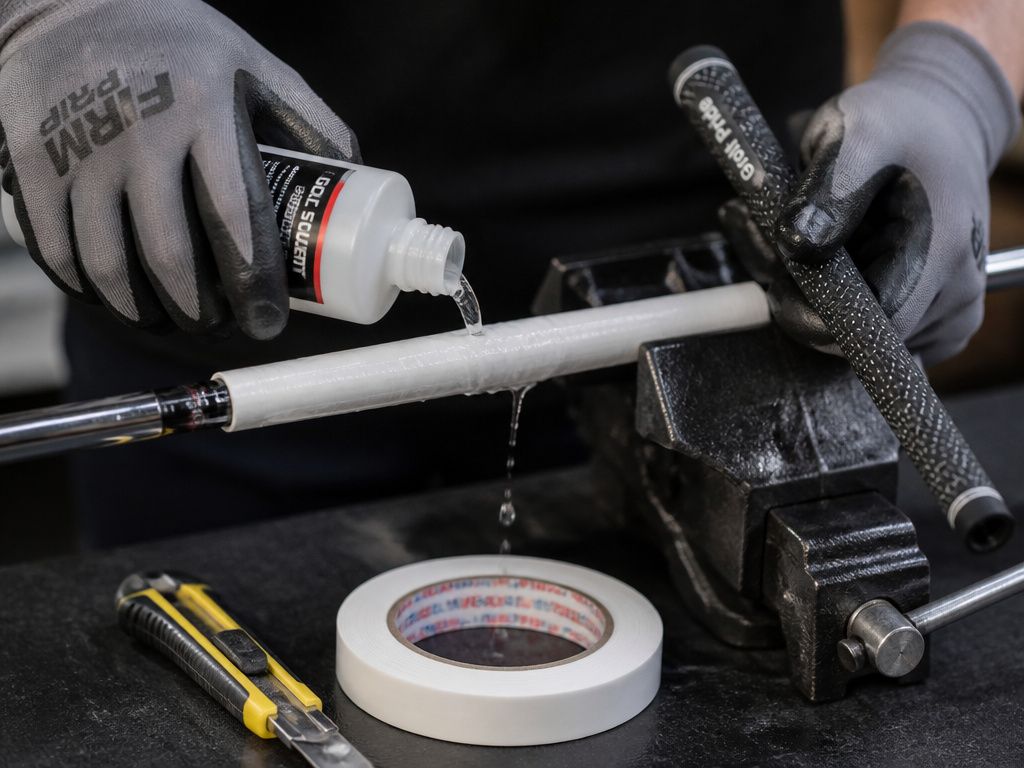
Doing it yourself saves money and takes less than an hour for a full set. The process is simple, but two errors ruin it.
You need a basic kit: * New grips * Double-sided grip tape (2″ wide) * Grip solvent or odorless mineral spirits * Sharp utility knife * A vise with a rubber shaft clamp (highly recommended) * A drip pan and rags
Common mistake: Using too little solvent. If the grip binds halfway on, you cannot twist it into position. You’ll have to cut it off and waste a grip. Pour solvent liberally inside the new grip and over the taped shaft until it’s dripping wet.
The core steps are methodical: cut off the old grip, scrape off old tape, apply new tape, pour solvent, and slide the new grip on. Align any logos or alignment aids before the solvent dries, you have about 20 seconds to adjust.
The second major error involves knife work. When cutting off the old grip, score the tape underneath, not the graphite shaft. Sawing into a graphite shaft creates a weak point that can snap. For players with expensive graphite shafts in their best hybrid clubs, this is the strongest argument for paying a pro.
| Task | DIY | Pro Shop |
|---|---|---|
| Cost (13 clubs) | $60 – $90 (materials) | $80 – $150 (parts + labor) |
| Time | 30 – 45 minutes | 1 – 2 hours (drop-off) |
| Best For | Comfort with tools, saving money, graphite irons | Avoiding knife work, precise alignment, complex build-ups |
Storage, Cleaning, and The Putter Exception
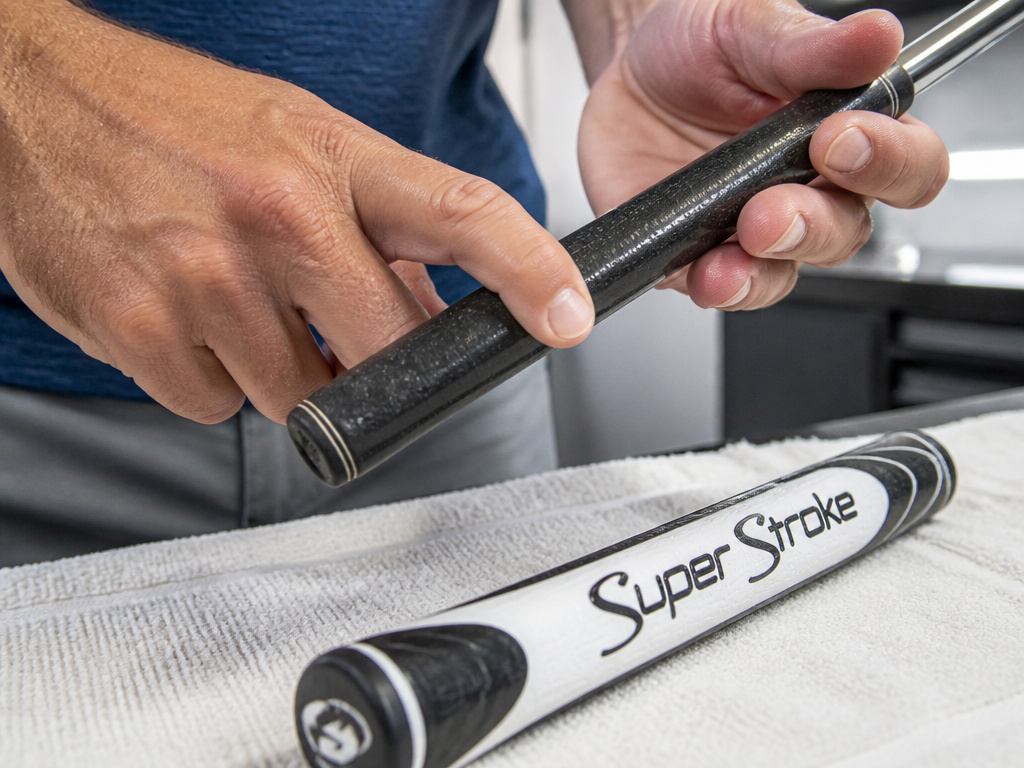
How you store clubs determines their true age. Heat is the enemy. Ultraviolet light breaks down rubber. A garage or car trunk is a grip-aging chamber. Indoor, climate-controlled storage doubles or triples a grip’s functional life.
Cleaning is maintenance, not a revival. A mix of warm water and mild dish soap with a soft brush can strip away dirt, oil, and sunscreen residue. This can restore surprising tackiness to a grip that’s merely dirty. It will not fix a grip that’s hardened or lost its porous texture. Clean your grips every few rounds; it’s the easiest way to extend their prime.
Putter grips live by different rules. They don’t experience the shear forces of a full swing. Replace them every 3-5 years, or when the surface under your thumbs becomes smooth and shiny. The feel is paramount here. A worn putter grip can subtly alter your stroke path and distance control. Many players opt for a larger, specialized putter grip like a SuperStroke for added stability, which is a separate upgrade from a standard regrip.
Frequently Asked Questions
How do I know if my grips are too old?
Perform the three-point test: look for shiny, hardened patches; notice if you’re gripping tighter to prevent slippage; and watch for a loss of short-game touch or an increase in off-center strikes. If any are true, they’re past due.
Can I regrip my own clubs?
Yes. It’s the easiest DIY golf maintenance task. You need grips, double-sided tape, solvent, and a utility knife. The first club takes 10 minutes; each subsequent one takes 3-4 minutes. Watch a tutorial first if you’re nervous about cutting near the shaft.
Do cord grips last longer?
Yes. The integrated cord material resists wear from friction and provides better traction in wet conditions. A quality cord grip like the Golf Pride Tour Velvet Cord can last 50-75 rounds, compared to 40 rounds for a standard rubber grip.
Is regripping worth the money?
Absolutely. The Golf Pride study quantifies the benefit at 3-4 strokes per round. For a $60-$90 investment in materials, it’s the most impactful, cost-per-stroke upgrade you can make, far exceeding the marginal gains from a new driver.
How often should a beginner regrip?
If you’re playing with new beginner men’s clubs or beginner women’s clubs, the grips are likely fine for 2-3 seasons with casual play. Focus on cleaning them regularly. Replace them when they become visually shiny or slick to the touch, which for a casual player is typically around the 18-24 month mark.
Does wear make a club non-conforming?
No. According to the USGA Rule 4 on clubs, wear from normal use does not render a conforming club non-conforming. The rule distinguishes between normal “wear” (erosion of material) and purposeful “alteration.”
The Bottom Line
Don’t wait for a grip to split open. By then, it’s cost you a season of compromised shots. Use the 40-round/12-month rule as your baseline, but let the physical test, the shine, the hardness, the tension in your hands, be your final judge. A fresh set of grips transforms any set, from entry level clubs to the best golf clubs on the market, by restoring the one connection that matters most. Your hands.
