
Adaptive Golf for Disabilities: Data-Driven Setup Changes
This post contains affiliate links. As an Amazon Associate, we earn from qualifying purchases.
This post contains affiliate links. As an Amazon Associate, we earn from qualifying purchases.
Adaptive golf for players with disabilities is about building a functional swing within your physical reality, not forcing a textbook motion. It relies on four pillars: rule modifications under USGA Rule 25, official impairment classifications, swing adaptations that prioritize consistency over power, and specialized equipment like single-rider carts. The goal isn’t to mimic an able-bodied swing but to create a repeatable, effective motion that works for you.
That goal hinges on understanding what your body can actually do. The mechanics of a seated swing are fundamentally different from a standing one, and the equipment choices, from grip size to cart type, either support those mechanics or fight them.
What follows breaks down the official frameworks, the swing principles that work, and the specific equipment that bridges the gap between intention and execution. We’ll look at the data on performance differences between classes and why some standard advice needs to be thrown out.
Key Takeaways
- Rule 25 is your foundation. The USGA Rules of Golf include specific modifications for players with disabilities, covering everything from adaptive equipment use to assistance on the course. Knowing this rule is step one.
- Swing for your class, not against it. A 2026 peer-reviewed study found seated golfers average 60.9 yards less carry distance across all clubs compared to standing players. Chasing distance here is a losing battle; focus on consistency and strategy instead.
- Equipment certification matters. An adaptive golf cart built to the ANSI/RESNA ASE-2 standard is tested for safety and stability on course terrain. A standard personal transport vehicle is not.
- Forward tees are a strategic tool, not a concession. Playing from a forward set of tees is one of the most effective ways to level the playing field, turning long par-4s into manageable approach shots.
- Simplify the grip first. Before investing in expensive custom clubs, explore larger, softer arthritic grips or specialized attachments. Often, the contact point is the biggest barrier.
The Official Frameworks: Rules and Classifications
You can’t build an adaptive game in a vacuum. It has to fit within the structure of the sport, which means starting with the rulebook and the classification system. These bureaucratic hurdles are the blueprint that tells you what’s possible in competition and how you’re grouped with players of similar ability.
The USGA’s Rule 25 is the entry point. This section of the Rules of Golf is dedicated to modifications for players with disabilities. It explicitly allows for the use of adaptive equipment, permits assistance from a caregiver or caddie for certain tasks, and outlines how rules apply when a player uses a mobility device. You don’t need to memorize the entire rule, but you should know it exists and where to find it. Your local PGA professional or the tournament committee can provide the specific USGA adaptive golf handbook that details these modifications.
Where this goes sideways: Assuming all mobility devices are treated the same under the rules. A cart built to the ANSI/RESNA ASE-2 standard for adaptive golf is explicitly permitted, while a standard personal transport vehicle may not be, depending on the competition.
Classification is the next layer. Organizations like the United States Disabled Golf Association (USDGA) use a system of Sport Classes. G1 through G6, to group golfers based on the nature of their impairment. These aren’t skill levels; they’re impairment levels designed so that competition is decided by golf ability, not by who has the least severe disability. You can review the full USDGA impairment classifications online to see where you might fit. This system, used in events like the U.S. Adaptive Open, ensures you’re playing against people who face similar physical challenges.
| Impairment Type | Example Sport Classes | Key Golf Consideration |
|---|---|---|
| Limb Deficiency | G1, G2 | Balance, weight transfer, and club control. A below-knee amputation on the trail leg affects the swing differently than on the lead leg. |
| Neurological | G3, G4 | Coordination, muscle spasticity, and fine motor control. Consistency in the takeaway and follow-through is often the primary focus. |
| Seated / Wheelchair | G5 | Trunk rotation and stability. Power generation comes from the upper body and arms, not the legs. |
| Visual Impairment | G6 | Targeting, alignment, and distance judgment. A sighted guide or audible rangefinder becomes essential equipment. |
The 4 Core Principles of an Adaptive Golf Swing
Good golf should feel less complicated the more you understand it. For adaptive golf, that means stripping the swing back to its functional essentials. Forget positions. We’re building a motion that gets the clubface back to the ball consistently. These four principles apply whether you’re standing, seated, or have a limb difference.
1. Stability Over Mobility. Your swing is only as good as your base. If you’re seated, that means a cart seat with proper lateral and lower-back support. If you’re standing with a balance impairment, it might mean a wider stance or even a single crutch for support during the swing. The goal is to create a platform that doesn’t move unless you want it to.
2. Shorten the Levers. A long, flowing backswing looks great but requires tremendous core stability and joint range. For many players, a shorter, more compact backswing is easier to control and repeat. Think of turning your shoulders until you feel tension, then starting down. That’s your top.
3. Lead with the Body (What You Have). The classic “hip turn” power source might not be available. Power has to come from somewhere else. For seated golfers, it’s a coordinated turn of the shoulders and arms. For a player with a single arm, it might be a powerful shoulder turn and wrist hinge. Find the biggest muscle group you can reliably use and make it the engine.
**4. Finish in Balance.The follow-through proves a balanced swing. Your finish position should be comfortable and held for a two-count.If you’re falling out of it, the swing was off-balance from the start. This is the single best diagnostic tool you have.
A 2026 Frontiers disability golf study of 142 competitive players provided hard numbers. It found the seated playing style had a median carry distance 60.9 yards shorter than standing players across all clubs. That’s the physics of a seated swing. The study also noted seated players had lower variability in offline distance, because a shorter shot simply can’t stray as far. This tells us their challenge is distance, not direction.
Let’s be clear about this. I favor straightforward movements players can actually stick with. For a client with severe arthritis, we spent a month chasing a “proper” putting grip. Her hands hurt, her scores went up. We switched to a simple, adapted cross-handed grip that took the twisting pressure off her joints. She holed three more putts per round within two weeks. Sometimes the best adaptation is the one that lets you play without pain.
Adaptive Equipment: From Grips to Carts
The right equipment removes barriers; the wrong equipment creates them. This process involves choosing tools that align with the swing principles above and your specific physical needs. Start with what touches your body, then work outward.
Grips and Clubs. Before you look at a new driver, look at your grips. Standard rubber grips are thin and require firm hand pressure. For players with arthritis, reduced grip strength, or limited hand function, a larger, softer arthritic grip is the first and cheapest upgrade. Brands like Winn and Lamkin make oversized, cushioned models that reduce vibration and require less squeezing. If standard clubs are still difficult to control, a clubfitting session at a specialist like PGASS can explore options like lighter graphite shafts, more upright lie angles, or even single-arm club sets.
Footwear and Support. You can’t swing from a shaky foundation. For players who walk, comfortable shoes with ample support are essential. This is especially critical for those with foot conditions, diabetes, or swelling. Don’t fight a standard width; seek out extra wide shoes or specific 4E wide shoes** from brands that cater to anatomical needs. The goal is a shoe that disappears on your foot, letting you focus on the swing.
Mobility and Seating. This is where the line between equipment and rulebook is brightest. A true adaptive golf cart, like those from Single Rider or Paramobile, is engineered for the course. It has a lower center of gravity, turf-friendly tires, and often includes features like swivel seats and hand controls. Crucially, these carts are built to meet the assistive technology seating standard (ANSI/RESNA ASE-2), which covers safety and performance. A standard medical scooter is not, and many courses will not allow them in formal play.
Course Strategy and the Mental Game
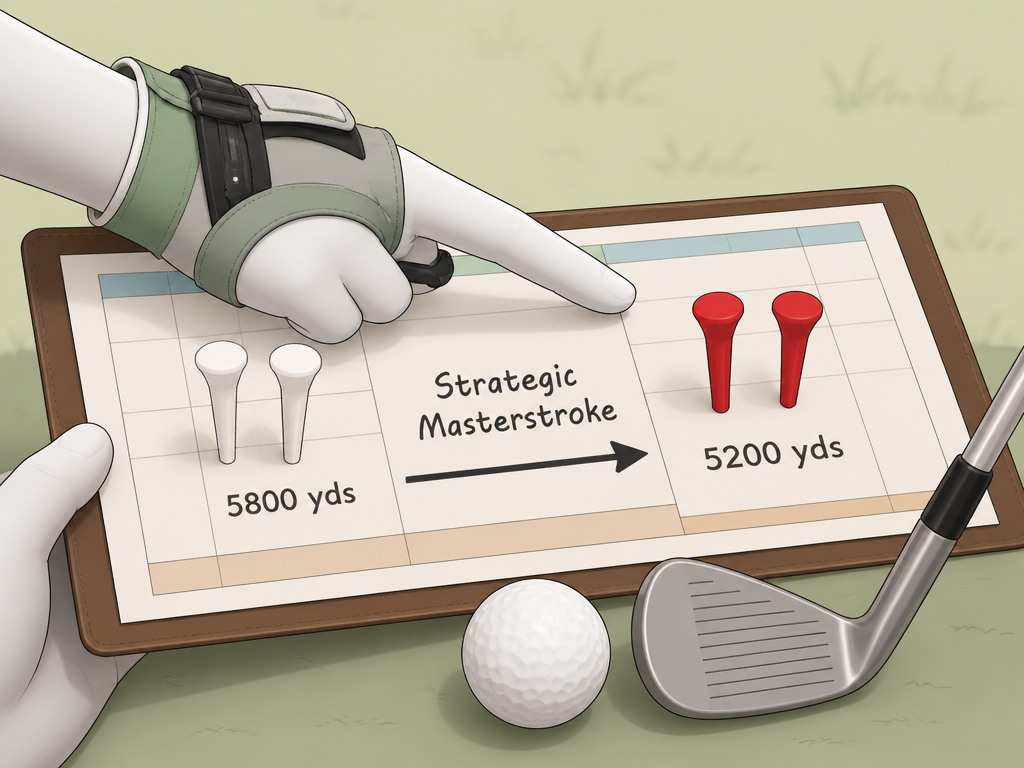
The adaptive golfer’s advantage lies in smarter play. Your strategy must account for your actual distances and your most reliable shots.This is where you turn perceived limitations into scoring opportunities.
The most powerful tool in your bag is the forward tee. Playing from a shorter distance isn’t a concession; it’s a strategic masterstroke. If your driver carry is 150 yards, playing from the 5,800-yard tees leaves you a long iron into every par-4. Move up to the 5,200-yard tees, and suddenly you’re hitting 7-iron or 8-iron. That’s a world of difference in accuracy and confidence. An adaptive golf health outcomes study noted that players who embraced forward tees reported higher enjoyment and lower frustration, key factors in long-term participation.
Build your game from the green backward. Since distance control can be a bigger challenge, the same research noted higher carry distance variability for visually impaired players, your practice time should reflect that. Spend 70% of your range time on shots inside 100 yards. Develop a reliable chip, pitch, and putting stroke. A great short game turns bogeys into pars and takes pressure off the longer, less consistent shots.
Common mistake: Trying to fix a strategic problem with a technical solution. If you’re consistently short on par-4s, the answer isn’t a grueling swing overhaul to gain 10 yards. It’s moving to a forward tee. The scorecard doesn’t care how you got there.
Frequently Asked Questions
What is the difference between adaptive golf and regular golf?
The rules and objectives are identical. The difference is in the modifications permitted under Rule 25 and the use of specialized equipment. Adaptive golf allows for equipment like single-rider carts, club attachments, and rule adjustments for players who need assistance, ensuring the game tests golf skill, not physical ability.
How do I get classified for competitive adaptive golf?
You need to undergo an assessment with a certified classifier from an organization like the USDGA. They will evaluate your impairment against the official golf impairment standards. This classification determines your Sport Class (G1-G6) for eligible tournaments. Start by contacting the USDGA or the tournament organizer for the assessment process.
Can I use a regular golf cart if I have a disability?
For casual play, most courses will accommodate you. For formal competition, you must check the specific rules of the event. Many adaptive tournaments require carts that meet specific safety standards, like the ANSI/RESNA ASE-2 standard. A standard golf cart may not be permitted if it’s deemed to give an unfair advantage or doesn’t meet stability requirements.
Are there golf clubs made for one-handed players?
Yes. Several manufacturers and custom club fitters produce sets designed for single-arm play. These clubs often have modified weights, grips, and lie angles to help control the clubface through the swing with one hand. A clubfitter certified by the PGA of America can also adapt your existing set with heavier clubheads and specialized grips.
What is the most important piece of equipment for a new adaptive golfer?
Without a doubt, the grip. If you can’t hold the club comfortably and securely, nothing else works. Investing in a set of larger, softer arthritic grips is a low-cost, high-impact change that can reduce pain and improve control immediately, making it the best first step for many players.
The Bottom Line
Adaptive golf for players with disabilities succeeds when you stop fighting your body and start building a game around it. The frameworks. Rule 25 and the classification system, exist to support that, not restrict it. The swing principles are about functional movement, not picturesque poses. The equipment, from forgiving irons to certified carts, are the bridges.
If your driver carry is under 180 yards, move to the forward tees this weekend. That single decision will do more for your score and enjoyment than any equipment purchase. Then, look at your grips. If your hands ache after nine holes, that’s your next fix. This process focuses on the one change you can make right now that makes the next shot easier.
