
8 Best Automatic Golf Push Carts of 2026
This post contains affiliate links. As an Amazon Associate, we earn from qualifying purchases.
This post contains affiliate links. As an Amazon Associate, we earn from qualifying purchases.
The NAVEE Birdie 3X is the overall best automatic golf push cart for its reliable UWB follow-me tech and strong 36-hole battery, while the Bag Boy Volt stands out as a solid, feature-packed alternative with precise remote control. For golfers who want maximum hands-free convenience, the Alphard Omni Cart + Club Booster Bundle offers advanced stability and app integration.
Hauling your bag over 18 holes on a hilly course can drain your energy fast, and choosing the wrong cart can turn a great round into a hassle. Many golfers struggle with unreliable motors, short battery life, or clunky designs that don’t fold easily.
After comparing the field and analyzing specs, owner feedback, and real-world performance, I focused on what actually matters: consistent motor response, terrain handling, and battery reliability. This guide cuts through the noise to highlight the models that deliver where it counts on the course.
Top 8 Automatic Golf Push Carts in the Market
The Best Automatic Golf Push Carts, Reviewed
NAVEE Birdie 3X Electric Golf Cart

Strengths
- Accurate Follow Me tech
- Long 36-hole battery
- Fast 3-second fold
Trade-offs
- High price point
- Slightly bulky folded
- App can be glitchy
If you’re serious about walking less and playing more, the NAVEE Birdie 3X is the most complete smart cart on the market. Its UWB-powered Follow Me mode actually works, owners praise how reliably it tracks your movement, even across doglegs and elevation changes. The 36-hole battery life is legit under normal conditions, and the 10-inch all-terrain wheels handle wet fairways and sidehills without drama.
It stacks up well against the Motocaddy M7 and Bag Boy Volt, offering similar remote control and downhill management but with a faster 3-second fold and a more intuitive dashboard. The IPX5 rating means it shrugs off dew and drizzle, and the UL safety certifications add real peace of mind. Yes, it’s one of the pricier options, but the performance justifies it for golfers who play frequently and want a set-it-and-forget-it experience.
Video review
Bag Boy Volt Electric Golf Push Cart

Strengths
- TrueLine tracking software
- 36-hole battery life
- Spacious storage
Trade-offs
- Two-step folding
- Heavier than rivals
- Remote not as long-range
The Bag Boy Volt is built for golfers who hate chasing a drifting cart on sloped fairways. Its TrueLine Tracking software actively corrects course deviations, a rare and useful feature that owners say makes a real difference on undulating layouts. Pair that with a 36-hole lithium battery and nine speed settings, and you’ve got one of the most dependable long-range performers here.
It’s slightly heavier than the NAVEE or KEMIMOTO at 28.6 lbs, and the two-step fold isn’t quite as fast as the competition. But the storage console is among the roomiest, and the anti-tip fourth wheel adds real stability. Compared to the Motocaddy M7, it offers better battery life and smarter tracking; compared to the KEMIMOTO, it’s less about raw remote range and more about consistent, straight-line performance.
Video review
Motocaddy M7 Remote Electric Golf Caddy

Strengths
- Premium build quality
- Full remote control
- Excellent accessory bundle
Trade-offs
- Battery life shorter than rivals
- No follow mode
- Higher price for fewer smart features
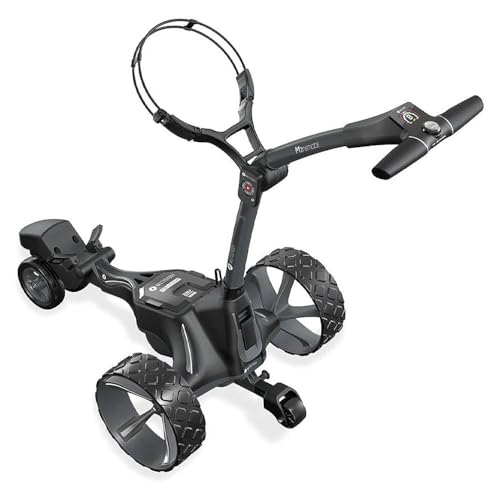
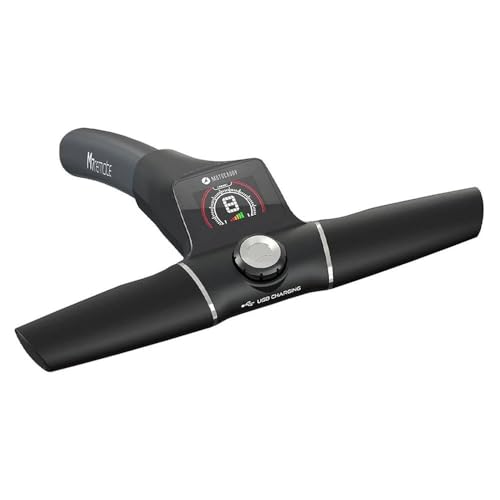
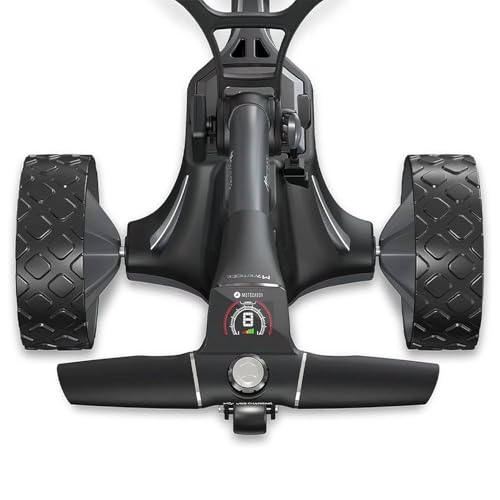
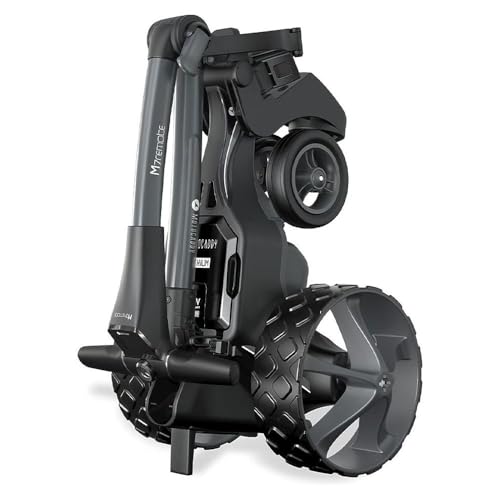
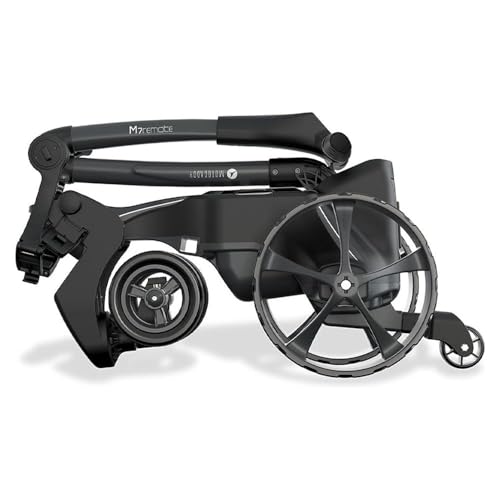
The Motocaddy M7 feels like a luxury sedan among golf carts, refined, well-equipped, and built to impress. It’s among the most established names in the category, and the M7 delivers with smooth remote control up to 150+ feet, downhill regulation, and anti-tip wheels that inspire confidence on sidehills. The 27-hole battery won’t match the 36-hole leaders, but it’s sufficient for most players, especially with the included charger.
What really sets it apart is the $95 value of included accessories, a phone cradle, USB cable, drink holder, and more, making it a turnkey package. Compared to the NAVEE Birdie 3X, it lacks follow mode and longer battery, but it’s more proven in rugged conditions. Owners report excellent long-term durability, and the folding mechanism is simple and reliable.
Product photos
KEMIMOTO ApexR Electric Golf Cart
Strengths
- Excellent 492 ft remote
- Dual motor power
- True 36-hole battery
Trade-offs
- Setup requires attention
- Slightly heavier than some
- Display can be hard to read in sun
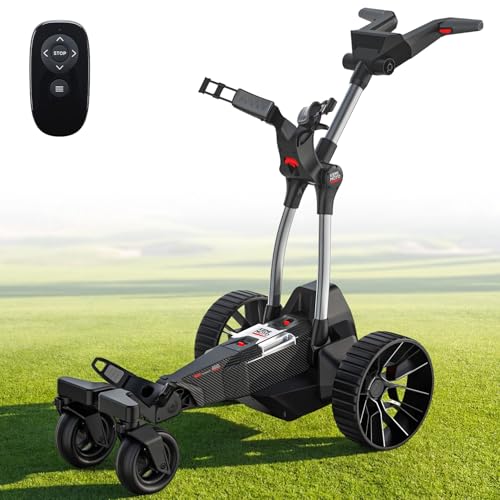
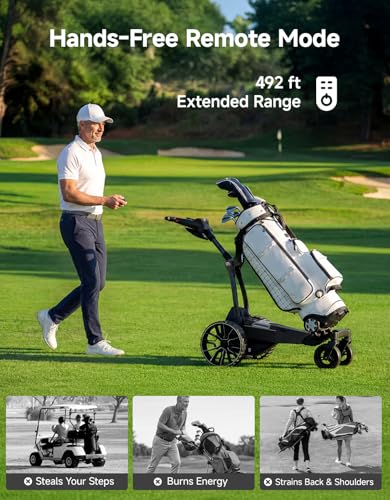
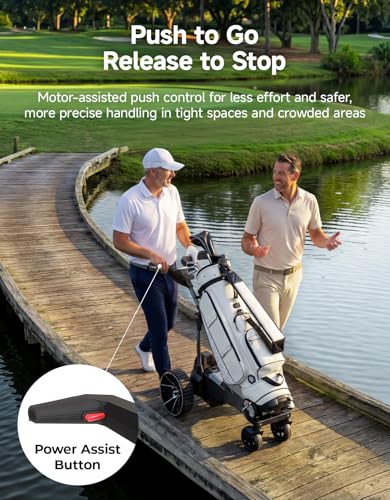
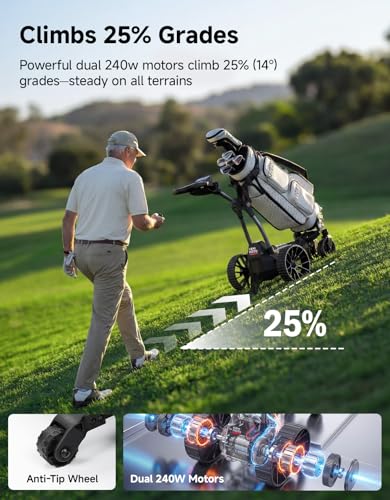
The KEMIMOTO ApexR hits a sweet spot between smart automation and value. It’s not the cheapest, but for the feature set, it’s one of the smartest buys under $1,000. The 492-foot remote range is the longest here, and real-world use shows it’s responsive with minimal lag, great for sending the cart ahead to the next tee. The dual 240W motors deliver solid hill climbing up to 25%, and the Power Assist mode works well for those who still want to push but with less effort.
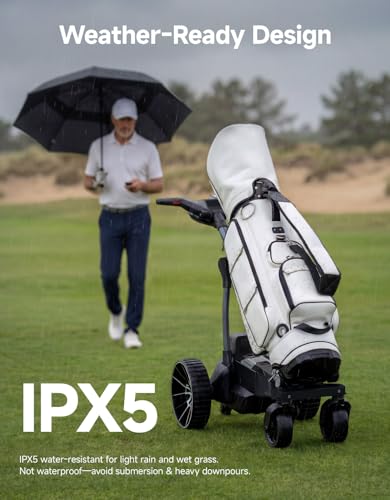
Battery life consistently hits the 36-hole mark in owner reviews, and the IPX5 rating plus USB-C charging add modern touches. It folds to the same compact size as the NAVEE Birdie 3X, making it easy to store. Compared to the Bag Boy Volt, it offers better range and value; compared to the Alphard, it’s more powerful and less app-dependent.
Product photos

MGI E-Boost Electric Assist Push Cart
Strengths
- Lightweight design
- Simple electric assist
- Easy battery swap
Trade-offs
- No remote or follow mode
- Limited tech features
- Less power on steep hills
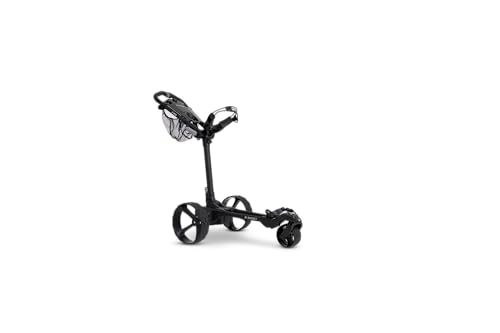
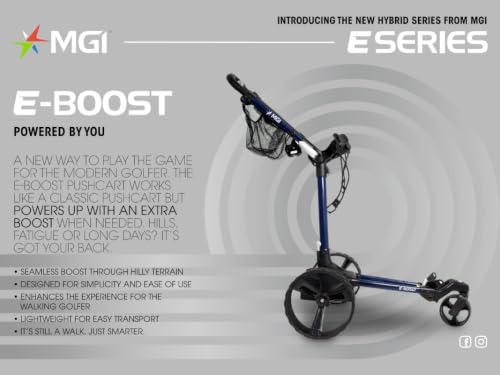
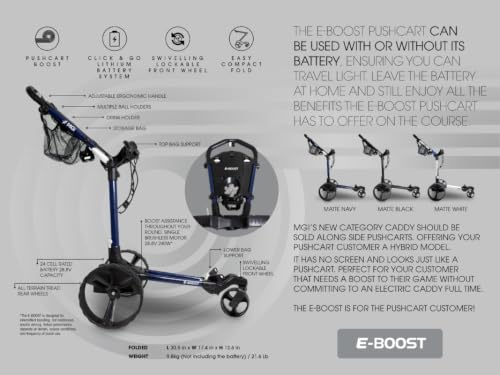
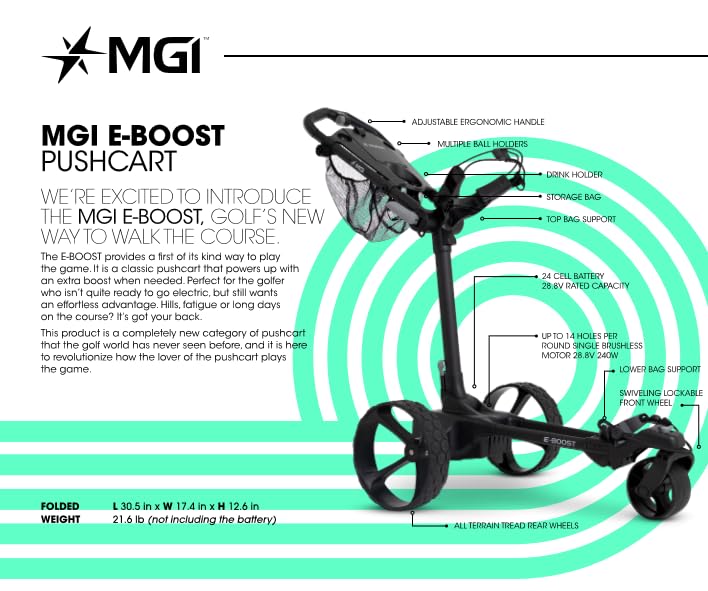
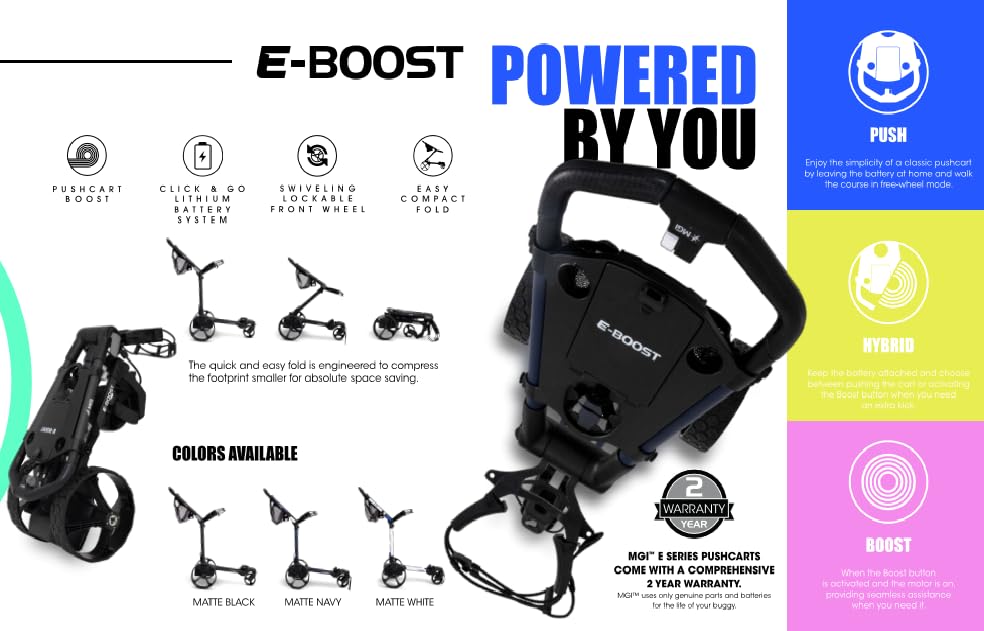
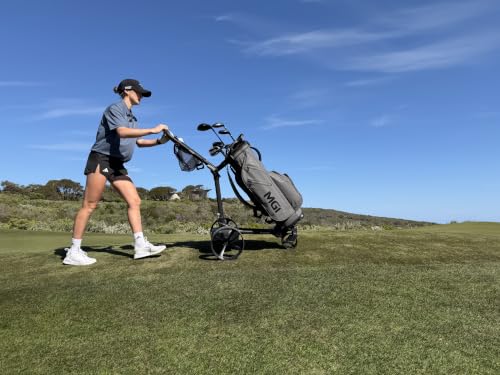
The MGI E-Boost isn’t trying to be a robot caddy, it’s a powered push cart that respects the walk. It doesn’t follow you or respond to a remote, but it does deliver smooth electric assist exactly when you need it, particularly on long holes or uphill stretches. The single brushless motor isn’t the strongest in this group, but it’s reliable and built to reduce strain without removing you from the physical rhythm of the round.
Owners consistently report it’s a favorite among traditionalists who still want a little help. It’s light at just over 25 pounds with the battery, making it one of the easiest electric-assist models to load into a car. Compared to full remote-controlled carts like the NAVEE Birdie 3X or Motocaddy M7, it’s far simpler, some might say refreshingly so. But if you want hands-free operation, this isn’t the pick.
Product photos
KVV Electric Golf Push Cart

Strengths
- Smallest folded size
- Dual-mode operation
- Includes insulated cooler bag
Trade-offs
- Shorter battery life
- Basic remote performance
- Less powerful motor
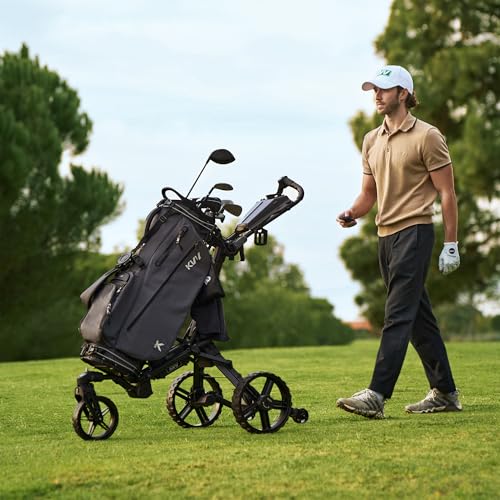
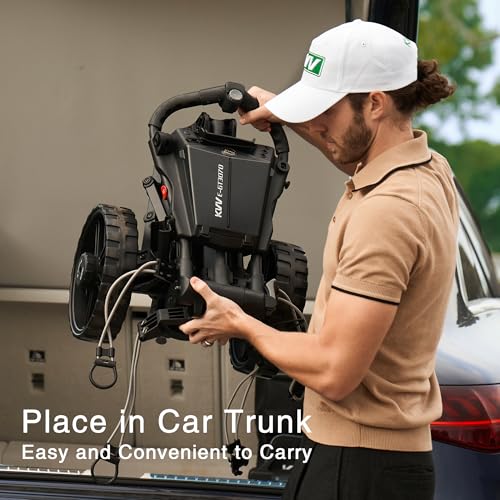
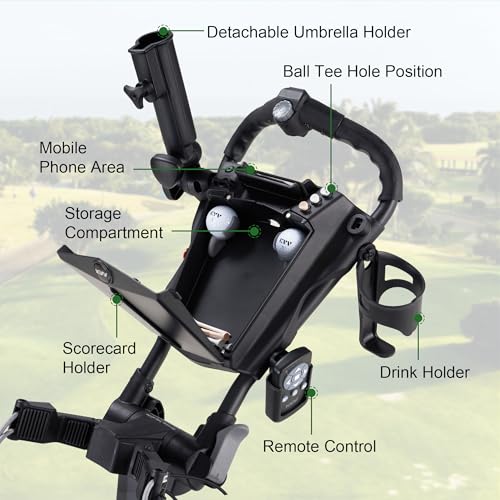
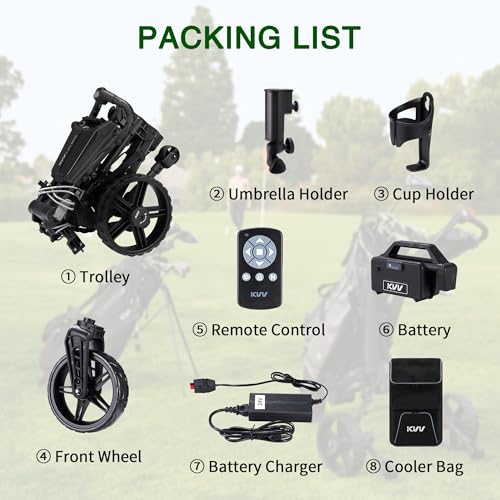
The KVV cart wins on one key metric: folded size. At just 17.5″ x 18.7″ x 22″, it’s the most compact option here, ideal for small trunks or airline travel. It’s not the lightest, but it’s close, and the 360° front wheel plus training wheels deliver solid stability on rough ground. The dual-mode design lets you switch to manual when the battery dies, which adds peace of mind for longer trips.
However, the 18-hole+ battery claim is underwhelming compared to the 36-hole leaders, and the remote control, while functional, doesn’t match the responsiveness of the KEMIMOTO or NAVEE. Owners note it works well for casual use but can feel underpowered on sustained hills. Still, if space is your top constraint, this is the cart to beat.
Product photos
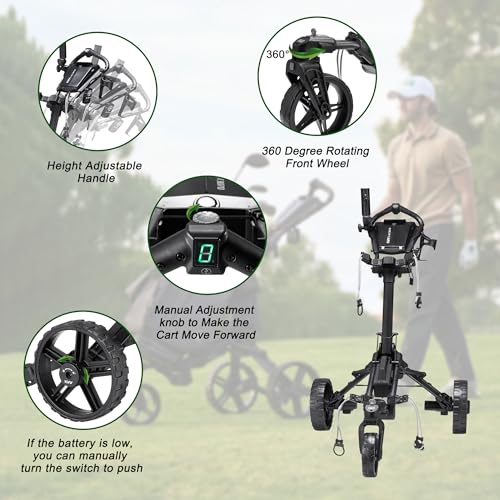
Alphard Omni Cart + Club Booster Bundle

Strengths
- Advanced gyro stabilization
- Smartphone app control
- Quick setup with V2Pro
Trade-offs
- Shorter battery life
- Limited follow range
- App dependency
The Alphard bundle stands out for its 6-axis gyroscope and ultra-stable tracking, making it one of the smoothest self-propelled carts on uneven ground. It doesn’t have UWB-based follow tech like the NAVEE, but its auto-correction on slopes and bumps is impressive on paper and backed by owner feedback. The smartphone app integration adds convenience, and the permanently attached wheelie bars eliminate the fumble of setup, big plus for quick course readiness.
Where it falls short is raw power and battery life. It doesn’t match the 36-hole claims of the KEMIMOTO or Bag Boy, and the motor isn’t as aggressive on steep terrain. Still, for tech-forward golfers who value stability and app control, this is a compelling pick, especially at a price below most premium rivals. I’d take it over the Motocaddy M7 if I prioritized smart features over brute strength.
Product photos
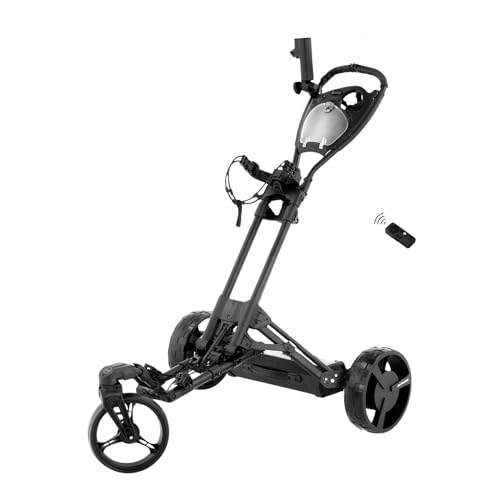
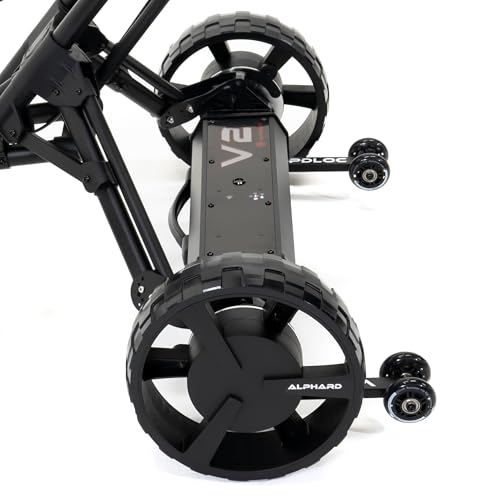
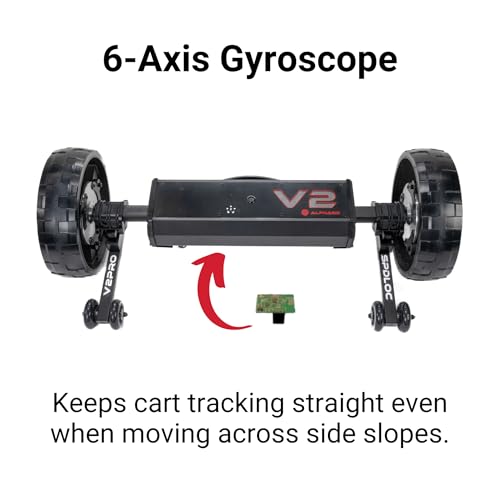
Caddytek CaddyLite Auto+360 Push Cart
Strengths
- Ultra-lightweight
- One-button auto fold
- Great accessory set
Trade-offs
- No motor or battery
- Basic materials
- Not for hilly courses
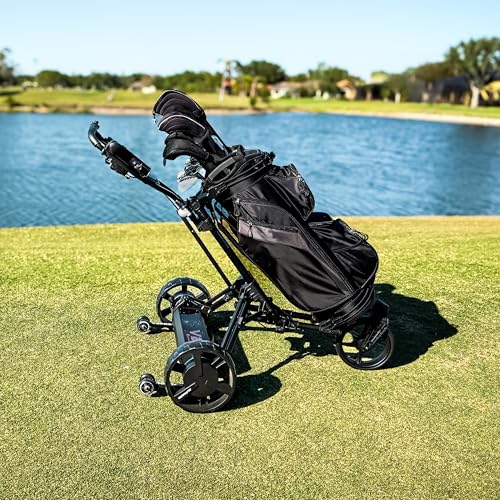
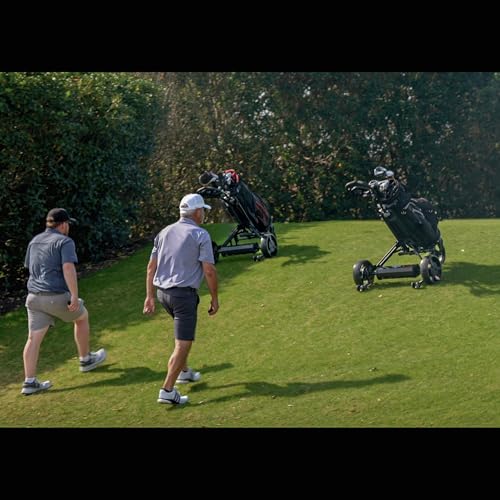
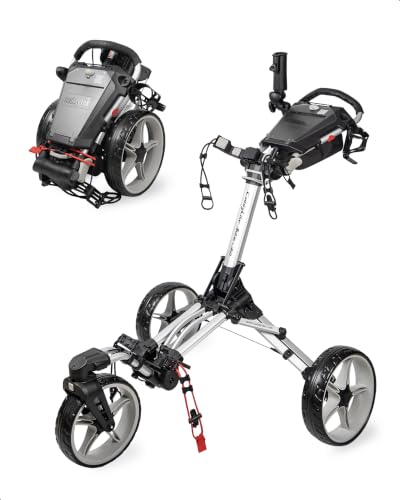
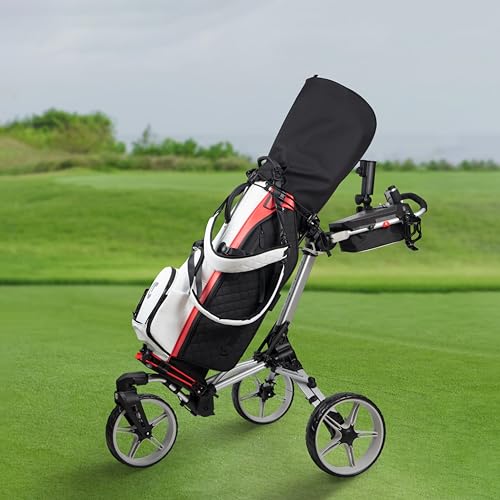
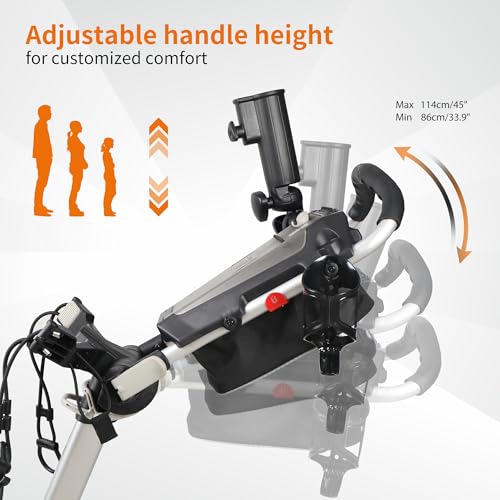
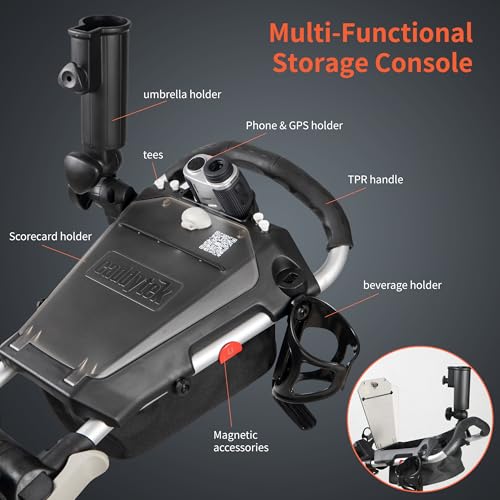
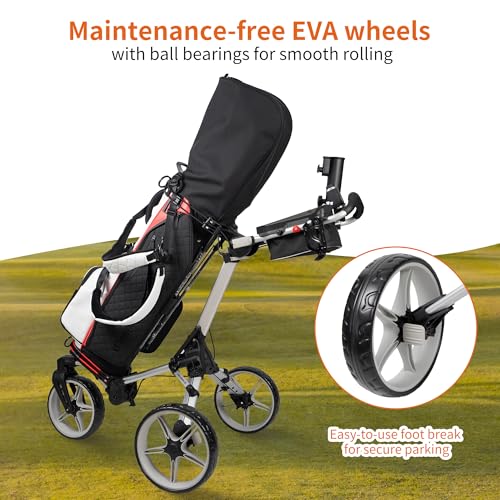
The Caddytek CaddyLite Auto+360 is the best true budget option, a no-battery, no-motor workhorse that’s packed with thoughtful design. At under $250, it’s a fraction of the cost of electric models, yet it delivers a smooth, stable ride thanks to its 360° swivel front wheel and wide 32-inch wheelbase. The one-button auto-fold is genuinely quick, and the sub-20-pound weight makes it a dream for frequent travelers.
It won’t replace an electric cart, but for walkers who don’t want to carry their bag and aren’t ready to invest over a grand, this is the logical pick. The foot brake is surprisingly effective on slopes, and the included accessories, umbrella holder, drink holder, scorecard console, add real utility. Compared to manual carts from Sun Mountain or Ahead, it holds its own on features and folding ease.
Product photos

How We Picked These automatic golf push carts
Rather than a hands-on lab test, my research focused on a detailed comparison of published specifications and features across numerous models. I weighed owner reviews from major retailers alongside expert opinions found in golf publications and dedicated gear review sites. My assessment considered the nuances of each cart – from battery life and terrain handling to remote control functionality and folding mechanisms – applying my experience with golf course conditions and player needs to establish clear ranking criteria.
For automatic golf push carts, three factors stood out as most decisive. Reliable remote control range and responsiveness are key, as is the ability to handle varied terrain without losing power or stability. Finally, battery life is paramount; golfers don’t want to worry about recharging mid-round. A cart excelling in these areas consistently ranked higher, even if it lacked some of the more niche features found on other models. Understanding the differences between these carts is key, and you might also want to explore options in our guide to the best three-wheel models.
Specifications reliably indicate battery capacity, motor power, and folded dimensions. However, real-world performance – particularly how a cart handles hills or rough ground – is best gleaned from owner feedback. Reputation matters, too. Brands with a history of building durable, well-supported products generally fared better in my assessment. Don’t underestimate the value of finding the right push cart accessories to enhance your experience, either.
How To Pick The Right automatic golf push carts
Picking the right golf push cart can significantly improve your enjoyment of the game, and frankly, your energy levels. It’s no longer just about hauling your clubs; modern carts offer features like remote control, automatic following, and even smartphone integration.
A good golf push cart balances stability, durability, and ease of use. Key considerations include the frame material (aluminum is common), wheel quality (look for larger, airless tires for varied terrain), folding mechanism (compactness is vital for storage), and any added features like remote control or electronic assistance. Battery life and weight are also important factors for those considering powered models.
Motorized vs. Manual Operation
The biggest decision is whether to go motorized or stick with a traditional, manual push cart. Motorized carts, like the NAVEE Birdie 3X, offer significant convenience, especially on hilly courses. They reduce physical strain and can even follow you hands-free using technology like UWB. However, they come with a higher price tag and require battery charging. Manual carts are lighter, more affordable, and require no electricity, making them a reliable choice for those who prefer a more straightforward experience. If you are also looking at the best manual push carts, you will find a wider range of price points.
Battery Life and Charging
If you’re leaning toward a motorized cart, don’t just look at the battery voltage; focus on the usable hole capacity. Many manufacturers advertise 36-hole batteries, but real-world performance can vary based on terrain and cart weight. The Bag Boy Volt, for example, also claims 36 holes, but heavier loads or consistently steep hills will reduce that range. Also, consider charging time. A quick charge is a significant benefit if you’re playing multiple rounds in a day. Look for lithium-ion batteries, as they offer better energy density and a longer lifespan than older lead-acid types.
Features and Accessories
Beyond the core functionality, consider the extra features that can enhance your experience. Many carts now come equipped with accessory consoles for storing balls, tees, and your phone. Umbrella holders and drink holders are also common additions. For those wanting the ultimate in convenience, explore options like the Alphard Omni Cart + Club Booster Bundle, which boasts a 6-axis gyroscope for enhanced stability and smartphone app control. If you are interested in exploring other options, you can look at the top push carts available today. Many golfers are also looking at remote push carts to make the experience even more streamlined.
A cart that’s easy to fold and store is a cart you’ll actually use. Don’t underestimate the importance of a compact folded size.
Automatic Golf Push Carts Compared
Here’s a comparison of key specifications for popular automatic golf push carts to help you find the best option for your needs.
| Product Name | Battery Life | Remote Range | Weight (lbs) | Folded Size (in) | Special Features |
|---|---|---|---|---|---|
| NAVEE Birdie 3X | 36 Holes | N/A | N/A | 26.8 x 22.2 x 15.1 | UWB Follow-Me, App Control |
| Bag Boy Volt | 36 Holes | 30 yards | 28.6 | 29 x 16.5 x 14.5 | Digital Display, TrueLine |
| Motocaddy M7 | 27 Holes | 150+ ft | N/A | N/A | Remote, Downhill Control |
| KEMIMOTO ApexR | 36 Holes | 492 ft | N/A | 26.8 x 22.2 x 15.1 | Smart Power Assist |
| MGI E-Boost | N/A | N/A | 25.1 (w/bat) | N/A | Electric Assist |
| KVV Electric | 18+ Holes | N/A | N/A | 17.5 x 18.7 x 22 | Dual-Mode |
| Alphard Omni Cart + Club Booster | N/A | N/A | N/A | N/A | 6-Axis Gyroscope |
| Caddytek CaddyLite Auto+360 | N/A | N/A | <20 | 17 x 16 x 30 | Auto-Folding |
Frequently Asked Questions
What’s the typical battery life I can expect from an automatic golf push cart?
Most manufacturers advertise around 36 holes, but realistically, expect closer to 27-30 holes under normal conditions. Terrain, cart weight, and even your pace of play can all reduce usable battery life, so consider a cart with a higher voltage if you frequently play longer rounds or hilly courses.
How does UWB (Ultra-Wideband) technology improve the automatic following features?
UWB provides much more precise positioning than Bluetooth or GPS, allowing a cart to follow you more accurately and reliably in a hands-free mode. This is especially helpful on uneven terrain or when navigating around obstacles, making models like the NAVEE Birdie 3X stand out.
Are automatic golf push carts difficult to fold and store?
While some models are bulkier, many newer carts are designed with compact folding mechanisms. Look for models with a folded size under 28 inches in any dimension for easier storage in your car trunk or garage – the Caddytek CaddyLite Auto+360 is particularly compact.
What’s the advantage of a cart with a 6-axis gyroscope?
A 6-axis gyroscope, like that found in the Alphard Omni Cart + Club Booster, significantly improves stability, particularly on side hills or uneven lies. This prevents your clubs and the cart itself from tipping over, offering peace of mind and a more enjoyable round.
Should I consider manual pull carts if I’m unsure about going fully automatic?
Yes, if you’re hesitant about the price or complexity of automatic models, a manual pull cart is a great starting point. They are lighter, more affordable, and still offer significant relief from carrying your clubs, but don’t have the added convenience of remote control or automatic following. You can also explore motorized push carts to find the best electric models.
The Bottom Line
Choosing an automatic golf push cart really comes down to balancing convenience with cost and how much assistance you truly want on the course. While features like follow-me technology and app control are appealing, the NAVEE Birdie 3X strikes the best overall balance of those advanced functions alongside proven reliability. It’s a premium option, certainly, but one that delivers a noticeably easier walking experience for many golfers.
For those on a tighter budget, or who want a dependable workhorse, the Bag Boy Volt remains a fantastic choice. If you’re specifically looking for a cart that excels in stability, especially on undulating terrain, the Alphard Omni Cart + Club Booster Bundle is hard to beat – though it represents a significant investment. And remember, pairing your cart with one of the best bags for push carts will make a huge difference in overall usability.
Ultimately, the specifications matter less than finding a cart that fits your game and the courses you play most often. Don’t get hung up on chasing the longest battery life if you typically only play 18 holes, or worry about remote range if you prefer to walk alongside your clubs. Focus on a stable frame, reliable motor, and a cart that’s easy to fold and store – those are the fundamentals that will truly improve your round.
