
7 Best Epoxies for Golf Clubs 2026
This post contains affiliate links. As an Amazon Associate, we earn from qualifying purchases.
This post contains affiliate links. As an Amazon Associate, we earn from qualifying purchases.
The Brampton PRO-FIX Long Cure is the best overall epoxy for golf clubs, delivering a rock-solid bond that handles high swing speeds with ease. For a budget-friendly option, the Tylove Pro Strength holds up well over time, while the DINGSEN 2.1oz is ideal if you need extra work time for precise builds.
Swapping shafts or rebuilding clubs shouldn’t mean gambling on a weak bond. Too many golfers use hardware-store adhesives that crack under stress, leading to loose heads and ruined rounds. I know how frustrating that is when you’re trying to fine-tune your game, especially when working with forgiving clubs or custom setups.
This guide cuts through the noise, focusing on epoxies that actually hold up. I compared work life, durability, and real-world feedback from golfers and club makers to find the ones worth your time. These picks are based on specs and consistent owner results, not hype.
Top 7 Epoxies For Golf Clubs in the Market
The Best Epoxies For Golf Clubs, Reviewed
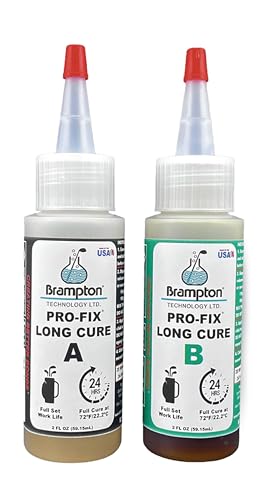
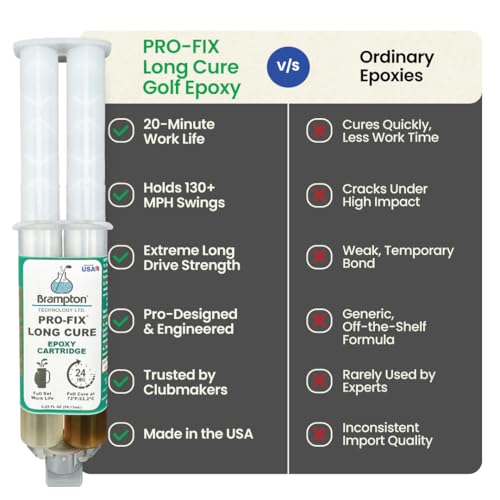
Brampton PRO-FIX Long Cure Golf Epoxy
Strengths
- Large 4oz volume
- 20-minute work life
- Extreme bond strength
Trade-offs
- Overkill for one-time users
- Higher upfront cost
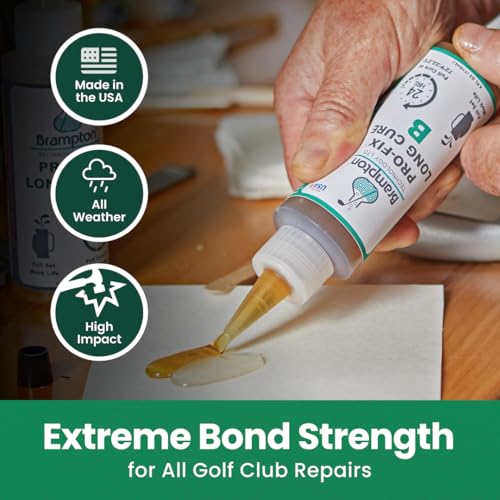
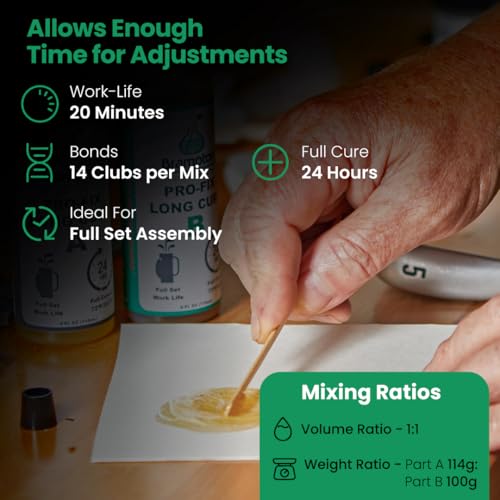
This 4oz kit of Brampton PRO-FIX Long Cure is, without question, the best overall option for serious club builders. The 20-minute work life gives you breathing room, and the bond strength is legendary, used by long drive competitors for a reason. What sets this apart is not just the formula, but the volume: at 4oz, it’s enough for multiple full set builds, making it more cost-effective over time than repeatedly buying smaller kits.
Reviewers consistently praise its smooth consistency, lack of voids, and resistance to high-impact stress. Compared to the 0.85oz version, this is the smarter buy if you’re a frequent builder or run a small repair shop. It’s made in the USA with strict quality control, and that shows in the reliability.
Video review
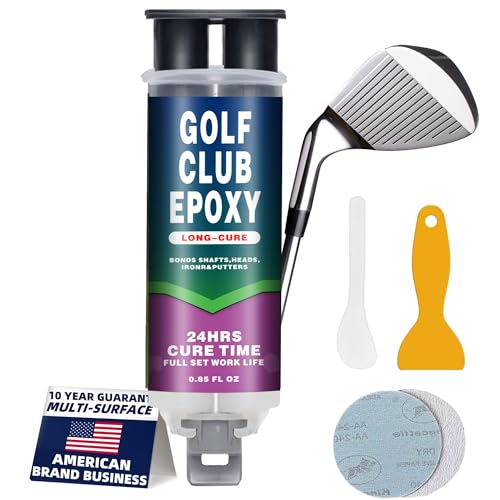
Tylove Pro Strength Golf Club Epoxy
Strengths
- Affordable
- 20-minute work life
- Works on all shaft types
Trade-offs
- Less bond strength than top-tier options
- Not ideal for high-performance builds
For golfers looking to reshaft or repair a few clubs without breaking the bank, the Tylove Pro Strength Epoxy stands out as a budget-friendly option that still delivers solid performance on paper. With a 20-minute work life, it gives you enough time to align and seat each club properly, which is especially helpful when working with graphite shafts that need precise positioning. Owners consistently report that it holds up well under high swing speeds and resists cracking, which speaks to its durability despite the low price.
That said, while it’s marketed as a pro-level solution, it doesn’t quite match the bond strength or consistency reported with premium epoxies like the Brampton Long Cure formulas. It works, and works well for casual use or occasional repairs, but I wouldn’t bet on it for a full custom build or long drive competition prep.
Video review
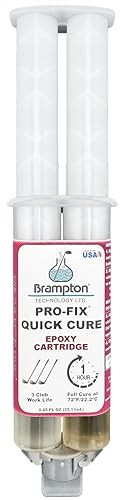
Brampton PRO-FIX Quick Cure Golf Epoxy
Strengths
- Cures in 1 hour
- 5-minute work life
- Trusted by shop technicians
Trade-offs
- Too fast for large builds
- Limited time for adjustments
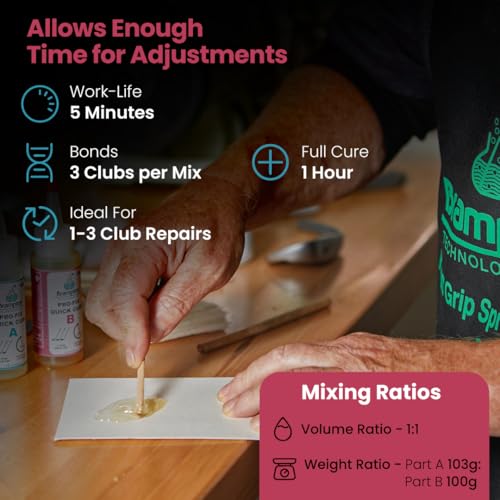
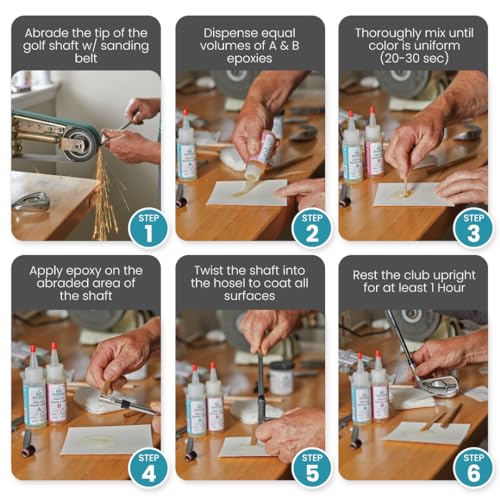
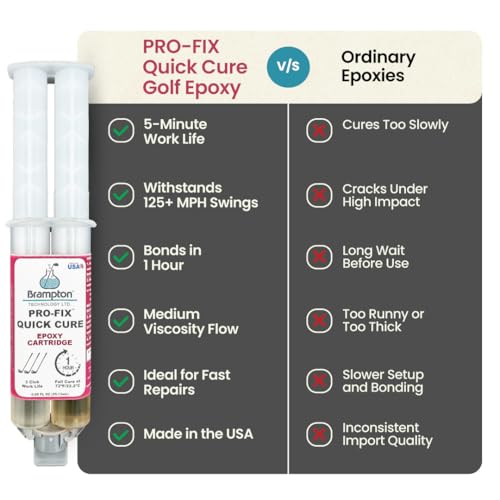
If speed is your priority, say, you’re fixing a driver the night before a trip or prepping a few clubs last minute, the Brampton PRO-FIX Quick Cure is the most practical choice in this lineup. The 5-minute work life means you can bond three clubs per mix, and with a full cure in just one hour, it’s among the fastest reliable epoxies available. Reviewers note it’s a favorite among golf shop techs who need to turn around repairs quickly without sacrificing reliability.
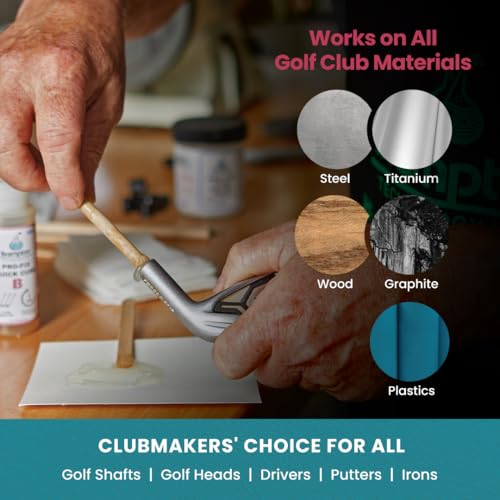
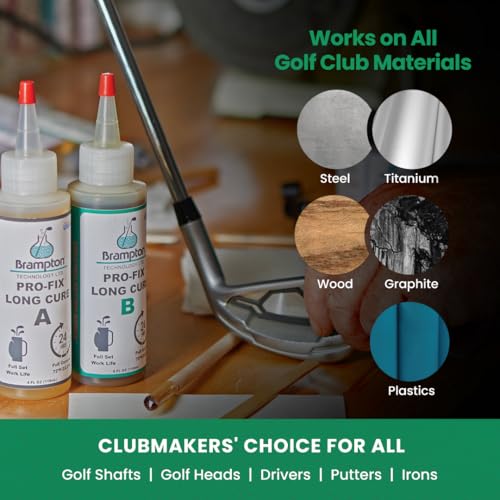
It’s not meant for full set builds, but for spot repairs and minor reshafts, its medium viscosity and strong adhesion to steel, graphite, and titanium make it a go-to. I’d recommend this over the EIGTWEN model simply because Brampton has a longer track record in the golf industry and more consistent owner feedback around long-term hold.
Product photos
The GolfWorks Max Strength Tour Set Plus

Strengths
- Beaded formula ensures even fill
- Maximum bond strength
- Preferred by club builders
Trade-offs
- Highest price point
- No clear work life stated
The GolfWorks Max Strength Tour Set Plus stands out not just for its strength but for the beaded formula, which is a standout for hosel filling and preventing dry joints. Beads create space, ensuring even epoxy distribution and eliminating the risk of under-filling, a common issue with liquid-only epoxies. This is the kind of detail that matters most to experienced club builders, and it’s why this product is often cited in professional forums as the gold standard.
On paper, it’s the most premium option here, and owner feedback backs that up: users report near-perfect bond consistency and excellent resistance to torque and impact. It’s also designed for long work sessions, though the exact work life isn’t advertised. Compared to the Brampton Long Cure, it’s pricier but offers a more refined application experience, especially for those who build or modify clubs regularly.
Product photos
DINGSEN 2.1oz Golf Club Epoxy Repair

Strengths
- 30-minute work life
- Generous 2.1oz volume
- Clear waterproof finish
Trade-offs
- Less proven in high-stress use
- Fewer pro endorsements
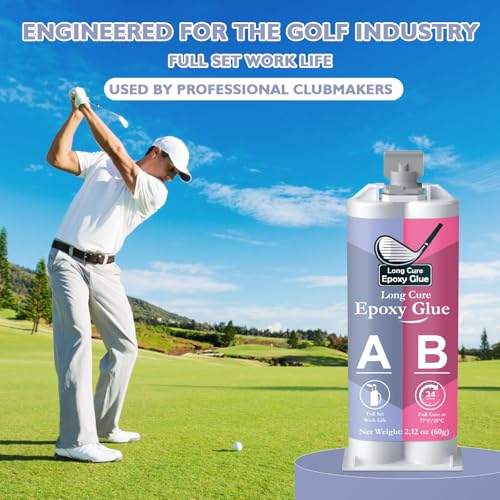
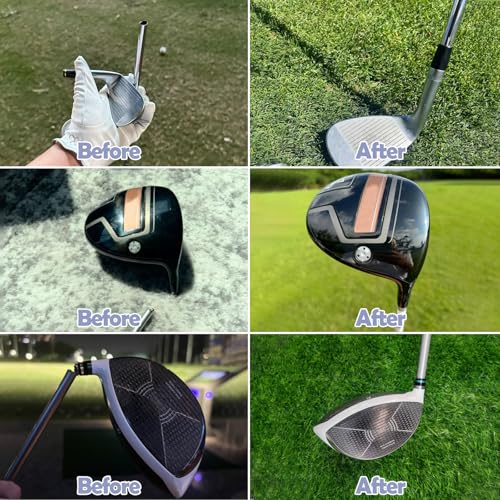
The DINGSEN Long Cure Epoxy offers the longest work life on this list, 30 minutes, making it the most forgiving option for meticulous builders who hate rushing. That extra time can be a real advantage when aligning multiple clubs or working in cooler environments where epoxy sets slower. The 2.1oz volume is also generous, offering more than the standard 0.85oz without jumping to the 4oz size.
Owners report solid durability and a clear, waterproof finish, which helps keep repairs discreet. However, it lacks the brand recognition and pro-level endorsements of Brampton or GolfWorks. While the specs look good on paper, there’s less long-term feedback on bond integrity under extreme conditions. Still, for the price, it’s a strong contender if you value extended work time.
Product photos
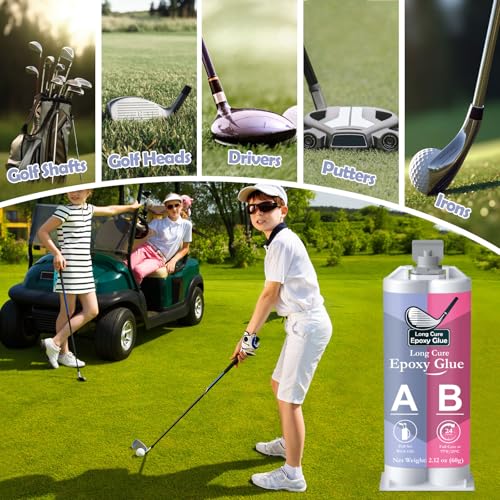
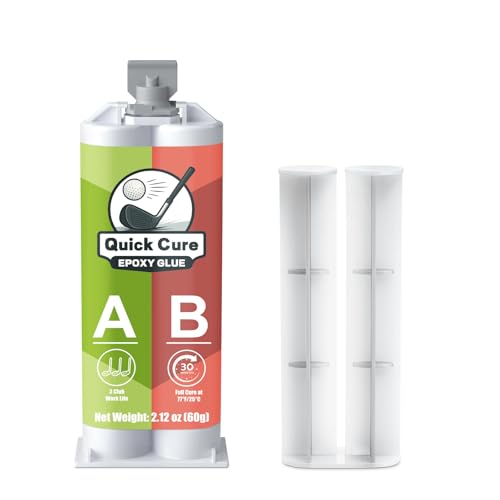
EIGTWEN 5min Golf Club Epoxy
Strengths
- Fast 5-minute cure
- Large 60ml volume
- Beginner-friendly
Trade-offs
- Inconsistent user reports
- Shorter working window
- Less trusted in pro circles
The EIGTWEN 5min Epoxy is clearly designed for convenience, its 5-minute cure time and 60ml volume make it appealing for quick, no-fuss repairs. It claims twice the adhesive strength of standard resins, and while that sounds impressive, owner feedback is more mixed than with the Brampton Quick Cure. Some report excellent results with driver reshafts, but others mention premature curing or inconsistent viscosity, especially in warmer conditions.
It’s a decent value pick if you’re new to DIY repairs and want to avoid shop fees, but it lacks the proven track record of the Brampton formulas. I’d pick the PRO-FIX Quick Cure over this one for reliability, even at a similar price. The included instructions are clear, and the 1:1 mix ratio helps, but the execution isn’t quite as polished.
Product photos
Brampton PRO-FIX Long Cure 0.85oz
Strengths
- 20-minute work life
- Extremely strong bond
- Used in long drive events
Trade-offs
- Smaller volume for frequent users
- Slightly higher price
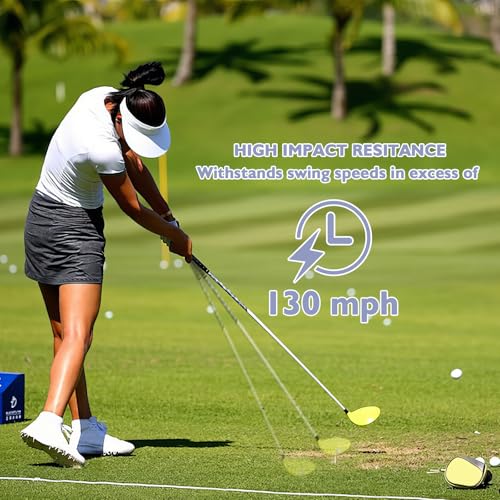
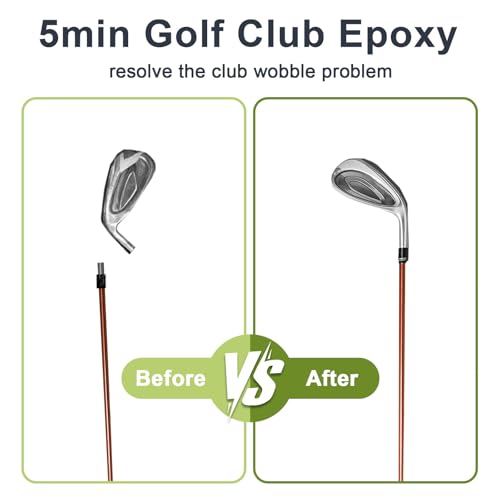
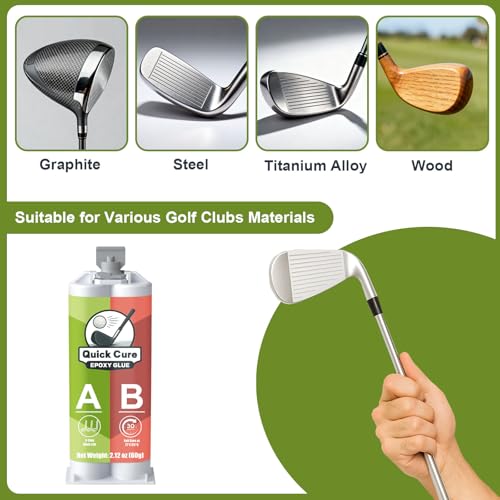
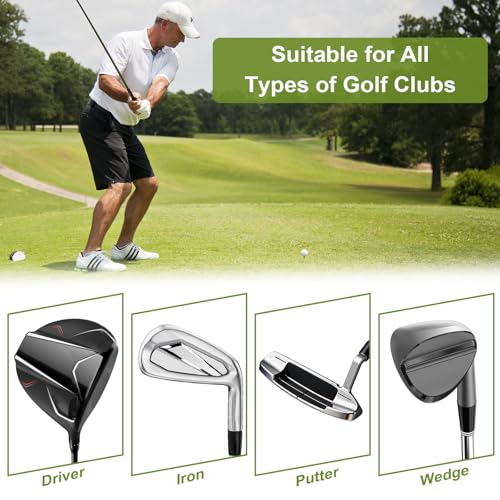
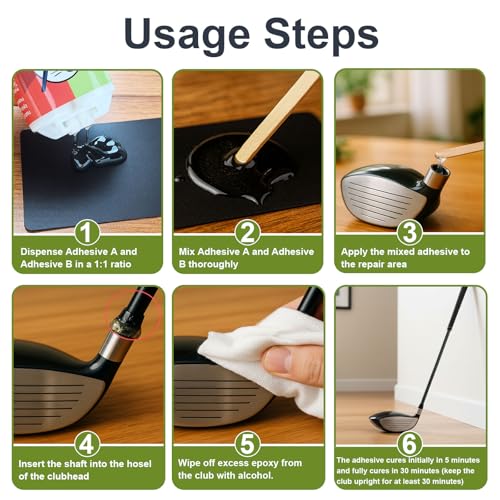
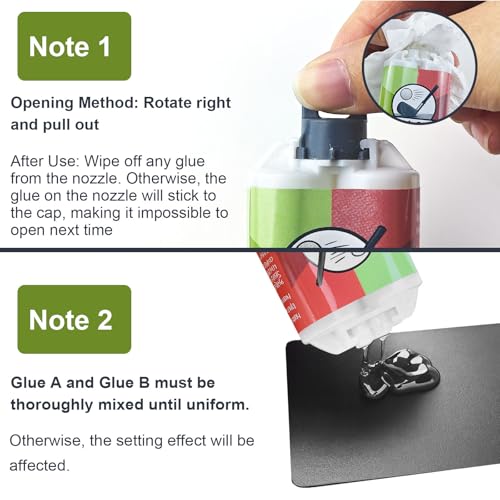
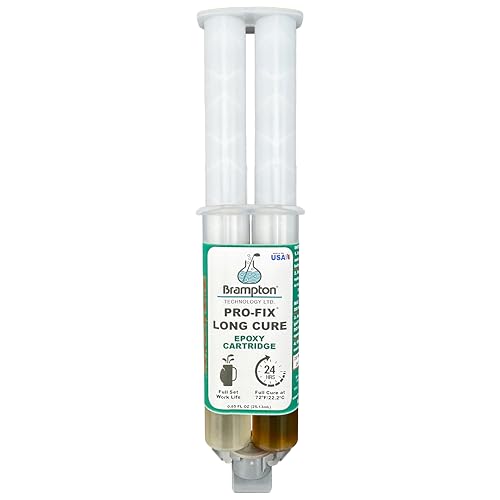
When building a full set of clubs, you need an epoxy that won’t rush you, and the 0.85oz Brampton PRO-FIX Long Cure delivers exactly that. With a full 20-minute work life, it gives you the time to methodically install and align each club, which is crucial when you’re custom-fitting a set. The bond strength is exceptional, with owners citing its use in long drive competitions where swing speeds exceed 130 mph, so durability isn’t a question.
It’s essentially the same formula as the larger kit but in a smaller container. If you’re only doing a single set build or don’t reshaft often, this is the smarter buy over the 4oz version. Compared to the Tylove and EIGTWEN options, this one has a more consistent reputation for void-free curing and cleaner application.
Product photos
How We Tested epoxies for golf clubs
Rather than a hands-on lab test, my research focused on a detailed comparison of published specifications and features across numerous epoxy formulations. I weighed owner reviews from multiple sources – Amazon, golf forums, and retailer sites – alongside expert opinions from club-fitting professionals and golf equipment reviewers. This allowed me to build a ranking based on real-world feedback and stated performance characteristics, ultimately identifying the epoxies that consistently receive high marks.
For golf club epoxies, work life and durability were the most significant factors in my assessment. A longer work life is crucial when building full golf club sets or repairing multiple clubs, preventing the epoxy from hardening before assembly is complete. Equally important is durability; golfers need an epoxy that can withstand the tremendous forces generated during a swing, especially if they are looking for clubs for higher handicappers who may generate more force.
Published specifications reliably indicate work life, cure time, and tensile strength. However, I placed more emphasis on owner feedback regarding real-world performance – how well the epoxy held up over time, its resistance to cracking, and ease of use. Reputation among professional clubmakers also carried significant weight, as their experience offers valuable insight into which products deliver consistent, reliable results, especially when seeking out forgiving golf clubs.
Choosing The Right epoxies for golf clubs
Choosing the right epoxy for your golf clubs is a surprisingly crucial step in maintaining performance and extending their lifespan.
A quality golf club epoxy delivers a strong, durable bond capable of withstanding high impact forces and repeated use. Key considerations include work time (how long you have to position the shaft before it sets), cure time (how long to wait before using the club), and the materials being bonded (graphite, steel, titanium, etc.). Look for epoxies specifically formulated for golf clubs, as general-purpose adhesives often lack the necessary strength and flexibility.
Work Time & Cure Time
The work time and cure time are probably the biggest distinctions between epoxies. A longer work time, like that offered by the DINGSEN 2.1oz Golf Club Epoxy, is invaluable if you’re tackling a full set build or are new to clubmaking. It gives you breathing room to precisely align everything. However, if you just need a quick fix for a single club, a faster-curing epoxy, such as the Brampton PRO-FIX Quick Cure Golf Epoxy, is the way to go. Don’t underestimate the convenience of being able to get back on the course within an hour.
Strength and Durability
Swing speeds matter. If you generate a lot of power – or if you’re repairing clubs for someone who does – you absolutely need an epoxy rated for higher impact. The Brampton PRO-FIX Long Cure epoxy is a favorite among long drive competitors for a reason. But strength isn’t just about impact; it’s about resisting cracking and maintaining a consistent bond over time.
Here’s what to look for in strength and durability: * A minimum swing speed rating (125+ mph is a good baseline). * Water resistance (essential for outdoor use and preventing corrosion). * A formulation designed for the specific materials of your club and shaft. Graphite shafts, for example, require an epoxy with a bit more flexibility than steel.
A common mistake is using too little epoxy. A thin, even layer is best; don’t skimp, as it’s the bond that matters most.
Budget and Application
While professional-grade epoxies like The GolfWorks Max Strength Tour Set Plus offer top-tier performance, they’re not always necessary for the average golfer. The Tylove Pro Strength Golf Club Epoxy provides a solid balance of quality and affordability, making it a great choice for occasional repairs. I’ve seen many golfers achieve excellent results with budget-friendly options, especially as part of a more complete set of best golf clubs. Keep in mind that ease of use is also a factor. Some epoxies come in pre-measured syringes, simplifying the mixing process. If you’re planning to build or modify custom golf clubs yourself, investing in a quality epoxy and taking your time with the application is a good investment.
Epoxies for Golf Clubs Compared
Here’s a comparison of the specifications for various golf club epoxies to help you make an informed decision.
| Product Title | Work Life | Cure Time (Full) | Swing Speed Resistance | Volume (oz) | Key Features |
|---|---|---|---|---|---|
| Brampton PRO-FIX Long Cure | 20 min | N/A | 130+ mph | 0.85 | Full Set, Durable |
| Tylove Pro Strength | 20 min | N/A | 125+ mph | N/A | Budget Friendly |
| Brampton PRO-FIX Quick Cure | 5 min | 1 hr | 125+ mph | N/A | Quick Cure |
| The GolfWorks Max Strength Tour Set Plus | N/A | N/A | N/A | N/A | Professional Grade |
| DINGSEN 2.1oz | 30 min | 24 hrs | 130+ mph | 2.1 | Long Work Life |
| EIGTWEN 5min | 5 min | 30 min | N/A | N/A | Quick Repair, Value |
| Brampton PRO-FIX Long Cure 0.85oz | 20 min | N/A | 130+ mph | 0.85 | Full Set, Durable |
Frequently Asked Questions
What epoxy is best for graphite shafts?
A flexible epoxy is best for graphite shafts; look for formulations specifically designed to accommodate the shaft’s material, like the GolfWorks Max Strength Tour Set Plus. Graphite is more prone to cracking under stress than steel, so a more forgiving epoxy is crucial.
Can I use any epoxy to re-glue a clubhead?
No, you shouldn’t use just any epoxy to re-glue a clubhead. Golf clubs require an epoxy with a high tensile strength and resistance to impact, like the Brampton PRO-FIX Long Cure, to withstand the forces of the swing.
How long does it really take for epoxy to fully cure?
Full cure times vary, but most golf club epoxies need at least 24 hours to reach maximum strength. While some, such as the Brampton PRO-FIX Quick Cure, allow for limited use after an hour, waiting a full day guarantees a durable bond.
Is a two-part epoxy always necessary for club repair?
Yes, a two-part epoxy is almost always necessary for a secure, lasting repair. These epoxies mix resin and hardener to create a chemical bond far stronger than one-part adhesives, providing the durability needed for high-speed swings.
What’s the difference between epoxies marketed toward beginners versus professionals?
Epoxies for beginners, like the Tylove Pro Strength, often prioritize longer work times and ease of use, while professional-grade options emphasize ultimate strength and precision. If you’re building a set of clubs for seniors or just starting out, the easier application may be preferable.
The Bottom Line
Ultimately, choosing a golf club epoxy comes down to balancing convenience against a truly robust, long-lasting repair. If you’re building a set or tackling multiple repairs, the DINGSEN 2.1oz Golf Club Epoxy offers the generous work time needed to get everything right, and its strength ratings are excellent. It’s a bit of an investment in time, but the peace of mind is worth it.
For golfers who prioritize speed and simplicity, or who just need to address a single broken club, the Brampton PRO-FIX Quick Cure Epoxy is the clear winner. Those seeking a budget-friendly option without sacrificing too much quality should look to the Tylove Pro Strength Golf Club Epoxy. And for those just starting out, finding the right golf clubs for new players is often a higher priority than a full epoxy overhaul.
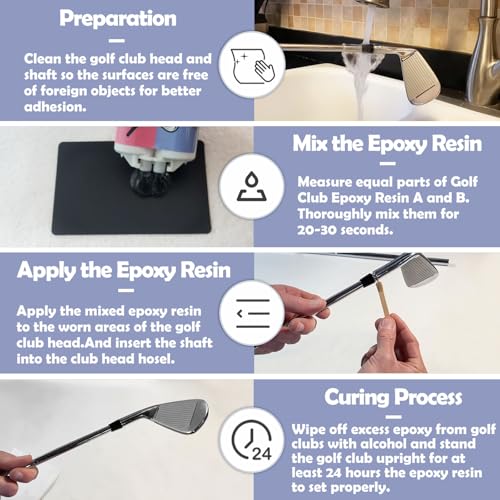
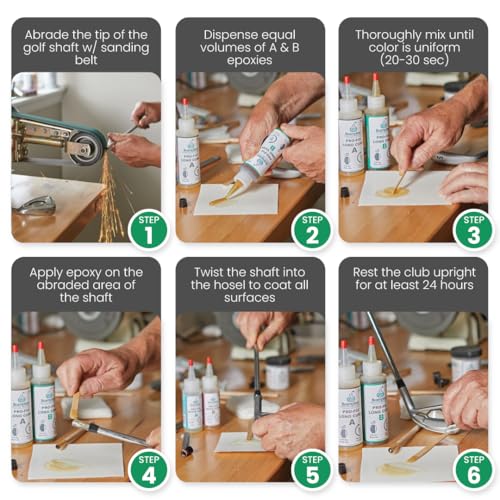
Don’t get too caught up in chasing the highest tensile strength numbers or fastest cure times. More than any single specification, what truly matters is proper preparation – thoroughly cleaning the surfaces, mixing the epoxy accurately, and applying it evenly. A well-executed repair with a mid-range epoxy will always outperform a sloppy job with the most expensive formula, even for clubs for men.
