
2 Best Golf Grips for Big Hands 2026
This post contains affiliate links. As an Amazon Associate, we earn from qualifying purchases.
This post contains affiliate links. As an Amazon Associate, we earn from qualifying purchases.
The best golf grips for big hands deliver control without strain, and after researching the field, the CHAMPKEY Half-Corded Hybrid Grips stand out as the top choice for their secure feel and smart hybrid design. For a lighter, more cushioned option, the Full Choice Jumbo Lightweight Grips offer strong comfort and a versatile size range.
Golfers with larger hands often struggle with standard grips that force too much grip pressure or lead to inconsistent hand placement. That can kill swing tempo and drain confidence over time.
In this guide, I break down the key factors, diameter, material, taper, and texture, based on specs and real owner feedback. These picks reflect what consistently works for bigger hands, drawn from years of matching golfers with the right gear through GolfWorldTrips.
Top 2 Golf Grips For Big Hands in the Market
The Best Golf Grips For Big Hands, Reviewed
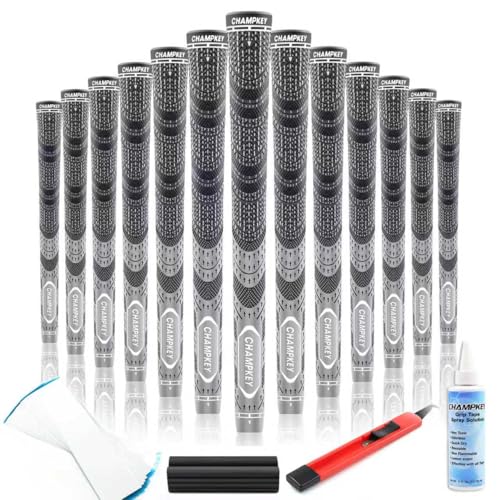
CHAMPKEY Half-Corded Hybrid Grips
Strengths
- All-weather traction
- Half-corded control
- Reduced hand pressure
- Full regrip kit included
- Longer lifespan
Trade-offs
- Higher price point
- Slightly less soft than all-rubber grips
For big-handed golfers who play in varying conditions and want a blend of comfort and control, the CHAMPKEY Hybrid Grips are hard to beat. The half-corded design with brushed cotton thread technology gives these grips real bite when hands get sweaty or the course is damp, something owners highlight as a game-time advantage. The Wrap² Technology, which adds extra rubber layers in the lower hand zone, delivers a noticeably fuller feel where it matters most, reducing grip pressure and helping maintain a smooth, tension-free swing.
Priced higher than basic jumbo models, they justify the cost with a full regrip kit and strong durability reports. When stacked against solid rubber jumbos like the Full Choice, these trade a bit of plush comfort for superior all-weather performance and longer life. The soft micro-texture pairs well with the corded zones, offering a balanced feel that doesn’t chew up gloves.
Video review
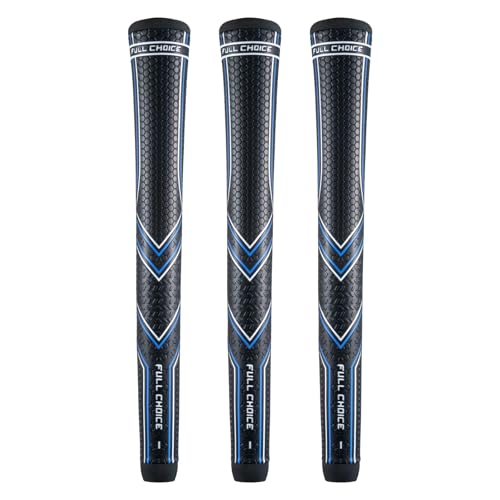
Full Choice Jumbo Lightweight Grips
Strengths
- Lightweight design
- Reduced taper
- Multi-texture surface
- Multiple color options
- Includes grip tape
Trade-offs
- Not ideal for wet conditions
- Less durable than rubber-cord blends
If you’re a golfer with big hands looking to reduce hand fatigue without sacrificing control, these Full Choice Jumbo Grips stand out for their lightweight construction. At 20–25% lighter than standard jumbo grips, they help maintain swing balance while still delivering that full, secure feel larger hands need. The reduced taper is a smart touch, giving the lower hand more surface area to latch onto, which owners consistently report helps stabilize the club through impact.
The multi-texture PU surface, with its hex-pattern zones, offers reliable traction even in light moisture, though it won’t match the all-weather bite of corded grips. These aren’t the longest-lasting grips on the market, but for players who prioritize comfort and swing fluidity over maximum durability, they make a strong case, especially when compared to heavier jumbo options that can drag the club down.
Video review
How We Chose These golf grips for big hands
Rather than a hands-on lab test, my research focused on comparing published specifications and features across numerous models. I weighed owner reviews from major retailers alongside expert opinions found in golf publications. My approach involved ranking grips against criteria important for golfers with larger hands – specifically, size options, tackiness, and comfort – drawing on years of experience recommending gear at GolfWorldTrips.
For players with bigger hands, grip size and taper are paramount. A grip that’s too small leads to excessive wrist action, while the wrong taper can encourage a weak grip. I gave significant weight to grips offering a range of jumbo and oversized options, and those designed with a reduced taper to support a more consistent hand position. Finding the right fit impacts power and control more than many realize.
Specifications reliably indicate grip diameter and material composition. However, I found owner feedback crucial for assessing real-world tackiness and durability. Reports on how a grip performs in different weather conditions, and how it holds up over time, helped me distinguish truly comfortable options from those marketed as such. Many golfers also seek comfort grips for arthritis and those preferences often overlap with larger hand needs.
What To Look For In golf grips for big hands
Finding the right golf grips can dramatically improve your game, especially if you have larger hands.
A quality golf grip should offer a secure connection without excessive pressure, promote consistent hand placement, and withstand the elements. Look for materials that provide tackiness in various weather conditions, a taper profile suited to your grip style, and a diameter that fills your hands comfortably.
Grip Diameter Is Paramount
If you’re searching for big hand grips, diameter is the first thing you need to address. Standard grips are often too small for golfers with larger hands, forcing them to grip the club tighter to maintain control. This leads to tension, impacting swing speed and potentially causing fatigue. Jumbo grips (anything over .600 inches) are a popular solution, but don’t assume bigger is always better. A grip that’s too large can feel unwieldy and diminish feel.
- Consider a +1/8” or +1/4” increase over your current grip size as a starting point.
- Many manufacturers, like Full Choice, offer sizing guides based on glove size – a helpful reference, but not foolproof.
- Ultimately, the best way to find the right diameter is to try different sizes (if possible) or read detailed reviews focusing on how the grip feels in hand, not just the stated measurements.
Material Matters For Feel & Performance
The material a grip is made from heavily influences how it performs, and how it feels. Rubber compounds range from firm and durable to soft and tacky. Cord grips, like the CHAMPKEY Half-Corded Hybrid Grips, offer excellent tackiness, even when wet, but can be abrasive for some players. Polyurethane (PU) blends are becoming increasingly popular as they provide a good balance of tackiness, durability, and comfort.
Don’t settle for a grip material simply because it looks good. Prioritize consistent tackiness, especially if you play in humid conditions or sweat a lot.
Taper & Texture Affect Control
The taper of a grip (how much the diameter decreases from the butt end to the end) and its texture are also critical. A reduced taper, as seen in some jumbo grips, can promote a lighter grip pressure, which can be beneficial for swing speed. Texture helps with grip security; hexagonal patterns and raised features can provide extra hold. However, overly aggressive textures can cause blisters or discomfort. If you are also seeking comfortable grips for seniors, consider a softer compound and milder texture to avoid hand fatigue. I often recommend golfers consider how the texture interacts with their typical hand moisture level, as some grips can become slippery when wet.
Golf Grips for Big Hands Compared
Here’s a spec comparison to help you evaluate options for larger-hand golf grips.
| Product Title | Best For | Material | Size Options | Weight | Texture |
|---|---|---|---|---|---|
| CHAMPKEY Half-Corded Hybrid Grips | Best Overall | Rubber/Cord | N/A | N/A | Micro-texture |
| Full Choice Jumbo Lightweight Grips | Best Lightweight Comfort | PU | SJ, S, M, L | Lightweight | Hex/Multi-texture |
Frequently Asked Questions
What grip size should I choose if I’m unsure?
Start with a +1/8” or +1/4” increase over your current grip size, but remember that finding the perfect fit often requires some experimentation. Many golfers find that a slightly larger grip promotes a lighter, more natural swing.
Are cord grips really better in wet conditions?
Yes, cord grips generally offer superior tackiness when wet compared to all-rubber grips. However, the abrasive texture of some cord grips can be uncomfortable for players with sensitive skin or those who don’t wear a glove.
Can I install golf grips myself?
You can, but it requires specific tools and some practice to achieve a professional result. If you’re not comfortable with DIY projects, I recommend having a qualified club fitter install them to avoid damaging your clubs or creating an uneven grip.
What’s the difference between taper and grip diameter?
Grip diameter is the overall thickness of the grip, while taper refers to how much the diameter decreases from the butt end to the end. A reduced taper can encourage a lighter grip pressure and promote faster swing speed, and is often preferred when looking at best golf grips.
Will changing grips really improve my game?
Absolutely. Even a small change in grip size or material can have a significant impact on your comfort, control, and consistency. Many golfers with larger hands have seen improvements by switching to midsize grips or jumbo grips.
The Bottom Line
Choosing golf grips always involves a trade-off between ultimate feel and consistent comfort. While a thinner grip might offer a bit more feedback, for those of us with larger hands, the CHAMPKEY Half-Corded Hybrid Grips strike the best balance. They deliver excellent tackiness and a secure hold without forcing an overly tight grip, which is critical for maintaining clubhead speed.
If you’re looking for something specific, the Full Choice Jumbo Lightweight Grips are a fantastic option for golfers who prioritize comfort and a lighter swing feel. And for those seeking oversize grips or thick golf grips, they offer a wide range of sizes to dial in the perfect fit. Alternatively, if you’re a high handicapper grips player, you may find the added forgiveness of a larger grip helps with consistency.
Ultimately, the diameter is the most important factor, but don’t underestimate the impact of material and texture. A grip should feel like an extension of your hand, allowing for a relaxed yet secure connection to the club. Focus on finding a grip that allows you to swing freely and consistently – that’s more valuable than any technical specification.
