
8 Best Golf Hitting Mats for Outdoors 2026
This post contains affiliate links. As an Amazon Associate, we earn from qualifying purchases.
This post contains affiliate links. As an Amazon Associate, we earn from qualifying purchases.
The Bltend Elite is the best overall outdoor golf hitting mat, combining thick 36mm cushioning with high-density turf that protects your joints and clubs. For golfers on a budget, the Ponsonbay offers solid dual-turf realism and a convenient ball tray at a lower price. If you value portability, the SAPLIZE foldable mat delivers decent performance in a compact design.
Hitting off a cheap or poorly built mat can wreck your swing and your body over time. Too many golfers ignore how much the surface affects ball contact, feedback, and long-term durability when exposed to sun and rain.
After researching the market and analyzing owner feedback, I focused on mats that deliver real-world performance, balancing turf realism, shock absorption, and weather-resistant construction. This guide cuts through the noise to highlight options that actually hold up to regular outdoor use.
Top 8 Golf Hitting Mats Outdoors in the Market
The Best Golf Hitting Mats Outdoors, Reviewed
Bltend Elite 5x4ft 36mm Golf Mat

Strengths
- Ultra-thick base
- Commercial durability
- UV-resistant turf
Trade-offs
- Heavy
- High price
- Storage needs space
At 36mm thick, this mat has the deepest cushioning in the lineup, and on paper, it’s built like a tank. The 20mm EVA base claims to absorb over 90% of impact, which should be a win for joint health during long sessions. The turf is UV-resistant and reinforced at the edges, and owners report it holds up well to daily outdoor use, even in direct sun. With six tee positions and a 5x4ft layout, it’s designed for serious, repeated practice.
It’s the most complete package, and while it’s the second most expensive, it justifies the cost with durability and comfort. I’d call this the best overall pick for golfers who want one mat to handle everything, drivers, irons, chipping, without worrying about wear or discomfort.
Video review
SAPLIZE 23″ x 16″ Foldable Golf Mat
Strengths
- Affordable
- Foldable design
- Dual-turf surface
Trade-offs
- Very small size
- Minimal padding
- Not for full swings
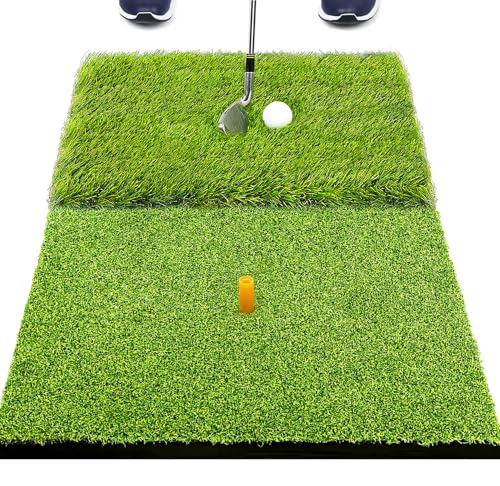
This is the budget pick, and it shows, small footprint, thin build, but it gets the job done for light use. The 2-in-1 turf gives you fairway and rough simulation in a foldable, easy-to-store format. It’s surprisingly durable for the price, with upgraded glue holding the turf in place better than cheaper knockoffs. Owners say it works well for short game drills and occasional iron shots.
It won’t handle daily driver practice, and the lack of padding means you’ll feel every fat shot. But for the price, it’s a functional entry-level option. I’d recommend it as a starter mat or backup for chipping, not as a primary hitting surface.
Video review
GoSports Elite 5x4ft Golf Hitting Mat
Strengths
- Premium turf feel
- Excellent shock absorption
- Six tee holes
Trade-offs
- No ball tray
- Heavy when rolled
- Higher price
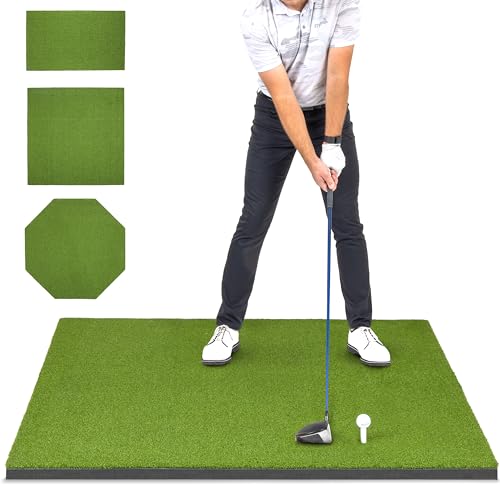
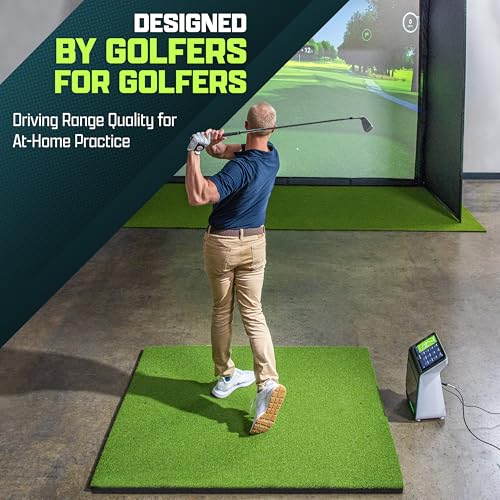
This is the mat I’d lean toward if I were setting up a permanent home practice station, especially on hard flooring. The 15mm EVA foam base is dense and forgiving, and the commercial-grade turf feels more authentic than most budget options. Reviewers often highlight how well it mimics fairway feedback, which helps with refining strike quality. The six tee positions and included rubber tees make it versatile for both irons and driver work, and the non-slip backing keeps it locked in place even on smooth garage floors.
It’s one of the pricier models, but the build quality justifies it for serious players. Compared to thinner mats, this one handles repeated use without showing early wear. My only gripe is the lack of a ball tray, bending over after every shot gets old.
Product photos


Ponsonbay Dual Turf Mat with Ball Tray
Strengths
- Integrated ball tray
- Dual-turf surface
- Reinforced swing zone
Trade-offs
- Tray can trap debris
- Turf feel average
- Slight rollout over time
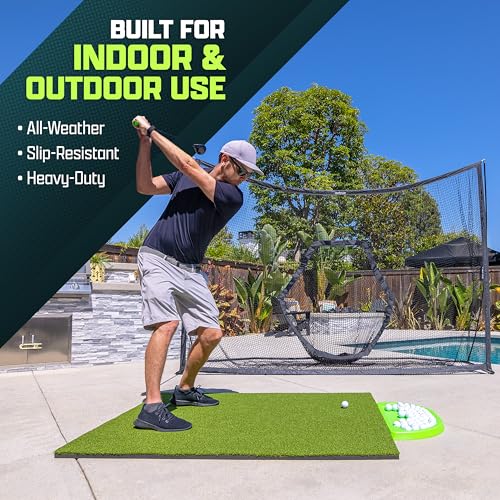
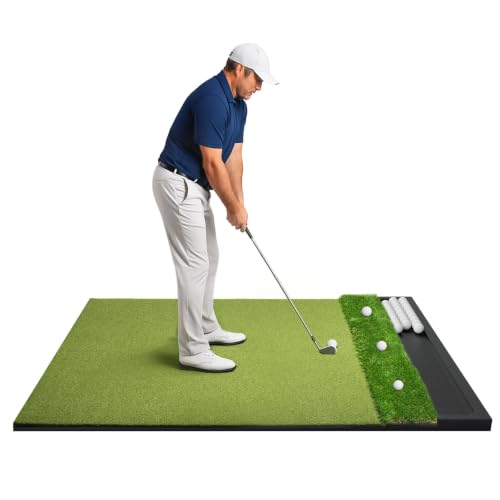
The built-in ball tray is the standout feature here, and owners love not having to bend down after every shot. That small convenience can add up over a 100-ball session. The 1.02-inch thick base provides solid cushioning, and the dual-turf surface, short fairway and longer rough, adds useful training variety. At 5x4ft, it gives plenty of room for full swings, and the reinforced swing path zone helps it endure repeated use.
Compared to similarly sized mats, this one stands out for usability. It’s not the thickest or most premium turf, but the thoughtful design makes practice more efficient. I’d pick this over models without trays if I were doing daily backyard drills.
Product photos

Premium Dual-Turf 5x4ft Thickened Base Mat

Strengths
- Thick EVA base
- Stable on surfaces
- Durable turf
Trade-offs
- Turf less realistic
- No alignment aids
- Ball pickup not integrated
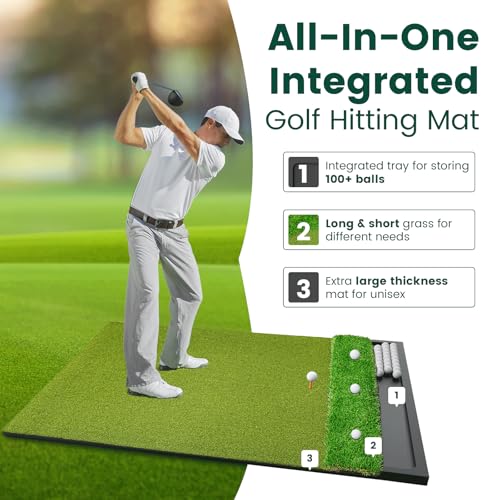
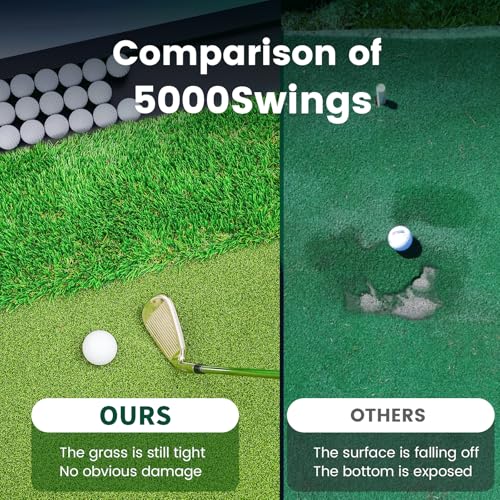
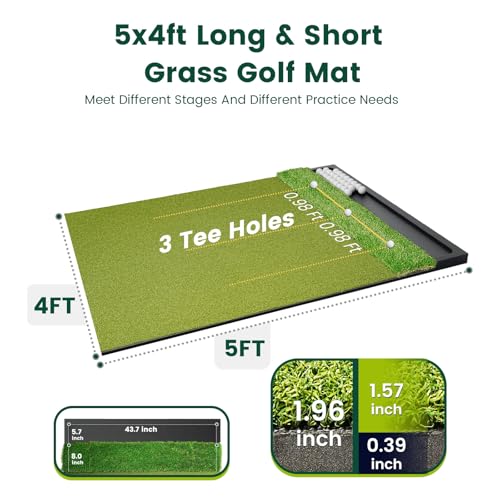
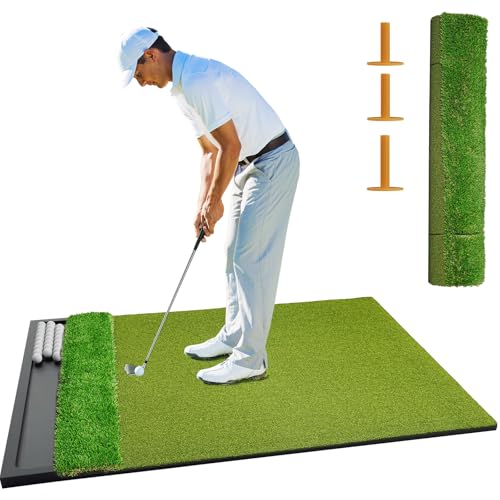
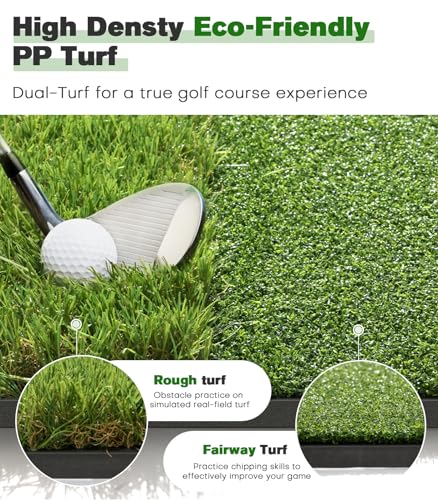
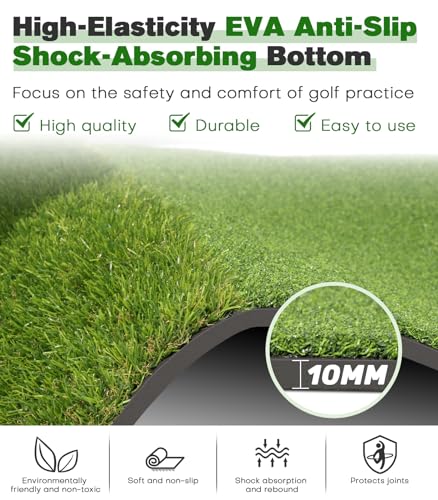
With up to 45mm of EVA foam, this mat earns its ‘Best Shock Absorption’ tag on paper, and owner feedback backs that up, many note it feels noticeably softer on the joints than thinner alternatives. The thick base stays put on concrete and grass, and the dual-turf layout gives you fairway and rough simulation in a spacious 5x4ft footprint. For backyard practice where comfort matters, that extra cushioning makes a real difference, especially if you’re working on full swings daily.
It’s not the most premium turf in the lineup, but it holds up well under regular use. Compared to pricier models, it strikes a smart balance: serious padding without a pro-level price. I’d recommend this over thinner mats for anyone with wrist or elbow concerns.
Product photos
GoSports Tri-Turf XL 24×24 in Mat

Strengths
- Tri-turf variety
- Compact size
- Stable rubber base
Trade-offs
- Small hitting area
- Not for full stance drivers
- Limited swing room
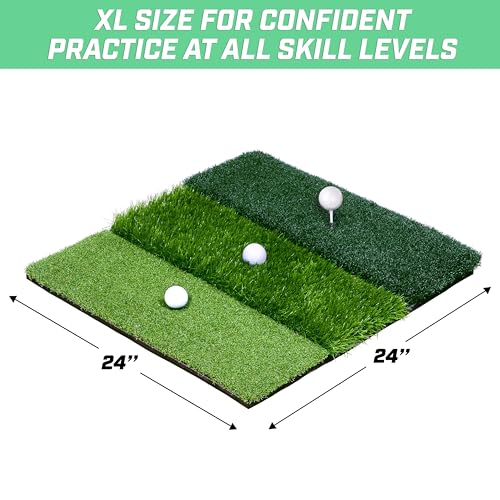
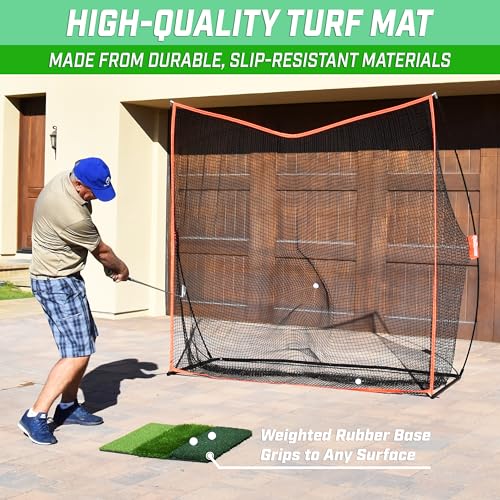
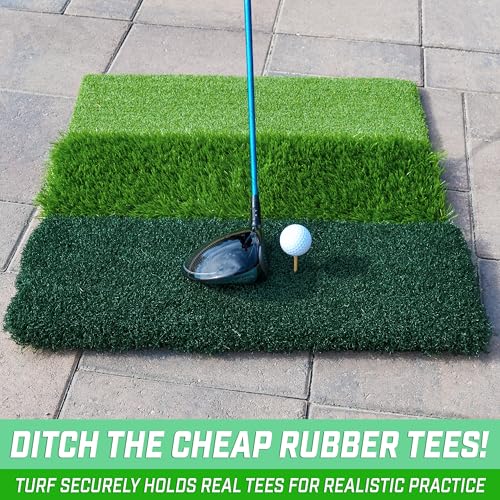
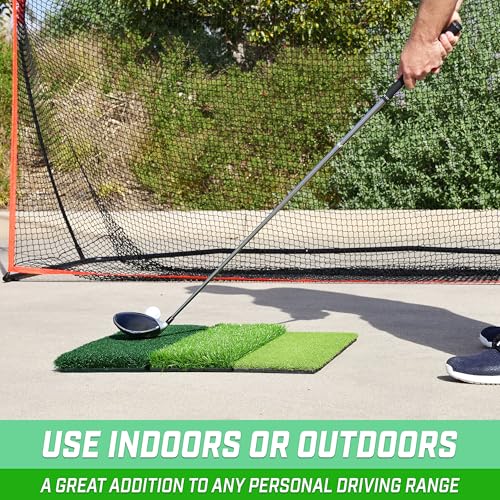
At 24×24 inches, this is one of the most compact full-swing mats here, yet the tri-turf design packs in fairway, rough, and tee lies in a surprisingly functional footprint. It’s a smart choice if you’re tight on space but still want variety in your practice, perfect for garage corners or simulator setups. The rubber base keeps it stable, and owners report it holds up well to moderate use, especially for wedge and iron work.
It won’t replace a larger mat for full driver sessions, but I appreciate how portable and versatile it is. For golfers who travel with their gear or rotate between indoor and outdoor spots, this is a no-fuss option that doesn’t skimp on training variety.
Product photos

Golfguru 5x4FT Dual Turf with Alignment
Strengths
- Clear alignment lines
- Dual-turf surface
- Nine tee holes
Trade-offs
- Moderate padding
- Turf flattens over time
- Lines may fade
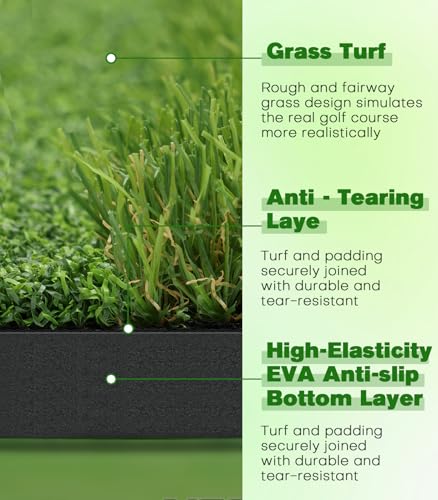
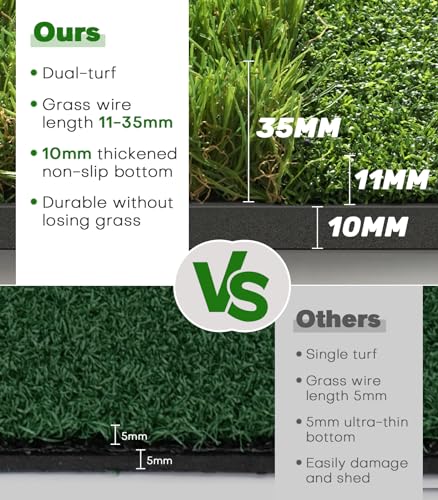
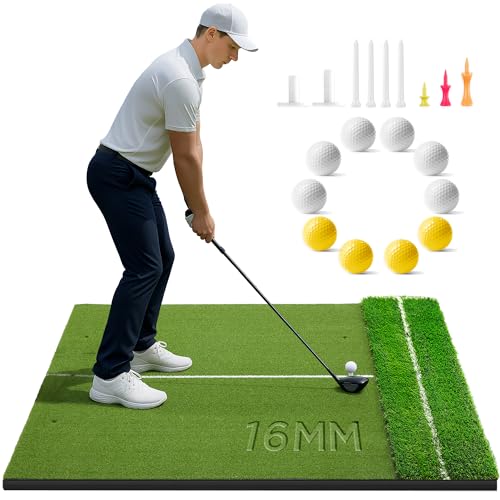
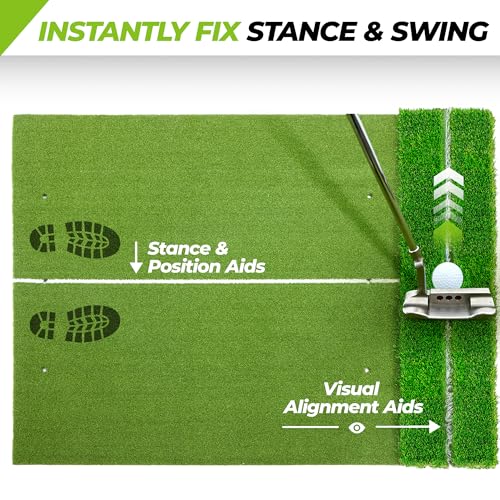
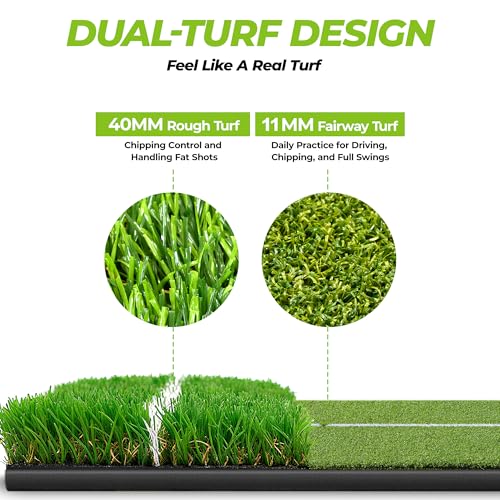
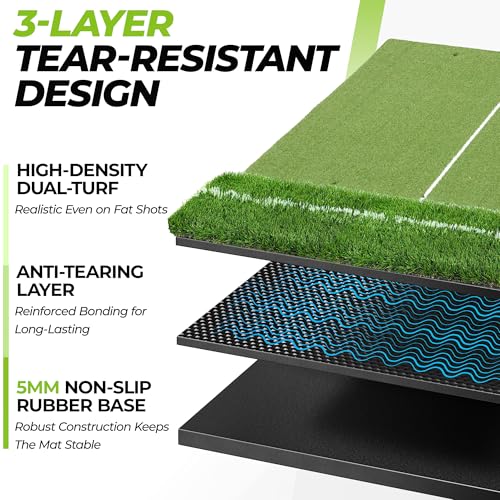
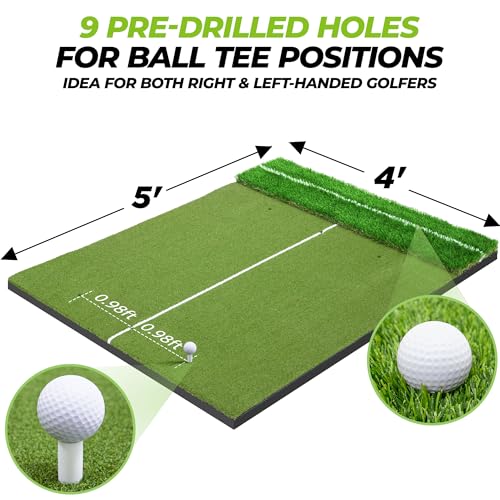
If you’re working on swing mechanics, this mat’s alignment lines are a real advantage. The visual guides help set up consistent stances and reinforce proper swing path, something beginners and intermediates often struggle with. The dual-turf design gives you both fairway and rough lies, and the 16mm total thickness (11mm turf + 5mm EVA base) offers decent cushioning, though not as much as the thickest models.
Owners appreciate the feedback the lines provide, and the 9 tee holes add flexibility. It’s not the softest mat, but for technique-focused practice, the alignment feature tips the scales. I’d choose this over others if I were dialing in my setup or coaching someone new to the game.
Product photos
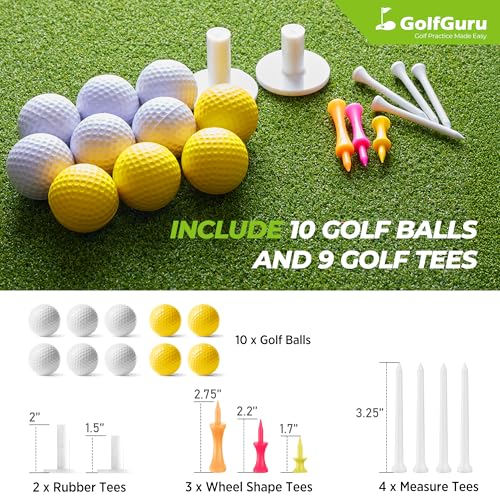
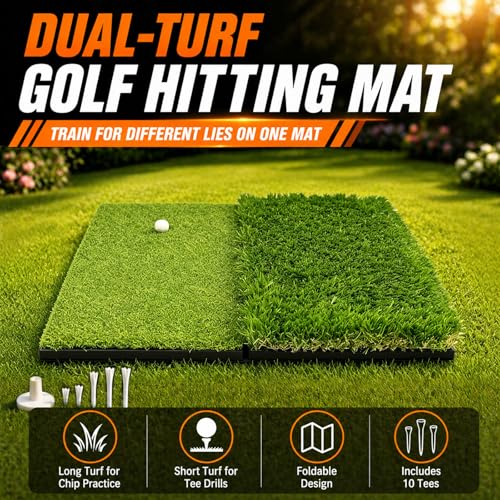
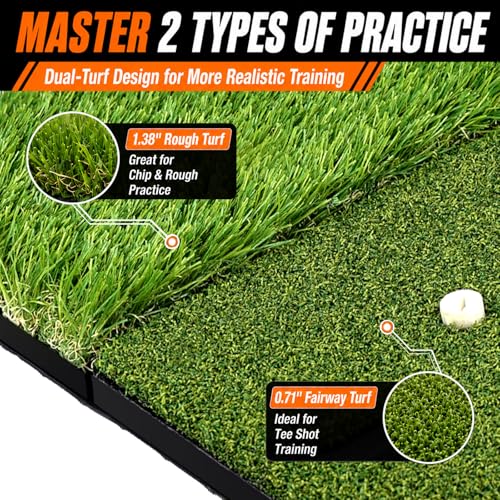
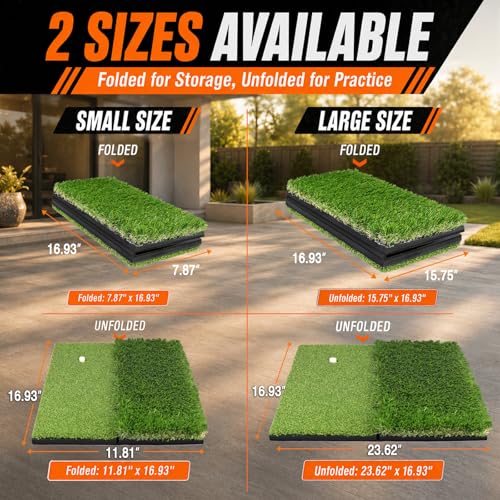
BIRDIEBLAST Dual-Turf Foldable Golf Mat

Strengths
- Lightweight
- Dual-turf surface
- Foldable design
Trade-offs
- Thin padding
- Limited durability
- Not for heavy use
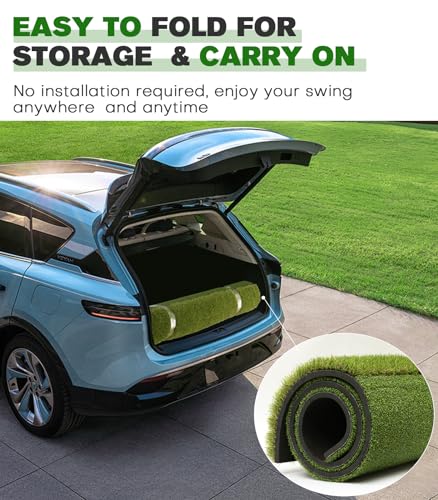
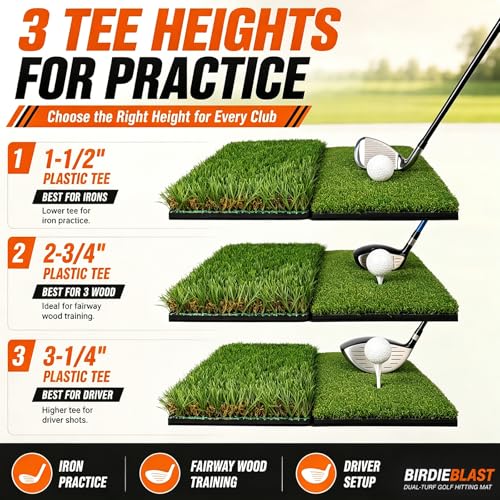
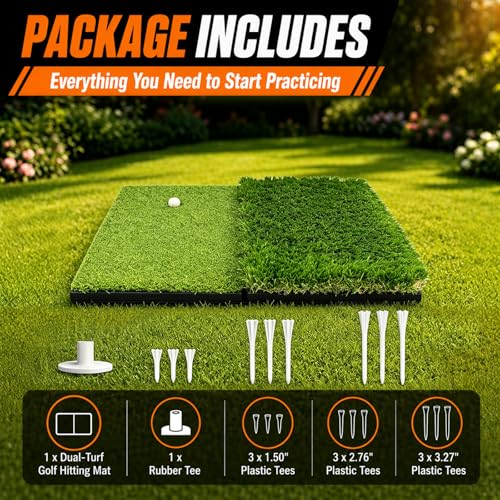
This mat stands out for being one of the lightest and most travel-friendly options on the list, making it a solid pick if you’re tossing it in the trunk for occasional outdoor range sessions or backyard warmups. The 10mm foam padding is modest, but owners consistently report it’s enough to dull the sting of fat shots on concrete, especially when used with a rubber base. The dual-turf design gives you both fairway and rough lies, which adds useful variety for short game work.
Still, I wouldn’t expect it to last through daily, heavy iron sessions. The thinner base means it won’t absorb impact like the thicker models, and serious players will miss the extra cushioning. But for casual use or as a portable secondary mat, it delivers decent value.
Product photos
How We Picked These golf hitting mats outdoors
I approached researching outdoor golf hitting mats by first compiling specifications and features from numerous manufacturers. Rather than a hands-on lab test, this is a research-led comparison of specs and owner feedback across a wide range of products. I then weighed these details against owner reviews from major retailers and insights from golf publications, looking for common praise and recurring complaints. My goal was to identify which mats consistently delivered on performance and durability expectations.
For outdoor use, the thickness of the mat’s cushioning and the quality of the turf itself were the most important factors. A thicker mat protects clubs and, importantly, your joints from the shock of impact, particularly on hard surfaces. The turf’s ability to withstand weather and maintain a realistic feel underfoot was also crucial. I also placed significant weight on durability – an outdoor mat needs to withstand repeated use and the elements.
Specifications reliably tell you about mat dimensions, turf type (and sometimes density), and base material. However, judging long-term durability and realistic feel requires looking at owner feedback. Reviews illuminated which mats held up to frequent use and provided a consistent striking surface, versus those that showed wear quickly or felt unrealistic. You’ll find more information on setting up a complete outdoor practice area on our site, if you’re looking to expand your setup beyond just the mat. For truly heavy use, exploring commercial practice mats can be a worthwhile investment.
How To Choose The golf hitting mats outdoors
Finding the right outdoor golf hitting mat can make a huge difference in your practice – and save you a fortune in range fees. It’s not just about slapping down some turf; it’s about finding a setup that protects your clubs, feels realistic, and holds up to the elements.
A quality golf hitting mat balances durability with realistic feel. Look for a mat with a thick, shock-absorbing base to protect your clubs and joints. The surface should mimic natural turf as closely as possible, offering consistent feedback for improved swing mechanics. Weather resistance is also key for outdoor use, ensuring the mat doesn’t degrade quickly from sun and rain.
Turf Realism & Feedback
One of the biggest mistakes I see golfers make is settling for a mat that feels…wrong. It’s tempting to go with the cheapest option, but a poor surface will quickly ingrain bad habits. You want a mat that provides realistic feedback, simulating the feeling of hitting off real grass. The density and texture of the turf are crucial. I’ve found that mats using a blend of different turf types – fairway and rough – offer the most versatility. This allows you to practice a wider range of shots and lies, preparing you for the unpredictable conditions you’ll encounter on the course.
Durability & Construction
Outdoor mats take a beating. Sun, rain, and repeated swings all take their toll. The materials matter here. Look for mats constructed with a durable, UV-resistant artificial grass surface. The base is equally important; a thick, high-density EVA foam layer provides excellent shock absorption and helps the mat maintain its shape over time. I often recommend considering commercial-grade options if you plan on heavy use, as these are built to withstand far more wear and tear.
- A thin base (under 10mm) won’t offer enough protection for your clubs or your body.
- Reinforced edges are a must-have to prevent fraying and tearing, especially with frequent use.
- The quality of the glue holding the turf to the base is often overlooked, but it’s critical for longevity. A cheap adhesive will quickly fail, leading to the turf separating from the mat.
Ultimately, investing in a well-constructed mat will save you money in the long run by avoiding frequent replacements.
Portability & Size Considerations
Think about where you’ll be using the mat and how often you’ll move it. If you plan on setting it up and leaving it in place, size is less of a concern. Larger mats (like the 5x4ft options) provide more space for a full swing. However, if you need to roll it up and store it after each use, portability becomes a key factor. Some mats fold for easy storage, while others are more compact when rolled. As I discuss in my guide to the best outdoor mats, even a smaller, well-made mat can be incredibly effective for short game practice.
A good rule of thumb is to prioritize quality over size if portability is a concern. A smaller, durable mat that you’ll actually use is far better than a large, flimsy one that sits unused in the garage.
I also frequently point golfers to resources about the golf driving mats that provide more options for indoor and outdoor use. There are so many options available, and making the right choice depends on your individual needs and preferences.
Golf Hitting Mats Outdoors Compared
Here’s a comparison of key specifications for popular outdoor golf hitting mats to help you choose the right one.
| Product Name | Size (ft) | Turf Type | Cushioning (mm) | Portability | Ball Tray |
|---|---|---|---|---|---|
| Bltend Elite | 5×4 | High-Density | 36 | N/A | No |
| SAPLIZE | 23×16 | Fairway/Rough | N/A | Foldable | No |
| GoSports Elite | 5×4 | Commercial-Grade | N/A | N/A | No |
| Ponsonbay | 5×4 | Dual Turf | 1.02″ | Foldable | Yes |
| Premium Dual-Turf | 5×4 | Dual Turf | N/A | Roll-up | No |
| GoSports Tri-Turf XL | 24×24 | Tri-Turf | N/A | Portable | No |
| Golfguru | 5×4 | Dual Turf | 5 | N/A | No |
| BIRDIEBLAST | N/A | Dual Turf | N/A | Foldable | No |
Frequently Asked Questions
What mat thickness is best for outdoor use?
A thickness of at least 36mm is ideal for outdoor golf hitting mats, as it provides sufficient cushioning to protect your clubs and, more importantly, your joints from impact on hard surfaces. Thinner mats may be acceptable for light use, but a thicker base offers better long-term protection.
Are dual-turf mats really worth the extra cost?
Yes, dual-turf mats are generally worth the investment. Offering both fairway and rough surfaces allows you to practice a wider variety of shots and lies, more closely simulating the conditions you’ll encounter on a golf course, and improving your overall game.
How important is UV resistance in an outdoor mat?
UV resistance is extremely important. Prolonged sun exposure will quickly degrade mats not specifically treated for UV protection, causing the turf to become brittle and crack. Choosing a mat marketed as UV-resistant will significantly extend its lifespan.
Can I leave an outdoor hitting mat out in the rain?
While many outdoor hitting mats are water-resistant, consistently leaving one exposed to the elements isn’t recommended. Prolonged exposure to rain and moisture can lead to mildew and deterioration of the base material, shortening the mat’s life. Storing it when not in use is best.
Where can I find realistic feel practice mats for my home setup?
I recommend looking at mats constructed with a blend of different turf types and a high-density base. Several retailers specialize in golf practice equipment and offer a range of options suited for creating a dedicated practice space, including some excellent quality home hitting mats.
The Bottom Line
Ultimately, choosing a golf hitting mat comes down to balancing how much control you want over your practice environment with how much fuss you’re willing to tolerate. For the consistently best overall performance and durability, I believe the Bltend Elite stands out. Its generous size and thick cushioning provide a premium practice experience that will hold up over time.
If you’re looking for specific needs, the SAPLIZE mat is a fantastic option for those prioritizing portability and versatility with its foldable design and dual turf surface. For those seeking a more budget-friendly solution without sacrificing too much quality, the Golfguru mat offers a solid hitting experience at a reasonable price. And if you’re interested in exploring more options, our guide to the best golf mats can help you find the perfect fit.
Don’t get caught up chasing the highest number in a spec sheet. The thickness of the mat and the quality of the turf are important, but they’re secondary to finding a setup that encourages consistent practice. A realistic feel underfoot and a durable surface will do far more to improve your game than any fancy feature. Consider also exploring realistic turf mats to truly refine your swing.
