
7 Best Golf Wrist Trainers of 2026
This post contains affiliate links. As an Amazon Associate, we earn from qualifying purchases.
This post contains affiliate links. As an Amazon Associate, we earn from qualifying purchases.
The WHYGOLF Wrist-X is the best overall golf wrist trainer for its precise adjustable angle and audible feedback that sharpens swing consistency. For budget-conscious golfers, the ALLCIFP Golf Wrist Training Aid delivers solid muscle memory training without the high price, while the CUBEDAY kit stands out for full-swing control with its integrated arm band system.
Most golfers struggle with wrist movement that sabotages their swing, whether it’s casting early, flipping at impact, or losing lag. These flaws kill power and accuracy, and without the right feedback, they’re hard to fix.
This guide cuts through the noise by focusing on trainers that deliver real results, based on swing mechanics expertise, owner experiences, and key features like adjustability and versatility. I looked at how each device helps correct specific faults and supports improvement across the full range of your game.
Top 7 Golf Wrist Trainers in the Market
The Best Golf Wrist Trainers, Reviewed
WHYGOLF Wrist-X Swing Trainer
Strengths
- Audible hinge feedback
- Adjustable 0–70° range
- Works for full swing and short game
Trade-offs
- High price
- Slight learning curve
- Bulkier than basic braces
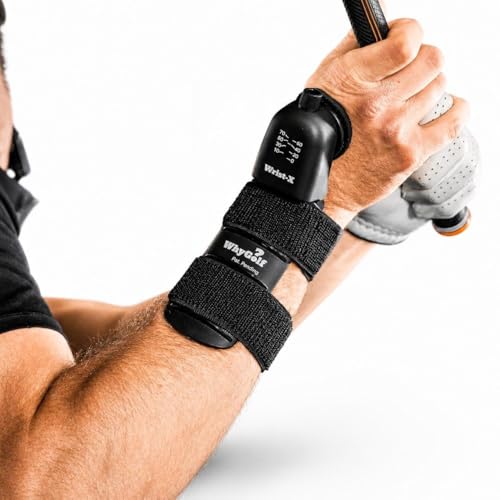
This is the most complete wrist trainer in the category, and I’d pick it over others for its smart, adjustable hinge system and real-world usability. The audible click at your preset angle is a standout, no apps, no guesswork, just instant feedback on every swing. Owners consistently report improved awareness of wrist cupping, casting, and early hinge, which are root causes of poor ball striking.
What really sets it apart is versatility. It works across full swings, chipping, and even putting, which no other model in this list can claim. The inclusion of training videos and a carry bag makes it a turnkey system. Yes, it’s the most expensive, but the value justifies the cost for anyone serious about fixing wrist mechanics.
Video review
ALLCIFP Golf Wrist Training Aid
Strengths
- Affordable
- Breathable material
- Universal fit
Trade-offs
- No real-time feedback
- Limited adjustability
- Basic design
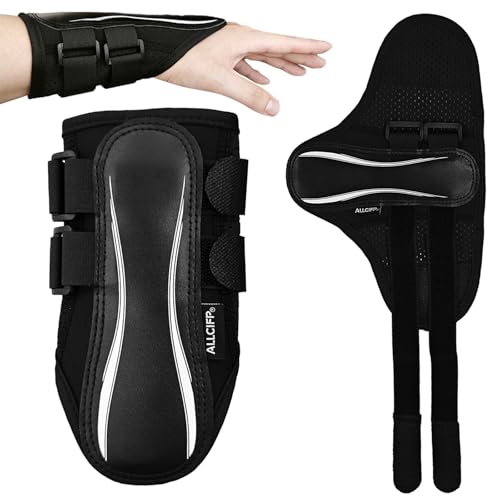
For golfers on a tight budget who want basic wrist stabilization without fuss, the ALLCIFP trainer delivers exactly that. It’s not flashy, but on paper and in owner feedback, it does what it promises, limits excessive wrist movement and helps maintain a neutral position through impact. The lightweight build and adjustable straps mean it stays comfortable over long practice sessions, and the fact that it works for all skill levels makes it a solid entry point.
Where it falls short is in feedback and adjustability. Unlike higher-end models, there’s no audible cue or customizable hinge angle, so you’re relying on feel alone. But for the price, that’s expected. If you’re just starting out and need something to reinforce basic wrist discipline without spending big, this one makes sense.
Video review
CUBEDAY Wrist Brace & Arm Band Kit
Strengths
- Combines wrist and arm training
- Prevents chicken wing
- Enhances swing sync
Trade-offs
- Bulkier setup
- Arm band may feel restrictive
- Higher price for niche use
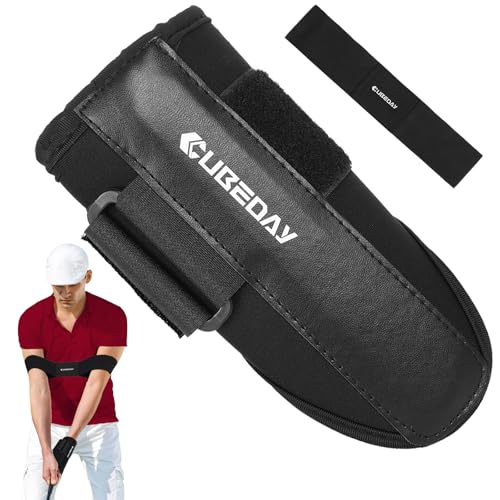
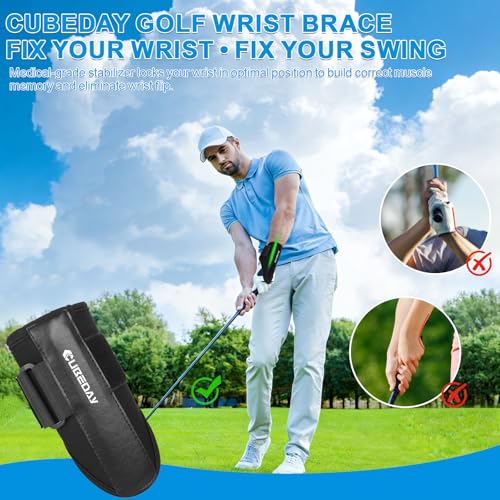
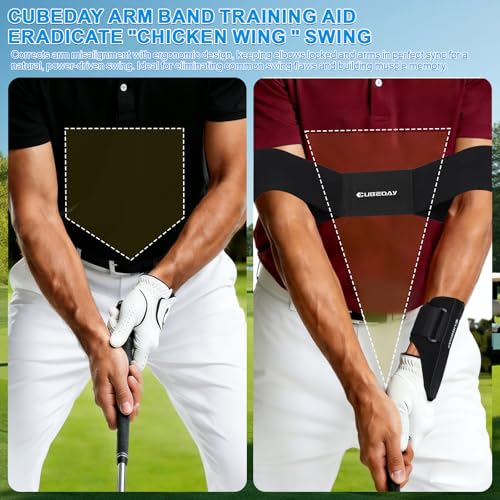
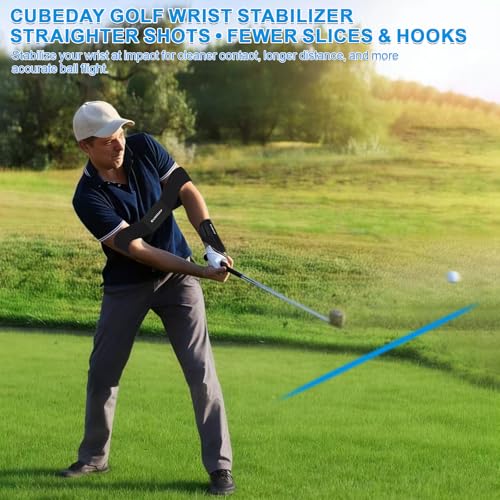
This 2-in-1 system goes beyond wrist training by syncing arm movement, targeting not just wrist flip but the entire kinetic chain. The arm band is what makes it unique, promoting connectedness between elbows and torso to eliminate the dreaded chicken wing. Owners say it helps create a more unified swing path, which reduces slices and improves compression.
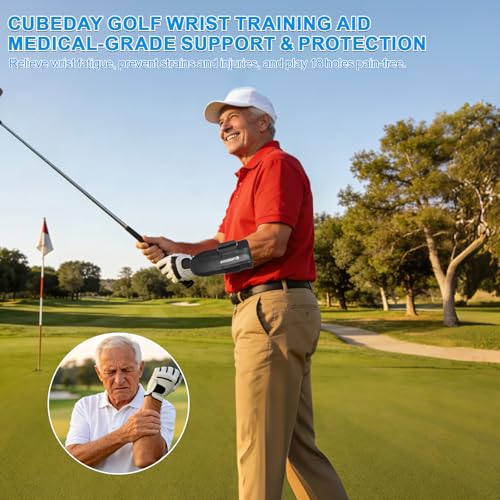
The brace itself has a medical-grade support strip that locks in a flat wrist, and the breathable fabric keeps it comfortable over time. It’s one of the few that addresses both wrist and arm mechanics, making it ideal for players whose faults stem from disconnection, not just poor hinge. The digital manual is a nice touch, though some wish it had more video content.
Product photos

Golf Wrist Training Glove
Strengths
- Removable wrist support
- Grip alignment patch
- Doubles as play glove
Trade-offs
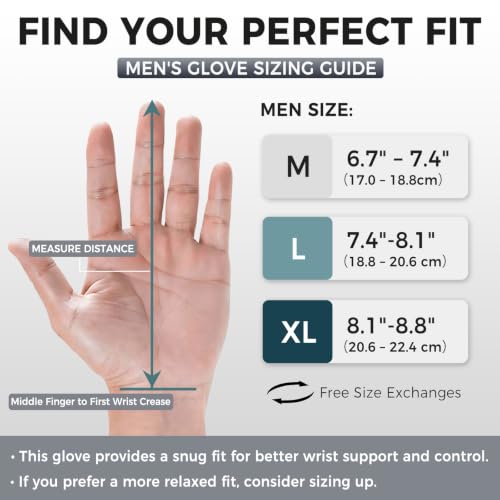
- Only for left hand (right-handed players)
- Limited hinge correction
- XL only in this listing
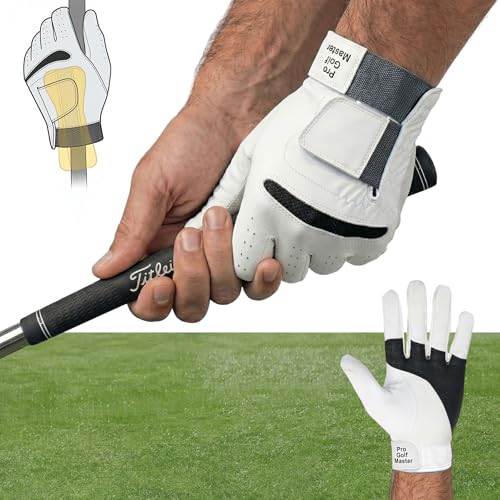
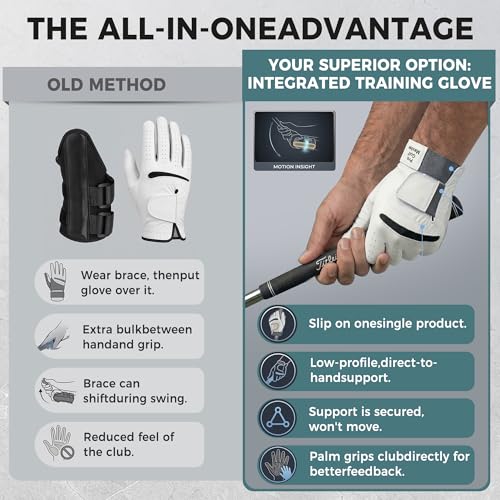
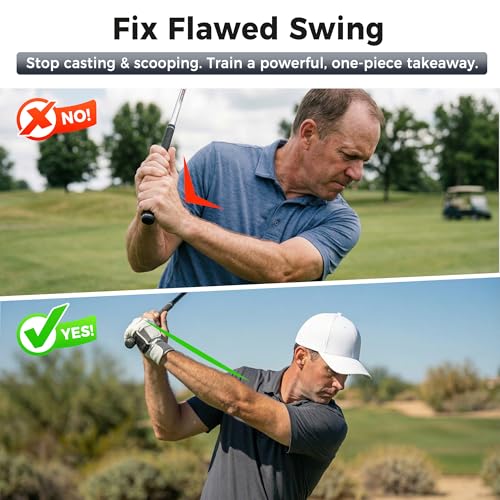
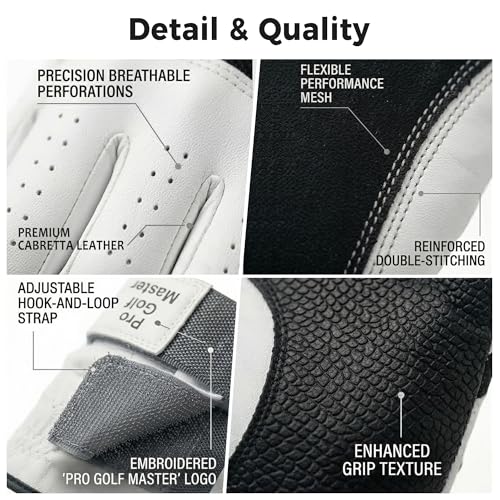
This glove is a clever hybrid, part grip trainer, part wrist stabilizer, and it works well for players who want both alignment and support in one wearable. The removable wrist pad is the key feature: leave it in for training, take it out for play, and you’ve got a legal glove with a grip alignment patch. That flexibility is rare, and owners appreciate being able to transition smoothly from practice to course.
The palm’s non-slip patch helps lock in a consistent grip, which directly impacts face control at impact. While it doesn’t offer the same hinge feedback as a dedicated brace, it’s more practical for daily use. For right-handed players battling slices due to grip and wrist roll, this combo approach makes a lot of sense.
Product photos

K-Shield UV Color Change Wrist Brace
Strengths
- Medical splint support
- Breathable fabric
- UV color change
Trade-offs
- Less precise hinge feedback
- Stiffer feel
- Not ideal for unrestricted motion
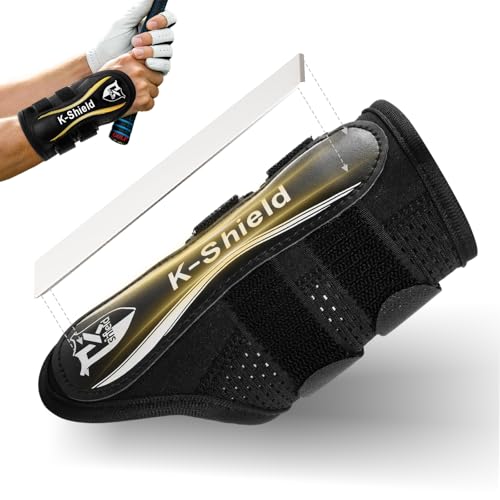
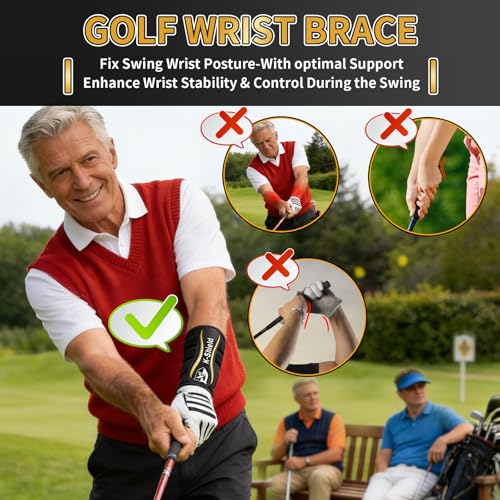
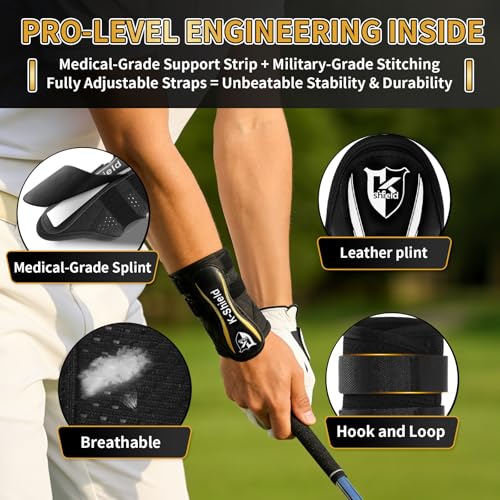
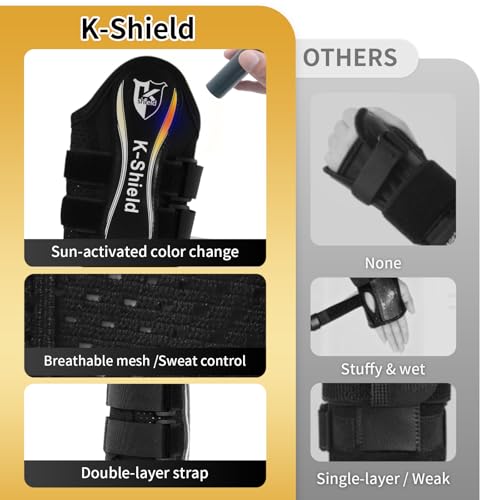
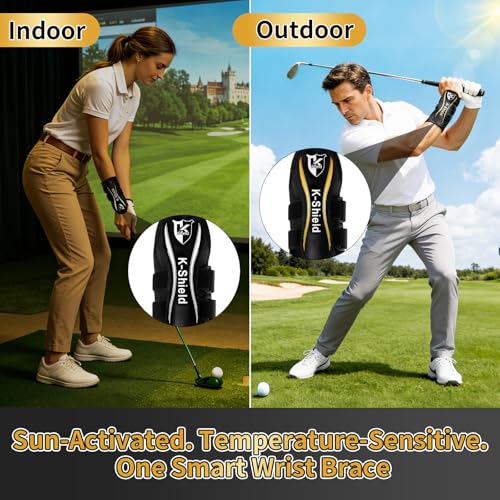
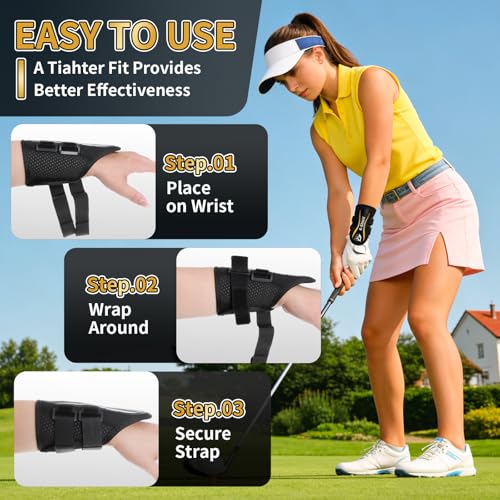
The K-Shield stands out not for performance alone, but for blending injury support with training functionality. The medical-grade splint inside gives it real structural support, which reviewers with past wrist issues say provides noticeable stability during the downswing. That, combined with the breathable mesh, makes it a strong option for golfers coming back from strain or needing daily joint protection.
The sun-activated color change is gimmicky but fun, some owners like the UV feedback as a reminder they’re outdoors training, though it doesn’t improve mechanics. Where it wins is in the 2-in-1 design: it’s both a rehab brace and a hinge trainer. If you’re managing discomfort but still want to build better wrist action, this hits a sweet spot.
Product photos
SKLZ Wrist Hinge Trainer

Strengths
- Effective hinge lock
- Simple setup
- Compact and portable
Trade-offs
- No angle customization
- Can slip on sweaty arms
- Limited to hinge training
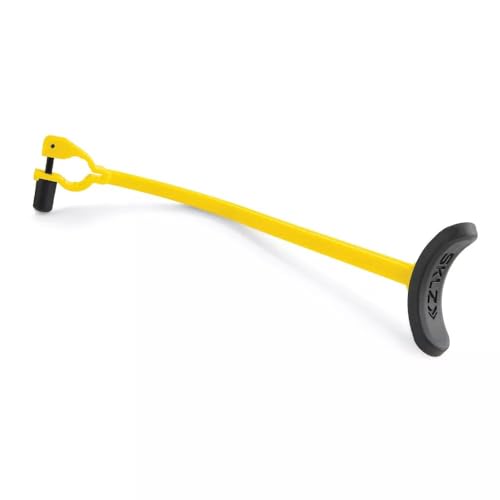
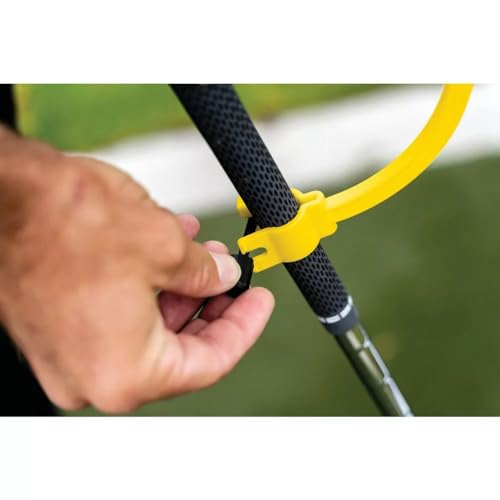
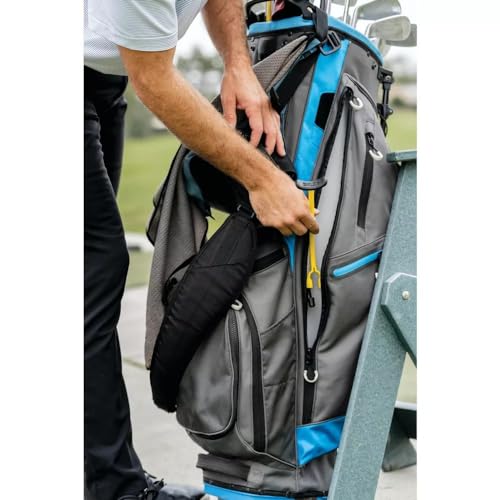
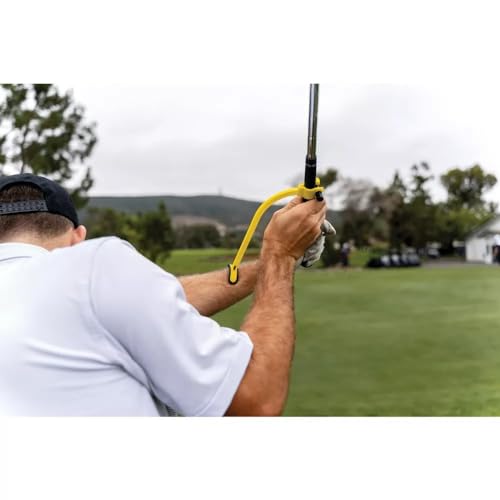
The SKLZ trainer is all about one thing: setting the correct wrist hinge early in the backswing. It uses a swing lock mechanism that physically stops the wrist from breaking too soon, forcing you into a steeper, more controlled takeaway. This is useful for golfers who cast the club or lose lag, as it builds the feel of a proper hinge from the start.
It’s not as advanced as the Wrist-X, but it’s more focused than most. The rubber grip holds securely on the arm, and the bright yellow design makes it easy to spot in your bag. Owners like its simplicity and portability, though some note it can slip if not tightened well. As a dedicated hinge coach, it’s one of the better options under $30.
Product photos

GAIARENA Wrist Hinge Trainer
Strengths
- Fully covers lead wrist
- Comfortable materials
- Easy to use
Trade-offs
- No adjustable hinge
- No feedback system
- One-directional use
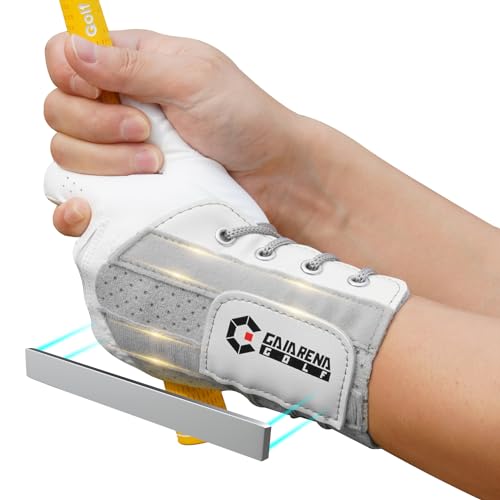
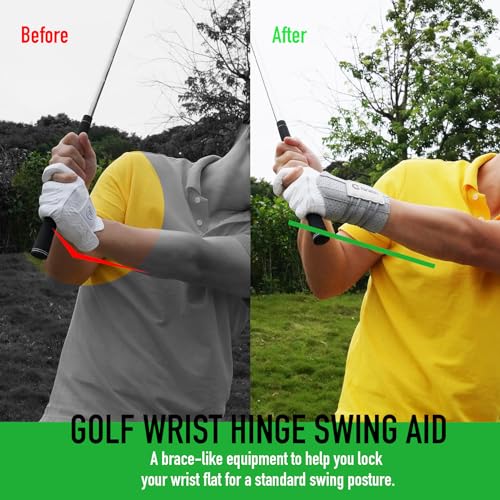
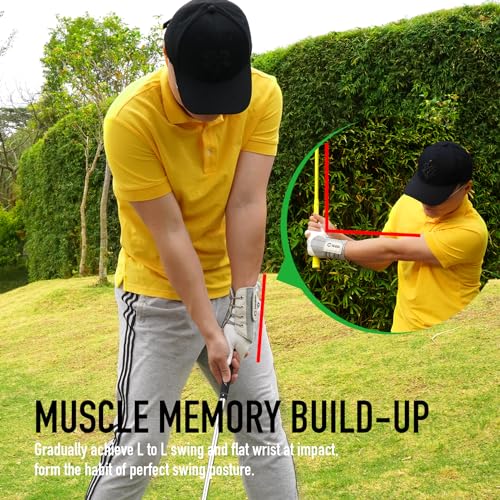
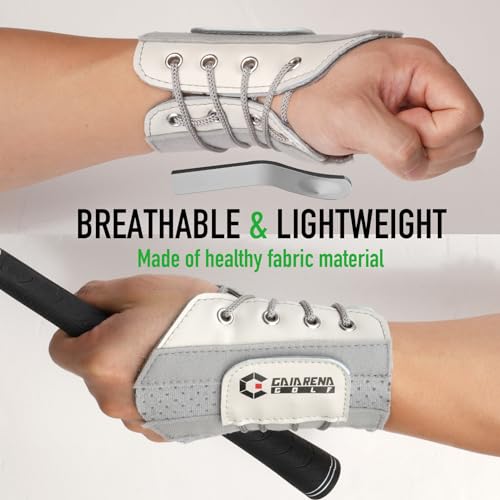
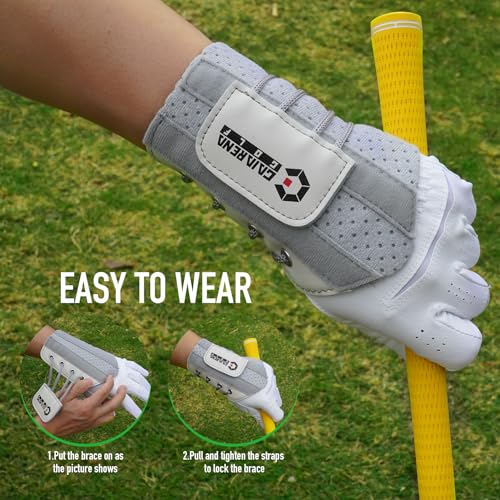
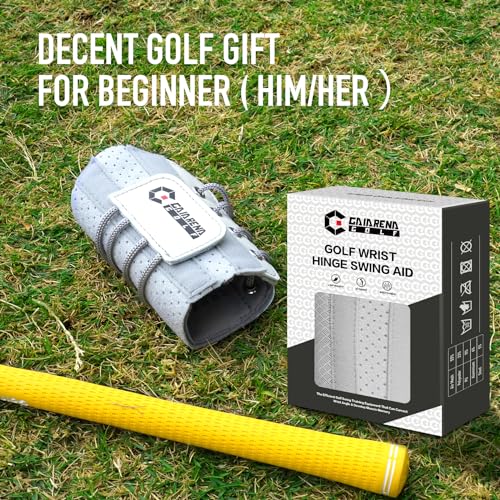
This is a no-frills, beginner-focused brace that prioritizes simplicity and comfort. It’s designed specifically to keep the lead wrist flat, critical for avoiding early release and fat shots, and on paper, it does that job well. The vegan leather and soft fabric get consistent praise for comfort, and the sizing guide helps ensure a proper fit, which is often overlooked in budget trainers.
The downside? It’s rigid in its function. There’s no adjustability in hinge angle, and no feedback mechanism beyond physical restriction. But for a new golfer struggling to feel what a flat wrist at impact should be, that restriction can actually help build muscle memory faster. It’s essentially training wheels for the wrist.
Product photos
How We Evaluated golf wrist trainers
Rather than a hands-on lab test, this is a research-led comparison of published specifications and owner feedback for a range of golf wrist trainers. I examined features listed by manufacturers, comparing those to comments from golfers regarding real-world performance. We weighed these factors against my understanding of effective golf swing mechanics – specifically, what elements are most critical for consistent contact and power. The goal was to identify trainers that address common swing faults and offer demonstrable improvement.
For this category, the most heavily weighted factors were adjustability and the ability to provide clear, repeatable feedback. A trainer that simply locks the wrist in place isn’t as useful as one that allows a golfer to learn proper movement patterns. Equally important was the versatility of the trainer – could it be used for full swings, chipping, or even putting? Many golfers struggle with consistency across all parts of their game, and a trainer addressing multiple areas offers greater value. You can find more information about related equipment in our guide to the best wrist braces for golfers.
Specifications reliably indicate build quality and range of adjustment. However, owner feedback proved crucial for assessing how well a trainer translates those features into practical benefits. Comments about comfort, durability, and ease of use were heavily considered. I also looked for recurring themes in reviews – consistent praise or criticism about a trainer’s effectiveness in addressing specific swing issues. Understanding how a trainer impacts a golfer’s golf tempo trainers and rhythm and timing trainers is also vital to improving overall performance.
How To Pick The Right golf wrist trainers
Finding the right golf wrist trainer can be the difference between frustrating plateaus and consistent improvement. It’s not about simply buying something; it’s about identifying a tool that addresses your specific swing flaws and helps build lasting, positive changes.
A truly effective golf wrist trainer provides adjustable resistance or feedback, targets common swing faults like early extension or wrist collapse, and supports training for all aspects of the game – from the full swing to chipping and putting. Look for designs that accommodate both right and left-handed golfers, and consider materials built for durability and comfort during extended practice sessions.
Understanding Your Swing Faults
The first step is honestly assessing where your swing breaks down. Many golfers instinctively reach for a trainer to “fix” their swing, but without a clear understanding of the problem, you’re just guessing. Are you struggling with consistency, power, or accuracy? Do you tend to slice or hook the ball? Common issues addressed by wrist trainers include improper wrist hinging, casting, or a cupped lead wrist. Identifying these faults will narrow your focus and help you choose a trainer designed to address them. I often recommend golfers start with video analysis of their swing to pinpoint these areas before investing in any training aid.
Adjustability and Feedback Mechanisms
Not all wrist trainers are created equal. Some offer simple resistance, while others provide real-time feedback. For example, the WHYGOLF Wrist-X boasts “instant audible feedback” – a click that lets you hear when your wrist angle is incorrect. This is incredibly valuable for developing muscle memory. Other trainers, like the CUBEDAY kit, focus on stabilizing the wrist to prevent unwanted movement. When considering adjustability, think about the range of motion you need to correct. A trainer with limited adjustment may not be suitable if you have a significant flaw to overcome. Don’t underestimate the power of being able to fine-tune the device to your individual swing.
Value, Versatility, and Practicality
A high price tag doesn’t always equate to better results. Consider how often you’ll realistically use the trainer and whether its features justify the cost. The ALLCIFP Golf Wrist Training Aid is a good example of a budget-friendly option that still addresses core issues like wrist control and muscle memory.
Here’s what I look for in a practical, versatile trainer:
- Portability: Can you easily take it to the driving range or use it at home?
- Multi-Use: Does it work for the full swing, chipping, and putting, or is it limited to one aspect of the game?
- Durability: Will it withstand repeated use without falling apart? A cheaply made trainer is a waste of money in the long run.
Ultimately, I’ve found that a good wrist trainer isn’t just about correcting flaws; it’s about building consistency. If you’re also experiencing pain or instability in your wrists, you might also want to consider exploring other support for golf wrists to aid in recovery and prevention.
Don’t overcomplicate things. Start with a trainer that targets your biggest swing flaw, and focus on mastering that one aspect before moving on to others. Consistent, focused practice is more effective than trying to fix everything at once.
For those looking to enhance their overall practice routine, exploring different golf swing trainers can be a great way to improve your swing mechanics.
Golf Wrist Trainers Compared
Here’s a comparison of key specifications for popular golf wrist trainers to help you make an informed decision.
| Product Title | Best For | Adjustable Angle | Skill Level | Material | Special Features |
|---|---|---|---|---|---|
| WHYGOLF Wrist-X Swing Trainer | Best Overall | 0–70° | All | N/A | Audible Feedback, Videos |
| ALLCIFP Golf Wrist Training Aid | Best Budget Friendly | N/A | All | Breathable Fabric | Muscle Memory Training |
| CUBEDAY Wrist Brace & Arm Band Kit | Best for Full-Swing Control | N/A | All | N/A | Arm Band, Swing Sync |
| Golf Wrist Training Glove | Best for Grip & Wrist Combo | N/A | All | Leather/Fabric | Removable Pad, Grip Aid |
| K-Shield UV Color Change Wrist Brace | Best for Injury Support | N/A | All | Mesh/Splint | UV Color Change |
| SKLZ Wrist Hinge Trainer | Best for Hinge Feedback | N/A | All | Rubber/Plastic | Swing Lock Mechanism |
| GAIARENA Wrist Hinge Trainer | Best for Beginners | N/A | Beginners | Fabric/Synthetic | Lead Wrist Specific |
Frequently Asked Questions
What level golfer will benefit most from a wrist trainer?
All skill levels can benefit, but beginners often see the quickest gains. Establishing correct wrist mechanics early on prevents ingrained flaws that are harder to correct later, while experienced golfers can refine existing movements.
Can a wrist trainer really improve my distance?
Potentially, yes. By promoting proper wrist hinge and release, a trainer can help you generate more clubhead speed, which directly translates to increased distance – particularly if you’re currently losing power due to improper technique.
Are these trainers effective for slice or hook correction?
While not a direct fix, they can be. Many slices and hooks stem from inconsistent wrist action. A trainer helps develop a more neutral wrist position, promoting a squarer clubface at impact and reducing these common misses.
How long should I practice with a golf wrist trainer each day?
Start with 10-15 minute sessions, focusing on quality over quantity. Overtraining can lead to fatigue and reinforce incorrect movements. I suggest incorporating the trainer into your warm-up routine before a practice session or round, and then doing short focused drills.
Can I use a wrist trainer with other golf training aids, like weighted trainers?
Absolutely. Combining a wrist trainer with other tools, such as those for improving grip trainers, can be very effective. Just be sure the aids complement each other and don’t create conflicting movements or sensations.
The Bottom Line
Choosing the right golf wrist trainer often comes down to balancing how much control you want versus how much initial fuss you’re willing to handle. While some trainers offer a simple, locked-in feel, the WHYGOLF Wrist-X Swing Trainer stands out as the most effective overall pick. Its adjustable angle and audible feedback provide a clear path to building better muscle memory, even if it takes a bit of getting used to.
For golfers on a tighter budget, or those seeking a straightforward solution, the ALLCIFP Golf Wrist Training Aid delivers excellent value. If you’re specifically looking to improve full-swing control and synchronization, the CUBEDAY Wrist Brace & Arm Band Kit is a great choice, offering a unique approach to connecting your arm and wrist movements. And if you’re concerned about wrist injuries or are recovering from one, the K-Shield UV Color Change Wrist Brace offers support while you work on your swing.
Ultimately, the best wrist trainer isn’t the one with the most features, but the one that helps you address your specific swing flaws and build consistent, repeatable movements. Don’t get bogged down in chasing the latest technology; focus on fundamentals like grip, posture, and tempo, and consider exploring other golf trainers to enhance your practice routine.
