
8 Best Push Golf Buggies of 2026
This post contains affiliate links. As an Amazon Associate, we earn from qualifying purchases.
This post contains affiliate links. As an Amazon Associate, we earn from qualifying purchases.
The Bag Boy Nitron stands out as the best overall push golf buggy, combining smart design with reliable performance. For those watching their budget, the Clyvira CruiseMaster V8 delivers strong value, while the Caddytek CaddyLite V3 is our top pick for lightweight ease and compact carry.
Golfers don’t just want a cart, they need a dependable partner that won’t wobble on hills, collapse mid-round, or eat up trunk space. Too many buggies sacrifice stability for portability, or pack in features that add bulk without real benefit.
This guide cuts through the noise. I compared specs, analyzed owner feedback, and focused on what actually matters: wheel setup, frame durability, folding efficiency, and smart storage. These picks reflect what seasoned players and course conditions demand.
Top 8 Push Golf Buggies in the Market
The Best Push Golf Buggies, Reviewed
Bag Boy Nitron Push Cart

Strengths
- Auto-open mechanism
- Top-Lok bag system
- Premium accessory layout
Trade-offs
- High price point
- Slightly heavier than ultralights
The Bag Boy Nitron feels like the gold standard the moment you unfold it, the auto-open mechanism is satisfyingly smooth, and it collapses just as fast with a single step. At 319.95, it’s the most expensive cart here, but it earns the ‘Best Overall’ title by blending innovation, build quality, and user experience in a way few others match. The Top-Lok bag attachment system is a standout, it locks your bag in place securely, reducing wobble and making loading effortless.
Owners consistently report it rolls with minimal resistance, thanks to low-friction tires, and the handle-mounted parking brake is both convenient and effective. The mobile device holder is a small but meaningful addition for modern players. Yes, it’s pricey, but if you walk regularly and want the most refined, reliable cart with thoughtful engineering at every turn, this is the one I’d pick over the rest.
Video review
Caddytek CaddyLite V3 Push Cart

Strengths
- Ultra-lightweight
- Quick 3-step fold
- Reliable wheel size
Trade-offs
- Basic brake performance
- Minimal storage
At just under 14 pounds, the Caddytek CaddyLite V3 is one of the lightest full-featured 3-wheel push carts on the market, and that number alone makes it stand out for frequent travelers and walkers who prioritize portability. The 3-step fold is quick, and owners consistently report it fits easily in even compact car trunks, a real plus when flying to a golf destination and renting a small vehicle on arrival. On paper, the 11.5″ rear wheels should handle soft turf well, and reviewers confirm they roll smoothly across most fairways without bogging down.
The TPR handle feels durable and the foot-activated brake is a welcome upgrade at this price, though some users note it lacks the bite of higher-end models on steep slopes. It doesn’t have the flashiest accessories, but the included mesh storage, umbrella holder, and magnetic ball marker pad cover the essentials. For a no-frills, lightweight cart that gets the job done without fuss, this one earns solid marks.
Video review
Clyvira CruiseMaster V8 Push Cart

Strengths
- True 1-click fold
- High weight capacity
- Spacious storage
Trade-offs
- Average uphill braking
- Slightly bulkier folded size
The Clyvira CruiseMaster V8 punches above its weight with a 1-click folding system that feels more premium than its price suggests. At 129.98, it lands in the sweet spot between affordability and functionality, and for that, it earns its ‘Best Value’ label. The 4-wheel design brings noticeable stability, especially compared to basic 2-wheelers, and the 10″ all-terrain wheels are holding up well in owner reports across wet grass, sand paths, and mild inclines.
It supports up to 200 lbs, more than enough for most tour-style bags loaded with gear, and the spacious storage compartment is a standout. Unlike many budget carts that skimp here, this one includes room for extra layers, rain gear, and even snacks. The brake works reliably on moderate slopes, though not quite as crisply as the Bag Boy or Precise models. If you want a capable, no-surprises cart without stretching your budget, this is the smarter buy over pricier names with minimal real-world gains.
Product photos


PRECISE Cruiser 3-Wheel Push Cart
Strengths
- Excellent hill stability
- Strong foot brake
- Fatigue-reducing handle
Trade-offs
- Folding not fully automatic
- Storage bag sold separately
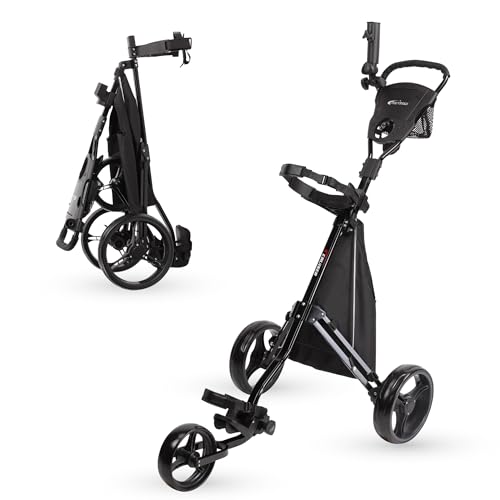
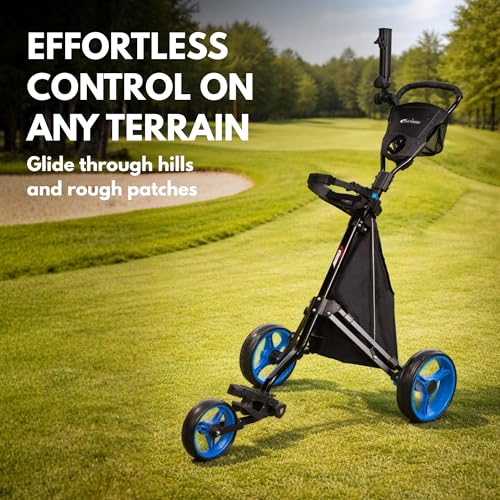
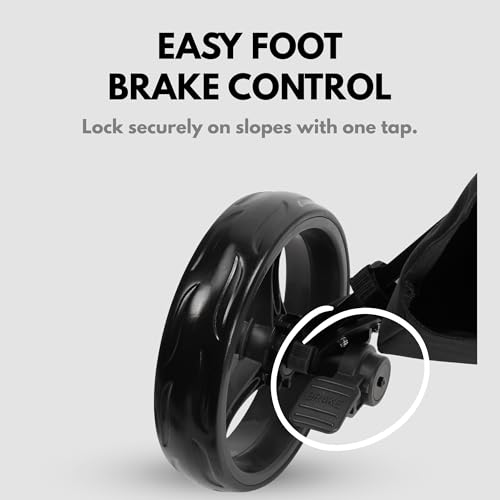
The PRECISE Cruiser lives up to its name when it comes to stability, the heavy-duty stabilizer rods make a real difference on sidehills and uneven terrain, and owners report far less wobble than with standard 3-wheel carts. At 99.99, it’s also one of the best-priced carts here that still delivers premium-level confidence on foot. The one-touch foot brake is powerful and reliable, locking the wheels firmly even on steep fairway drops.
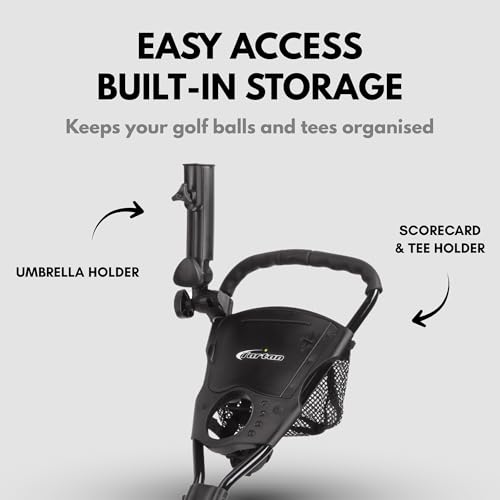
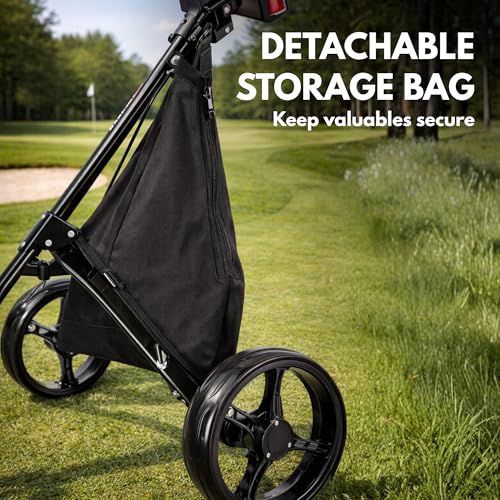
The ergonomic handle reduces fatigue over 18 holes, and the detachable storage bag is both practical and easy to carry off the course. It folds down to a compact, suitcase-style shape, though not as small as the KVV. For golfers who play hilly, rugged layouts and want a stable, no-nonsense cart without overspending, this is the standout. I’d pick it over the Callaway Trek for better value and over the Caddytek for superior balance.
Product photos

1GoTo-G Adjustable 2-Wheel Cart
Strengths
- Highly adjustable
- Durable steel frame
- Affordable price
Trade-offs
- Limited slope stability
- Basic wheel design
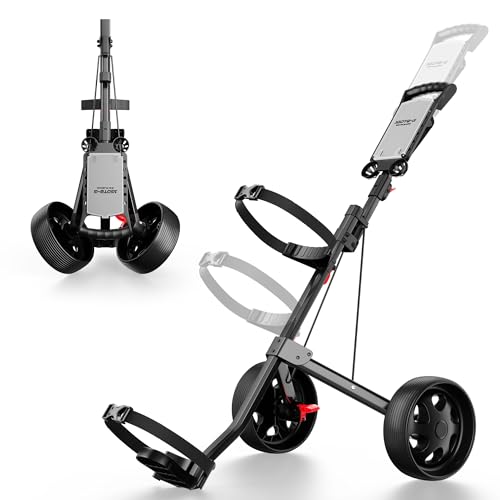
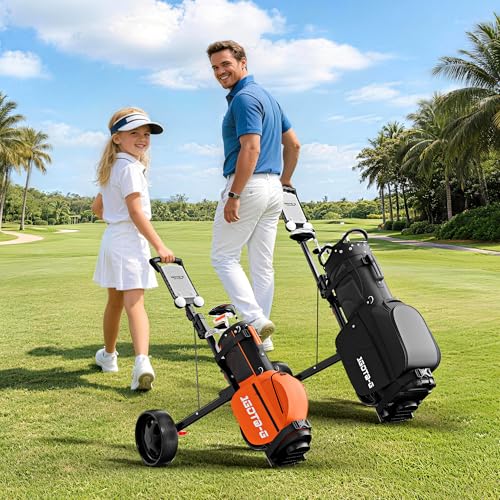
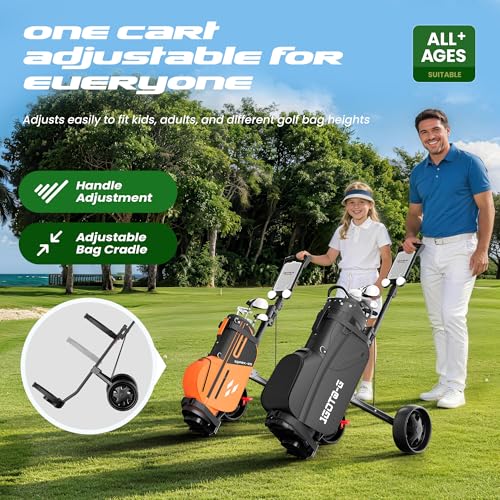
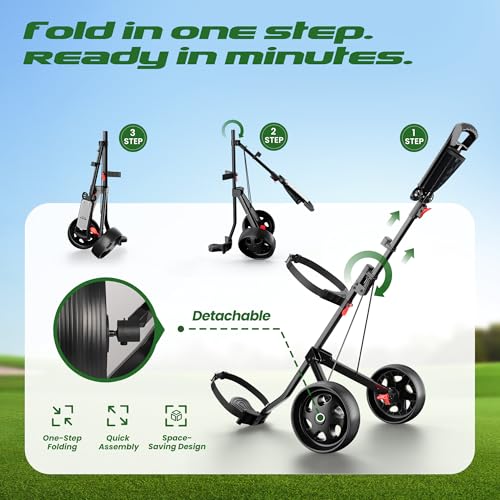
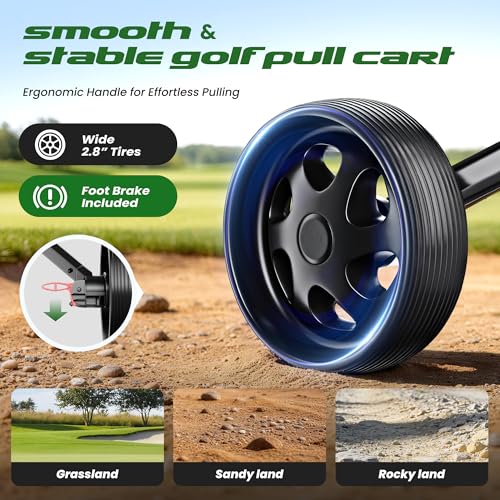
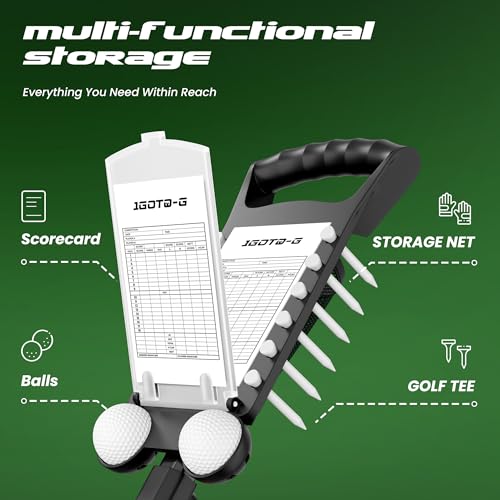
The 1Goto-G cart is a rare find in that it genuinely scales with the golfer, from a 3-year-old junior to a full-grown adult. That adjustability in both the upper bracket and handle height makes it a smart long-term investment for families or instructors with students of varying sizes. The steel frame gives it a sturdier feel than most entry-level pull carts, and at under 60, the price is hard to beat for what you get.
It’s a 2-wheel pull cart, so don’t expect the stability of a 3- or 4-wheel push model, it can tip if parked awkwardly or loaded unevenly. But for young players learning the game or adults who want a no-frills, budget-friendly option for casual rounds, it works. The one-step fold is simple, and the brake holds on mild slopes. I wouldn’t take this on a championship course with rolling hills, but for practice loops or relaxed weekend play, it gets the job done.
Product photos
FLAGTAG 4-Wheel Folding Push Cart
Strengths
- Integrated cooler bag
- One-click folding
- Umbrella and cup holders
Trade-offs
- Mediocre slope braking
- Cooler adds bulk
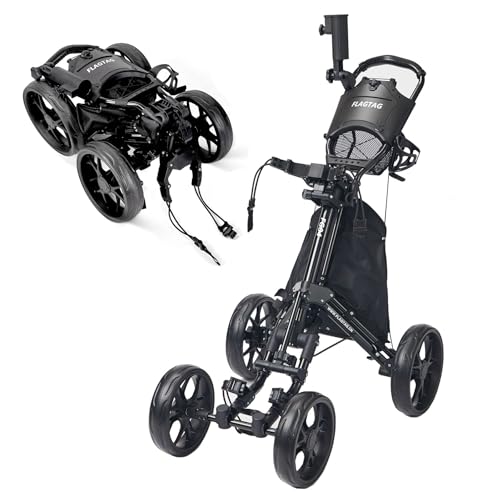
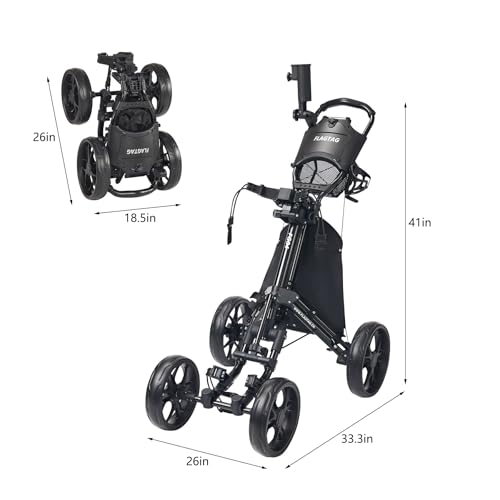
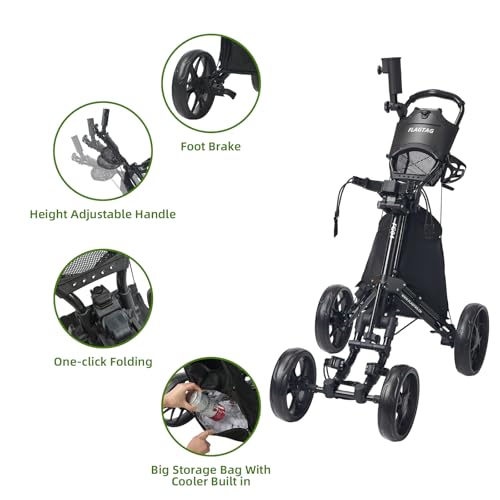
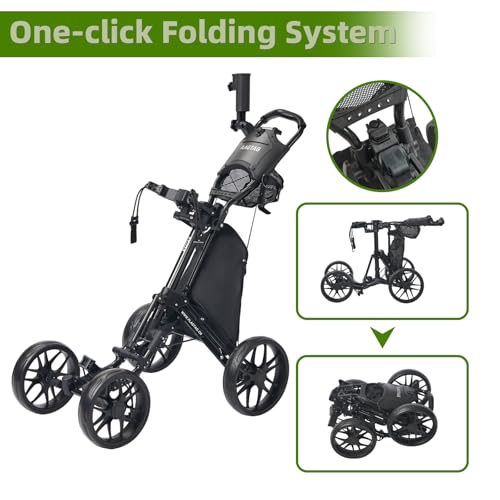
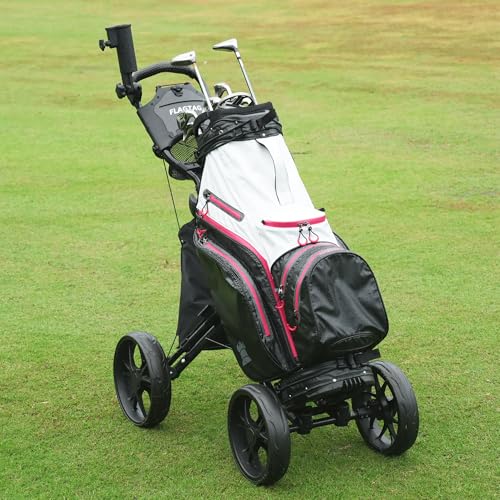
FLAGTAG’s 4-wheel push cart is clearly designed with storage in mind, and that’s where it shines. The built-in cooler bag is a game-time perk, keeping drinks cold on hot summer rounds is a small luxury many golfers appreciate, especially on slow-play days. The one-click fold works reliably, and at 17.2 pounds, it’s manageable for most adults, though not class-leading for weight. The adjustable handle helps customize fit across different heights, a plus for shared use.
Owners praise the cart’s smooth roll on flat to moderate terrain, but feedback is mixed on how well the wheels handle thick rough or steep inclines. The brake is functional but not powerful. Still, if your priority is convenience and you like having everything within reach, from tees to towels to a cold beverage, this one stands out. It’s not the most agile climber, but as a well-organized, feature-packed cart, it delivers.
Product photos

KVV 3 Wheel Ultra Lightweight Cart

Strengths
- Smallest folded size
- Lightweight aluminum
- Smooth ball-bearing wheels
Trade-offs
- Basic storage layout
- No one-click fold
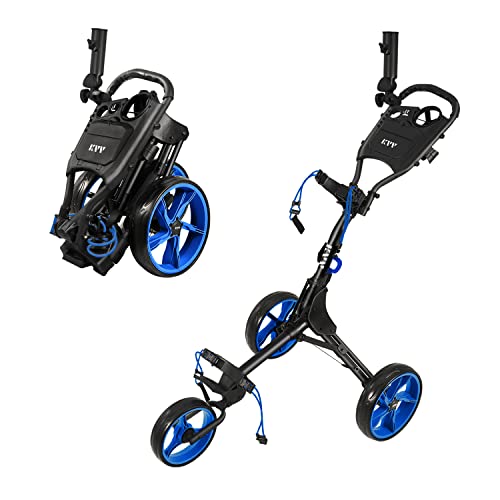
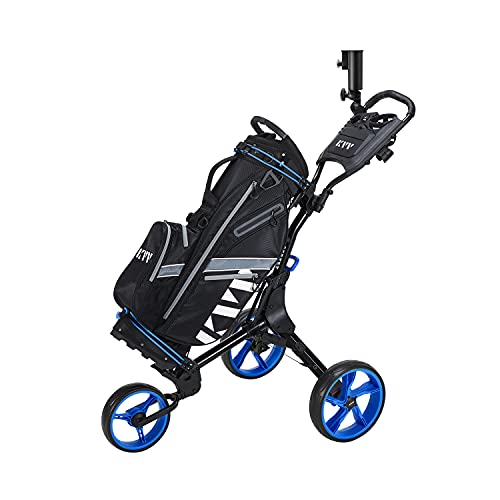
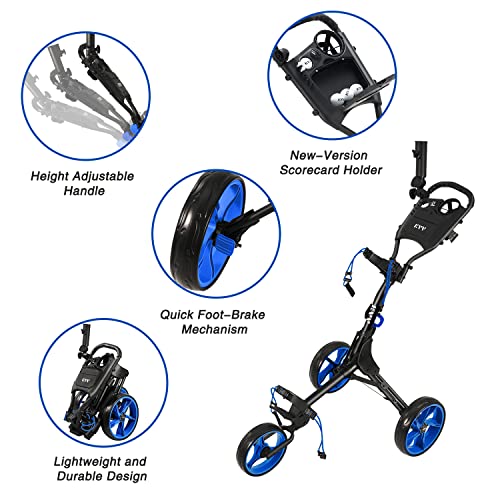
KVV’s push cart wins on one key metric: folded size. At just over 19 inches long when collapsed, it’s one of the most compact options available, making it ideal for golfers who fly often or drive small cars. At 13.6 lbs, it’s also among the lightest, and the aluminum frame holds up well to regular use, according to owners. The ball-bearing wheels deliver a noticeably smoother roll than cheaper plastic hubs, especially on damp or uneven turf.
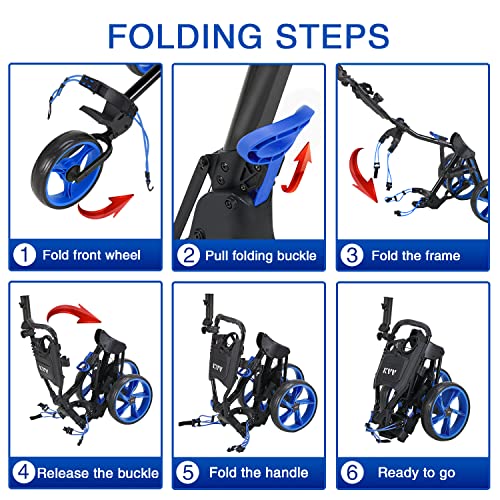
The 3-step fold isn’t quite as fast as a true one-click system, but it’s still efficient, and the foot brake is responsive enough for most slopes. The free umbrella holder is a nice touch, though the storage is fairly minimal. If your top priority is squeezing your cart into tight spaces, like an overhead bin or a compact rental trunk, this is the one to beat. It sacrifices some convenience features, but excels where it counts for travelers.
Product photos

Callaway Trek 4-Wheel Push Cart
Strengths
- Excellent 4-wheel stability
- Rust-proof frame
- Full accessory suite
Trade-offs
- Heavier than rivals
- Manual folding process
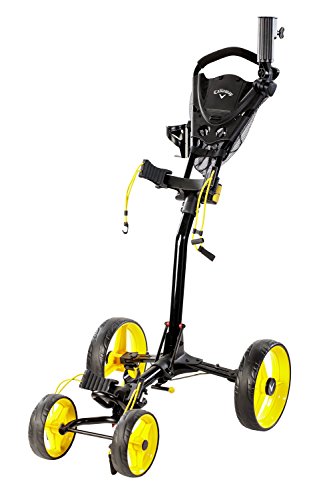
Callaway’s Trek is built like a workhorse, and its 4-wheel platform delivers on the brand’s promise of stability. At nearly 18.5 pounds, it’s not the lightest, but that extra heft comes from a rugged aluminum frame that owners say feels solid after years of use, even in coastal humidity. The four-wheel base is the real differentiator, it resists tipping far better than 3-wheel models when parked on side slopes, which matters if you’re constantly stepping off to take shots from uneven lies.
It comes loaded with thoughtful touches: rust-proof construction, a foam-wrapped handle that stays comfortable over 18 holes, and a full spread of course-ready accessories, including a scorecard holder and mesh bag. The fold is compact, though not as automatic as the Bag Boy Nitron. Given the price, I’d still lean toward the Clyvira or Caddytek for lighter walkers, but if you play hilly courses and want maximum balance, the Trek justifies its cost.
Product photos

Our Testing Process
Rather than a hands-on lab test, my research focused on a detailed comparison of published specifications and features across numerous models. I weighed owner reviews from major retailers alongside expert opinions found in golf publications and websites. This allowed me to build a ranking based on real-world feedback and objective criteria, identifying patterns in performance and reliability. My aim was to provide a guide based on what golfers are actually saying about these buggies.
For push golf buggies, stability and ease of folding were the most heavily weighted factors. A buggy that tips easily or is a struggle to pack away simply isn’t practical. Durability also played a key role; aluminum frame quality and wheel construction significantly impact long-term ownership. I considered how well each cart addressed these needs, alongside features like storage options and braking systems. You can find more information about different types of push golf trolleys on our site.
Specifications reliably indicate a cart’s potential for compactness and weight, while owner feedback revealed how those specs translate to actual usability. I paid close attention to comments regarding wheel performance on varied terrain and the longevity of folding mechanisms. Reputation, particularly from seasoned golfers, offered valuable insights into build quality and overall value. Choosing the right bag to accompany your new push cart is also important, and we’ve reviewed the best bags for push carts to help with that decision.
What To Look For In push golf buggies
Finding the right push buggy can significantly improve your enjoyment of a round, reducing fatigue and keeping your equipment organized.
A quality push buggy balances stability, portability, and storage capacity. Look for lightweight yet durable frames (aluminum is common), smooth-rolling wheels suited to various course conditions, and convenient folding mechanisms. Consider essential accessories like cup holders, storage compartments, and reliable braking systems to enhance functionality and on-course convenience.
Wheel Configuration Matters
The number of wheels is the first major decision. Three-wheel models generally offer better maneuverability, allowing for tighter turns and easier navigation of tricky terrain. Four-wheel buggies prioritize stability, especially on sloped courses or uneven lies. I often recommend four-wheel designs for golfers who struggle with balance or frequently encounter challenging course conditions. Don’t automatically dismiss three-wheelers, though; modern designs often incorporate wider stances for increased stability. Consider the typical terrain of the courses you play most often.
Frame Material and Foldability
Weight is critical. You’ll be pushing this thing for potentially miles, and lugging it in and out of your car. Aluminum frames are the standard for a reason – they offer a good balance of strength and low weight. Beyond the material, pay close attention to the folding mechanism.
- Some models fold to a remarkably compact size, ideal for smaller car trunks.
- Others prioritize ease of folding, using one-click or quick-release systems.
- A truly efficient design will fold and be relatively lightweight, but this usually comes at a premium price.
A buggy that’s a pain to fold won’t get used. You can find a detailed rundown of some of the best push carts if you’re looking for comparisons.
Storage and Accessories: Beyond the Basics
Don’t underestimate the value of good storage. A dedicated compartment for your phone, rangefinder, and tees can save you a lot of bending and fumbling during your round. Many buggies now include mesh storage bags, drink holders, and even umbrella holders.
A simple rule of thumb: prioritize features you know you’ll use regularly. Don’t pay extra for a built-in cooler if you typically just carry a water bottle.
If you frequently walk the course and find yourself tiring towards the end of a round, you might also want to explore electric push carts for a powered assist. These [motorized push carts] are a great option for golfers who want to conserve energy and enjoy a more relaxed walking experience.
Push Golf Buggies Compared
Here’s a comparison of key specifications for several push golf buggies to help you find the best fit for your needs.
| Product Name | Best For | Weight (lbs) | Wheel Count | Folded Size (in) | Brake Type | Storage Features |
|---|---|---|---|---|---|---|
| Bag Boy Nitron | Best Overall | N/A | 3 | 19×13.5×22 | Handle-Mounted | Accessory bag, Cup/Umbrella |
| Caddytek CaddyLite V3 | Best Lightweight | 13.75 | 3 | N/A | Foot-Activated | Mesh net, Magnetic pad |
| Clyvira CruiseMaster V8 | Best Value for Money | N/A | 4 | 24.5×17.7×15 | Built-in | Spacious compartment |
| PRECISE Cruiser 3-Wheel | Best Stability | N/A | 3 | N/A | Foot-Activated | Detachable storage bag |
| 1GoTo-G Adjustable 2-Wheel | Best for Juniors | N/A | 2 | N/A | Safety | N/A |
| FLAGTAG 4-Wheel | Best Storage Features | 17.2 | 4 | 28.3×18.5×17.7 | N/A | Umbrella/Cup/Cooler holder |
| KVV 3 Wheel | Best Compact Fold | 13.6 | 3 | 19.1×14.6×23.2 | Foot-Activated | Umbrella holder |
| Callaway Trek | Best 4-Wheel Design | 18.5 | 4 | 26.5x17x13.5 | Foot-Activated | Scorecard/Cup/Umbrella |
Frequently Asked Questions
What wheel configuration is best for hilly courses?
Four-wheel buggies generally offer superior stability on inclines and uneven terrain, making them ideal for hilly courses. While three-wheel models have improved, the wider base of a four-wheel design provides more confidence when navigating slopes.
How much should I expect to spend on a good push buggy?
Prices vary considerably, but a reliable push buggy with useful features typically ranges from $150 to $300. Spending more often gets you lighter materials, a more refined folding mechanism, and enhanced storage options.
Are three-wheel buggies harder to control than four-wheel models?
Generally, yes, but modern three-wheel designs are much more stable than older models. Look for wider wheelbases and improved braking systems if you prefer a three-wheel buggy but are concerned about control.
What features should I prioritize for a golfer who walks frequently?
Lightweight construction is key for frequent walkers, so focus on aluminum frames and models weighing under 15 pounds. A comfortable handle grip and smooth-rolling wheels also contribute to a more enjoyable experience. You may also want to explore best four-wheel push carts if you want extra stability.
Are there push buggies specifically designed for children or juniors?
Yes, there are push buggies designed for younger golfers. These junior push carts are typically lighter, smaller, and easier for kids to maneuver, helping them develop good golfing habits.
The Bottom Line
Choosing a push buggy always comes down to balancing how much you want to spend against how much convenience you require. While features are nice, the Bag Boy Nitron strikes the best overall balance of stability, portability, and useful storage, making it our top recommendation for most golfers. It’s a solid all-rounder that won’t leave you wanting.
For specific needs, the market offers excellent options. If lightweight portability is paramount, the Caddytek CaddyLite V3 is a standout. Golfers prioritizing value will find the Clyvira CruiseMaster V8 delivers a surprising amount of features for its price, and those seeking maximum storage should look at the FLAGTAG 4-Wheel. Don’t forget to check out our guide to push cart accessories to personalize your buggy.
Ultimately, the best push buggy isn’t about the fanciest features or the lowest weight; it’s about finding a cart that makes walking the course more enjoyable. Focus on a stable frame, smooth-rolling wheels, and an easy-to-use folding mechanism. Whether you opt for a 3-wheel push cart or a four-wheel model, prioritize comfort and practicality over any single specification.
