
7 Best Rescue Golf Clubs of 2026
This post contains affiliate links. As an Amazon Associate, we earn from qualifying purchases.
This post contains affiliate links. As an Amazon Associate, we earn from qualifying purchases.
The TaylorMade Qi4D Max Rescue stands out as the best overall rescue club for its exceptional forgiveness and easy launch, especially from tough lies. For golfers on a budget, the MAZEL Rescue Hybrid delivers solid performance at a fraction of the cost, while the PGF Gold Tour Precision Hybrid offers a player-focused option for those who want control and a cleaner look at address.
Hitting from uneven lies, deep rough, or long distances into greens can ruin an otherwise solid round. Rescue clubs are designed to save shots when your long irons don’t cut it and your fairway woods feel too unwieldy.
After comparing specs, owner feedback, and performance trends across dozens of models, I focused on forgiveness, launch quality, and real-world usability, key traits that matter most when you’re standing over a tough shot on the course. This guide breaks down what actually makes a rescue club effective and highlights the best options based on how they perform where it counts.
Top 7 Rescue Golf Clubs in the Market
The Best Rescue Golf Clubs, Reviewed
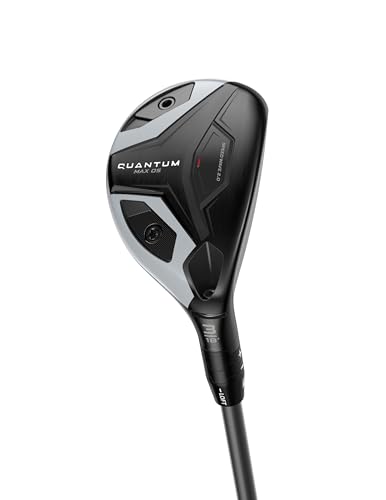
Callaway Quantum Max OS Hybrid
Strengths
- Exceptional forgiveness
- AI-optimized face
- Adjustable hosel
Trade-offs
- Bulky at address
- Less workable
Callaway didn’t hold back with the Quantum Max OS, this is a full-on game-improvement hybrid built for golfers who need help getting the ball up and keeping it straight. The oversized, draw-biased head and AI-tuned face deliver exceptional forgiveness, and reviewers consistently note how well it performs on low-face strikes. The Step Sole Design seems to deliver real-world benefits in turf interaction, promoting cleaner contact.
What sets it apart from rivals like the MAZEL or XINGGM is the tech depth: Ai face optimization, OptiFit4 hosel adjustments, and forward tungsten weighting. It’s not just about size, it’s about smart engineering. For higher handicappers or seniors needing reliability, this is arguably the best all-around performer in the list. I’d recommend it over the TaylorMade Qi4D Max if forgiveness and ease of use are your top priorities.
Video review
TaylorMade Qi4D Max Rescue #4

Strengths
- High launch angle
- Adjustable TAS weight
- Excellent stability
Trade-offs
- Expensive
- Heavier swing feel
TaylorMade’s Qi4D Max Rescue #4 is engineered for golfers who want high launch without giving up control. The combination of a back-positioned TAS weight and ultralight carbon crown pushes the CG low and deep, and on paper, that translates into towering shots that land softly, ideal for holding greens. Owners praise the stability and how consistently it launches, even from tough lies.
The real differentiator is the Trajectory Adjustment System. That 8g weight lets you fine-tune flight and spin in a way few other hybrids allow. When you stack it against the SIM2 Max, the Qi4D Max offers more adjustability and a slightly more refined feel, though at a premium. If you’re serious about dialing in your yardages and need a true 4-iron replacement, this is a smart, tech-forward pick.
Video review
TaylorMade Qi4D Rescue #3

Strengths
- Highly adjustable
- Great workability
- Stable on tight lies
Trade-offs
- Less forgiving on misses
- Premium price
The Qi4D Rescue #3 is built for utility, long par 3s, punch-outs, or stepping in for a weak 3-wood. With a 450 stainless steel body and carbon crown, it’s lightweight yet stable, and the balanced CG placement gives it a more neutral, iron-like flight than the Max version. Owners highlight its versatility from tight lies and how well it holds greens thanks to a steeper landing angle.
The real win here is adjustability. Between the TAS weight and the 3° loft sleeve, you can tune launch, spin, and face angle to match your gaps. Compared to the SIM2 Max, it offers more customization and a slightly crisper feel, though it demands a better strike. I’d go with this over the Max version if you want to shape shots and fine-tune performance, just know it’s less forgiving than the Quantum Max OS.
Product photos


TaylorMade SIM 2 MAX Rescue 3
Strengths
- Excellent distance
- V Steel turf interaction
- Strong face material
Trade-offs
- No adjustability
- Older model
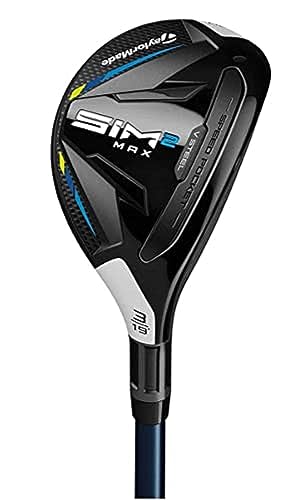
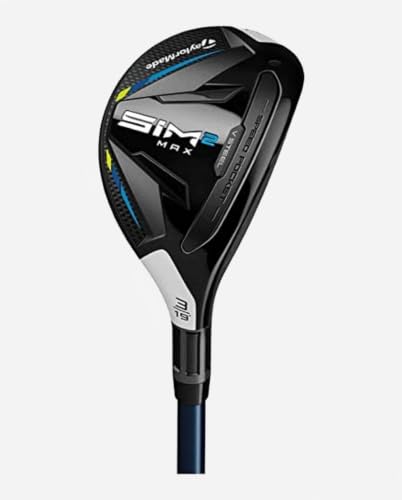
This is the hybrid that brings Tour-proven design within reach of the weekend golfer. The V Steel sole and C300 steel face make it a distance machine, owners consistently report solid ball speed retention, especially on thin strikes, thanks to the Thru-Slot Speed Pocket. It launches high and carries well, and the black-and-white crown aids alignment without looking busy.
At this price, it punches above its weight. While it lacks the adjustability of the Qi4D models, it delivers 90% of the performance for less. Compared to budget options like MAZEL or XINGGM, the SIM2 Max feels more refined and consistent. For golfers upgrading from older hybrids or looking for a premium feel without the $300 price tag, this is the smarter buy.
Product photos


MAZEL Rescue Hybrid 2-9

Strengths
- Affordable
- Easy launch
- Lightweight design
Trade-offs
- Basic materials
- Less refined feel
- Limited adjustability
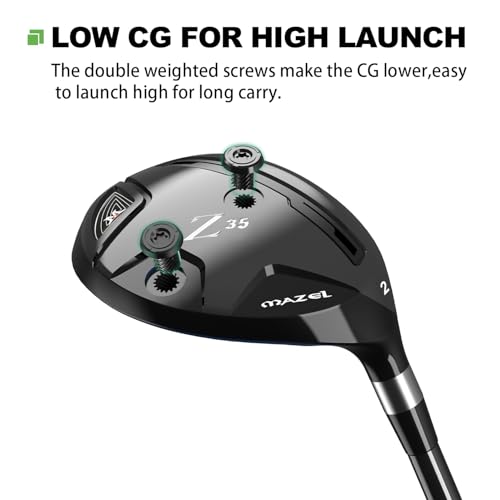
The MAZEL hybrid is a no-frills, budget-friendly option that gets the fundamentals right. It’s designed with a slightly deeper profile and low-back CG, and owners report it launches easily and feels stable on mishits. The aerodynamic head seems to help generate a bit more swing speed, which is a win for slower swingers looking to squeeze out extra yards.
But let’s be honest, this isn’t a tech showcase. It lacks the materials and precision of TaylorMade or Callaway models. Still, for the price, it’s a solid entry-level hybrid. If you’re a beginner or casual player needing a reliable 3 or 4 hybrid without overspending, and you’re not chasing cutting-edge performance, this gets the job done. I’d pick it over pricier models only if budget is the top concern.
Product photos


PGF Gold Tour Precision Hybrid

Strengths
- Player-friendly shape
- Forged carbon face
- High shot control
Trade-offs
- Less forgiving on misses
- Narrower sweet spot
This hybrid stands out in the player’s market with a design that leans into precision, not just forgiveness. The forged carbon steel face and low CG placement suggest it’s built for ball speed and consistent launch, and owners consistently report it delivers a clean, iron-like feel with better playability than bulkier models. The compact profile at address inspires confidence, especially for mid-to-low handicappers who want hybrid ease without sacrificing shot shaping.
Still, the smaller head and player-first tuning mean it won’t be as forgiving as game-improvement hybrids, mis-hits bleed distance faster. Compared to the TaylorMade Qi4D or Callaway Quantum Max OS, it’s less about brute forgiveness and more about blending control with a touch of help. I’d pick this if you’re replacing a long iron and want a hybrid that doesn’t feel like a crutch.
Product photos


XINGGM Hybrid Golf Club
Strengths
- Mid-high trajectory
- Stable landings
- Good shaft feel
Trade-offs
- Limited tech depth
- Less forgiveness than top models
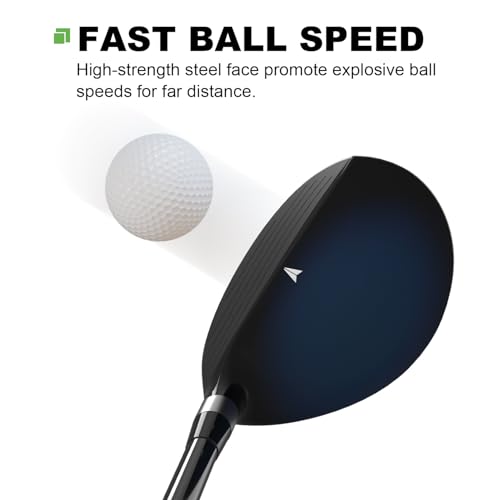
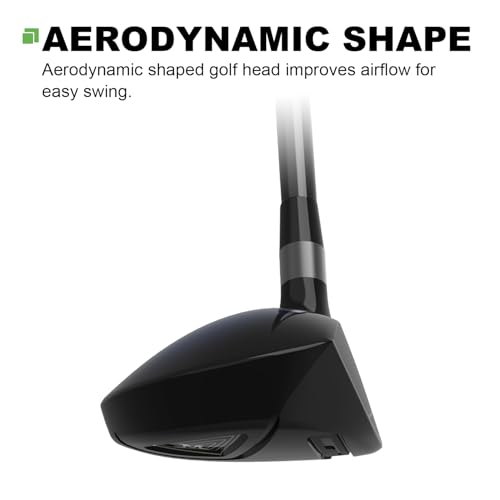
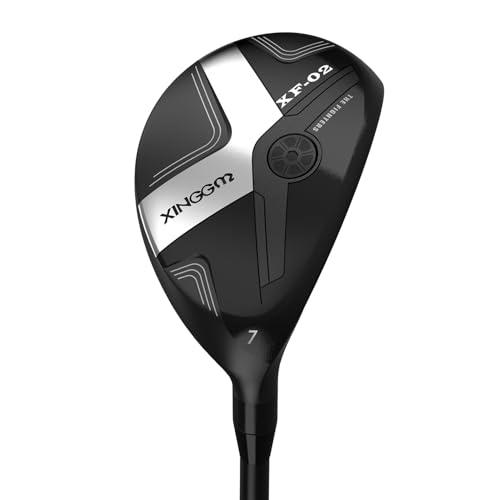
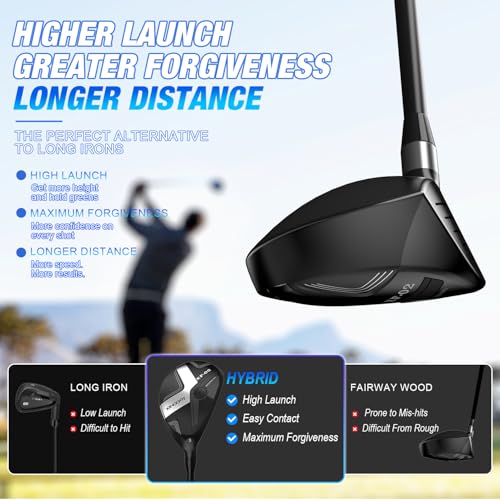
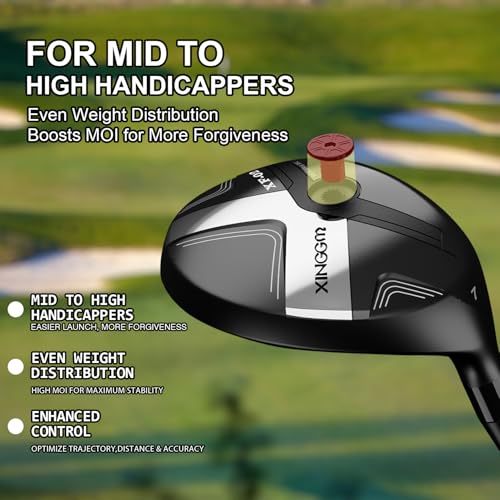
The XINGGM hybrid leans into mid-launch control with an X-shaped perimeter weight and ultra-low CG. On paper, that setup should deliver a penetrating flight with stable landings, ideal for approach shots where you need the ball to stop. Owners note the anti-slip grip and dampened shaft make it feel secure, and the aerodynamic head does seem to help maintain swing speed.
It’s positioned as a mid-tier option, and it shows. While it doesn’t have the adjustability of TaylorMade or the Ai tuning of Callaway, it offers better control than the MAZEL at a similar price. For golfers who play firm courses and need a hybrid that doesn’t balloon, this could be a quiet standout. I’d recommend it over the MAZEL if you prioritize landing precision over raw forgiveness.
Product photos


How We Picked These rescue golf clubs
Rather than a hands-on lab test, my research focused on a detailed comparison of published specifications and features across numerous models. I weighed owner reviews from multiple retailers alongside expert analysis from golf publications and websites. My assessment applied a decade of experience planning golf trips and understanding what golfers prioritize in their equipment – forgiveness, distance, and playability are key when you’re facing challenging courses.
For rescue clubs, launch angle and forgiveness were the heaviest factors in my evaluation. A high MOI (moment of inertia) and low center of gravity are critical for players needing help getting the ball airborne and minimizing off-center hits. Adjustability also played a significant role, allowing golfers to fine-tune their clubs for optimal performance. Finally, value for money was considered, as not everyone needs the most expensive option to improve their game.
Published specs reliably indicate head size, materials, and adjustability options. However, I placed more weight on owner feedback regarding real-world performance – how the club feels at impact, its consistency, and how well it performs from various lies. Reputation, particularly from experienced golfers, also factored heavily, influencing my assessment of build quality and long-term durability. You can find more insights into selecting the right clubs in our guide to the best 3 hybrid options.
What To Look For In rescue golf clubs
Choosing the right rescue club can dramatically improve your performance on challenging shots and fill gaps in your set.
A quality rescue club blends the distance of an iron with the forgiveness of a fairway wood. Key factors include head design (MOI and weighting), shaft quality, and adjustability options. Look for clubs with a low center of gravity for easy launch, and consider whether you prioritize forgiveness, adjustability, or a more player-controlled feel.
Forgiveness and Launch
For many golfers, especially those seeking clubs for more forgiveness, forgiveness is paramount. A higher MOI (Moment of Inertia) resists twisting on off-center hits, leading to straighter shots. Brands like TaylorMade (Qi4D Max) and Callaway (Quantum Max OS) heavily emphasize this with their designs. Don’t get caught up in chasing distance if you’re consistently missing the sweet spot; prioritizing forgiveness will likely result in better overall scores. Consider the sole design too. A wider sole promotes easier turf interaction, while a stepped sole, as seen in the Callaway Quantum Max OS, reduces digging.
Adjustability and Fine-Tuning
Some rescues, like the TaylorMade Qi4D Rescue, offer adjustability through a trajectory adjustment system (TAS) weight. This allows you to dial in launch conditions and shot shape. This is particularly beneficial if you play on varied courses or want to experiment with different flight paths.
Here’s how to think about adjustability:
- Minimal Adjustment: A fixed-loft rescue is simpler and often more affordable.
- Loft Adjustment: A hosel sleeve allowing 1-2 degrees of loft change is a good balance.
- Full Adjustment (TAS): Offers the most control over launch, spin, and swingweight, but requires more experimentation to optimize.
Ultimately, adjustability adds complexity, so only pursue it if you enjoy tinkering with your equipment.
Value and Player Preference
Not everyone needs the latest and greatest technology. The MAZEL Rescue Hybrid series demonstrates that you can find a functional and forgiving rescue club without breaking the bank. However, if you’re a more skilled player looking for precision and control, models like the PGF Gold Tour Precision Hybrid offer a compact head shape and a forged carbon steel face designed for more strategic shot-making. If you’re struggling with a specific club distance, it might be time to explore great high-loft hybrid options to bridge the gap in your set.
A rescue club should feel comfortable in your hands and inspire confidence at address. Don’t be afraid to demo several models to find one that suits your swing and aesthetic preferences.
Rescue Golf Clubs Compared
Here’s a comparison of key specifications for popular rescue/hybrid golf clubs to help you make an informed decision.
| Product Title | Loft (Degrees) | # of Hybrids in Set | Material (Head) | Weighting | Shaft |
|---|---|---|---|---|---|
| Callaway Quantum Max OS Hybrid | N/A | 1 | N/A | Tungsten | N/A |
| TaylorMade Qi4D Max Rescue #4 | N/A | 1 | Multi-Material | TAS Weight | REAX |
| TaylorMade Qi4D Rescue #3 | N/A | 1 | Multi-Material | TAS Weight | REAX |
| TaylorMade SIM 2 MAX Rescue 3 | N/A | 1 | C300 Steel | V Steel | N/A |
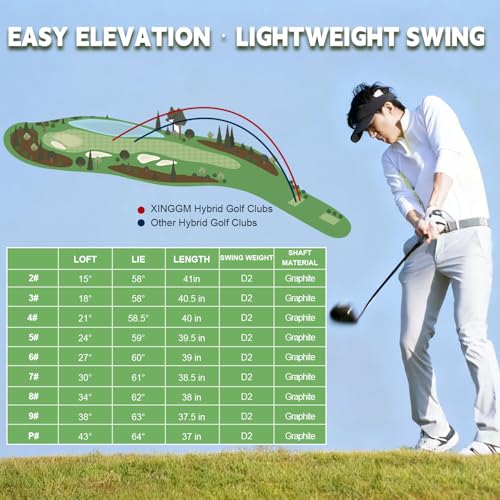
| MAZEL Rescue Hybrid 2-9 | 15-43 | 9 | N/A | Back Center | N/A |
| PGF Gold Tour Precision Hybrid | 32 | 1 | Forged Carbon | Perimeter | N/A |
| XINGGM Hybrid Golf Club | N/A | 1 | N/A | X-Shaped | N/A |
Frequently Asked Questions
What loft should I get in a rescue club?
Generally, you’ll want a rescue club with a loft that fills a gap in your existing set. Most golfers benefit from a 4- or 5-iron replacement, meaning a 21- or 24-degree rescue, but consider your current clubs and typical shot distances.
Are rescue clubs harder to hit than hybrids?
Not necessarily. While some rescues have a smaller head size favored by better players, most are designed for forgiveness, similar to hybrids. The key difference is often the intended shot shape; rescues generally promote a higher, softer landing.
Can a rescue club replace my long irons completely?
Yes, a rescue club can absolutely replace long irons, particularly for golfers who struggle with distance control or consistency with those clubs. Swapping out your 2- or 3-iron for a rescue can add both distance and forgiveness to your game.
Will a rescue club help me get the ball airborne from difficult lies?
Yes, the design of a rescue club – with its lower center of gravity and wider sole – makes it easier to launch the ball from rough or fairway divots. Look for models with a specific sole design intended to prevent digging, like the Callaway Quantum Max OS.
Are more expensive rescue clubs always better?
Not always. While premium clubs often feature advanced materials and adjustability options, a more affordable option like the MAZEL Rescue Hybrid series can provide excellent performance and forgiveness for many golfers. You can find a recommended 5 hybrid club that isn’t top-of-the-line and still see significant improvements.
The Bottom Line
Choosing a rescue club often comes down to balancing forgiveness with control. If you frequently struggle with off-center hits and need help getting the ball airborne, the TaylorMade Qi4D Max Rescue #4 is an excellent all-around performer. It blends a generous sweet spot with adjustability, making it a strong choice for a wide range of golfers.
For those on a tighter budget, or seeking a complete set upgrade, the MAZEL Rescue Hybrid series provides remarkable value. And if you’re a more experienced player looking for precision and a more controlled feel, the PGF Gold Tour Precision Hybrid offers a compact design and premium materials. Don’t overlook exploring great 4 hybrid options to round out your bag.
Ultimately, the best rescue club is the one that inspires confidence and helps you score better. Don’t get too hung up on chasing the latest technology or highest numbers. Focus on finding a club that fits your swing, feels good in your hands, and, most importantly, helps you get the ball in the hole – and remember that clubs for seniors can make a big difference too.
