
Stand, Cart, or Staff Bag? Your Golf Bag Types Decision
This post contains affiliate links. As an Amazon Associate, we earn from qualifying purchases.
This post contains affiliate links. As an Amazon Associate, we earn from qualifying purchases.
Your golf bag type is a three-way choice: stand bags for walking, cart bags for riding, and staff bags for the tour look or a caddie. The decision hinges on one spec, empty weight. Stand bags run 3 to 6 pounds, cart bags 6 to 8 pounds, and staff bags 10 to 13 pounds. Cross the 6-pound threshold and you’ve bought a cart bag, regardless of what the label says.
That weight number isn’t a suggestion. It’s the line between a bag you can carry for 18 holes and one that will wear you out by the turn. The rest, pockets, dividers, strap systems, are features built on top of that fundamental weight class. A 7-pound bag with a stand is a hybrid, not a true walking bag, and it will fail on hard surfaces like a clubhouse patio.
What follows: the documented failure modes manufacturers don’t highlight, the three named models that define each category, and the one spec sheet line you must check before you buy anything.
Key Takeaways
- The 6-pound rule is real. An empty bag over 6 pounds is a cart bag in disguise. The Callaway Fairway 14 proves it at 7.25 pounds, testers call it a hybrid, not a pure stand bag.
- Stand legs fail on hard surfaces. The Sun Mountain 4.5 LS and others have a documented flaw: legs slip on concrete or tile, causing the bag to tip. This isn’t a defect; it’s a design limitation.
- Buy a staff bag for one reason only: you have a caddie or only ride. At 10+ pounds, they’re too heavy to carry and often don’t fit securely on standard carts, accelerating wear.
- The “staff cart bag” is a distinct category. Brands like Keep Perfect Golf make these: staff bag aesthetics (10.5-inch top, branding space) on a 7-pound cart bag frame. Know what you’re buying.
- Your storage needs are probably wrong. A 14-way top adds weight and complexity. You need it if your clubs chatter on a cart; you don’t if you walk and every ounce counts.
The 3-Pound Decision That Changes Everything
Your bag’s empty weight dictates everything else about your round. This isn’t about fitness. It’s about physics. Add a full set of clubs, six balls, a jacket, water, and a rangefinder. That’s 20 to 25 pounds of total load. Start with a 3-pound bag and you’re at 23 pounds. Start with a 7-pound bag and you’re at 27 pounds. That extra four pounds lands on your shoulders and lower back every step for five miles.
Where this goes sideways: Choosing a bag by its features before checking its weight. The Callaway Fairway 14 has a brilliant 14-way top and Shaft Shield dividers. It also weighs 7 pounds, 4 ounces. MyGolfSpy’s testers labeled it a “hybrid” bag, not a stand bag, for that exact reason. You buy it for storage and club protection, not for walking 18.
Manufacturers know this. They use terms like “lightweight” and “carry-friendly” loosely. The only metric that doesn’t lie is the number on the scale. Here is how the three main categories break down by weight, straight from manufacturer specs and tester reviews.
| Bag Type | Empty Weight Range | Best For | The Trade-Off |
|---|---|---|---|
| Stand Bag | 3 – 6 lbs | Walking most or all rounds. | Less storage space than a cart bag. |
| Cart Bag | 6 – 8 lbs | Riding in a cart or using a push cart. | Too heavy for comfortable carrying. |
| Staff Bag | 10 – 13 lbs | Professional use, caddies, or exclusive cart riding. | Extremely heavy, poor cart fit, expensive. |
The Ping Hoofer defines the stand bag category at 5.5 pounds. It’s the benchmark because it balances that sub-6-pound weight with legit storage and a reliable stand. When you see a bag creeping toward 7 pounds, like the Callaway Fairway 14, understand the compromise. You’re getting more structure and often a 14-way top, but you’re buying a bag for a push cart, not your back.
Stand Bags: The Walker’s Workhorse (With a Caveat)
A stand bag is a tool for walking. Its entire design, retractable legs, dual shoulder straps, a compact profile, serves that one purpose. The best ones, like the Ping Hoofer, disappear on your back. The worst ones fail at the one job they have: standing up.
The stand mechanism is the most common point of failure. The legs rely on friction against the ground to lock. On grass or turf, they bite. On a smooth, hard surface like a cart path, clubhouse patio, or parking lot, they can slide.
The Sun Mountain 4.5 LS stand legs can fail to lock on hard, smooth surfaces like concrete or tile. This is reported across multiple owner threads. It’s a limitation of stand-leg bags on hard surfaces generally, not a defect specific to this model.
That’s a non-commodity insight you won’t find in a product manual. It comes from owner forums and long-term reviews. If you frequently set your bag down on pavement, a stand bag will frustrate you. It will tip over, scattering your clubs.
Beyond the stand, look for these three things:
- Dual-Strap System: Non-negotiable. A single strap distributes weight poorly. The Ping Hoofer’s system is a standard; the Sun Mountain 4.5 LS uses an E-Z Fit dual-strap that reviewers call “fiddly” to adjust at first but comfortable once set.
- Dividers: 4-way, 5-way, or 14-way? More dividers add weight and can make club access slower. For a pure walking bag, a 5-way top is the sweet spot, it prevents major chatter without the bulk.
- Cart Compatibility: Most stand bags have a pass-through channel for a cart strap. This is essential if you ever use a push cart. Without it, the strap blocks your pockets.
The default pick for a walker: the Ping Hoofer. At 5.5 pounds, it sets the standard for usable storage, a reliable stand, and carry comfort. It’s the bag other brands try to beat.
Cart Bags: Built for the Ride
A cart bag has no stand. It assumes it will live strapped to a riding cart or a push cart. This freedom lets designers prioritize storage and accessibility over weight savings. Pockets are forward-facing so you can reach them while seated. The base is often flat or shaped to lock into a cart bracket securely.
The weight jump is immediate. While a stand bag maxes out around 6 pounds, cart bags start there. The Bag Boy Chiller Hybrid and the Callaway Fairway 14 (when used as a cart bag) sit in the 7-pound range. That extra pound or two buys you significant storage and often a full 14-way top with individual club slots.
The technical difference between a cart bag and a heavy stand bag is the base. A cart bag’s base is reinforced to sit solidly on a cart without wobbling. A stand bag’s base is hollowed out for the leg mechanism, which can make it less stable when strapped down.
Why does a 14-way top matter on a cart? On a walking bag, clubs bounce together gently. On a riding cart, they rattle violently over every bump. A full-length 14-way divider system, like the Shaft Shield in the Callaway Fairway 14, isolates each shaft. This prevents wear on your graphite shafts and stops that annoying clattering sound.
Here’s what to prioritize in a cart bag:
- 14-Way Full-Length Dividers: The best protection for your clubs on a cart.
- Forward-Facing Pockets: Your rangefinder, balls, and tees should be reachable from the seat.
- Cooler Pocket: An insulated pocket for drinks is a game-changer on a hot day.
- Strap Pass-Through: A dedicated sleeve that routes the cart strap behind the pockets, so nothing is blocked.
The Bag Boy Chiller Pro is a top choice here because it’s designed from the ground up for cart use, with features like Top-Lok compatibility for secure attachment to Bag Boy push carts. It also includes a removable insulated cooler pouch, a clever bag accessory that makes sense for a rider.
Staff Bags & The “Staff Cart” Hybrid
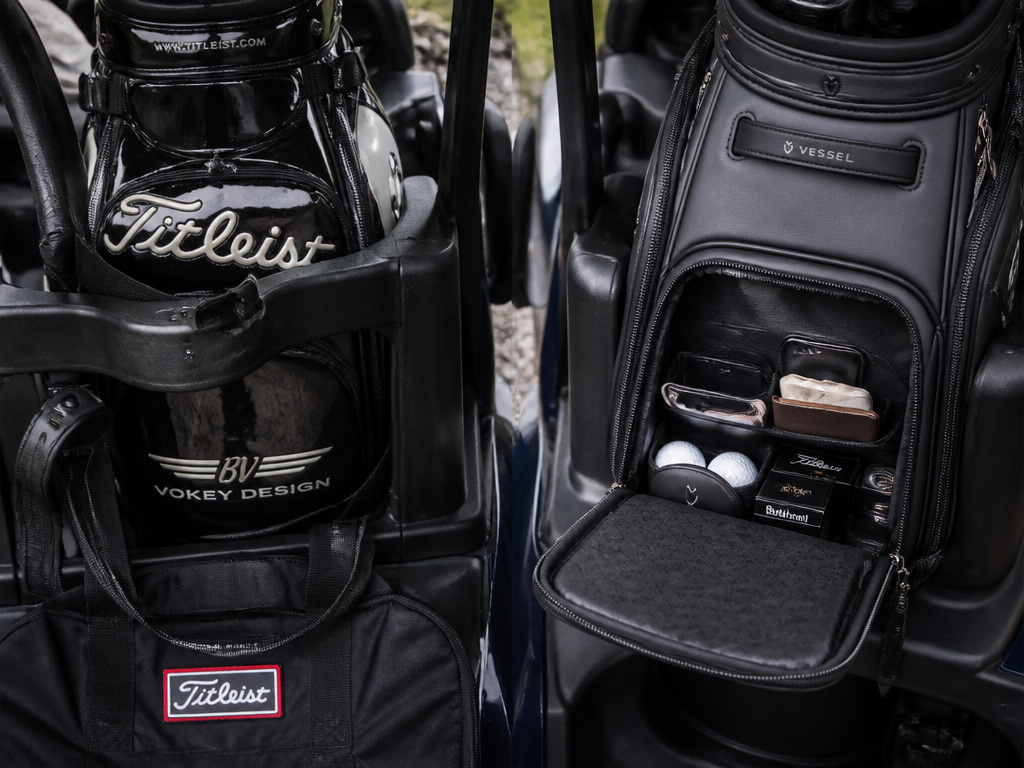
Staff bags are the giants you see on TV. A traditional staff bag, like the J.Lindeberg Staff Bag Prime, weighs 11 pounds. It’s built for a caddie, with vast storage and large panels for sponsor branding. For an amateur, it’s almost always the wrong choice. It’s too heavy to carry and, ironically, often a poor fit on a standard golf cart.
Yes, you can put a staff bag on a golf cart. But it barely fits into the bed. The cart frame digs into the bag’s material, accelerating wear and tear. Staff bags also lack the forward-facing pockets of a dedicated cart bag, so your gear is harder to reach.
This mismatch created a new category: the staff cart bag. This is a hybrid. It uses the oversized, upright profile and aesthetic of a staff bag (like a 10.5-inch top for branding) but builds it on a cart bag chassis weighing 6.5 to 7.5 pounds. The Keep Perfect Golf Staff Cart Bag is a prime example. It’s for the golfer who wants the tour look but actually rides in a cart.
| Feature | Traditional Staff Bag | Staff Cart Bag |
|---|---|---|
| Weight | 10-13 lbs | 6.5-7.5 lbs |
| Primary Use | Caddie / Tour Transport | Riding Cart |
| Top Size | Oversized (for branding) | Oversized (for branding) |
| Pocket Layout | Traditional, not always cart-optimized | Forward-facing, cart-optimized |
| Best For | Professional, caddied rounds | Amateur who rides and wants the pro look |
If you love the staff bag aesthetic, buy a staff cart bag. You’ll get the look without the 11-pound penalty and with pockets you can actually use. Otherwise, stick with a standard cart bag or a lightweight cart bag designed for pure function.
Hybrid Bags: The “Do-It-All” Compromise
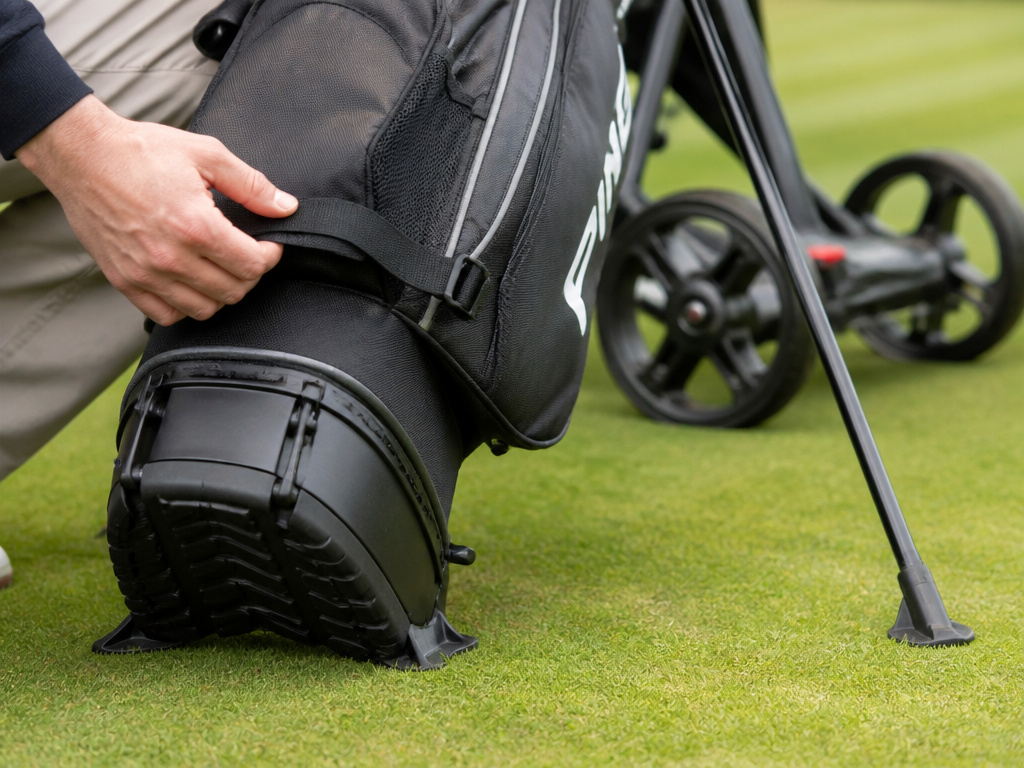
The hybrid bag, like the Callaway Fairway 14, tries to be both a stand bag and a cart bag. It has legs and a dual strap, but it also has a heavy-duty base and cart-friendly features like Lowrider 2.0 technology. The promise is one bag for all situations.
The reality is a compromise. At 7.25 pounds, the Fairway 14 is too heavy for a dedicated walker. Testers at MyGolfSpy were clear: “Buy this one for the storage and club protection, not the stand.” They found the FLEX POD stand system underwhelming.
So who is it for? The golfer who splits their time 50/50 between walking and using a push cart. The hybrid bag is the solution when you don’t want to own two bags. Its cart-optimized base works well with modern electric push carts, and its stand is there for the holes where you park and walk to your ball.
The short version: A hybrid bag is a cart bag with legs attached. Evaluate it as a cart bag first. If the stand is decent, that’s a bonus.
Frequently Asked Questions
What is the lightest type of golf bag?
Sunday or carry bag is the lightest, often under 3 pounds. Next are stand bags, with the lightest models like the Sun Mountain 2.5+ coming in around 2.5 pounds. Cart bags and staff bags are significantly heavier.
Can you use a stand bag on a golf cart?
Yes, all modern stand bags include a cart strap pass-through channel. However, the bag’s curved back (designed for your back) can make it less stable on a cart than a flat-backed cart bag. It works in a pinch, but it’s not ideal.
Why are staff bags so expensive?
You pay for premium materials (leather, high-denier nylon), extensive branding space, and massive storage capacity. They are also lower-volume products compared to mass-market stand and cart bags. For most amateurs, the cost isn’t justified by the utility.
Is a 14-way top better than a 6-way top?
It depends on your use. A 14-way top is better for cart bags because it stops club chatter during rides. For stand bags, a 6-way top is often better, it’s lighter, and clubs don’t rattle as much when you’re walking. The extra organization can also slow you down when pulling clubs.
What’s the most important feature in a golf bag?
Empty weight. It determines whether you can carry it comfortably. After that, match the bag’s features to your primary mode of transport: stand and straps for walking, forward pockets and a sturdy base for riding.
How long should a golf bag last?
Quality bag from a major brand should last 5-10 years with regular use. The first things to wear are usually the zippers and the stand mechanism. Protecting your bag with a travel case when flying and avoiding overstuffing pockets will extend its life.
Before You Go
Your bag is the one piece of equipment you use on every single hole. Don’t choose it for its color or a clever pocket. Choose it for how it gets from the first tee to the 18th green.
If you walk, the math is simple. Find a stand bag under 6 pounds with a comfortable dual-strap system. The Ping Hoofer is the default for a reason. If you ride, lean into a dedicated cart bag with a 14-way top and forward-facing pockets. The Bag Boy Chiller Pro exemplifies the type.
Ignore the hybrid hype unless your weekly routine genuinely mixes carrying and carting. And unless you have a caddie on retainer, admire staff bags from a distance. Your shoulders and your golf cart will thank you.
