
Pre-Round and On-Course Golf Nutrition: What to Eat & When
This post contains affiliate links. As an Amazon Associate, we earn from qualifying purchases.
This post contains affiliate links. As an Amazon Associate, we earn from qualifying purchases.
Golf nutrition for a round comes down to three fuel stops: a carb-and-protein breakfast 1-2 hours before you tee off, 30-60 grams of carbohydrates per hour from portable snacks during play, and 13-18 ounces of water per hour with electrolytes if you sweat heavily. The goal is to keep blood sugar stable and prevent the 10-30% glucose dip that causes fatigue and poor shots on the back nine.
Strip it back. Most of the advice out there is either too vague (“eat healthy”) or hyper-specific to pros with nutritionists. What you actually need is a simple, repeatable system you can pack in your bag. It’s not about superfoods or pre-round caffeine spikes. It’s about steady fuel over four hours.
This guide walks through the three phases: what to eat before you leave the house, what to munch on between shots, and how much to drink based on your sweat. We’ll use numbers from actual golf studies and name the snacks that work without a cooler. By the end, you’ll have a plan that fits in two pockets and keeps your energy, and your score, from cratering after the turn.
Key Takeaways
- Eat a breakfast with carbs and protein 1-2 hours before your round, a heavy, greasy meal right before tee-off leads to sluggishness by the 7th hole.
- Pack 30-60 grams of fast-acting carbohydrates per hour of play; a banana (27g carbs) and a handful of pretzels (22g per ounce) will cover most of that.
- Drink 13-18 ounces of fluid per hour, and if you’re a heavy sweater, alternate water with an electrolyte drink like Gatorlyte to replace sodium and maintain your drive to drink.
- Your post-round meal matters more for recovery than any on-course supplement; aim for a mix of carbs and protein within 60 minutes of finishing.
- Caffeine-loaded “energy” drinks are a trap; they dehydrate you and often cause a crash just as you’re lining up your putt on 16.
The Pre-Round Meal (Your First Fuel Stop)
A 2022 study at the Ishizaka Golf Club provided competitive golfers with a standardized breakfast of 635 calories: 12% protein, 25.1% fat, and 48.3% carbohydrates. This meal, consumed 1-2 hours before play, supplied the 1-4 grams of carbohydrates per kilogram of body weight recommended by the American College of Sports Medicine (ACSM) to pre-load energy stores.
Forget the “big game” breakfast. A heavy, greasy plate right before you tee off is a one-way ticket to feeling bloated and mentally foggy by the time you reach the 7th green. What you’re after is fuel that’s available, not sitting in your gut.
The goal is to top off your liver and muscle glycogen, your body’s preferred energy source for walking and swinging. The ACSM guideline is a specific target: 1 to 4 grams of carbs per kilogram of your body weight, eaten 1 to 4 hours before exercise. For a 180-pound (82 kg) golfer, that’s 82 to 328 grams of carbs. That’s a range, not a mandate. Hitting the lower end is fine.
Here’s the truth nobody sells: the protein in that pre-round meal might be more important than the carbs for how you feel. A study found that while carb-only and carb+protein feedings both helped, self-reported fatigue scores were lowest (2.5 out of 10) with the carb+protein combo, compared to carb-only (3.0) or a zero-calorie drink (4.0). Protein helps modulate the release of energy, preventing a sugar rush and crash.
So what does that look like on a plate? * Good: Two slices of whole-grain toast with almond butter, a banana, and a Greek yogurt. * Better: A bowl of oatmeal with a scoop of protein powder and a handful of berries. * Tour-level simple: A turkey and cheese sandwich on whole-wheat bread, eaten about 90 minutes before your tee time.
The common mistake is skipping breakfast entirely or replacing it with just coffee. You start the round in a mild energy deficit, and by the 12th hole, your blood glucose has dropped, your decision-making suffers, and that easy 6-iron approach starts missing the green. Give yourself the 60-90 minute buffer to digest.
On-Course Snacks: The 30-60 Gram Per Hour Rule
Ever wondered why you always seem to blade that simple chip shot on the 15th hole? It’s rarely your technique suddenly failing. It’s your brain running low on glucose. Research shows blood sugar can drop 10-30% during an 18-hole round without fueling, directly hurting concentration and fine motor control.
The fix is a steady drip of carbohydrates. Sports science recommends 30 to 60 grams per hour of continuous activity. Golf fits that model perfectly, it’s 4+ hours of low-to-moderate intensity exercise punctuated by high-intensity bursts (the swing).
Where this goes sideways: Relying on the turn hot dog and a soda. That’s a massive, hard-to-digest load of fat and simple sugar that will spike your blood glucose and then send it plummeting, leaving you feeling worse. Space your fuel out.
Your snack kit should be portable, non-perishable, and easy to eat while walking. Here’s what works:
| Snack | Carbohydrates (approx.) | Why It Works | When to Eat It |
|---|---|---|---|
| Banana | 27g per medium fruit | Natural sugars, portable, has potassium. | Holes 3-4, 9-10 |
| Apple Sauce Pouch | 20-25g per pouch | Easy to consume, no mess, fast-digesting carbs. | Every 3-4 holes |
| Pretzels (1 oz) | 22g | Salty, good for replenishing sodium lost in sweat. | A handful at the turn |
| Energy Chews (e.g., CLIF Bloks) | 24g per 3-block serving | Designed for athletes, precise dosing, often include electrolytes. | A few every other hole |
| Fig Newtons (2 cookies) | 20g | Dense, easy to pack, provide sustained energy. | Mid-round (holes 7-8, 13-14) |
| Turkey Jerky | <5g (mostly protein) | Not for carbs, but provides protein to curb hunger and aid satiety. | Pair with a carb snack mid-round |
The rhythm is simple: eat a small amount every three holes. A banana at the 4th, a pack of applesauce at the 7th, a few pretzels at the 10th. This keeps your interstitial glucose, the sugar level in your tissues, stable. A 2022 study using carbohydrate gummies found exactly this: golfers who consumed carbs every three holes maintained significantly higher glucose levels from the 4th hole onward and reported less fatigue.
I learned this the hard way early in my playing days. I’d skip breakfast, play the front nine on coffee, and then wonder why my back nine scorecard looked like a different, much worse player was signing it. A 10-30% dip in focus isn’t a small thing. It’s the difference between judging a green’s slope correctly and three-putting.
Hydration: It’s Not Just About Water
Dehydration is a silent score-killer. One study of elite collegiate golfers found that those who started their round dehydrated (measured by urine specific gravity) shot nearly four strokes higher on average than their well-hydrated peers. It’s not just about distance; mild dehydration impairs cognitive tasks and accuracy judgments.
Your hydration plan has three parts: pre-loading, maintaining, and recovering.
Pre-Load: Drink 13-18 ounces of fluid about 4 hours before your round. Your urine should be a light lemonade color, not dark yellow, when you arrive at the course.
During: Aim to drink 4-8 ounces every 20-30 minutes. For most, that’s a sip from a bottle after every shot or every green. If you’re a heavy sweater, you need to match your sweat rate.
Recover: For every pound of weight you lose on the course, drink 20-24 ounces of fluid afterward. Weigh yourself before and after a round once to learn your sweat rate.
Easy to miss: Water alone might not be enough if you’re sweating a lot. Sodium is the key electrolyte lost in sweat, and it helps your body retain the fluid you’re drinking. Without it, you can drink plenty and still end up in a sodium-deficit headache by the 16th tee.
This is where a product like Gatorlyte or a similar electrolyte mix becomes useful, not just marketing. The Gatorade Sports Science Institute (GSSI) case study of a golfer named “Thomas” is instructive. In hot, Ryder Cup-like conditions, with a sweat rate of 1 liter per hour and high sodium losses, his plan was to alternate between Gatorade Zero (for fluid without sugar) and Gatorlyte every few holes to keep his electrolyte balance in check. For the weekend player in summer, that might mean mixing one electrolyte packet into your 24-ounce water bottle for the back nine.
The sensory cue? If you stop feeling thirsty mid-round despite not drinking much, that’s a red flag. Your body’s thirst mechanism can shut down when you’re significantly dehydrated. Drink on schedule, not just on thirst.
What About Protein and Fat During the Round?
The short answer: protein, yes, in small amounts. Fat, avoid it.
A little protein during the round, think 10-20 grams spaced out, can help with satiety and provide a trickle of amino acids to support focus. This is why a turkey sandwich or some jerky can be a high-protein turn snack. But the main energy must come from carbohydrates. They are the only macronutrient your brain and muscles can use rapidly under aerobic conditions.
Fat, on the other hand, slows gastric emptying. A high-fat snack like nuts or a candy bar with a lot of fat will sit in your stomach, demanding blood flow for digestion that should be going to your muscles and brain. Save the handful of almonds for after the round.
Your on-course nutrition is about availability. Carbohydrates are available. Fat is not.
The Post-Round Recovery Window
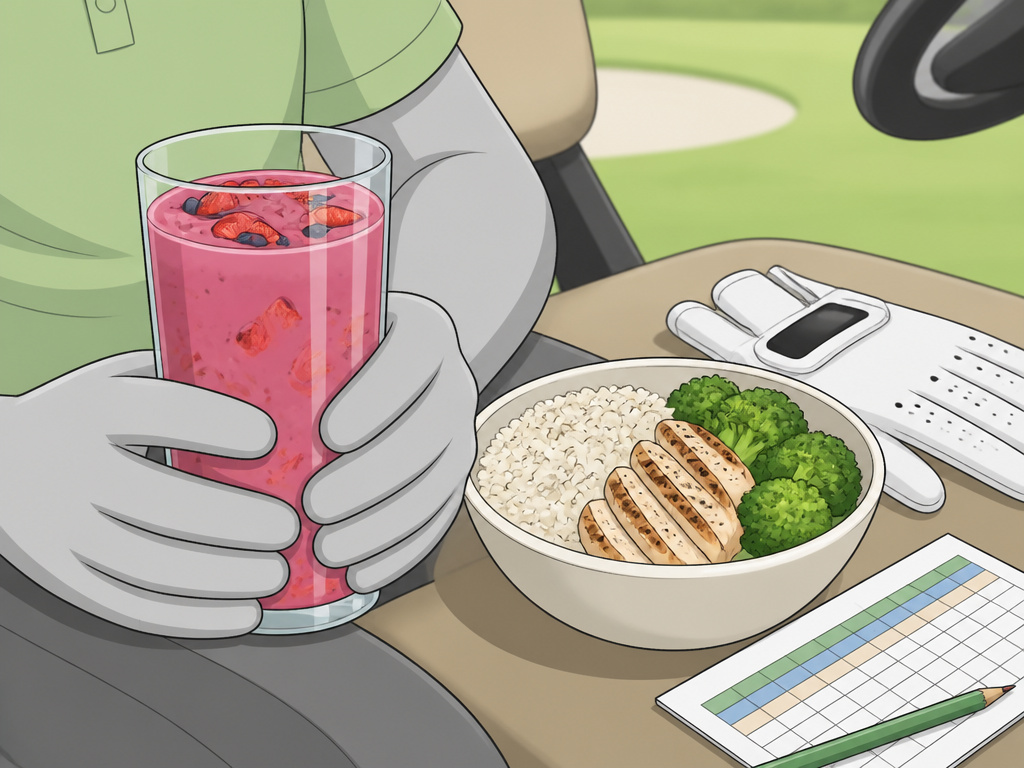
Your work isn’t done when you tap in on 18. The 60 minutes after your round are critical for recovery, especially if you play again tomorrow or have a heavy practice session planned. Your muscles are primed to replenish glycogen and start repair.
Aim for a meal or substantial snack that provides both carbohydrates and protein. The classic recommendation is 1.0-1.2 g/kg of carbs and 0.25-0.3 g/kg of protein. For our 180-pound golfer, that’s roughly 80-100g of carbs and 20-25g of protein.
This isn’t a free pass for a giant burger and fries. While that has carbs and protein, the high fat content blunts the recovery response. Better choices: * A chicken and rice bowl with vegetables. * A smoothie made with Greek yogurt, fruit, and a scoop of protein powder. * Chocolate milk (it’s actually a near-perfect recovery drink by the numbers).
This meal replenishes what you spent over four hours and kicks off muscle repair. Skip it, and you’ll start your next round already in a hole.
Frequently Asked Questions
What’s the best quick snack if I didn’t have time for breakfast?
Banana and a protein bar eaten on the way to the course. It’s not ideal, but the banana gives you fast-acting carbs (27g), and the bar (look for one with ~20g protein, <10g fat) provides some staying power. You’ll still need to snack every few holes.
Can I just drink a sports drink instead of eating?
You could, but it’s not optimal. A typical 20-ounce sports drink contains about 35g of carbs, which fits the hourly goal. However, solid food provides more satiety and often includes other nutrients like fiber and protein. A drink-only strategy might leave you hungry and can be harder on your teeth. Use drinks to supplement your food, not replace it.
I heard caffeine helps. Should I drink coffee before I play?
It’s a double-edged sword. Caffeine can enhance alertness and focus, which is great for golf. But it’s also a diuretic, which can contribute to dehydration if you’re not careful with your water intake. If you rely on coffee, have your usual cup with breakfast, but then switch to water and electrolyte drinks on the course. Avoid sugar-loaded energy drinks entirely.
How do I know if I’m drinking enough during my round?
The best gauge is your urine color post-round and your weight. If your urine is dark yellow hours afterward, you didn’t drink enough. Weigh yourself before and after a round (in minimal clothing). If you lost more than 2% of your body weight (3.6 lbs for a 180-lb person), you need to increase your fluid intake plan for next time.
The Bottom Line
Good golf nutrition is boringly consistent. It’s a pre-round meal with carbs and protein, a zip-top bag of snacks you eat every three holes, and a water bottle you sip from more often than you think you need.
The threshold for action is simple: if you’ve ever felt tired, irritable, or unfocused on the back nine, your fuel plan is the first thing to fix, before you buy a new driver or take another lesson. Pack a banana, an applesauce pouch, and some jerky. Fill a 24-ounce bottle with water and maybe one electrolyte tab. Do that for three rounds.
Your scorecard will notice before you do. The game is hard enough without fighting your own tank gauge. Strip it back. Fuel the engine, then work on the steering.
