
Top Hot Weather Golf Tips: Acclimatisation, Hydration & Strategy
This post contains affiliate links. As an Amazon Associate, we earn from qualifying purchases.
This post contains affiliate links. As an Amazon Associate, we earn from qualifying purchases.
Hot weather golf requires three things: a drink schedule based on body weight, a 10-14 day acclimatisation period if you’re new to the heat, and a yardage adjustment of about two yards per 10°F temperature rise. The goal is to manage your core temperature and hydration so your decision-making survives the back nine.
That 10-14 day figure isn’t a suggestion. It’s the International Golf Federation’s medical guideline for full acclimatisation. Your body needs that time to increase plasma volume and improve sweat efficiency. Most weekend players ignore it, fly into a desert destination, and wonder why they’re dizzy by the 13th hole even after drinking water.
What follows: the exact pre-round fluid math, the one heat metric that matters more than temperature, the simple clothing swap that cuts your thermal load in half, and the early symptoms that mean you should stop playing immediately.
Key Takeaways
- Full heat acclimatisation takes 10-14 days. Treat yourself as one heat band hotter if you’re unacclimatized, over 65, or on certain medications.
- Drink 7-8 ml per kg of body weight (about 500ml for a 70kg person) in the two hours before your round, then aim for 3 ml per kg every 15-20 minutes during play.
- Your driver gains about two yards of carry for every 10°F rise in air temperature; a pitching wedge gains only about 1.3 yards.
- Use dew point, not just temperature, to assess real heat risk. A dew point above 65°F (18°C) means high humidity that cripples sweat evaporation.
- Stop playing and seek cool shelter if you experience headache, nausea, unusual weakness, muscle cramps, irritability, or confusion.
How Much Water Do You Actually Need on the Course?
Telling someone to “drink plenty” is as useless as saying “keep your head down.” You need a number. Two primary sources give you that number, and they agree on the framework.
The Golf Australia Hot Weather Guidelines provide the formula: drink 7-8 ml of fluid per kg of body mass in the two hours before exercise. For a 70 kg (154 lb) golfer, that’s about 500 ml (17 oz). During the round, aim for 3 ml per kg every 15-20 minutes, another 250 ml (8.5 oz) for that same golfer. This aligns with the NIOSH benchmark of roughly 8 ounces every 15 to 20 minutes for moderate activity in heat.
A common error is waiting for thirst. By the time you feel thirsty on a hot course, you’re already behind on fluid. Your swing doesn’t need a fix yet; your body needs a schedule.
The trick is turning that math into a routine you’ll actually follow. Use your scorecard as a timer.
| Hole Block | Action | Why This Works |
|---|---|---|
| Before Tee-Off | Drink 500ml (17oz) in the 2 hours prior. | Pre-hydration tops off your system so you start ahead. |
| Every Tee Box | Take 3-4 deliberate swallows. | Small, frequent intake is absorbed better than gulping. |
| After Hole 5 | Check your bottle. If it’s half full, you’re on pace. | An early check lets you correct gradually, not panic at the turn. |
| At the Turn | Refill completely, even if you have some left. | Ensures you have enough for the closing holes, where fatigue sets in. |
If you’re sweating heavily for several hours, add a balanced electrolyte drink. Water is perfect for shorter rounds, but a four-hour walk in 95°F heat will drain sodium. Don’t turn every drink into sugar, but do use electrolytes strategically. And never make alcohol your primary fluid source, it dehydrates you and impairs judgment, a dangerous combo in the heat.
The 10-14 Day Rule Nobody Talks About (But the Pros Follow)
You can nail your hydration and still get cooked by the heat if your body isn’t ready for it. This is the single biggest gap in most hot-weather advice.
The International Golf Federation heat guidelines state clearly that full acclimatisation to hot and/or humid conditions can take up to 10-14 days. This process involves physiological changes: your plasma volume expands, you start sweating sooner and more efficiently, and your core temperature stabilizes at a lower level for the same workload.
What does this mean for you? If you live in a cool climate and book a golf trip to Arizona in July, your body will treat the first round as a shock. No amount of water in your bag will instantly grant you that acclimatisation. The guideline advises that unacclimatized individuals, older players, or those on relevant medication should treat themselves as one heat band hotter than the thermometer indicates.
Where this goes sideways: Flying in on Friday for a Saturday tee time in extreme heat. You’ll feel fine for nine holes, then hit a wall of fatigue and brain fog on the back nine that no snack can fix.
Build heat tolerance gradually. If you have a big trip planned, start exposing yourself to heat in the weeks before. Take a walk at the warmest part of the day, hit the range in the afternoon sun, or play a few nine-hole rounds locally. The goal is to stimulate those physiological adaptations before you’re standing on a desert course with no shade in sight.
Your Yardages Are Wrong in the Heat (Here’s the Math)
Hot air is less dense than cold air. The ball flies farther. This isn’t just folklore; it’s physics you can quantify, which changes your club selection.
A formula presented by GOLF Top 100 Teacher Andrew Rice provides a useful estimate. Assuming a 250-yard drive with 150 mph ball speed, you gain about two yards on your drives for every 10-degree Fahrenheit rise in temperature. The effect diminishes with shorter clubs. A pitching wedge gains only about 1.3 yards per 10 degrees.
| Club | Approx. Gain per 10°F Rise | Practical Implication |
|---|---|---|
| Driver | 2.0 yards | On a 90°F day vs. A 60°F day, you’re 6 yards longer. |
| 7-Iron | ~1.7 yards | Enough to change your stock yardage by half a club. |
| Pitching Wedge | 1.3 yards | A subtle change, but enough to fly a green if you’re pin-seeking. |
Combine this with firm summer conditions. The ball will run out more. The smart play is to club down when you’re between clubs. Take more loft and make a smoother, controlled swing. This is especially critical on approach shots where distance control is everything. Don’t guess, use your warm-up to test your carry distances with a mid-iron and a wedge to feel the difference firsthand.
Dress for the Heat, Not Just the Clubhouse
Your clothing is your first line of defense. The right gear actively cools you; the wrong gear traps heat and sweat, weighing you down.
Forget cotton. Once it’s soaked, it stays soaked, clinging to your skin and stopping evaporation. Modern moisture-wicking shirts made from polyester or nylon blends pull sweat away from your skin to the fabric’s surface where it can evaporate. This evaporation is the cooling mechanism. Look for sun protection clothing with a UPF rating of 30+ to block ultraviolet rays without needing a separate sunscreen layer on your torso.
A wide-brimmed hat is non-negotiable. It protects your neck, ears, and face far better than a baseball cap. Pair it with UV400 sunglasses to protect your eyes and reduce squinting, which can contribute to fatigue and headaches.
Common mistake: Wearing a dark-colored polo. Dark colors absorb significantly more solar radiation than light colors. A white or light grey shirt reflects heat away from your body.
Your kit should also include active cooling tools. A FROGG TOGGS Chilly Pad cooling towel works through evaporation, wet it, wring it out, and drape it on your neck. The drop in skin temperature can help lower your core temperature. UPF arm sleeves, like those from Aegend, protect your arms from sunburn while offering a cooling effect. Keep a second glove in your bag to swap out when the first gets sweaty, and always dry your hands and grips with a separate towel.
The One Metric That Tells the Real Story: Dew Point
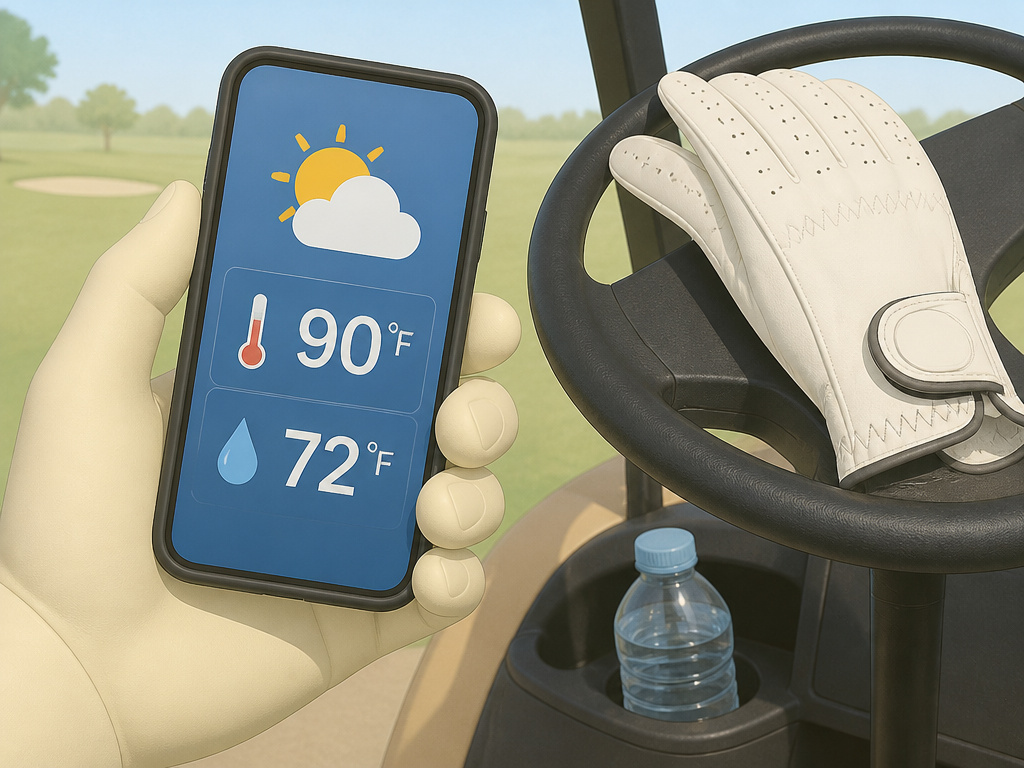
Checking the temperature is only half the picture. Humidity is what makes heat dangerous because it stops your sweat from evaporating. The best single number to assess this risk is the dew point.
Dew point is the temperature at which air becomes saturated with moisture. A higher dew point means more moisture in the air. When the dew point climbs above 65°F (18°C), the air feels muggy and your sweat evaporation drops dramatically. Above 70°F (21°C), it feels oppressive, and your body’s cooling system struggles.
If the dew point is 70°F and the air temperature is 90°F, your body works as hard as it would in 100°F dry heat. This is why you feel “hit by a wall” in humid climates.
Use a weather app that shows dew point. It’s a better guide for deciding whether to walk or ride than temperature alone. If the dew point is high, be extra vigilant with your fluid schedule, seek shade aggressively, and seriously consider taking a cart. The reduced physical exertion can be the difference between finishing your round strong and needing to stop after 14 holes.
Walk or Ride? The Heat Decides for You.
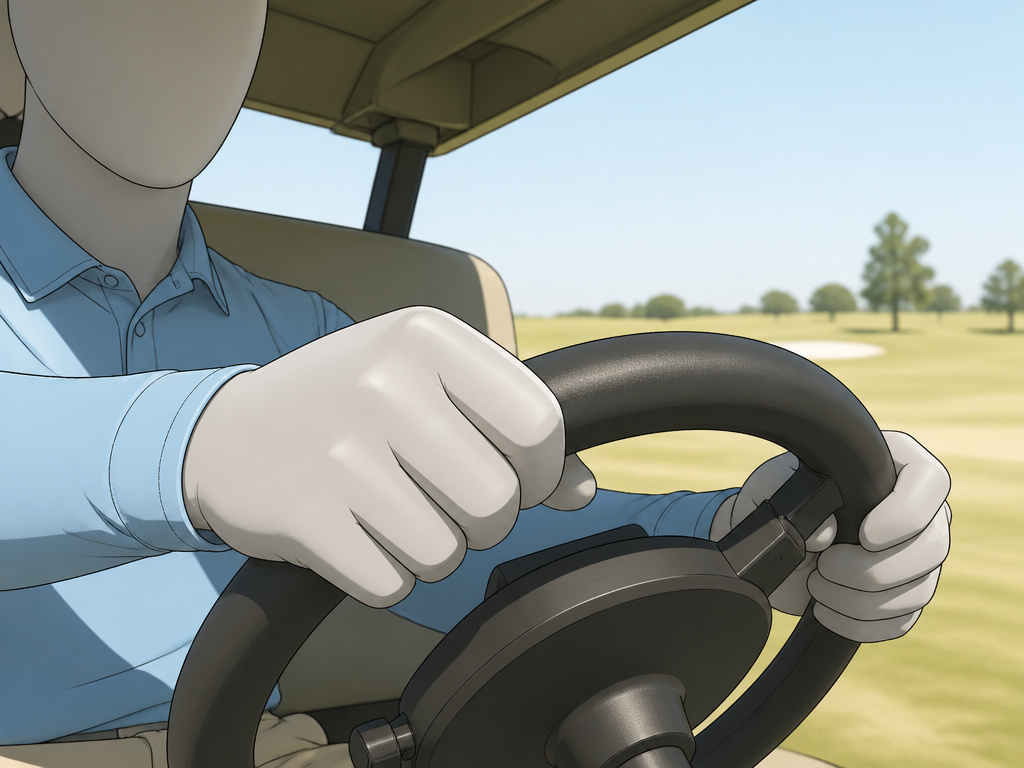
Walking is better golf. It gives you rhythm, lets you read the ground, and is better exercise. On a brutally hot day, it’s also a massive additional heat load.
The calculus is simple: if the combined stress of heat, humidity (check that dew point), and your own acclimatisation level is high, take the cart. The roof provides constant shade, and it eliminates the cardiovascular load of carrying or pushing your bag for four miles. What you lose in tempo you gain in preserved energy and cognitive function for the closing holes.
If you do walk, your preparation must be flawless. Use a push trolley, never carry. Load it with twice the water you think you need. Wear a technical hat and shirt. Plan your route between shots to use every scrap of shade available. And give yourself permission to play only nine holes if conditions are extreme.
When to Stop Playing: The Symptoms That Aren’t Negotiable
Heat illness sneaks up. It impairs your judgment, making you less likely to recognize your own decline. Know the warning signs in yourself and your playing partners.
Stop playing and move to a cool place immediately if you notice:
- Headache, dizziness, or nausea.
- Unusual weakness or heavy fatigue.
- Muscle cramps in the legs, arms, or abdomen.
- Irritability, confusion, or difficulty concentrating.
- Trouble walking steadily.
These are signs of heat exhaustion. Confusion, slurred speech, seizures, or loss of consciousness indicate heat stroke, a medical emergency. Call 911 immediately and begin cooling the person, move them to shade, apply cool wet towels to the neck and armpits, and fan them.
No score, no match, no green fee is worth negotiating with these symptoms. The smartest hot-weather round sometimes ends on the 12th tee.
Frequently Asked Questions
How do I rehydrate after a hot round?
Weigh yourself before and after. For every pound lost, drink 20-24 ounces of fluid. The Golf Australia guideline recommends replacing 150% of fluid lost. If you lost 2 lbs (about 1 liter), drink 1.5 liters. Include an electrolyte source if you sweated heavily.
Is sunscreen really that important for golf?
Yes. You’re outside for 4+ hours with significant sun exposure. Use a broad-spectrum, sport-rated sunscreen of SPF 30 to SPF 50. Alcohol-based gels are less likely to run into your eyes with sweat. Reapply every two hours, or more often if you’re sweating profusely.
What’s the best snack for hot-weather golf?
Choose light, familiar carbohydrates with a little protein. A banana, pretzels, a fig bar, or half a peanut butter sandwich work well. Eat something small around the 4th or 5th hole and again near the turn. Avoid heavy, greasy foods at the turn that will sit in your stomach.
Can I drink alcohol during a hot round?
It’s a poor strategy. Alcohol is a diuretic, promoting fluid loss. It also impairs judgment and coordination. If you choose to drink, limit it to one per hour and match each alcoholic drink with at least an equal amount of water or an electrolyte beverage.
Do cooling towels actually work?
Yes, through evaporative cooling. A towel like the FROGG TOGGS Chilly Pad retains water while feeling dry. When draped on your neck or wrists, the evaporation cools the blood flowing near the skin’s surface, providing a tangible drop in perceived temperature. It’s a tool, not a solution, use it alongside hydration and shade.
The Bottom Line
Hot-weather golf tips that work reject vague advice. They give you numbers: 10-14 days to acclimatise, 7-8 ml per kg to drink beforehand, two yards per 10°F for your driver. They tell you to check the dew point, not just the temperature. They insist you swap your cotton polo for a moisture-wicking shirt and your baseball cap for a wide-brimmed hat.
The goal isn’t to prove how much heat you can endure. It’s to make enough good decisions early, about fluid, clothing, and pace, that you have a clear head and steady hands left for the shots that decide your score on the 16th green. That’s how you play golf in the heat and still enjoy the game.
