
What is the Masters Green Jacket | The Prize Only 54 Exist
This post contains affiliate links. As an Amazon Associate, we earn from qualifying purchases.
This post contains affiliate links. As an Amazon Associate, we earn from qualifying purchases.
The Masters Green Jacket is a single-breasted, single-vented blazer in Pantone 342 green, made from a wool-polyester blend sourced from a Georgia mill, cut and sewn by Hamilton Tailoring Co. In Cincinnati, and fitted with custom brass buttons from Connecticut. The champion presented on Sunday wears a standby jacket; a custom-fitted replica with his name inside is made later. Officially, only 54 exist. The winner may keep the original jacket off Augusta National grounds for one year, after which it returns to the club’s Champions Locker, a rule famously tested by Gary Player in 1961 and Seve Ballesteros in 1980.
That one-year window is where the jacket’s real cultural weight gets measured. It’s not just a coat kept under glass. It’s a coat worn to baseball games, Krispy Kreme drive-thrus, and Wimbledon, turning the abstract honor into a public, slightly awkward, deeply human spectacle. The tension between Augusta National’s strict control and the champion’s brief ownership creates every story worth telling.
What follows: the school-uniform fabric mix from a specific Georgia mill, the Ohio tailor sworn to secrecy, the documented cases of jackets going rogue, and the precise moment a $250 garment becomes the most recognizable non-monetary prize in sports.
Key Takeaways
- The jacket’s fabric is a specific wool-polyester blend from the Forstmann mill in Dublin, Georgia, but the garment is assembled by Hamilton Tailoring Co. In Cincinnati, a split supply chain that’s been in place since 1967.
- Champions are initially presented with a generic jacket from a standby rack. Their actual, custom-fitted replica takes about a month to produce and becomes their permanent, take-home version.
- Only two champions have openly defied the rule to return the jacket: Gary Player (1961) and Seve Ballesteros (1980). Their defiance led directly to the modern policy of issuing a separate replica for champions to keep.
- The color is a trademarked shade, Pantone 342, often called “Masters Green.” Its precise formulation is a guarded asset of Augusta National.
- Jack Nicklaus, the player most associated with the Masters, did not own a properly fitted, official green jacket until 1998, 35 years after his first win, due to a comedy of sizing errors and replica misfires.
The Origins: From Member Uniform to Champion’s Prize
The green jacket began as a practical solution, not a trophy. In 1937, Augusta National members were instructed to wear them during the tournament. The idea was simple: make the members easily identifiable to patrons who might need directions. Bobby Jones, the club’s co-founder, had gotten the idea from seeing captains at Royal Liverpool wear distinctive red jackets years earlier. The early versions, made by Brooks Uniform Company in New York, were heavy wool and reportedly unpopular in the Georgia spring heat.
It wasn’t until 1949 that the garment jumped from club livery to champion’s spoils. Sam Snead’s victory that year provided the occasion. The club retroactively awarded jackets to all prior champions and established the Sunday presentation as a permanent ritual. In that moment, the jacket transformed. It was no longer a staff uniform. It became a symbol of entry into the most exclusive winner’s circle in golf.
Common mistake: Thinking the green jacket was always the winner’s prize. It served as a member’s uniform for 12 years before Sam Snead was draped in it in 1949, merging two separate traditions into one.
This shift is what separates the Masters from other majors. The Claret Jug is a trophy. The Wanamaker Trophy is a trophy. The Green Jacket is a wearable artifact that comes with a built-in narrative, the previous champion physically passing a mantle to the new one. It’s a ritual that visually reinforces lineage.
The Jacket Itself: Specs, Sourcing, and Secrets
Let’s strip it back to the materials. What are you actually looking at when you see that coat? The fabric is a workmanlike blend of wool and polyester, the kind used in durable school uniforms. It’s sourced from the Forstmann mill in Dublin, Georgia. This isn’t luxury suiting wool. It’s chosen for consistency and hardiness, meant to look the same on television year after year.
The cut-and-sew work happens 550 miles away at Hamilton Tailoring Co. In Cincinnati, Ohio. They’ve held the contract since 1967, taking over from Brooks Uniform after members complained the original jackets were too heavy. The company is famously tight-lipped; a past chairman once told a newspaper, “We can’t talk about it. I wish I could tell you more. It would be good for our business, but I can’t.”
The detailing is where the hidden cost lies. The brass buttons are made by the Waterbury Co. In Connecticut, each embossed with the Augusta National logo. The embroidered patch on the left breast comes from A&B Emblem Co. In Weaverville, North Carolina. The lining is a sheer Bemberg rayon. Each jacket takes about a month to produce and costs the club roughly $250.
| Component | Specification | Origin | Why It Matters |
|---|---|---|---|
| Fabric | Wool-polyester blend | Forstmann Mill, Dublin, GA | Provides consistent color (Pantone 342) and durability, not luxury drape. |
| Manufacturer | Full garment assembly | Hamilton Tailoring Co., Cincinnati, OH | Holder of the secretive contract since 1967; alterations are possible but not always trusted by winners. |
| Buttons | Brass, ANGC-embossed | Waterbury Co., Connecticut | Custom hardware that prevents easy replication; a lost button is a minor crisis. |
| Patch | Embroidered Augusta National logo | A&B Emblem Co., Weaverville, NC | The most visible brand mark; applied after the jacket is assembled. |
| Lining | Sheer Bemberg rayon | Not specified | Bears the winner’s name stitched inside; the only truly personalized element. |
The Masters Green shade itself is trademarked Pantone 342. You can’t legally sell a blazer in that exact color and call it a Masters jacket. This control extends to the physical objects. Only 54 official champion jackets are believed to exist. They are tracked.
I learned through poor results that if you can’t execute a shot calmly on the range, you definitely shouldn’t try it on the course. The same principle applies here. If a club can’t control its most famous symbol, the symbolism evaporates. Augusta National’s entire history with the jacket is a masterclass in controlled scarcity. They make the rules. They own the color. They keep the inventory.
The Rules: Ownership, Travel, and Defiance
Here’s the truth nobody sells: the jacket you see the winner wear on Sunday afternoon isn’t the one he keeps. It’s a standby from the club’s closet, grabbed to fit close enough for the ceremony. His actual jacket, the one with his name in the lining, is made to measure afterward. He gets that one for life.
But there’s a catch, and it’s the source of all the best stories. The official, original green jacket must reside at Augusta National. The reigning champion is granted a one-year exemption to take it off property. After that, it returns to hang in his dedicated locker in the Champions Locker room, only to be worn again when he’s on the club grounds. This rule exists because of what happened without it.
Where this goes sideways: A champion refusing to return the jacket after his year. Gary Player did it in 1961, Seve Ballesteros did it in 1980, and the club’s response was to formalize the replica system. Now, winners get a dedicated replica to keep at home, no questions asked.
Player, the first international winner, was asked by co-founder Clifford Roberts to return his jacket. His reported reply: “Fine, Mr. Roberts, if you want it, come and fetch it!” He eventually agreed not to wear it in public. Ballesteros simply ignored the requests and kept his in Spain. These incidents turned a tradition into a strictly codified policy. The modern champion gets two jackets: the club’s original that he must return, and a personal replica that is forever his.
This is why you see the jacket in the wild. That one-year pass has been used for everything from a puck drop at a Toronto Maple Leafs game (Mike Weir) to throwing a first pitch for the Texas Rangers (Scottie Scheffler) to a round of late-night doughnuts (Phil Mickelson). The jacket becomes a passport to a year of celebration. Hideki Matsuyama was so paranoid during his year that he never dry-cleaned it, carrying it on his arm through airports, afraid to let it out of his sight.
Myths and Mishaps: The Human Stories Behind the Icon
The pedestal the jacket sits on invites chaos. The stories of things going wrong are more revealing than the perfect presentations. They show the value.
Take Jack Nicklaus. He won his first Masters in 1963 as a 23-year-old. For the ceremony, Arnold Palmer handed him a size 46-long jacket. It swallowed him. “It hung on me like an old blanket,” he said. No replacement was ordered for his 1964 defense, so he borrowed one. He borrowed again for wins in 1965 and 1966. Frustrated, he later had a replica made by a personal sponsor. It was the wrong color and cut. He wore it for wins in 1972 and 1975, and nobody noticed. He didn’t get a proper, official, perfectly fitted green jacket from the club until 1998.
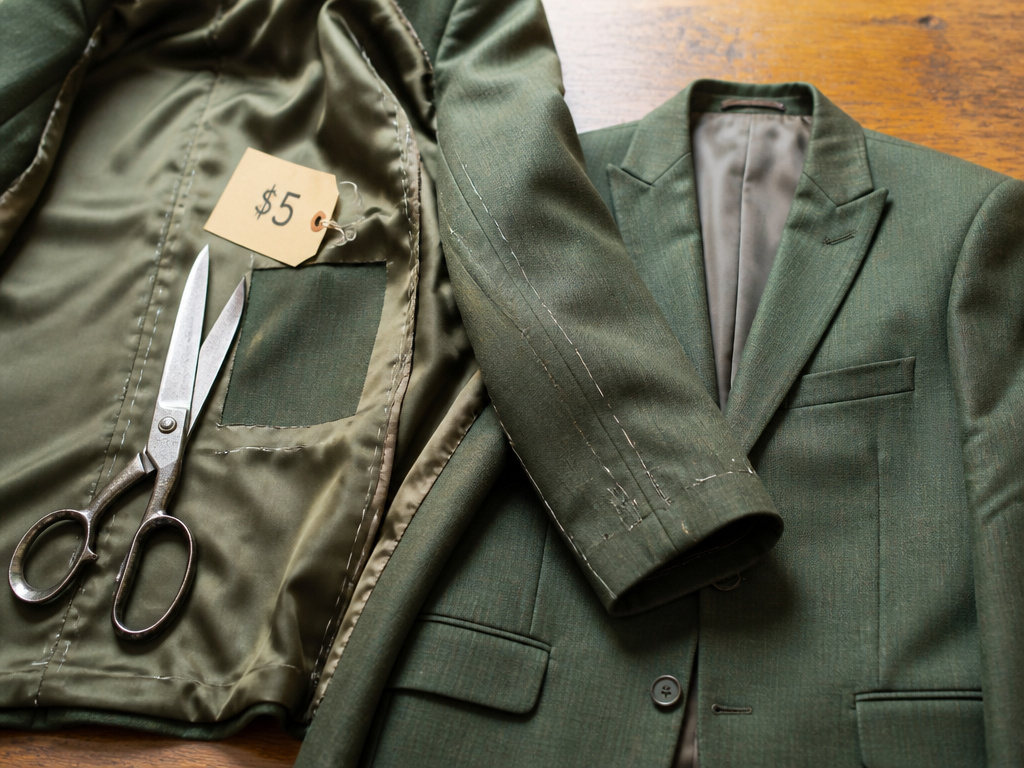
Then there’s the case of the thrift shop jacket. In 1994, a green jacket was found in a Toronto thrift store, priced at $5. The original owner’s name had been cut from the lining, suggesting it was a member’s jacket, not a champion’s. It was authenticated and sold at auction in 2017 for $139,000. Augusta National, which trademarked the term “Green Jacket” in 2010, now watches the auction houses closely.
These aren’t tales of neglect. They’re proof of magnetic attraction. A jacket goes missing, and its value skyrockets. The rules get broken, and new rules are written. The artifact is powerful because it’s desired, and it’s desired because it’s powerfully controlled.
Frequently Asked Questions
Can the Masters champion keep the green jacket forever?
Yes, but with a critical distinction. The champion is given a custom-fitted replica jacket to keep permanently. The original green jacket presented on Sunday remains the property of Augusta National. The champion may take that original jacket off-site for the year of his reign, but after that, it must return to his locker at the club.
How much does a Masters green jacket cost?
The cost for Augusta National to produce one green jacket is approximately $250. This covers the materials and labor from the mill, tailor, button maker, and embroiderer. Its market value, however, is astronomical. A member’s jacket found in a thrift shop sold for $139,000 at auction, and champion jackets are considered priceless and are never legally sold.
Why is the Masters jacket green?
The green color was chosen to blend with the spring setting at Augusta National, specifically the verdant shades of the azaleas and pines. The exact shade is a trademarked color called Pantone 342. The original idea for distinctive member jackets came from Bobby Jones seeing captains wear red jackets at Royal Liverpool Golf Club.
Has a green jacket ever been stolen or lost?
There is no public record of a champion’s jacket being stolen. However, a member’s jacket was lost and ended up in a Toronto thrift shop in 1994. Champions like Charl Schwartzel (2011) have left theirs in the back seat of a car, only for it to be returned. The club maintains tight control over the official 54 champion jackets.
The Bottom Line
The Masters Green Jacket works because it operates on two levels. On one, it’s a simple, slightly scratchy blazer made from school-fabric, assembled under a secret contract in Ohio. On the other, it’s a narrative engine. The tension between the club’s ironclad rules and the champion’s temporary ownership generates every headline, the airport carry, the dry-cleaning fear, the borrowed coats, the thrift shop miracle.
That’s the real genius. It’s a tournament prize that behaves like a cultural relic. It’s a golf caddie’s ultimate dream to see his player win one. Its lore is a core part of Masters traditions. It transcends the sport because its story is about control, desire, and the occasional, glorious human messiness that happens when a $250 coat is told it’s priceless. You don’t just win it. You become part of its ongoing, slightly awkward, deeply compelling history.
