
What to Pack for a Golf Trip: Smart, Minimalist Strategies
This post contains affiliate links. As an Amazon Associate, we earn from qualifying purchases.
This post contains affiliate links. As an Amazon Associate, we earn from qualifying purchases.
Pack for a golf trip by starting with your itinerary, not your closet. Lay out the gear you need to play first, then add performance clothing layers for each round, a second pair of golf shoes if rain is likely, weather protection for the destination, and a “Round Saver” kit in your carry-on to survive a baggage delay. Everything else is optional.
The wrong way is to just pile everything you own into a suitcase. That’s how you end up with a 50-pound checked bag, $150 in airline fees, and no room for the shirt you actually wanted to buy from the pro shop.
Instead, let’s strip it back. Good golf travel is about reliable gear that gets you on the course with your mind on the game, not on your luggage. We’ll build a packing system around the five things you actually control: the clubs, the clothes, the weather, your body, and the airport.
Key Takeaways
- Start your packing by deciding whether to fly or ship your clubs. For multi-stop trips or equipment worth over $2,000, shipping with a service like Ship Sticks is cheaper than airline damage.
- Every golf trip needs a “Round Saver” kit in your carry-on: one complete golf outfit, a glove, a sleeve of balls, essential meds, and a phone charger. If your checked bag is delayed, you can still play with rental clubs.
- Pack for the destination type, not golf in general. Links courses demand a real waterproof jacket and extra gloves; desert trips require sun protection and electrolytes; resort trips enforce dress codes you must respect.
- Budget $40–$60 per round in cash for caddies, bag drop tips, and halfway-house snacks. Premium courses run on cash tips, and ATMs on property charge exorbitant fees.
- Bring 50% more golf balls than your home course requires. Links rough and desert waste areas swallow balls at a higher rate, and pro-shop prices are a brutal markup.
The Core Golf Travel Packing List
Start here before you think about destination specifics. This essential gear travels on every trip, whether it’s Scotland or Scottsdale. Build this foundation, then we’ll adapt it.
Before you start: Airlines have liability caps for sports equipment that won’t cover a high-end driver shaft. Remove the driver head if possible and carry it on. Lithium batteries for rangefinders or AirTags must go in your carry-on per FAA rules, not checked with your clubs.
First, the clubs. You have two choices: check them or ship them.
| Option | Best For | Risk If Skipped |
|---|---|---|
| Check with Airline | Single-destination trips to major airports, sub-$2,000 club sets. | Baggage handling snaps a shaft; the airline’s liability limit is often $500 per bag, leaving you hundreds short on a replacement. |
| Ship with Service (Ship Sticks) | Multi-stop itineraries, small regional airports (like North Bend for Bandon Dunes), clubs worth >$2,000. | Clubs arrive late, missing your first tee time. You must have a destination address ready 1-2 weeks out for a smooth handoff. |
If you fly with them, you need a real travel bag. A soft, padded case is fine for most direct flights, but for any trip involving a connection through a rough-handling airport, a hard travel case is the call. The extra bulk is worth the insurance.
Here’s your universal gear checklist. Tick these off first:
- Golf Bag & Clubs: Tag each club head with a sticker or tape. If one works loose inside the bag, the airline can match it back.
- Golf Travel Bag or Hard Case: Your first layer of defense. Look for one with TSA-approved locks so security can inspect it without breaking your locks.
- Rangefinder/GPS + Spare Batteries: International and remote courses often have sparse yardage markers. Don’t assume your phone app will get signal.
- Golf Balls (2–3 dozen): Pro-shop markup is real. Pack what you actually play.
- Gloves (3 minimum): Heat, humidity, and rain destroy leather. Rotating them lets each dry fully between rounds.
- Tees (generous supply): They’re cheap and lightweight, yet everyone runs out mid-trip.
- Shoe Bag: Keep your dirty golf shoes separate from your clean clothes. Some countries restrict soil entry on footwear.
- Pitch Repair Tool (2-3): You’ll make more pitch marks on unfamiliar, softer greens.
For your suitcase, the rule is layers, not bulk. A waterproof golf jacket is non-negotiable—even Arizona gets afternoon monsoons. Pack collared shirts, one per round plus a spare. Golf trousers or shorts? Check the forecast and the course dress code. Never assume cargo shorts are allowed.
Your body is part of your equipment. A small kit in your golf bag should include: – High-SPF sunscreen (SPF 50+) – Ibuprofen or similar pain relief – Blister prevention (like BodyGlide) – Electrolyte packets or tablets – A small, refillable water bottle
The part nobody mentions: Pack a small dry bag or waterproof stuff sack. Your rain jacket pockets are not waterproof. After an hour in a downpour, your phone and wallet will be soaked through the fabric. An $8 dry sack clips to your bag and is pure trip-saving genius.
The “Round Saver” Carry-On Kit
This is the most important bag you pack, and it’s the one you keep with you on the plane. Your checked luggage—golf bag included—can be delayed by a day or two. Your first tee time cannot.
Where this goes sideways: Assuming your clubs will make it. Baggage systems at small regional airports servicing golf destinations (Coos Bay, North Bend, Traverse City) are not gentle. A 24-hour delay is common enough to plan for.
Your carry-on “Round Saver” kit lets you walk off the plane, rent a set of clubs, and still play your scheduled round. It should contain:
- One complete golf outfit: shirt, pants/shorts, socks, underwear. This is your emergency uniform.
- A golf glove. Rental sets don’t include them.
- A sleeve of golf balls and a handful of tees.
- Essential medications and a small toiletry kit (toothbrush, deodorant).
- Phone, charger, travel documents, and a printed copy of your tee times and insurance.
- A light sweater or vest. Airport terminals and early transfer shuttles are often cold.
I learned this the hard way on a trip to Ireland. My clubs took a scenic tour through Heathrow for 36 hours. Because I had this kit, I rented clubs at Ballybunion and played. The guy in my group who didn’t? He sat in the pub, fuming, for two days. The cost of rental clubs is trivial compared to the cost of a missed round at a bucket-list course.
Simple. This kit turns a travel disaster into a minor inconvenience.
Links vs Desert vs Resort: Three Different Packing Lists
Now we adapt. A trip to Bandon Dunes has almost no overlap with a trip to Scottsdale. Pack for the destination, not for golf in general.
Coastal Links (Bandon Dunes, Whistling Straits, Cabot)
The weather is the main opponent. The priority is staying dry, warm, and stocked.
The rain jacket is the most important item. Not a water-resistant shell. A Gore-Tex or equivalent waterproof jacket rated for sustained, wind-driven rain. June at Bandon averages 55°F with 20 mph winds at tee time. You will play in the rain.
| Essential Item | Why It’s Critical | Common Mistake |
|---|---|---|
| Waterproof Jacket & Pants | Stops hypothermia and keeps you playing. | Bringing a light windbreaker that soaks through in 20 minutes. |
| Waterproof Golf Shoes | Wet feet ruin a round faster than any swing flaw. | Assuming your regular shoes will dry overnight—they often don’t. |
| Extra Gloves (4+) | Rotate between nines so each can dry. A soaked glove loses all grip. | Packing only two gloves for a four-round trip. |
| Golf Balls (2 dozen/day) | Links fescue and waste areas swallow balls. Budget this for average players. | Bringing your usual Saturday morning supply. |
| Wind Vest & Base Layer | Traps heat without bulk. You’ll strip the vest off by the back nine. | Packing a single heavy jacket you’re stuck wearing all day. |
| Cash ($60/round) | Caddies are often cash-only. Halfway houses might be too. | Arriving with only a credit card. |
What most people forget: Extra plastic tees. Links teeing grounds are famously firm. You’ll snap tees at twice your normal rate. Bring three times what you think you’ll need.
Desert Golf (Scottsdale, Las Vegas, Palm Springs)
Sun protection is the game. The priority shifts to hydration, staying cool, and preserving your energy over 18 holes in dry heat.
The desert sounds warm but plays brutal. A full-brim hat, not a visor, is mandatory. Your neck and ears will thank you by the 14th hole. Light, breathable shirts in moisture-wicking fabric are non-negotiable. You need two pairs of gloves because sweat and heat degrade the leather faster than cold does.
Easy to miss: Electrolyte supplementation. Water alone doesn’t replace what you lose sweating in 95°F heat over four hours. Pack tablets or powder. The difference in your back-nine focus is measurable.
Pack a complete change of shirt for the 19th hole. You will be soaked through by the end of the round. A fresh shirt in your bag weighs three ounces and feels like a million bucks. Don’t forget sunscreen rated for full-day outdoor use—apply it at the hotel, not on the first tee. By the time you remember at the turn, you’ve already been in the sun for two hours.
Desert hardpan is also tough on tees. Bring a sturdy, longer tee for your driver, as the hard ground offers little purchase for a short one.
Resort & Southeast (Pinehurst, Sea Island, Kiawah)
The challenge here is presentation and volume. These courses enforce dress codes, and you’ll likely play multiple rounds in a few days.
First, check the specific dress code for every course on your itinerary. Pinehurst No. 2 requires a collared shirt and prohibits cargo shorts. Some courses even require your rain jacket to have a collar to be worn on the course. A hooded non-collared pullover might get you turned away at the bag drop.
Second, pack for outfit rotation. You don’t want to wear the same shirt for two consecutive rounds in front of the same group. Laundry service is available but expensive and slow. The simple math: one shirt per round, plus one spare.
Third, verify spike policy. Most high-end resort courses require soft spikes. Metal spikes are almost universally banned. Don’t get caught needing a $25 pro-shop replacement.
What most people forget: A light pullover or sweater for early morning tee times in the shoulder seasons. An October morning in the Sandhills can be 48°F at dawn, warming to 70°F by the back nine. That first hour is miserable without a layer you can easily take off.
The Bag Drop: Organizing Your Golf Travel Gear
 Packing it is one thing. Getting it to the course organized is another. A cluttered travel bag leads to lost items, extra fees, and frustration.
Invest in a bag with a hard-shell case or a reinforced, padded soft case.com/best-golf-travel-bags-for-airlines/). The right bag has reinforced corners, sturdy wheels, and enough internal padding that you don’t need to wrap every club in a towel. For maximum protection, especially on long-haul journeys, a hard travel case** is the only way to guarantee your driver shaft arrives unbent.
Inside your suitcase, use packing cubes. One cube for golf clothes, one for casual wear, one for underwear and socks. It keeps everything findable and compresses your load. A waterproof laundry bag is also key for separating wet rain gear or sweaty clothes from the clean stuff.
For the car ride to the airport or the road trip, a trunk organizer for golf gear keeps shoes, balls, and snacks from rolling around. It’s a small thing that reduces pre-round stress.
If you’re walking the course, consider the weight. A lightweight stand bag is better than a heavy staff bag if you’re tackling 36 holes at a walking-only resort like Bandon Dunes. For those trips, or for anyone who wants to save their back, an electric golf caddie can make a big difference, though you’ll need to check airline battery rules.
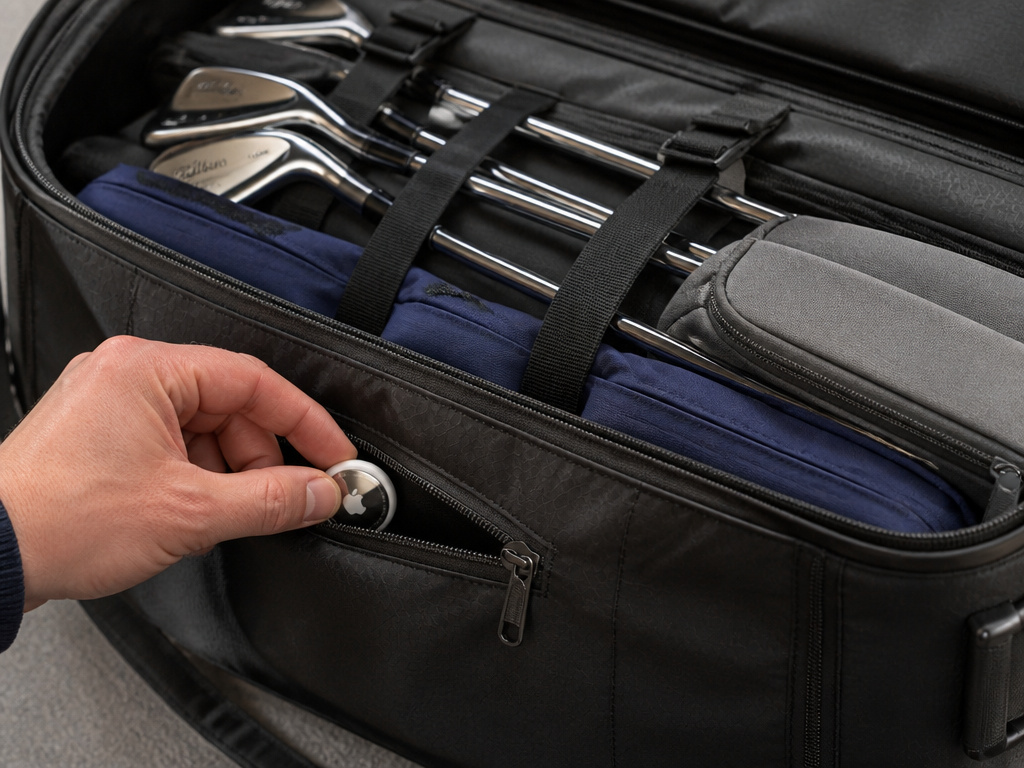
Finally, attach an Apple AirTag or similar tracker to your golf bag. Hide it in a pocket. The peace of mind of knowing your clubs are in Terminal B and not still in Chicago is worth the $30.
Budgeting for the Unseen Costs
 Your packing list isn’t complete without a financial plan. Golf trips have hidden costs that catch first-timers off guard.
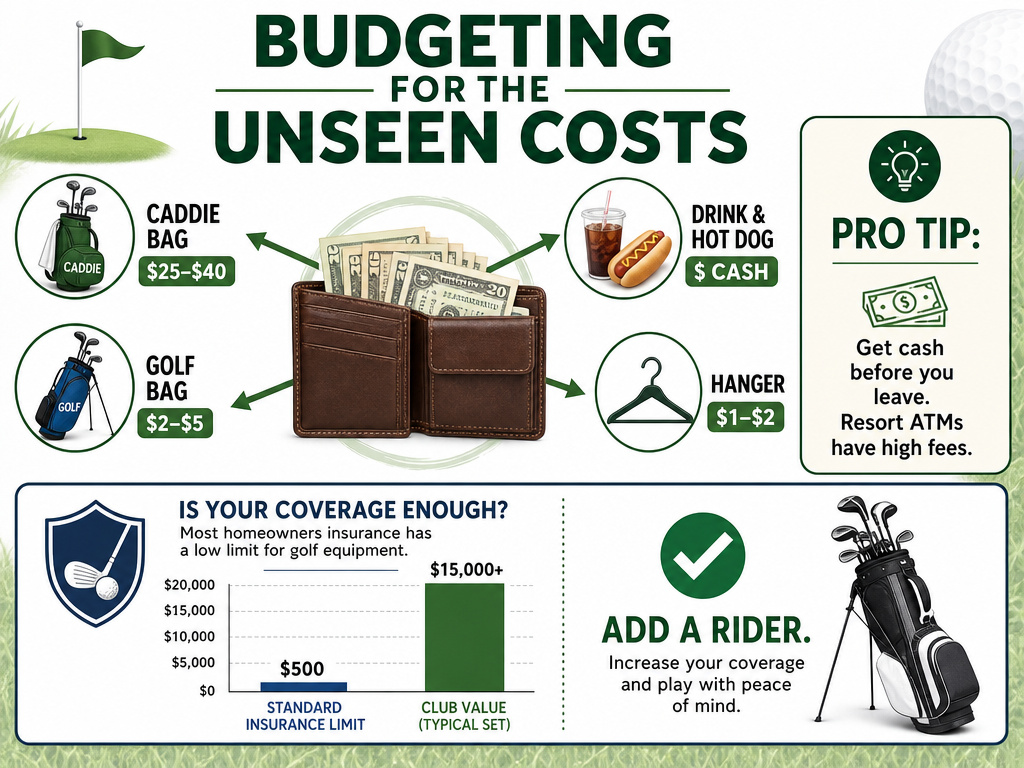
Cash is king. Budget $40 to $60 per round for cash tips. This covers: – Caddie tip (if you take one): $25-$40 per bag. – Bag drop attendant: $2-$5 per bag. – Halfway house snacks and drinks: often cash-only. – Locker room attendant: $1-$2.
That’s $160-$240 cash for a four-round trip. Get it before you leave. Resort ATM fees are punishing.
Check your travel insurance policy for equipment coverage. Most standard policies have a low default limit for sports equipment, often around $500. Your clubs are likely worth more. You can usually add a rider for a few dollars a day. For a premium trip, it’s a no-brainer.
Factor in the “pro-shop tax.” Forget a critical item like sunscreen or ibuprofen, and you’ll pay 300% markup at the resort shop. Packing your known brands from home is a direct money-saver.
Frequently Asked Questions
Should I ship my clubs or check them on the plane?
Ship them if: your clubs are worth more than $2,000, you’re flying into a small regional airport with rough handling, or you have a multi-stop itinerary where baggage routing is complex. Services like Ship Sticks cost $80-$150 each way and eliminate airline baggage fees and handling risk. Check them if: you’re flying direct to a major airport and your set is moderately valued. Always remove your driver head if possible.
How many golf balls should I pack?
Bring 50% more than you use during a similar number of rounds at home. For links or desert trips, budget up to two dozen balls per day for an average player. Offline shots are punished more severely by fescue, waste areas, and water hazards at destination courses.
What is the most forgotten item on a golf trip?
Small, waterproof dry bag for your phone, wallet, and scorecard. Rain jacket pockets are not fully waterproof, and electronics can be ruined by a sustained downpour during a round.
Can I wear golf shoes on the plane?
Yes, and you should. It saves considerable space and weight in your checked luggage. Just make sure they are clean to comply with any agricultural restrictions at your destination.
What if my golf bag is delayed or lost by the airline?
Report it at the airline baggage desk before you leave the airport. Get a reference number. Then, immediately call the golf course pro shop to arrange a rental set. Use the “Round Saver” kit in your carry-on to provide your own shoes, glove, and clothes. The airline is responsible for delivering your bag to your hotel when it arrives.
The Bottom Line
Packing for a golf trip is a logistical skill, not a shopping exercise. The goal is to arrive with your energy, your clubs, and your focus intact.
Strip it back. Start with the clubs decision (fly or ship), build the universal checklist, then tailor it ruthlessly to your destination’s demands. The links call for waterproof everything, the desert demands sun strategy, and resorts require sartorial respect. Pack your “Round Saver” kit like your first round depends on it—because it might.
The best trips aren’t the ones with the most gear. They’re the ones where your gear disappears into the background, leaving only the game, the course, and the company. Now go plan a golf trip worth packing for.
