
What to Wear to a Golf Course: The Essential Attire Rules
This post contains affiliate links. As an Amazon Associate, we earn from qualifying purchases.
This post contains affiliate links. As an Amazon Associate, we earn from qualifying purchases.
Wear a collared shirt, tailored trousers or shorts (not denim), and golf shoes. That outfit gets you onto 95% of golf courses without a second look. The collar is required at traditional clubs, denim is banned almost everywhere, and spikeless golf shoes are the standard modern choice. For women, the rules are similar: structured tops with a collar or sleeves, and bottoms like skirts, skorts, or tailored shorts. Always check the specific club’s posted dress code, variations on sock length, hat policy, and hoodies exist.
That three-item formula is the atomic answer, but it’s the reason you’re here. Every course publishes some version of “proper golf attire required,” and that phrase hides a spectrum of enforcement. A municipal course might let a clean t-shirt slide on a slow Tuesday; a private club will stop you at the bag drop. The difference isn’t about snobbery, it’s about knowing which of the three dress code tiers you’re walking into.
What follows is a breakdown of the public, resort, and private club tiers, the physics behind why cotton polos fail, and the one call to the pro shop that saves you from a wasted trip. By the end, you’ll be able to scan any club’s website and know exactly where you stand.
Key Takeaways
- The universal safe outfit is a collared performance polo, tailored shorts or trousers (no denim or cargo pockets), and spikeless golf shoes. This works at any course type.
- Denim is the single most banned item on golf courses. “No denim” means no jeans, jean shorts, or jean jackets, regardless of color or condition.
- Clubhouse rules are often stricter than on-course rules. Hats must come off indoors, and “smart casual” usually means a collared shirt remains.
- Performance fabrics (polyester blends) beat cotton every time. Cotton holds sweat, adds weight, and chills you as it dries over a four-hour round.
- Always call the pro shop if you’re unsure. A 90-second call is cheaper than a forced pro-shop polo bought at a 40% markup.
The 3-Tier Dress Code System (Public, Resort, Private)
Golf dress codes aren’t a monolith. They run on a spectrum, and your outfit needs to match the tier. Getting this wrong is the fastest way to have an awkward conversation before you even see the first tee.
Public/Municipal Courses are the most relaxed tier. The baseline collared-shirt rule usually applies, but enforcement can be spotty. I’ve seen clean, non-graphic t-shirts pass at busy city courses on a weekday afternoon. Athletic shorts are still a gamble, but clean sneakers with decent tread are often tolerated. The vibe is “look neat.” Don’t treat this as a free pass, though. Some upscale public tracks, like Colorado National, enforce a strict collared-shirt and no-denim policy year-round. The rule of thumb here: if your outfit would look at home in a casual office, you’re probably safe.
Resort Courses sit in the middle. They cater to vacationers, so the dress code is the standard golf uniform but with friendly enforcement. You’ll see the full range of stylish golf apparel here. The written rules always exclude denim, cargo shorts, and athletic wear. This is where your default outfit, collared polo, tailored shorts, golf shoes, pays off. You’ll never be turned away, and you won’t stick out. Resort pro shops are also the most likely to have a “loaner” polo if you mess up, but you’ll pay resort prices for it.
Private/Country Clubs are the traditional tier. The rules are explicit and enforced. A collared shirt (tucked in) is mandatory. Tailored trousers or approved shorts (often with a required belt) are expected. Denim is prohibited. Golf shoes with soft spikes or spikeless designs are required; sneakers are not allowed. Some clubs even specify sock length or ban shorts entirely on the main course. This isn’t about being difficult; it’s about upholding a club’s culture. When you’re playing a historic venue, dressing the part is part of the experience. Our guide to best golf outfits dives into options that work at this level.
The dress code at a private club isn’t a suggestion. It’s a condition of entry. Showing up unprepared tells the staff you haven’t done your homework, and that’s a poor start to any round.
What Never to Wear (And Why It Matters)
This list is short for a reason. These items break the code at virtually every course that cares about its standards. The bans aren’t arbitrary, each has a practical or traditional rationale.
| Item | Why It’s Banned | Where It Might Slide |
|---|---|---|
| Denim (Jeans, Jean Shorts) | Seen as casual, non-athletic wear; can damage delicate clubhouse furniture. | Almost nowhere. A handful of rural public courses may allow dark, non-distressed jeans. |
| T-Shirts & Tank Tops | Lack a collar, which is the universal signal of “golf attire.” | Driving ranges, Topgolf, some very casual municipal courses. Never at a resort or private club. |
| Cargo Shorts/Pants | Pockets are considered bulky and non-tailored; associated with casual or work wear. | Rarely. A few modern, “streetwear-friendly” resorts may allow sleek cargo designs. |
| Athletic Joggers/Sweatpants | Elastic cuffs and relaxed fit are coded as gym wear, not golf wear. | Almost never. Even relaxed courses draw the line here. Opt for performance golf joggers instead. |
| Running Shoes/Trainers | Aggressive tread patterns can tear up sensitive greens. Lack lateral stability for the golf swing. | Some public courses allow “clean athletic shoes.” Never at private clubs and rarely at resorts. |
The “why” often comes down to tradition and turf protection. A collar formally distinguishes a golf shirt from a t-shirt. Denim is historically working-class attire, the opposite of the country club’s leisure image. Running shoes dig in and pivot on greens, leaving scars that affect every putt after yours. It’s not personal. It’s preservation.
Building Your Universal Golf Outfit
You don’t need a wardrobe. You need one reliable outfit that you can wash and wear for any course. Let’s strip it back to the three components.
The Shirt: The Collar is King
The collar is non-negotiable. Polo shirts are the universal choice, but not all collars are equal. A blade collar (like on a classic polo) and a mock neck (a collarless shirt with a raised, banded neck) are both widely accepted. However, some strict private clubs explicitly prohibit mock necks, when in doubt, go with a traditional polo. Forget 100% cotton. It’s a trap. Cotton absorbs sweat and stays wet, adding weight and chilling you as it slowly dries. You want a performance polyester blend with moisture-wicking and stretch. A polo made from a lightweight, moisture-wicking fabric like polyester or a polyester blend feels light, moves with your swing, and dries in minutes. Brands like FootJoy, Under Armour, and Peter Millar make polos specifically for this. Check out our deep dive on best golf polos for specific recommendations.
The Bottoms: Tailored, Not Tight
“Tailored” means it looks neat, not that it’s skin-tight. For shorts, the length should hit just above the knee. For pants or trousers, a straight or slightly tapered leg works. The key is the fabric: lightweight, stretchable, and with belt loops. Drawstrings mark an item as athletic wear, which is why they’re usually banned. Chinos, golf-specific trousers, or relaxed-fit golf pants are all perfect. For women, tailored shorts, skirts, skorts, or golf dresses are standard. The Green Tree Country Club dress code notes that leggings are only permitted under skirts or shorts, a common edge-case rule.
The Shoes: Spikeless is the Standard
Golf shoes provide essential lateral stability during your swing. Spikeless golf shoes have become the default for most recreational players. They look like clean sneakers but have hundreds of small, rubber nubs for grip. They’re comfortable enough to wear from the car to the course to the clubhouse, and they won’t damage floors. Save traditional soft-spike shoes for hilly or perpetually wet courses where you need maximum traction. Running shoes, boat shoes, and sandals are almost always prohibited. Your feet are your foundation for four hours, invest in proper support.
Layering for the 4-Season Round
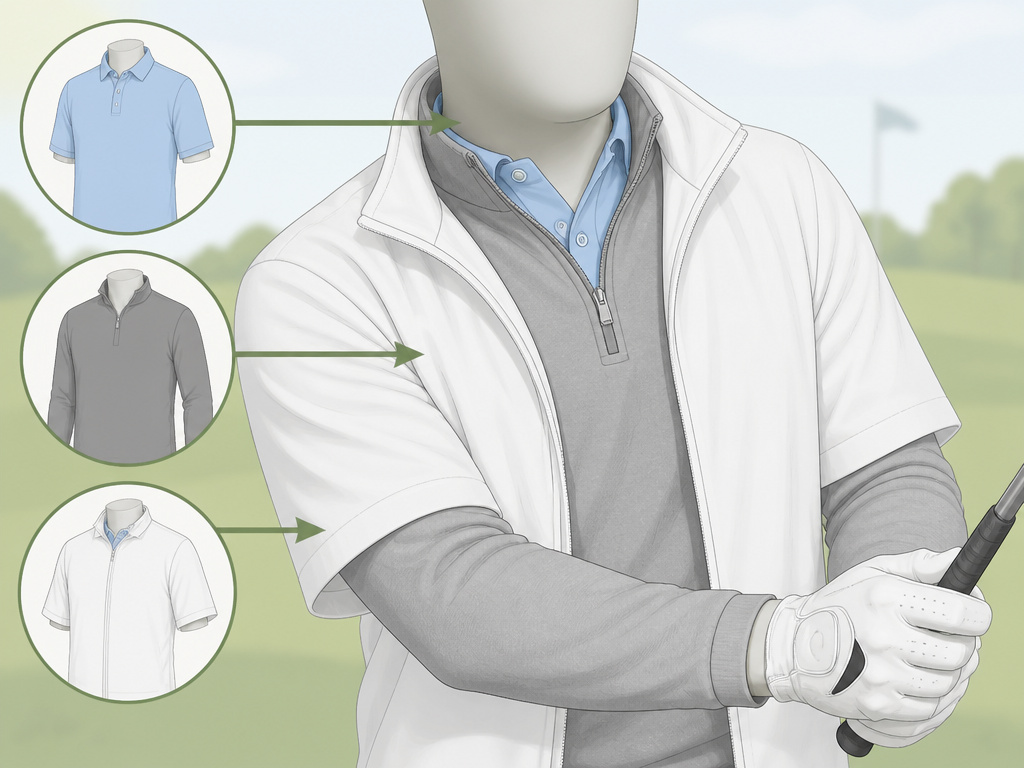
A golf round lasts four hours, and weather changes. Dressing in layers isn’t just about comfort; it’s about maintaining your swing when the temperature drops.
Your base layer is your polo. Your mid-layer should be a thin, stretchy piece that doesn’t restrict your turn. A quarter-zip pullover or a lightweight sweater is ideal. For the outer layer, you need real rain gear if there’s any chance of precipitation. A good performance golf jacket is waterproof, breathable, and cut shorter in the front so it doesn’t bunch up during your swing.
Where this goes sideways: Wearing a bulky, non-stretch jacket you can’t swing in. You’ll either take it off and get soaked, or keep it on and ruin your motion. Golf-specific outerwear exists for a reason.
What about hoodies? This is a modern edge case. At traditional clubs, hoodies are still often prohibited as “athletic wear.” At more relaxed resorts and public courses, a solid-color golf hoodie worn over a polo is increasingly accepted. Never assume. Check the club’s policy first.
Women’s Golf Attire: The Same Rules, Wider Style
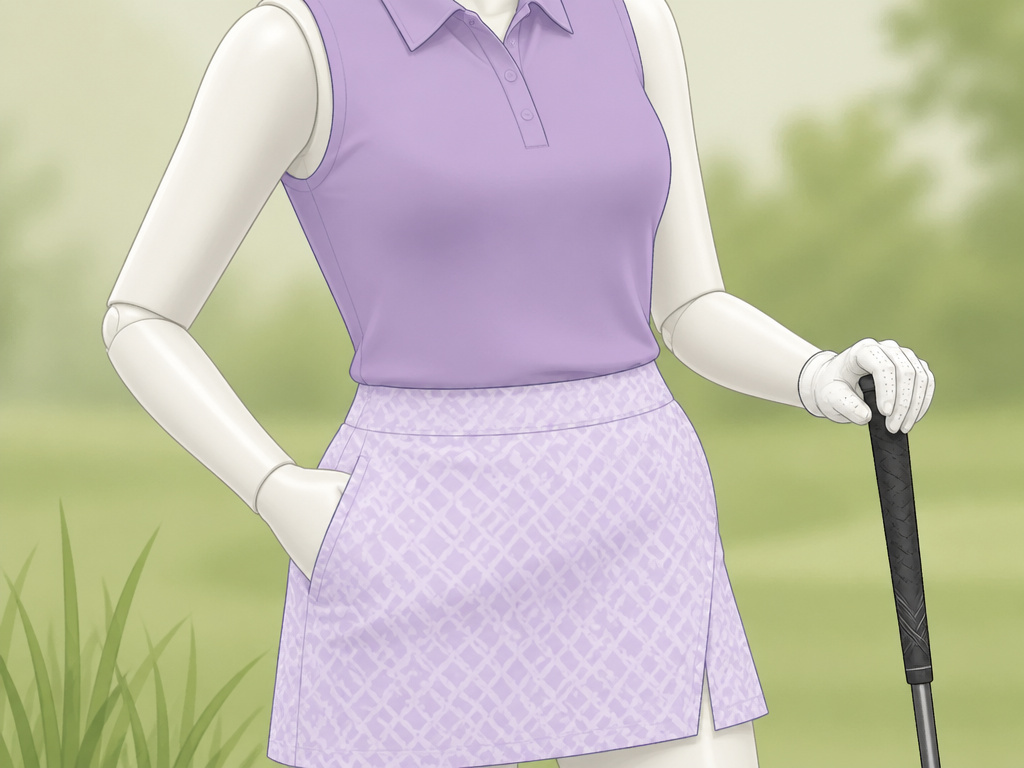
The core principles are identical: collared or structured tops, tailored bottoms, proper footwear. The variety of acceptable styles is simply broader.
A sleeveless top is generally acceptable for women if it has a collar or structured sleeves. The Green Tree Country Club code explicitly allows women’s sleeveless shirts with a collar. Tops without sleeves or collars, like tank tops or racerbacks, are typically not allowed. For bottoms, the range includes skirts, skorts, dresses, tailored shorts, and trousers. Length rules are common, shorts and skirts should be at or near the knee. As with men, denim, athletic wear, and overly casual items are prohibited. For specific picks, our guides on women’s golf shorts and best women’s golf shorts cover the options that blend style and code compliance.
The Clubhouse & Spectator Rules
Your round isn’t over on the 18th green. Clubhouse rules are often stricter, and they catch more people off guard.
The most universal clubhouse rule: remove your hat. This is a standard sign of respect indoors. Some clubs make medical exceptions, but the default is hats off. Also, change your shoes if you’re wearing spiked or dirty golf shoes. Many clubhouses require “smart casual,” which usually means your collared shirt stays on, but you can swap golf pants for clean chinos or trousers. As a spectator at a tournament, the rules relax slightly, but the “smart casual” guideline holds. You’re walking all day, so comfort is key, but athletic wear, denim, and overly revealing clothing are still frowned upon at most professional events. The Keiser University golf apparel guide is a useful resource that frames these rules from an educational perspective.
Frequently Asked Questions
Can you wear jeans on a golf course?
Almost never. “No denim” is the most consistently enforced rule across all types of golf courses. This includes black jeans, white jeans, and denim shorts. A tiny number of rural public courses may allow dark, non-distressed jeans, but you should never assume this. Pack tailored trousers or shorts instead.
Do you have to tuck in your shirt?
At private and semi-private clubs, yes, it’s almost always required. At public and resort courses, it depends. Many modern polos are designed with a straight hem to be worn untucked, and this is often accepted. When in doubt, tuck it in. You can always untuck it after you confirm the club’s vibe.
What shoes can you wear if you don’t have golf shoes?
Clean, non-aggressive athletic sneakers are your best bet at most public courses in a pinch. Avoid running shoes with deep, knobby treads that can damage greens. Your medium-term solution should be a pair of spikeless golf shoes, which look like sneakers but are built for the game.
Are joggers allowed on the golf course?
Most courses do not allow joggers, even nice ones. The elastic cuffs and athletic silhouette read as gym wear, which is explicitly excluded from most dress codes. For similar comfort, choose a pair of men’s golf joggers that are cut like tailored pants but made from stretch performance fabric.
Can women wear leggings to play golf?
Typically, no, not as standalone pants. However, many clubs (like Green Tree) allow leggings if they are worn under skirts, skorts, or shorts. This is a common compromise that provides comfort and coverage while adhering to the traditional “tailored bottom” rule.
Before You Go
The goal isn’t to memorize every club’s quirks. It’s to have one outfit you can grab that works 95% of the time. That outfit is a performance polo, tailored shorts or pants, and spikeless golf shoes. Everything else, the layering, the clubhouse etiquette, the sock-length fine print, is what you learn after you’ve cleared the first hurdle.
If you remember one action from this guide, make it this: call the pro shop. Look up the course, find the number, and ask. “Hey, I’m playing tomorrow, do you require a collared shirt, and are spikeless shoes okay?” takes 90 seconds. It saves you a 40-minute drive back home or a forced, overpriced purchase. Good golf starts before you even put a tee in the ground. Showing up dressed right means you’re already thinking like a player.
