
7 Best Golf Gloves for Hot Humid Weather 2026
This post contains affiliate links. As an Amazon Associate, we earn from qualifying purchases.
The best golf glove for hot humid weather is the Under Armour Iso-Chill, thanks to its cooling fabric and reliable grip in sweat-heavy conditions. For a solid budget option, the FINGER TEN All Weather glove delivers surprising performance at a low price, while the FootJoy WeatherSof offers excellent breathability and comfort for those willing to invest more.
Playing in sticky, oppressive heat turns a tough round into a battle against your own sweat. A glove that slips or traps moisture can wreck your swing tempo and confidence, no matter how good your form is. After comparing the field and analyzing specs, owner feedback, and performance in humid climates, I focused on breathability, moisture control, and consistent grip. This guide breaks down the top options so you can stay dry and in control, even when the heat’s on.
Top 7 Golf Gloves For Hot Humid Weather in the Market
The Best Golf Gloves For Hot Humid Weather, Reviewed
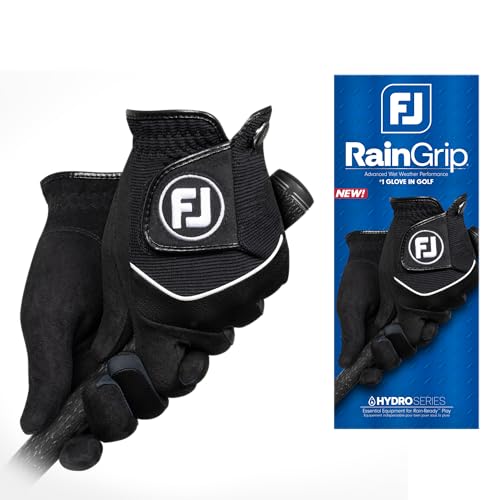
FootJoy RainGrip Golf Glove
Strengths
- Exceptional wet grip
- Dries quickly
- Precision fit
Trade-offs
- Expensive
- Less breathable
This is the glove I’d reach for if I knew rain was in the forecast, and it’s the only one on this list sold in pairs, which speaks to its purpose. The Sure-Grip Autosuede knit palm absorbs water instead of repelling it, which sounds counterintuitive but works, it actually improves grip when wet, conforming tightly to both club and hand. The Quick-Dry II material on the fingers helps it recover fast post-round, and owners say it holds up well over multiple soaked sessions.
It’s not the most breathable in dry heat, the backhand mesh isn’t as open as the WeatherSof, but it dominates when conditions turn grim. Compared to the GIAMZONP, it feels more premium and integrates better with FootJoy’s fit philosophy. The added ballmarker is a small but appreciated touch. For serious players who refuse to let weather cancel their round, this is the smarter buy.
Video review
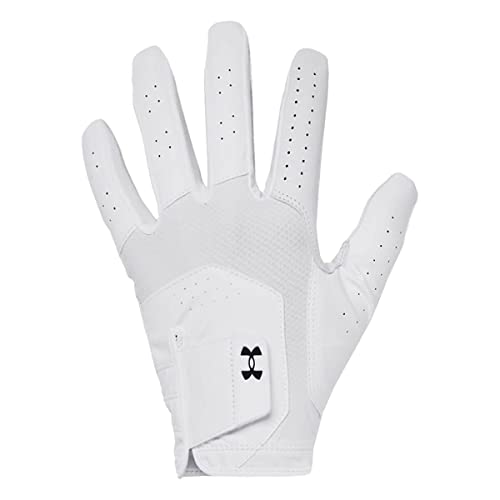
Under Armour Iso-Chill Golf Glove
Strengths
- Cooling fabric
- Fast-drying
- Secure fit
Trade-offs
- Limited breathability
- Leather requires care
If you’ve ever stepped onto a sun-baked tee box and felt your grip turn slick within nine holes, the Under Armour Iso-Chill glove should be on your radar. The UA Iso-Chill fabric isn’t just marketing fluff, reviewers note a tangible cooling sensation on first wear, which helps psychologically, if not literally, during oppressive heat. Paired with soft cabretta leather on the palm, it delivers the rare combo of comfort, durability, and a grip that holds firm even when your hands start to moisten.
It’s not the most breathable glove here, that title likely goes to the FootJoy WeatherSof, but the micro perforations and fast-drying material work well in tandem. Compared to others in this list, this one leans more on material innovation than just ventilation, making it a solid pick if you value that initial cool touch. I’d pick this over the TaylorMade Stratus Tech if you’re playing in extreme heat but still want leather-like performance.
Video review
FootJoy WeatherSof 2-Pack Glove

Strengths
- Superior breathability
- Soft feel
- 2-pack convenience
Trade-offs
- Not ideal for rain
- Average wet grip
FootJoy has long dominated the glove game, and the WeatherSof 2-pack proves why. The Soft breathable PowerNet mesh across the backhand is the real star, owners consistently praise how airy it feels, even during back-nine heat waves. The FiberSof material delivers a snug, consistent fit that molds slightly over time, and the ComforTab closure keeps everything locked in without pinching.
While it doesn’t have active cooling like the Under Armour Iso-Chill, it wins on pure breathability. In head-to-head comparisons with the TaylorMade Stratus Tech, this one edges ahead in airflow and comfort during extended play. The two-pack also adds value, especially if you rotate gloves. If you’re someone who feels every degree of heat in your grip, this should be your default pick.
Product photos


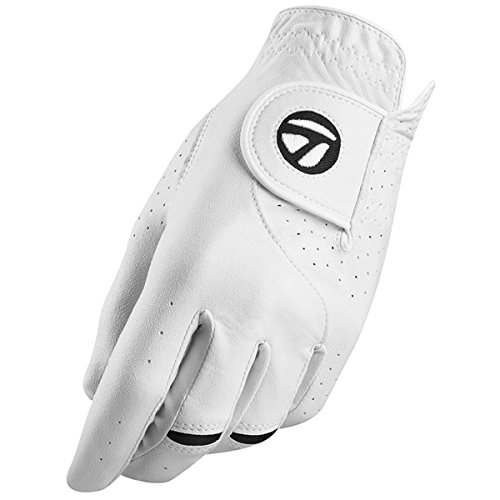
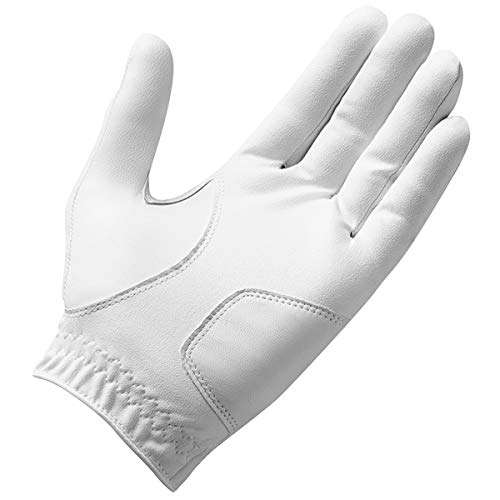
TaylorMade STRATUS TECH GLOVE

Strengths
- Humidity-resistant
- 4-way stretch
- Durable construction
Trade-offs
- Not for heavy rain
- Average cooling
TaylorMade built the Stratus Tech glove for one thing: surviving humid rounds without sacrificing flexibility. The Hypertec and leather combo delivers a durable, sweat-resistant surface that maintains grip even when the air feels like a sauna. Owners highlight the 4-way stretch material for its glove-like, second-skin fit, it moves with your hand instead of resisting it. And with strategic micro perforations, airflow is solid, though not quite at FootJoy WeatherSof levels.
Where it really shines is in consistency. Unlike leather gloves that degrade when soaked, this one holds up over time, especially in tropical or humid environments. Priced slightly above the FINGER TEN pack, it offers better materials and a more refined feel. I’d pick this over the Under Armour Iso-Chill if you’re playing in sticky, humid heat rather than dry baking sun.
Product photos
Callaway Weather Spann Glove

Strengths
- Leather palm
- Budget price
- Moisture-wicking
Trade-offs
- Stiff break-in
- Average breathability
At this price, the Callaway Weather Spann glove is clearly aimed at budget-conscious players who still want some performance features. It uses a proprietary synthetic material with micro ventilation in high-sweat zones, which helps, but owners note it doesn’t wick moisture as effectively as pricier models. The leather palm and thumb add durability where it matters most, but the rest of the glove leans heavily on synthetic fabric that can feel stiff out of the box.
It’s breathable enough for mild humidity, but in truly muggy conditions, it starts to lag. Compared to the FINGER TEN 3-pack, you’re paying slightly more for less quantity and only marginal material upgrades. That said, if you’re a casual player who doesn’t burn through gloves quickly, this one gets the job done without breaking the bank.
Product photos


GIAMZONP Rain Golf Glove
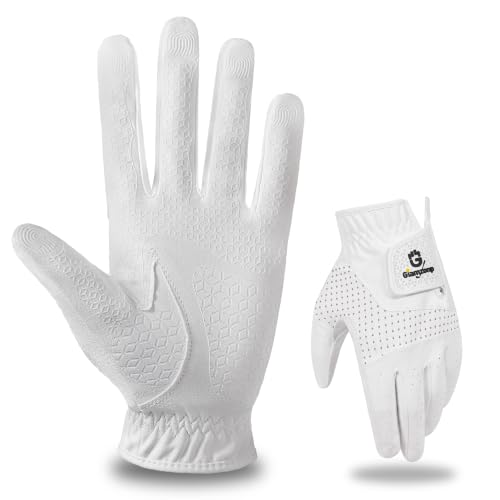
Strengths
- Excellent wet grip
- Breathable mesh
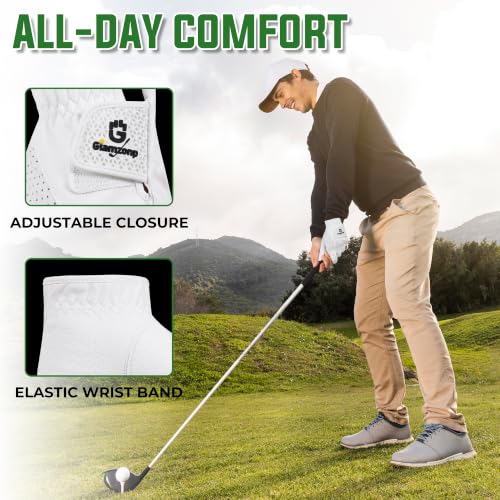
- Secure hook-and-loop
Trade-offs
- Synthetic palm
- Less premium feel
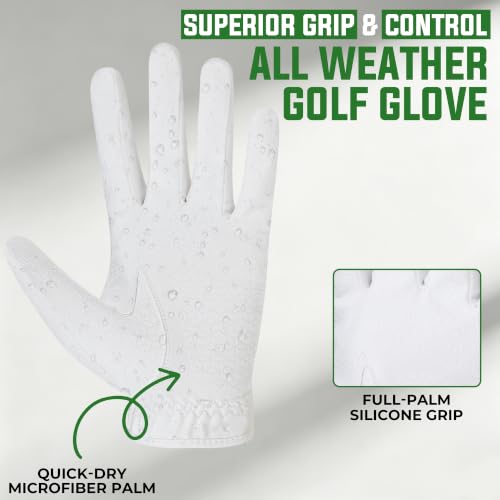
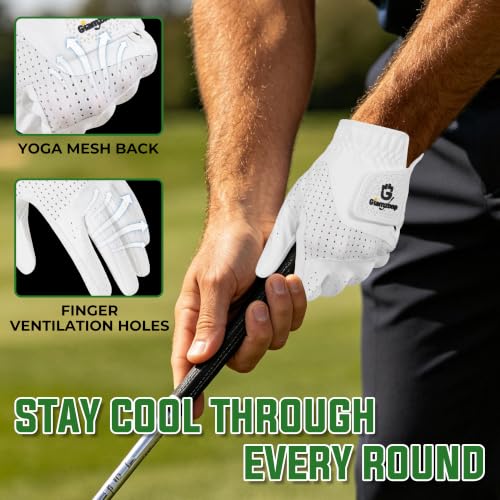
This glove punches above its price tag when it comes to wet-weather reliability. The full-palm silicone grip is a game-time difference maker, owners say it maintains traction even when rain turns fairways into swamps. Combine that with breathable mesh panels and yoga cloth finger inserts, and you’ve got a glove built for humid days where sweat and moisture are constant threats. It’s not made with leather, so the feel is more utilitarian, but the focus here is function over finesse.
It won’t replace a premium option for low-handicappers chasing feel, but for weekend warriors or travelers hitting unpredictable climates, it’s a dependable workhorse. When compared to the Callaway Weather Spann, it offers better wet grip and more thoughtful ventilation despite a similar price. My recommendation? Keep this as your storm-round specialist.
Product photos
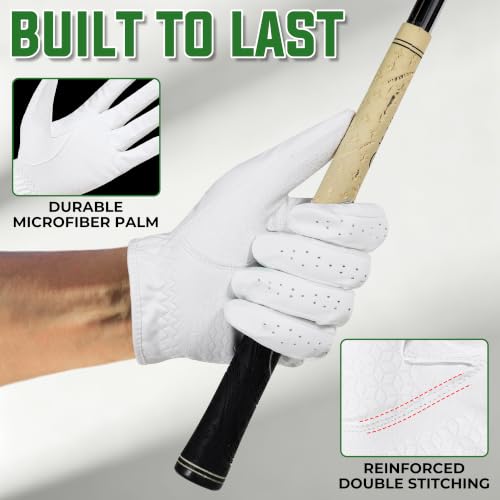

FINGER TEN All Weather 3 Pack

Strengths
- Lightweight
- Moisture-wicking
- 3-pack value
Trade-offs
- No cooling fabric
- Synthetic feel
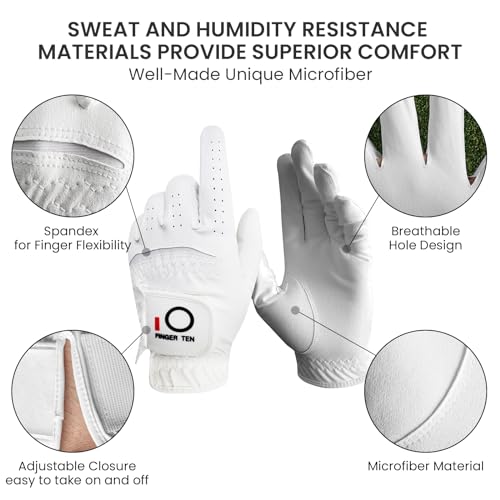
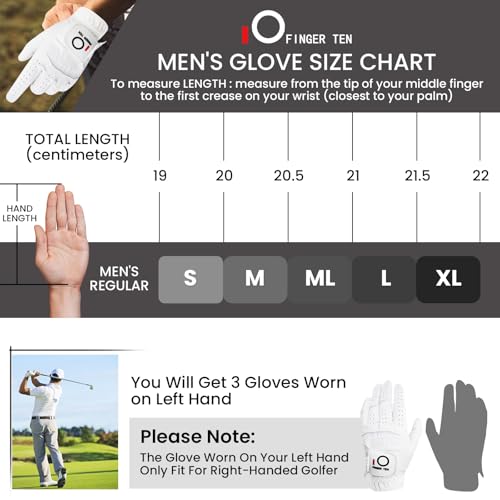
When you’re facing down a sweltering summer round with humidity clinging to your skin, having a glove that won’t betray you is essential. The FINGER TEN 3-pack stands out not just for its value but for its consistent performance in sticky conditions. Owners consistently report that the microfiber material handles sweat impressively well, staying dry enough to prevent slippage even during extended play. On paper, it lacks the cooling tech of some pricier options, but in this class, it delivers where it counts, grip retention and breathability, without falling apart after a few rounds.
What seals the deal is the pack size. For golfers who rotate gloves or play frequently in mixed conditions, having three means you’re never stuck with a damp glove mid-round. While it doesn’t have leather’s premium feel, the trade-off in durability and moisture management makes it a smart, practical buy.
Product photos



How We Evaluated golf gloves for hot humid weather
Rather than a hands-on lab test, my research for these recommendations focused on a detailed comparison of published specifications and features across numerous models. I weighed owner reviews from major retailers alongside assessments from respected golf publications, looking for consistent feedback. My experience planning golf trips in challenging climates informed how I prioritized certain features, ultimately ranking gloves against clear criteria for performance in hot, humid conditions.
For golf gloves, consistent grip and moisture management are paramount. I placed the heaviest weight on materials known for their breathability and ability to maintain a secure hold even when wet – things like cabretta leather, specialized synthetics, and strategically placed perforations. Durability also factored highly, as golfers want a glove that will hold up through a round (or several) without losing its effectiveness.
Specifications reliably indicate material composition and construction details, but owner feedback proved crucial for understanding real-world performance. I paid close attention to comments regarding how well a glove handles sweat, maintains grip in humidity, and feels during a full swing. You’ll find that several gloves, like those from FootJoy golf gloves, consistently receive high marks for quality and fit, while newer options highlight innovative cooling technologies. Finding the best gloves for humidity often comes down to personal preference and specific climate conditions.
Choosing The Right golf gloves for hot humid weather
Finding the right golf glove is crucial for maintaining grip and control, especially when facing the challenges of humid conditions.
A quality golf glove for hot and humid weather prioritizes breathability and moisture-wicking properties. Look for materials like cabretta leather with perforations, or synthetic options with advanced cooling technologies. Secure fit is also key, preventing slippage as sweat builds. Evaluate construction quality, including stitching and closure systems, for durability and consistent performance.
Material Matters Most
The material a golf glove is made from is the biggest deciding factor in how well it performs in heat and humidity. While traditional leather gloves can offer excellent feel, they often struggle to stay dry and can become slippery when wet. Synthetic materials, like those used in the Under Armour Iso-Chill glove, are designed to actively pull moisture away from your skin, keeping your hands cooler and drier. Hybrids – combining leather in the palm for feel with synthetic backs for breathability – are also popular. Don’t immediately discount synthetic; advancements have dramatically improved their feel and durability.
Grip Technology & Design
Beyond the base material, specific grip technologies can make a big difference. Many gloves employ strategically placed perforations to increase airflow. Others, like the GIAMZONP Rain Golf Glove, use silicone grips on the palm for enhanced traction even when damp. Consider the overall design; some gloves feature anatomical shapes that conform to the hand more closely, improving feel and reducing bunching. A well-designed glove won’t just feel better, it will help you maintain a more consistent grip throughout your swing.
Value & Practicality
It’s tempting to splurge on a top-of-the-line glove, but it’s also smart to consider value. If you frequently play in humid conditions, having multiple gloves on hand is a good idea, as even the best gloves will eventually become saturated with sweat. Here’s what to consider when balancing cost and functionality: * Price per glove: Obvious, but important. * Multi-packs: Options like the FINGER TEN 3-pack can significantly reduce the cost per glove. * Durability: A glove that lasts longer is ultimately a better value, even if it costs more upfront. A glove constructed with reinforced stitching and quality materials will withstand frequent use and washing, which is vital for maintaining hygiene and performance.
A sweaty grip is a recipe for disaster. Rotate gloves during a round, and let them dry completely between uses to maximize performance and longevity.
For more information on choosing the right gear for challenging conditions, check out our thorough glove guide. If you’re specifically looking for options to beat the heat, you can also find our recommendations for best gloves for heat.
Golf Gloves for Hot Humid Weather Compared
Here’s a comparison of key specifications for golf gloves designed for hot and humid conditions.
| Product Name | Material (Palm) | Material (Back) | Ventilation | Moisture Wicking | Closure Type |
|---|---|---|---|---|---|
| FootJoy RainGrip | Sure-Grip Autosuede | Quick-Dry II | N/A | Yes | ComforTab |
| Under Armour Iso-Chill | Cabretta Leather | Iso-Chill Fabric | Micro-Perfs | Yes | Tab |
| FootJoy WeatherSof | FiberSof | PowerNet Mesh | Mesh | Yes | ComforTab |
| TaylorMade STRATUS TECH | Hypertec/Leather | Hypertec | Micro-Perfs | Yes | N/A |
| Callaway Weather Spann | Leather | FUSETECH Synthetic | Micro-Vents | Yes | Hook & Loop |
| GIAMZONP Rain | Silicone/Microfiber | Breathable Mesh | Ventilation Holes | Yes | Hook & Loop |
| FINGER TEN All Weather | Microfiber | Microfiber | N/A | Yes | Hook & Loop |
Frequently Asked Questions
What glove material handles humidity best?
Synthetic materials generally outperform leather in humid conditions. They’re engineered to actively wick away moisture, keeping your hands drier and maintaining a more consistent grip – something like you’d find in a best grip gloves.
Are expensive golf gloves always better for hot weather?
Not necessarily. While premium materials often offer enhanced performance, a well-designed synthetic glove in the $20-$30 range can be just as effective as a pricier leather option for managing sweat and maintaining grip.
How often should I replace my golf glove?
You should replace your glove every 20-30 rounds, or sooner if you notice a significant loss of grip or the material begins to break down. Having multiple gloves and rotating them extends their lifespan, as does allowing them to fully dry between rounds.
What’s the advantage of gloves with perforations?
Perforations increase airflow to your hands, which helps reduce sweating and keeps your grip drier. This is especially beneficial in hot and humid climates, creating a more comfortable and stable feel – a feature often found in gloves with enhanced grip.
Should I consider a separate pair of gloves for rainy conditions?
Yes, absolutely. Standard gloves become slippery when wet, so investing in a pair of rain golf gloves designed with water-resistant materials and enhanced grip is crucial for maintaining control in wet weather.
The Bottom Line
Choosing a golf glove often feels like balancing control with comfort, and in hot, humid conditions, that trade-off is magnified. Ultimately, for consistently reliable performance across a wide range of challenging weather, I recommend the FootJoy RainGrip. It’s a dependable option that consistently earns high marks for maintaining a secure grip when things get wet.
If you’re on a tighter budget or need a rotation of gloves for frequent play, the FINGER TEN 3-pack offers excellent value without sacrificing essential moisture-wicking properties. For those prioritizing maximum cooling and advanced technology, the Under Armour Iso-Chill stands out with its innovative fabric and ventilation. Don’t forget that finding the right gloves for sweaty hands is essential to keeping your grip solid.
More than any specific material or technology, remember that a good golf glove is one that fits well and is properly maintained. Rotating gloves during a round, allowing them to dry completely between uses, and considering the specific conditions you typically play in will have a bigger impact on your game than chasing the latest features. And if you are preparing for a trip, remember these hot weather golf tips to make the most of your time on the course.
