
How Grain in Golf Greens Affects Putting Speed and Break
This post contains affiliate links. As an Amazon Associate, we earn from qualifying purchases.
This post contains affiliate links. As an Amazon Associate, we earn from qualifying purchases.
Grain in golf greens is the horizontal growth direction of grass blades, and it affects putting by changing ball speed and break. Putting into the grain slows the ball down by up to 20%, requiring a firmer stroke. Putting down grain accelerates the ball, demanding a softer touch and more break played. The effect is most pronounced on warm-season grasses like bermudagrass, less so on bentgrass.
That speed change is the whole game. A putt that looks straight can drift off line because the grain is pulling it while also changing its roll speed. Most players feel the effect but misdiagnose it as a misread of slope.
What follows is a breakdown of the three things grain actually does: it changes speed, it alters perceived break, and it dictates where you should aim on the cup. This explains how to spot it, when to ignore it, and the maintenance practices superintendents use to control it.
Key Takeaways
- Putting into the grain can slow a ball’s roll by 15-20%, requiring a significantly firmer stroke.
- Bermudagrass has strong, visible grain; bentgrass and Poa annua often have minimal grain that changes little.
- Look at the cup’s edge for a frayed or “rough” side, the grain grows toward that side.
- Grain’s effect on break is indirect: a slower putt (into grain) breaks more, a faster putt (down grain) breaks less.
- Modern sand-based rootzone construction and regular topdressing minimize grain development over time.
How Grain Actually Changes Your Putt
Grain doesn’t magically pull the ball sideways. It changes the friction between the ball and the green’s surface. Think of a ball rolling over a carpet: if you rub your hand with the nap, it’s smooth. Against the nap, it’s rough. That’s grain.
The grass blades lay over in a dominant direction. When your ball rolls with them (down grain), the blades offer less resistance. The ball skims across the tops, maintaining speed. Roll against them (into grain), and the ball’s momentum is fighting thousands of tiny leaf blades. It digs in, slows down, and can even hop or wobble.
Putting into the grain adds the equivalent of an uphill slope to your putt in terms of speed. Putting down grain is like adding a downhill slope.
This friction shift has two direct consequences for your read. First, the speed change itself. Second, and more subtly, it changes how much the slope affects the ball. A slow-moving ball is more susceptible to gravity’s pull. So a putt into the grain not only runs slower, it also breaks more than the same putt on a grainless surface. The opposite is true down grain: the ball moves faster, so it breaks less.
How to See Grain Direction on Any Green
You don’t need to guess. Grain leaves physical signs a practiced eye can spot in seconds. The best method is the most direct: look at the hole.
The Cup Doesn’t Lie. Walk to the cup and examine its rim. One side will often look slightly frayed, ragged, or “rough.” This is where the mower’s blades sliced across the tips of the grass as it laid over. The grain grows toward that rough side. It’s a superintendent’s tell that never misses.
If the cup looks uniform, use the sheen test. Crouch down and look across the green’s surface. The grass will have a shiny, silvery appearance when you look down the direction the blades are lying (down grain). When you look into the grain, the surface appears darker and matte because you’re seeing the upright edges of the blades.
Forget the Mowing Lines. A common mistake is to assume mowing stripes indicate grain direction. Mowing patterns are cosmetic and can run any direction the crew chooses. Grain is a growth habit. They often coincide, but they are not the same thing. Trust the cup and the sheen.
The Two Types of Grass That Change Everything
Not all greens grain equally. The species of grass determines the severity of the effect. Your green reading techniques must account for this.
| Grass Type | Typical Grain | Where It’s Common | Putting Adjustment |
|---|---|---|---|
| Bermudagrass | Strong, pronounced | Southern U.S., warm climates | Major speed adjustments. Play significant break into grain. |
| Bentgrass | Minimal to moderate | Northern U.S., cool climates | Minor speed tweaks. Grain is a secondary factor to slope. |
| Poa annua (Annual Bluegrass) | Variable, often upright | Transition zones, coastal | Unpredictable. Often plays more like bentgrass. |
Bermudagrass is the main character in the grain story. It’s a warm-season grass with creeping stolons that grow laterally. This growth habit creates a dense, carpet-like surface with a strong grain that consistently runs toward sunlight or drainage. In Florida or Texas, grain is your primary read after slope.
Bentgrass and Poa annua have a more upright growth habit. The blades grow more vertically, so the horizontal grain is faint. On these surfaces, slope is king. You might notice a slight sheen, but it rarely demands more than a 5-10% adjustment in stroke speed. This is why northern players visiting southern courses are often baffled by the greens, they’re not used to grain being a dominant force.
The Real-World Speed and Break Adjustments
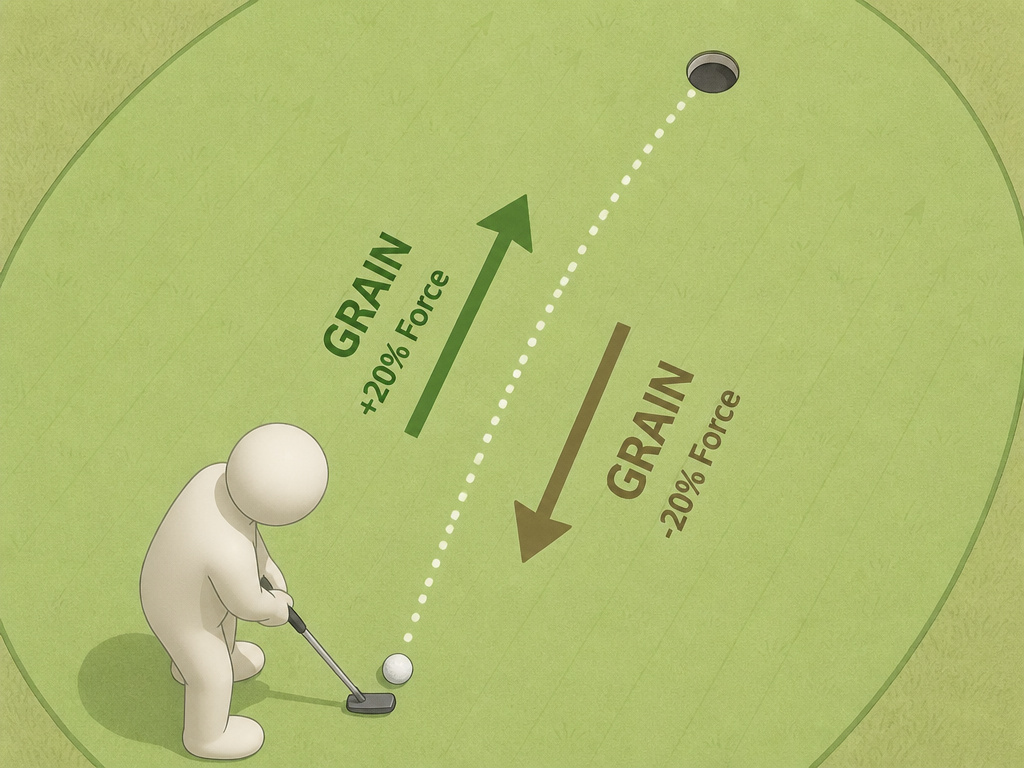 Theory is fine, but you need a rule you can use over the ball. How much harder do you actually hit it?
Into the Grain: Add 15-20% to your stroke force. For a 10-foot putt, you need to hit it with the energy of a 12-foot putt. This is the most common error, leaving putts short. Because the break is also increased, your aim point should be higher on the proverbial “clock face.” If you normally aim at 4 o’clock for a right-to-left break, aim at 5 o’clock.
Down Grain: Use a 15-20% softer stroke. Hit a 10-foot putt with the energy of an 8-foot putt. Since the ball breaks less, your aim point should be lower. That 4 o’clock aim might shift to 3 o’clock. The danger here is running the ball 4 or 5 feet past the hole.
Common mistake: Adjusting for grain only on breaking putts. Grain affects straight putts just as much, it turns them into slow or fast putts, which is why so many “straight” putts miss.
The toughest read is a putt with cross-grain. Here, the grain acts like a sideways pull. If the grain runs left-to-right, it will push the ball in that direction throughout its roll. You must play for this push in addition to the slope’s break. The speed change is less dramatic, but the lateral effect is real.
Why Some Greens Barely Grain at All
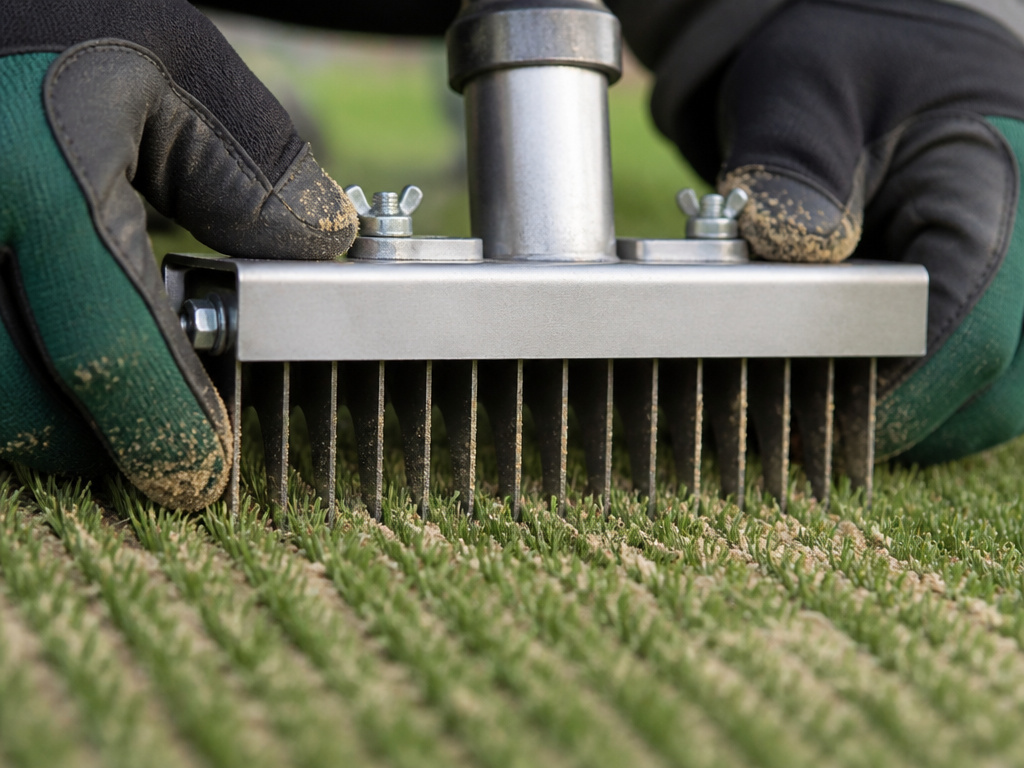 If you play a modern, well-kept course and struggle to see grain, there’s a reason. Modern agronomy fights it.
Grass Breeding Matters. New cultivars of bentgrass and bermudagrass are specifically bred for upright growth, finer blades, and higher density. This essential putting green maintenance philosophy, supported by organizations like the GCSAA, prioritizes a uniform surface. The USGA has noted these improved grasses simply have less grain.
Maintenance Practices Suppress It. Regular topdressing, applying a thin layer of sand, and verticutting are not just for health. They physically stand the grass blades up. A study in the HortScience journal found that aggressive verticutting was most effective at managing the surface layer that contributes to grain. When superintendents aerate and topdress regularly, they are indirectly controlling grain by preventing thatch buildup and promoting vertical growth.
This is the superintendent’s goal: a true, consistent roll where the ball’s path is determined by the contour they designed, not by the unpredictable friction of grass blades.
The Rootzone Under Your Feet
The putting green is a complex ecosystem. The grain you see is just the surface expression of the system below. Modern greens are built to USGA recommendations, which specify a sand-based rootzone at least 12 inches deep over a gravel drainage layer.
This construction, detailed in standards like the ASTM sand-based green construction standard, is designed for one thing: consistent moisture and firmness. A sand rootzone drains quickly and resists compaction. Why does this matter for grain? A wet, soft green promotes lush, lateral grass growth, the kind that leads to grain. A firm, dry green encourages the dense, upright growth that minimizes it.
The fight against organic matter at the surface, as outlined in GCSAA organic matter management guides, is also a fight against grain. Organic matter holds water, creating a soft, spongy surface where grain thrives. Cultivation keeps the surface firm and the grass growing correctly.
Frequently Asked Questions
Does grain grow towards water or the setting sun?
This is an old caddie rule that often holds true. Grain generally grows toward a dominant water source (an ocean, lake, or setting sun in the west) because the grass is leaning toward the afternoon light and moisture. However, on modern, highly maintained greens with subsurface drainage, this rule is less reliable. Always verify with the cup’s edge or the sheen.
How much does grain affect a putt’s break?
Grain itself doesn’t make the ball break. It changes the ball’s speed, which then changes how much the slope can affect it. A putt into the grain (slower) will break more than the same putt down grain (faster). The break change can be the difference between catching the edge and missing the hole entirely.
Can you practice reading grain at home?
You can practice the identification skill. Use a putting mat with a consistent surface to ingrain your speed control. To practice reading variable grain, you need real greens. Pay the fee for a putting-green-only session and focus solely on identifying grain direction and hitting putts into and with it.
Do expensive putters help with grain?
Putter’s technology, like high-MOI designs, helps with off-center strikes, not reading grain. Consistency is key. A putter you align well and strike purely will give you the speed control needed to adjust for grain. The tool doesn’t read the green; you do.
Is grain more important than slope?
Almost never. Slope (gravity) is the primary force moving your ball. Grain is a modifier of that force. First, read the slope. Then, determine if the grain will make the putt play faster or slower, and adjust your speed and break read accordingly. On severe bermudagrass greens, grain can sometimes rival slope in importance.
Before You Go
Grain is a detail that becomes decisive on fast, championship greens. The player who accounts for it gains a full-stroke advantage over a field that doesn’t.
Start with the cup. Checking the rim’s rough edge is an essential part of your routine, especially on unfamiliar bermudagrass. Feel the difference in stroke force, that 20% is real, not a guess. And remember, the best greens in the world are maintained to have as little grain as possible. When you encounter a grainy green, you’re often encountering a maintenance challenge, not a design feature. Your ability to adapt to that challenge is what separates a putter with a face-balanced design from one with significant toe hang. Now take that read and roll it.
