
How to Hit a Fade | The Setup Pros Use for Control
This post contains affiliate links. As an Amazon Associate, we earn from qualifying purchases.
This post contains affiliate links. As an Amazon Associate, we earn from qualifying purchases.
To hit a fade, you need an out-to-in swing path with a clubface that is open to that path but still pointed left of your final target. Set up with your feet, hips, and shoulders aligned left of the target. Position the ball forward in your stance and weaken your grip slightly. Swing along your body lines, focusing on a centered strike, and hold the clubface open through impact to produce the gentle left-to-right curve.
Most instruction stops at “aim left and swing left.” That gets the ball moving right, but it also produces the high, weak slice that costs you thirty yards and lands in the rough. The difference between that slice and a pro’s penetrating fade isn’t intention. It’s three specific setup choices and one non-negotiable strike location.
What follows: the exact stance and grip adjustments that pre-set the fade, the swing thought that keeps it from becoming a slice, and a breakdown of how tour players like Collin Morikawa actually set up their drivers to make this shot repeatable under pressure.
Key Takeaways
- A playable fade requires a centered strike on the clubface. A heel strike adds uncontrollable side spin and turns a fade into a slice.
- Weaken your grip slightly at address. A strong grip encourages a closing clubface through impact, which kills the left-to-right spin.
- Tour players often use a square or slightly closed clubface at address to control the start line, not a wide-open face.
- The “power fade” move used by professionals requires significant hip mobility and rotation; without it, you’ll likely produce a weaker cut.
- Spin management is critical. Ideal fade spin rates with a driver range from 2,200 to 2,600 RPMs, paired with a launch angle of 11-12 degrees.
The Fade Setup: Stance, Grip, and Alignment
The work for a consistent fade happens before the club moves. Get these pre-swing elements wrong, and you’re fighting physics during the swing.
A controlled fade does not require a theatrical open stance. It requires enough separation for the club to travel slightly left while the face remains only a little open to that path.
First, align your body left. Your feet, knees, hips, and shoulders should all point on a parallel line left of your target. This “open stance” pre-sets the out-to-in swing path. How far left? For a gentle fade, aim your body at the left edge of the fairway. For more curve, aim farther left.
Next, position the ball forward in your stance, just inside your left heel for a right-handed golfer. This promotes a slightly ascending strike, which is crucial for optimizing launch and spin with a driver. A ball position that’s too far back encourages a steeper, more descending blow, which can add excess spin and reduce distance.
Finally, adjust your grip. Weaken it slightly by rotating both hands counter-clockwise on the club. You should see one fewer knuckle on your left hand. This grip adjustment makes it harder to aggressively rotate the clubface closed through impact, helping it stay open relative to your path.
| Setup Element | Fade Adjustment | Common Mistake |
|---|---|---|
| Stance | Align body left of target (open stance). | Aligning shoulders at the target while feet are left. |
| Ball Position | Forward, off left heel. | Playing ball too far back, leading to a steep strike. |
| Grip | Slightly weakened (hands rotated left). | Keeping a strong grip, which shuts the face. |
| Clubface | Square to target or slightly closed. | Opening the face excessively at address. |
Swing Path and Face Control: The Relationship
The ball starts roughly where the clubface is pointing and curves away from the swing path. For a right-handed fade, you need the club moving left (out-to-in) with the face open to that path.
The face must be open to the path to create left-to-right sidespin. But here’s the nuance most amateurs miss: the face also needs to be pointed left of the target. If your face is pointed at the target while your path is left, the ball will start at the target and slice wildly right. You have to commit to the left start line.
Your swing thought should be “swing along my body lines.” Because your stance is open, swinging along your shoulders naturally creates the leftward path. Do not try to “cut across” the ball more. That leads to a steep, choppy motion, heel strikes, and a loss of power.
Spray the driver face with foot powder or use impact tape. Hit five shots. If your strike marks are consistently on the heel, you are overdoing the out-to-in move or standing too close. A centered strike is mandatory. Heel contact magnifies side spin and will turn a reasonable fade into an unplayable slice.
Pro vs. Amateur Method: The Power Fade
There are two ways to create a fade. The amateur method is all arm and steep angle. The pro method uses body rotation and maintains clubhead speed.
Amateurs typically try to hit a fade by opening the clubface and making an exaggerated out-to-in swing, often with a steep shaft angle. This does produce left-to-right curve, but it also results in a high, weak shot that loses significant distance, the “wipey cut.”
Where this goes sideways: Trying to create fade spin only with your arms and an open face. You lose all leverage and deliver the club with the heel, producing a slice that balloons and falls short.
Pros like Scottie Scheffler or Jon Rahm use a different method. They align their bodies well left of the target, sometimes 15-20 yards, but then make their normal, powerful swing along that line. They shallow the club in the downswing and use rapid hip rotation to power through impact while holding the clubface open.
The key move for a power fade, according to top teacher Jonathan Yarwood, is extreme hip mobility. From the top of the downswing, professionals spin their hips open aggressively while maintaining significant side bend and rotation. This creates a powerful out-to-in path with a shallow angle of attack, not a steep chop. As Yarwood notes, this move is “only achievable if you’re hyper mobile.”
If you can manage that level of rotation, you can hit a powerful fade. If not, focus on the setup-driven method for a reliable, controlled curve.
Gear Considerations: How Pros Set Up a Fade
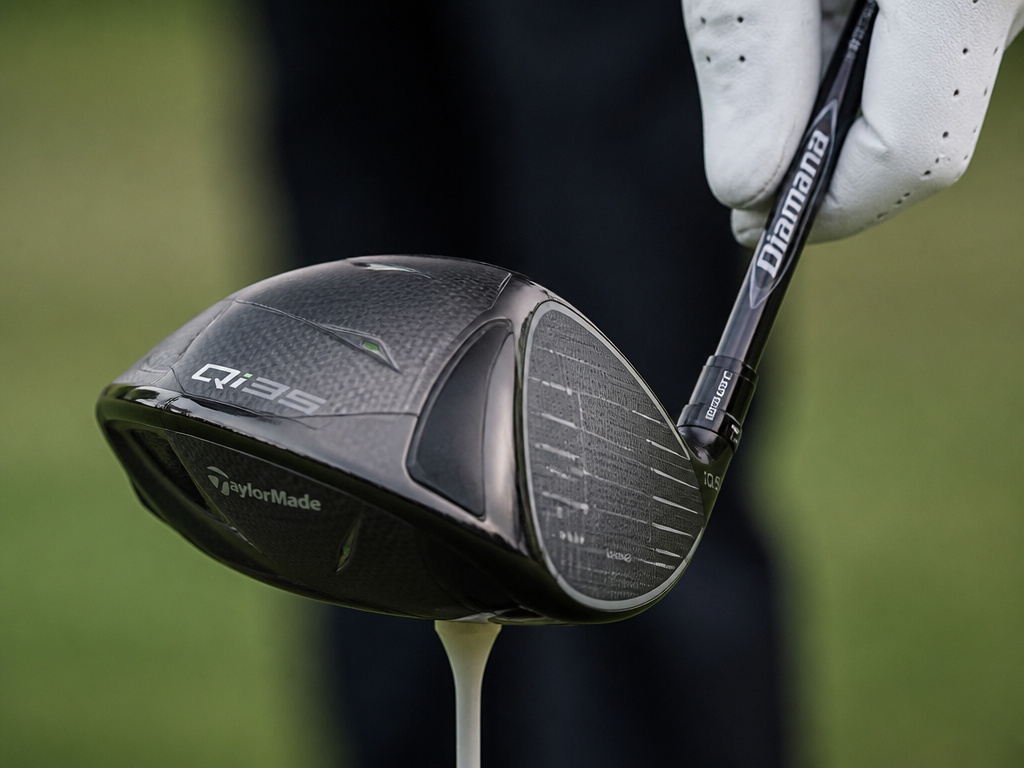 You don’t need a special “fade-biased” driver, but understanding how tour players configure their equipment is revealing. Their setups are designed to manage spin and start line, not just promote curve.
Collin Morikawa’s driver specification is a perfect case study for a “flat fade”: * Head: TaylorMade Qi35 IS 9@9.5 (set at standard, neutral weighting) * Shaft: Mitsubishi Diamana D+ 60TX (tipped 1 inch, 45.25″ long, D3 swing weight) * Grip: Golf Pride Tour Velvet 58R * Target Numbers: 2,200–2,600 RPM spin, 11–12 degree launch
Notice two things. First, his clubface angle at address is neutral or even slightly closed, pointing at his left shoulder. This ensures his start line is left, preventing the big right miss. Second, he uses plenty of loft (9.5 degrees) and a low-spin, stable shaft to keep spin in the optimal window. His fade is a product of swing path meeting a carefully tuned club, not a maximally open face.
For everyday golfers, the lesson is to use enough loft and ensure your driver is properly fit. A higher lofted head (10.5 degrees or more) is more forgiving and helps maintain optimal spin for a carry-focused fade. The modern player’s driver setup for a fade is about precision, not just bias.
Drills to Groove the Feel
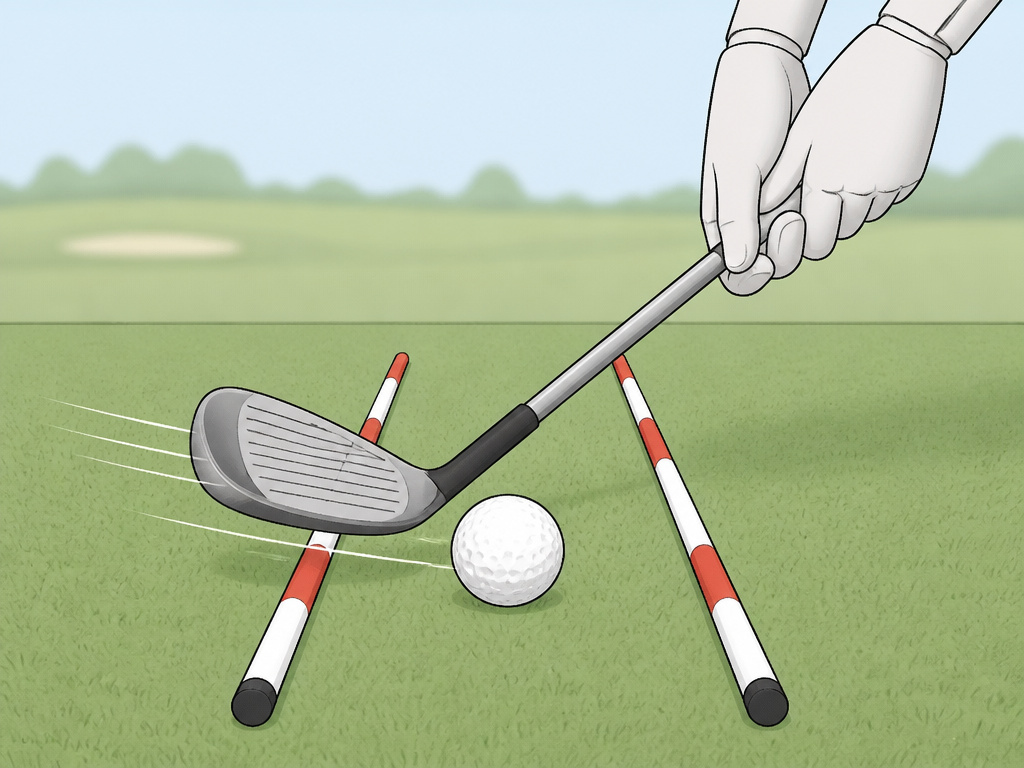 Thinking about path and face relationships is abstract. These drills make the feel concrete.
- The Gate Drill: Place two alignment sticks or clubs on the ground. Set one along your toe line (pointing left). Place the other just outside the ball and ahead of it, also pointing left. Practice swinging so the clubhead passes between the two sticks. This trains the out-to-in path without overdoing it.
- Hold-Off Finish: Hit half-swing shots with a 7-iron. Focus on the follow-through feeling, where the back of your left hand and the clubface “point to the sky” as long as possible. This sensation prevents the hands from rolling over and closing the face.
- Ladder the Curve: On the range, pick a target. Hit your first shot trying to make it curve just 5 yards. Then try for 10 yards of curve, then 15. Adjust only your stance alignment, open it more for more curve. This teaches you how setup directly controls shot shape.
When to Hit a Fade vs. A Draw
A fade isn’t always the right shot. Knowing when to hit a fade is a key part of course strategy.
Choose a fade when: * The hole doglegs to the right. * The pin is on the right side of the green, protected by a bunker. * You need the ball to stop quickly on a firm green (a fade has more backspin). * You are facing trouble on the left side of the fairway.
A draw, which moves right-to-left, generally flies lower and runs out more. It’s useful for extra distance or navigating left doglegs. The strongest players can call upon both shapes, using a fade for control and a draw shot for distance when the situation demands.
Frequently Asked Questions
What’s the difference between a fade and a slice?
Fade is a small, intentional curve of 5-15 yards. A slice is an exaggerated, uncontrolled curve of 30+ yards caused by a severe out-to-in path and a wide-open clubface. A fade loses little distance; a slice balloons and falls short.
Should I change my ball position to hit a fade?
Yes. For a driver, play the ball forward off your left heel to promote a sweeping, ascending strike. For irons, a standard or slightly forward ball position is fine. The key is ensuring your swing path is left, not manipulating the ball back in your stance.
Why do my fade shots sometimes not curve?
The ball isn’t curving because your clubface and swing path are too closely matched. If your path is left and your face is also pointing left (relative to the target), the difference is too small to generate sidespin. Feel like you are holding the clubface open to your body line through impact.
Can I hit a fade with my irons?
Absolutely. The principles are identical: an open stance and a swing along that line, with the face slightly open to the path. The curve will be less pronounced than with a driver due to the shorter club length and higher loft.
Is a fade easier to hit than a draw?
For most golfers, yes. A fade is generally considered more controllable because the open clubface adds backspin, which reduces the amount of sidespin. This makes the shot less prone to the wild, hooking miss that can plague a draw. Many top players use a fade as their stock shot for this reason.
Before You Go
Hitting a reliable fade starts with committing to an open alignment and a leftward start line. Tweak your grip, check your strike, and swing along your body. Forget about chopping across the ball.
Master this, and you gain a tool for right doglegs, tucked pins, and windy days. It’s the shot that lets you play for the fat side of the fairway and still attack. Once it’s dependable, learn its counterpart, the draw, so you can shape the ball both ways. That’s when course management truly begins.
