
Avoid Beginner Golf Mistakes: 3 Proven Fixes to Cut Strokes
This post contains affiliate links. As an Amazon Associate, we earn from qualifying purchases.
This post contains affiliate links. As an Amazon Associate, we earn from qualifying purchases.
To avoid beginner golf mistakes, focus on three essential fixes: square your shoulders at setup (most amateurs are 20-30 degrees open, pros are about 8), stop trying to “keep your head down” (it locks your rotation), and use less loft around the greens (a chip and run with an 8-iron has a 27% up-and-down rate vs 21% with a wedge). These adjustments address the root causes of slices, poor contact, and wasted strokes before you ever swing.**
Most instruction treats these errors as style points. They are not. An open stance forces an out-to-in swing path every time, which is physics, not opinion. The “head down” command robs you of the hip and shoulder turn needed for power. And reaching for a wedge from the fringe is a low-percentage play that data from Shot Scope proves is a mistake for a 15-handicapper.
What follows is a breakdown of why these habits form, what they cost you in real strokes, and the straightforward drills to replace them. The guide addresses setup flaws you can’t swing around, the mechanical failures that cause thin and fat shots, and the strategic blunders that turn a bad hole into a nightmare. By the end, you’ll have a short list of changes that actually move the needle.
Key Takeaways
- Square your shoulders. Recreational golfers average 20-30 degrees open at address; this guarantees an outside-in swing path and a slice. Get your shoulders parallel to the target line.
- Let your head turn. The “keep your head down” myth restricts rotation. Your head should naturally follow your chest through impact; forcing it still costs you distance and consistency.
- Practice your short game first. Spend two-thirds of your practice time on shots within 100 yards. A chip and run with a less-lofted club is statistically more successful than a flop shot.
- Take more club on approach shots. Shot Scope data shows 15-handicappers come up short 54% of the time. Play to the yardage at the back of the green, not the front.
- Play the correct tees. If your driver carry is around 150 yards, use the forward tees. Playing from too far back makes every hole a struggle and slows down pace.
The Setup Flaws You Can’t Swing Around
Your swing is dictated by your address position. Get the setup wrong, and you’re trying to correct a mistake before the club even moves. The most common errors here are invisible to the player but obvious to a coach.
GOLFTEC’s Director of Teaching Quality, Josh Troyer, points out that recreational golfers are often 20 to 30 degrees open with their shoulders at address. For comparison, a professional’s shoulders are only about eight degrees open. That massive difference isn’t a preference; it’s a fault that forces your swing path to come across the ball from outside to in. The result is a weak fade or a slice, no matter how hard you try to rotate.
Common mistake: Setting up with an overly open stance. This presets an out-to-in swing path, making a slice the default ball flight. You’ll spend the entire round fighting a left-to-right curve.
A weak grip often partners with this open stance. If your trail hand sits too much on top of the shaft, the clubface will be open at impact, exaggerating the slice. The fix isn’t a wrist manipulation mid-swing. It’s strengthening your grip slightly at address so your hands are more under the shaft, promoting a squarer face.
Your feet matter, too. If your toes point straight ahead or inward, you physically cannot make a full hip turn. Flare both feet out slightly, your lead foot more than your trail foot. This simple adjustment gives your hips and knees the room they need to rotate freely in the backswing and follow-through.
Swing Mechanics That Wreck Contact
Once you start the swing, two mechanical failures cause most poor strikes: swaying and the “chicken wing.” Both are reactions to bad setup, but they feel like swing problems.
Swaying is the act of sliding your hips away from the target during the backswing. Good players do the opposite; they recenter, moving their hips about three inches toward the target by impact. If you sway, your low point moves behind the ball. You’ll hit it fat, or you’ll throw your hands at it to compensate and hit it thin.
| Fault | What It Looks Like | The Result |
|---|---|---|
| Sway | Hips slide laterally away from target in backswing. | Low point is behind ball, causing fat or thin contact. |
| Chicken Wing | Lead elbow flares out, widening the space between elbows at impact. | Club effectively shortens, leading to topped shots and lost power. |
| No Tilt | Spine stays vertical; head and chest point down through impact. | Inability to launch the ball; requires early arm extension to make contact. |
The “chicken wing” is when your lead elbow separates from your body and flies out toward the target line through impact. It’s an inefficient power leak. Think of your arms and chest as a triangle. That triangle should rotate, not collapse. If your elbows start eight inches apart at address, they should return to that distance at impact, not stretch to twelve inches.
I used to believe playing blades would make you a better ball-striker, until I saw how they shattered confidence for mid-handicappers. The same logic applies here. Trying to force a perfect, connected position with a flawed setup is like trying to build a house on sand. Fix the foundation first, the setup, and the mechanics have a chance to work.
The “Head Down” Myth That Kills Your Rotation
This is the single worst piece of advice given to beginners. “Keep your head down” is meant to encourage steady focus, but the body hears it as “don’t move.” Your head is attached to your spine, which is the center of your rotation. If you lock your head in place staring at the ball, your chest and hips cannot fully turn through the shot.
PGA Pro James Jankowski and GOLFTEC are explicit: this is a myth. Watch any tour pro. Their head stays relatively centered, but it rotates with their body. By the finish, their chest faces the target and their eyes have followed the ball flight. Trying to keep your head artificially still leads to a cramped, arm-dominated swing with no power.
What to do instead: Focus on a tall, balanced finish. Let your hips move toward the target and allow your chest to face upward. Your head will naturally follow. Focus on seeing the ball flight with your right ear (for right-handed players). This promotes the necessary rotation without any forced stillness.
Strategic Blunders That Cost Real Strokes
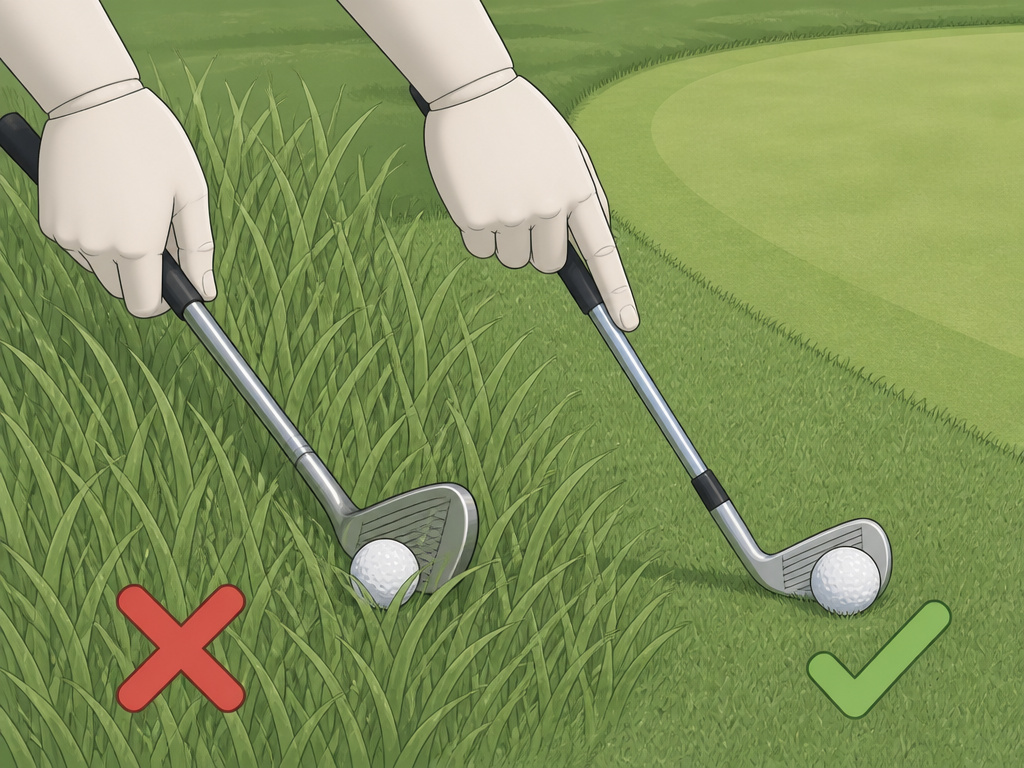
Mistakes aren’t just physical. Poor decisions on the course add strokes faster than a bad swing. The data from Shot Scope highlights two glaring strategic errors amateurs make every round.
First, club selection on approach shots. The numbers are stark: a 15-handicapper comes up short 54% of the time. Most players look at the yardage to the front of the green and choose a club that can just get there. That’s a losing strategy. It doesn’t account for poor strikes, wind, or adrenaline. The fix is simple: get the yardage to the back of the green and play to the window between the flag and that back edge. Take more club.
Second, short game choices. The average 15-handicapper uses a wedge around the green 70% of the time, with just a 21% chance of getting up-and-down. Switch to a chip and run with an 8 or 9-iron, and that chance jumps to 27%. Using a putter from off the green rockets it to 59%. The high-lofted wedge requires a perfect strike and precise landing spot. A chip and run is more forgiving, uses a smaller swing, and lets the ground do the work.
Where this goes sideways: Using a 3-wood off the tee for accuracy. Shot Scope data shows this gains only a 1-3% increase in fairways hit over a driver, while sacrificing significant distance. For most, the trade-off isn’t worth it.
Practice and Equipment Traps
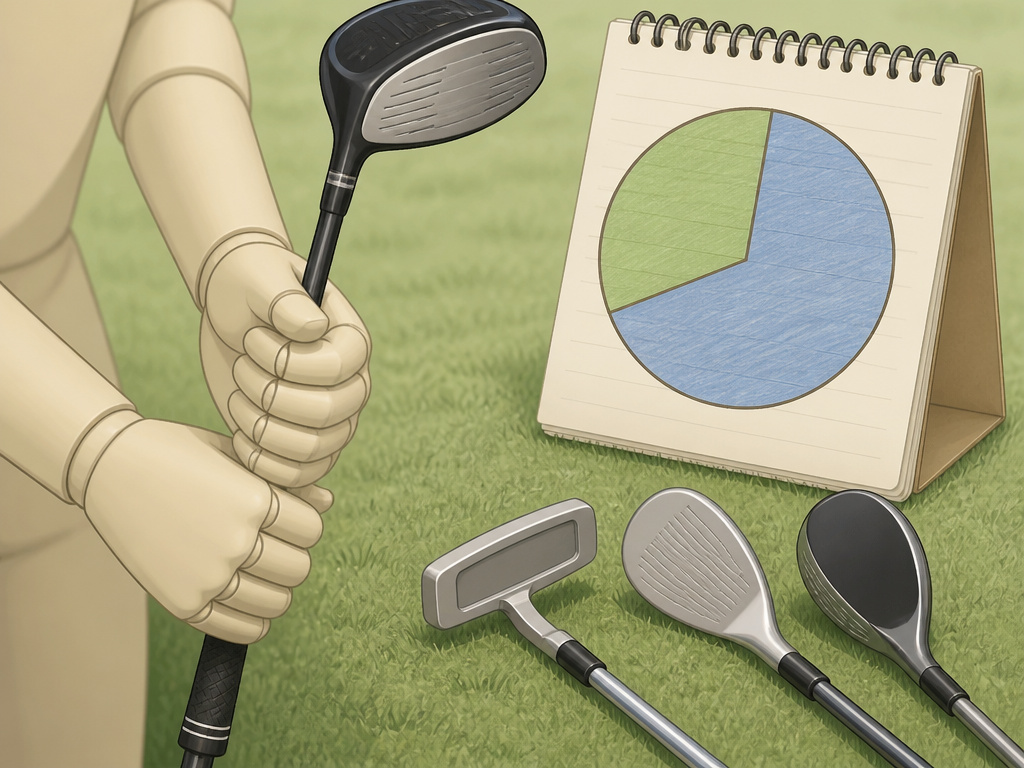
How and what you practice defines your improvement. A beginner who spends the entire session hitting driver is building a game with no foundation.
Split your practice time deliberately. Spend one-third on the long game (driver, fairway woods, long irons). Spend the remaining two-thirds on the short game: putting, chipping, pitching, and bunker shots. This ratio reflects the reality of the course, where most shots happen within 100 yards. La Roca Golf‘s observation is correct, the driver comes out on maybe 13 holes; the other 60-70 shots are everything else.
On equipment, the biggest trap is buying a full 14-club set immediately. You don’t need it. Start with a half-set: a driver, a hybrid, a 6-iron, an 8-iron, a pitching wedge, a sand wedge, and a putter. Seven clubs are plenty to learn with. Focus your budget on a few quality beginner golf sets or men’s beginner clubs that are forgiving, not on a full bag of professional models. Your first investment should be in lessons, not in the latest golf grips or beginner drivers.
Frequently Asked Questions
What is the number one mistake beginner golfers make?
The foundational mistake is an incorrect setup, specifically overly open shoulders. This creates a slice swing path before you even start your takeaway. Fixing your alignment is the fastest way to see straighter shots.
Should I keep my head down when I swing?
No. This is a harmful myth. Your head should be allowed to rotate naturally with your spine and shoulders. Forcing it to stay down and still restricts your body turn, robbing you of power and often causing poor contact.
How often should I practice as a beginner?
Frequency beats duration. Practicing for 30-45 minutes, three times a week, is far better than a single three-hour marathon session once a month. Focus most of that time on short game and full-swing fundamentals with mid-irons.
What clubs should a beginner buy first?
Start with a minimal set: putter, sand wedge, pitching wedge, 8-iron, 6-iron, one hybrid, and a driver. Look for game-improvement designs in beginner irons or complete golf sets for beginners that offer maximum forgiveness on off-center hits.
Why do I always come up short on my approach shots?
You are likely choosing a club based on the yardage to the front of the green, and you’re not accounting for less-than-perfect strikes. Always take one more club than you think you need, and aim for the middle to back of the green.
Before You Go
Golf improvement is not about adding complexity. It’s about stripping away the noise, the bad advice, the overthinking, the unnecessary equipment, and focusing on a few critical points. Square your stance. Let your body turn. Practice your short game more than your long game. Take enough club.
If you remember one thing from this, let it be this: your next range session should start on the putting green, not the driver bay. Build feel and success from the hole backwards. The confidence you gain from getting up-and-down a few times will do more for your scorecard than ten extra yards off the tee. That’s the truth nobody sells, but it’s the one that sticks.
