
The Best Age to Start Golf: A Guide Based on Development
This post contains affiliate links. As an Amazon Associate, we earn from qualifying purchases.
This post contains affiliate links. As an Amazon Associate, we earn from qualifying purchases.
The best age to start golf is between 6 and 12 years old, during the “FUNdamentals” and “Learn to Play” stages of athletic development. This 6-year window is when children build the fundamental movement skills that golf-specific technique relies on. Starting structured play before age 6 should be purely playful, while starting after 12 requires a different approach focused on athleticism first.
That 6-12 range isn’t a random guess. It’s the core of the PGA’s American Development Model, a framework built on how kids actually develop coordination, strength, and cognitive ability. The goal isn’t to find a single perfect birthday. It’s to match the introduction of golf skills to the child’s physical and mental readiness.
What follows is a breakdown of that model, the science behind the “windows,” and how to adapt your approach whether your child is 4, 8, or 14. We’ll strip away the pressure and focus on what actually builds a lifelong player.
Key Takeaways
- The PGA’s American Development Model pinpoints ages 6-12 as the critical window for learning fundamental golf movements.
- Before age 6, “golf” should be active play, rolling balls, swinging lightweight clubs, and having fun on the putting green.
- Peak Height Velocity, the adolescent growth spurt, temporarily disrupts coordination; training during this period must prioritize safety and form over performance.
- Choose equipment based on the child’s height and strength, not their age; a club that’s too heavy destroys a natural swing.
- Success for young juniors is measured by process (e.g., “Did they make a balanced finish?”) not product (e.g., “How far did the ball go?”).
The American Development Model (ADM) Framework
Forget looking for a single magic age. The PGA’s American Development Model gives us a roadmap based on developmental stages, not calendar years. The consensus says “it depends,” but the ADM tells you exactly what it depends on.
The model splits development into seven stages. For introducing golf, the first three are everything.
The “Learn to Play” stage (Boys 9-12 / Girls 8-11) is where a significant window opens. The ADM states that failing to develop fundamental movement skills and introduce fundamental golf skills here “compromises the ability of the young golfer to reach their full potential.”
| Stage | Age Range (Boys) | Age Range (Girls) | Primary Focus | Golf Relevance |
|---|---|---|---|---|
| Active Start | 0-6 | 0-6 | Fundamental movement linked through play. | Swinging, rolling, throwing. No formal instruction. |
| FUNdamentals | 6-9 | 6-8 | ABCs of athleticism: Agility, Balance, Coordination, Speed. | Introduction to grip, stance, balance, and swing imitation. |
| Learn to Play | 9-12 | 8-11 | Develop all fundamental movement & sport-specific skills. | Teach general, fundamental golf skills. Critical window. |
The “FUNdamentals” stage is where you can first introduce kids to golf with structure. Think simple grip, a balanced stance, and finishing a swing in control. The “Learn to Play” stage is where those basics get applied to actual golf skills. Miss this window, and you’re playing catch-up on athletic foundations forever.
Why Developmental Age Beats Chronological Age
A 10-year-old child can be three different athletes. One might be experiencing early adolescence, another is in a growth spurt, and a third hasn’t started. This is where the FSGA junior developmental guide stresses training based on developmental age.
The biggest disruptor is Peak Height Velocity (PHV), the adolescent growth spurt where kids can grow up to 9.5 cm in a year. Bones lengthen faster than muscles and tendons. Coordination drops. A child who was striping the ball can suddenly look like they’ve never held a club.
During PHV, lower performance is expected. The coaching focus must shift to maintaining form and ensuring safety to reduce injury risk. Pushing for distance or scores during this phase is how kids get hurt and quit. You watch for the lanky look, the sudden clumsiness, and you dial back the technical demands. Let the body adapt.
How to Start at Any Age (A Practical Guide)
The ADM provides the framework, but your child has a specific birthday. Here’s how to translate the model into action, whether you’re starting early, in the sweet spot, or a bit later.
Starting Before Age 6: The “Active Start” Philosophy
If your toddler shows interest, start. But your definition of “golf” must change. This isn’t instruction. It’s play.
The goal is to create positive associations with the tools and the environment. A plastic club and whiffle balls in the backyard. A putter and a cup on the carpet. The U.S. Kids Golf guide is blunt: “When golf ceases to be fun, your child will lose interest.” Your job is to be a fun director, not a swing coach.
Keep it short, keep it successful. A three-year-old’s attention span is about six minutes. Do one activity, like seeing how many balls they can roll into a hula hoop, and stop while they still want more. The sound of a plastic ball clunking into a cup is a better reward than any correction.
The 6-12 Window: Building the Foundation
This is the golden time to teach a child to play golf. The child has the motor skills to learn and the cognitive ability to follow simple instructions.
I use the “Headcover Under the Arm” drill here. Have the child hold a headcover between their trail-side elbow and body while making small swings. If the headcover drops, the arm is flying away from the body. It instantly teaches connection without a word about “rotating the pelvis” or “maintaining spine angle.” They feel it. Simple, repeatable movements.
Focus on three things only: 1. Grip: Can they hold the club with two hands? 2. Stance: Can they stand with feet apart and finish in balance? 3. Swing: Can they make a back-and-through motion without falling over?
Assessment here should be process-oriented, like the Golf Science Journal skill assessment for 6-9-year-olds. Did they keep their head still? Was the swing smooth? The score is irrelevant.
Starting as a Teenager: The Athleticism-First Path
What if your child is 13 or 14 and wants to start? The “Learn to Play” window hasn’t slammed shut, but the approach changes. You can’t spend two years on fundamental movement skills if they want to play with friends next month.
The priority shifts to building general athleticism fast. Strength, flexibility, and coordination drills become the foundation of practice. Use athletic movements they already know, throwing a football, swinging a baseball bat, to translate feel to the golf swing. The First Tee junior golf age guide is clear: there’s no age that’s “too late” to begin, but the pathway for a teenager focuses on life skills and social enjoyment as much as technique.
The good news is that a teenager’s cognitive ability allows them to understand cause and effect quickly. They can grasp swing concepts faster than a 7-year-old. The trade-off is they might lack the ingrained motor skills, so consistency takes longer. Be patient. Celebrate athletic motions, not just straight shots.
The Right Gear for the Right Age
Bad equipment is the fastest way to ruin a good start. An adult club cut down with a hacksaw is a recipe for a terrible swing. It’s too heavy, too stiff, and the balance is wrong.
For the youngest beginners, a putter is the best first club. It’s the shortest, simplest, and success is easiest to find. Next, add a lofted club like a 9-iron or hybrid, it’s easier to get the ball airborne. That’s a complete starter set.
Common mistake: Using cut-down adult clubs. The weight and balance force a child to manipulate the club unnaturally, creating bad habits that take years to undo.
The single most important spec is weight. A lighter clubhead allows for more clubhead speed and helps develop a smooth, natural swing. Kids grow an average of 2.5 inches per year after age two. Check their height every six months and be ready to move them into a new junior golf equipment guide size.
| Age / Stage | Club Type Priority | Key Fitting Focus | What to Avoid |
|---|---|---|---|
| 2-5 (Active Start) | 1. Putter 2. Plastic/foam club |
Length (should reach belt buckle when standing upright) | Any metal club that feels heavy. |
| 6-9 (FUNdamentals) | 1. Putter 2. 9-iron/hybrid 3. Driver (lightweight) |
Weight (child can swing smoothly with one hand) | Stiff shafts, full 14-club sets. |
| 9-12 (Learn to Play) | Complete junior golf club sets (7-9 clubs) | Length & Lie (proper posture at address) | Adult flex shafts, clubs that force a hunched posture. |
For specific recommendations, our guides on the best golf clubs for junior golfers and best junior golf sets break down the top choices by height and skill level.
Measuring Success: Process Over Product
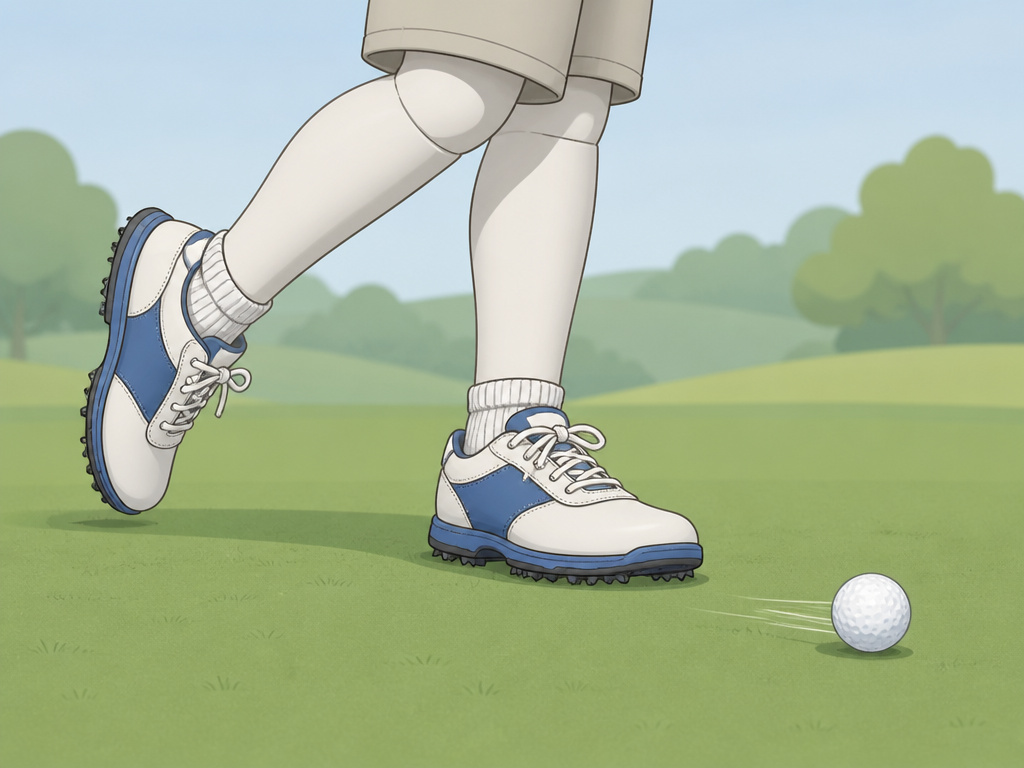 The biggest shift for parents is redefining what a “good” shot is. For a child in the FUNdamentals stage, a topped ball that rolls 20 yards with a balanced finish is better than a pure shot hit with a falling-over lunge.
This is the core of process-related assessment. The academic text on junior golfers and other research advocates for checking the components of the skill, not the outcome. Barnett’s Golf Swing and Putt Skill Assessment for children uses criteria like “small backswing below knee height” and “smooth follow-through toward the target.”
Create simple games that focus on the process: * Balance Game: How many swings can you make finishing on your front foot? * Tempo Game: Can you swing so the club goes “swish” at the same spot every time? * Target Game: Can you hit the ball toward the target (left or right is okay)?
This builds intrinsic motivation. The child learns to feel a good move, not just chase a result. It also prevents the frustration that comes when a well-executed swing produces a bad bounce, they still know they did the right thing.
Frequently Asked Questions
Is 4 years old too young to start golf?
No, but “golf” at 4 should be unstructured play with safe, lightweight equipment. Focus on swinging, rolling balls, and putting into a cup on the carpet. If the child is interested, a 5-10 minute “session” is plenty. The moment it feels like work, stop.
My 10-year-old wants to start. Have we missed the window?
Absolutely not. The “Learn to Play” stage runs through age 12 for boys and 11 for girls. A 10-year-old is squarely in the prime window for learning fundamental golf skills. They may progress quickly due to better cognitive understanding. Start with athletic movement drills and proper clubs for young players.
How often should a junior practice?
For children under 9, frequency is more important than duration. Three 20-minute playful sessions per week beat one grueling hour. During the “Learn to Play” stage, the ADM recommends a 70% training to 30% competition ratio. That “training” includes games and play, not just drilling.
What about tournaments and competition?
Formal, stroke-play competition should be introduced late in the “Learn to Play” stage or in the “Play to Improve” stage (age 12+). For younger kids, create informal competitions focused on skill execution: “Let’s see who can hit 5 shots in a row with a good finish.” Early specialization and year-round tournament play is a leading cause of burnout.
How do I find a good junior instructor?
Look for a coach who uses games and has a bag of tricks beyond technical talk. Ask them how they assess young players. If they only talk about ball flight and scores, keep looking. A good junior coach will talk about balance, coordination, and fun. They should ask about your child’s other sports and activities.
The Bottom Line
Stop searching for the perfect birthday. The best age to start golf is when you can match the child’s developmental stage with the right type of engagement.
For most children, that means introducing structured skills between ages 6 and 12, guided by the PGA’s American Development Model. Before 6, it’s all play. After 12, lead with athleticism. At every stage, equip them properly, a club that fits is essential.
The goal isn’t a junior trophy. It’s a teenager who still wants to play with you, an adult who finds joy in the game. That journey starts with a simple, balanced swing and the sound of a ball falling into a cup. Everything else is just detail.
