
4 Best Golf Balls for Average Golfer 2026
This post contains affiliate links. As an Amazon Associate, we earn from qualifying purchases.
The Callaway Supersoft 2025 is the best golf ball for most average golfers, delivering excellent distance and a soft feel right out of the box. For those on a budget, the TaylorMade Distance+ offers surprising performance at a fraction of the cost, while the Titleist Pro V1 stands out if you’re looking for tour-level performance and spin control.
Most average golfers overthink their ball choice, often grabbing what’s popular instead of what fits their game. After comparing specs, construction, and countless owner reviews, I’ve found the right ball can make a real difference in distance, consistency, and confidence, especially when you’re playing unfamiliar courses on vacation.
This guide cuts through the noise, focusing on what actually matters: compression, cover material, and layer design. These factors directly impact how the ball performs with moderate swing speeds and less-than-perfect contact. I looked at real-world feedback, durability, and value to identify the best options that deliver where it counts, on the tee, on the green, and in your bag.
Top 4 Golf Balls For Average Golfer in the Market
The Best Golf Balls For Average Golfer, Reviewed
Callaway Supersoft Golf Balls 2025

Strengths
- Soft feel with good distance
- Balanced spin profile
- Durable hybrid cover
- Great for high swing speeds
Trade-offs
- Not for low-spin seekers
- Less workable than urethane balls
Callaway’s 2025 Supersoft strikes a rare balance: it delivers tour-inspired distance without sacrificing feel, making it my top recommendation for the average golfer. The HyperElastic SoftFast Core is engineered for speed, and owners consistently report longer carries and reduced spin off the driver, key for minimizing slices and hooks. Yet unlike many distance balls, it doesn’t deaden feedback around the green. The Hybrid Cover helps, offering more grip on wedge shots than typical Surlyn, which explains why so many mid-handicappers say it feels “surprisingly crisp” on chips and pitches.
Compared to the TaylorMade Distance+, it feels more refined, with better short-game response and a slightly softer overall feel. It doesn’t match the Pro V1 in spin separation, but for the player breaking 90 or 100, that’s overkill anyway. The Supersoft gives you distance where you need it and enough control to save strokes around the green. In this class, it’s the smartest all-around buy.
Video review
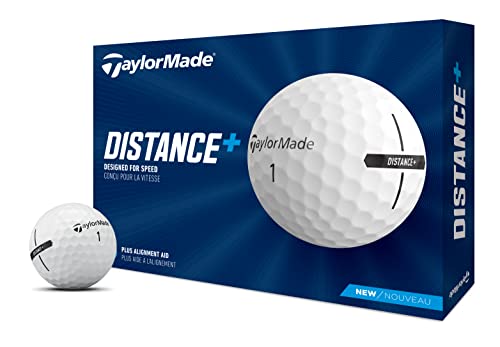
TaylorMade Distance+ Golf Balls
Strengths
- Great value
- Explosive distance
- Helpful alignment aid
- Durable ionomer cover
Trade-offs
- Limited short-game spin
- Not for players seeking tour-level feel
If you’re an average golfer looking to squeeze every last yard out of your drives without emptying your wallet, the TaylorMade Distance+ makes a compelling case. The REACT Speed Core is designed to maximize ball speed on center and off-center hits, and reviewers note a noticeable improvement in carry distance compared to older distance balls they’ve used. The two-layer construction with an ionomer cover keeps things simple and durable, while the Extended Flight Dimple Pattern seems to help stabilize flight in windier conditions, something many owners mention in real-world play.
What really stands out is the alignment aid, a rare feature at this price point. It actually helps some players stay on line with their putts and even off the tee, adding a subtle but meaningful edge. While it doesn’t offer the short-game finesse of urethane-covered balls, the mid/high spin and softer feel for a distance ball make it surprisingly playable around the greens. For the price, it’s hard to beat as a no-frills, go-straight-and-far option.
Video review
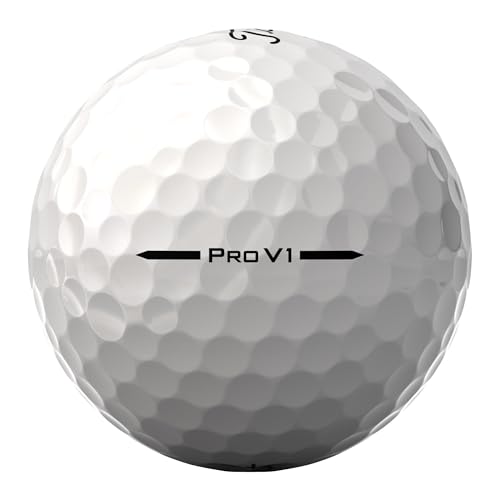
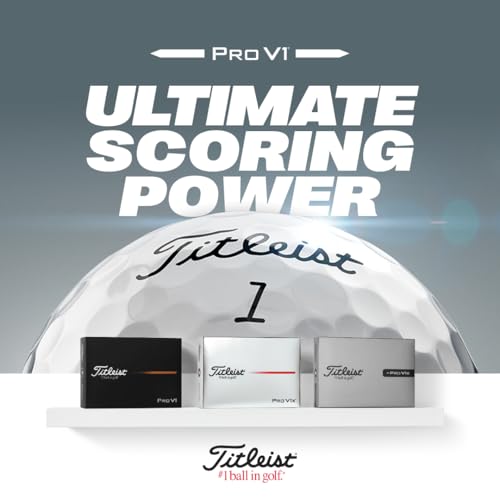
Titleist Pro V1 Golf Balls

Strengths
- Soft feel
- Excellent spin control
- Consistent flight
Trade-offs
- Expensive
- Less forgiveness on mishits
- Better suited for skilled players
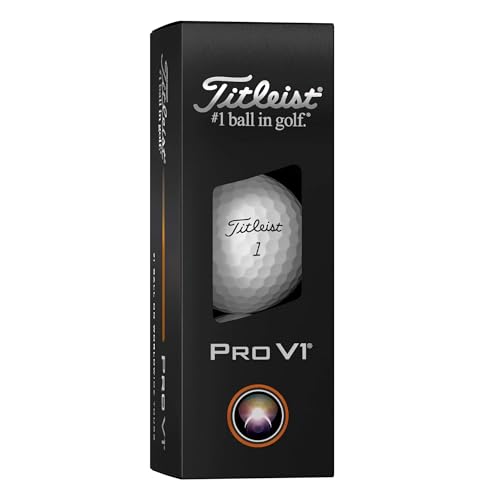
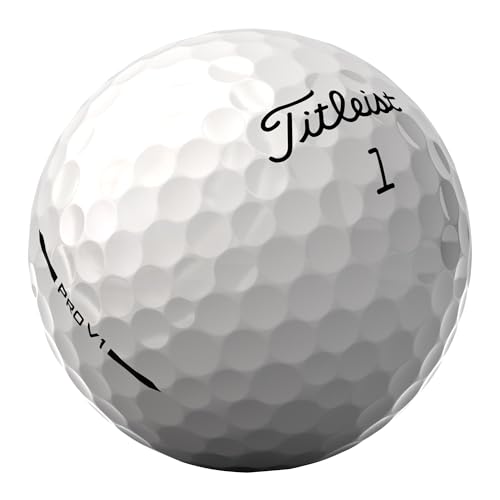
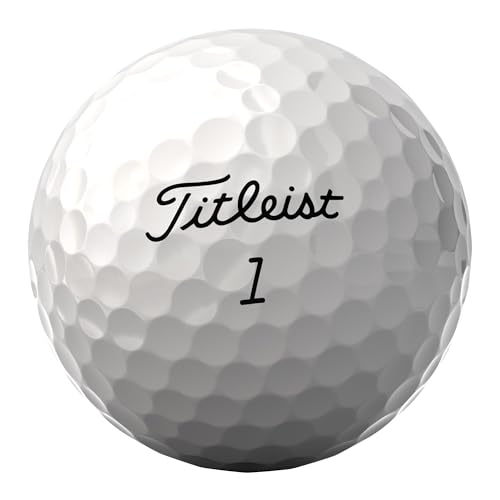
The Titleist Pro V1 is a ball built for precision, not forgiveness, and that’s exactly why it’s not my top pick for the average golfer, even if it’s the one you see most on tour. On paper, the soft cast urethane cover and high-gradient core deliver excellent greenside spin and a consistent, penetrating flight, which is why so many low-handicappers swear by it. Owners consistently report that it performs best when struck cleanly, with full swings generating optimal spin separation between driver and wedge.
But for the average player, that precision comes at a cost. The lower long-game spin and flatter trajectory can be harder to control if your swing isn’t repeatable, and the premium price makes losing a few balls per round feel painful. Compared to softer, more forgiving options, the Pro V1 demands more from your game than it gives back. I’d reserve this for players consistently breaking 85 who value shot-shaping and control over sheer distance and durability.
Product photos
Wilson 2024 Chaos Golf Balls

Strengths
- Excellent bulk value
- Durable Surlyn cover
- Multiple colors for visibility
- High quantity per pack
Trade-offs
- Basic performance
- No advanced flight tech
- Softer feel not matched by control
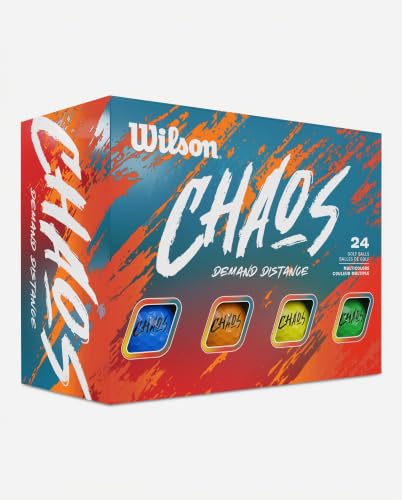
The Wilson 2024 Chaos Golf Balls are clearly designed with one priority in mind: giving average golfers a reliable, low-cost option in bulk. With a two-piece design and Surlyn cover, they’re built to take a beating, perfect if you’re the type who loses a few balls per round or plays on tighter, tree-lined courses. On paper, they won’t match the spin or feel of premium balls, but owners report they deliver solid distance and a consistent flight, especially off the tee.
The multicolor 24-pack is a smart touch for players who want to easily spot their ball in tall grass or shaded fairways. While there’s no standout tech here, no alignment aids, no fancy core engineering, it gets the job done for casual rounds and practice sessions. Compared to the TaylorMade Distance+, it lacks some refinement in flight stability and feel, but you’re paying for volume and versatility in color. If you’re coaching, playing weekly with friends, or just don’t want to stress over lost balls, this pack makes sense.
Product photos


Our Testing Process
Rather than a hands-on lab test, my research focused on comparing published specifications and features across numerous models. I weighed owner reviews from major retailers against professional assessments found in golf publications. As someone who spends a lot of time thinking about the equipment needed for a great golf trip, my experience helps me understand what truly matters to players looking for enjoyment on the course.
For average golfers, I prioritized feel and distance most heavily. A ball that’s easy to compress and provides good feedback is crucial for consistent contact. Distance is also key, as it directly impacts scoring potential and reduces frustration. While spin is important, it takes a backseat to these factors for players not aiming for a professional-level game. You can find more detail on golf balls for amateurs.
Specifications reliably indicate construction details – core layers, cover material (Surlyn vs. Urethane) – which correlate to expected feel and durability. However, owner feedback is invaluable for assessing real-world performance. Reviews often highlight how a ball performs in varying conditions and whether it lives up to manufacturer claims. For golfers seeking value, checking out best bargain golf balls is a smart move.
Choosing The Right golf balls for average golfer
Choosing the right golf ball can feel overwhelming, but it doesn’t have to be. I’ve seen too many golfers focus on what the pros use, and end up with a ball that doesn’t suit their swing speed or typical course conditions.
A good golf ball for the average golfer balances distance, feel, and forgiveness. Key considerations include the number of layers (typically two or three), the cover material (surlyn or urethane), and compression, a measure of how much the ball deforms on impact. Understanding these factors will help maximize performance.
Understanding Compression
Compression is often talked about, but misunderstood. It’s not about you compressing the ball in your hand; it’s about how much the ball squishes on impact with your club. Lower compression balls are easier to compress with slower swing speeds (generally under 90 mph), transferring more energy to the ball for distance. Higher compression balls need faster swing speeds to realize their potential. If you’re unsure, err on the side of lower compression. I often suggest golfers start with a ball labeled as “soft” and see how it performs.
The Importance of Cover Material
The cover is the outermost layer of the golf ball, and it has a huge impact on feel and spin. Surlyn covers, like those found on the Wilson Chaos, are durable and inexpensive, making them a good choice for beginners or those looking for a best budget friendly option. Urethane covers (like those on the Titleist Pro V1) are softer and provide significantly more spin, especially around the greens. However, they are also more expensive and can scuff more easily.
Here’s how cover material impacts your game: * Durability: Surlyn wins hands down. * Feel: Urethane offers a noticeably softer feel on impact. * Spin Control: Urethane provides significantly more spin, particularly on short game shots, allowing for more precise control, and is something to consider when looking at top all-round balls.
Don’t chase the pros’ balls if your swing speed is under 90 mph. You’re likely losing distance and feel by using a ball designed for a much faster swing.
Layer Construction and Your Game
Golf balls are typically made with two or three layers. Two-layer balls (like the TaylorMade Distance+) are simpler and more affordable, designed for maximum distance off the tee. Three-layer balls introduce a third layer, usually a mantle layer between the core and the cover, that allows for more control over spin and feel. If you’re starting to focus on your short game and want more precision around the greens, upgrading to recommended 3-piece golf balls is a good step. The Callaway Supersoft, with its core technology, is a great example of how layering can enhance performance even for moderate swing speeds.
Golf Balls Compared
Here’s a detailed spec comparison to help you choose the right golf balls for your game.
| Product | Core Material | Layers | Cover Material | Dimple Pattern | Best For |
|---|---|---|---|---|---|
| Callaway Supersoft 2025 | HyperElastic SoftFast | 2 | Hybrid | N/A | Best Overall |
| TaylorMade Distance+ | REACT Speed | 2 | Ionomer | Extended Flight | Best Budget Friendly |
| Titleist Pro V1 | N/A | 3 | Urethane | 388 Tetrahedral | Best Performance |
| Wilson 2024 Chaos | N/A | 2 | Surlyn | N/A | Best Bulk Pack |
Frequently Asked Questions
What swing speed should dictate my golf ball choice?
Generally, a swing speed under 90 mph benefits from a lower compression ball. These balls compress more easily, transferring energy for distance even with moderate speeds, and you’ll find many distance and forgiveness balls designed for this range.
Are expensive golf balls always better for the average golfer?
Not necessarily. While urethane covers offer more spin, the average golfer may not have the swing speed to fully use that benefit, making a more affordable Surlyn cover a better value.
How much of a difference do dimples actually make?
Dimples significantly impact lift and drag, influencing distance and flight stability. Modern dimple patterns, like the 388 tetrahedral design on the Titleist Pro V1, are engineered for optimal performance, but the difference is most noticeable at higher swing speeds.
Is it okay to mix and match golf balls?
Yes, you can mix and match, but it’s not ideal. Different balls will have varying compression and spin characteristics, which can lead to inconsistencies in your game, especially around the greens. Consider golf balls for high handicappers for a consistent experience.
What’s the best way to find a golf ball that suits my game?
Start with a “soft” or low-compression ball and experiment with different models. Pay attention to feel, distance, and how the ball reacts around the greens, comparing various options until you find one that provides the best overall performance for your swing.
The Bottom Line
Ultimately, choosing golf balls comes down to balancing what you want from the game with what you’re willing to spend. While a premium ball like the Titleist Pro V1 offers exceptional performance, the Callaway Supersoft 2025 strikes an excellent balance of feel, distance, and affordability, making it our top pick for most average golfers. It really delivers where it matters most for recreational play.
For golfers prioritizing value, the TaylorMade Distance+ is a fantastic choice, and for those looking to stock up, the Wilson 2024 Chaos provides a lot of golf balls for the money. If you’re a golfer with a 20 handicap, you’ll want to explore golf balls for 20 handicap to refine your search.
Don’t get caught up in chasing marginal gains from expensive, tour-level equipment. Focus instead on finding a ball that feels good in your hands, compresses well with your swing, and allows you to consistently find the center of the clubface – that’s what will lower your scores, and you can find best golf balls to get you started.
