
8 Best Golf Hitting Mats for 2026
This post contains affiliate links. As an Amazon Associate, we earn from qualifying purchases.
This post contains affiliate links. As an Amazon Associate, we earn from qualifying purchases.
The GoSports Elite 5×5 ft is the best overall golf hitting mat for serious practice, thanks to its durable turf and ample size. For a more budget-friendly option, the Bearwill 31mm Premium delivers solid performance with decent cushioning. If versatility matters, the Ponsonbay Dual Turf 5×4 ft gives you both fairway and rough lies in one mat.
Golfers need a hitting mat that feels real and holds up over time, not one that punishes your body or frays after a few weeks. Too many mats sacrifice turf quality or cushioning to cut costs, which hurts your swing and long-term comfort.
This guide cuts through the noise by focusing on what actually matters: turf realism, joint protection, and build quality. I looked at specs and dug into owner feedback to find mats that deliver consistent performance and last beyond just a few months of use.
Top 8 Golf Hitting Mats in the Market
The Best Golf Hitting Mats, Reviewed
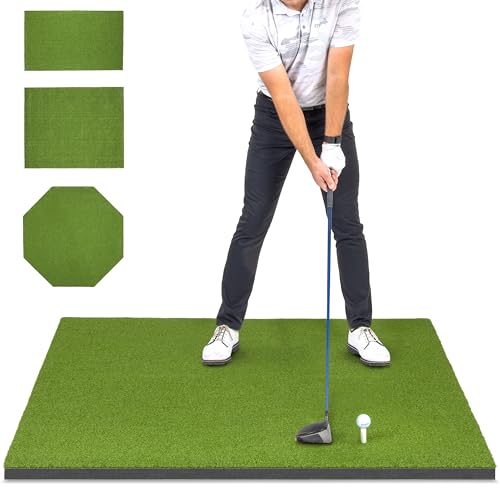
GoSports Elite 5×5 ft Golf Mat
Strengths
- Spacious 5×5 size
- Superior shock absorption
- Commercial-grade durability
Trade-offs
- Higher price point
- Heavier to move
This is the mat I’d recommend to a friend who wants one-and-done quality. The 5×5 size gives real room to move, which matters if you have a wide stance or tend to mis-hit off the edges. The 15mm commercial-grade turf feels consistent and resilient, and the premium EVA base is excellent at dampening impact, owners with joint concerns consistently highlight this. It stays put during aggressive swings, and the 12 tee holes make it easy to switch stances for left- and right-handed drills.
It’s the most expensive option here, but it’s built like a driving range mat. The turf resists flattening, and the non-slip backing works on everything from garage floors to grass. If you’re serious about practice and want something that won’t need replacing in a year or two, this is the benchmark.
Video review
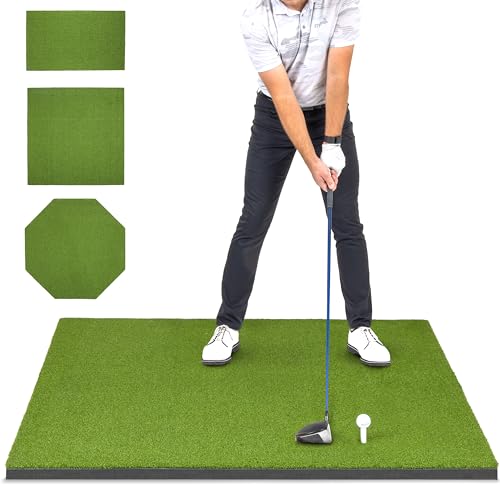
GoSports Elite 5×4 ft Golf Mat
Strengths
- Same quality as 5×5 model
- Better value
- Compact yet spacious
Trade-offs
- Fewer tee holes than 5×5
- Slightly less room for wide stances
This is the smarter buy if you don’t need the extra foot of width. It shares the same elite turf, EVA base, and build quality as the 5×5 model, just in a slightly smaller footprint. For most home setups, garages, basements, simulators, the 5×4 size is plenty. The six tee holes cover standard practice needs, and the included rubber tees are a nice touch. Owners report it handles daily use well, with minimal wear even after months of iron and driver practice.
I’d pick this over the 5×5 unless you’re certain you need the extra space. It’s significantly cheaper, easier to store, and still delivers that premium feel. It’s the sweet spot between cost and performance for most serious players.
Video review
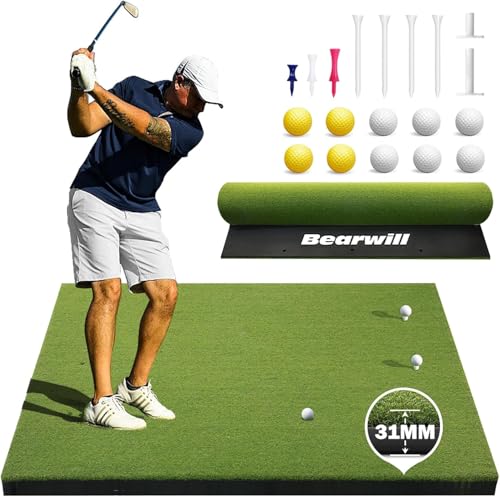
Bearwill 31mm Premium Golf Mat
Strengths
- Exceptional durability
- Strong impact resistance
- Stable, flat lay
Trade-offs
- No extra features like alignment or ball tray
- Higher price than basic mats
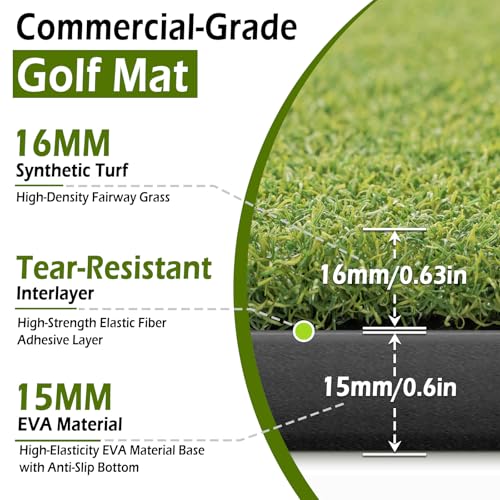
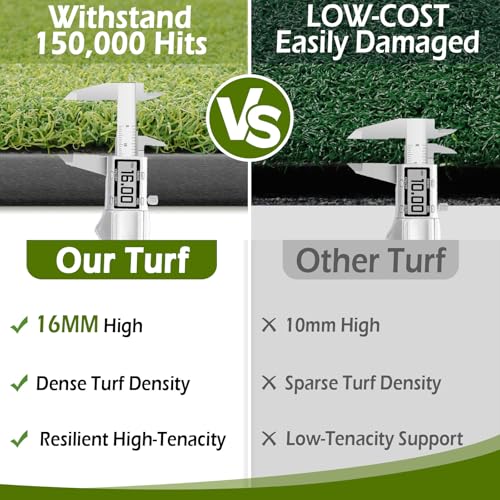
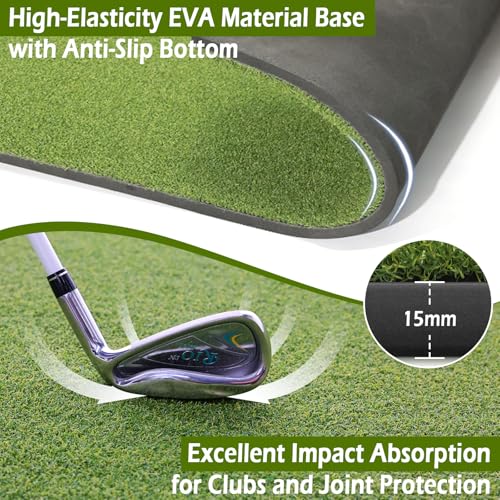
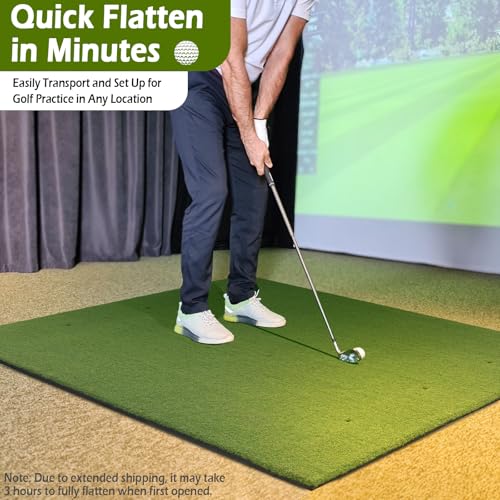
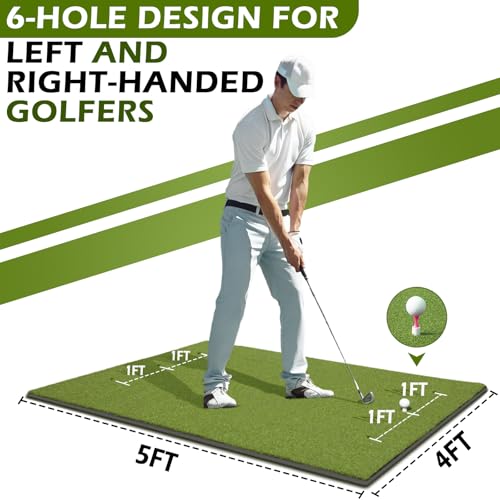
This mat is built like a tank. The combination of 16mm turf, elastic fiber interlayer, and 15mm high-elasticity EVA base makes it one of the most impact-resistant options here. Owners hitting drivers daily report minimal turf separation and no base compression over time, critical if you’re logging hundreds of balls a week. The 150,000-hit rating isn’t marketing fluff; the materials back it up.
It doesn’t have a ball tray or alignment lines, but it doesn’t need them. Its strength is pure durability and joint protection. The surface feels firm but forgiving, and it stays flat without curling. If you want a no-nonsense, high-resistance mat that will last years, this is a top contender.
Product photos
Ponsonbay Golf Mat with Ball Tray
Strengths
- Integrated ball tray
- Good shock absorption
- Easy setup and storage
Trade-offs
- Single turf type only
- Turf less durable than premium options
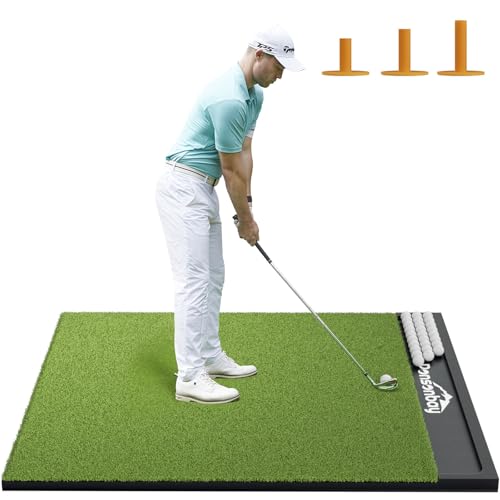
This mat offers a smart balance of convenience and comfort at a mid-tier price. The built-in ball tray is a real time-saver, keeping your practice rhythm smooth, owners love not having to bend over constantly. The EVA foam base is thicker than average, so it does a better job protecting joints and clubs than thinner mats, especially on concrete floors. It’s not dual-turf, so you won’t get rough simulation, but the single turf type is dense and holds up reasonably well under regular iron and wedge use.
It’s essentially a budget-friendly version of the dual-turf Ponsonbay, minus the dual-surface feature but keeping the ball tray and solid build. The three tee heights are useful for different clubs and player types, and it unrolls flat quickly, which is a small but appreciated detail. For the price, it’s a practical pick if you want convenience without top-tier cost.
Product photos
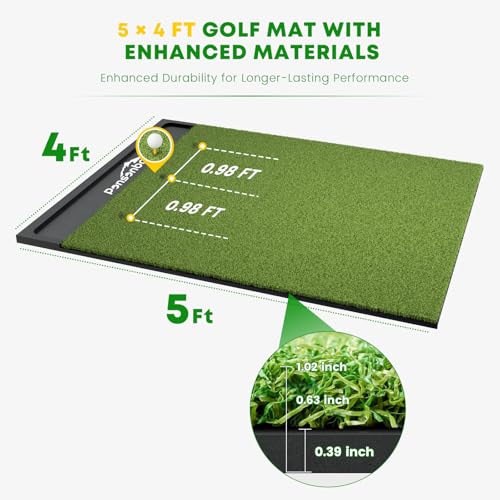
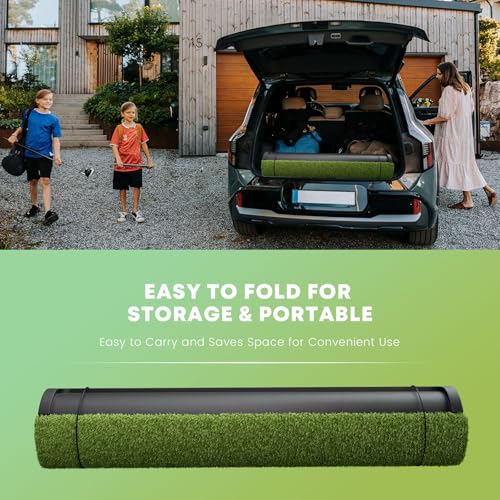
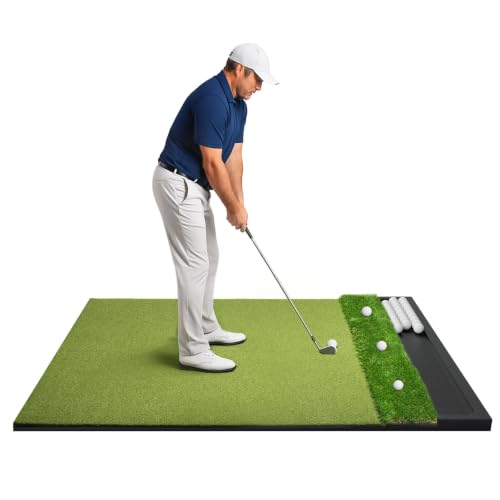
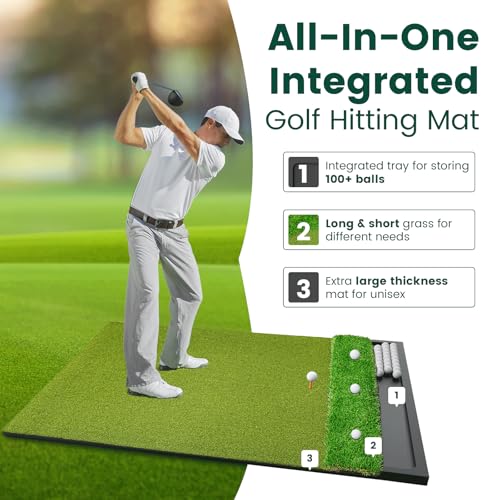
Ponsonbay Dual Turf 5×4 ft Mat
Strengths
- Dual-turf realism
- Built-in ball tray
- Wear-resistant construction
Trade-offs
- Moderate shock absorption
- Slight stiffness on impact
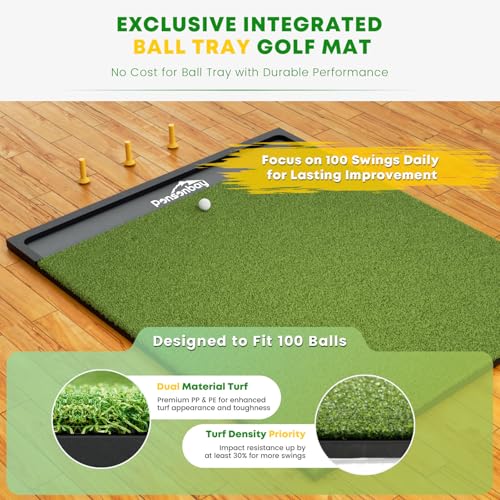
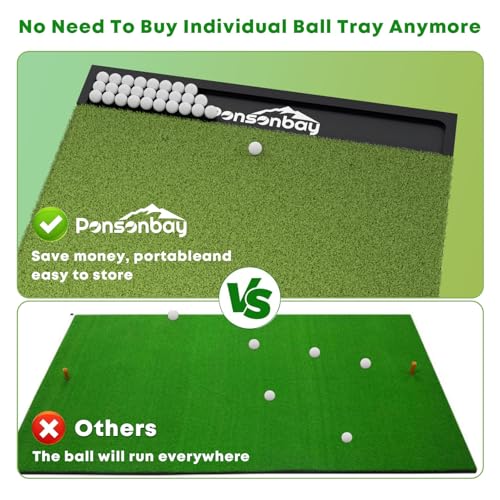
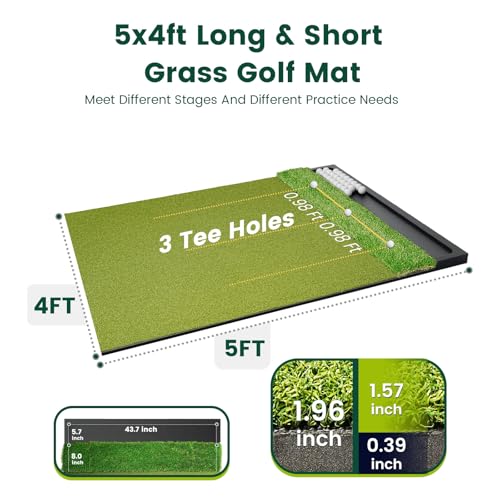
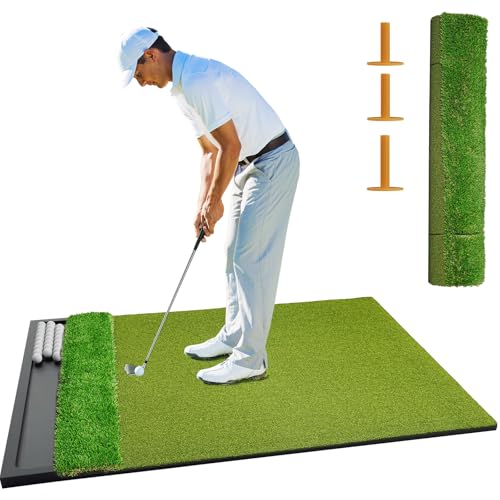
This mat stands out for golfers who want a realistic blend of fairway and rough conditions in one surface. The dual-turf design isn’t just a gimmick, owners consistently report that switching between the short and long grass helps replicate actual course decisions, especially when dialing in iron play and low-trajectory chips. The built-in ball tray is a smart touch, keeping practice flowing without constant bending, which matters if you’re logging serious reps in the garage or backyard.
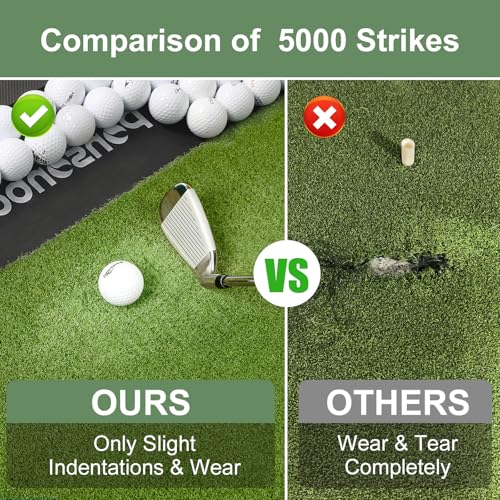
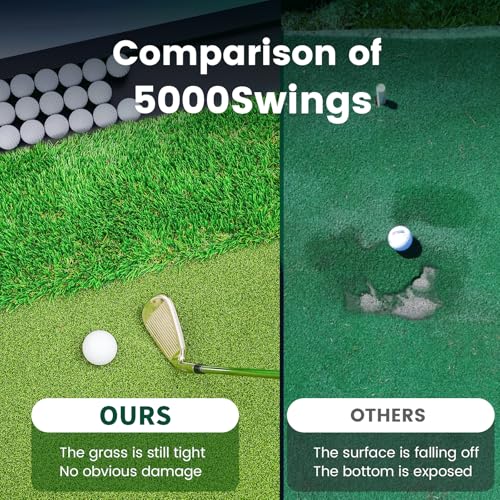
Where it really wins is durability. The polypropylene turf isn’t the softest on impact, but it’s built to handle repeated driver swings without fraying, and the reinforced swing path zone shows less wear over time than cheaper mats. It’s not the most cushioned option, so joint protection isn’t its strongest suit, but if you value a mat that mimics real conditions and holds up, this one delivers on paper and in owner feedback.
Product photos

COSPOPTIC Swing Path Feedback Mat
Strengths
- Real-time swing feedback
- Compact and portable
- Replaceable hitting surface
Trade-offs
- Too small for full swings
- Minimal shock absorption
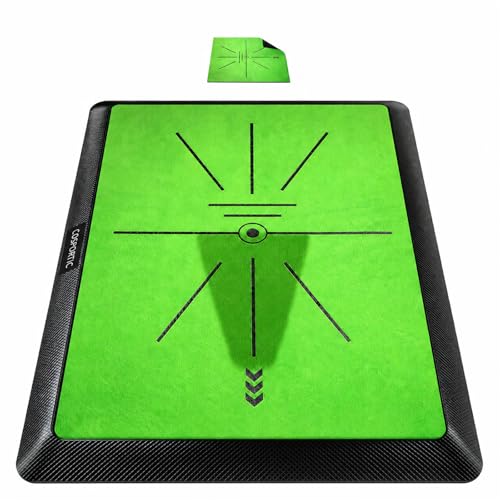
This isn’t a full-size mat, and that’s the point. At 16″x12″, it’s meant for quick, focused sessions, perfect for checking your strike pattern or warming up before a round. The swing path feedback is surprisingly effective. The surface shows clear impact marks, letting you see if you’re hitting heel, center, or toe, which reviewers say helps correct fat or thin strikes over time. It’s not for full swings, but as a diagnostic tool, it’s clever and portable.
The rubber base grips well on concrete, hardwood, or carpet, and the included spare surface extends its life significantly. For the price, it’s a no-brainer for tucking into a golf bag or using during office breaks. But don’t expect cushioning or space for driver work, this is a specialist tool, not a primary practice mat.
Product photos


Bltend Elite 5×4 ft 36mm Mat

Strengths
- Maximum shock absorption
- Thick, durable build
- All-weather performance
Trade-offs
- Bulky to store
- No alignment or feedback features
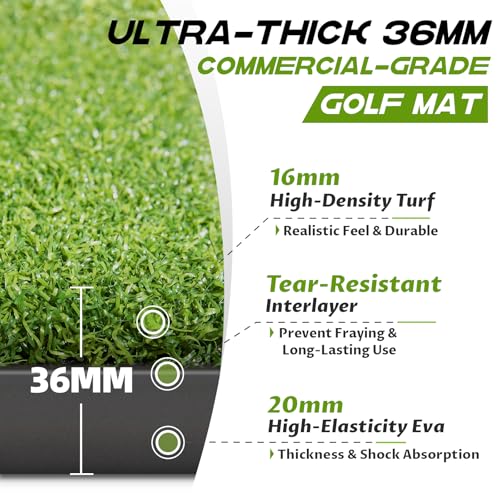
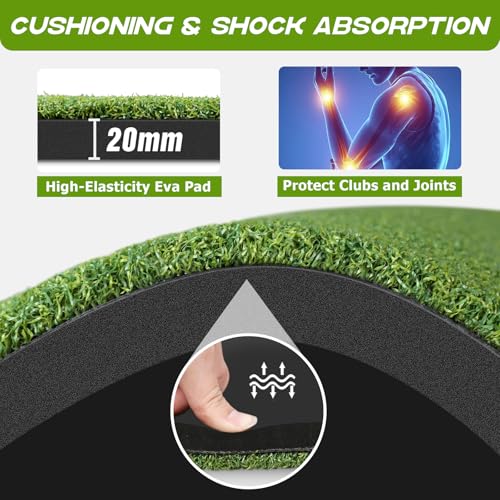
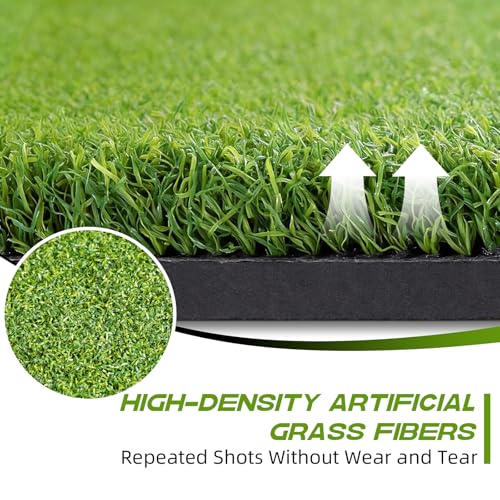
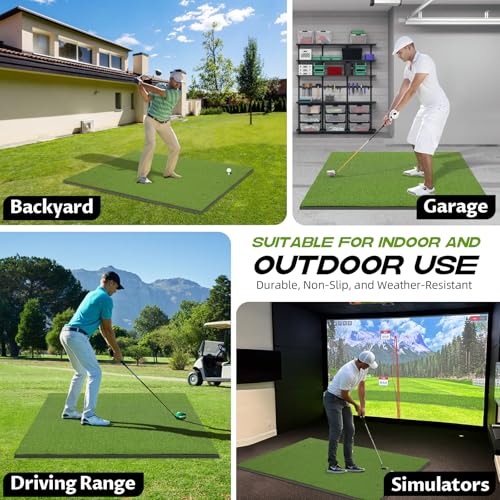
At 36mm thick, this mat is the cushiest option here, ideal for anyone concerned about joint strain. The 20mm EVA base soaks up over 90% of impact, which owners with wrist or elbow issues consistently appreciate. The turf feels realistic and holds up well under repeated use, and the UV-resistant material means it’s safe for long-term outdoor use without fading or brittleness.
It’s not the most compact, but the trade-off is comfort and stability. The 6 tee positions and generous 5×4 size accommodate most stances, and the included accessories make it a solid starter kit. While it lacks swing feedback or alignment lines, it excels where it counts: protecting your body and clubs during daily practice.
Product photos

Golfguru Dual Turf with Alignment
Strengths
- Clear alignment guides
- Good turf variety
- Stable non-slip base
Trade-offs
- Turf less durable under heavy use
- Rough section limited in size
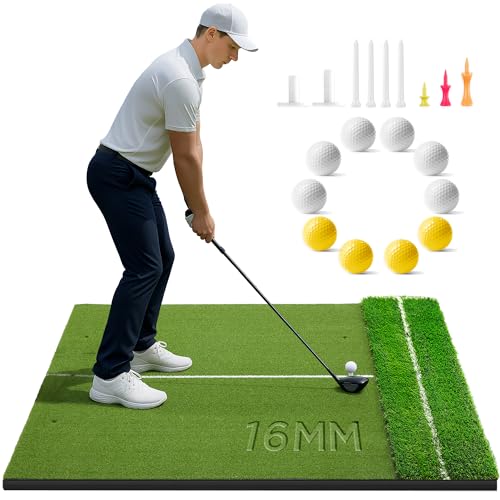
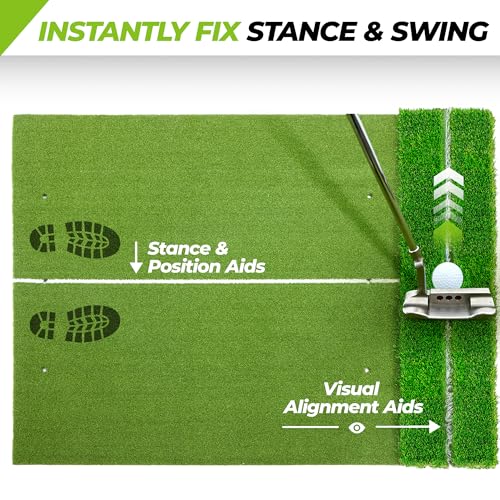
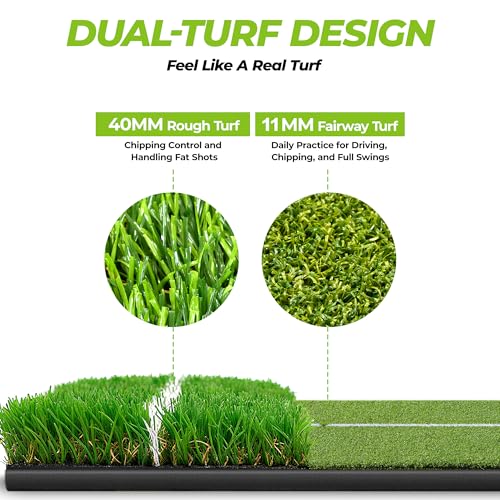
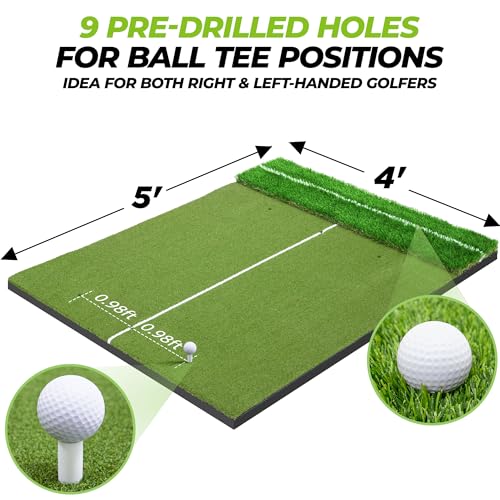
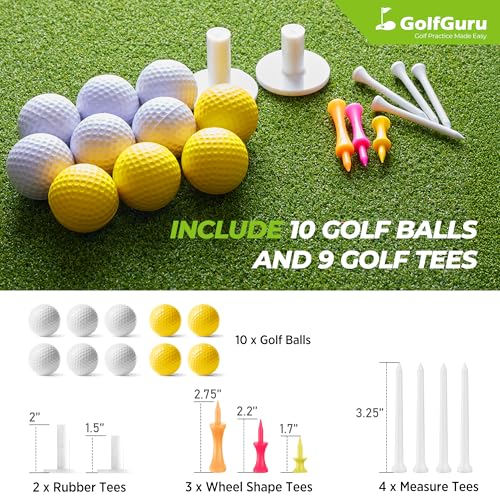
If you’re working on swing mechanics, the alignment guides on this mat are a genuine help. The visual lines are bold and clearly positioned, giving immediate feedback on stance and swing path, something beginners and mid-handicappers consistently praise. The dual-turf setup (11mm fairway and 40mm rough) works well for chipping drills and full swings, though the longer rough section is a bit narrow. It doesn’t feel quite as premium as some higher-end mats, but for the price, it punches above its weight in functionality.
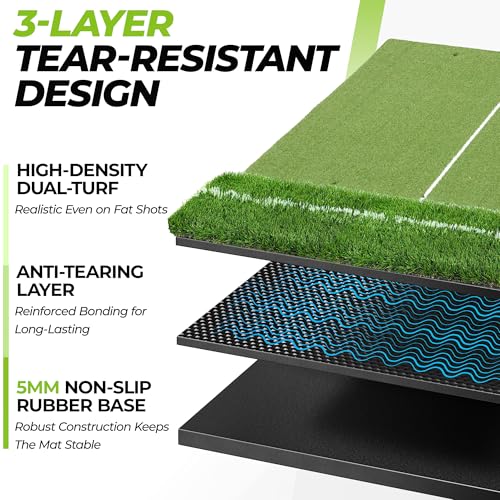
The 5mm EVA base does a decent job with shock absorption and stays put on most surfaces, thanks to the non-slip design. Owners note it rolls up easily and holds its shape without curling at the edges, which is a common pain point with budget mats. It’s not built for heavy daily driver use over years, but for regular practice with irons and partial swings, it’s a solid performer.
Product photos
Our Testing Process
As someone who spends a lot of time thinking about how golfers can improve their game, I wanted to approach this guide with a focus on real-world performance and durability. Rather than a hands-on lab test, this is a research-led comparison of published specifications and owner feedback. We compared features across numerous models, giving weight to owner reviews from verified purchasers and expert opinions found in golf publications and online forums. This allowed us to build a ranking based on what golfers are actually saying about these mats.
For golf hitting mats, the most important factors are the quality of the turf and the shock absorption provided by the base. A realistic turf surface is essential for developing a consistent swing, and the base needs to protect your joints and your clubs from impact. We heavily prioritized these factors because they directly influence both the effectiveness of practice and the longevity of the product. Finally, features like portability and ease of setup also played a role, but the core performance elements were paramount.
Specifications reliably indicate the thickness of the turf and base materials, which give a good sense of potential durability and impact absorption. However, real-world performance – how well a mat holds up over time, and how closely it mimics a natural surface – is best gleaned from owner reviews. We looked for consistent feedback regarding wear and tear, slippage, and the overall feel of hitting off the mat. If you’re looking for the best golf mats for a variety of uses, this combination of data points provided the most accurate assessment. For those specifically interested in taking their practice outside, check out our guide to the best outdoor hitting mats.
How To Pick The Right golf hitting mats
Finding the right golf hitting mat can dramatically improve your practice, especially when getting to the range isn’t an option.
A good golf hitting mat isn’t just about hitting into something soft. It should realistically simulate turf interaction, provide adequate shock absorption to protect your joints, and withstand consistent use without falling apart. Key factors include turf quality (density and cut), base cushioning, overall size, and durability of the construction. Consider how and where you’ll be using the mat to determine the best features for your needs.
Turf Realism & Feel
Let’s be honest: a bad turf surface can ruin your practice. Many cheaper mats feel…wrong. You want something that provides realistic feedback, allowing you to feel where you’re making contact with the clubface. Look for mats that specify the type of turf used, and don’t shy away from higher-density options. A thicker turf pile (30mm or higher) generally feels more natural, and polypropylene blends are often more durable than lower-quality nylon. Don’t assume all “realistic” turf is created equal; read reviews and see what golfers say about the feel after repeated use.
Cushioning & Joint Protection
As someone who’s spent years walking golf courses, I know how quickly impact can take a toll on your body. A solid base with ample cushioning is critical. EVA foam is common, but the thickness matters. Thinner bases (under 10mm) may not provide enough shock absorption, especially if you practice frequently or have joint issues. Look for mats with at least 15mm of EVA foam, and consider thicker options (20mm+) if you’re concerned about protecting your wrists, elbows, or back. I often recommend checking out recommended hitting mats for home to see the options with the best cushioning.
- Consider your typical swing. A powerful driver swing demands more cushioning than a gentle wedge shot.
- Surface compatibility is key. A mat that’s stable on carpet might slide around on concrete, so check the base material.
- Long-term health is worth the investment. A better base protects your body and allows for more consistent practice over time; cheaper options can lead to fatigue and even injury.
A worn-out mat is a wasted mat. Prioritize durability and construction. Look for reinforced edges, and materials designed to withstand thousands of swings.
Size, Features & Versatility
The size of the mat should match your practice needs. A smaller mat (3×5 ft) is fine for short game work, but you’ll want something larger (5×5 ft or bigger) if you plan on practicing with a driver. Many mats now come with integrated tee holders, which is a convenient feature, but pay attention to the quality and adjustability of those holders. Dual-turf mats, offering both fairway and rough surfaces, are excellent for simulating different lies. If you’re serious about improving your game, exploring best driving mats can broaden your practice options.
Golf Hitting Mats Compared
Here’s a comparison of key specifications for popular golf hitting mats to help you choose the best option for your needs.
| Product Name | Size (ft) | Turf Type | Cushioning (mm) | Tee Holes | Ball Tray |
|---|---|---|---|---|---|
| GoSports Elite 5×5 ft | 5×5 | Fairway | N/A | 12 | No |
| GoSports Elite 5×4 ft | 5×4 | Fairway | N/A | 6 | No |
| Bearwill 31mm Premium | 5×4 | Fairway | 15 | 6 | No |
| Ponsonbay w/ Ball Tray | N/A | Fairway | 39-59 | 3 | Yes |
| Ponsonbay Dual Turf 5×4 ft | 5×4 | Dual (Fairway/Rough) | N/A | N/A | Yes |
| COSPOPTIC Swing Path Feedback | 16×12 in | Velvet | N/A | N/A | No |
| Bltend Elite 5×4 ft 36mm | 5×4 | Fairway | 36 | 6 | No |
| Golfguru Dual Turf w/ Alignment | 5×4 | Dual (Fairway/Rough) | N/A | 9 | No |
Frequently Asked Questions
What mat thickness is best for protecting my joints?
At least 15mm of EVA foam cushioning is ideal for joint protection, but 20mm or more is preferable if you have existing issues or a powerful swing. Thinner mats offer less impact absorption and could contribute to fatigue over time.
Are dual-turf mats really useful for practice?
Yes, dual-turf mats offer significant versatility. Being able to practice off both fairway and rough surfaces allows you to simulate a wider range of real-world lies and improve your adaptability.
How important is the type of turf material?
The turf material greatly impacts feel and durability. Polypropylene blends generally outlast nylon and offer a more realistic playing surface, but higher-density options in either material are always preferred for a better experience.
What size mat do I need for a full swing?
A 5×5 ft mat or larger is recommended for a full swing, especially with a driver. A smaller mat can restrict your swing and potentially damage the mat itself. For focused short-game work, smaller options such as the COSPOPTIC Swing Path Feedback mat are sufficient.
Where can I find best indoor hitting mats for year-round practice?
I recommend looking for options with a durable base that won’t slide on hard floors and a high-quality turf that can withstand repeated use. Consider also exploring quality indoor hitting surfaces designed specifically for indoor use.
The Bottom Line
Choosing a golf hitting mat often comes down to balancing how much control you want over your practice environment with how much fuss you’re willing to deal with. For the best overall experience, and a mat that will stand up to serious use, the GoSports Elite 5×5 ft mat is a solid choice. It offers a generous hitting surface, good turf quality, and a reputation for durability, making it a worthwhile investment for golfers of all levels.
If you’re on a tighter budget, the Bearwill 31mm Premium mat provides excellent value. Or, for those seeking versatility, the Ponsonbay Dual Turf 5×4 ft mat lets you practice a wider range of shots, simulating different lies and conditions. If you’re planning to build a dedicated setup, exploring best simulator mats is a smart move to ensure compatibility and performance.
Ultimately, remember that the most expensive mat isn’t necessarily the best. Prioritize a realistic turf feel, adequate cushioning to protect your body, and a durable construction. A consistent, comfortable practice experience, even a simple one, is far more valuable than any fancy feature. You’ll find plenty of golf practice mats to meet your needs, but focusing on these fundamentals will lead to the most improvement in your game.
