
8 Best Women’s Golf Putters of 2026
This post contains affiliate links. As an Amazon Associate, we earn from qualifying purchases.
This post contains affiliate links. As an Amazon Associate, we earn from qualifying purchases.
The TaylorMade Kalea Spider Putter stands out as the best overall choice for women, combining high MOI with excellent alignment, while the Orlimar F9 ZT Zero Torque delivers exceptional stroke consistency. For those watching their budget, the PGM Low CG Zinc Alloy Putter offers solid performance without the premium price.
Choosing the right putter isn’t just about brand names or looks, it’s about finding one that matches your stroke, feels comfortable, and helps you roll the ball more consistently. Many women struggle with putters that are too heavy, too long, or hard to align, which can hurt confidence and accuracy on the greens.
This guide cuts through the noise by focusing on what actually matters: head weight, MOI, stroke compatibility, and grip comfort, all evaluated through specs and real-world feedback from women golfers. These picks are designed to help you make smarter choices, whether you’re upgrading your first putter or fine-tuning your short game.
Top 8 Women’S Golf Putters in the Market
The Best Women’S Golf Putters, Reviewed
TaylorMade Kalea Spider Putter
Strengths
- High MOI for forgiveness
- Tour-inspired mallet design
- Premium materials and finish
Trade-offs
- Very high price
- Limited stroke compatibility
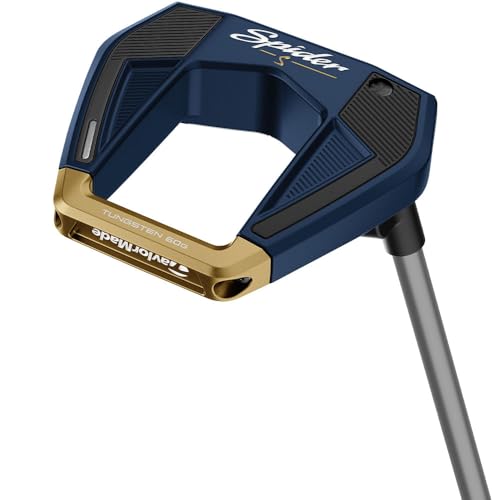
TaylorMade’s Kalea Spider is built with intent, it’s not just a pinked-and-shrunk version of a men’s club, but a thoughtfully scaled mallet with real performance DNA. The multi-material construction raises MOI significantly, giving it excellent stability on off-center hits, which is critical for golfers still dialing in their stroke. Owners report increased confidence over the ball, thanks to the bold alignment system and face-balanced design.
Compared to other women-specific models, this one stands alone in blending modern tech with aesthetic appeal. The 33-inch length is ideal for average-height women, and the shaft is lightweight without feeling cheap. While it’s the most expensive option here, it’s also the only one that feels like a true upgrade from beginner gear. If you’re serious about improving, this is the putter to grow into.
Video review
Orlimar F9 ZT Zero Torque
Strengths
- Zero torque design
- High MOI stability
- Ball pickup feature
Trade-offs
- Bold aesthetics may not suit all
- Limited stroke compatibility
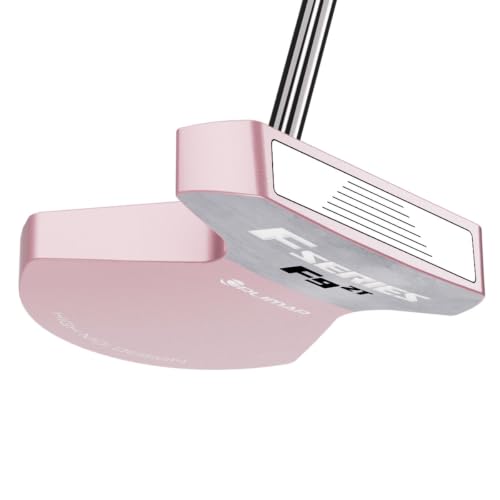
The Orlimar F9 ZT stands out in the women’s putter market with its true engineering focus on stroke mechanics. The zero torque design, which aligns the center of gravity with the shaft axis, is not just marketing fluff, owners consistently report a noticeably straighter stroke path and reduced face rotation at impact. On paper, this should help golfers who struggle with inconsistent putting lines or those who tend to push or pull putts due to hand dominance.
The mallet shape boosts MOI, so mishits stay closer to target, and the integrated ball pickup is a small but appreciated convenience that I’ve seen praised by senior and mobility-conscious players. While the pink/white colorway leans flashy, the performance leans serious. It’s not as refined as a Scotty Cameron, but for the price, it delivers a level of stability and alignment confidence that punches above its weight.
Video review
Orlimar Tangent T3 Mallet
Strengths
- Slight toe hang for arc strokes
- Milled face for crisp feel
- Strong alignment aid
Trade-offs
- Limited color options
- No ball pickup feature
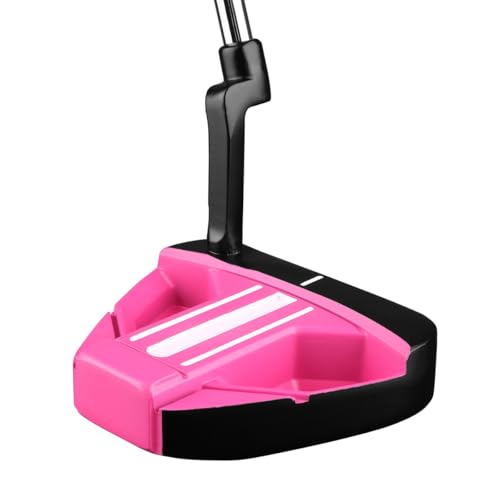
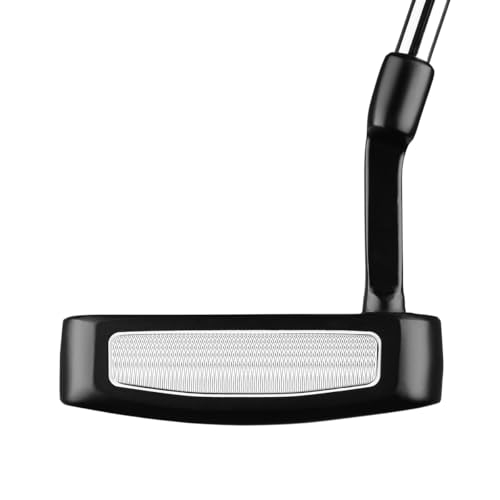
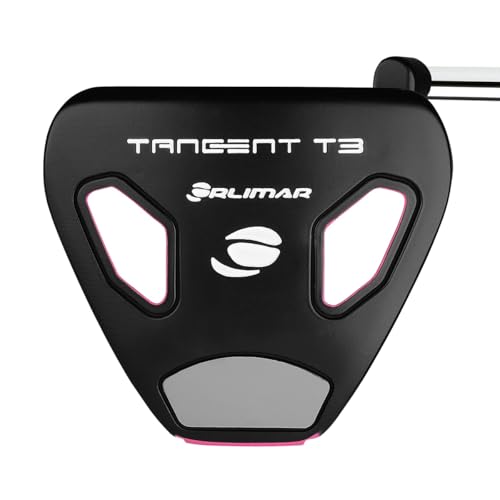
The Orlimar Tangent T3 hits a sweet spot between price and performance. It’s not flashy, but it’s smartly designed, the slight toe hang suits golfers with a natural arc stroke, which a lot of women tend to have. The milled face insert delivers a crisper feel than most putters in this range, and owners frequently mention how it helps them better sense center-face contact.
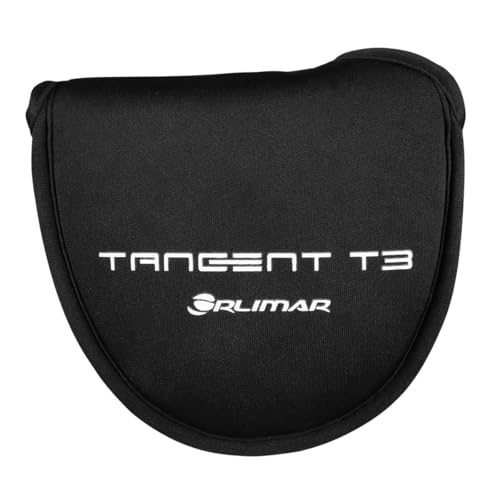
The bold alignment system stands out clearly against most green backgrounds, and the included headcover is actually useful, not just decorative. Compared to the F9 ZT, this one feels more balanced for stroke freedom, while still offering high MOI forgiveness. At under 70 bucks, it’s the kind of putter that should be on more radar lists. My pick for the best value in the premium budget tier.
Product photos

PGM Women’s Putter with Ball Pickup
Strengths
- Oversized grip reduces wrist action
- CNC-milled face for roll
- Includes headcover
Trade-offs
- Overbuilt with gimmicky features
- Inconsistent durability reports
- Average alignment system
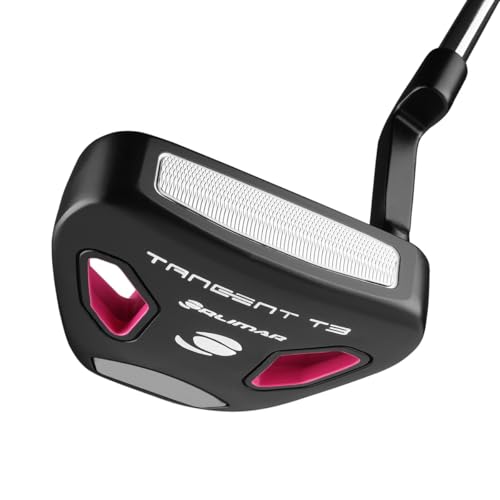
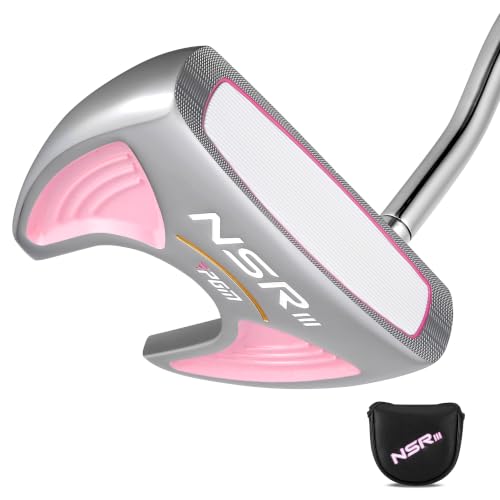
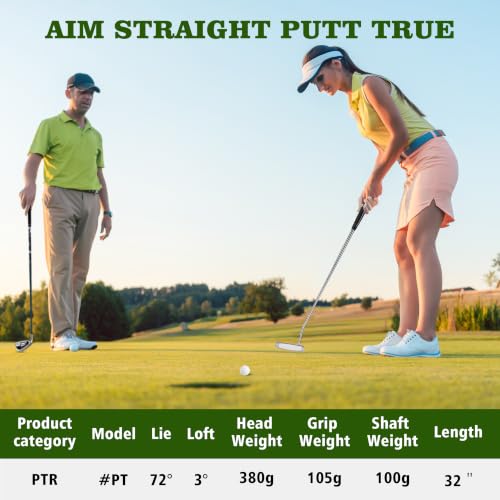
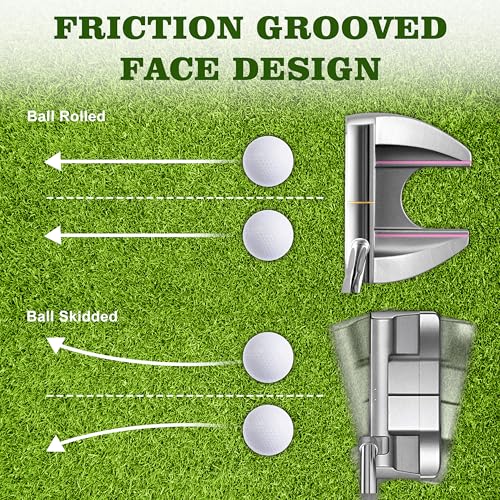
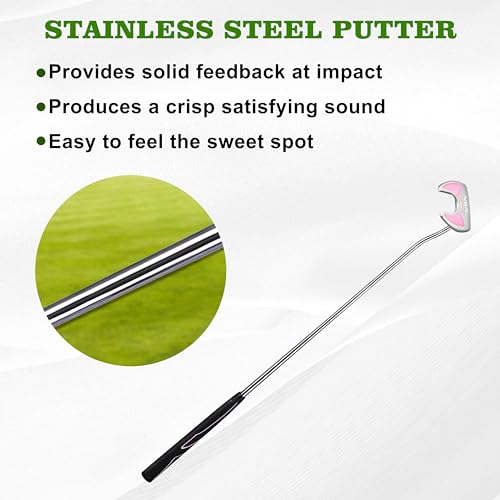
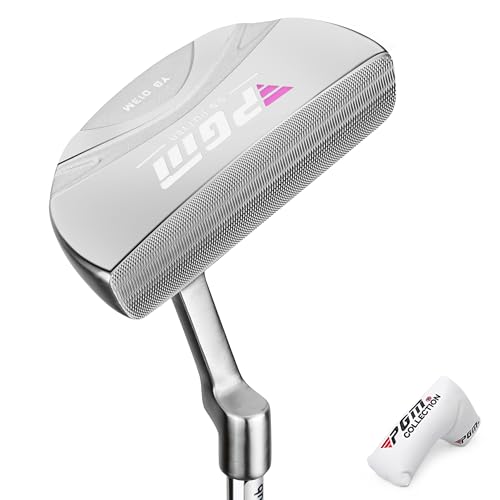
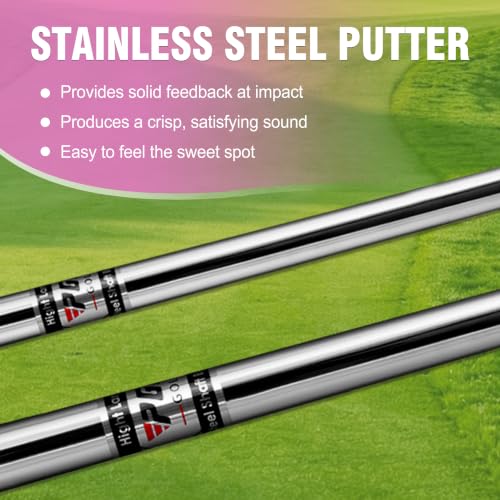
This PGM model packs a lot of features into a mid-tier price, but it spreads itself thin. The CNC-milled grooves do help promote a true roll, and the stainless steel build gives it a crisper sound and better feedback than their zinc models. The oversized grip is a standout, it genuinely helps reduce wrist flick, which aligns with what many women golfers need for smoother tempo.
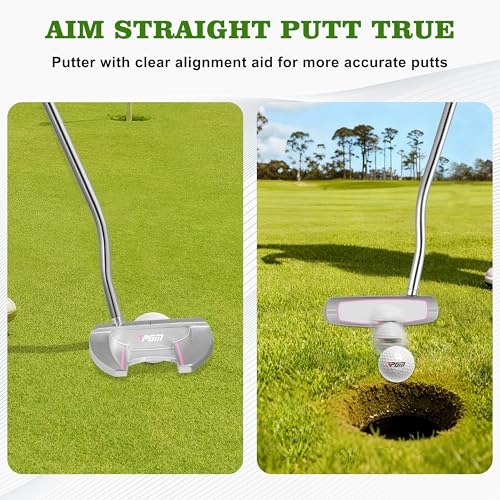
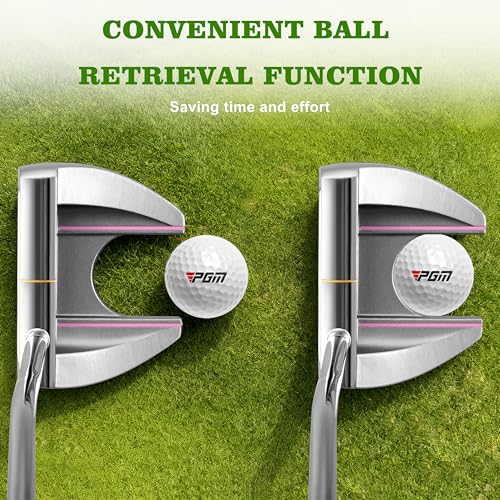
Still, the ball pickup and alignment features feel like add-ons rather than integrated design elements. Some owners mention the headcover is flimsy despite the “premium” claims. It looks good and offers convenience, but if you’re after pure putting performance, there are better-focused options. I’d recommend it more for resort players or those who value ease and comfort over tour-level precision.
Product photos
PGM 33″ Oversized Grip Putter
Strengths
- Jumbo grip reduces wrist action
- Plumber neck for alignment
- CNC-milled face
Trade-offs
- Redundant features
- Overly styled design
- Mixed durability reports
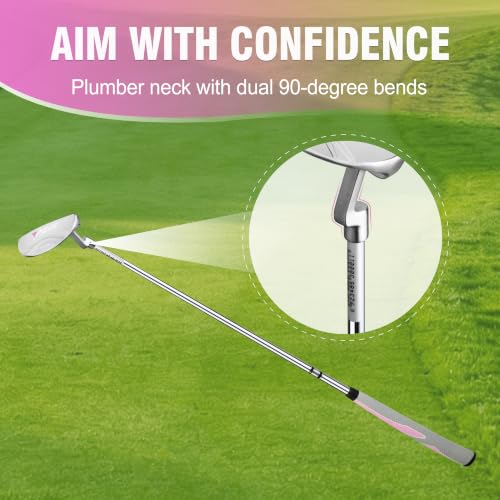
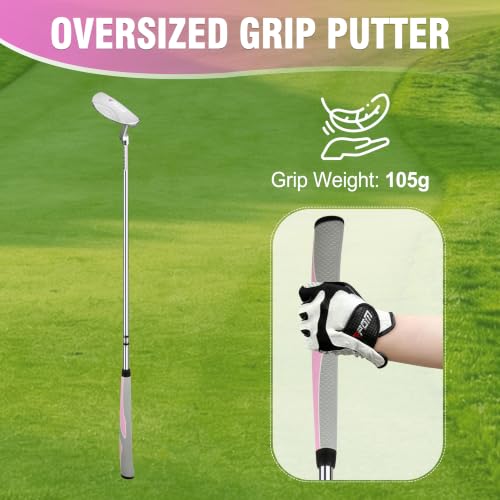
This PGM model is nearly identical to the B0FK29V5K9 but leans harder into wrist control, and rightly so. The oversized, jumbo grip is its defining feature, and owners who struggle with wrist breakdown or tension love how it promotes a pendulum stroke. The plumber’s neck with dual bends helps set the face back, aiding alignment without forcing an awkward setup.
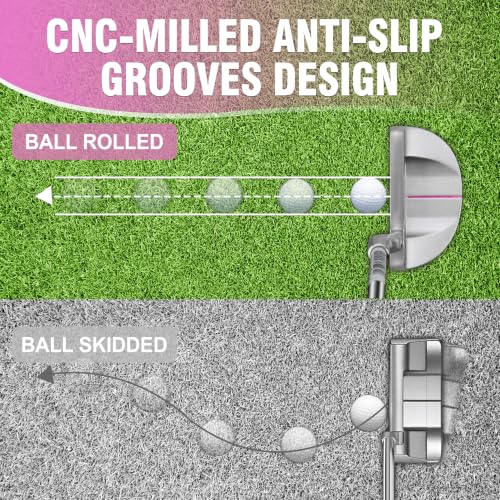
The stainless steel head gives it better feedback than zinc models, and the anti-slip grooves do help reduce skid. Where it falters is identity, it tries to be everything at once. But if you’re a golfer who tends to wrist-twitch or lose posture over short putts, this one could be a real fix. I’d recommend it over the other PGM mallets for stroke correction.
Product photos

PGM Anti-Twist Mallet Putter
Strengths
- Stepped steel shaft
- Low CG for smooth roll
- High MOI mallet head
Trade-offs
- 35 inch length too long for most women
- Generic branding
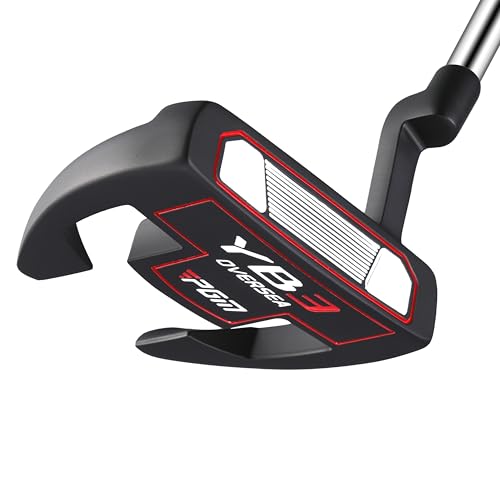
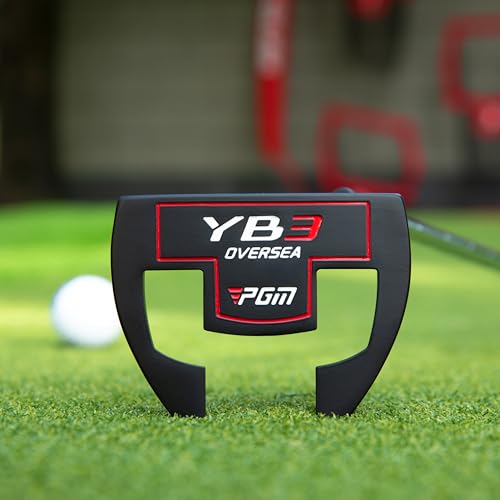
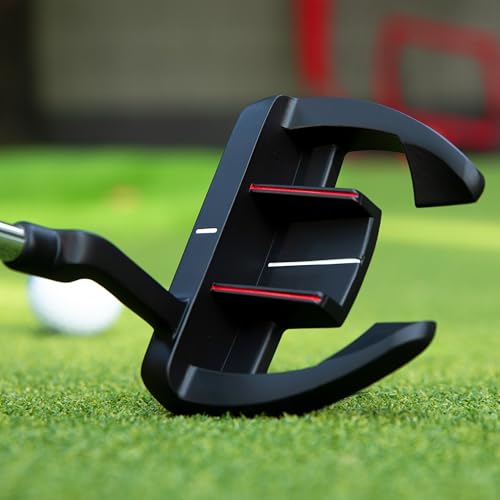
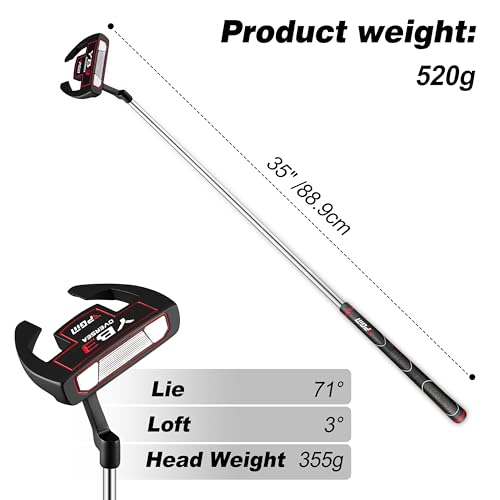
This 35-inch PGM mallet is an interesting hybrid, technically labeled for women, but the length skews tall or upright players. The stepped steel shaft is its strongest feature, reducing torque and delivering consistent feedback that many users say improves face control. The low center of gravity helps get the ball rolling early, which is great on slower greens or for players with a steeper stroke.
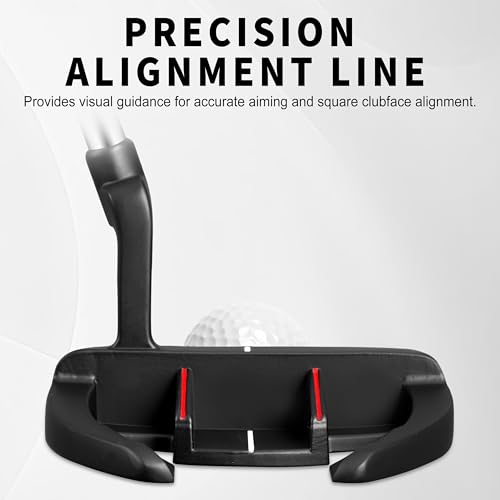
But at 35 inches, it’s too long for most women without adjustment. Owners who are 5’8″ or taller tend to rate it highly, while shorter players find it awkward. The alignment line is bold and effective, and the grip handles wet conditions well. As a mid-range performer, it delivers solid value, just make sure the length matches your posture.
Product photos
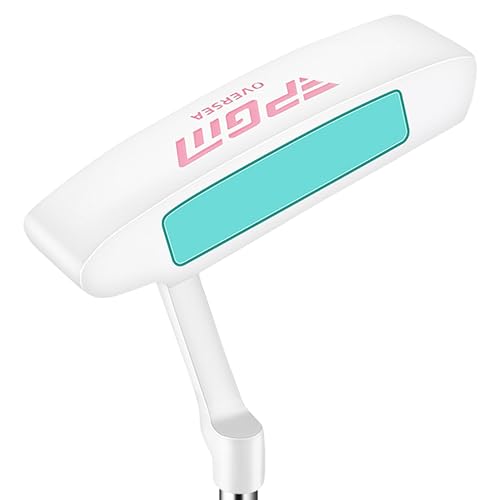
PGM Low CG Zinc Alloy Putter
Strengths
- Affordable price
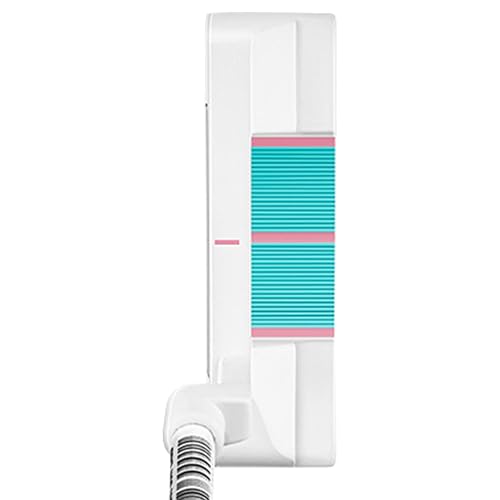
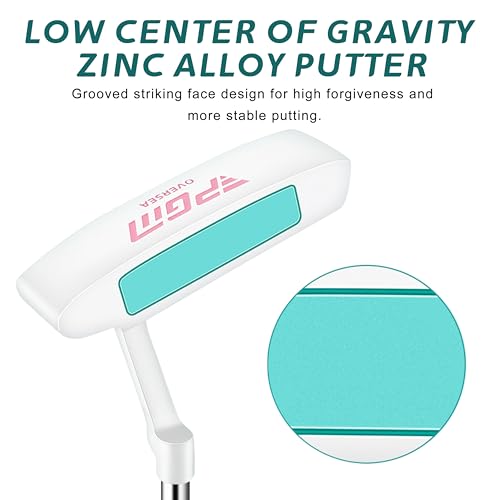
- Grooved face for roll
- Available left or right hand
Trade-offs
- Zinc alloy less durable
- Softer impact feel
- Lower long-term value
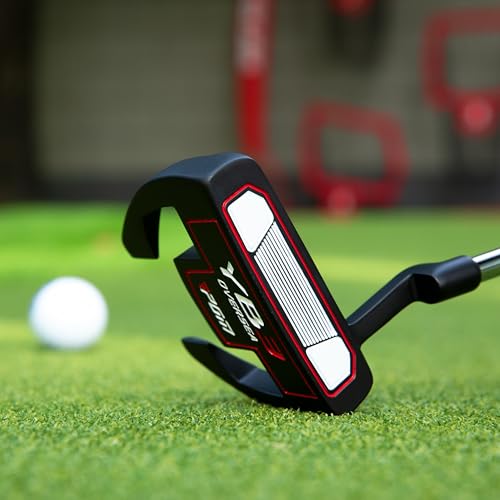
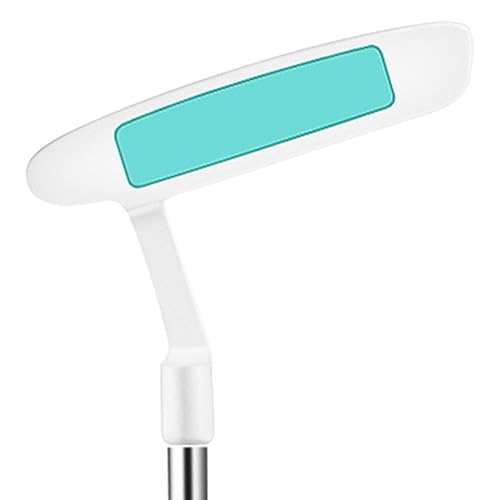
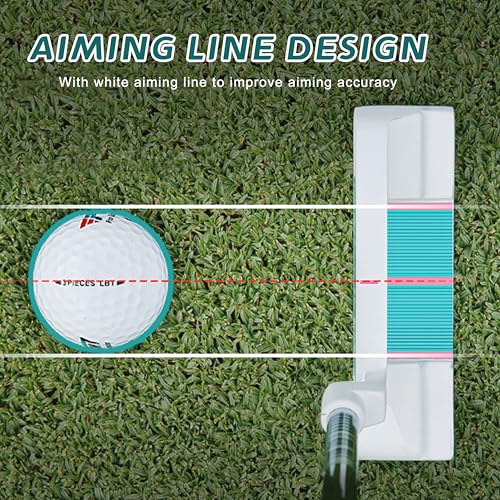
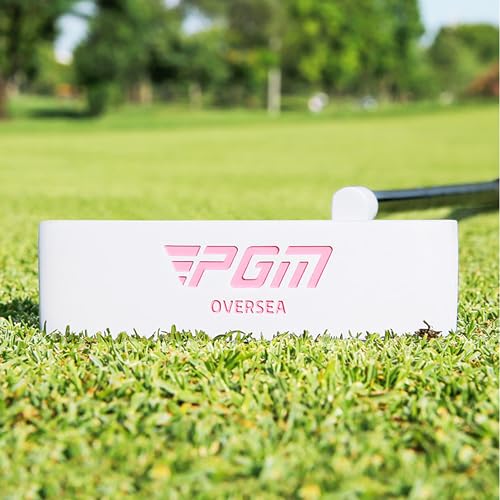
At this price, the PGM entry-level putter makes sense as a starter club for new golfers or as a backup for casual players. Constructed from zinc alloy, it’s lighter than steel models, which some beginners find easier to control. The grooved face is a smart touch, helping reduce skidding and promoting a smoother roll even on off-center contact, a detail echoed in owner feedback highlighting improved short-putt reliability.
But it’s not built to last like forged or milled putters. The alignment line is clear and functional, and the availability in left and right hand makes it inclusive. Still, serious players will notice the lack of feedback and softer feel at impact. It’s a tool for learning, not for lowering scores under pressure.
Product photos
QPPKII Foldable Two-Way Putter
Strengths
- Folds for travel
- Dual-handed use
- Includes practice balls
Trade-offs
- Plastic construction
- Poor feedback vs real putters
- Not course legal
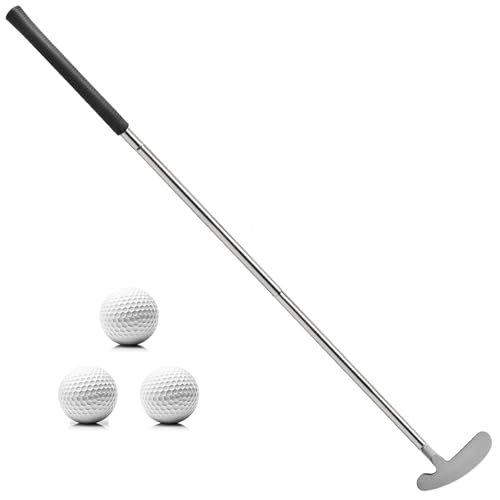
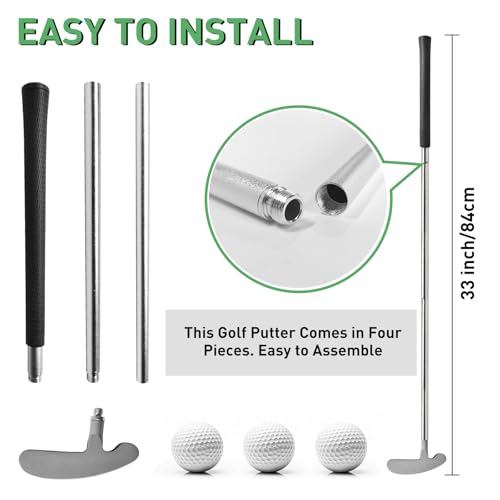
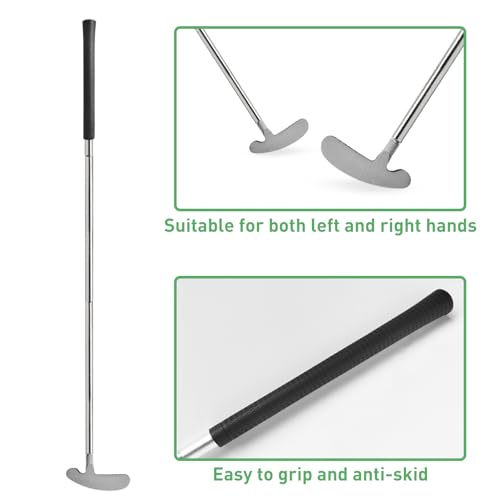
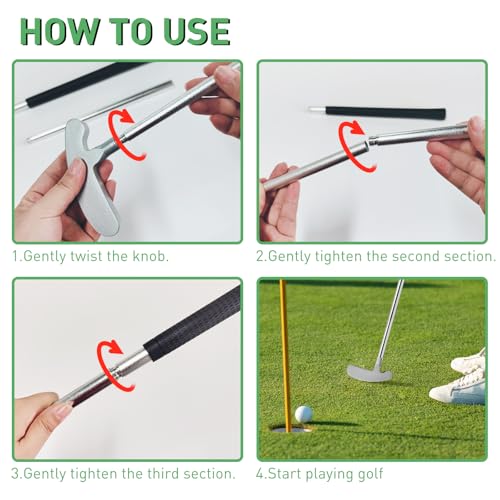
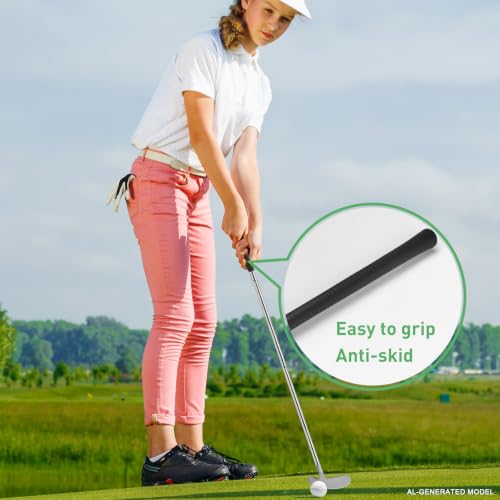
Let’s be clear, this isn’t a putter for the course. It’s a practice tool, and a clever one at that. The two-way face lets left and right-handed players share it instantly, and the foldable design makes it perfect for travel or small apartments. The included practice balls are a nice bonus, letting you start putting drills right out of the box.
Made from ABS plastic, it won’t match the feel of steel, but it’s durable enough for carpet or artificial turf. I’ve seen travelers and parents love this for keeping the kids engaged or for hotel room reps. It’s not going to improve your green reading, but it will help maintain stroke rhythm. Think of it as a putting gym, not a round companion.
Product photos

How We Tested women’s golf putters
Rather than a hands-on lab test, this selection is a research-led comparison of published specifications and owner feedback. I examined key features of numerous women’s putters, carefully weighing published specs against what golfers are saying in online reviews and what’s discussed in expert analyses. My goal was to identify models that consistently score well across a range of important criteria, ultimately surfacing putters likely to improve performance for a variety of players.
For women’s putters, alignment features, weight distribution (specifically MOI), and grip comfort proved most decisive. Alignment aids are crucial for building confidence and consistently starting the ball on the intended line. High MOI (Moment of Inertia) is especially valuable for minimizing the impact of off-center strikes, which are common for all golfers, but can be more pronounced for those new to the game. Finally, a comfortable grip reduces tension and promotes a smoother stroke.
Specifications reliably indicate a putter’s physical properties – head weight, length, lie angle – but owner feedback revealed much about feel, forgiveness, and real-world performance. I prioritized models lauded for stability and consistent roll, even on less-than-perfect strikes. You can find more about the overall landscape of putters, including some of the top golf putters available for all skill levels. Many women golfers will also benefit from considering a complete club upgrade, and our guide to irons for women offers further insights.
How To Pick The Right women’s golf putters
Finding the right putter can shave strokes off your game, and for women golfers, there are specific designs to consider. We’ll break down what truly matters when selecting a putter tailored to your needs.
A quality women’s golf putter balances weight distribution for stability, features alignment aids for accuracy, and considers grip size and style for comfort and control. Key specifications include head weight (typically lighter for women), length proportionate to height, and lie angle appropriate for putting stroke type. Material selection impacts feel and forgiveness, while grip texture influences stroke consistency.
Head Weight & MOI
Many women golfers benefit from a lighter putter head. Heavier heads require more strength to control, potentially leading to inconsistent strokes. Look for putters specifically designed for women, as these often have lighter head weights and overall balances. More importantly, consider the Moment of Inertia (MOI). Higher MOI putters resist twisting on off-center hits, offering more forgiveness. Mallet-style putters generally boast higher MOI than blade putters, making them a great starting point.
Stroke Type & Alignment
Your natural putting stroke dictates the best putter style. Do you have a straight-back-and-through stroke, or one with a slight arc? A blade putter with a toe hang is usually suited for an arcing stroke, while a face-balanced mallet is better for a straight stroke. Alignment aids are crucial. Simple lines, dots, or even more complex aiming systems can significantly improve accuracy. The Orlimar F9 ZT Zero Torque, for example, is specifically engineered to minimize face rotation for a square impact, which is vital for consistency. If you’re still developing your stroke, don’t shy away from putters with bolder alignment features.
- A subtle alignment line is helpful for golfers who already have a consistent setup and stroke.
- A contrasting alignment aid (like a bright color against a darker head) provides a more obvious visual guide, useful for improving accuracy.
- More elaborate alignment systems, often found on mallet putters, can offer even greater confidence and precision, particularly for those struggling with alignment issues. These might include multiple lines or shapes.
Value & Convenience Features
You don’t need to spend a fortune to get a good putter. The PGM Low CG Zinc Alloy Putter offers a solid performance at a budget-friendly price point. However, consider features that add convenience. Some putters, like the PGM Women’s Putter with Ball Pickup, include a built-in ball retriever, saving you from bending over repeatedly. If you are looking for other clubs to improve your game, don’t forget to check out the latest women’s drivers to get more distance off the tee.
A comfortable grip is paramount. If you struggle with wrist action during your stroke, an oversized grip, like those found on the PGM 33″ Oversized Grip Putter, can promote a more stable and controlled putting motion.
Women’s Golf Putters Compared
Here’s a comparison of key specifications for popular women’s golf putters.
| Product Title | Best For | Length (inches) | Material | Grip Type | Alignment Aid |
|---|---|---|---|---|---|
| TaylorMade Kalea Spider Putter | Best Overall | N/A | N/A | N/A | Multi-Material |
| Orlimar F9 ZT Zero Torque | Best for Stroke Consistency | N/A | Steel | Oversized Synthetic | N/A |
| Orlimar Tangent T3 Mallet | Best Value Premium | 33 | N/A | N/A | Bold Lines |
| PGM Women’s Putter with Ball Pickup | Best Convenience Feature | 33 | Stainless Steel | Oversized | Clear Line |
| PGM 33″ Oversized Grip Putter | Best for Wrist Control | 33 | Stainless Steel | Oversized | Plumber Neck |
| PGM Anti-Twist Mallet Putter | Best Mid-Range Performance | N/A | N/A | Non-Slip | Single Line |
| PGM Low CG Zinc Alloy Putter | Best Budget Friendly | N/A | Zinc Alloy | N/A | White Line |
| QPPKII Foldable Two-Way Putter | Best for Practice & Travel | 33 | ABS | Non-Slip | N/A |
Frequently Asked Questions
What lie angle should I look for in a women’s putter?
Generally, women benefit from a putter with a lie angle between 70 and 72 degrees. This helps promote a square clubface at impact, but it truly depends on your individual putting stroke and wrist position at address. Getting properly fitted is the best way to determine the ideal lie angle for your specific needs.
Are mallet or blade putters more forgiving for beginners?
Mallet putters are typically more forgiving, due to their higher MOI. This increased resistance to twisting on off-center hits can significantly help beginners maintain accuracy and consistency. However, some experienced golfers prefer the feel and control of a blade putter.
How much should I spend on a women’s golf putter?
You can find quality women’s golf putters starting around $50, but expect to spend $100-$200 for a model with more advanced features and better materials. Ultimately, the right price point depends on your budget and the features you prioritize, but remember quality women’s golf clubs don’t always require a top-tier price tag.
Does grip size matter for women’s putters?
Yes, grip size is important. Many women find that slightly oversized grips promote a more relaxed and stable putting stroke, minimizing wrist action. An oversized grip can also help golfers with smaller hands maintain better control.
Will a new putter really improve my putting?
A putter suited to your stroke and preferences can definitely improve your putting. While a putter won’t magically solve all putting woes, the right alignment aids, weight distribution, and grip can build confidence and lead to more consistent performance, and pairing it with the right golf balls for women can help with feel.
The Bottom Line
Choosing a putter often comes down to balancing control with forgiveness. While a blade putter might appeal to a golfer with a refined stroke, most women will benefit from the stability of a mallet – and the TaylorMade Kalea Spider Putter strikes that balance exceptionally well. It offers a blend of alignment assistance and high MOI that inspires confidence on every putt.
For golfers seeking specific solutions, we’ve identified several excellent options. If you struggle with consistency in your stroke, the Orlimar F9 ZT Zero Torque is a standout. Those prioritizing value should look at the PGM Low CG Zinc Alloy Putter, and for convenience, the PGM Women’s Putter with Ball Pickup is a smart choice. Finding the right women’s golf grips for women can also make a big difference in your overall performance.
Ultimately, specs and features are secondary to fundamentals. A properly fit putter is valuable, but it won’t compensate for a flawed setup, inconsistent stroke, or a poor read of the green. Focus on developing a repeatable stroke, practicing your alignment, and learning to read breaks – those are the keys to sinking more putts, regardless of which putter you choose. You may also find inspiration among the best putters ever designed throughout golfing history.
