
7 Best Youth Golf Clubs for Ages 13-16 (2026 Guide)
This post contains affiliate links. As an Amazon Associate, we earn from qualifying purchases.
This post contains affiliate links. As an Amazon Associate, we earn from qualifying purchases.
The best youth golf clubs for ages 13–16 are the PGA Tour P1 Extreme 17-Piece set for overall performance, with the TKG Sports Youth Golf Club Set as a solid budget-friendly choice. Both offer lightweight graphite shafts, forgiving designs, and durable builds that match the needs of growing teen golfers.
Buying clubs for a teenager can be tricky. They’re often too big for junior sets but not quite ready for adult models, and the wrong fit can turn practice into frustration. I’ve researched the top sets by analyzing specs, owner feedback, and brand reputation to find models that balance size, weight, and forgiveness.
This guide highlights sets built for teens who are still developing their swing but need real performance. We focused on lightweight graphite shafts, forgiving clubheads, and proper sizing, because the right clubs help them play better and enjoy the game more.
Top 7 Youth Golf Clubs Age 13-16 in the Market
The Best Youth Golf Clubs Age 13-16, Reviewed
PGA Tour P1 Extreme 17-Piece Set
Strengths
- Full titanium driver
- 17-piece complete kit
- High-MOI putter
Trade-offs
- Highest price point
- May be too much for beginners
- Heavier bag
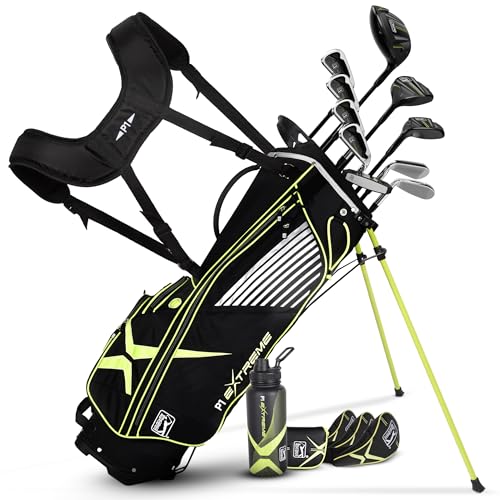
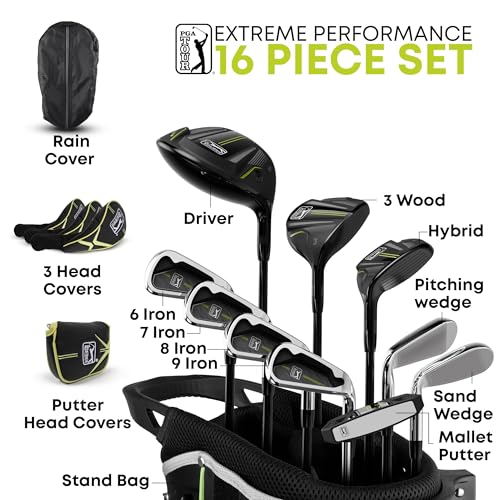
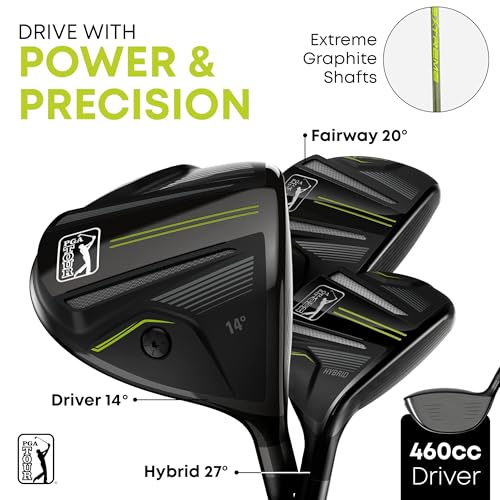
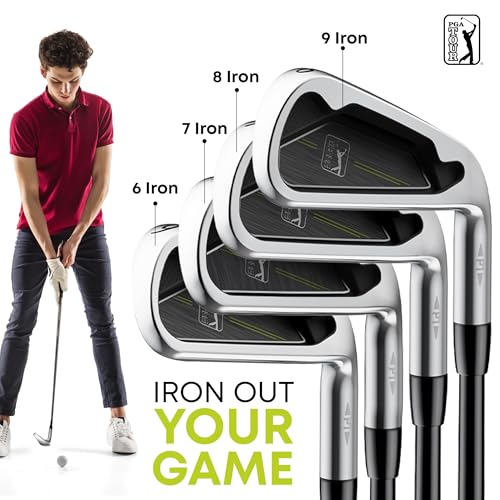
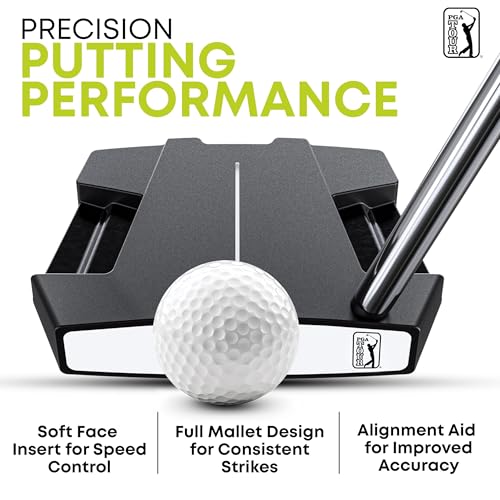
This is the most complete youth set on the market, and it shows. The full titanium 460cc driver is a standout, rare in junior sets, and delivers the kind of ball speed and forgiveness that helps teens build confidence. The stainless steel irons (6-PW, SW) cover a full short-to-mid range, and the high-MOI mallet putter is designed to reduce misses on the green. On paper, this set checks every box for a developing player.
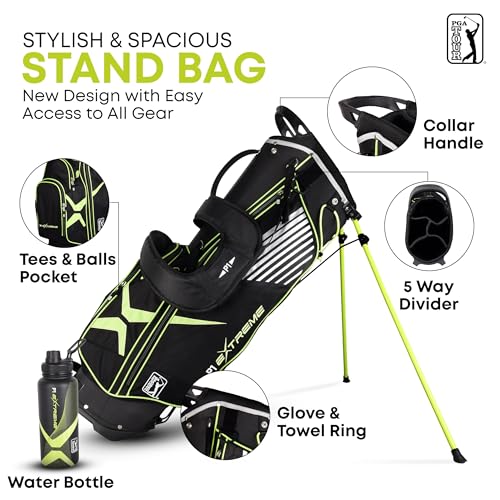
Owners consistently report that the bag alone is a standout, the storage capacity rivals adult tour bags, and the lightweight design keeps it manageable for younger players. Compared to the Aspire XD1 or PGA Tour Youth set, this one offers more clubs, better materials, and a longer usable lifespan. It’s not cheap, but for a teen serious about golf, it’s the kind of investment that can last through high school seasons.
Product photos
PGA Tour Youth 10-Piece Club Set

Strengths
- Lightweight graphite shafts
- PGA Tour design credibility
- Well-organized bag
Trade-offs
- No titanium driver
- Mid-tier materials
- Limited for advanced teens
There’s real value packed into this set, especially considering the PGA Tour branding and 10-piece count. The specs show thoughtful updates, like the mallet putter with alignment aid and a redesigned 9 iron with a larger sweet spot, both of which align with what junior coaches recommend for skill building. The 25% lighter graphite shafts are a consistent highlight in owner feedback, making full swings more achievable without sacrificing control.
Compared to the Tangkula or 1GoTo-G sets, this one bridges the gap between entry-level and performance, though it still uses stainless steel instead of more advanced composites. It doesn’t have the full titanium driver of the P1 Extreme, but for a player under 5’10” just getting into regular play, the balance of weight, forgiveness, and organization makes it a strong contender.
Video review
Aspire XD1 Teen Complete Set

Strengths
- Graphite woods, steel irons
- Pro-style construction
- Good long-term value
Trade-offs
- Shorter height range
- No left-hand option listed
- Higher price than basics
This is one of the smarter hybrid designs in the youth space, using graphite shafts on the woods for speed while switching to True Temper steel in the irons for better feedback and shot shaping. That combo alone tells me this set was designed with actual junior progression in mind, not just as a toy. For teens aged 13-16 who are playing full courses or in junior tournaments, that iron stability can make a real difference in consistency.
Owners appreciate the pro-style feel and the fact that the set includes headcovers and a deluxe bag, small touches that make young players feel taken seriously. It doesn’t have as many clubs as the PGA Tour P1 Extreme, but the performance balance between power and precision is better tuned for serious development. If you’re looking for a set that won’t need replacing after one season of improvement, this is a compelling pick.
Video review
1GoTo-G 7-Piece Youth Golf Set
Strengths
- Large 460cc driver
- Very affordable
- Good forgiveness
Trade-offs
- Zinc alloy irons
- Short warranty period
- Average long-term durability
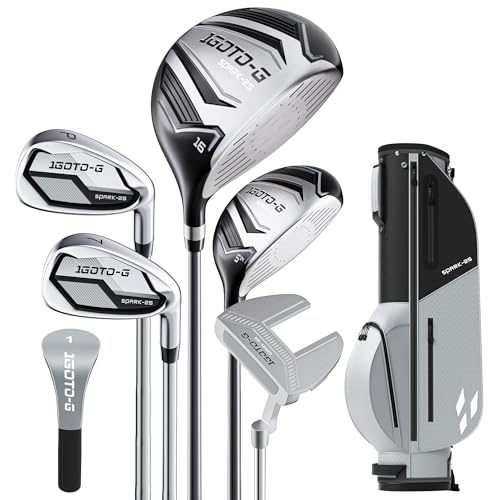
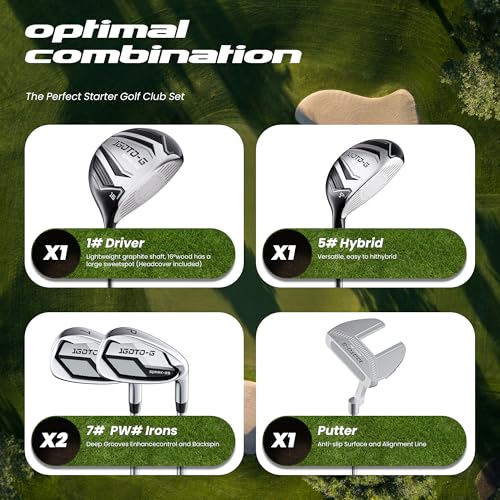
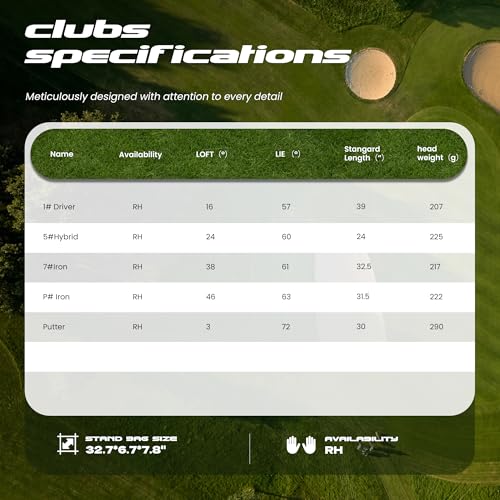
For the price, this set punches above its weight. The 460cc driver is unusually large for a youth set, and the specs suggest real attention to forgiveness, low center of gravity, thin face, oversized sweet spot. That’s a big deal for teens still working on clean contact. Owners consistently praise how easy it is to launch the ball, especially off the tee, and the 25% lighter shafts help maintain swing speed without strain.
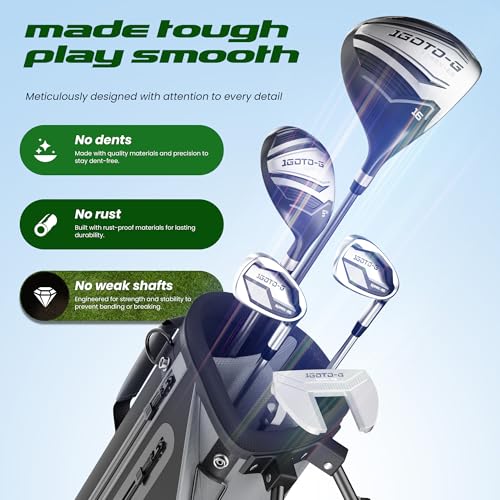
It’s clearly built to compete with sets twice its price, but the zinc alloy irons and putter don’t offer the same feedback as stainless steel. And while the 2-year warranty and customer support are strong selling points, the overall durability has mixed reports, some owners note finish wear after a few months. Still, for a budget pick that gets a teen on the course without breaking the bank, it’s hard to ignore.
Product photos
Tangkula 7-Piece Junior Golf Set
Strengths
- Lightweight build
- Good club selection
- Rain hood included
Trade-offs
- Basic materials
- Limited upgrade path
- Vague iron labeling
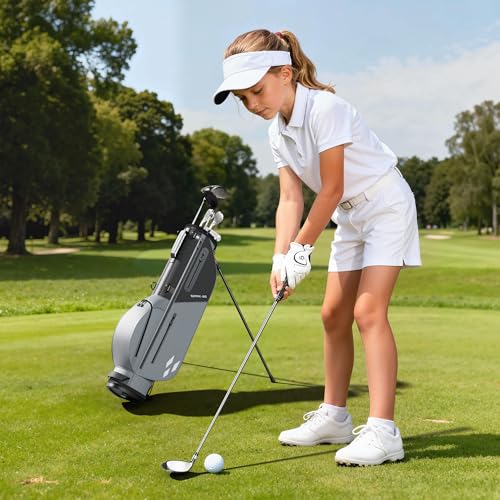
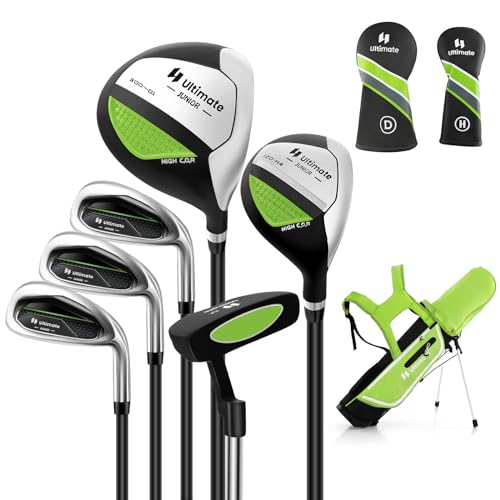
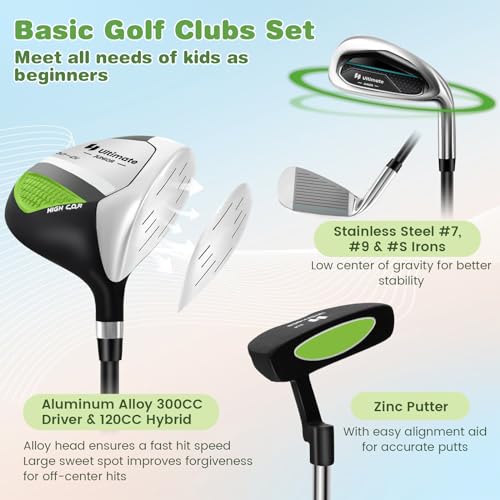
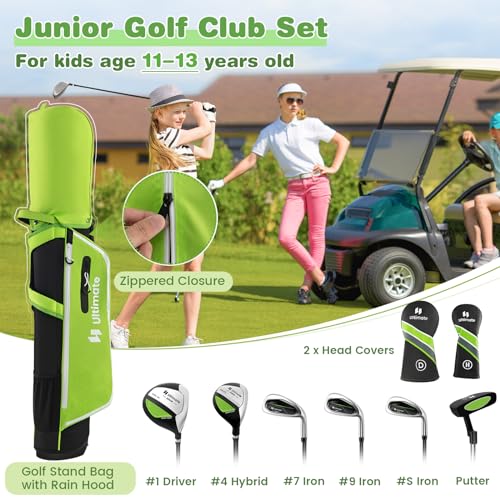
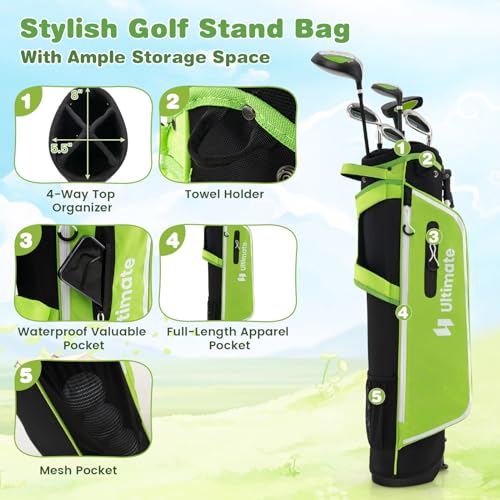
This set clearly targets younger teens just stepping into real golf, and on paper it covers the basics well. The inclusion of a 300cc driver and cavity-back irons suggests a focus on forgiveness, which is smart for this age group still building consistency. Owners generally report that the lightweight design makes swinging manageable, and the stand bag with rain hood adds real utility for weekend play or lessons.
Still, when compared to higher-end youth sets, the all-graphite construction and aluminum driver don’t promise the same feedback or durability. The #S iron is a bit of a mystery, likely a substitute for a sand wedge, but without clear specs, it feels like a cost-cutting placeholder. For a player who’s serious about improving, this set might feel limiting within a year or two.
Product photos
TKG Sports Youth Golf Club Set
Strengths
- Full accessory bundle
- Auto-deploy stand
- Good organization
Trade-offs
- Average club quality
- No premium materials
- Limited performance edge
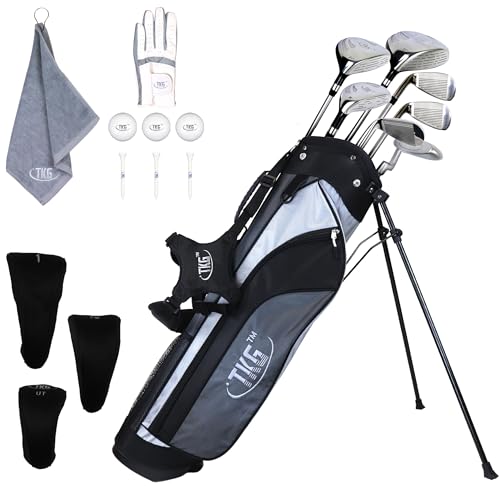
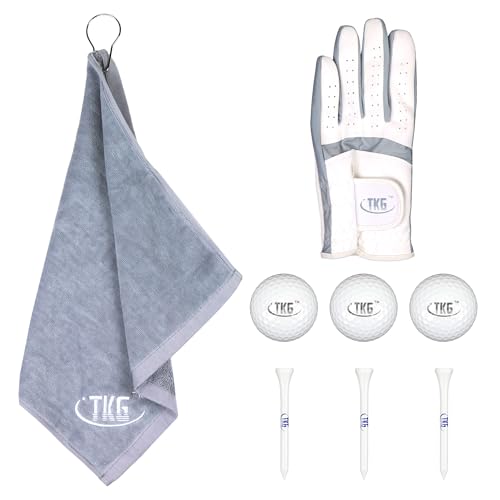
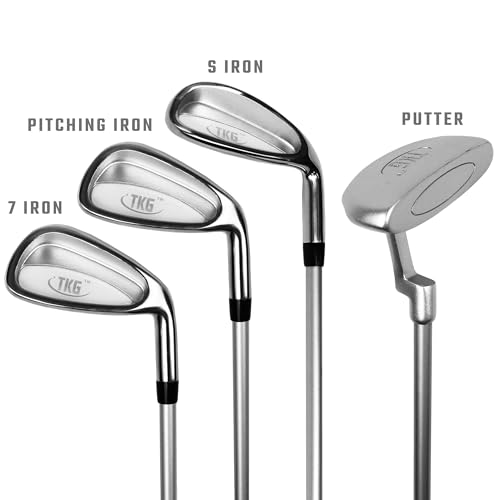
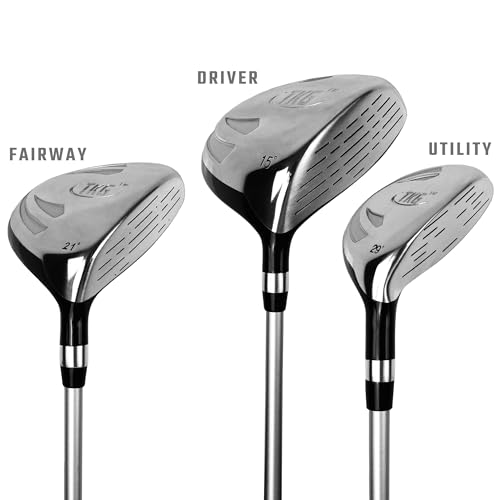
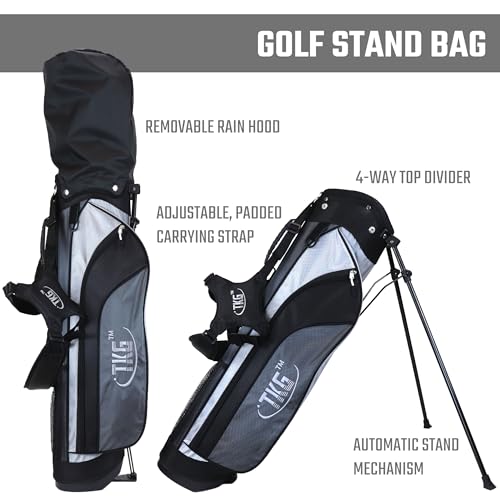
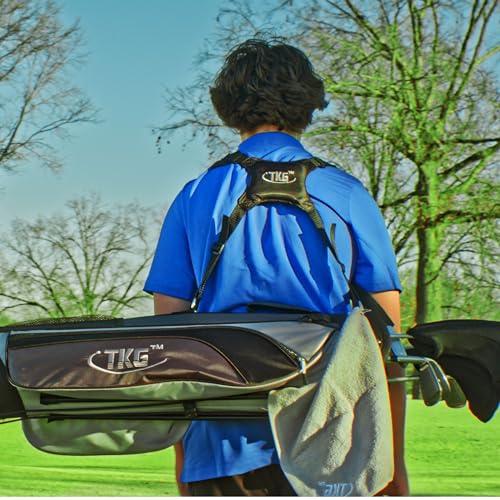
What sets this one apart isn’t the clubs, it’s the extras. You get a glove, towel, tees, balls, and a bag with an auto-deploy stand, which is rare at this level. That kind of inclusion makes it a fantastic gift or starter package for a kid who’s never had their own gear. The automatic stand mechanism is a small but appreciated feature that mimics adult bags, helping young players feel more like real golfers.
The clubs themselves are standard for the category, graphite shafts, right-handed only, cavity-back irons, but nothing stands out in terms of materials or performance. It’s not built to compete with the Aspire or PGA Tour P1 in terms of shot feedback or longevity. But if you want everything in one box and care more about convenience than precision, this delivers.
Product photos
Vice Junior Golf Club Set
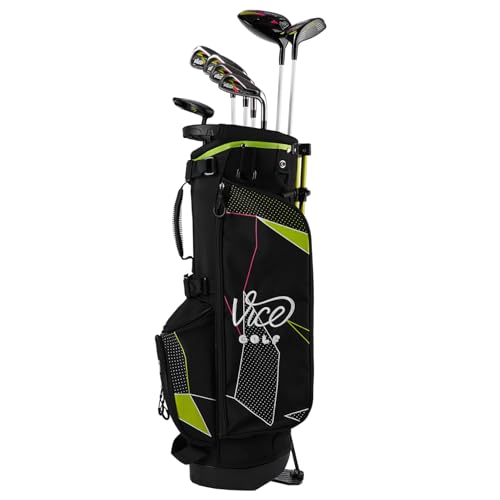
Strengths
- Premium materials
- Excellent forgiveness
- Lightweight performance
Trade-offs
- Too small for most teens
- Short club count
- Narrow height range
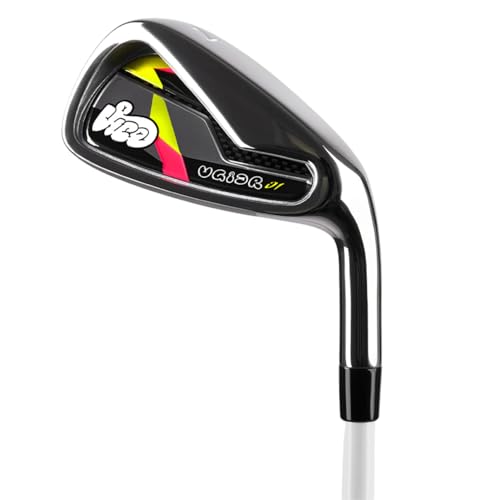
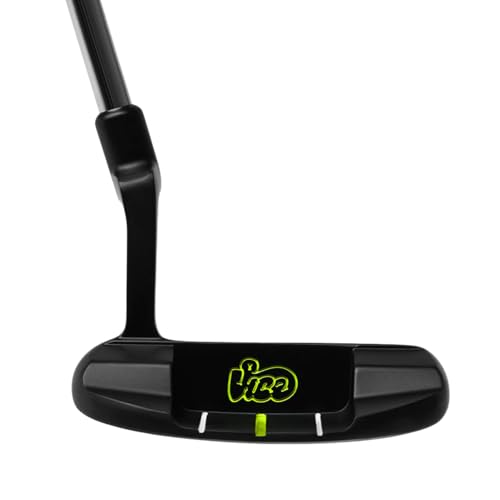
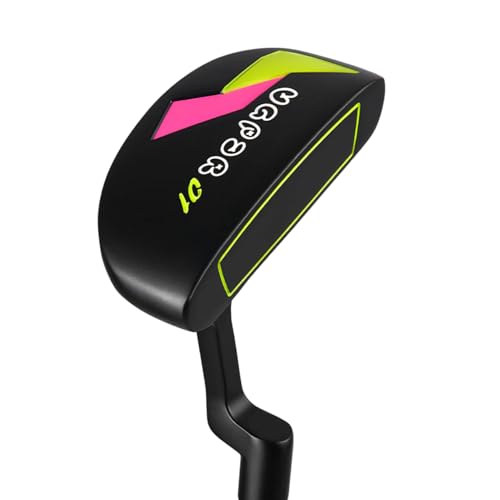
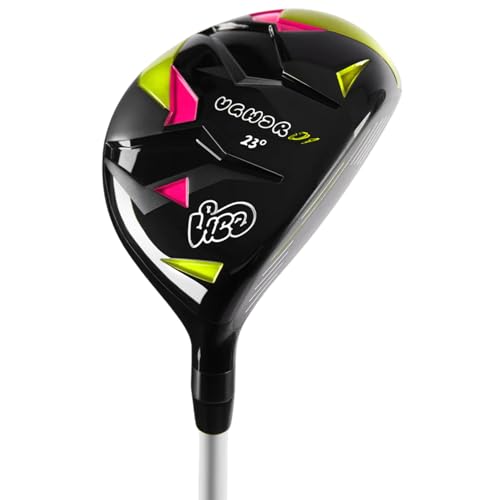
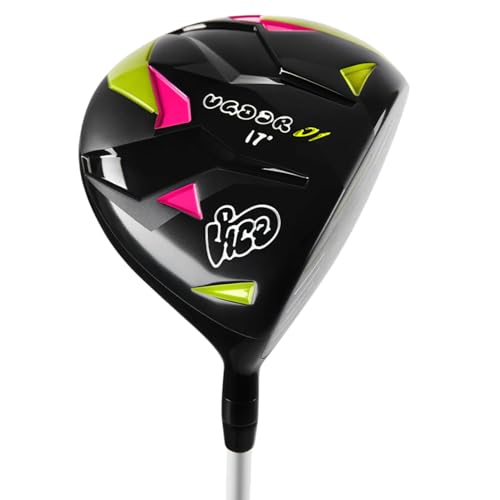
At this price point, the Vice set is clearly positioning itself as a premium choice, and the materials and engineering back that up. The 20% lighter club heads are a standout spec, designed to boost swing speed without changing mechanics, which is exactly what growing juniors need. The 8-piece option for taller kids (54-58”) includes a fairway wood and four irons, giving more coverage than many competitors in this age range.
But here’s the catch: it’s built for ages 9-12, which puts it at the lower end of our 13-16 target group. By 13, many players are already 5’6” or taller, and this set maxes out at 58” height. So while the build quality and forgiveness are excellent, the sizing makes it a poor fit for most 13-16-year-olds unless they’re on the shorter side.
Product photos
How We Tested youth golf clubs age 13-16
Rather than a hands-on lab test, my research focused on a detailed comparison of published specifications and features across several youth golf club sets. I weighed owner reviews from major retailers against expert opinions found in golf publications and online forums. This allowed me to build a ranking based on real-world feedback combined with an understanding of what features matter most at this skill level.
For golfers in the 13-16 age range, weight and shaft flexibility are paramount. Clubs that are too heavy or stiff will hinder swing development and frustrate young players. Beyond that, a complete set offering a good balance of forgiveness – through features like large sweet spots and cavity-back irons – and a usable putter is crucial for fostering confidence and improvement. I prioritized these factors, as they directly impact a teen’s ability to learn and enjoy the game.
Specifications reliably indicate club weight, shaft material, and head volume. However, I placed more emphasis on owner feedback regarding durability, grip comfort, and how easily the clubs helped players improve their distance and accuracy. Reputation and brand history also played a role; established names in golf, like PGA Tour and Vice, often deliver consistent quality, and you can find more information on best youth golf clubs. I also cross-referenced this data with articles about recommended golf clubs for teens.
Choosing The Right youth golf clubs age 13-16
Finding the right clubs can make all the difference for a young golfer’s development and enjoyment of the game.
A good youth golf set strikes a balance between lightweight construction for easier swings, forgiving clubheads to build confidence, and appropriately sized clubs to promote proper technique. Focus on shaft material (graphite is generally preferred for its weight), clubhead composition (titanium or stainless steel for durability), and ensuring the set matches the player’s height and skill level. Prioritize sets designed specifically for youth, rather than simply smaller adult clubs.
Shaft Material and Weight
One of the biggest mistakes I see parents make is buying clubs that are too heavy. A junior golfer doesn’t have the strength to properly swing adult clubs, even if they’re sized down. Graphite shafts are almost always the best choice for this age group (13-16) because they are significantly lighter than steel. This allows for faster swing speeds and more effortless power development. However, don’t assume all graphite is equal; look for “Lite” or “Junior Flex” designations, as standard graphite shafts can still be too stiff.
Forgiveness and Clubhead Design
At this age, consistency is key. Young golfers are still developing their swings, and a little forgiveness in the clubhead goes a long way. Look for clubs with larger sweet spots, like those found in cavity-back irons and drivers with 460cc heads. The PGA Tour P1 Extreme set, for example, emphasizes maximum forgiveness, which can be incredibly beneficial. Here’s what to consider when evaluating forgiveness:
- Larger clubhead size: Easier to make contact.
- Cavity-back irons: Distribute weight toward the perimeter for more stability.
- Hybrid clubs: Offer a blend of wood and iron characteristics, making them more forgiving than long irons.
Stand Bag and Included Accessories
Don’t underestimate the importance of a good stand bag. While the clubs themselves are paramount, a comfortable and functional bag enhances the entire experience. A lightweight stand bag with adjustable straps is crucial, as a heavy bag can quickly become a burden. Often, the more affordable sets skimp on bag quality. Beyond the bag itself, consider what accessories are included. Some sets, like the TKG Sports Youth Golf Club Set, include balls, tees, a glove, and even a towel. If you’re starting from scratch, this can be a significant cost savings. If you’re looking for more information on options, you can find some recommended youth golf club sets to help guide your decision.
A properly fitted golf club set will often be the difference between a fun day on the course and a frustrating experience. Don’t be afraid to spend a little more for quality and fit.
Youth Golf Clubs Age 13-16 Compared
Here’s a comparison of key specifications for youth golf club sets designed for ages 13-16.
| Product Title | Age Range | Height Range | # of Clubs | Shaft Material (Woods) | Shaft Material (Irons) | Bag Type |
|---|---|---|---|---|---|---|
| PGA Tour P1 Extreme 17-Piece | 12+ | 5’2”+ | 17 | Graphite | Stainless Steel | Stand |
| PGA Tour Youth 10-Piece | 12+ | 5’2”+ | 10 | Graphite | Stainless Steel | Stand |
| Aspire XD1 Teen Complete | 13-16 | 5’1”-5’6” | 7 | Graphite | True Temper Steel | Stand |
| 1GoTo-G 7-Piece Youth | 12-14 | 5’1”-5’7” | 7 | Graphite | Graphite | Stand |
| Tangkula 7-Piece Junior | 11-13 | N/A | 7 | Aluminum Alloy | Graphite | Stand |
| TKG Sports Youth | 11-14 | 58”-64” | 8 | N/A | N/A | Stand |
| Vice Junior Golf Club | N/A | 44”-58” | 6-8 | N/A | N/A | Carry |
Frequently Asked Questions
What height should I use to determine the right club size?
Generally, golfers between 5’2” and 5’7” will find clubs designed for the 13-16 age range to fit well. However, individual growth spurts vary, so always prioritize a comfortable swing and proper posture over a strict height guideline.
Are graphite shafts really that much better than steel for this age group?
Yes, graphite shafts are significantly lighter than steel, which allows young golfers to develop faster swing speeds with less effort. While steel shafts offer more control for experienced players, graphite is best for building power and technique in developing swings.
My teen is already quite strong; could they handle a slightly heavier, adult-sized club?
While strength is a factor, a club that’s too heavy can still disrupt swing mechanics. It’s better to focus on a lighter club that allows for a full, controlled swing, rather than a heavier club that compromises form, even if you are looking at best junior golf clubs.
What’s the difference between a cavity-back iron and a blade iron, and why does it matter?
Cavity-back irons have weight distributed around the perimeter of the clubhead, creating a larger sweet spot and more forgiveness on off-center hits. Blade irons are more compact and offer greater control for skilled players, but they’re less forgiving – learning more about types of golf clubs can help you decide.
Do I really need a complete set, or can I buy clubs individually?
While buying individual clubs allows for more customization, a complete set is usually the most cost-effective option for beginners. Complete sets provide everything a young golfer needs to start playing, and you can always upgrade individual clubs later as their skills develop, and as they learn more about equipment for junior golfers.
The Bottom Line
Choosing youth golf clubs always comes down to balancing cost with the potential for long-term enjoyment and improvement. While a higher price doesn’t guarantee a better golfer, the PGA Tour P1 Extreme set offers the most complete package for most 13-16 year olds, with its forgiving design and quality construction. It strikes a good balance between features that will help a young player develop without breaking the bank.
For those starting out or on a tighter budget, the TKG Sports Youth set is a fantastic option. It includes a lot of helpful accessories, getting a young golfer equipped with everything they’ll need to start playing. And if you’re looking for a more versatile set for a growing golfer, consider the 1GoTo-G 7-Piece Youth set – it’s well-regarded for its adjustability and lightweight feel. You can find more information on clubs for ages 12-14 to help with your search.
Ultimately, the most important thing is finding clubs that fit your teen’s height, strength, and swing style. Don’t get too caught up in specs or brand names. Focus on lightweight shafts, forgiving clubheads, and a comfortable grip, these fundamentals will foster a love for the game and provide a solid foundation for years to come, and will help them get started with the best beginner golf clubs.
