
Boost Your Game with Exercises and Flexibility for Seniors
This post contains affiliate links. As an Amazon Associate, we earn from qualifying purchases.
This post contains affiliate links. As an Amazon Associate, we earn from qualifying purchases.
For senior golfers, effective exercises and flexibility work target three specific areas: hip internal rotation, thoracic spine mobility, and shoulder range of motion. A short, daily routine of dynamic stretches beats a long, sporadic session. Research shows an 8-week program can increase clubhead speed by over 2 mph in older men, and a 5-week program significantly improves shoulder rotation in older women. The goal isn’t maximal flexibility; it’s restoring the specific mobility your golf swing has lost.
The gap between “healthy” senior golfers and those with age-related conditions isn’t just about pain. Studies show it’s measurable in inches of carry and seconds of trunk extension time. A male golfer without musculoskeletal issues shows a seven-iron carry advantage of nearly 25 yards over his counterpart with a condition. That difference comes down to movement quality, not just strength.
What follows is not another list of generic stretches. We’ll break down the three mobility zones that actually matter, why your current warm-up might be costing you distance, and how to build a five-minute daily habit that sticks. You’ll also see the hard numbers from the research so you know what’s possible.
Key Takeaways
- Swap static stretching for a dynamic warm-up before you play; holding a stretch cold can reduce power output on your first few holes.
- Focus 80% of your mobility work on hip internal rotation and thoracic spine rotation, these are the first two areas to stiffen with age and have the biggest impact on your turn.
- A consistent 5-minute daily routine yields better long-term results than a 30-minute session you do once a week. Adaptation requires frequency.
- “Healthy” senior male golfers show a significant physical advantage, including 24 more yards of carry with a seven-iron, highlighting the direct link between targeted mobility and performance.
- If you have persistent pain during any of these movements, the routine is a maintenance tool, not a fix, consult a qualified provider first.
Why Generic Flexibility Programs Fail Senior Golfers
Your body loses mobility in a specific order, and the golf swing demands movement in a specific pattern. Most general fitness routines miss that overlap entirely. They’ll give you a hamstring stretch, which is fine, but they ignore the internal rotation of your trail hip, the motion that lets your pelvis clear properly in the downswing.
The research is clear on what separates players who maintain their games from those who struggle. A study in the International Journal of Golf Science compared healthy seniors to those with age-related musculoskeletal conditions. The healthy male golfers weren’t just more flexible; they had a trunk extension time over twice as long as the condition group. That’s the physical capacity to maintain a braced spine under rotational load, which is essential for power and avoiding back pain.
A 2021 study found healthy senior male golfers had an average trunk extension time of 146 seconds, compared to just 64 seconds for those with musculoskeletal conditions. That gap directly translates to swing consistency.
The exercises that matter are the ones that restore the movements your swing is starving for. Strip it back. What does a powerful turn require? Your hips need to rotate independently of your shoulders (separation), your mid-back needs to twist, and your lead shoulder needs to externally rotate at the top. If your daily routine isn’t feeding those three hungriest parts of the kinetic chain, you’re just doing busywork.
The Non-Negotiable Warm-Up Switch
Let’s be clear about this: static stretching before a round is a bad idea for seniors. Holding a cold muscle in a lengthened position for 30 seconds can temporarily reduce its ability to produce force. Your first drive will feel sluggish, and you might spend three holes trying to find your rhythm.
I learned this the hard way. For years, I’d do a few toe-touches and quad pulls before heading to the first tee. My early-round distance suffered, and I’d often feel a twinge in my lower back on the second or third swing. The switch to a dynamic routine, moving through ranges of motion with control, was a revelation. Now, I use a light TheraBand for five minutes of resistance band work before hitting balls. The difference in shoulder feel on that first tee shot is night and day; the stiffness is gone, replaced by ready elasticity.
A dynamic warm-up increases blood flow and core temperature while rehearsing movement patterns. It prepares the body for action, not just flexibility. Your pre-round ritual should take no more than 10 minutes and must include these elements:
- Torso Twists (30 seconds): Stand with feet shoulder-width, hold a club across your shoulders. Gently rotate your upper body back and forth, letting your hips follow naturally. Listen for a smooth, fluid motion, any grinding or catching is a sign you need to go slower.
- Arm Circles (30 seconds each direction): Start small and gradually make the circles larger. You’re lubricating the shoulder joint, not testing its limits.
- Leg Pendulums (20 per side): Hold onto your cart or a club for balance. Swing one leg forward and back like a pendulum, then side to side. This dynamically loosens the hips.
- Half-Kneeling Hip Flexor Stretch (30 seconds per side): This is the one static hold that earns its place. It directly targets the tight hip flexors that pull your pelvis out of position and force your lower back to overwork.
Skipping this for a couple of static hamstring stretches costs you distance and increases your risk of an early-round strain. The body needs to be awakened, not just pulled on.
The Three Mobility Zones You Must Feed
Good golf for seniors is about managing losses smartly. You don’t need the flexibility of a 25-year-old, but you must maintain adequate range in the joints that govern the swing. These three zones are your non-negotiable focus.
1. Hip Internal Rotation
This is the silent killer of the senior swing. When you lose internal rotation in your trail hip (right hip for a right-handed golfer), your pelvis can’t rotate back fully or clear through impact. The lower back picks up the slack, and you either lose power or feel a sharp pinch on your follow-through.
The Go-To Exercise: The 90/90 Stretch
Sit on the floor with both knees bent at 90 degrees, one in front and one to the side. Gently lean your chest forward over your front leg. You should feel a deep stretch in the outer hip of your back leg. A 78-year-old golfer in a documented case study improved his hamstring length in this position from 50 degrees of knee flexion to 15 degrees after targeted intervention. That’s a massive gain in functional mobility.
2. Thoracic Spine (Mid-Back) Rotation
Your shoulders should turn significantly more than your hips. When your T-spine stiffens, and it will, that differential shrinks. You’ll either make a shorter backswing or force your lower back and hips to over-rotate, wrecking your posture.
The Go-To Exercise: Quadruped Rotation
Start on your hands and knees. Place one hand behind your head. Rotate your elbow down toward the arm that’s on the ground, then open it up toward the ceiling. Move slowly and deliberately. This isolates rotation in the very part of your spine that’s designed for it, sparing your lumbar.
3. Shoulder Range of Motion
A full, wide backswing requires external rotation in your lead shoulder (left shoulder for a righty). Tightness in the chest and lats slams the door shut, leading to a short, choppy swing or a painful impingement.
The Go-To Exercise: Doorway Chest Opener
Stand in a doorway, place your forearms on the frame with elbows bent at 90 degrees. Step forward gently until you feel a stretch across your chest and the front of your shoulders. Hold for 20-30 seconds. This directly counters the hunched posture that accumulates off the course.
| Mobility Zone | Swing Impact If Restricted | Best Corrective Exercise |
|---|---|---|
| Hip Internal Rotation | Loss of pelvic clearance, lower back compensation, power leak. | 90/90 Hip Stretch |
| Thoracic Spine Rotation | Reduced shoulder turn, loss of swing width, increased lateral sway. | Quadruped Rotation |
| Shoulder External Rotation | Shortened backswing, lead shoulder pain, loss of clubhead speed. | Doorway Chest Opener |
A 5-Minute Daily Foundation

Forget the idea that you need an hour of yoga. Consistency beats duration every time for senior mobility. A five-minute routine done daily does more to re-educate stiff tissues than a thirty-minute session done once a week. The goal is to build this into your morning, before coffee.
Here’s a simple, research-informed framework. Spend about 45 seconds on each movement.
- 90/90 Hip Stretch (45 seconds per side): Addresses the most common hip limitation.
- Half-Kneeling Hip Flexor Stretch (45 seconds per side): Fixes posture before you even stand to the ball.
- Quadruped Rotation (8 reps per side): Feeds your thoracic spine its required rotation.
- Standing Lat Stretch with Club (45 seconds per side): Hold a club overhead with a wide grip, gently lean side to side.
- Doorway Chest Opener (45 seconds): Counters a lifetime of forward hunch.
The magic isn’t in the individual exercises, it’s in the daily commitment. This is the “simmering” phase. You’re not trying to force change; you’re gently reminding your body of its available ranges day after day. Within two weeks, your practice swing will start to feel different.
Where this goes sideways: Doing this routine only on golf days. The tissues adapt to consistent, frequent input. Skipping days means you’re always starting from scratch, and you’ll never build lasting mobility.
When to Add Strength and When to See a Pro
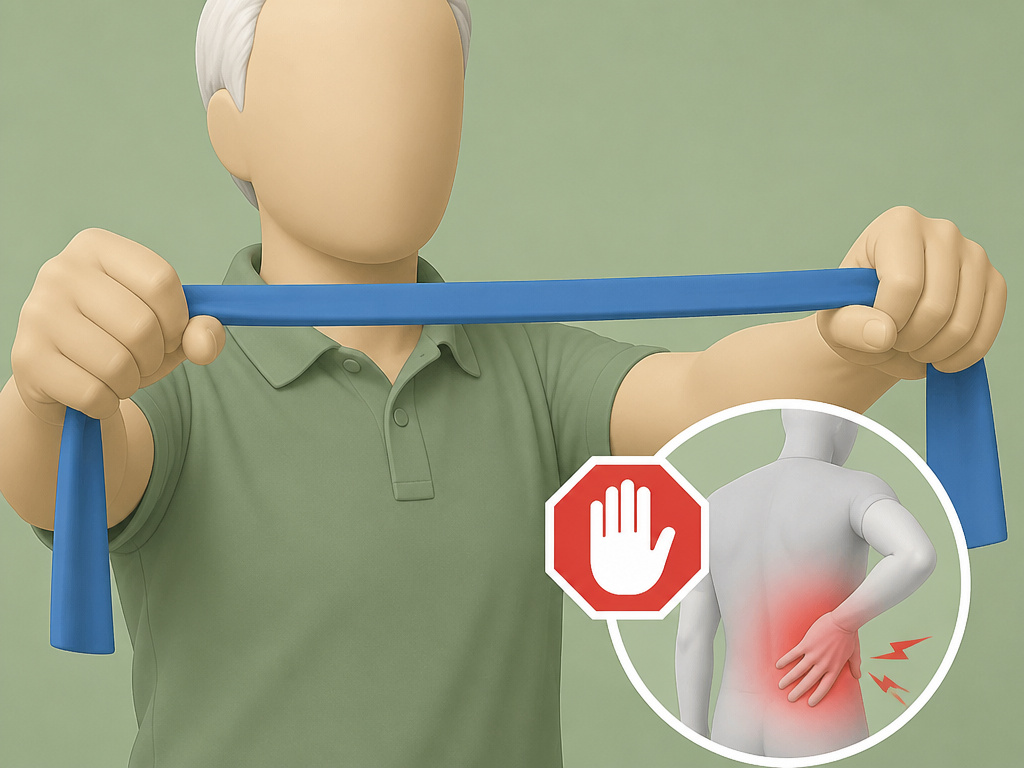
Mobility without stability is just instability. A joint that can move but can’t control that movement under the load of a swing will still break down. Once your daily mobility routine feels easy, usually after 3-4 consistent weeks, it’s time to layer in stability.
This doesn’t mean heavy weights. It means exercises like: * Clamshells with a resistance band for hip stability. * Dead Bugs for core anti-rotation control. * Band Pull-Aparts for shoulder blade stability.
A program like the Kinetix 6 Challenge is built on this exact principle: mobility first, then the strength to use it. Many generic strength training programs put the cart before the horse.
Now, the critical warning. This entire routine is for maintenance and prevention. If you have active lower back pain, a diagnosed rotator cuff tear, or significant joint pain, some of these movements may be inappropriate. The Senior Golfers Movement Assessment (SGMA) is a tool professionals use to identify such limitations. If you feel sharp pain, not the sensation of a stretch, stop. This is where a guide for senior golfers ends and a conversation with a physical therapist or qualified medical professional begins. Don’t try to stretch your way out of a structural injury.
Frequently Asked Questions
What are the best stretching exercises for senior golfers?
The best stretches are those that target the specific mobility losses that affect the swing: the 90/90 stretch for hip internal rotation, the quadruped rotation for thoracic spine mobility, and the doorway chest opener for shoulder range. These three, done daily, address the root causes of a shortened turn and loss of power far more effectively than generic hamstring or calf stretches.
Should I stretch before or after I play golf?
You should perform dynamic movements before you play (torso twists, leg swings). Save static stretching (holding a position for 20-30 seconds) for after your round or as part of your separate daily mobility routine. Static stretching cold muscles can reduce power output, as shown in a Medicine & Science in Sports & Exercise study on older female golfers that used targeted, non-static preparation.
How can I improve my flexibility for golf at 70 years old?
Improvement at 70 is about consistency and specificity. Commit to a short, daily routine focused on hip and thoracic rotation. Research proves it works: a case study on a 78-year-old golfer showed dramatic improvements in shoulder and hamstring mobility after targeted intervention. Progress may be slower, but it is absolutely achievable with the right mobility exercises.
Can stretching help with lower back pain from golf?
It can, if the stretches target the cause. Most golf-related back pain stems from stiff hips or a stiff mid-back. The 90/90 hip stretch and quadruped rotation directly address these upstream issues, taking strain off the lumbar spine. However, if pain is severe or persistent, stretching is not a substitute for a medical diagnosis.
How long does it take to see results from a golf flexibility routine?
You may feel a minor improvement in swing feel within a week of a consistent daily routine. Measurable changes, like an increase in your turn or a reduction in stiffness, typically take 3-5 weeks. Peer-reviewed studies, like one in the Journal of Aging and Physical Activity, show statistically significant gains in clubhead speed after 8-week programs.
The Bottom Line
Your flexibility work needs a job description. Its job is to restore hip internal rotation, thoracic spine twist, and shoulder range, nothing more, nothing less. A five-minute daily commitment to that specific task beats any hour-long generic class.
The research gives us a clear threshold: if you’re a senior male golfer and your seven-iron carry is consistently under 100 yards, there’s a high probability an age-related mobility restriction is at play. The fix isn’t a new club; it’s a new morning habit.
Start with the dynamic warm-up before your next round. Then, build the five-minute daily foundation. Everything else, added stability work, speed training, depends on that foundation being solid. Ignore the flashy, complicated routines. Good golf for seniors comes from simpler, repeatable movements you’ll actually do tomorrow.
