
Golf and the Environment: Real Sustainability Practices Explained
This post contains affiliate links. As an Amazon Associate, we earn from qualifying purchases.
This post contains affiliate links. As an Amazon Associate, we earn from qualifying purchases.
Golf course sustainability practices are a balance sheet game, they’re about cutting waste to protect your facility’s financial and environmental future. The core moves are auditing water use, switching to efficient energy sources, adopting Best Management Practices (BMPs), and making smarter turfgrass choices. Get these right, and you conserve resources and improve your bottom line.
That balance is where most advice gets fuzzy. Let’s strip it back to the numbers a superintendent actually controls: gallons of water pumped, gallons of fuel burned, kilowatt-hours billed. The goal isn’t to be perfect; it’s to be better than you were last year in measurable ways.
This guide walks through the four areas where real savings live. We’ll look at the data from the clubs that have done it, the tools they used, and the exact next step you can take this month to start moving the needle.
Key Takeaways
- A simple water audit often reveals 20-30% over-watering; fixing that can save tens of thousands of dollars annually.
- Switching maintenance equipment to electric or hybrid models cuts both fuel costs and the Scope 1 emissions that make up the bulk of a course’s carbon footprint.
- Adopting BMPs isn’t just an environmental win; it’s a proven framework that simplifies operations and reduces costly mistakes.
- While turf sequesters carbon, the science shows most mature courses are net carbon positive, meaning reducing maintenance emissions is the only path to true neutrality.
- The financial case for sustainability now often beats the PR case; it’s about survival in an era of rising water and energy costs.
The Simple Math That Changes Everything
Let’s be clear about this. Sustainability talk feels abstract until you attach a dollar sign. The peer-reviewed study on turfgrass emissions from northern U.S. Courses gives us the hard numbers. The mean energy use for turfgrass maintenance was 72 gigajoules per hectare per year. That’s the total engine. But the breakdown is what matters: Scope 1 (direct fuel) was 24 GJ, Scope 2 (purchased electricity) was 7 GJ, and Scope 3 (embodied energy in supplies) was 40 GJ.
The takeaway? **Fuel and electricity alone drive nearly two-thirds of a course’s greenhouse gas emissions.This is the practical reality: the diesel in your fairway mowers, the gas in your utility vehicles, and the electricity running your irrigation pumps overnight.
A simple, annual irrigation system audit can cut water use by 20% or more. The GCSAA BMP guide states that checking for distribution uniformity and fixing leaks should be a standard part of preventive maintenance, not a special project.
I learned this helping a club audit their Rain Bird system. We found a pattern of over-watering on certain fairway sections by about 30%. The superintendent thought it was just the soil type. It was a combination of a misadjusted head and an old schedule. Correcting it saved an estimated $15,000 on their water bill that next season. That’s a part-time staff salary, or a new piece of equipment. That’s the math.
The Big Levers: Water, Energy, and Inputs
You have three main control panels: what you pump, what you burn, and what you spread. Most sustainable turf and irrigation practices start with understanding these flows.
**Water first.An irrigation audit is a necessary financial scan. The process is straightforward: catch cans, a site map, and a few hours.You’re looking for two things: distribution uniformity (are all heads putting out the same amount?) and application efficiency (is the water going into the soil or running off?). Old systems, especially those without modern pressure-regulating valves, are notorious for both problems. The fix is often simpler than a full replacement, replacing worn nozzles, adjusting schedules to match soil intake rates, and using soil moisture sensors.
Energy second. The GCSAA Golf Course Environmental Profile shows a trend: while overall energy use per facility dropped between 2008 and 2015, diesel use crept up slightly. The opportunity is in the fleet. Electric utility carts and trikes for staff, hybrid or electric greens mowers, and even converting gas-powered blowers make a direct dent in that Scope 1 number. The upfront cost is real, but the long-term fuel savings and reduced maintenance often justify it within a few seasons.
Inputs third. This is fertilizer, pesticides, and sand. The principle is precision. Using soil tests to guide nutrient applications instead of a calendar-based program cuts costs and runoff. Managing pests through cultural practices, like proper mowing height and aeration, reduces the need for chemical interventions. It’s the “right product, right place, right time” mantra from any good turf management playbook.
Does a Golf Course Actually Help the Environment?
This is the question you get from members and the community. The answer is nuanced, and that’s okay. A well-managed course provides ecosystem services: habitat, heat island mitigation, stormwater management, and green space. The USGA Green Section Record article details these benefits well.
But on the carbon question, the latest science from the R&A is decisive. The R&A climate impact report modeled the lifecycle of courses. Turfgrass sequesters carbon, especially in the first 30 years after establishment. However, the constant emissions from maintenance, mowing, irrigation, equipment, mean that after about three decades, a typical course becomes a net carbon source. It becomes “carbon positive.”
| Course Age | Carbon Status | Primary Driver |
|---|---|---|
| 0 – 30 years | Carbon Negative | High sequestration rate in young soil. |
| 30+ years | Carbon Positive | Maintenance emissions outpace slowing sequestration. |
This doesn’t mean the effort is pointless. It means the goal must shift. For the vast majority of mature courses, the path focuses on drastically cutting the emissions side of the ledger through the water, energy, and input strategies we just discussed. That’s an honest, achievable target.
The Superintendent’s Toolkit: BMPs and Certification
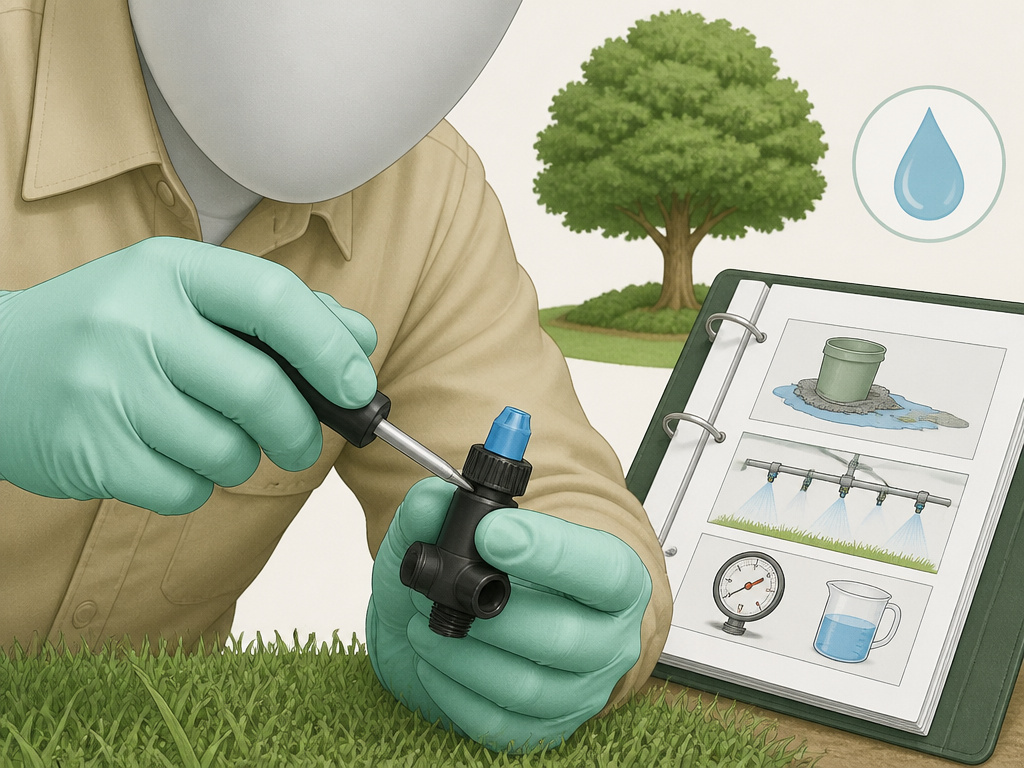
This is where theory meets the daily grind. Best Management Practices (BMPs) are your operational blueprint. Think of them as the standard operating procedures for environmental stewardship. A BMP program certified by the state’s Department of Agriculture covers everything from spill response for fuel to calibration procedures for sprayers.
Where this goes sideways: Treating BMPs as a binder on a shelf. A written plan that nobody follows is worse than no plan at all, it creates a false sense of security and opens the door for compliance issues.
The RIT Golf Course Sustainability Handbook breaks BMPs into a practical “Par, Birdie, Eagle” framework. A “Par” action might be a simple walk-through inspection of your chemical storage pad. An “Eagle” action could be a full site-wide environmental management system audit. You don’t have to do everything at once. Start with the Par-level items that address your biggest cost or risk.
For facilities aiming higher, the Sustainable Golf Development Voluntary Sustainability Standard (VSS) offers a structured path. It’s a global framework with specific performance requirements for water sourcing, energy use in design, and habitat protection. Pursuing certification is a commitment, but it signals a serious, verified stance to your community and market.
Making the Financial Case to the Board or Owner
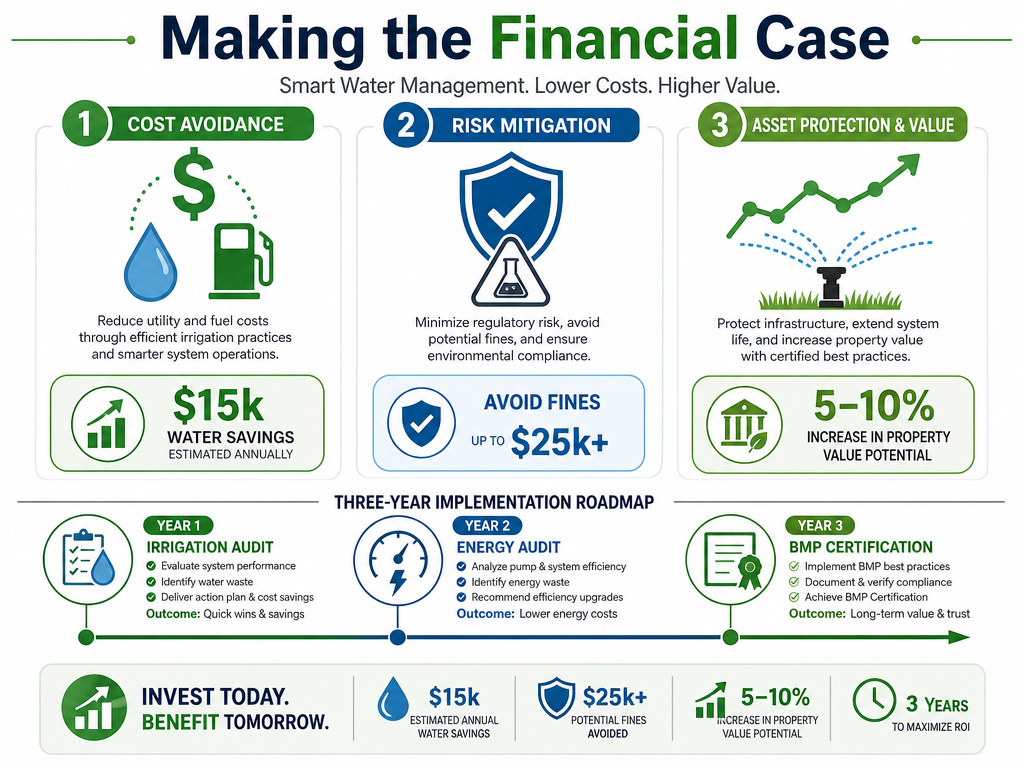
Here’s the truth nobody sells. The “green” PR angle only goes so far with a budget committee. Your proposal must lead with operational savings and risk reduction.
Build the case around three pillars:
- Cost Avoidance: Show the projected savings from reduced water, fuel, and chemical use. Use your audit data. A $15,000 water savings is a compelling headline.
- Risk Mitigation: Outline the potential fines or remediation costs from a chemical spill or water use violation that a BMP program prevents. This speaks to the fiduciary duty of the board.
- Asset Protection & Value: Demonstrate how sustainable practices prolong the life of expensive assets like irrigation systems and reduce long-term capital needs.
Present it as a phased plan. Year One: the irrigation audit and a switch to electric staff carts. Year Two: a full energy audit and the beginning of a lithium battery conversion for member carts. Year Three: BMP certification. This makes the investment digestible and shows strategic thinking.
The role of the golf course superintendent is evolving into this hybrid of agronomist and operations manager. Your expertise is the bridge between the grass and the balance sheet.
Frequently Asked Questions
What is the single most impactful sustainability practice for a golf course?
Conducting an irrigation system audit. It directly addresses the largest consumable cost (water) and has a fast payback period, often within a single season. The savings immediately fund other sustainability projects.
Are electric golf carts really more sustainable?
Yes, but the carbon benefit depends on your local electricity grid. If your power comes from coal, the emissions are just shifted. The strongest case is pairing electric carts with onsite solar or purchasing renewable energy credits. The operational benefits, less maintenance, quieter operation, are immediate regardless.
How can a small, budget-limited course get started?
Use the “Par” level actions from the RIT Sustainability Handbook. Focus on no-cost or low-cost steps: perform a visual irrigation audit (look for leaks and dry spots), calibrate all sprayers and spreaders, and implement a simple preventive maintenance schedule for equipment to improve fuel efficiency. Documenting these steps is the start of a BMP program.
Is artificial turf a sustainable option?
Rarely. While it eliminates water and chemical needs, it creates a “heat island” effect, has a high carbon footprint from manufacturing and disposal (petroleum-based), and provides no ecological habitat. It’s often a last resort for specific areas where grass cannot survive, not a whole-course solution.
Do golfers even care about sustainability?
Increasingly, yes. But more importantly, the communities that surround courses and the regulators that permit them care deeply. Demonstrating responsible stewardship builds social license to operate, which can be more valuable than individual golfer sentiment.
Before You Go
One rule most guides skip: if your facility hasn’t had a professional energy audit in the last five years, that’s your next move. The national data shows only 13% of courses have. The process identifies the low-hanging fruit, the pump that’s three generations out of date, the clubhouse HVAC running full-blast into an empty room at night. Those fixes pay for themselves.
The path relies on the cumulative effect of a hundred smarter, smaller decisions. For example, choose drought-tolerant paspalum over thirsty bentgrass on a new construction hole.Schedule mowing outside peak electricity hours. Fix that one irrigation leak you’ve been meaning to get to.
That’s how you build a course that’s not only more playable but also more resilient. And in the end, that’s the most sustainable practice of all.
