
Golf in Australia: Guide to Premier Courses & Club Culture
This post contains affiliate links. As an Amazon Associate, we earn from qualifying purchases.
Golf in Australia is played across more than 1,600 venues, from the famed Sandbelt courses to remote bushland layouts, under a unified national handicapping system and a culture that balances fierce competition with a relaxed, social ethos. The game is governed by Golf Australia, which manages everything from elite amateur championships to the handicaps of over 450,000 club members.
That national framework is what lets a visitor from Sydney show up at a course in Perth and have a fair game, or a club in Queensland adopt a local rule for kangaroo scrapes. The system isn’t just about bureaucracy; it’s the plumbing that makes the whole Australian golf ecosystem work, from the professional tours down to the weekend social comp. Without understanding it, you’re just hitting a ball on grass.
What follows: a look at who actually plays, the unique rhythms of club life, the mechanics of the handicapping engine, and the major initiatives shaping the game’s future.
Key Takeaways
- Australia’s golf scene splits almost evenly between traditional on-course players and a growing off‑course segment that includes driving ranges, simulators, and mini‑golf.
- The national handicapping system, managed through GOLF Link, uses the World Handicap System formula to ensure portability and fairness across the country’s 1,600+ diverse courses.
- Sustainability and climate resilience are central to the sport’s future, guided by the Golf Course 2030 initiative launched by The R&A and Golf Australia.
- Local rules and competition conditions are often detailed in a course-specific “hard card,” which can include everything from pace-of-play penalties to relief from seam‑cut turf.
- The average club member is 55 years old, but new members are significantly younger, pointing to a shifting demographic base for the game.
Who Plays Golf in Australia?
The 2023/24 Golf Participation Report paints a picture of a game in flux. The traditional image of golf, an 18‑hole round at a member club, now represents just one part of a much broader landscape.
The part nobody mentions: There are now more Australians playing golf exclusively off‑course (1.5 million) than those playing only on‑course (1.3 million). This shift is largely driven by younger players and women.
The research splits golfers into three clear buckets. Understanding which bucket you (or the golfers you meet) fall into explains a lot about the Australian golf experience.
| Participant Type | Estimated Numbers | Average Age | Key Characteristics |
|---|---|---|---|
| On‑Course Only | 1.3 million | 45 | Club members (459,143) and casual round players. Most likely to be Australian‑born. |
| Off‑Course Only | 1.5 million | 38 | Plays at driving ranges, simulators, or mini‑golf only. Highest percentage of women (51%). |
| Both On & Off‑Course | 1.0 million | 41 | The hybrid player. Engaged in all formats, from club competitions to range sessions. |
Club membership remains the core of the organised game. The average age of a club member is 54.9, but that headline number hides a crucial trend. New members are, on average, over a decade younger. Men joining a club average 41 years old; women average 52. This influx is slowly changing the demographic center of gravity.
Let’s be clear about this: if you’re picturing Australian golf as only retirees on private courses, you’re a decade behind. The game’s growth is happening off the fairway, in simulators and at entertainment venues, and it’s pulling in a younger, more diverse crowd.
Golf Culture in Australia: More Than Just a Game
Strip it back, and Australian golf culture is built on two things: accessibility and social competition. The Australian Golf Facilities Guidelines explicitly state they are “not designed to be prescriptive,” acknowledging the vast range of facility types, from the iconic Royal Melbourne to a 9‑hole course carved out of the bush.
This pragmatic approach shapes the on‑ground experience. While the elite amateur championships operate under a strict Golf Australia “hard card”, with detailed local rules for everything from pace of play (50 seconds for a first‑to‑play approach shot) to damaged clubs, your average Saturday club competition is more relaxed. The bond is the shared challenge of the course itself.
I learned that on the weekend rounds where I first got hooked. The conversation in the clubhouse afterwards mattered as much as the score. It wasn’t about being the best; it was about being part of the day’s story.
The sensory reality of Australian golf is distinct. The firm, fast running grounds of the Sandbelt courses produce a sharp click at impact and a ball that seems to roll forever. Playing a links‑style course like Barnbougle in Tasmania, you’ll feel the wind change three times during your swing and hear the ocean as a constant backdrop. It’s a physical, engaging style of golf that rewards creativity over brute force.
This culture extends to equipment and attire. While the global brands dominate, there’s a strong preference for practicality. You’re as likely to see someone in comfortable golf shorts and a polo as in full‑on tour kit. The focus is on what works for the conditions, not what looks pro. It’s the same logic behind choosing forgiving irons or soft golf balls suited to the firm turf, performance tailored to the environment.
How Does the Australian Handicapping System Work?
If club culture is the heart of Australian golf, the handicapping system is the central nervous system. Managed nationally by Golf Australia through GOLF Link, it’s what makes your handicap valid at any of the 1,600+ courses across the country.
The system is built on the World Handicap System (WHS). Your handicap isn’t a fixed number; it’s a rolling calculation based on your best 8 scores from your last 20 rounds. The formula accounts for course difficulty, using Slope Rating and Scratch Rating to standardise your performance.
Here’s the W.H.S. Formula for an 18‑hole Gross Differential (the building block of your handicap):
((36 – Stableford Score) + Daily Handicap + Par – (Scratch Rating + PCC)) × (113 ÷ Slope Rating)
A few critical, sourced specifics cut through the complexity: * The Neutral Slope is 113. If a course has this rating, your daily handicap equals your rounded GA Handicap. * The Playing Conditions Calculation (PCC) can adjust scores after the fact if weather or course setup made the day abnormally hard or easy, a rare but important fairness mechanism. * The Maximum is 14 clubs in your bag, as per The Equipment Rules. Carry a 15th, and you’re in breach of the rules before you even tee off.
The system’s beauty is its portability. A 15-handicapper in Brisbane knows they’ll get a slope-adjusted course handicap when they visit a course in Adelaide. This seamless integration is why Australian handicaps are recognised worldwide. For new players, establishing a handicap requires submitting 54 holes worth of scores, which can be a mix of 9 and 18‑hole rounds. It’s a gateway to formal competition.
Golf’s Sustainable Future: The Golf Course 2030 Initiative
 The Australian landscape is harsh. Water is scarce, temperatures are rising, and environmental regulations are tightening. The sport’s long‑term health depends on adapting. Enter Golf Course 2030 (GC2030), an industry initiative established by The R&A in 2018.
Common mistake: Seeing course conditioning only as an aesthetic concern. In Australia, it’s a survival imperative. Resources like water, fertiliser, and energy are becoming scarcer and more expensive, as noted in the GC2030 Australia plan.
The initiative isn’t about making courses harder or longer. It’s about resilience. The goal is to “sustain, perhaps even improve, course condition and playability” compared to today, using less. This maps directly onto the United Nations’ Sustainable Development Goals, focusing on clean water, responsible consumption, and protecting life on land.
On the ground, this means: * Converting to drought‑tolerant grasses that need less water and chemical input. * Implementing precision irrigation to cut water use by significant margins. * Creating native habitat corridors within courses to support local biodiversity, something the Australian Golf Facilities Guidelines actively encourage.
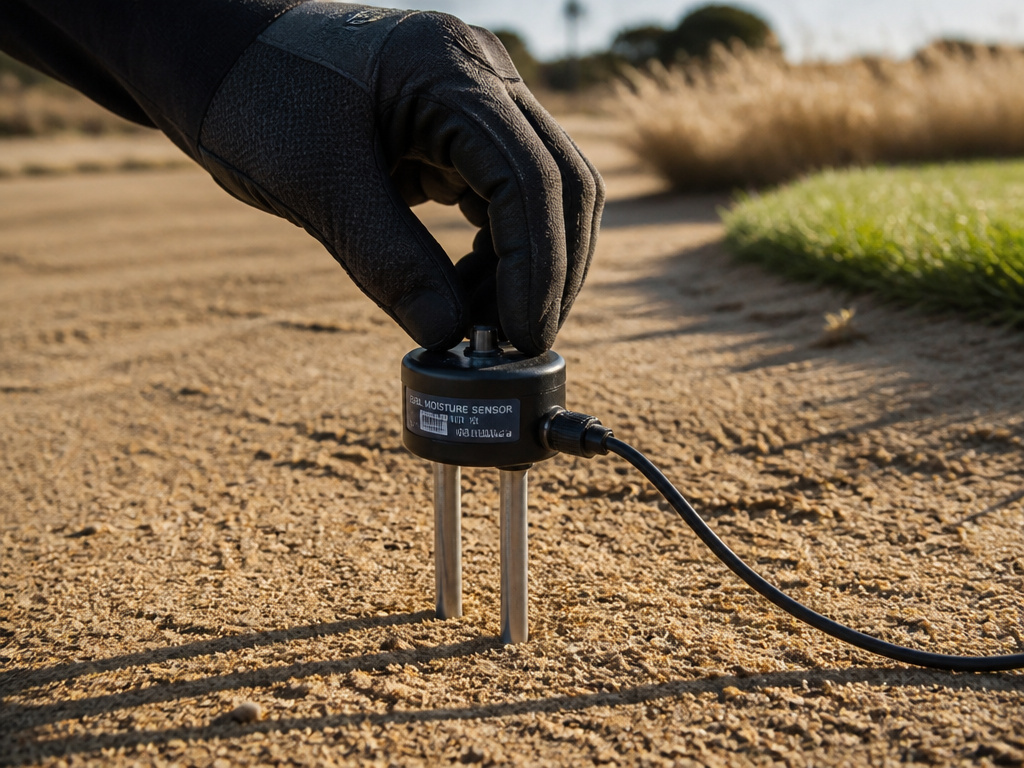
This isn’t corporate greenwashing. I’ve watched courses in my region struggle through drought years, their fairways turning to dust while the native rough thrived. The clubs that invested in soil moisture meters and switched to subsurface drip irrigation not only survived but maintained better playing conditions. GC2030 is codifying that kind of smart, essential adaptation.
Navigating Local Rules and Competition Play
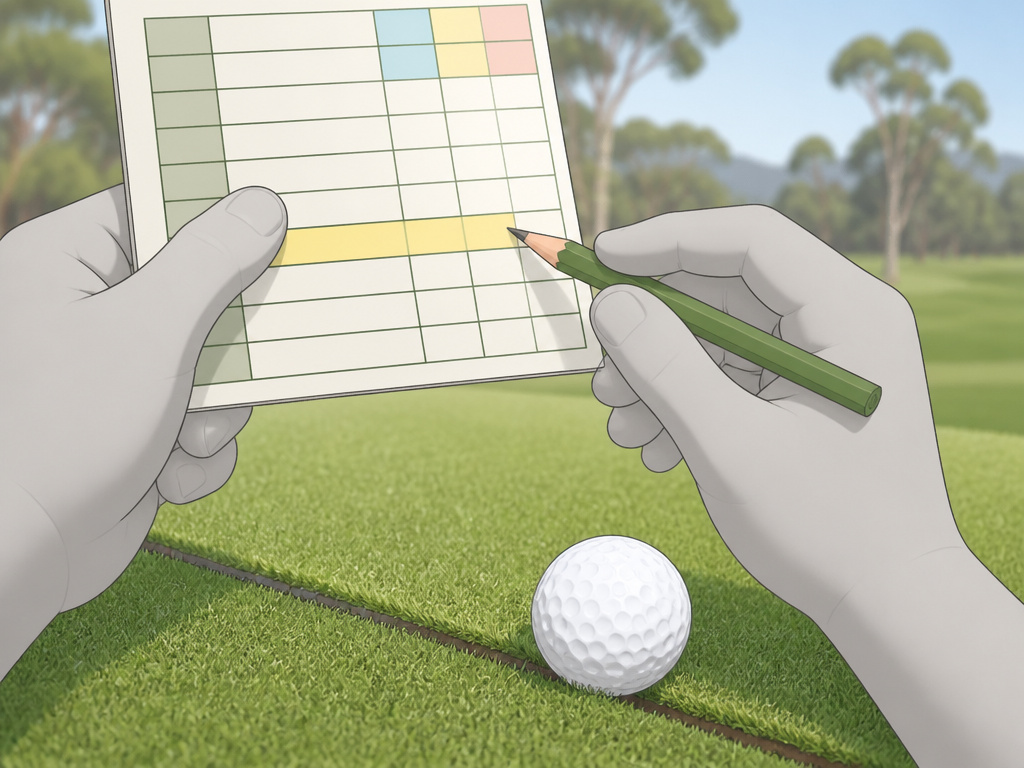 Beyond the universal Rules of Golf, every course and competition in Australia operates under a layer of Local Rules. For casual play, these are often posted in the pro shop or on the scorecard. For serious tournaments, they’re detailed in the hard card, a document every competitor is expected to know.
The Local Rules and Terms of Competition for Golf Australia Amateur Championships provides a template. Some rules are about fairness, others about practicality.
For example, Rule 16 of the 2026 hard card deals with “Seams of Cut Turf”:
If a player’s ball lies in or touches a seam of cut turf, or the seam interferes with the stance or swing, relief is allowed under Rule 16.1b.
This is a classic Australian adaptation. The machinery used to prepare fairways can leave visible seams.
Other common local rules address: * Environmentally‑Sensitive Areas (ESAs): Marked as no‑play zones to protect native flora and fauna. A drop area is usually provided. * Preferred Lies: Often called “winter rules” or “clean and place,” this allows you to mark, lift, clean, and place your ball within a specified area (often a scorecard length) in closely‑mown areas. It’s used to protect the course during wet conditions. * Obstructions: Clarifies relief from specific immovable obstructions, like sprinkler heads close to a green.
The golden rule? Always check the local rules sheet before you tee off. Assuming you know them is a quick route to a penalty you never saw coming.
Frequently Asked Questions
What is the most popular form of golf in Australia?
Currently, off-course participation (driving ranges, simulators, mini-golf) slightly edges out traditional on-course play in raw participant numbers. However, the 18‑hole round at a golf club remains the central competitive and social format for dedicated players, with over 47 million rounds played annually by on‑course golfers.
How do I get a golf handicap in Australia?
You need to be a member of a club affiliated with Golf Australia. After joining, you submit scores from 54 holes (which can be a combination of 9 and 18‑hole rounds). These are entered into the GOLF Link system, which calculates your initial Golf Australia Handicap based on the World Handicap System formula. Your handicap is then updated with every subsequent competition or acceptable social score you submit.
Can I play golf in Australia as a tourist without a handicap?
Absolutely. Most public access courses welcome visitors and do not require a handicap for general play. You can book a tee time online or by calling the pro shop. If you wish to enter a club competition, however, you will need a current Golf Australia or equivalent recognised handicap.
What are the best golf courses in Australia for visitors?
Australia is famous for its Sandbelt courses in Melbourne (e.g., Royal Melbourne, Kingston Heath) and the stunning links courses in Tasmania (e.g., Barnbougle, Cape Wickham). For something truly unique, seek out the rustic charm of a bushland course like Bungambrawatha in Wagga, NSW. The “best” course depends entirely on the experience you’re after, world‑class challenge or authentic Aussie atmosphere.
What should I know about golf etiquette in Australia?
The core tenets are the same globally: repair pitch marks, rake bunkers, keep pace. The Australian twist is an emphasis on pace of play and being ready when it’s your turn. Slow play is heavily frowned upon. Also, respect the course’s environmental policies, stay out of marked native areas, and always use the provided waste bins. The culture is friendly but expects you to know and follow the basic rules.
Before You Go
Golf in Australia is a story of contrast and cohesion. You have the tournament‑ready precision of the Sandbelt coexisting with the raw, natural challenge of a bushland track. You have a national handicapping system sophisticated enough to govern elite play, yet simple enough to unite weekend hackers across the continent.
If you’re visiting, pack for variety. Your supportive golf shoes will need to handle firm, sandy ground and maybe a morning dew. Your versatile golf balls should work on fast greens and in coastal winds. And your attitude should be open, to the friendly rivalry, the stunning landscapes, and the fact that a round here is as much about the people you meet as the shots you hit.
The game is growing, changing, and facing real environmental challenges. But the foundation, a love for a well‑struck shot, a beautiful walk, and a post‑round drink, is as solid as ever. That’s what keeps it thriving.
