
How Alternate Shot Format Works: Rules, Tips & Sharing Clubs
This post contains affiliate links. As an Amazon Associate, we earn from qualifying purchases.
This post contains affiliate links. As an Amazon Associate, we earn from qualifying purchases.
The alternate shot format, officially called Foursomes, is a two-person team competition where partners play one ball, taking turns hitting shots until the ball is holed. One partner tees off on all odd-numbered holes, the other on all even-numbered holes, and the alternating sequence continues for every shot on that hole. The team shares a maximum of 14 clubs total, and playing a stroke out of order results in a loss of hole in match play or a two-stroke penalty in stroke play.
That 14-club limit is the rule most weekend teams forget. You aren’t just sharing a ball; you’re sharing an entire bag. It forces a different kind of pre-round conversation.
What follows is the complete breakdown: the non-negotiable USGA rules, the strategic pairing and planning that happens before the first tee, and the on-course mindset that separates good teams from frustrated ones. We’ll also untangle the modified versions you might encounter, like Greensomes and the Chapman System.
Key Takeaways
- Partners may share clubs, but the team’s total cannot exceed 14—a specific USGA rule that reshapes club selection.
- The penalty for hitting a shot out of turn is severe: loss of hole in match play or a two-stroke penalty plus a correction in stroke play.
- Strategy starts with the scorecard: assign odd/even tees based on who hits the best driver on the toughest par-4s and the best irons on the par-3s.
- For higher handicappers, consistency trumps specialty. Playing the same ball model for the entire round is smarter than switching for “ideal” approach shots.
- Modified formats like Greensomes give both players a tee shot, reducing pressure but adding a layer of post-drive decision-making.
The Fundamental Rules You Must Get Right
Get these wrong and you’re giving away holes before you even start. The official regulations are in USGA Rule 22, and they are precise for a reason.
USGA Rule 22 official text states that partners compete as one side, playing one ball in alternating order. The player who tees off on a hole must be decided before the round (odds/evens), and that order is fixed. Penalty strokes do not change the sequence.
The first and biggest strategic decision is who hits the odd-numbered tee shots and who hits the evens. This isn’t a coin flip. You lock it in on the first tee, and it doesn’t change, no matter who holed the last putt. If you start with Player A on hole 1, Player B hits the tee shot on hole 2. Every time.
Playing out of turn is a cardinal sin. In match play, your side loses the hole. In stroke play, it’s a two-stroke penalty, and you must correct the mistake by having the correct partner play from the spot of the error. Any strokes made with the wrong ball by the wrong player don’t count. Fail to correct it before teeing off on the next hole? Disqualification.
The provisional ball rule has a specific twist. If your tee shot might be lost or out of bounds, the partner who did not hit the original shot must be the one to play the provisional. The sequence keeps alternating, even for a do-over.
And then there’s the gear rule nobody talks about until a competitor calls it.
| Rule | Specifics | Common Mistake |
|---|---|---|
| Tee Shot Order | Fixed for the round (Player A on odds, B on evens). | Thinking you alternate who tees off based on who putted last. |
| Club Limit | The side must not have more than 14 clubs between both players. | Each player bringing their own full 14-club bag. |
| Out-of-Turn Stroke | Loss of hole (match play) or two-stroke penalty (stroke play). | “It’s just a practice swing” confusion after a whiff. |
| Ball Selection | The side can change the ball model between holes. | Switching balls during a hole, which is not allowed. |
Where this goes sideways: Each player bringing their own full bag. Under USGA Rule 22.5, your team is limited to 14 clubs total. If you both show up with 14, you’re starting 14 clubs over the limit and will be penalized two strokes per hole (max four strokes) in stroke play. Talk before you pack.
That club limit changes everything. It means you and your partner need to build a composite bag that covers both your games without duplication. It’s the first real test of teamwork.
Pre-Round Strategy: Building Your Two-Person Game
Winning at alternate shot starts in the parking lot, not on the fairway. You are constructing a single golfer from two sets of skills, nerves, and preferences.
Choosing the Right Partner
The lowest handicap player isn’t automatically the best partner. You need a complementary fit.
Look for a balance of strengths. If you are wild off the tee but a wizard with a wedge, pair with a steady fairway-finder. Their job is to get the ball in play; your job is to save par when the approach shot misses. Conversely, if you stripe your driver but struggle with long irons, find a partner who loves a 4-iron from 200 yards.
Personality match is arguably more critical. You need a calm talker paired with an intense focuser, not two intensity bombs waiting to explode. Agree on a communication style upfront. Some teams talk through every shot; others need silence. Enforcing your style on a mismatched partner guarantees a long, tense day.
Deciding the Tee Shot Order (The Scorecard Session)
Pull out the scorecard. This is a puzzle. Your goal is to put each player in their comfort zone for the shots that matter most.
- Identify the Par 3s. Which player is the more precise iron player? That player should likely tee off on the holes where those par 3s fall. If holes 4, 8, 12, and 16 are all par 3s, the iron specialist takes the even tee shots.
- Find the Beast Par 4s. Every course has two or three brutally long or narrow par 4s. Your most reliable driver gets those tee shots, regardless of whether they are odd or even.
- Plan for the Finish. Who do you want hitting the tee shot on the 18th with the match on the line? Decide that now and work your order backward if you have to.
Sometimes there’s no perfect split. The key is to maximize your team’s confidence on the highest-leverage shots. This deliberate planning is a form of target golf strategy, where you’re managing the course as a unit rather than as individuals.
The Great Ball Debate
What ball do you play? At the 2008 Ryder Cup at Valhalla, Phil Mickelson outlined the pro strategy: “I tee off with their ball, and they tee off with my ball… We will be hitting our own balls with our iron approach shots.”
That works for pros who hit greens. For amateurs, especially those above a 10-handicap, the math changes. The player hitting the tee shot will often be hitting a wedge for the third shot, too. Switching balls between the drive and the wedge adds variables.
For most amateur pairs, picking one ball model and sticking with it for the whole round is smarter. It eliminates one more variable from a format already full of them. Consistency in feel around the greens outweighs the marginal gain of a “perfect” iron ball.
On-Course Tactics: The Teamwork Mindset
Once you’re playing, the game becomes about management, not heroics. Every decision is made for two.
The unspoken rule: Never apologize for a bad shot. Apologizing layers guilt onto a mistake your partner already feels. A simple “We’re good, next shot” is the only productive response.
Your primary job on every shot is to leave your partner in the best possible position for their next shot. This is the core of strategic shot selection.
- In the trees? Don’t attempt the hero shot through a tiny gap. The percentage play is to chip out sideways to the fairway, giving your partner a full swing from a clean lie. Turning one bad shot into a manageable recovery is a win.
- Approaching the green? Play for the fat part. Flag-hunting is a solo sport. Aiming for the center of the green avoids short-siding your partner with a impossible bunker shot or a delicate flop shot.
- On the greens? Control your speed. Remember, your partner has the next putt. Lagging to a safe three-foot circle is better than racing a six-footer four feet past. Think two-putt as a team.
This collaborative, conservative style is the antithesis of the aggressive, solo LIV Golf format you see on TV. It’s chess, not checkers.
Modified Formats: Greensomes and Chapman
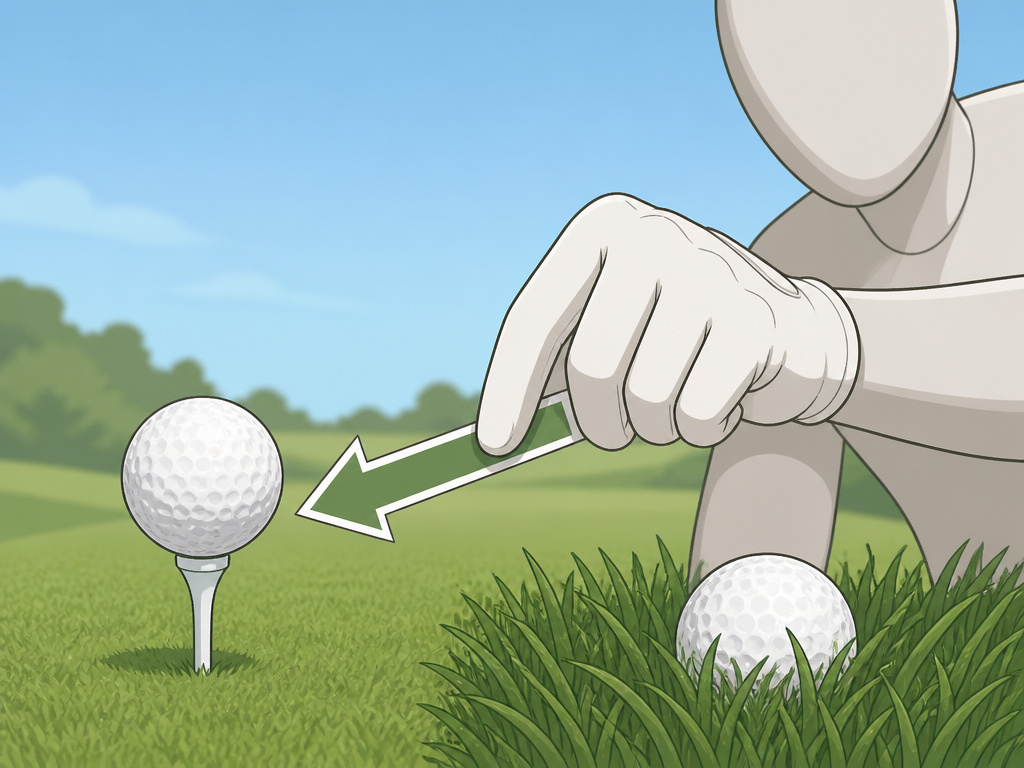 You might hear terms like “Greensomes” or “Chapman System.” These are variations on the alternate shot theme, often used to speed play or reduce pressure.
| Format | How It Differs from Standard Alternate Shot | Best For |
|---|---|---|
| Greensomes (Modified Alternate Shot) | Both players hit a tee shot. The team chooses the best one, then plays alternate shot from there. | Social events, higher handicappers; reduces pressure of a single bad drive. |
| Chapman System (Pinehurst) | Both players hit a tee shot. Then they switch balls for the second shot. After both second shots, they choose the best ball and play alternate shot to finish. | Strategic, thoughtful players; adds a layer of fun complexity. |
| Foursomes (Standard) | One tee shot per hole. Strict alternating from tee to green. | Pure team match play competition like the Ryder Cup or Solheim Cup. |
Greensomes is the most common modification. It gives you two chances off the tee, which dramatically reduces the chance of a hole starting with a lost ball. The strategy shifts to choosing the best tee shot—not always the longest, but the one with the best lie and angle for the upcoming approach.
The Chapman System is for the truly strategic mind. Switching balls for the second shot can salvage a hole where one player hit a terrible drive but the other can play a recovery shot with their partner’s ball. It rewards teams that understand each other’s games intimately.
Frequently Asked Questions
Can you change golf balls during an alternate shot round?
Yes, but only between holes. You and your partner can decide to switch to a different ball model on the next tee. You cannot change the ball in the middle of a hole. This is why many amateur teams simply agree on one ball model for the entire round to avoid confusion.
What happens if you hit the wrong ball in alternate shot?
In alternate shot, you are only playing one ball as a team, so the typical “wrong ball” penalty doesn’t apply in the same way. However, if you play a stroke when it was your partner’s turn, that’s playing out of order (see the penalty above). If you accidentally play a different ball that isn’t your team’s ball in play, you’d incur the standard penalty for playing a wrong ball.
Do both players putt in alternate shot?
No. The alternating sequence includes putts. If your partner hits the approach shot onto the green, it is your turn to putt first. You then alternate putts until the ball is holed. Good teams will both read the putt, but only one player strikes it.
How are handicaps calculated for alternate shot?
Common method is to use 60% of the lower handicap and 40% of the higher handicap. For example, a 10 and a 20 handicap would have a team handicap of (10 x 0.6) + (20 x 0.4) = 14. Always check the specific rules of your competition, as methods can vary.
Is alternate shot used in professional tournaments?
Yes, most famously in the Ryder Cup, Solheim Cup, and Presidents Cup. On the PGA Tour, the Zurich Classic of New Orleans uses a team format that includes one round of alternate shot. It’s the ultimate test of partnership under pressure.
The Bottom Line
Alternate shot strips golf down to its most collaborative form. It’s not about your individual score; it’s about building a joint game plan and executing it under a unique set of constraints. The team that wins is usually the one that best blends complementary skills, plans their tee-shot order with the scorecard, and embraces a conservative, partner-first mindset on every shot.
Master the 14-club rule. Nail the odd/even decision. And remember—the next shot is always your partner’s problem. Set them up to succeed, and you both will.
