
The Essential Golf Terms Glossary Every Player Must Know
This post contains affiliate links. As an Amazon Associate, we earn from qualifying purchases.
An essential golf terms glossary covers the 11 rule and scoring terms that directly change your number on the card, plus about a hundred more for course conversation. The score-changers are Par, Birdie, Bogey, Handicap, Course Rating, Slope Rating, Carry, Compression, Address, Unplayable Lie, and Lost Ball. Master these first; the rest are names for things you already see.
The difference between a term that decorates a story and one that alters your score is a specific rule, a measured distance, or a defined penalty. A “fried egg” lie is just a description. A “lost ball” is a three-minute search timer and a one-stroke penalty with a drop within two club-lengths. That distinction is the entire point of a useful glossary.
What follows: the short list of terms that demand your attention, the longer dictionary for sounding like you belong, and the specific rules data, search times, drop distances, penalty strokes, that turn jargon into actionable knowledge.
Key Takeaways
- Focus first on the 11 scoring and rule terms: Par, Birdie, Bogey, Handicap, Course Rating, Slope Rating, Carry, Compression, Address, Unplayable Lie, and Lost Ball. These are the only ones that directly change how you play and score.
- A lost ball search lasts exactly three minutes (per the Rules of Golf). After that, it’s a one-stroke penalty, and you must play from the original spot or take relief within two club-lengths of where it was last seen.
- Declaring a ball “unplayable” gives you three relief options, all costing one stroke: drop within two club-lengths (no closer to the hole), drop back on a line from the hole, or replay the previous shot.
- Your “angle of attack” isn’t just technique talk; it’s the vertical path of the clubhead at impact. A downward attack (positive angle) with an iron creates backspin; an upward sweep (negative angle) with a driver reduces spin for distance.
- Most golf terms are simply names for things, a “bunker” is a sand pit, a “divot” is a chunk of turf. Learn these for conversation, but don’t confuse them with the rules that actually affect your card.
The 11 Terms That Actually Change Your Score (And How)
Forget memorizing two hundred words. Your priority list is eleven terms long. These are the ones with numbers attached, penalties, distances, ratings, and conditions that physically change your next shot and your total score.
If you learn nothing else, learn these. They are the difference between guessing and knowing.
Angle of attack refers to the direction in which the clubhead approaches the ball at impact relative to the ground. A positive angle (downward strike) with irons creates spin; a negative angle (upward sweep) with a driver optimizes launch.
Par, Birdie, & Bogey: The Scoring Trinity
Par is the expected number of strokes a skilled golfer should take on a hole. A birdie is one stroke under par. A bogey is one stroke over par.
This isn’t just arithmetic. Par sets the strategy for the hole. On a par 5, two good shots might leave you a wedge for your third. That’s a birdie chance. On a par 3, missing the green often means a bogey is a good save. Courses are typically par-70 to par-72, so averaging a bogey per hole shoots roughly 90. That’s the baseline math every round runs on.
Handicap, Course Rating & Slope Rating: The Leveling System
Your Handicap Index is a measure of your potential ability, not your average score. It’s a number that allows players of different skill levels to compete fairly.
The Course Rating tells a scratch golfer (handicap 0) how difficult the course is, a higher number means a tougher test. The Slope Rating (from 55 to 155) tells a bogey golfer how much harder the course is for them compared to the scratch player. You use both to calculate your “Course Handicap,” which determines how many strokes you get on that specific track. This isn’t bureaucracy. It’s the system that lets a 20-handicap have a real match against a 5-handicap.
Carry & Compression: The Equipment Science
Carry is the pure air distance your ball travels before it lands. Knowing your carry distance with each club, not total distance including roll, is non-negotiable for clearing hazards. Water doesn’t care about your roll.
Compression measures how much a golf ball deforms at impact. Lower compression balls (softer) suit slower swings; higher compression (harder) suits faster swings. A mismatch costs you distance. It’s a measurable spec, not a feel preference.
Address, Unplayable Lie, & Lost Ball: The Rulebook Triggers
Addressing the ball means taking your stance and grounding the club. If the ball moves after you’ve addressed it, it’s usually a one-stroke penalty. There’s an exception: if you accidentally cause it to move while in the act of addressing it, no penalty. That’s a specific edge case worth knowing.
An unplayable lie is your call. You can declare it anywhere except in a penalty area. The three relief options each cost one stroke: 1. Drop within two club-lengths of the spot, no closer to the hole. 2. Drop back on a straight line between the hole and the spot, going as far back as you want. 3. Replay from where you last played.
A lost ball has a timer. According to the Rules of Golf, you have three minutes to search. Fail, and it’s stroke-and-distance: a one-stroke penalty, and you must play from where you last played. If you’re taking relief where it was lost, the drop is within two club-lengths of that spot.
| Term | Category | Direct Impact on Your Game |
|---|---|---|
| Par | Scoring | Sets the target score and strategy for every hole. |
| Birdie/Bogey | Scoring | The immediate measure of success or failure on a hole. |
| Handicap | Scoring | Levels the playing field for competition across skill levels. |
| Course/Slope Rating | Scoring | Adjusts your handicap to the specific difficulty of the course you’re playing. |
| Carry | Technique/Strategy | The critical distance for carrying hazards; must be known for each club. |
| Compression | Equipment | Matching ball compression to swing speed maximizes distance. |
| Address | Rules | Accidentally moving a ball after addressing it usually incurs a penalty stroke. |
| Unplayable Lie | Rules | Provides three defined relief options, each with a one-stroke penalty. |
| Lost Ball | Rules | Triggers a three-minute search and a stroke-and-distance penalty if not found. |
Course Layout & Conditions: The Map You’re Playing
The course has a specific geography. Knowing the names isn’t about vocabulary; it’s about understanding the challenge each area presents and choosing the right club.
The Tee Box, Fairway & Green
You start at the tee box. Your ball should be between the two markers and up to two club-lengths behind them. The fairway is the short, manicured path to the green. Hit it here. The green is the smooth putting surface where the hole is. Everything else is trouble.
The Rough, Bunker & Hazard
The rough is the longer grass flanking the fairway. It’s a penalty of distance and control. A bunker (or sand trap) is a depression filled with sand. It requires a specific technique, hitting the sand, not the ball.
The term hazard is older but still common. The modern Rules of Golf use “penalty area” to describe areas where a ball is often lost or unplayable, typically marked by red or yellow stakes. This includes ponds, streams, and sometimes dense brush. The stakes’ color tells you your relief options.
The Fringe, Apron & Divot
The fringe or apron is the collar of slightly longer grass around the green. You can putt from it, but it’s not the green. A divot is the chunk of turf your iron shot removes. Replace it or fill it with sand mix. This is basic etiquette, and it keeps the course playable for everyone behind you.
Shots & Ball Flight: What You Meant to Do vs. What Happened
Your swing intention has a name. So does the curve the ball takes in the air. Knowing both lets you diagnose your miss and communicate it.
The Good: Draw, Fade, Punch, Chip
A draw is a controlled right-to-left curve for a right-handed golfer. A fade is a controlled left-to-right curve. Both are shapes better players use to navigate holes. A punch shot is a low, controlled strike used under trees or into wind. A chip is a short, low-air-time shot from near the green, meant to roll like a putt.
The Bad: Slice, Hook, Shank, Skull
A slice is a severe, uncontrolled fade that usually ends right. A hook is a severe, uncontrolled draw that usually ends left. A shank is the worst strike, the ball comes off the hosel (where the head meets the shaft) and rockets sideways. A skull or blade is when you strike the ball with the leading edge of the club, sending a low, screaming line drive past your target.
The Ugly: Duff, Fat, Thin, Whiff
A duff or fat shot is when you hit the ground well behind the ball, resulting in a short, weak shot. A thin shot is the opposite, you catch the ball on its equator with the bottom edge, producing a low, skipping bullet. A whiff is a complete miss. If you were trying to hit it, it counts as a stroke.
Common mistake: Confusing a “fade” with a “slice.” A fade is a few yards of planned curve. A slice is a double-digit yardage emergency that starts left and finishes farther right.
Rules, Etiquette & Formats: The Unwritten Code
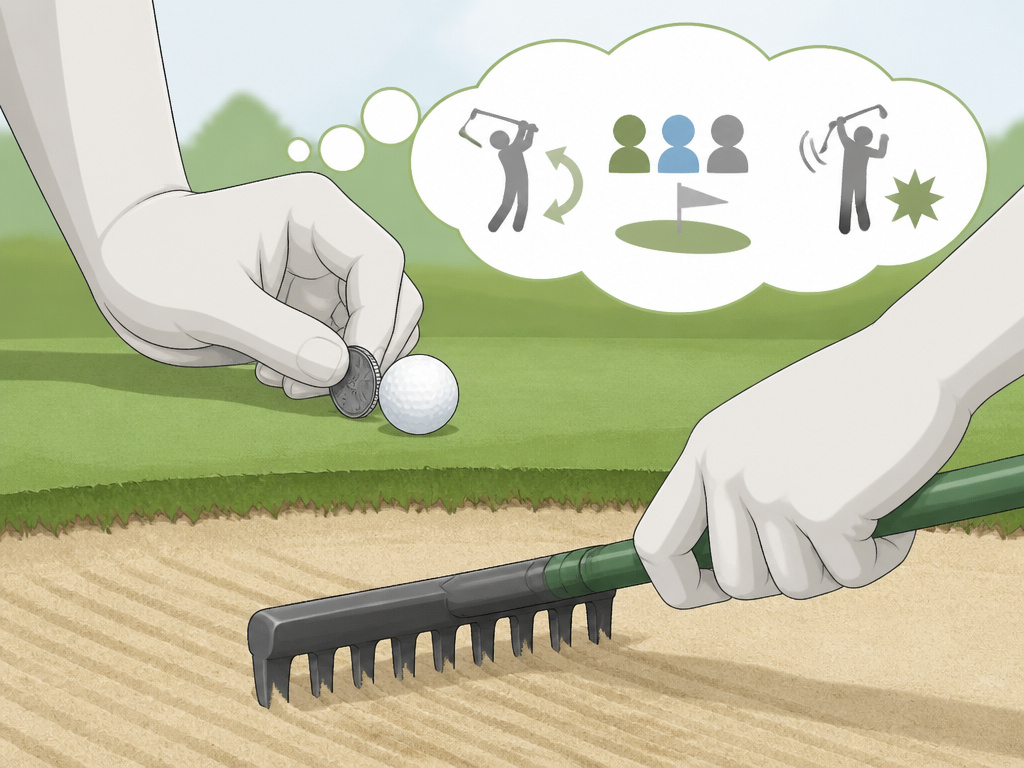
Golf runs on rules and manners. Get this part wrong, and it doesn’t matter how well you speak the language.
Essential Rules: Mulligan, Gimme, Provisional
A mulligan is a do-over, not allowed by the rules. It’s for casual play only. A gimme is a short putt your opponent in match play concedes. In stroke play, you must putt everything out. A provisional ball is a second ball you play immediately if you think your first one might be lost or out of bounds. It saves time.
Betting & Play Formats: Nassau, Scramble, Best Ball
A Nassau is a common bet: one point for the front nine, one for the back nine, one for the overall match. A scramble is a team format where everyone hits, you pick the best shot, and everyone plays from there. Best ball is a team format where everyone plays their own ball, and the best score on each hole counts for the team.
Pace & Etiquette: Ready Golf, Fore, Rake
Ready golf means hitting when you’re ready, not strictly waiting for the player farthest out, to keep pace. “Fore!” is the universal warning yell when your shot is headed toward people. You shout it. Loudly. Always rake a bunker after you play from it, smoothing the sand for the next player.
| Scenario | Correct Term & Action | Why It Matters |
|---|---|---|
| Your ball is buried in deep sand. | Fried Egg Lie. Play a explosion shot, hitting the sand behind the ball. | Describes the specific challenge; dictates technique. |
| Your ball is on the green in another player’s line. | Mark your ball with a ball marker, then lift it. | Required by rule; basic courtesy. |
| You hit a terrible tee shot on the first hole in a casual round. | Take a breakfast ball if everyone agrees. Unofficial. | Sets informal expectations for the round. |
| You need to hit a low shot under a tree branch. | Play a punch shot with a shorter backswing and abbreviated follow-through. | Communicates intent and required technique to partners. |
The Rest of the Dictionary: Names for Things
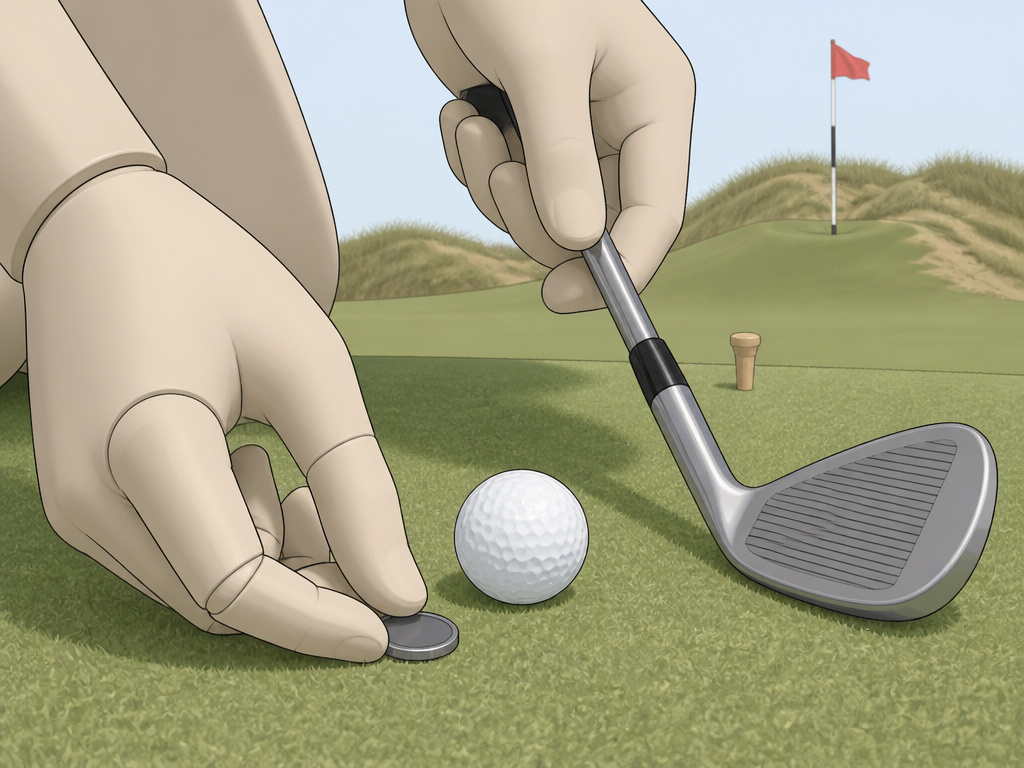
Once the critical terms are down, the rest of the golf slang and vocabulary is about fluency. These terms describe common situations, equipment, and course features. They won’t change your score, but they’ll stop the nodding and pretending.
Ace: A hole-in-one.
Albatross/Double Eagle: Three strokes under par on a hole.
Eagle: Two strokes under par.
Double Bogey: Two strokes over par.
Lie: How the ball is sitting (e.g., “good lie,” “bad lie”).
Links: A specific type of coastal course built on sandy soil, like many in Scotland.
Reading the Green: Assessing the slope, grain, and speed to determine how your putt will break.
Tee: The peg you set your ball on, or the area where you start (tee box).
Wedge: A high-lofted club for short shots (Pitching Wedge, Gap Wedge, Sand Wedge, Lob Wedge).
This is where you can explore more on specific golf accessories or the best golf ball markers to personalize your gear. The Wikipedia golf glossary entry remains the definitive, updatable source for the complete, rule-backed definitions of every term listed here and hundreds more.
Frequently Asked Questions
What is the most important golf term for a beginner to know?
Par. It is the anchor for every hole. All other scoring (birdie, bogey) and most of your strategy revolves around it. Knowing a hole is a par 5 tells you it’s a three-shot hole for most; a par 3 is a one-shot hole. Start there.
Do “gimmes” count in official scoring?
No. In any formal stroke play competition, you must hole out, putt the ball into the cup, on every hole. A “gimme” is only applicable in casual play or in match play, where an opponent can concede your next stroke. Counting conceded putts as made in a posted round for handicap is incorrect.
What’s the difference between a “penalty area” and a “bunker”?
Both are hazards, but the rules differ. A bunker is specifically a prepared area of sand. A penalty area (marked red or yellow) is any defined area where relief is allowed with a penalty stroke, typically containing water or other unplayable terrain. You can ground your club in a penalty area (usually), but you cannot ground your club in a bunker before your stroke.
How long can I look for a lost ball?
You have three minutes to search, starting from when you or your caddie reach the area where the ball is likely to be. Not five minutes, not “a quick look.” Use a timer on your phone. After three minutes, the ball is lost, and you must proceed under the stroke-and-distance penalty.
What should I do if I’m slow and the group behind is waiting?
Let them play through. The universal signal is to finish the hole you’re on, then wave the following group to come up while you stand aside at the next tee box. Implementing ready golf, hitting when ready regardless of honors, is the best way to avoid being in that position.
Before You Go
Don’t try to swallow the entire dictionary. Lock down the eleven score-changing terms first, the ones with penalties, distances, and ratings. They are the leverage points in your game. Everything else, from the best golf brushes for cleaning your clubs to the slang for a terrible shot, is color commentary. Use the official Glossary of golf Wikipedia page as your reference when a rule question pops up mid-round. The goal isn’t to sound like a pro in the grill room. It’s to walk onto any course, understand the stakes of your next shot, and know exactly what the number on your card means.
