
Understanding What a Championship Golf Course Truly Is
This post contains affiliate links. As an Amazon Associate, we earn from qualifying purchases.
This post contains affiliate links. As an Amazon Associate, we earn from qualifying purchases.
A championship golf course is a layout designed and maintained to test every department of a skilled golfer’s game under tournament conditions. It is defined by strategic design, variety of challenge, and specific conditioning standards, not by a mandatory yardage. The common belief that a course must be at least 6,500 yards is a historic fallacy dating to 1948.
That yardage myth persists, but it misses the point. A course’s character comes from how its length is distributed, not the total number. A 6,100-yard course with eight long approach shots can be a sterner test than a 6,700-yard course with only five. The real definition hinges on three distinct uses of the term, the architectural principles behind a complete examination, and the often-misunderstood conditioning that separates a true championship venue from a marketing slogan.
What follows breaks down the three meanings, the essential design elements, and the conditioning secrets straight from the tournament organizers’ manuals. By the end, you’ll read any course description and know exactly what “championship” actually promises.
Key Takeaways
- The term “championship course” has three distinct meanings: a historic tournament host, the toughest course at a multi-course facility, or a devalued marketing term for new developments.
- Total yardage is a poor measure of quality. A 1948 article labeled the “6,500-yard minimum” a fallacy, arguing that the distribution of challenging holes matters far more.
- A true championship test requires variety, it must challenge driving, long irons, short game, and putting, not just reward one strength.
- Tournament organizers like The R&A prioritize firm, fast conditions over lush, over-watered grass, which actually hurts playability and recovery.
- Effective Playing Length, which accounts for wind, elevation, and roll, is a more accurate gauge of difficulty than the scorecard yardage.
The Three Meanings of “Championship Course”
The phrase is used in three different ways across the golf world. Knowing which one is in play tells you whether you’re looking at history, a relative comparison, or an advertisement.
The original and most legitimate meaning is a course that has actually hosted a significant professional or elite amateur championship. This includes Augusta National (The Masters), Pebble Beach Golf Links (U.S. Open), and The Old Course at St. Andrews (The Open). The PGA Tour’s TPC Network of courses also fits here, as they are built to host tour events. This usage is earned, not claimed.
A course that has staged a major championship, a national open, or a recognised PGA Tour event has earned the “championship” label by association with the events themselves.
At private clubs or resorts with multiple courses, the “championship” course is simply the longest and most demanding layout relative to the others on site. It’s a label of comparison, not an absolute standard. This course might host the club’s member tournament, but it doesn’t need a PGA Tour event in its past. The other course might be an executive course or a shorter, more forgiving 18-hole design.
The third meaning is the most common and the least meaningful. Since the 1980s, “championship course” has become a widespread marketing term for new real-estate or resort courses trying to convey prestige. As golf writer Brent Kelley noted, this has devalued the phrase. When a new development calls itself a championship course, it’s often signaling aspirations of quality, not a proven ability to test the world’s best.
| Meaning | Definition | Example | Credibility |
|---|---|---|---|
| Historic Host | Has hosted a major tour event or national championship. | Pebble Beach, St. Andrews | High – Proven by history. |
| Relative Test | The toughest course at a multi-course facility. | “The Championship Course” at a 36-hole club. | Medium – A local designation. |
| Marketing Term | Used in advertising to imply quality or difficulty. | Many modern resort and housing development courses. | Low – Often unverified. |
Bottom line: If a course isn’t on a list of bucket list championship courses and isn’t the clear standout at a multi-course facility, that “championship” label is probably just marketing.
What Defines a True Championship Test?
Forget yardage. A course fit for a championship is one that presents a balanced, varied examination. It cannot unduly reward excellence in just one part of the game, like driving distance. It must demand precision with long irons, creativity with the short game, and nerve on the greens. This philosophy isn’t new, it was spelled out clearly in a 1948 article by architect William B. Langford, which you can find in the MSU historical golf course definition archive.
Langford argued that custom dictating a 6,500-yard minimum was a “fallacy.” He illustrated this with two hypothetical courses: Course A at 6,120 yards had eight holes requiring a long shot to the green, while Course B at 6,720 yards had only five. The shorter course presented more sustained long-iron tests. The core of great golf course architecture is this kind of strategic variety.
Where this goes sideways: Designing a course that is just long and open. It becomes a bland driving contest that favors only power hitters, failing the test of all-around skill.
The modern framework for measuring this difficulty is the USGA Course Rating System. It evaluates two main components: 1. Yardage Rating: The evaluation of a course’s playing difficulty based on Effective Playing Length, which adjusts measured length for roll, elevation, wind, and forced lay-ups. 2. Obstacle Factors: Ten ratings for hazards, topography, rough, and green targets that measure the mental and physical challenge.
This system, part of the official USGA Course Rating rule, confirms that two courses of identical yardage can have wildly different ratings based on design. A true championship course will have a high Course Rating and Slope, reflecting its balanced, strategic demands. Good course design principles are what create those demands.
The Non-Negotiable Elements: Design and Conditioning
Two concrete elements separate potential from reality: timeless design and tournament-specific conditioning. You can have one without the other, but you need both to host a true championship.
The design must have strategic integrity. This means: * Risk-Reward Choices: Holes that offer a dangerous, shorter route versus a safer, longer one. * Varied Shot Requirements: A mix of doglegs, angles, and green complexes that demand draws, fades, high shots, and low runners. * Thoughtful course routing****: A sequence of holes that creates a flowing, logical round and uses the land’s natural features.
Many of the world’s greatest tests, like Pinehurst No. 2, come from the Golden Age of golf course architecture. Their enduring challenge proves that clever design beats sheer length every time. The philosophies of these famous architects were built on strategy, not spectacle.
Conditioning is where theory meets the turf. The governing bodies have clear preferences. The R&A, organizer of The Open Championship, states a clear preference: for championships, the course must play firm and fast.
In general, the preference for most championships is that the course plays firm and fast.
This is the opposite of the lush, green, over-watered conditions many clubs and resorts pursue for aesthetics. The R&A notes that in Asia, over-watering is common but “often to the detriment of players and tournament officials.” Wet conditions lead to mud, poor recovery, and artificial playing conditions. Firm turf rewards precise shot-making and allows the ball to roll into strategic hazards. It’s a key reason why links courses like Carnoustie and Royal Birkdale remain supreme championship tests.
Championship Course vs. Regular Course: A Side-by-Side Look

How does the experience actually differ for a golfer? The gap isn’t just about playing the back tees. It’s in the consistency of challenge and the severity of mistake punishment.
| Aspect | Championship-Caliber Course | Standard Recreational Course |
|---|---|---|
| Design Intent | To test all skills of a highly skilled player. Balanced to avoid favoring one strength. | To be enjoyable for a wide range of handicaps. May have forgiving alternatives. |
| Hole Variety | Requires a full arsenal: drivers, long irons, mid-irons, wedges, and a variety of short-game shots. | May have repetitive holes or a bias toward driver-wedge approaches. |
| Green Complexes | Firm, undulating, and well-protected. Miss the right section, and par is very difficult. | Softer, flatter, and more accessible. Misses are less penal. |
| Rough & Hazers | Penal but playable. Thick rough, deep bunkers with steep lips, and water in strategic locations. | Often less severe. Hazards may be more visual than truly in play. |
| Conditioning Standard | Tournament-ready: extremely consistent green speeds, firm fairways, meticulously graded bunkers. | Maintained for daily play. May have more variation in turf quality and green speed. |
Playing a true great golf course under championship conditions is a humbling experience. Your margin for error disappears. A drive six yards offline finds thick rough instead of light first cut. A slightly mis-hit approach spins off a firm green into a collection area. The course constantly asks questions, and the wrong answer adds a stroke immediately. This is the essence of a major championship venue, it exposes every flaw.
Can Average Golfers Play Championship Courses?
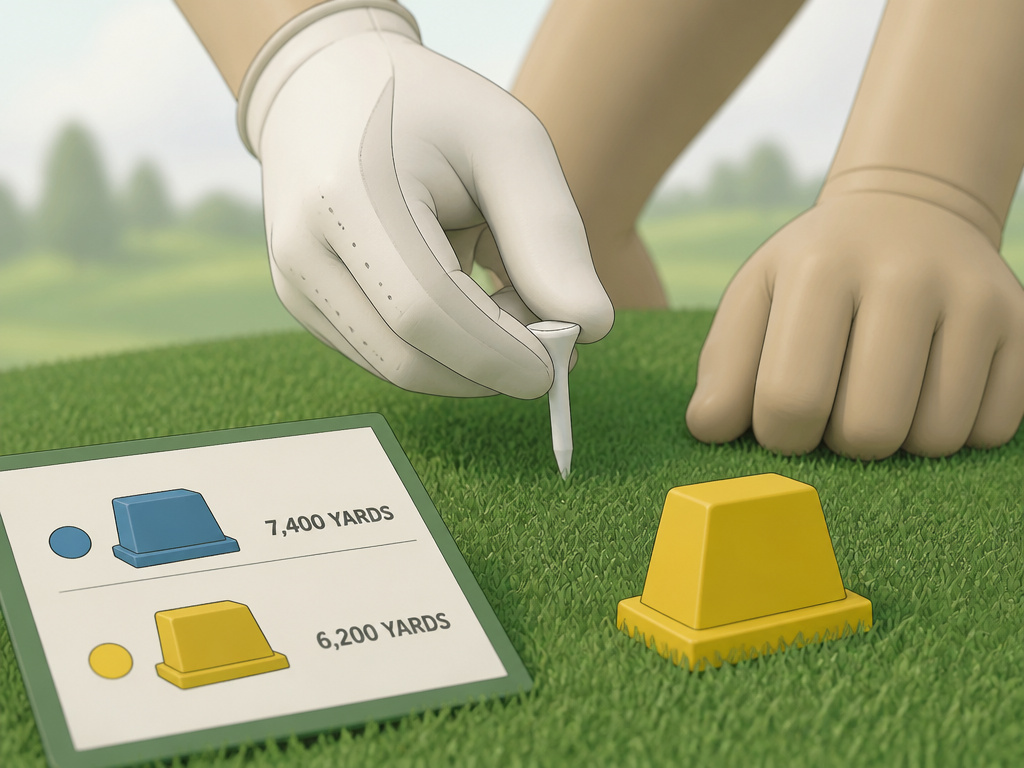
Absolutely. This is one of golf’s great democratic features. Most championship courses have multiple tee boxes, allowing them to scale the challenge. The “championship tees” might stretch to 7,400 yards, but the “member tees” could be a very playable 6,200 yards.
The mistake amateurs make is ego-teeing it. They see the scorecard from the tips and feel compelled to play back there, turning a round into a miserable slog. The simple fix is to choose tees based on your average driving distance, not your pride. If you can’t reach most par 4s in regulation, you’re on the wrong tees.
I learned this lesson watching all skill levels. I once worked with a client who had severe arthritis but a brilliant mind for the game. She couldn’t generate power, but she could plot her way around. We adapted her strategy, focusing on the forward tees and her impeccable short game. She started scoring better than many longer hitters because she played the course as it was presented to her, not as she thought it should be played. Good golf should feel less complicated the more you understand it.
Playing a historic layout like Pebble Beach or St. Andrews Old Course from the appropriate tees is a bucket-list experience. You walk the same fairways, navigate the same iconic hazards, and confront the same strategic decisions as the legends, just from a shorter starting point. That connection to history is priceless.
Frequently Asked Questions
What is the minimum length for a championship golf course?
There is no official minimum. A 1948 article called the then-common standard of 6,500 yards a “fallacy.” True championship caliber is determined by the distribution and variety of challenging holes, not total yardage. Some classic championship courses, like the 6,400-yard Calgary Country Club, have hosted national amateur events.
What is the difference between a championship course and a links course?
Links course is a specific type of design built on sandy, coastal land with few trees, firm turf, and natural dunes. A championship course** is a designation of quality and test. Many championship courses are links (e.g., St. Andrews, Carnoustie), but not all links courses are of championship caliber, and not all championship courses are links (e.g., Augusta National).
What does TPC stand for?
TPC stands for Tournament Players Club. It is a network of golf courses operated by the PGA Tour, most of which are designed and maintained to host professional tour events. A TPC course is, by its founding purpose, a championship-caliber facility.
Do all championship courses have high Slope ratings?
Generally, yes. The Slope Rating measures relative difficulty for a bogey golfer compared to a scratch golfer. A course that presents a full test to a professional will typically have a high Slope (often 135+ from the back tees). However, a high Slope alone doesn’t make a course a true championship test, the design must be strategically sound.
How much land is needed for a championship course?
An 18-hole championship course typically requires 150 to 200 acres. This allows for wide, strategic corridors, varied hole lengths, practice facilities, and the natural movement of land that defines great course architecture. Tight, cramped sites struggle to deliver the necessary variety.
The Bottom Line
A championship golf course isn’t a checkbox for length. It’s a philosophy of design and a standard of conditioning. The label carries weight only when it points to a layout that demands every club in the bag and a surface that rewards precise shot-making.
Ignore the marketing. Has the course hosted a real tournament? Does its design come from a respected era or architect? Does it prioritize firm, strategic ground over merely looking green? If the answer to those questions is yes, you’ve found the real thing. The rest is just a sign by the road.
