
What Makes St Andrews Old Course Special? The Genius Layout
This post contains affiliate links. As an Amazon Associate, we earn from qualifying purchases.
This post contains affiliate links. As an Amazon Associate, we earn from qualifying purchases.
The Old Course at St Andrews is special because it is the original strategic golf course, a 600-year-old public links where the game’s fundamental architecture was discovered, not designed. Its wide fairways, 112 named bunkers, seven double greens, and shared fairways create a puzzle that changes with every wind shift, demanding creative shot-making over brute force.
That puzzle is the whole point. The course’s genius isn’t in dramatic waterfalls or forced carries. It’s in the ground itself, the infinite jumble of depressions, mounds, and ridges that make you think your way around with every club. This is where the 18-hole standard was born, where legends have won, and where every round feels like a lesson in the game’s purest form.
What follows is a breakdown of the history that shaped it, the specific features that challenge even the best, and the strategic principles that make a round here unlike any other. By the end, you’ll see why this stretch of common land is golf’s sacred ground.
Key Takeaways
- The course’s strategic design, perfected by Old Tom Morris between 1864-1900, rewards thoughtful positioning over long driving, creating multiple routes for players of all skill levels.
- Its seven massive double greens, some over 100 yards wide, and eight shared fairways are a direct result of its historical evolution from a 22-hole out-and-back track.
- With 112 deep, revetted pot bunkers, each with a name and a purpose, the penalty for a misplaced shot is a lost stroke, not just a bad lie.
- First impressions are often wrong; the course’s apparent visual simplicity hides a deep, cerebral challenge that greats like Bobby Jones and Tiger Woods learned to love over time.
- Playing the Old Course is an exercise in adaptation, where firm turf and shifting winds turn the same hole into a completely different test from one day to the next.
The 600-Year Evolution from Sheep Path to Blueprint
Golf wasn’t invented on the Old Course. It was discovered there. The land was declared common ground in 1123, and for centuries, the game evolved naturally on this strip of links land between the town and the sea. Early players simply hit a ball over the existing dunes and sandy hollows worn by sheep seeking shelter. There was no architect, only adaptation.
The first major formalization came in 1764 when the Society of St Andrews Golfers (which later became The R&A) reduced the layout from 22 holes to 18, setting the sport’s enduring standard. For the next century, the course was a narrow, shared track where players went out on the right and came back on the left, playing to the same holes.
The critical transformation happened between 1848 and 1900. Allan Robertson first widened the double fairways. Then, Old Tom Morris, returning as Keeper of the Green in 1864, spent decades burning off gorse, building new greens like the 18th, and sculpting the vast, shared putting surfaces we see today. By 1900, the modern Old Course was essentially complete.
This timeline matters because it explains the course’s unique features. The double greens and shared fairways weren’t an artistic choice; they were a logistical solution to handle more golfers without chaos. This organic, problem-solving origin is why the strategic design feels so innate. The hazards are exactly where players are most likely to err, a principle modern architects still study.
The Unfair First Impressions That Turn to Love
Many golfers, even legendary ones, have hated the Old Course on sight. Sam Snead thought it was an abandoned field. Curtis Strange said it looked like the moon. The landscape is almost treeless, with blind shots, hidden bunkers, and a bewildering tangle of humps and hollows. It feels underwhelming, even unfair.
That reaction is the course’s first test. The architect Alister Mackenzie had a blunt reply to critics: they either “have not brains enough or have not played it long enough to appreciate its many virtues.” The initial frustration comes from expecting a penal design, where water and trees visibly punish mistakes. The Old Course is the birthplace of strategic design, where the punishment is subtle and the reward for smart play is a better angle.
Where this goes sideways: Judging the course by its first look. The bunkers you can’t see from the tee are there for a reason, often for a wind direction you haven’t faced yet. Writing it off as “tricked-up” means you miss the puzzle entirely.
Bobby Jones is the classic example. In 1921, he tore up his scorecard in fury after taking four shots to escape a bunker. Six years later, he won The Open here. He later said, “The more I studied the Old Course, the more I loved it.” The same journey from confusion to reverence defines the experience for pros and amateurs alike. It’s a course that reveals its secrets slowly, demanding not just skill but patience and study. This intellectual challenge is a core tenet of great golf course design.
Key Features That Define the Experience
The magic of St Andrews is in its specific, tangible elements. You can’t talk about what makes it special without naming its parts.
| Feature | The Specifics | Why It Matters |
|---|---|---|
| Double Greens | 7 total. The 5th/13th green is over 37,000 sq ft; the 7th/11th is 112 yards wide. | Creates vast, complex putting surfaces. It’s possible to be on the right green but 100 feet from the correct hole, turning approach shots and putting into a severe test of judgment. |
| Shared Fairways | 8 total. The 1st/18th fairway is 129 yards wide—the widest in golf. | Eliminates rough as a primary hazard. Strategy comes from choosing the optimal side of the fairway for your next shot’s angle, not just finding short grass. |
| Pot Bunkers | 112 total, with names like Hell, Principal’s Nose, and the Coffins. | They are small, deep, and have revetted (vertical) sod walls. A shot in one almost always costs a full stroke, as you must often play out sideways. Precision is paramount. |
| The Loop (Holes 7-11) | A compact, crisscrossing stretch by the Eden Estuary featuring the par-3 8th and 11th. | It’s the course’s scoring opportunity. The holes are shorter but intricately woven, requiring careful navigation as players cross paths. |
| The Closing Holes | The Road Hole (17th) and the 18th under the R&A clubhouse windows. | One of golf’s toughest finishes. The 17th demands a blind tee shot over the Old Course Hotel and a approach to a green guarded by the infamous Road Bunker. |
The Swilcan Bridge on the 18th hole is more than a photo op. It’s a literal link to the past, a stone crossing that has witnessed every champion and amateur for centuries. Walking over it feels less like a tourist move and more like a ritual.
Strategic Design vs. Everything Else
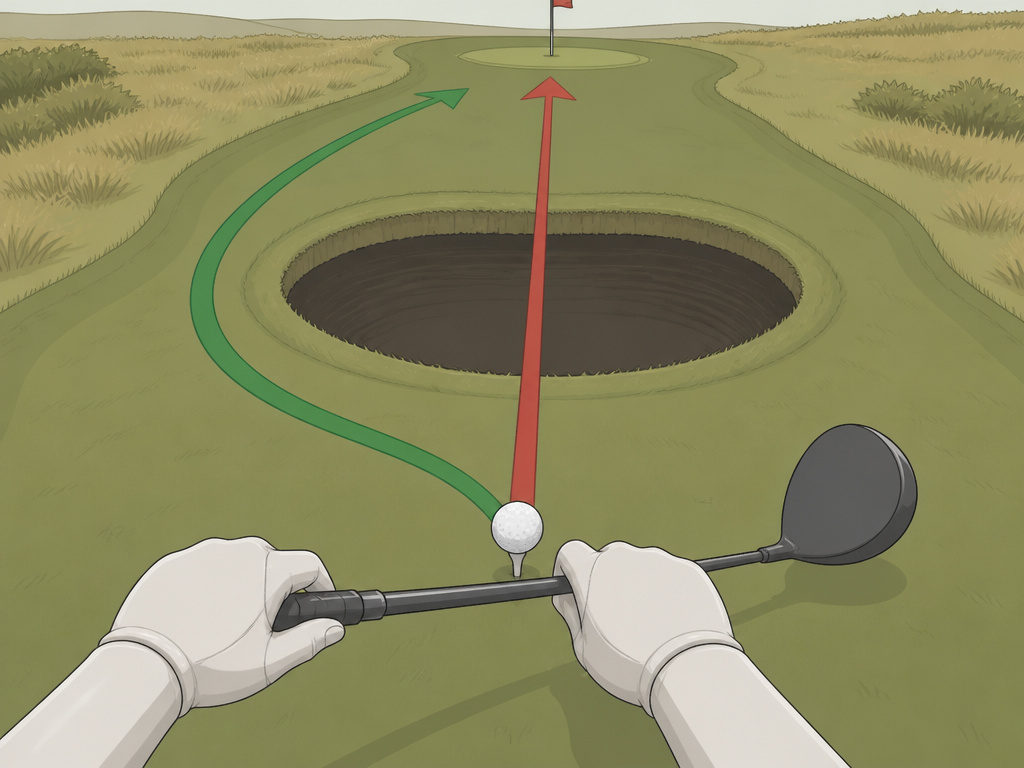 Most modern courses are penal. Hit it here, you’re in water. Miss there, you’re in trees. The Old Course is the world’s premier example of strategic design. The fairways are enormous, but the bunkers are placed at the precise landing zones where your next shot gains the best angle to the pin. It gives you options, each with a different risk/reward calculus.
- The safe route: Play away from trouble. You’ll have a longer, more awkward approach, but you avoid disaster.
- The aggressive route: Challenge the hazard. A successful shot leaves a simple wedge or putt.
- The creative route: Use the ground. A low runner that skirts a bunker can be better than a high shot that flies over it.
This is the essence of golf course architecture as defined here. As Harry Colt noted, the pleasure comes from avoiding small hazards through clever positioning. The course is a two-way street, it was originally played clockwise and counter-clockwise, so the bunkering works for multiple angles, explaining why some are hidden from today’s standard tee shot.
I learned this the hard way in my own game. I was once convinced that perfect execution was about a static, textbook move. The Old Course teaches that great golf is dynamic. Your strategy off the 5th tee changes completely if the wind switches from the east to the west. It’s an athletic, thinking person’s game. Good golf should feel less complicated the more you understand it, and this course is the ultimate teacher of that principle.
The design principles on display are why every architect makes the pilgrimage. They aren’t copying the double greens; they’re learning how to offer players meaningful choices. This philosophy, born from the Golden Age of design, makes the course endlessly replayable. You’ll never have the same round twice.
How to Actually Play the Old Course (The Mindset)
 Getting a tee time is one thing. Playing it well is another. Forget your standard course management.
- Study the yardage book. The blind shots are only blind if you’re unprepared. Know where the hidden bunkers are.
- Skip this step, and you’ll find a fairway bunker you never saw by your third hole, turning a potential birdie into a sure bogey.
- Plan one hole ahead. Your target on the 3rd fairway might be the left side, because it opens up the 4th green. You’re playing a 36-hole chess game, not 18 isolated holes.
- Putt from everywhere. If you’re within 50 yards of the green and the ground is firm, a putter or a low bump-and-run is often smarter than a lofted wedge. The contours will guide the ball.
- Respect the bunkers as stroke-losers. If you see a bunker off the tee, your primary goal is to avoid it, not to get as close as possible. As Christy O’Connor Jr. Said, “You need to avoid the bunkers at St Andrews because you often can’t play out of them.”
- Embrace the weather. The course is designed for wind. A downwind hole becomes a drivable par-4; the same hole into the wind becomes a brutal three-shotter. Fight the conditions, and you’ll lose.
The sensory reality is in the turf. The fairways are firm and fast, giving a satisfying click off a well-struck iron. The wind is a constant whisper that can turn into a roar, changing the sound of your ball flight. And the bunkers have a distinct, gritty texture, getting out is about feel and fear in equal measure.
Frequently Asked Questions
How old is the Old Course at St Andrews?
Golf has been played on the links at St Andrews since at least the early 15th century, making it over 600 years old. The course as a formalized 18-hole layout dates to 1764.
Why does St Andrews have double greens?
The double greens are a historical artifact. When the course was a narrow out-and-back track, players used the same putting surfaces going out and coming in. As the course widened, these huge shared greens remained, becoming a defining and strategic feature.
What is the most famous hole on the Old Course?
The par-4 17th, the Road Hole, is the most famous. It requires a blind tee shot over the corner of the Old Course Hotel, followed by an approach to a green protected by the treacherous Road Bunker and bounded by an actual road. It’s consistently ranked one of the hardest holes in championship golf.
Can the public play the Old Course?
Yes. The Old Course is a public course on common land, administered by the St Andrews Links Trust. While getting a tee time is competitive (often via a ballot or advance reservation), it is open to all golfers, which is a key part of its unique character and status as the home of golf.
How many times has The Open been held at St Andrews?
The Old Course has hosted The Open Championship 30 times, more than any other venue. It is on a regular rota, typically hosting the tournament every five years, most recently in 2022 for the landmark 150th Open.
What’s the best way to get a tee time?
For advance reservations, book through the St Andrews Links Trust website up to a year ahead, though these are limited. The most common method is the daily ballot, entered 48 hours before your desired play date. There is also a singles queue where solo golfers can show up early for potential same-day slots.
The Bottom Line
The Old Course at St Andrews isn’t the most beautiful or the hardest course. It’s the most important. It’s the original course, where the DNA of golf course architecture was formed through centuries of play, not on a drawing board. Its specialness isn’t a list of features; it’s the feeling it creates, a connection to every golfer who has ever puzzled over a ground shot, feared a pot bunker, or stood on the Swilcan Bridge.
Playing it changes your definition of what a great golf course is. It moves the measure from spectacle to strategy, from isolation to options. That’s why it tops every bucket list courses ranking. It’s not a museum piece. It’s a living, breathing lesson in the game, and your first round is just the beginning of understanding it.
