
America’s Most Famous Championship Courses & Their Legends
This post contains affiliate links. As an Amazon Associate, we earn from qualifying purchases.
This post contains affiliate links. As an Amazon Associate, we earn from qualifying purchases.
Famous championship courses in America are defined by three things: a relentless, repeatable challenge for the world’s best players, a documented history of hosting major tournaments, and architectural character that forces specific decisions. Length alone doesn’t make a course; precision, wind management, and nerve under pressure do. Pebble Beach, Pinehurst No. 2, Shinnecock Hills, and Hazeltine National are the standard bearers.
That architectural character is the real filter. A championship course isn’t just hard; it’s honest. It presents the same set of problems to every player, round after round, decade after decade. The challenge is baked into the land, the green complexes, and the way the wind moves across it. That’s why these layouts keep returning to the major rotation—they consistently identify the golfer with the most complete game.
What follows is a breakdown of four iconic American major venues, the specific tests they present, and the historic moments that cemented their legacies. We’ll also look at what separates a true championship course from a merely difficult one.
Key Takeaways
- Championship courses reward precision and strategy over raw power, often featuring smaller greens, penal rough, and strategic bunkering.
- A venue’s history with major governing bodies like the USGA and PGA of America is a critical credential, with some courses designated as future “anchor sites.”
- Course conditions and setup can create legendary challenges, as seen in the 2004 U.S. Open at Shinnecock Hills where miscommunication led to unplayable greens.
- Architectural restoration, like the work at Pinehurst No. 2, often aims to return a course to its original, strategic character by removing modern alterations.
- Watching a major is about understanding the specific, repeatable problems each hole presents, not just following the leaderboard.
What Makes a Course a Championship Venue?
It’s not about the slope rating or the yardage on the scorecard. A true major championship venue creates a specific, high-stakes examination that remains consistent across generations. The USGA or PGA of America doesn’t pick a course because it’s pretty; they pick it because it reliably produces a worthy champion through a identifiable set of challenges.
First, the course must have the infrastructure and space to host tens of thousands of spectators, a massive media contingent, and corporate hospitality. But the golf test itself depends on a few essential elements.
A championship course demands that players control trajectory, manage their golf ball in the wind, and execute precise approach shots to firm, well-guarded greens. It penalizes wayward play severely but rewards thoughtful strategy with realistic birdie opportunities.
The most telling sign is a course’s repeat business. Pebble Beach is an anchor site for the U.S. Open, locked in to host 10 more through 2048. Shinnecock Hills is the only course to host U.S. Opens in three different centuries. This long-term commitment from governing bodies is the ultimate stamp of approval. It signals that the championship course fundamentals are immutable.
The Agronomic Gauntlet: Specs That Separate the Pros
Forget the back tees you play. Tournament setups introduce a different layer of difficulty through precise agronomic control. The difference between a tough weekend round and a U.S. Open is measured in fractions of an inch and square feet.
Let’s look at the numbers from a recent PGA TOUR season. They reveal that the most famous courses defend themselves with precision, not just length.
| Course | Tournament Yardage | Key Defensive Spec | Tournament Impact |
|---|---|---|---|
| Pebble Beach Golf Links | 6,989 yards (Par 72) | Greens avg. 3,500 sq. Ft. (Smallest on TOUR) | Demands impeccable iron play; missing the green often means a tough up-and-down from thick Poa annua. |
| TPC Sawgrass (THE PLAYERS) | ~7,200 yards (Par 72) | Island green on the 137-yard 17th hole. | A full shot over water under pressure; the hole annually produces the highest drama and biggest score swings. |
| Shinnecock Hills | 7,440 yards (Par 70) | Fairways narrowed to ~25 yards in landing zones. | Eliminates the “bomb-and-gouge” strategy; players must hit specific sides of fairways to access pins. |
Pebble Beach is the clearest example. At under 7,000 yards, it’s one of the shortest courses on the PGA TOUR schedule. Its defense is its 3,500-square-foot Poa annua greens, cut to .125 inches. There’s no margin for error on approach shots. The 116 bunkers—third-most on tour—aren’t just for show. They’re positioned to catch the predictable bail-out miss from a tucked pin.
The part nobody mentions: This agronomic intensity is a two-way street. The 2004 U.S. Open at Shinnecock Hills infamously crossed the line. A miscommunication between the USGA setup team and the maintenance crew led to the par-3 7th green becoming so firm and fast that balls would not stop rolling. Play was temporarily suspended on Sunday morning to water the green. That incident changed how the USGA manages course preparation for every major since.
Pebble Beach Golf Links: Where the Ocean Decides
 The test at Pebble Beach is visual and visceral. Nine holes play directly along the cliffs of the Pacific Ocean, Stillwater Cove, and Carmel Bay. The wind is a club, sometimes two. The sound of waves crashing is constant. The course, designed in 1919 by Jack Neville and Douglas Grant, is a masterpiece of forced carries and terrifyingly small targets.
The most critical stretch is holes 4 through 10, plus the closing 17th and 18th. The par-3 7th is just a wedge, but it’s from a cliff-top tee to a green perched on another cliff over the beach. The 8th hole is a daring par-4 where your second shot must carry a chasm of beach and ocean to a shallow green. It’s less about perfect golf course architecture and more about guts.
I learned that on the weekend rounds where I first got hooked. Standing over a shot with a long carry over water or sand, your mind races. At Pebble, that’s every other hole. The course hasn’t changed, but your perception of risk and reward has to.
Pebble Beach became the first public course to host the U.S. Open in 1972. Its future is locked in as a U.S. Open anchor site, with championships scheduled for 2027, 2032, 2037, and 2044. It will also host the U.S. Women’s Open in 2035, 2040, and 2048. This commitment underscores its permanent place in the Open Championship rota of American major venues.
Pinehurst No. 2: The Strategic Restoration
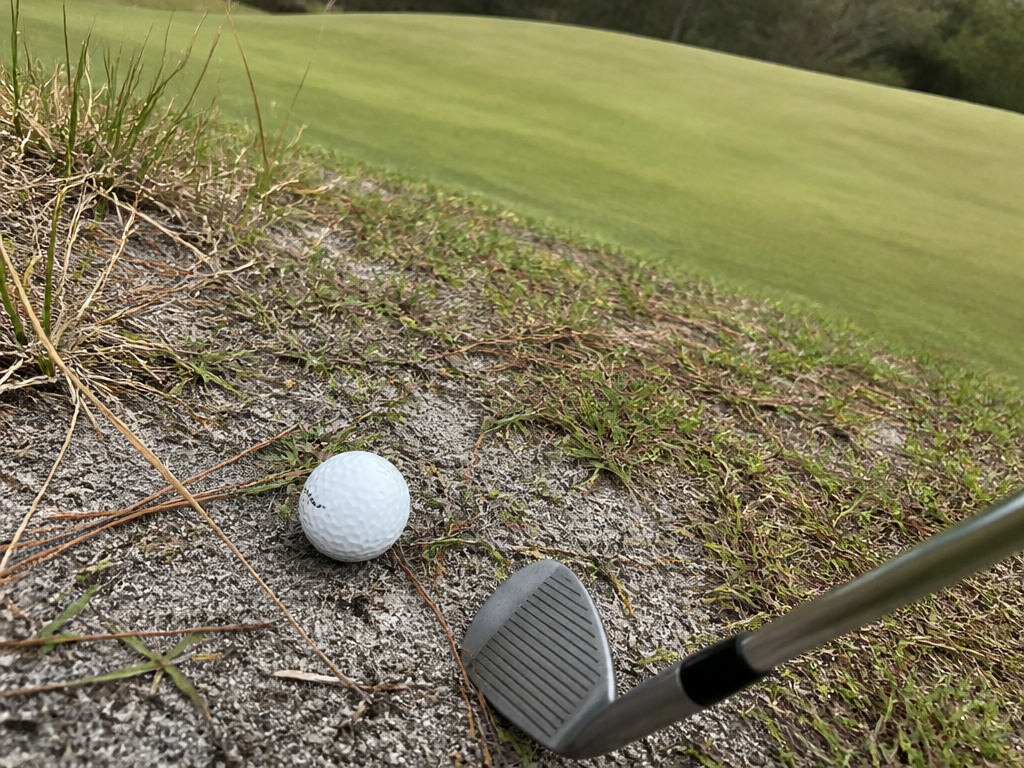 Pinehurst No. 2, Donald Ross’s masterpiece, presents a different kind of terror: endless options and brutal consequences. Its famous “turtleback” greens are crowned, sloping off on all sides into tight lies in sandy, native wiregrass. A shot that misses the green by five yards can result in a nearly impossible chip. This demands that players think about every approach shot in three dimensions—where to land it, and how it will release.
The course’s modern character is the result of a deliberate restoration. In 2010, a team led by Bill Coore and Ben Crenshaw stripped away Bermudagrass rough planted in the 1970s. They replaced it with the original landscape: hardpan sand, wiregrass, and pine needles. They also reduced irrigation to single rows in the fairways. The goal was to bring back the ground game, forcing players to invent shots and use slopes. It worked.
Where this goes sideways: The temptation is to fire at every pin. On Pinehurst’s greens, a shot that lands on the wrong tier can leave a 60-foot putt with three feet of break. The winning score at the 2024 U.S. Open was under par, but the mental fatigue on players was visible by Sunday afternoon. The course, ranked #32 on Golf Digest’s 100 Greatest list, hosts more single golf championships than any other in America because its strategic course design principles never go out of style.
Shinnecock Hills: The Ultimate Test
Shinnecock Hills Golf Club is the old master. Founded in 1891, it’s the oldest incorporated golf club in America and a founding member of the USGA. It’s the only venue to host U.S. Opens in three centuries (1896, 1986, 1995, 2004, 2018, 2026). Its greatness comes from a perfect, windswept piece of Long Island land and a design that has been meticulously preserved.
The course is a par 70 stretched to 7,440 yards, but its defense is the wind and the rugged, natural rough. Tree removal over the last 25 years has opened up the property, restoring the original heathland character intended by architect William S. Flynn. The greens are massive, averaging 7,400 square feet, but they are wildly contoured. The 11th hole, a 157-yard par-3 called “Hill Head,” has the smallest green at 4,280 square feet and plays straight uphill into the wind. Lee Trevino once called it “the shortest par 5 in golf.”
The PGA Championship and other majors reward power. Shinnecock rewards patience and exquisite control. Corey Pavin, one of the shortest hitters on tour, won there in 1995 with a legendary 4-wood into the 18th green. The course’s history, including the 2004 setup controversy, is a core part of its legacy of The Open Championship in the United States. It doesn’t just test golf shots; it tests composure.
Hazeltine National: The Modern Major Machine
Hazeltine National Golf Club, outside Minneapolis, represents the modern championship blueprint. Founded in 1962 with the explicit mission to host major championships, its record is unmatched in consistency. It has hosted men’s and women’s U.S. Opens, men’s and women’s PGA Championships, two U.S. Amateurs, and the Ryder Cup (with another scheduled for 2029, making it the first U.S. Venue to host the event twice).
Its design, originally by Robert Trent Jones Sr. And refined by his son Rees Jones, emphasizes strategic driving. The rough is grown to about three inches for championships, and Minnesota’s early summer weather makes it lush and penal. As PGA Director of Instruction Michael Barge noted, “You can’t play this golf course from the rough.” The closing stretch from holes 15 through 18 is considered one of the most demanding in golf, with water and wind in play on every shot.
What’s often overlooked is Hazeltine’s pioneering support for women’s golf. The first major ever contested there was the 1966 U.S. Women’s Open. This long-standing commitment is a key part of its identity as a top-tier course. For the 2026 KPMG Women’s PGA Championship, the course was set up at approximately 6,600 to 6,700 yards, proving that a great championship venue tests precision and decision-making for all players, regardless of driving distance.
Beyond the Big Four: Other Iconic Tests
America’s roster of famous championship courses runs deep. Each offers a unique flavor of major-championship pressure.
- TPC Sawgrass (THE PLAYERS Stadium Course): Home of The Players Championship, it’s famous for the island-green 17th hole. The course was the first designed specifically for spectator viewing, creating a stadium-like atmosphere. It’s a balanced test where every part of your game is examined.
- Oakmont Country Club: The benchmark for sheer difficulty. With 168 bunkers (including the famous “Church Pews”) and lightning-fast greens, Oakmont has hosted more USGA championships than any other site. It’s where pars are great scores and patience evaporates.
- Augusta National Golf Club: Home of the Masters, it’s in a category of its own. Its conditioning is perfect, its traditions are sacred, and its back nine on Sunday creates the most dramatic theater in golf. It’s less about brutal punishment and more about executing perfect shots under immense pressure.
Choosing which major venue is “best” is impossible. It depends on what kind of test you appreciate most. Do you prefer the visual intimidation of Pebble, the strategic puzzles of Pinehurst, the raw, windblown challenge of Shinnecock, or the modern, risk-reward design of Hazeltine? Each has produced a list of champions who mastered its particular language.
Frequently Asked Questions
What is the most famous golf course in America?
Augusta National Golf Club, home of the Masters, is arguably the most famous due to its annual television broadcast and exclusive aura. However, Pebble Beach Golf Links is the most famous public championship course, renowned for its oceanfront beauty and major championship history.
What makes Pebble Beach so special for major championships?
Pebble Beach combines breathtaking scenery with a brutally precise test. Its small, firm Poa annua greens (averaging 3,500 sq. Ft.) demand perfect iron play, and the ever-present Pacific Ocean wind affects nine holes. Its status as a U.S. Open “anchor site” guarantees its major role for decades.
How is a U.S. Open course setup different from normal play?
U.S. Open setup is defined by narrowed fairways (often to 25-30 yards), thick, lush rough grown to 3-4 inches, firm and fast greens running around 13 on the Stimpmeter, and strategically placed bunkers and hazards. The goal is to identify the most complete, patient, and accurate player.
Why is Shinnecock Hills considered such a tough U.S. Open venue?
Shinnecock Hills is a long, par-70 course (7,440 yards) built on windy, open land. Its greens are large and severely contoured, making putting and approach shots extremely difficult. Its rough is dense native grass, and its history includes some of the most challenging weather and course conditions in U.S. Open history, like in 2004.
Can the public play these famous championship courses?
Yes, but access varies. Pebble Beach, Pinehurst No. 2, and TPC Sawgrass are public-access courses, though green fees are premium and advance reservations are essential. Private clubs like Shinnecock Hills, Hazeltine National, Oakmont, and Augusta National are generally inaccessible to the public without a member invitation.
The Bottom Line
The famous championship courses in America are more than just beautiful landscapes or difficult tracks. They are preserved experiments in pressure. Each one applies a specific, timeless stress to a golfer’s game—Pebble Beach with its forced carries, Pinehurst with its chipping nightmares, Shinnecock with its wind and wild greens.
If you get a chance to watch a major at one of these venues, don’t just watch the players. Watch the course. See where the missed fairways end up. Notice how the leaders play the dangerous par-3s. The real drama isn’t in the birdie putts; it’s in the six-inch thick rough 20 yards off the fairway, waiting for a slightly pushed drive. That’s where these courses earn their fame, and where champions are truly separated.
