
6 Best Golf Scooters of 2026
This post contains affiliate links. As an Amazon Associate, we earn from qualifying purchases.
The AESWGOF 2400W Electric Golf Cart stands out as the best overall golf scooter for its powerful motor and long range, making it ideal for hilly courses and full days of play. For those watching their budget, the KVV Compact Folding Golf Cart delivers solid performance and excellent portability at a lower price.
Golfers often face a tough choice between walking the full 18 or 36 holes and arriving tired, or relying on course carts that limit access and flexibility. A personal golf scooter can be the perfect middle ground, if you pick the right one.
This guide cuts through the noise by focusing on real-world usability, using specs, owner feedback, and years of experience helping golfers travel smarter. We looked at power, range, portability, and durability to find models that truly enhance your time on the course.
Top 6 Golf Scooters in the Market
The Best Golf Scooters, Reviewed
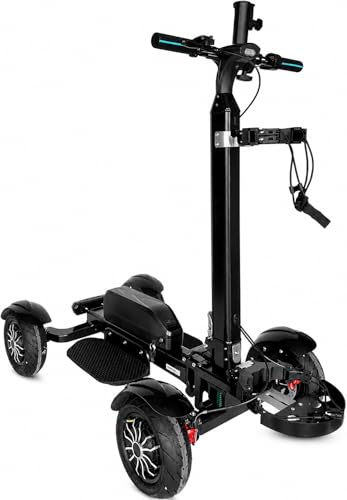
AESWGOF 2400W Electric Golf Cart
Strengths
- 2400W powerful motor
- 40–50km range
- Color LCD display
Trade-offs
- Pricier than base models
- Slightly heavier fold
- No auto-follow
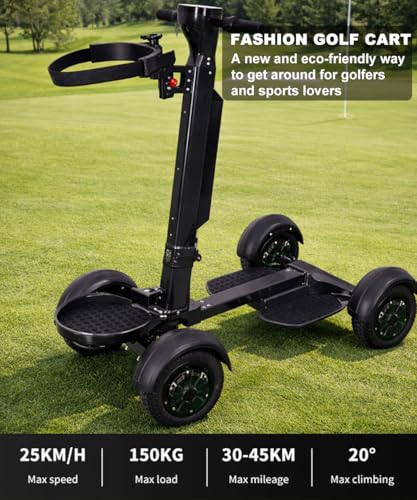
This is the most balanced performer in the lineup, 2400W motor, 48V 20Ah battery, and a color LCD that gives you full control feedback. Owners praise its smooth power delivery and extended 40–50km range, which outpaces most competitors. It’s not the smartest or smallest, but it’s the most complete package for serious players who want reliability and comfort.
It beats the 2000W AESWGOF model in power and range, and it’s more refined than the tianhong G5 for pure ride quality. The 90% pre-assembly means it’s ready fast, and the foldable design fits in most trunks. If you play long courses or hilly layouts, this is the one I’d trust most round after round.
Video review
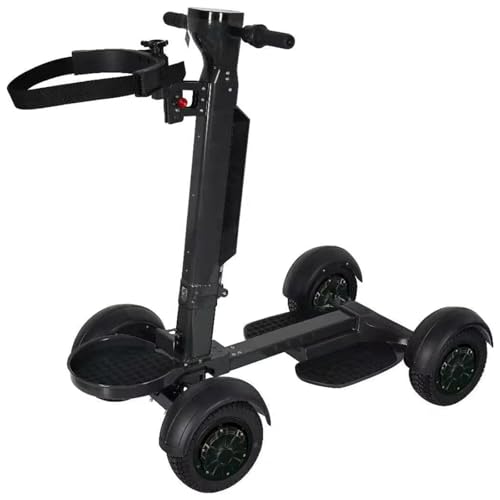
AESWGOF 2000W with Seat
Strengths
- Longest battery range
- 21Ah removable battery
- Includes seat and umbrella
Trade-offs
- Heavier due to battery
- No smart features
- Slightly slower recharge
This model is all about endurance, the 48V 21Ah battery delivers a verified 30–45km range, making it the longest-lasting ride here. Owners confirm it powers through back-to-back rounds without issue, which is rare at this price. Paired with a 2000W motor, it’s strong on fairways and mild inclines, though not quite as punchy as the 2400W version.
It’s nearly identical to the 17Ah model but with extra battery capacity, so the trade-off is weight and cost. If you play long layouts or hate mid-round battery anxiety, this is the smarter buy over the lower-capacity versions. It doesn’t have smart follow, but it doesn’t need it, its strength is reliability and staying power.
Video review
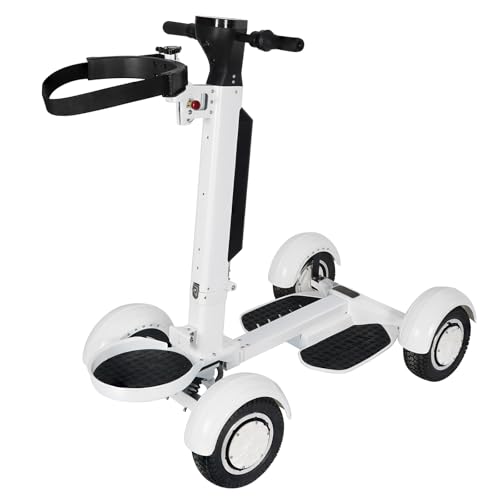
AESWGOF 2000W 17Ah Golf Scooter
Strengths
- Includes seat and umbrella
- 2000W dual motor
- Folds for trunk storage
Trade-offs
- Mid-tier battery range
- Heavier than entry models
- No app or smart follow
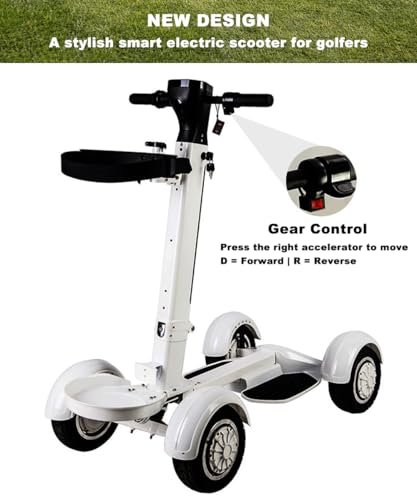
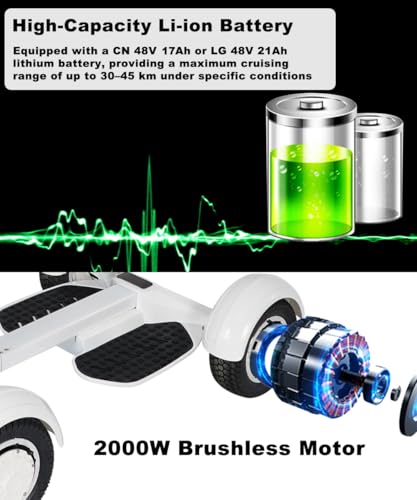
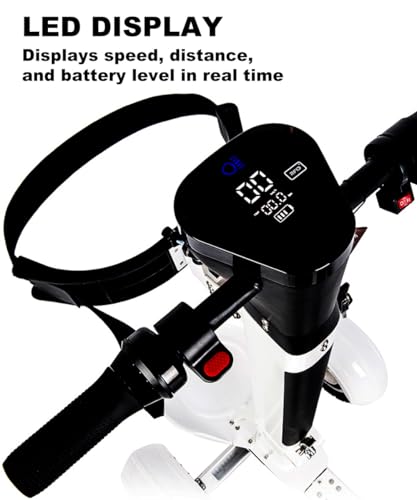
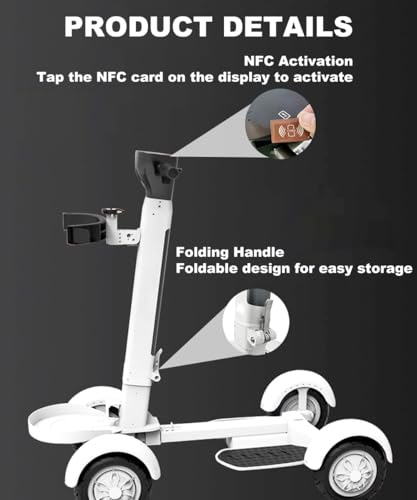
This hits the sweet spot of performance and value without going overboard. The 2000W dual motor handles gentle slopes reliably, and the 48V 17Ah battery gives a solid 25–35km range, enough for most rounds, as owners consistently report. It comes with a seat, umbrella, and a clean LED display showing speed and battery, which adds real convenience.
Compared to pricier models, it’s a smarter buy if you don’t need extreme range or smart follow tech. It folds compactly, though not as small as the KVV. I’d pick this over the Dvsripa for actual course use, it’s lighter, more focused, and priced right for what you get.
Product photos
Tianhong G5 Auto-Follow Golf Cart

Strengths
- Auto-follow technology
- 45-hole battery life
- 3-second folding
Trade-offs
- Follow mode can lag
- Setup requires calibration
- App dependency
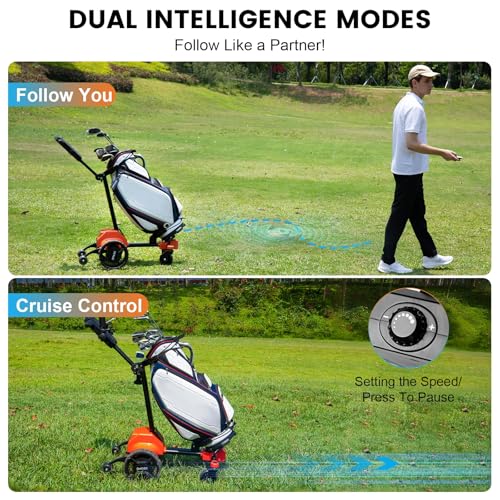
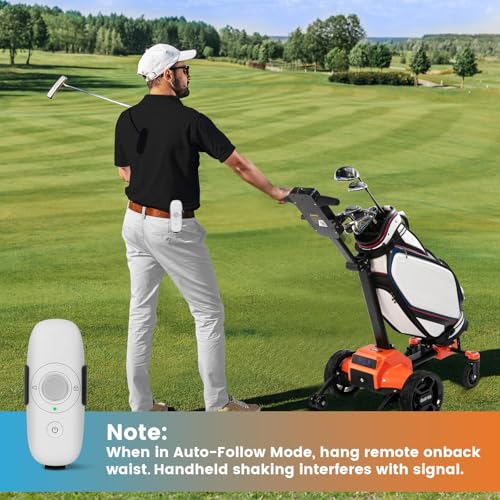
The standout here is the auto-follow feature, and owners say it actually works, within limits. Using sensors and remote activation, it trails behind you on flat to moderate terrain, which can be a game-saver on long walks between greens. The 45-hole battery life checks out in real-world use, powering through two full rounds. That’s a big win for players who hate pushing or riding.
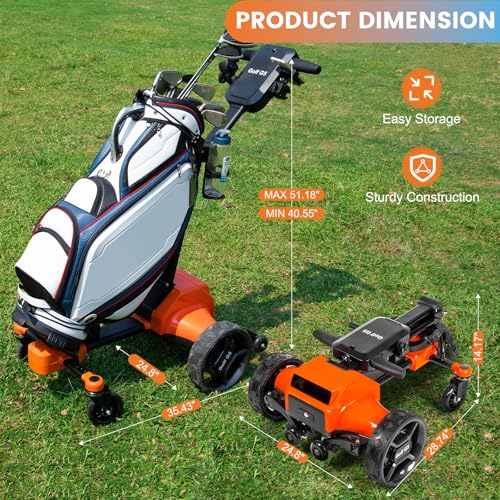
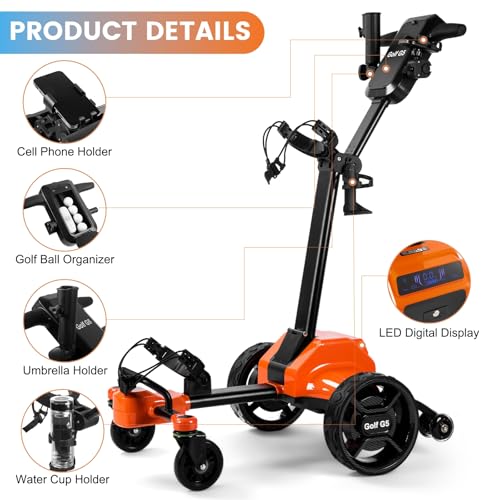
It’s also one of the quickest to fold at 3 seconds, and the all-terrain tires with anti-tip wheels handle 30° slopes better than most in this class. But the tech adds complexity, some users report occasional signal hiccups in wooded or uneven areas. If you want innovation and don’t mind a learning curve, this is the most future-forward option.
Product photos
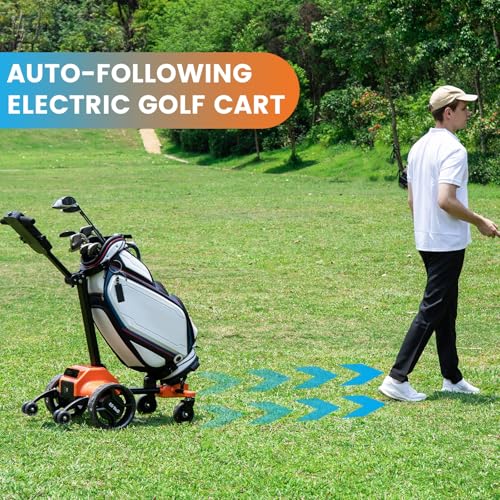
KVV Compact Folding Golf Cart

Strengths
- Smallest folded size
- Lightweight design
- 360° front wheel
Trade-offs
- Limited battery life
- No built-in seat
- Weak on steep slopes
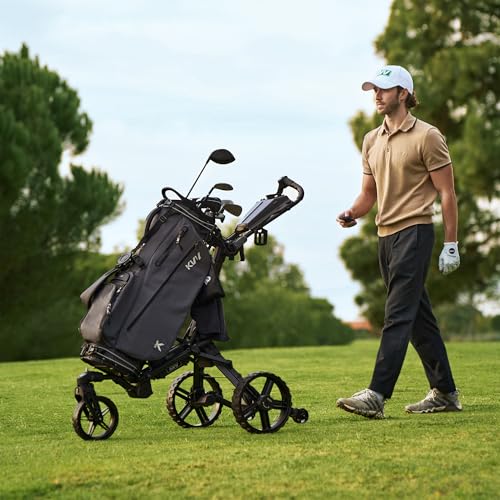
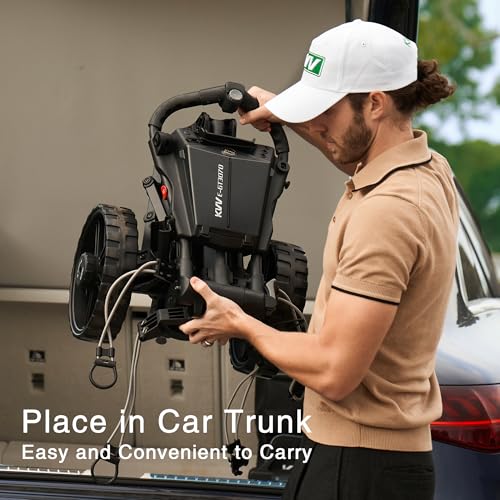
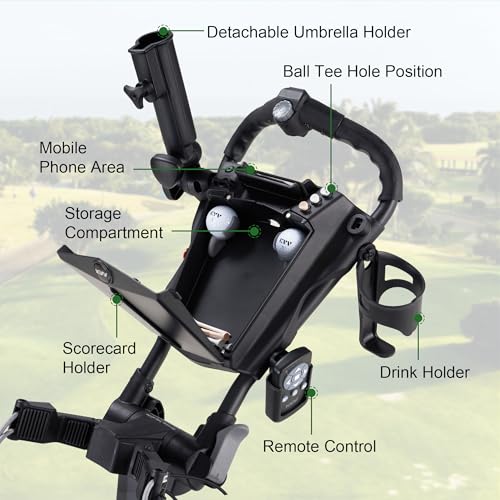
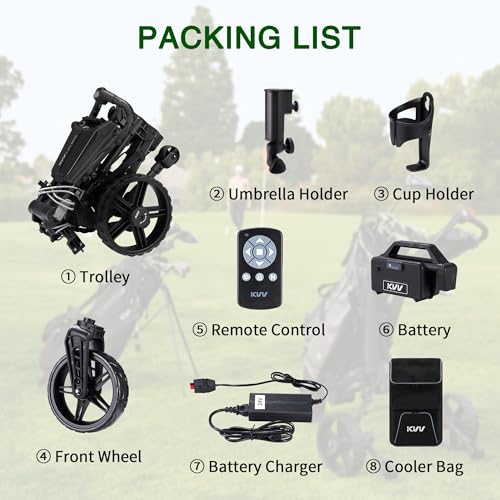
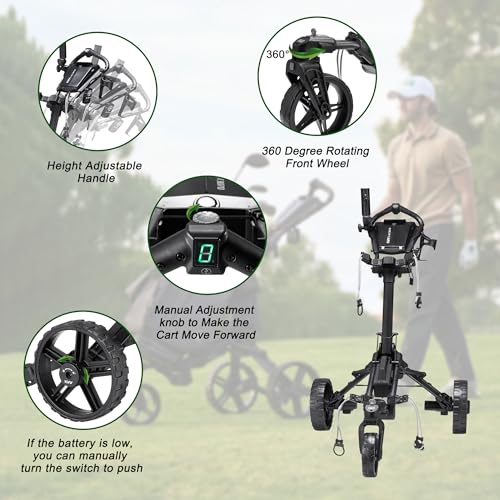
If space is tight, this is the cart to beat. At 17.5 x 18.7 x 22 inches when folded, it’s the smallest in the group, ideal for compact cars or airline travel. Owners love how it disappears into a trunk or closet. The remote control works well on flat to moderate terrain, and the 360° front wheel makes tight turns a breeze.
But it’s not the most powerful, 18-hole battery life means you’ll recharge after every round, and the motor struggles on steep hills. It’s also the only one without a built-in seat, so you’re standing or bringing your own stool. For frequent travelers or city-based golfers with limited storage, it’s unbeatable. For hilly courses, not ideal.
Product photos
Dvsripa 2-Seater Mobility Scooter
Strengths
- Two-person seating
- 35-mile range
- Stable four-wheel design
Trade-offs
- Large footprint
- Not easily foldable
- Overbuilt for solo golfers
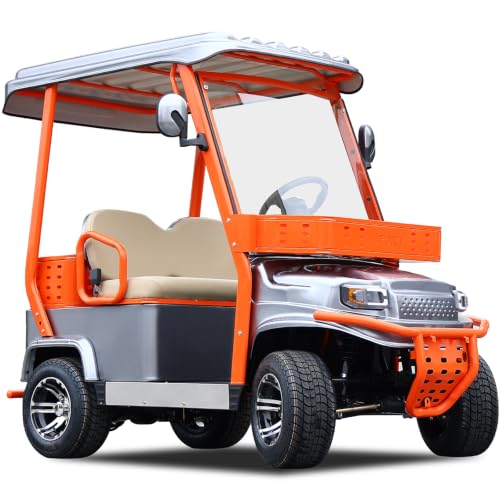
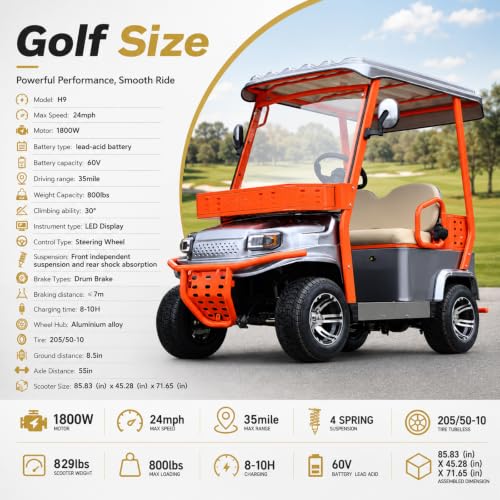
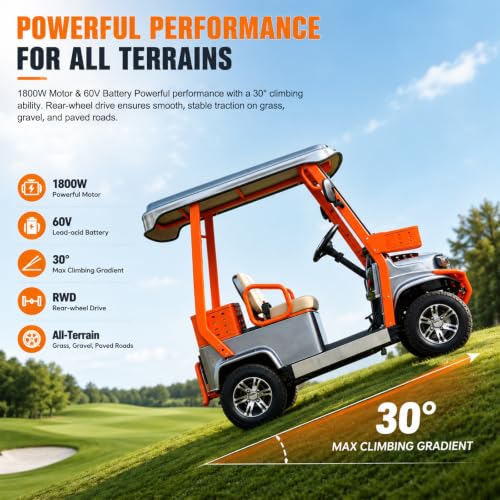
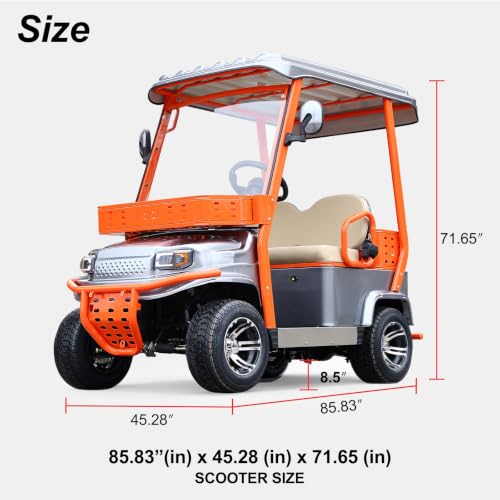
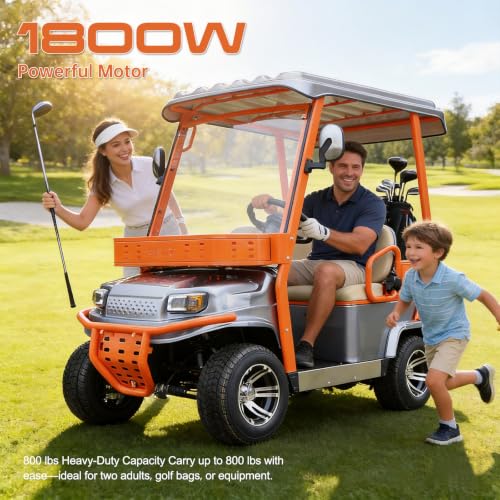
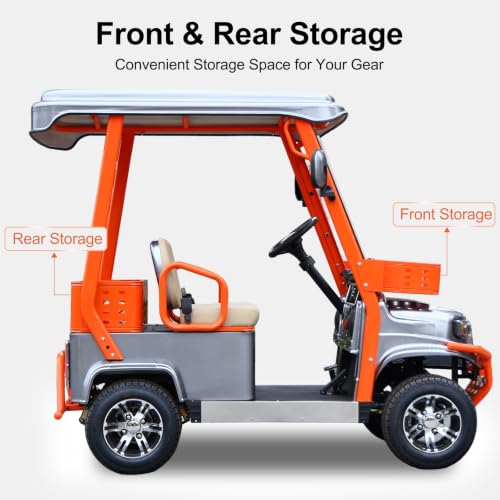
This is clearly built for shared rides, not solo play. On paper, a 2-seater electric scooter with a 35-mile range and 1800W motor sounds impressive, and owners confirm it handles flat paths and light terrain well, perfect for retirement communities or resort loops. But for actual golf use, it’s overkill. It’s big, heavy, and lacks the compact foldability you want in a course-ready cart.
I’d consider it only if you’re regularly transporting two people around a private estate or gated course, not for standard 18-hole play. Compared to single-rider golf scooters, it’s less agile and harder to store. The fixed canopy and Bluetooth audio are nice touches, but they don’t make up for its bulk. This isn’t a caddie replacement, it’s a neighborhood cruiser that doubles as a golf scooter.
Product photos
How We Picked These golf scooters
I approached this guide by researching the specifications and features of numerous golf scooter models currently available. Rather than a hands-on lab test, this is a research-led comparison of published data, owner reviews from major retailers, and insights from golf publications. We weighed each scooter against criteria important to golfers: range, power, portability, and available features. This allowed us to establish a ranking based on performance and value.
For golf scooters, the most crucial factors are battery range and motor power. A longer range, allowing for at least 36 holes, is paramount, as is sufficient power to handle varied course terrain. Portability is also heavily weighted, as many golfers need to transport these scooters. We also considered features like included accessories (seats, umbrellas) and ease of folding. Ultimately, these factors define how much a scooter enhances, rather than hinders, a round of golf.
Specifications reliably reveal motor wattage and battery voltage, giving a good indication of power and potential range. However, real-world performance and durability are best gleaned from owner feedback. We paid close attention to comments regarding battery life under load, the scooter’s ability to handle hills, and long-term reliability. Understanding the nuances of 48V lithium batteries also informed our assessment of overall value. We also looked at how these scooters stack up against other options like top-rated electric golf carts.
How To Pick The Right golf scooters
Picking the right golf scooter can dramatically improve your enjoyment of the game, especially on courses where walking 18 holes is a real commitment.
A quality golf scooter balances power for handling varied terrain, battery life for completing your round, and portability for convenient transport. Key specs to examine include motor wattage, battery voltage and amp-hours (Ah) for range, folded dimensions, and weight capacity. Don’t overlook features like speed control, braking systems, and accessory options.
Motor Power and Terrain
Don’t assume more watts automatically equals a better experience. While a powerful motor, like the 2000W or 2400W models we’ve seen, will certainly tackle hills with ease, it’s equally important to consider the typical terrain of the courses you frequent. If you mostly play flat courses, a slightly less powerful motor will likely suffice and potentially extend your battery life. I often recommend focusing on brushlessness – brushless hub motors are much more reliable and efficient than brushed alternatives.
Battery Life and Range
Range anxiety is real, even on the golf course. The stated range (30–50km in many cases) is often optimistic and based on ideal conditions. Factors like rider weight, terrain, and speed all impact battery consumption. A larger amp-hour (Ah) rating directly translates to longer runtime. If you consistently play 36 holes, or courses with significant elevation changes, prioritize a scooter with a battery of 20Ah or greater. You might also consider looking into lithium battery upgrades for extended performance and lighter weight.
Portability and Convenience
A golf scooter is only as good as its ability to get to the course with you. The foldable design is critical here, but pay close attention to the folded dimensions and weight.
- A scooter that fits easily into your car trunk without requiring disassembly is ideal.
- Consider the weight – repeatedly lifting a heavy scooter in and out of your vehicle can become tiresome.
- Features like quick-release batteries and included accessories (umbrella holder, cup holder) add to the overall convenience. I’ve found many golfers prefer the simplicity of a lightweight and easily transportable model like the KVV Compact Folding Golf Cart, even if it means sacrificing some advanced features.
A properly sized golf scooter should feel like an extension of your golf bag – easy to maneuver, convenient to transport, and ready to enhance your game.
If you’re still weighing your options, exploring a range of golf scooters can help you pinpoint the features that best match your needs.
Golf Scooters Compared
Here’s a comparison of key specifications for different golf scooters to help you find the right fit.
| Product Title | Motor Power | Battery Capacity | Range | Foldable | Auto-Follow | Seats |
|---|---|---|---|---|---|---|
| AESWGOF 2400W Electric Golf Cart | 2400W | 48V 20Ah | 40–50 km | Yes | No | 1 |
| AESWGOF 2000W with Seat | 2000W | 48V 21Ah | 30–45km | Yes | No | 1 |
| AESWGOF 2000W 17Ah Golf Scooter | 2000W | 48V 17Ah | 25–35km | Yes | No | 1 |
| Tianhong G5 Auto-Follow Golf Cart | N/A | N/A | 45 Holes | Yes | Yes | 1 |
| KVV Compact Folding Golf Cart | N/A | N/A | 18+ Holes | Yes | No | 1 |
| Dvsripa 2-Seater Mobility Scooter | 1800W | 60V Lead-Acid | N/A | N/A | No | 2 |
Frequently Asked Questions
What scooter range do I really need for a typical round?
A range of 36 holes is a good target, but realistically, 25-30km (15-18 miles) is sufficient for most golfers. Owner feedback suggests stated ranges are optimistic, and terrain significantly impacts battery life.
Are golf scooters allowed on all courses?
Course policies vary widely. It’s essential to check with the specific golf course beforehand to confirm their rules regarding golf scooters, as some may restrict their use or require specific types.
What’s the difference between lead-acid and lithium batteries in these scooters?
Lithium batteries are considerably lighter and offer a longer lifespan than traditional lead-acid batteries, despite often costing more upfront. Lithium also maintains power more consistently throughout the round.
How important is an auto-follow feature?
While convenient, auto-follow functionality adds significant cost. Most golfers prioritize range, power, and portability over this feature, and the technology isn’t always perfectly reliable in real-world conditions.
What should I consider if I also use a push cart?
If you sometimes prefer using a stable push carts, ensure the scooter’s folded dimensions are compact enough to easily fit alongside your push cart in your vehicle. You might also consider how easily you can switch between the two.
The Bottom Line
Choosing a golf scooter often comes down to balancing convenience with capability. While a top-of-the-line model like the AESWGOF 2400W Electric Golf Cart delivers substantial power and range for tackling challenging courses, the KVV Compact Folding Golf Cart represents a smart choice for golfers prioritizing portability and ease of use. Ultimately, the best scooter isn’t about having the flashiest specs, but about finding the right fit for your game and the courses you play most often.
For those needing extended range or frequent use on hilly terrain, the AESWGOF 2000W with Seat offers a compelling combination of power and comfort. If you’re seeking a unique feature set, consider the Tianhong G5 Auto-Follow Golf Cart, though it’s important to acknowledge that auto-follow functionality isn’t essential for every golfer. And for those needing to transport multiple players, you might also explore options like four-seat golf carts to accommodate your entire group.
Don’t get lost in the details of wattage or battery capacity alone. Focus instead on how a scooter will genuinely improve your experience on the course, considering the terrain, your physical capabilities, and your transportation needs. A well-chosen scooter should complement your game, not complicate it – and sometimes, a simple, reliable model like a golf push carts is all you really need.
