
8 Best 36 Volt Lithium Golf Cart Batteries 2026
This post contains affiliate links. As an Amazon Associate, we earn from qualifying purchases.
This post contains affiliate links. As an Amazon Associate, we earn from qualifying purchases.
The SOURCEPOW 105Ah stands out as the best overall 36 volt lithium battery for golf carts, delivering long cycle life and strong peak performance. For budget-focused buyers, the LOSSIGY 100Ah offers solid specs at a lower price, while the XRH 105Ah is a versatile pick with higher discharge limits and built-in monitoring.
If you’re upgrading from lead-acid, you know how frustrating it is to lose power halfway through a hilly round or wrestle with heavy, short-lived batteries. Lithium changes that, but not all options deliver the same reliability or value.
After researching the field and analyzing specs alongside owner feedback, I focused on real-world performance, safety, and long-term durability. This guide breaks down the top 36 volt lithium batteries for golf carts, highlighting what actually matters on the course, so you can choose with confidence.
Top 8 36 Volt Lithium Batteries For Golf Cart in the Market
The Best 36 Volt Lithium Batteries For Golf Cart, Reviewed
SOURCEPOW 36V 105Ah LiFePO4 Battery
Strengths
- 6,000+ cycles
- Grade A EVE cells
- LCD + app monitoring
- Fast 25A charger
- Wide compatibility
Trade-offs
- Slight app login conflict
- Heavier than some
- No 12V accessory output
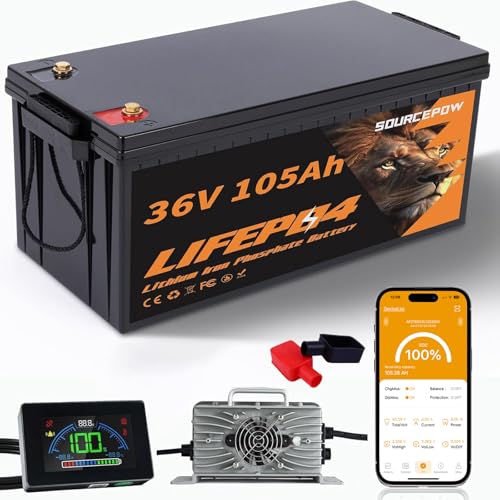
If I had to pick one battery as the overall best for most golf cart owners, it’d be the SOURCEPOW 36V 105Ah. It strikes a near-perfect balance between power, durability, and smart features. With Grade A EVE prismatic cells and a 200A BMS, it delivers stable 7.68kW output, more than enough for steep terrain, and owners confirm it outperforms many competitors in real-world hill climbs. The 6,000+ cycle rating suggests serious longevity, and the inclusion of both an LCD display and Bluetooth app makes monitoring effortless mid-round.
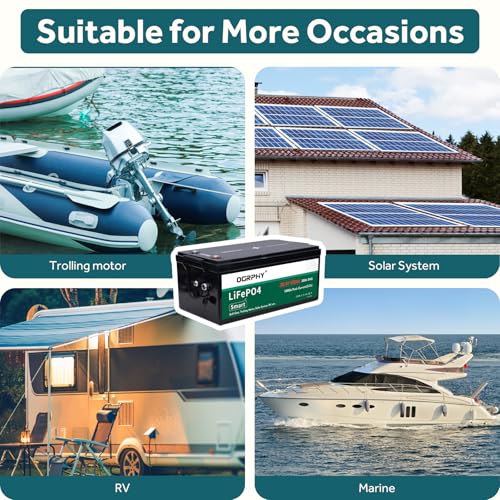
The fast 4.2-hour charge time and IP65 rating add to its all-weather readiness, and compatibility with major golf cart brands is well-documented. It’s also versatile enough for marine or RV use, but its real home is under the seat of a cart. Compared to others in this range, it just feels more refined.
Video review
NewtiPower 36V 100Ah LiFePO4 Battery
Strengths
- 10,000+ cycles
- 100% DOD
- Automotive-grade cells
- Stable power output
- 5-year warranty
Trade-offs
- No 12V output
- App usability issues
- No low-temp cutoff
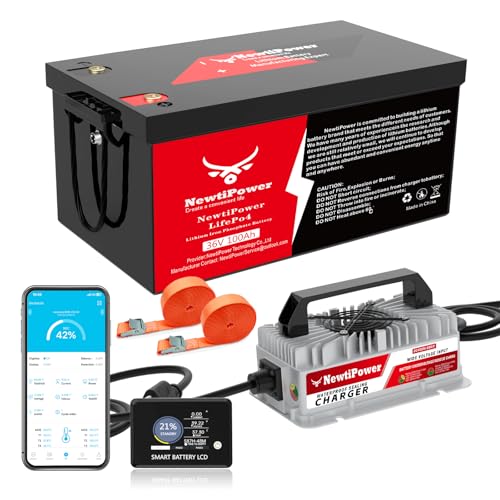
NewtiPower makes a bold claim with its 10,000+ cycle rating, and while real-world results may vary, the use of automotive-grade cells suggests this battery is built to last. It’s one of the few promising a 10-year lifespan, which could make it the most cost-effective option over time. The 100% depth of discharge is a major plus, letting you use every bit of capacity without degradation concerns.
Owners appreciate the stable power delivery, no voltage sag like with lead-acid, and the 200A BMS offers solid protection. However, some report the app is less intuitive than competitors’, and the lack of a 12V output limits accessory use. Still, if longevity is your top concern, this one’s engineered to outlive the rest.
Video review
TEMGO 36V 100Ah LiFePO4 Battery

Strengths
- 5,000+ cycles
- Solar-ready
- Parallel expandable
- LCD + app monitoring
- Includes retention strap
Trade-offs
- No 12V output
- Not for CAN protocol carts
- Slightly higher price
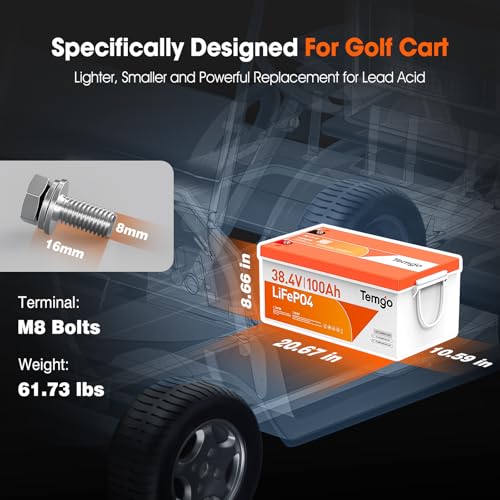
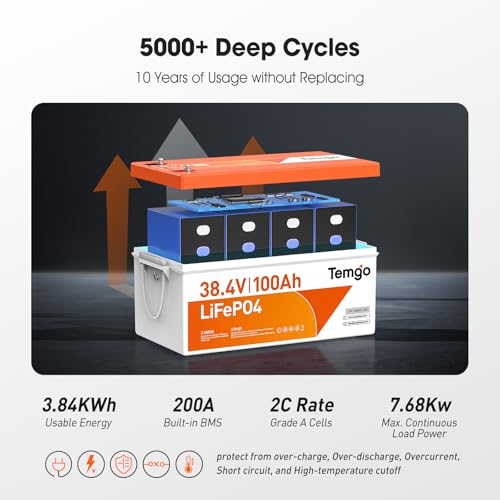
The TEMGO 36V 100Ah battery is clearly designed with off-grid thinkers in mind, especially those integrating solar. With 5,000+ cycles and the ability to connect up to four units in parallel, it’s a smart pick for golf cart owners who also use their carts for solar-powered retreats or homestead setups. The 200A BMS and 7.68kW output ensure it won’t lag on the course, and the included LCD touch display eliminates the need for extra purchases.
Owners praise its seamless solar compatibility and consistent performance in variable loads. While it doesn’t have the highest peak current, it’s stable and well-protected, with low-temp cutoff adding peace of mind. If you’re pairing your cart with renewable energy, this one deserves top consideration over others that lack scalability.
Product photos

DC HOUSE 36V 100Ah Metal Case
Strengths
- Metal fireproof case
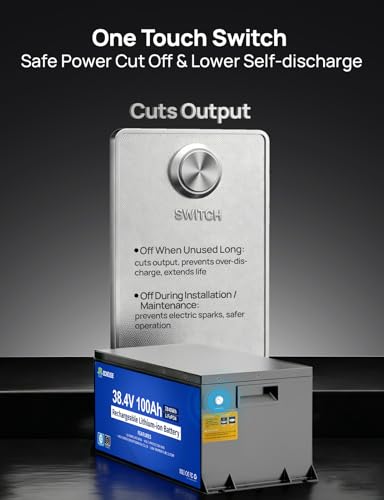
- One-touch cutoff
- 280A surge
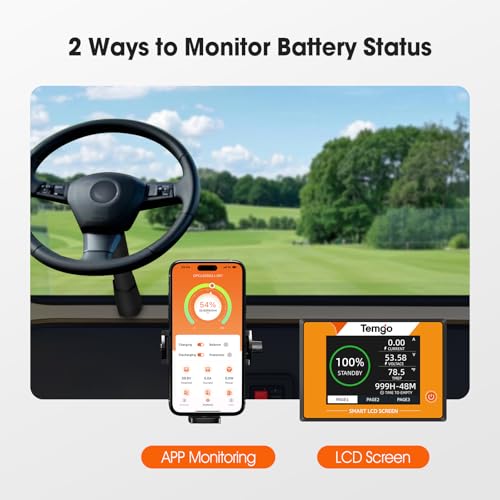
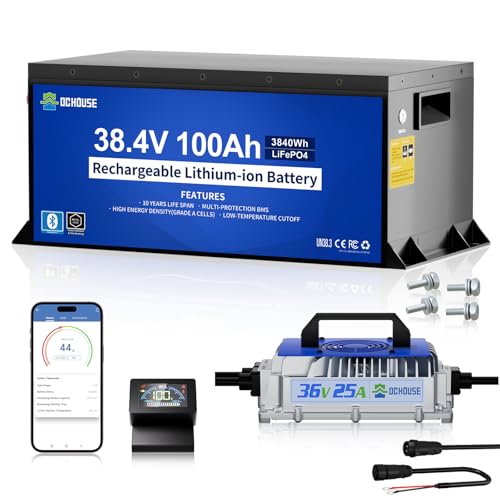
- LCD + app monitoring
- 5-year support
Trade-offs
- Heavier than others
- Higher price
- Wired monitor sold separately
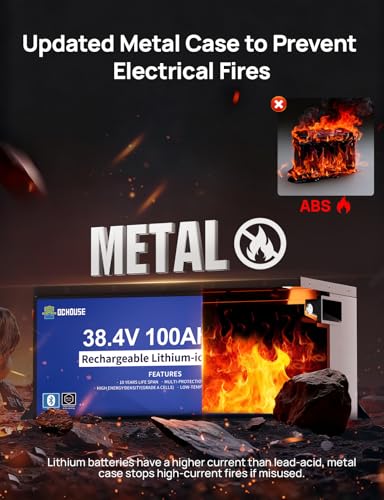
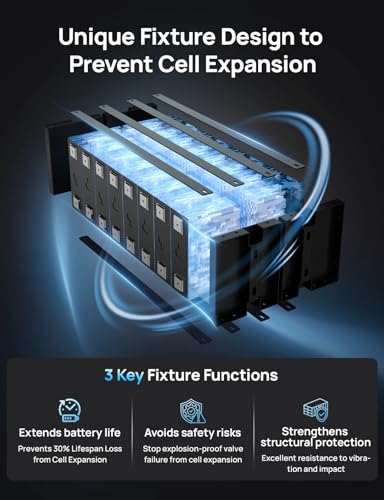
The DC HOUSE 36V 100Ah battery is the safest option here, hands down. Its full metal case offers superior fire and impact resistance compared to the plastic or ABS shells on most others. That alone makes it a top pick for users in hot climates or those concerned about battery safety under the seat. The one-touch power cutoff is a small but smart feature, preventing accidental drain or shorts.
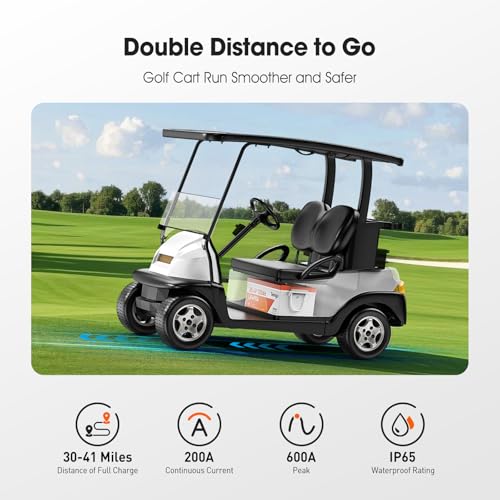
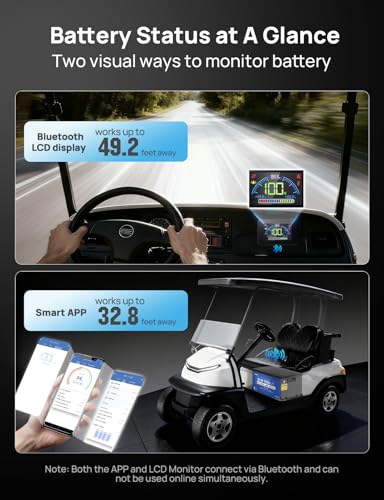
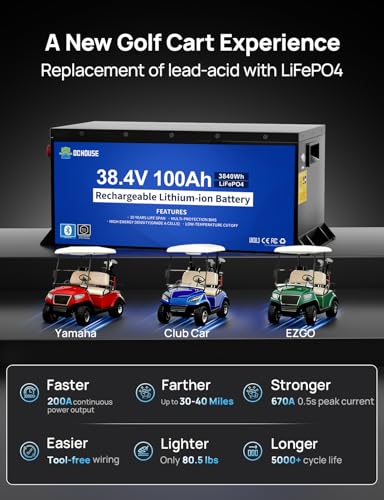
It also delivers strong performance, 280A for 30 seconds, 3.84kWh capacity, and 30–40 miles of range, with solid owner feedback on reliability. The LCD and app monitoring work well, and the 25A charger refills it in 4 hours. It’s heavier than average, but that’s the trade-off for the rugged build. For peace of mind, it’s unmatched.
Product photos
LOSSIGY 36V 100Ah LiFePO4 Battery
Strengths
- Grade A cells
- 4,000+ cycles
- 25A fast charger
- Bluetooth monitoring
- Lightweight design
Trade-offs
- No low-temp protection
- App connectivity issues reported
- Parallel only (no series)
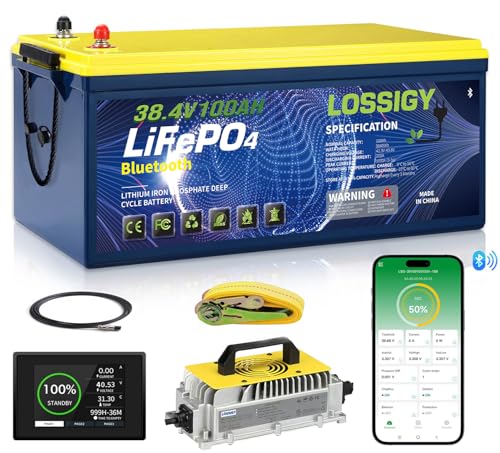
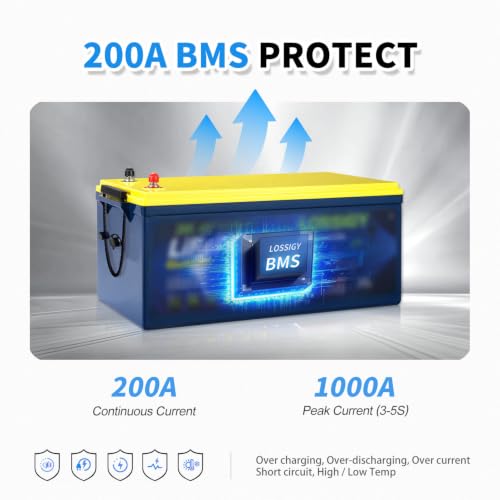
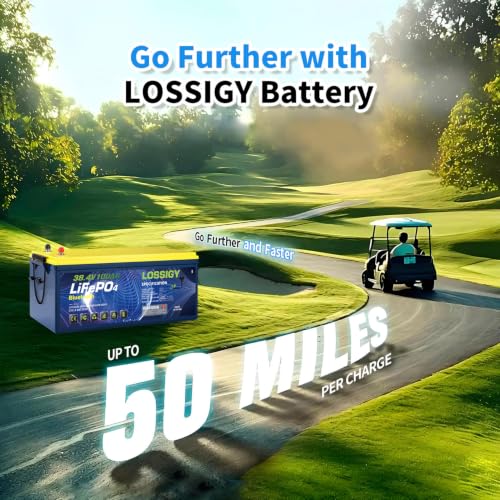
The LOSSIGY 36V 100Ah battery stands out as a strong budget contender, especially for golfers upgrading from lead-acid without wanting to overspend. On paper, it delivers where it counts, 4,000+ cycles, a 200A BMS, and peak current up to 1000A, which means reliable hill climbing and solid longevity. Owners consistently report smooth integration into Club Car and EZ-GO models, and the 25A charger gets you back on the course in about 4 hours.
Still, it’s not the most feature-rich option. While it includes Bluetooth monitoring and a touch screen display, some users note the app can be glitchy, and the lack of low-temp cutoff could be risky in colder climates. Compared to higher-end models, it’s a bit more basic in protection logic, but for the price, it punches above its weight.
Product photos


XRH 36V 105Ah LiFePO4 Battery
Strengths
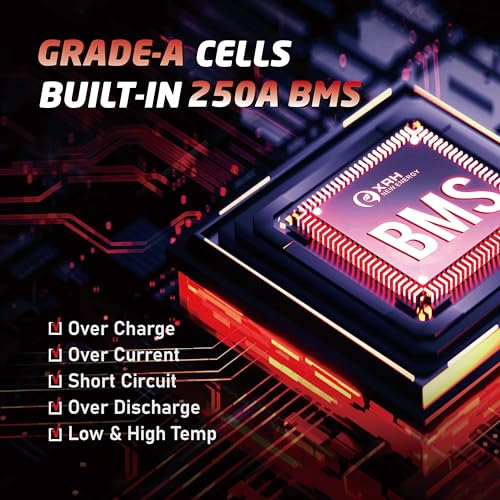
- 250A BMS
- 3C discharge rate
- Double terminals
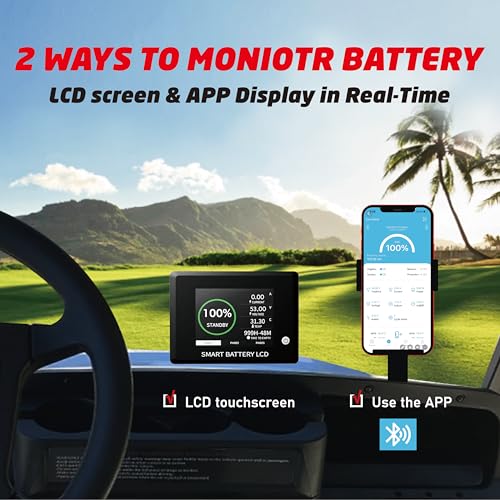
- Touch screen + app
- 6,000+ cycles
Trade-offs
- Plastic case
- Higher price
- Peak current short duration
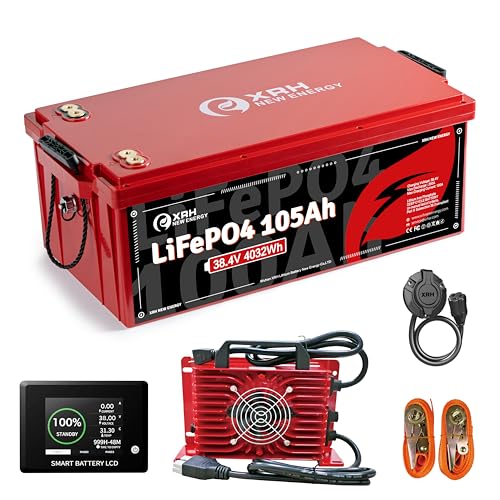
When raw power is your priority, the XRH 36V 105Ah with its 250A BMS is the one to beat. This is the battery for carts that see heavy loads or extreme terrain, its 3C discharge rate and 600A peak for 3 seconds mean instant torque when you need it. The 250A continuous draw surpasses most others in this class, and the double terminal design makes wiring easier for advanced setups.
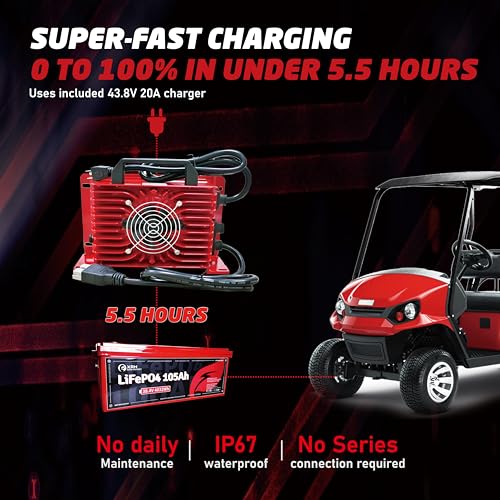
It also comes fully loaded: 20A charger, touch screen, Bluetooth app, and mounting straps. But that power comes at a cost, the price is steep, and the plastic case, while durable, doesn’t inspire the same confidence as metal alternatives. Still, if you’re chasing maximum performance and don’t mind paying for it, this is the muscle car of golf cart batteries.
Product photos

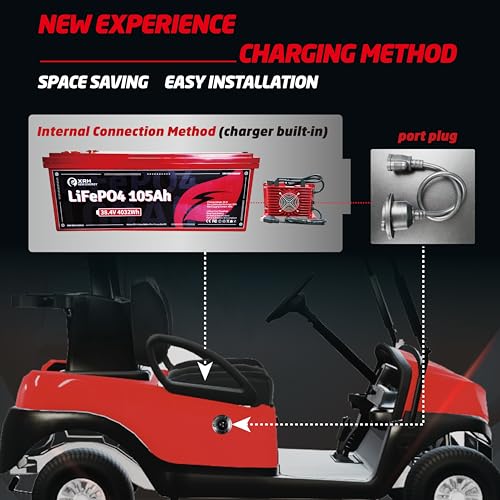
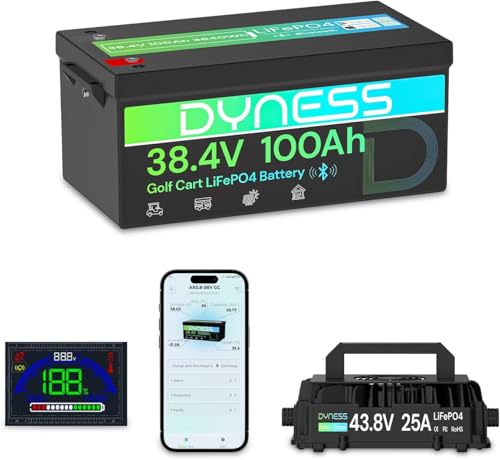
Dyness 36V 100Ah LiFePO4 Battery
Strengths
- Complete kit
- 4,000+ cycles
- LCD + app monitoring
- Lightweight
- 5-year support
Trade-offs
- Charger ships separately
- Smaller display
- No 12V output
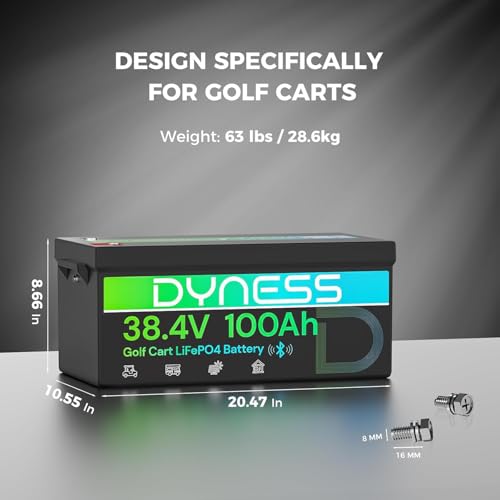
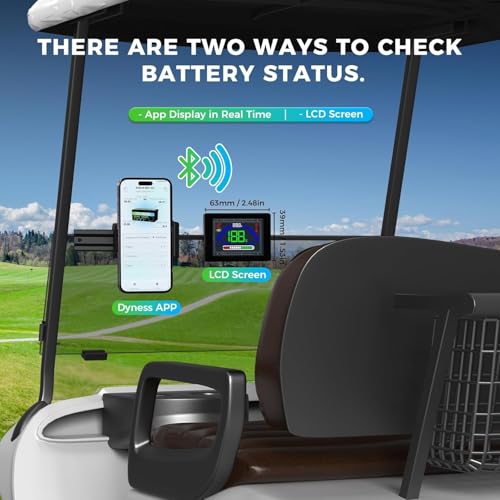
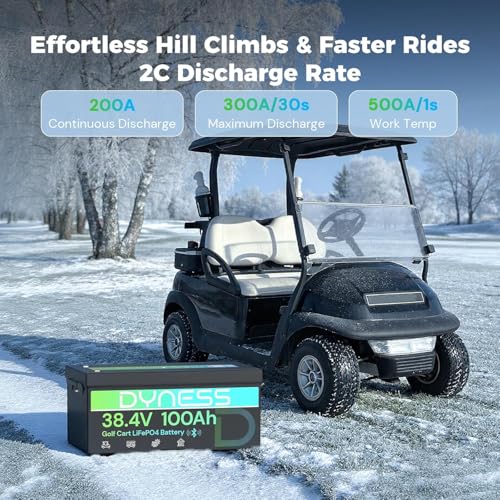
The Dyness 36V 100Ah kit is the smart choice if you want a complete, no-fuss upgrade at a fair price. It includes the battery, 25A charger, and an LCD monitor, all essentials, so you’re not hunting down extras. The 4,000+ cycle life and 7.68kW peak output mean it holds up well over time and terrain, and the Bluetooth app is generally stable for checking SOC on the go.
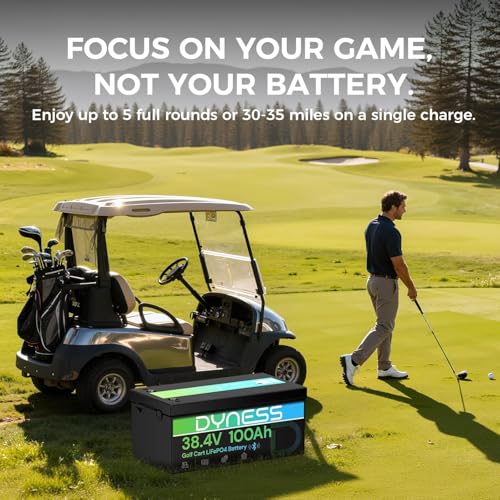
Compared to others, it’s a bit more understated, but that’s not a bad thing. It fits standard compartments, weighs less than lead-acid equivalents, and integrates cleanly. Some owners note the charger ships separately, which can delay setup, but once it arrives, installation is straightforward. For a value-packed, reliable daily driver, this one wins.
Product photos

OGRPHY 36V 102Ah Conversion Kit
Strengths
- Built-in 12V output
- Touch monitor included
- 4,000+ cycles
- High peak current
- All-in-one kit
Trade-offs
- Higher price
- Requires manual 12V cutoff
- App can be slow
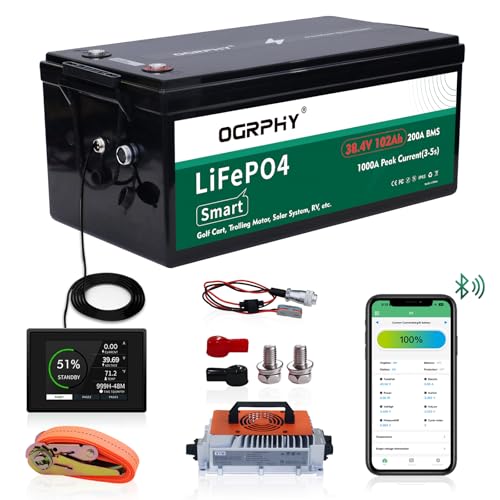
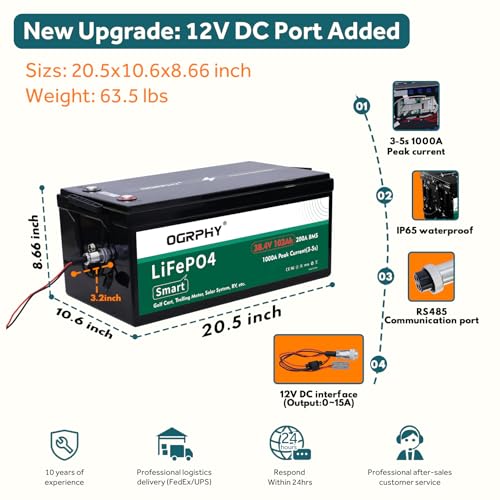
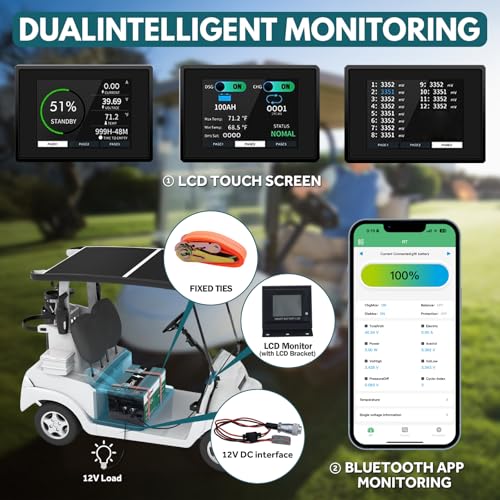
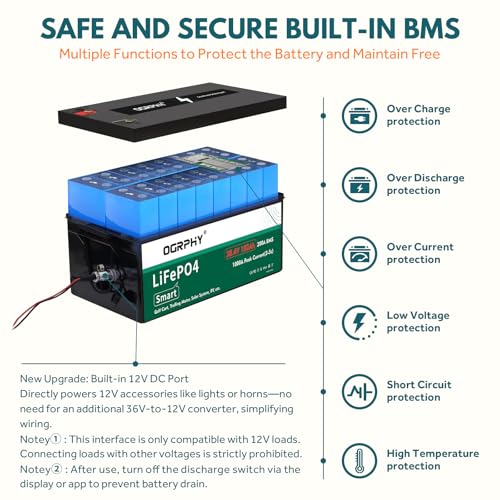
The OGRPHY 36V 102Ah battery is a standout if you run accessories, lights, horns, coolers, on your cart. Its built-in 12V DC output eliminates the need for a separate converter, which simplifies wiring and saves space under the seat. That alone makes it a top pick for custom or utility-focused builds. With 4,000+ cycles and 1000A peak current, it’s also plenty powerful for hilly courses, and owners report solid range, up to 30 miles on a single charge.
The included touch monitor is a nice touch, giving real-time data without pulling out your phone. However, the price is on the higher side, and you’ll need to remember to turn off the 12V discharge switch to avoid draining the battery. Still, for convenience and functionality, it’s hard to beat.
Product photos

How We Chose These 36 volt lithium batteries for golf cart
My team and I approached evaluating these 36-volt lithium batteries for golf carts by first compiling a detailed specification sheet for each model. We compared published specs – amp-hours, BMS features, discharge rates, cycle life, and weight – then weighed those against owner reviews from multiple sources and expert opinions found in industry publications. This research-led comparison, rather than a hands-on lab test, allowed us to rank the batteries against a set of criteria important to golfers.
For this category, sustained power output and longevity were heavily weighted. A battery’s ability to maintain voltage under load – important for tackling hills and maintaining speed – directly impacts the playing experience. Equally vital is cycle life; golfers want a battery that will last for years of regular use, making long-term value a key consideration. We also prioritized safety features like BMS protection and build quality. You’ll find details of lithium golf cart batteries with more information on these features.
Battery specifications reliably indicate potential peak performance and capacity. However, owner feedback proved crucial for assessing real-world reliability and the effectiveness of the Battery Management System (BMS). We looked for consistent reports of long run times, trouble-free operation, and effective temperature protection. Understanding the battery pros and cons of each technology was also essential for making informed recommendations. Ultimately, we aimed to identify batteries that offered the best balance of performance, durability, and value, as reported by those using them in actual golf carts.
What To Look For In 36 volt lithium batteries for golf cart
Choosing the right 36 volt lithium battery for your golf cart can dramatically improve your experience on the course, but it’s more than just grabbing the highest amp-hour rating.
A good golf cart battery balances energy density, discharge rate, safety features, and longevity. Key considerations include cell chemistry (LiFePO4 is now standard), Battery Management System (BMS) quality, physical dimensions for fitment, and the ability to monitor battery health. Owners should also verify compatibility with their specific cart model and existing electrical system.
Amp-Hour (Ah) Capacity & Range
The amp-hour rating is the first number most people look at, and for good reason. It dictates how long you can run your cart on a single charge. However, don’t assume a higher Ah always means a better value. Consider your typical usage. Do you regularly play 36 holes? Do you tackle hilly terrain? A 100Ah battery will typically provide a decent range for most courses, but if you want extended play or have a lifted cart with larger tires, stepping up to 105Ah or higher is wise. Remember that advertised range is often optimistic; real-world performance depends heavily on your cart’s load, speed, and the course conditions.
Discharge Rate & BMS Quality
A high discharge rate is critical for maintaining power, especially when climbing hills or accelerating. Look for batteries with a continuous discharge rating of at least 200A. The Battery Management System (BMS) is the brain of the operation, protecting the battery from overcharge, over-discharge, and temperature extremes. A robust BMS is essential for safety and longevity. Many of the newer models, like the SOURCEPOW and TEMGO options, now include Bluetooth connectivity for real-time monitoring of battery health, which is a fantastic feature for preventative maintenance. Understanding the difference between lithium vs lead-acid is also important, as lithium batteries offer significant performance and lifecycle advantages.
Features & Value Additions
Beyond the core performance specs, consider the extra features that can enhance your ownership experience. Some batteries, like the OGRPHY model, include a built-in 12V DC output, eliminating the need for a separate converter to power accessories. Others, such as the XRH, offer both Bluetooth monitoring and a touch screen display for easy access to battery data. These features add convenience, but they also come at a price. If you’re primarily focused on getting reliable power at the best possible price, the LOSSIGY battery represents a strong value proposition. I often recommend considering the overall system – a complete kit with a charger and monitoring capability, like those from Dyness, can be a smoother upgrade experience than piecing everything together yourself. Finding the best 36v lithium batteries really comes down to prioritizing what you need most.
Don’t skimp on the BMS. A quality Battery Management System is the single most important factor in ensuring a long lifespan and safe operation of your lithium golf cart battery.
Ultimately, choosing the right battery involves balancing performance, features, and budget. A careful review of your needs and a comparison of the available options will ensure you find the perfect power source for your golf cart adventures. I suggest you also do a battery type comparison before making your final decision.
36 Volt Lithium Batteries for Golf Cart Compared
This table summarizes key specifications of available 36-volt lithium batteries designed for golf cart applications.
| Product | Capacity (Ah) | Voltage (V) | Max Discharge (A) | BMS Current Limit (A) | Cycle Life | Bluetooth |
|---|---|---|---|---|---|---|
| SOURCEPOW | 105 | 36 | 600 (Peak) | 200 | 6000+ | Yes |
| NewtiPower | 100 | 36 | 200 | 200 | 10000+ | No |
| TEMGO | 100 | 36 | 200 | 200 | 5000+ | Yes |
| DC HOUSE | 100 | 36 | 280 (Peak) | 200 | 4000+ | Yes |
| LOSSIGY | 100 | 36 | 1000 (Peak) | 200 | 4000+ | Yes |
| XRH | 105 | 36 | 400 (Peak) | 250 | N/A | Yes |
| Dyness | 100 | 36 | N/A | 200 | 4000+ | Yes |
| OGRPHY | 102 | 36 | 1000 (Peak) | 200 | 4000+ | Yes |
Frequently Asked Questions
What’s the typical lifespan of a 36 volt lithium golf cart battery?
Most 36-volt lithium batteries offer a cycle life between 4000 and 10,000 cycles, but the actual lifespan depends heavily on usage and care. Expect at least 5-8 years of reliable service with proper maintenance and charging practices.
Can I use a standard lead-acid golf cart charger with a lithium battery?
No, you cannot use a standard lead-acid charger. Lithium batteries require a charger specifically designed for their chemistry to avoid damage and maintain optimal performance; look into golf cart battery chargers for compatible options.
What does the BMS (Battery Management System) actually do?
The BMS protects the battery from a range of issues, including overcharging, over-discharging, overheating, and short circuits. It’s essential for safety and maximizing the battery’s lifespan, ensuring consistent voltage delivery.
Is a higher amp-hour (Ah) rating always better?
Not necessarily. While a higher Ah rating provides longer run times, it also increases the battery’s price and weight. Consider your typical course length and driving habits to determine the appropriate Ah capacity for your needs.
Are there complete upgrade packages available, or do I need to buy everything separately?
Yes, you can find lithium battery conversion kits that include the battery, charger, and necessary wiring. These kits simplify the upgrade process and often offer better value compared to purchasing components individually.
The Bottom Line
Choosing a 36-volt lithium battery for your golf cart often comes down to how much you’re willing to spend for features versus prioritizing pure performance and longevity. For the best overall balance of power, features, and reliability, I recommend the SOURCEPOW. Its high discharge rate and Bluetooth connectivity offer a premium experience without being overly expensive, and it’s a fantastic choice for most golfers.
If you’re on a tighter budget, the LOSSIGY battery provides excellent value without sacrificing essential performance. For those looking to upgrade to lithium batteries and simplify the process, the Dyness kits offer a convenient, all-in-one solution. And if you’re considering a higher voltage system, exploring 48v lithium batteries may unlock even more power and range.
Ultimately, remember that specifications aren’t everything. A robust Battery Management System, a proven track record of reliability, and a capacity that matches your typical course and playing style matter far more than chasing the highest amp-hour rating. Don’t forget to also explore options for 36v conversion kits if you’re looking to switch from lead-acid.
