
How to Release the Golf Club | The 40-Degree Tour Average
This post contains affiliate links. As an Amazon Associate, we earn from qualifying purchases.
This post contains affiliate links. As an Amazon Associate, we earn from qualifying purchases.
Releasing the golf club means letting the wrists unhinge and the forearms rotate so the clubhead whips past your hands through impact. The Tour average release point, where all wrist angles are gone, is about 40 degrees in front of the ball. A proper release is a result of body-led sequencing, not an active hand throw.
Most instruction stops at “let it happen” or “rotate your forearms.” That leaves you guessing. The 40-degree benchmark from Tour data gives you a tangible checkpoint. Your job is to set up a chain reaction where your body’s turn pulls your arms, which then pulls the club into that release window naturally.
What follows breaks down that chain. You’ll see the four distinct wrist release styles science has identified, learn to diagnose whether you cast, flip, or hold off, and get three drills that force the correct feel. By the end, you’ll know exactly what to practice to make your release repeatable, not random.
Key Takeaways
- The release isn’t a hand action; it’s the last link in a sequence that starts with your lower body.
- Professional golfers release the club, on average, about 40 degrees in front of the ball, a measurable checkpoint for your follow-through.
- Scientific research identifies four distinct wrist release styles (Delayed Release 1 & 2, Early Release, Recocking), with Delayed Release styles showing more efficient sequencing.
- Casting (early release) is the most common power leak, caused by starting the downswing with your arms instead of your hips.
- The best fix for a casting habit is the step-back drill, which physically prevents your body from over-rotating and forces your hands to learn their job.
What Does “Releasing the Club” Actually Mean?
Think of your swing as a whip. Your body is the handle, your arms are the shaft, and the clubhead is the tip. The release is the moment the tip accelerates past everything else. Mechanically, it’s the combined unhinging of your wrists and the rotation of your forearms. The trail forearm rolls over the lead forearm, the wrists go from hinged to straight, and the clubface squares up through the ball.
This is a transfer of energy. When your hips initiate the downswing, they pull your torso, which pulls your arms, which finally pulls the club.The release happens when the club, as the last and lightest link, can’t keep up with the accelerating pull of your hands. It lags, stores energy, and then fires past.
A 2025 study in Sports Biomechanics analyzed the swings of 84 elite male golfers and identified four distinct on-plane wrist release styles: Delayed Release 1, Delayed Release 2, Early Release, and Recocking. The study found significant differences in sequencing and motion between these styles, proving there is more than one “correct” way to do it.
Your golf grip is the foundation for all of this. A neutral grip lets your forearms rotate freely. A grip that’s too strong or too weak forces your hands to manipulate the clubface to compensate, which usually blocks a clean release.
The Tour’s Release Benchmark: 40 Degrees In Front
You need a way to measure an abstract feel. Here it is. Analysis of Major winners’ swings shows the average point where they fully release the club, defined as when all wrist angles are gone and the club is splitting the forearms, is approximately 40 degrees in front of the ball.
This is a diagnostic tool. If your club is fully released before the ball (casting), you’ll hit weak, high shots.If you’re still hinged well past that point (holding off), you’ll hit low, blocked shots. The 40-degree mark is the sweet spot where maximum speed meets a square face.
| Release Timing | Visual Cue | Ball Flight Result |
|---|---|---|
| Early (Casting) | Clubhead passes hands before impact. | High, weak, loss of distance; often a slice. |
| On-Time (Tour Avg.) | Club splits forearms ~40° past ball. | Powerful, penetrating trajectory; straight or slight draw. |
| Late (Holding Off) | Wrists remain hinged well past impact. | Low, blocked shot; often a push or pull. |
Achieving this position is about patience in the downswing. The feeling for most amateurs is one of waiting. Your hips fire, your shoulders turn, and for a split second, it feels like your hands are doing nothing. That’s the lag being created. Then, as your arms accelerate, the club releases on its own into that 40-degree window. This is where quality golf club shafts matter, a shaft with the right flex profile helps store and release this energy efficiently.
Common Release Faults and Their Root Causes
Most bad releases stem from one error: poor sequence. The body and arms get out of sync, and the hands panic to make contact.
Casting or Early Release: This is the big one. You start the downswing by throwing the clubhead from the top with your hands and arms. Your hips and weight are still back. The club releases way too early, all the speed is spent before the ball, and you’re left scooping to get the ball airborne.
Where this goes sideways: Casting adds loft at impact. A 7-iron swings like a 9-iron, so you lose 15-20 yards instantly and hit ballooning shots that get killed by the wind.
Flipping: This is a cousin to casting, often happening later. You manage some lag, but as you approach impact, you actively scoop your hands upward to help the ball up. It’s a compensation for a poor low-point or a steep angle of attack. The clubface opens and closes violently, leading to wild inconsistency.
Holding Off or Blocking: Here, you’re afraid of releasing. You keep the clubface pointed at the target too long through impact, preventing the natural forearm rotation. It often comes from a fear of hooking. The result is a weak, stiff-armed strike where the body stops rotating, and the ball flies right.
The fix for any of these is in your feet. A proper weight shift onto your lead side early in the downswing creates the space and tilt for your arms to swing down and through.If your body stalls, your hands have no choice but to take over.
How Your Body Drives the Release (The Correct Sequence)
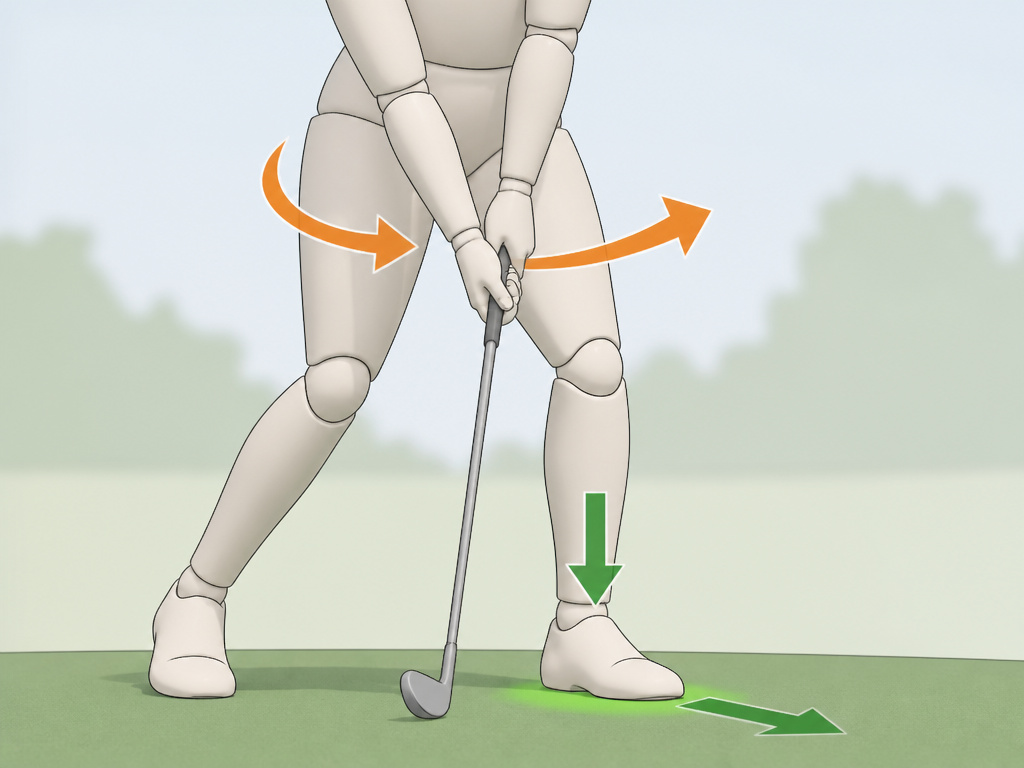
The release is an effect, not a cause. Your body’s movement is the cause. Follow this sequence to make it automatic.
- Transition from the Ground Up: Start the downswing by shifting pressure into your lead foot. Feel your lead knee drive toward the target. This moves your mass forward, creating the “room” for your arms to fall.
- Hips Rotate, Arms Drop: Let your hips begin to rotate open. This rotation pulls your torso, which pulls your shoulders. Your arms and hands should feel like they are simply responding, falling down in front of your chest. This is where lag is built.
- The Release Triggers Itself: As your rotating body continues to pull your hands forward and around, the clubhead will trail farther behind. The centripetal force will eventually overcome the tension in your wrists. They unhinge, the forearms rotate, and the club fires through.
- Full Extension to Finish: Don’t stop at the ball. A good release flows into a full finish with your chest facing the target, your weight on your lead foot, and the club wrapped around your back.
Skipping step one is the killer. If you start down with your arms, your hips have nowhere to go. They either slide or stall, and you’re stuck reverse-pivoting. All the power leaks out before you even get to the release phase. This sequence is universal, whether you’re using beginner sets or fitted intermediate sets.
Three Drills to Feel the Release
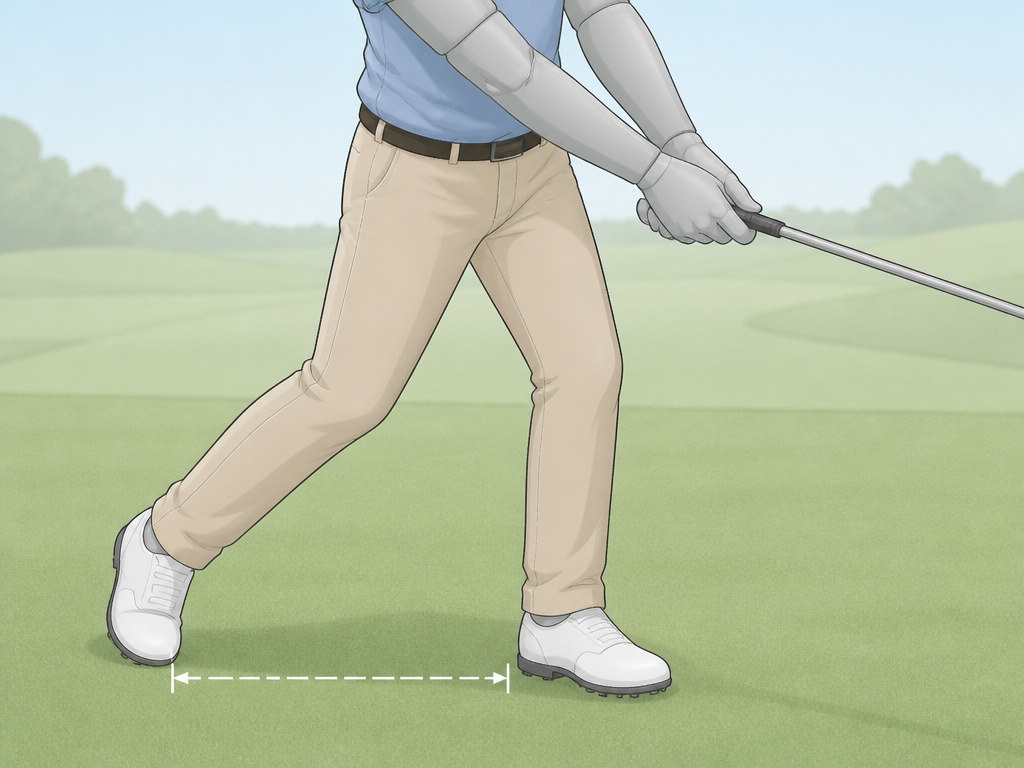
Telling your body to “sequence better” is useless. You need drills that create the correct feel through constraint.
1. The Step-Back Drill (for Casters)
This comes from PGA Pro John Jacobs. At address, pull your trail foot back about 12 inches. This closes your stance and severely restricts your hip turn. Now make swings. You’ll find it impossible to power the ball with your body. To hit it solidly, you are forced to learn how to release your hands and arms past your torso. Hit a small bucket like this. When you put your foot back to normal, the feeling of your hands passing your body will feel exaggerated and powerful.
2. The Split-Hands Drill (for Feel)
Grip the club, but separate your hands by 3-4 inches on the grip. Make slow, half-swings. The gap exaggerates the sensation of your trail forearm rolling over your lead forearm through impact. Focus on the rotation, not power. This drill wires in the muscle memory of the forearm rotation that squares the face. It also highlights if your proper grip is neutral.
3. The Swoosh Drill (for Timing)
Take a driver and hold it upside down by the clubhead. Make practice swings and listen. The “swoosh” sound is the handle moving through the air. Where is it loudest? If the swoosh peaks before the imaginary ball, you’re casting. If it’s after, you’re holding off. Your goal is to make the loudest swoosh happen right at the bottom of your swing arc. This trains you to deliver maximum speed at the exact moment of impact.
“Holding On” vs. “Letting Go” – Why Both Feels Are Correct
Golf instruction gets confusing here. One pro says “hold the angle,” another says “let it release freely.” Both are right, but for different players. This duality is a key insight from the on-plane wrist release research, which showed skilled golfers use different styles.
If you are a chronic caster who throws the club from the top, the correct feel will be one of holding on. You need to feel like you’re keeping your wrists hinged and your hands ahead of the clubhead for longer. This isn’t a true “hold”; it’s just stopping the early throw. It will feel controlled, even stiff, compared to your old motion.
If you are a player who drags the club through impact with rigid wrists and a stuck body, the correct feel will be one of letting go. You need to feel the clubhead swing past your hands freely, with softer wrists and a full follow-through. This isn’t a flip; it’s allowing the sequenced release you’ve been blocking.
One golfer’s “hold” is another golfer’s “release.” The feel you need depends entirely on the fault you’re trying to erase.
Your task is to diagnose your own pattern. Use video or a trusted eye. Are you early or late? Stiff or loose? Then choose the drill and feel that attacks your specific flaw. Tools like golf club sensors can provide objective data on your clubhead speed and release timing to guide this diagnosis.
Frequently Asked Questions
What is the most common mistake when releasing the golf club?
Casting, or early release, is the most common power leak. It happens when you start the downswing with your arms and hands, throwing the clubhead outward before your body has moved forward. This wastes all stored energy before impact, resulting in weak, high shots.
Should I actively roll my wrists through impact?
No. Active wrist rolling leads to inconsistency and flipping. The forearm rotation in a good release is a consequence of your body rotation pulling your arms through. Focus on turning your chest through the ball; your forearms and wrists will respond naturally.
How can I stop flipping my hands at the ball?
Flipping is usually a compensation for a poor low point. You’re trying to help the ball up because you’re hitting the ground first. Focus on shifting your weight to your lead side and maintaining the spine angle you had at address. Practice the step-back drill to learn the feeling of your hands leading the clubhead into impact.
Does grip strength affect the release?
Absolutely. A grip that is too strong (hands turned too far to the right for a righty) encourages a shut clubface and a hook. A grip that is too weak encourages an open face and a slice. Both force you to manipulate the release to square the face. A neutral grip is the best platform for a natural release. If your grips are worn, a regripping kits can restore the proper feel and tack.
Can you release the club too late?
Yes. This is often called “holding off” or blocking. The player keeps the clubface pointed at the target too long, preventing the natural rotation. It stems from a fear of the left side (for righties) and results in low, weak pushes. The feeling of “letting go” or using the swoosh drill can help.
The Bottom Line
Releasing the golf club is physics. Your body builds speed, your arms transfer it, and the club releases that speed into the ball.Stop trying to make it happen with your hands. Start building a swing where it has to happen because of your sequence.
Forget the abstract advice. Work with the 40-degree checkpoint, diagnose whether you cast or hold, and pick one drill, the step-back drill for casters is the single best fix, to ingrain the correct feel. A clean release is the reward for a swing that starts from the ground up. When you get that right, the power finds the ball on its own.
