
7 Best Impact Screens for Golf Simulator 2026
This post contains affiliate links. As an Amazon Associate, we earn from qualifying purchases.
This post contains affiliate links. As an Amazon Associate, we earn from qualifying purchases.
The Hliemoin 3D Air Mesh is our top pick for most golfers, offering reliable durability and solid image quality. If you’re watching your budget, the Aikeec 7mm Thickened screen delivers decent performance at a lower price. For those prioritizing noise reduction and a premium setup, the Durbles Triple Layer stands out.
Setting up a golf simulator at home should mean more practice, not more headaches. A flimsy or noisy screen can ruin your focus and frustrate everyone nearby. After researching the market and analyzing owner feedback, we focused on screens that balance impact resistance, image clarity, and noise reduction, because a great simulator experience starts with a screen that performs under real conditions.
Top 7 Impact Screens For Golf Simulator in the Market
The Best Impact Screens For Golf Simulator, Reviewed
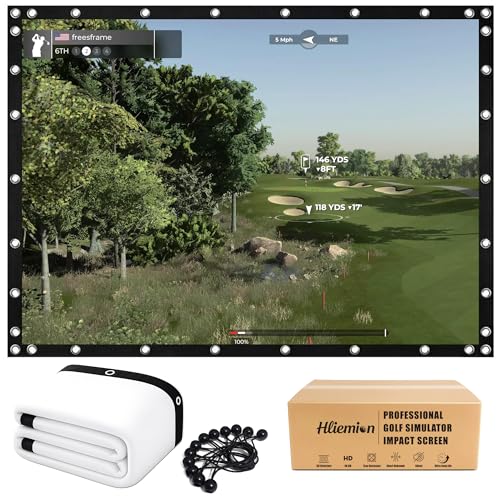
Hliemoin 3D Air Mesh Golf Impact Screen
Strengths
- Exceptional durability
- Superior noise dampening
- High-quality projection
Trade-offs
- Premium price tag
- Large size needs ample space
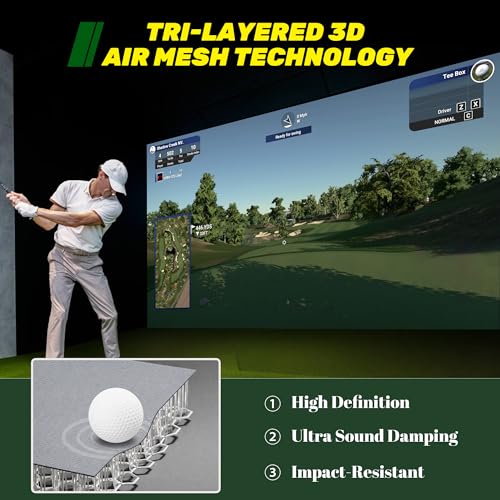
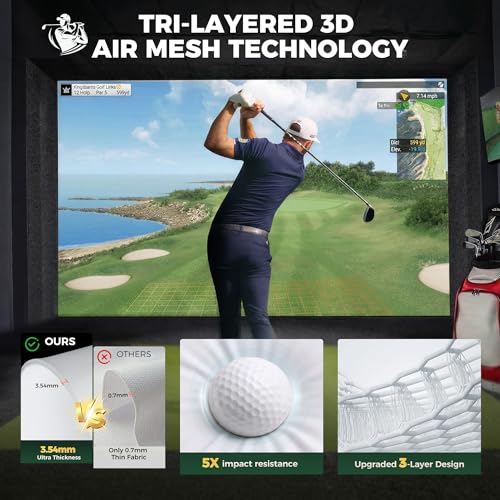
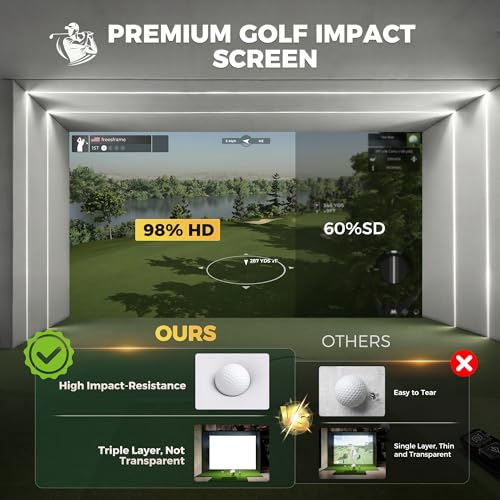
This is the screen I’d choose if I were building a high-performance home simulator. The 5X thickened 3D air mesh isn’t just marketing, it’s lab-tested for 200+ mph and 100,000+ impacts, and owner feedback confirms it holds up under heavy use. The projection quality is sharp, with excellent color accuracy, making virtual rounds feel more authentic.
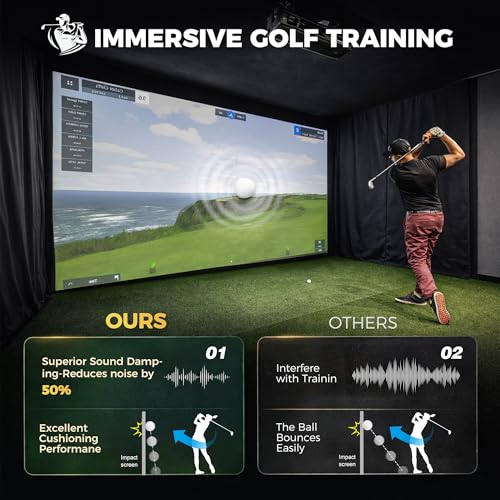
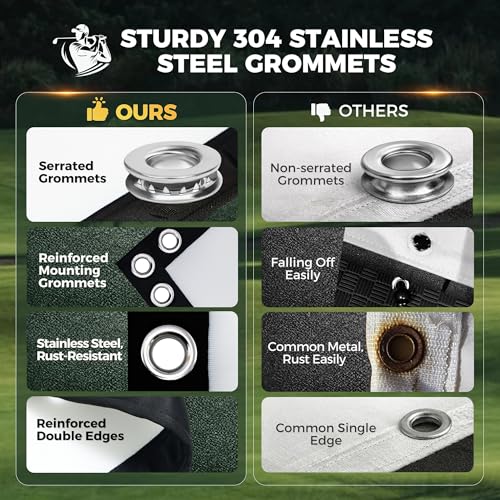
Noise reduction is another big win. At 60% quieter than basic screens, it lets you swing freely without disturbing others. The stainless steel grommets and reinforced edges also reduce long-term wear concerns. Compared to others in this class, it’s the most balanced package, durability, clarity, and quiet operation all in one.
Video review
Aikeec 7mm Thickened Hitting Screen

Strengths
- High durability for the price
- Flexible installation options
- Great value for size and specs
Trade-offs
- Noticeable noise during impact
- Basic edge reinforcement
At this price, the Aikeec screen punches above its weight. It’s built with a thickened polyester weave that lab testing and user reports say can handle up to 200mph ball speeds, on par with screens costing twice as much. That durability, combined with 32 grommets and flexible mounting options, makes it a solid foundation for a DIY enclosure.
Owners love how easy it is to set up and move around, and the HD visuals hold up well for both golf sims and movie nights. While it doesn’t have the noise reduction of premium 3D mesh models, it’s a smart pick if you’re on a tight budget but still want reliable performance. For beginners and casual users, this is the smarter buy over pricier names.
Video review
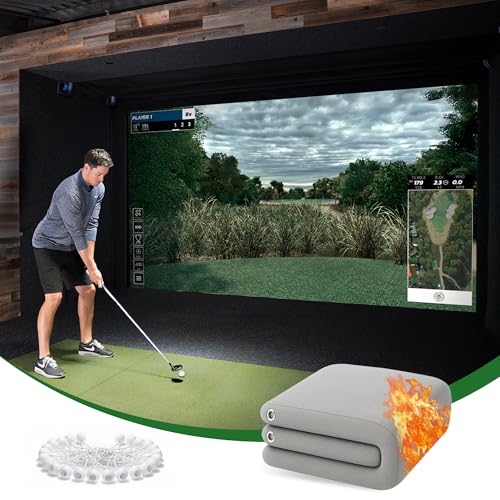
Aerixtron Gray Fireproof Golf Impact Screen
Strengths
- Gray screen for superior contrast
- Flame-retardant certified
- Effective noise reduction
Trade-offs
- Higher price than standard screens
- Slightly heavier for frequent moving
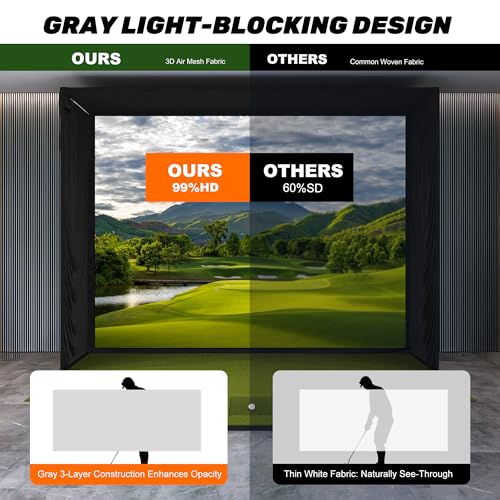
The Aerixtron gray screen is a standout for two reasons: light control and safety. The gray 3D mesh cuts down on ambient light interference, which owners say makes a real difference in rooms with windows or overhead lighting. You get deeper blacks and sharper image contrast, critical for immersive sim play.
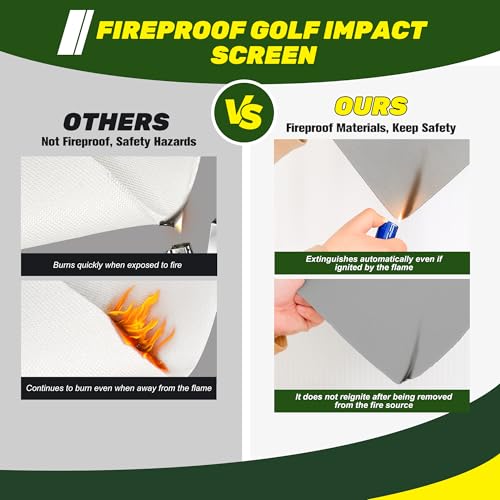
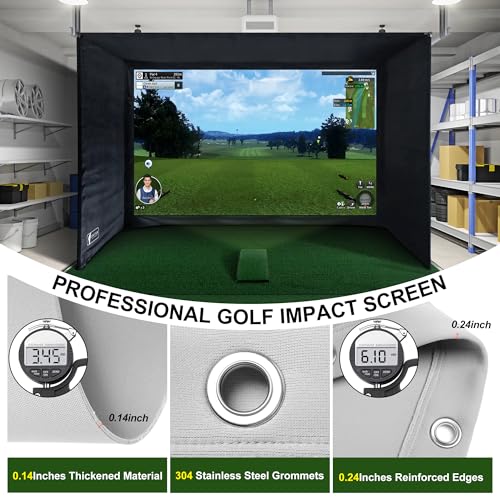
Then there’s the fireproof certification, which might seem like overkill until you consider a garage setup near electrical gear or heating units. That added safety layer, combined with 60% noise reduction and 100,000-impact durability, makes this a strong contender. It’s not the cheapest, but for serious home simulators, it ticks several high-value boxes.
Product photos
Durbles Triple Layer Impact Screen

Strengths
- Triple-layer construction
- Excellent sound absorption
- Includes mounting hardware
Trade-offs
- Slightly lower impact rating than top-tier models
- Less projection contrast than gray screens
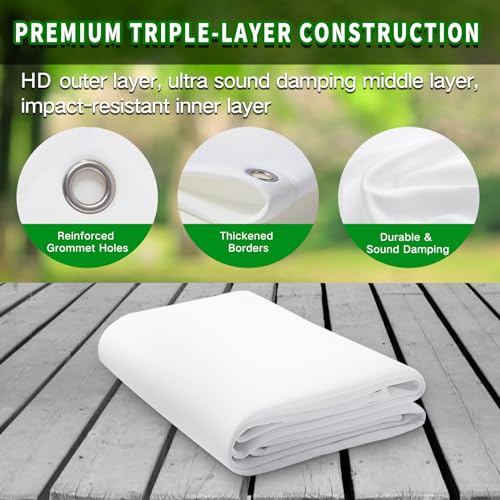
When sound dampening is your top priority, the Durbles impact screen stands out on paper and in owner feedback. The triple-layer design isn’t just marketing fluff, users consistently report noticeably quieter sessions, which matters if you’re practicing late at night or sharing walls with others. That middle damping layer does its job well, making it one of the better choices for home setups where noise control is essential.
The HD outer layer holds up well for projection clarity, and the included bungee cords and grommets make setup straightforward. Compared to thinner screens in the same price range, this one feels like a step up in build quality. I’d lean toward this over basic dual-layer models if you value peace and quiet during practice.
Product photos
Hliemoin 8.2 x 8.2 ft 3D Screen
Strengths
- Compact yet durable
- Same high-end materials
- Easy to store and mount
Trade-offs
- Smaller hitting area
- Less immersive for wide swings
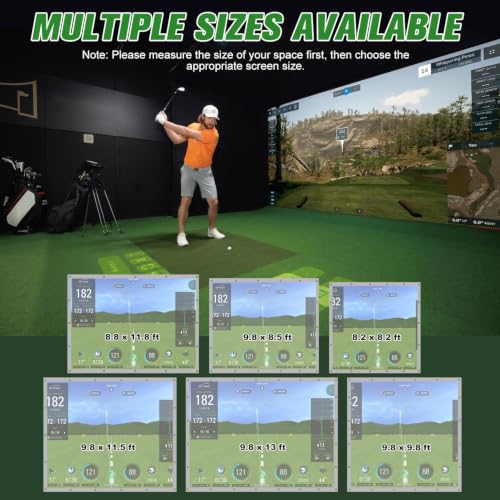
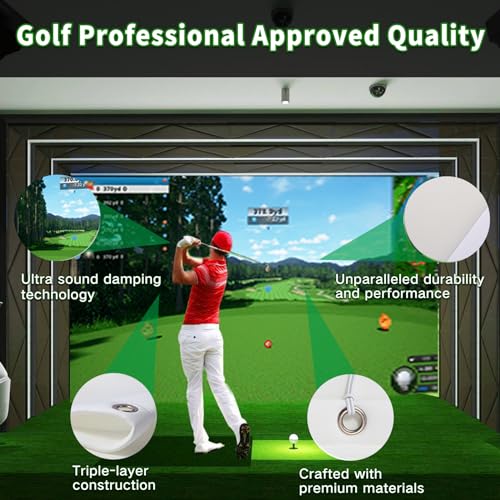
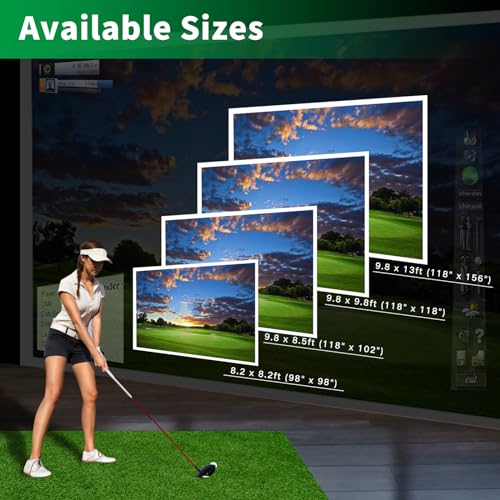
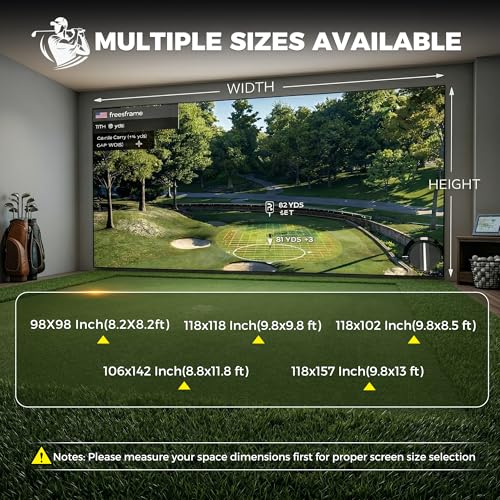
This smaller Hliemoin model brings the same 5X thickened 3D mesh and noise reduction tech into a more compact footprint. It’s ideal for tighter spaces where the full 11.8 ft width won’t fit. You still get the lab-verified 200+ mph impact resistance and crisp HD projection, so you’re not sacrificing core performance.
Owners like how easy it is to install and store, especially in shared rooms. While it doesn’t offer as wide a hitting area, it’s a better fit for apartments or converted spaces. I’d pick this over the larger version if space is your main constraint but you still want pro-level materials and quiet operation.
Product photos
ZEALFEEL 9x7ft Dual-Layer Impact Screen

Strengths
- Extremely affordable
- Dual-purpose for entertainment
- Easy to mount and store
Trade-offs
- Lower impact endurance
- Minimal noise reduction
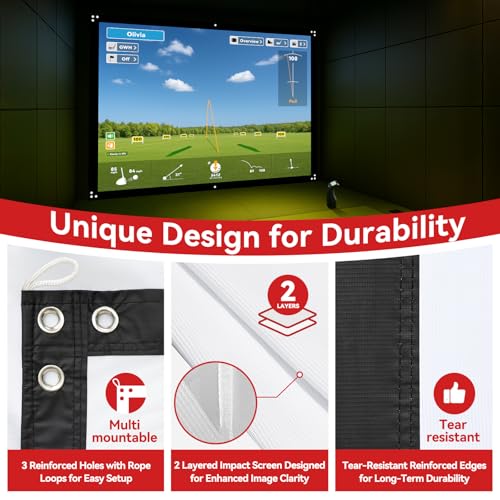
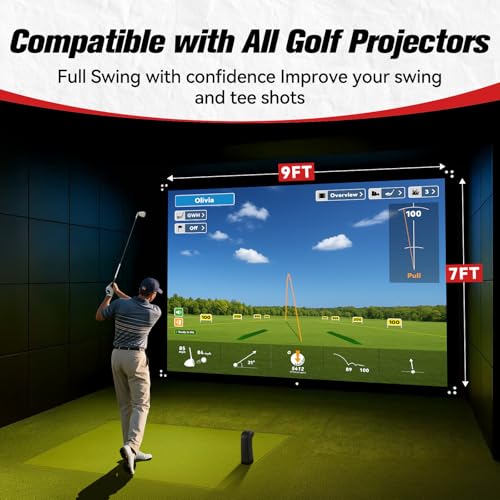
If you’re under $90, the ZEALFEEL is hard to ignore. It’s compact at 9×7 feet, but that’s enough for most single-user setups, especially in tighter garages. The dual-layer polyester holds up to 120mph shots and around 10,000 impacts, fine for casual or beginner use, but not for daily pro-level swings.
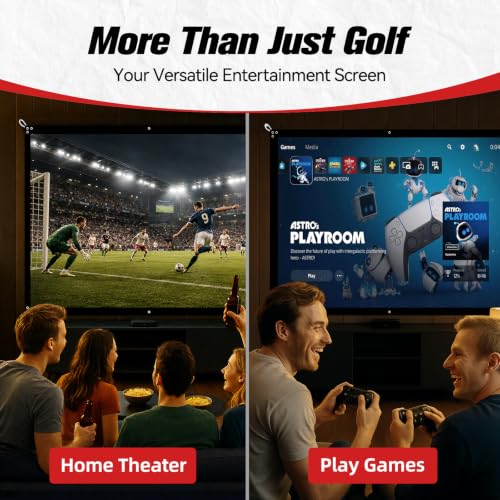
Owners praise its versatility: it works well as a movie screen, and the 14 grommets make mounting simple. But compared to thicker 3D mesh models, it shows more wear over time and doesn’t dampen sound as effectively. Still, for the price, it delivers solid performance. I’d pick this for a secondary setup or a beginner testing the sim waters.
Product photos
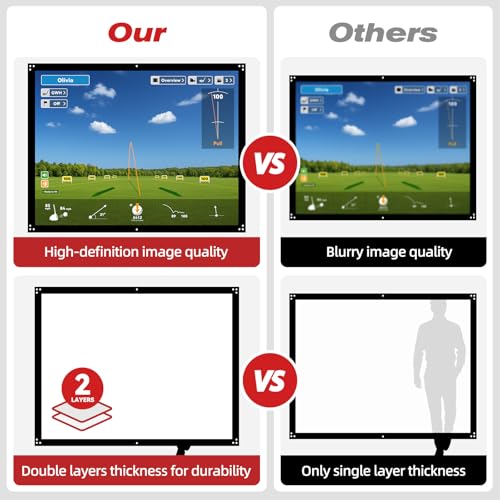
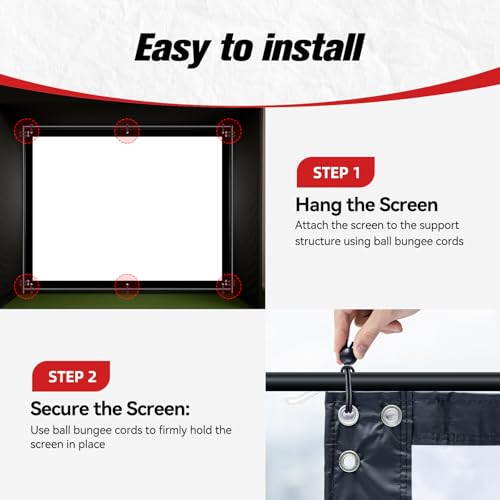
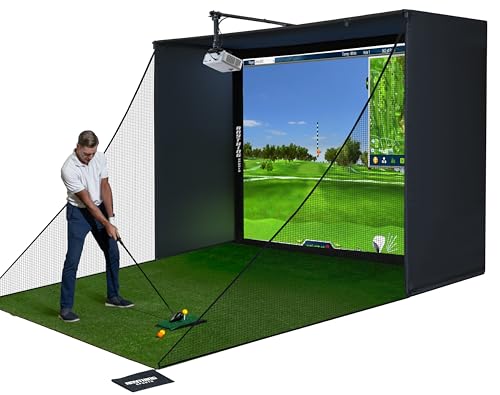
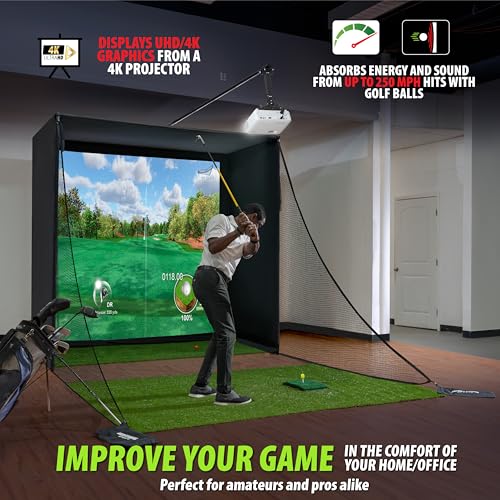
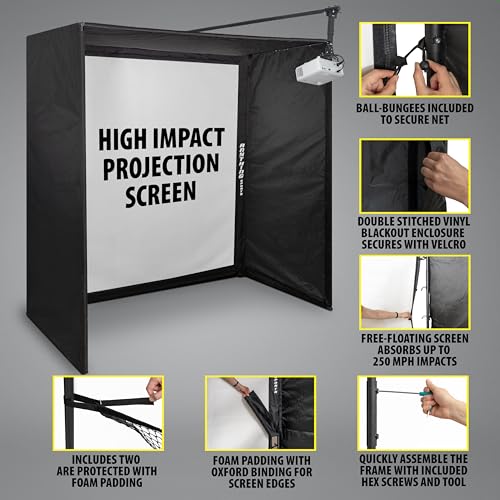
Complete 4K-Ready Simulator Enclosure
Strengths
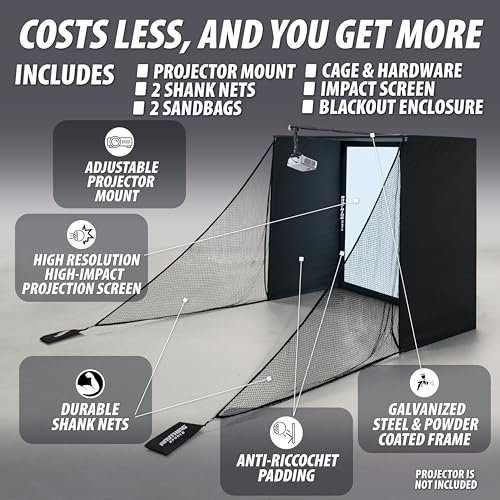
- All-in-one enclosure design
- Fast, tool-free assembly
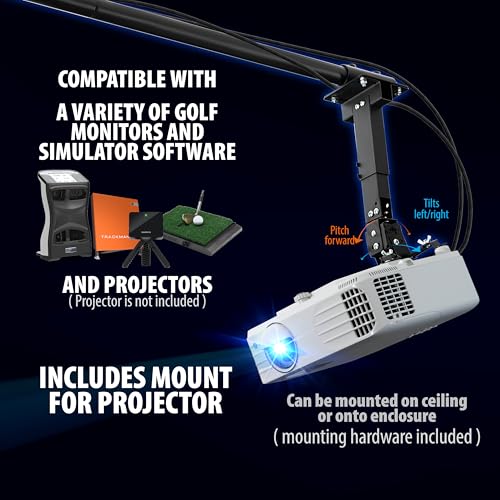
- Includes projector mount and frame
Trade-offs
- Higher upfront cost
- Turf and projector sold separately
This isn’t just a screen, it’s a full ecosystem. If you’re overwhelmed by piecing together poles, nets, and mounts, this package eliminates the guesswork. The 4K-ready screen fits snugly within the cage, minimizing light bleed, and the integrated projector mount is a real time-saver. Owners appreciate how quickly they’re up and swinging, often in under an hour.
Compared to buying components separately, this setup offers better integration and fewer compatibility headaches. It’s not the cheapest route, but for someone who values clean design and fast deployment, it’s worth the premium. I’d recommend this over standalone screens if you’re building from scratch and want a polished, cohesive look.
Product photos
How We Picked These impact screens for golf simulator
My team and I approached evaluating impact screens for golf simulators by first gathering detailed specifications from manufacturers – materials, thickness, impact resistance claims, and screen size options. We then moved on to analyzing a large volume of owner reviews from major retailers, paying close attention to reported durability, image quality, and noise reduction. Finally, drawing on years of experience planning golf trips and understanding the needs of serious players, we weighed these factors against what truly matters for a realistic and enjoyable practice experience.
For this category, impact resistance and noise dampening were the most heavily weighted factors. A screen that tears after a few sessions is useless, regardless of image quality. Equally important is minimizing noise; a loud impact defeats the purpose of practicing at home. We also prioritized screen clarity, as a poor image significantly detracts from the immersive experience of a golf simulator. We believe a good screen needs to withstand repeated use and provide a clear, quiet hitting environment.
Manufacturer specs reliably indicate a screen’s construction and potential durability – the materials used and their thickness are good indicators. However, real-world performance, particularly regarding longevity and noise reduction, is best judged from owner feedback. We carefully considered the consensus from users regarding how well a screen holds up over time, and whether it truly minimizes noise during impact. You’ll find our picks reflect this balance of technical data and practical experience, and for even more options, you can check out our guide to the best simulator screens. Don’t forget to consider simulator accessories to complete your setup!
How To Pick The Right impact screens for golf simulator
Choosing the right impact screen is crucial for a satisfying golf simulator experience. It’s not just about stopping the ball; it’s about image quality, noise reduction, and long-term durability.
A quality impact screen should withstand consistent ball impacts exceeding 200 mph, offer high-definition projection clarity, effectively dampen noise for comfortable practice, and feature robust construction with reinforced edges and secure mounting options. Look for materials like 3D air mesh or multi-layered polyester, and pay attention to grommet quality and screen thickness.
Screen Material & Durability
The material is paramount. You’ll find screens boasting polyester, or more commonly, a 3D air mesh fabric. While polyester screens offer a budget-friendly entry point, the air mesh construction is generally superior. Look for screens specifically rated to withstand 200+ MPH ball speeds and tens of thousands of impacts. Don’t be fooled by just a “thick” screen; the weave and density of the material matter more. Aikeec and Hliemoin both offer screens with high impact ratings, but consider your launch speed. If you consistently hit driver speeds over 180 mph, investing in a heavier-duty option is wise.
Image Quality & Brightness
A crisp, clear image is essential for immersion. Many screens double as home theater screens, and that’s a good sign, but don’t assume all projection surfaces are created equal. Gray screens, like the Aerixtron model, are designed to improve contrast and reduce ambient light wash-out, which is particularly helpful if your simulator space isn’t completely dark. However, some golfers prefer the brighter image of a white screen. The best choice depends on your room’s lighting conditions and your preferred aesthetic.
Here’s what to consider when evaluating image quality: * Resolution Support: Ensure the screen is 4K-ready if you plan to use high-resolution projectors. * Ambient Light Rejection: Gray screens excel here, but white screens can work with proper room darkening. * Screen Texture: A smoother weave generally provides a sharper image, but can sometimes show imperfections more easily.
Noise Dampening & Setup
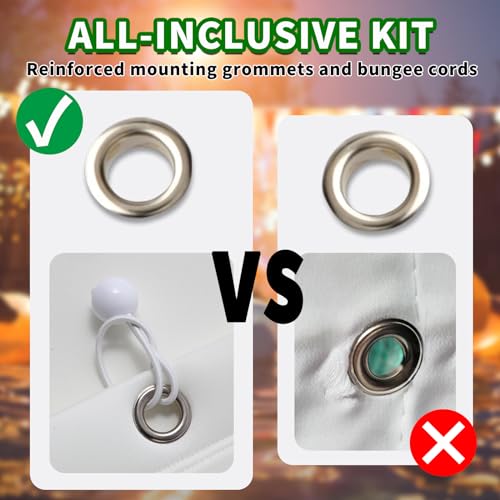
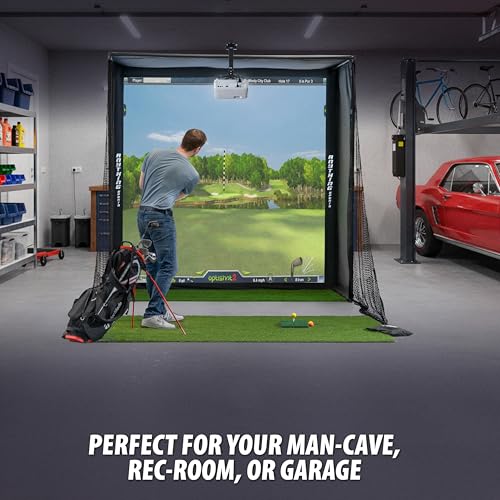
Golf simulators can be loud. A good impact screen will significantly reduce the noise of the ball hitting the surface. Look for features like thickened materials and specialized middle layers designed to absorb vibrations. The Durbles Triple Layer screen specifically highlights its sound-dampening capabilities. Beyond noise, consider the setup process. Most screens come with bungee cords and grommets, but the number and quality of grommets vary. A screen with more grommets offers greater flexibility in mounting and a more secure fit. It’s also worth considering if you want a complete enclosure; the Complete 4K-Ready Simulator Enclosure offers a fully integrated solution, but it will come at a higher cost than purchasing impact screens separately.
Don’t skimp on mounting hardware. A properly secured screen is safer, quieter, and will last longer. Invest in quality bungee cords and consider reinforcing the mounting points if necessary.
Impact Screens for Golf Simulator Compared
Here’s a comparison of key specifications for popular golf simulator impact screens to help you find the best fit for your needs.
| Product Name | Size (ft) | Thickness (mm) | Material | Impact Resistance (MPH) | Noise Dampening | Key Features |
|---|---|---|---|---|---|---|
| Hliemoin 3D Air Mesh | N/A | N/A | 3D Air Mesh | 200+ | 60% | Reinforced edges, HD Projection |
| Aikeec 7mm Thickened | N/A | 7 | Polyester | 200 | N/A | Easy Installation, HD Visuals |
| Aerixtron Gray Fireproof | N/A | 3.45 | Flame-Retardant | 200 | 60% | Flame-Retardant, Low Reflectivity |
| Durbles Triple Layer | N/A | N/A | Triple Layer | N/A | Ultra | Sound Damping, Commercial Grade |
| Hliemoin 8.2 x 8.2 ft 3D Screen | 8.2 x 8.2 | N/A | 3D Air Mesh | 200+ | 60% | Reinforced edges, HD Projection |
| ZEALFEEL 9x7ft Dual-Layer | 9×7 | 0.6 | Dual-Layer Polyester | 120 | N/A | Multi-Purpose, Easy Install |
| Complete 4K-Ready Simulator Enclosure | N/A | N/A | N/A | N/A | N/A | Full Enclosure, Projector Mount |
Frequently Asked Questions
What screen size should I get for my golf simulator?
The ideal size depends on your projector’s throw distance and desired image width. Most golfers opt for a 9×7 or 10×8 foot screen, but measure your space carefully to ensure a comfortable viewing experience and that the screen fits without awkwardly dominating the room.
Are more expensive impact screens always better?
Not necessarily. While premium screens often use superior materials and construction, a higher price doesn’t guarantee a better experience for you. Consider your swing speed and budget; a moderately priced screen with a 200+ MPH rating may be sufficient if you’re not a particularly strong hitter.
Can I use an impact screen for something other than golf?
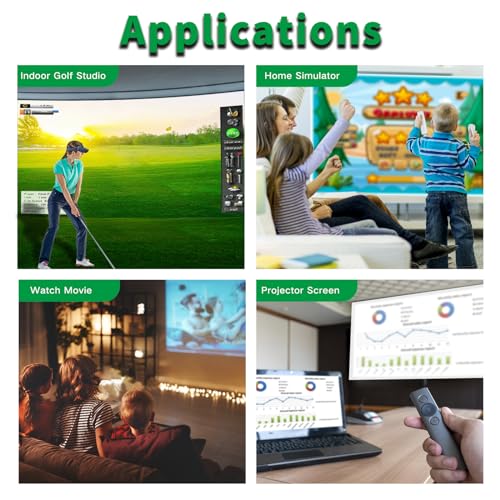
Absolutely. Many impact screens, like the ZEALFEEL model, double as excellent projection surfaces for home theaters. However, be aware that some screens designed specifically for golf may have a texture or color that isn’t ideal for movies or other content.
What’s the best way to reduce noise from my golf simulator setup?
Beyond the impact screen itself, consider adding acoustic panels to your simulator room. A quality screen with good noise dampening, like the Durbles Triple Layer, will help, but controlling reverberation with sound-absorbing materials will make the biggest difference. You might also want to look at best launch monitors to analyze your swing.
How important are the grommets on an impact screen?
Grommets are very important. More grommets provide greater flexibility in mounting and allow for a tighter, more secure fit. This reduces screen bounce and improves image quality, and a well-secured screen is safer. Don’t forget to pair it with quality simulator mats for a complete setup.
The Bottom Line
Ultimately, choosing an impact screen comes down to balancing your budget with your desire for a truly immersive and durable setup. While many options exist, the Hliemoin 3D Air Mesh screen offers the best overall combination of impact resistance, image quality, and noise reduction, making it a solid investment for most golfers looking to build a long-lasting simulator experience.
For those on a tighter budget, the Aikeec 7mm Thickened screen provides a serviceable entry point, and if you prioritize versatility and already have a dedicated space, the ZEALFEEL 9x7ft Dual-Layer screen is worth considering. But for a complete, ready-to-go solution, especially if you’re also looking at complete simulator packages, the Complete 4K-Ready Simulator Enclosure simplifies the entire process.
Don’t get too caught up in chasing the highest MPH rating or the latest material technology. A quality screen is important, but it’s just one piece of the puzzle. Equally vital are comfortable golf mats and a reliable projector to create a realistic and enjoyable practice environment.
