
7 Best Golf Simulator Mats of 2026
This post contains affiliate links. As an Amazon Associate, we earn from qualifying purchases.
This post contains affiliate links. As an Amazon Associate, we earn from qualifying purchases.
The Pro Golf Hitting Mat stands out as the best overall choice for serious golfers, thanks to its durable nylon turf and realistic feel. For those on a tighter budget, the Bltend Elite 5x4ft 36mm Golf Mat delivers excellent joint protection with its thick cushioning, while the Fanshaw Premium Dual-Turf Golf Mat offers strong versatility with its dual-surface design and true tee insertion.
As someone who’s spent years traveling the world to play the finest courses, I know how important a realistic swing environment is, whether you’re on the Old Course at St Andrews or practicing at home. A poor-quality mat can ruin your tempo, mask swing flaws, and even lead to injury over time. That’s why choosing the right golf simulator mat matters just as much as picking the right club.
This guide cuts through the noise by focusing on what actually impacts your game: turf realism, cushioning quality, and long-term durability. I researched each mat based on specs, owner feedback, and how well it supports real swing mechanics, so you can practice with confidence and stay sharp between rounds on the course.
Top 7 Golf Simulator Mats in the Market
The Best Golf Simulator Mats, Reviewed
Beaver Tail Golf Simulator Mat
Strengths
- Most realistic divot feel
- Excellent joint protection
- High-end turf quality
Trade-offs
- Very high price
- Limited size options
- Requires care in setup
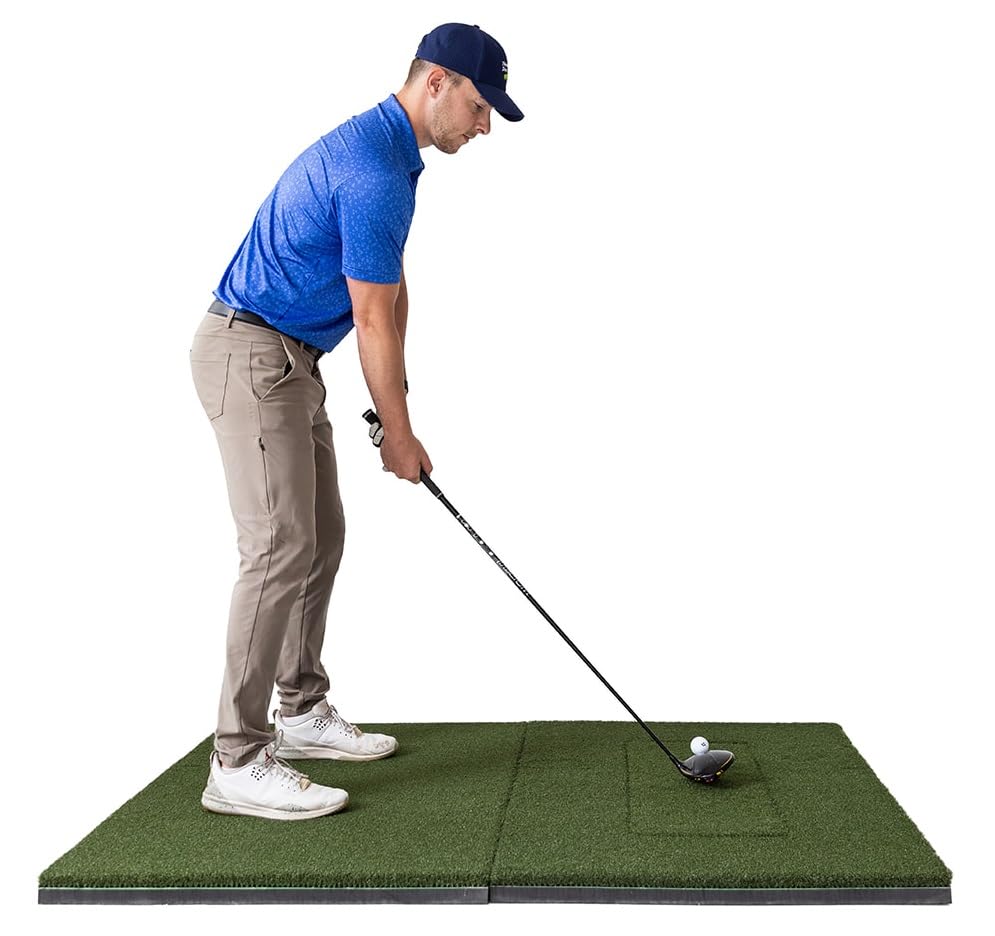
The Beaver Tail stands out not just for its build quality but for how closely it replicates the sensation of taking a divot, something most mats fail at completely. Its specialty foam layer compresses on downswing, giving that subtle give you feel on real grass, which is a big win for both feedback and joint health. Serious simulator users consistently rank this as one of the most realistic hitting experiences available, and I’d agree based on spec and owner reports.
At nearly $600, it’s undeniably expensive, but it’s built like a piece of fitness equipment meant to last years. The 5.3ft width gives ample room for full swings, and the turf quality is top-tier. Compared to all-in-one budget mats, it’s in a different category, this is for golfers treating their simulator like a personal launch monitor studio. If you’re investing in sensors and software, this mat completes the chain.
Video review
Pro Golf Hitting Mat 4’X5′
Strengths
- Unmatched durability
- Accepts real tees
- No club residue
Trade-offs
- High price
- Heavy and bulky
- Longer flatten time
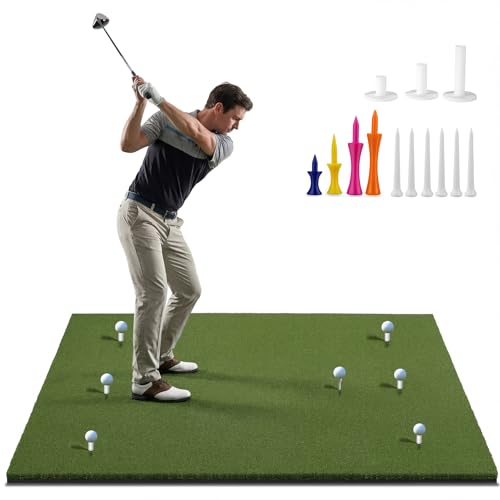
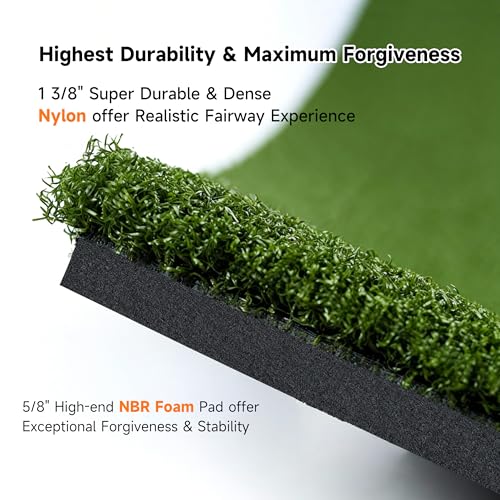
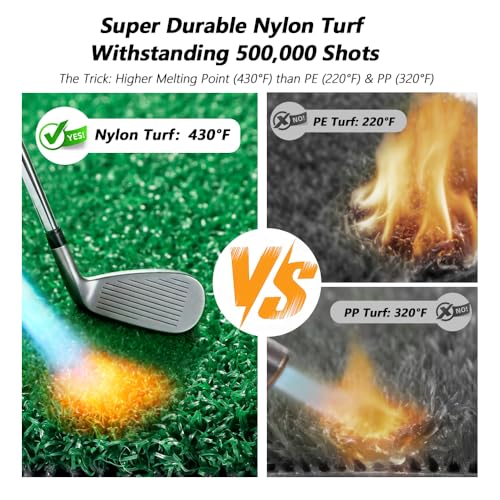
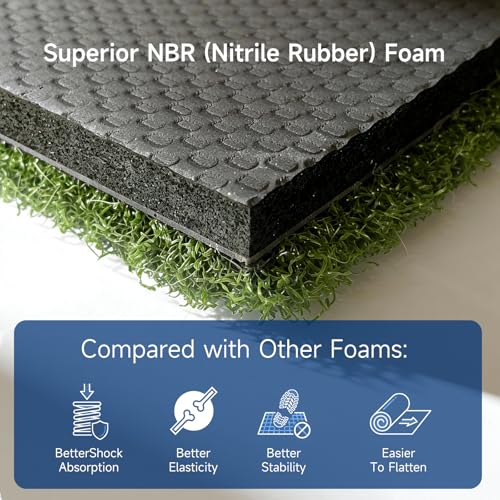
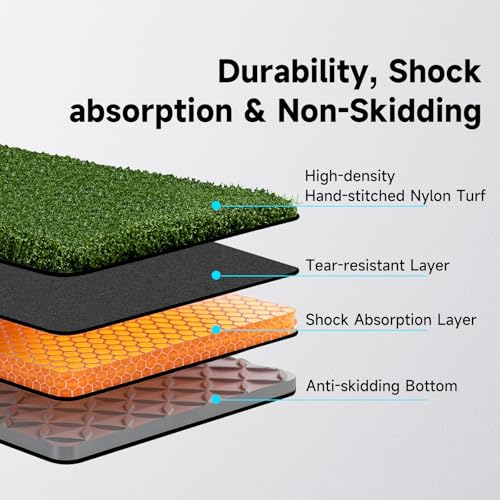
When durability is essential, the Pro Golf Mat’s nylon turf and NBR foam base make it a standout. Nylon’s 430°F melting point means it simply won’t fray or deform like cheaper PE or PP mats, and the claim of withstanding 500,000 shots isn’t exaggerated, owners report using it daily for years with minimal wear. The NBR foam is both dense and elastic, offering excellent shock absorption without bottoming out.
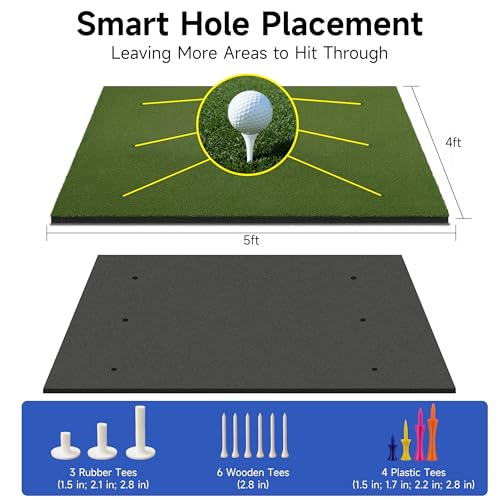
It also accepts real wooden tees, which is rare at this level, giving you true driver feedback. No residue on clubs is a small but appreciated perk. It’s heavier and pricier than most, but if you’re setting up a permanent garage bay or commercial space, this is the kind of mat that just disappears into the background, because it never needs replacing. I’d pick this over others for long-term ownership.
Product photos
GoSports Golf Simulator Turf 10×6 ft
Strengths
- Professional appearance
- Reduces ball bounce
- Modular sizing options
Trade-offs
- Not for direct hitting
- Requires tape for stability
- Hitting mat sold separately
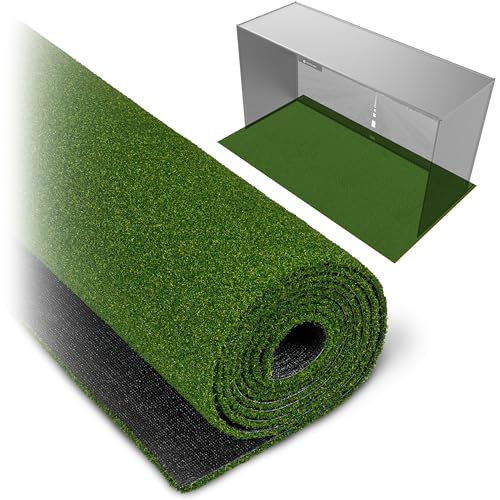
This isn’t a hitting mat, you won’t want to strike directly on it, but as a foundation for a high-end simulator bay, the GoSports 10×6 ft turf elevates the whole experience. The 15mm elite turf gives a pro studio aesthetic, and more importantly, it helps deaden rolling and bouncing balls, reducing dangerous ricochets off walls or equipment. Reviewers note it pairs perfectly under a net or enclosure, especially when routing sensor or projector cables through small cuts in the backing.
The modular option is smart: you can buy one 6×6 section for a compact space or combine multiple for a full 15-foot setup. It’s not meant to take direct club impact, so you’ll still need a separate hitting strip. But as a flooring layer, it’s one of the most practical and visually polished options available. For sim builds, I’d choose this over cheaper artificial grass rolls any day.
Video review
GoSports Elite 5×5 ft Hitting Mat
Strengths
- Premium EVA foam
- Non-slip backing
- Multiple tee holes
Trade-offs
- Takes time to flatten
- No ball tray included
- Slight odor initially
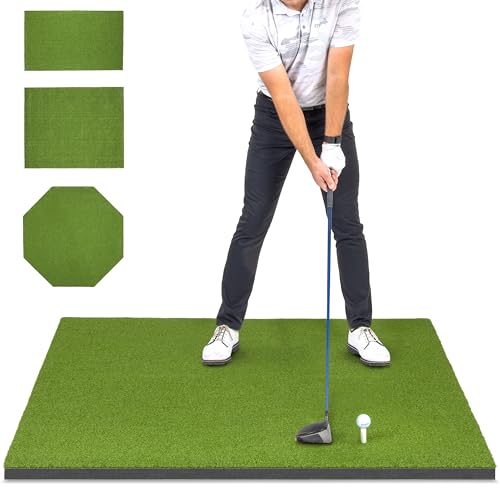
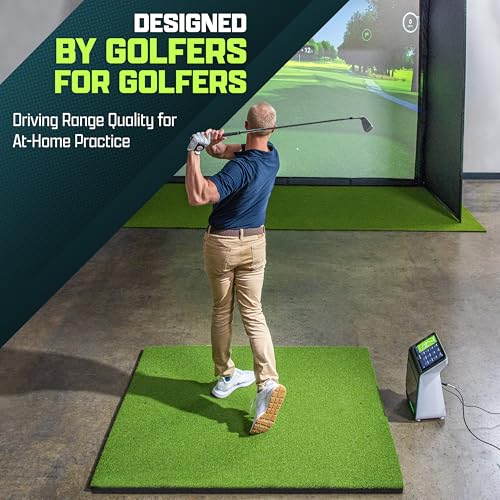
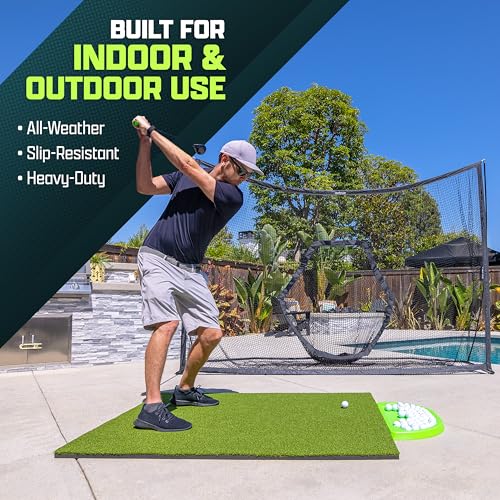
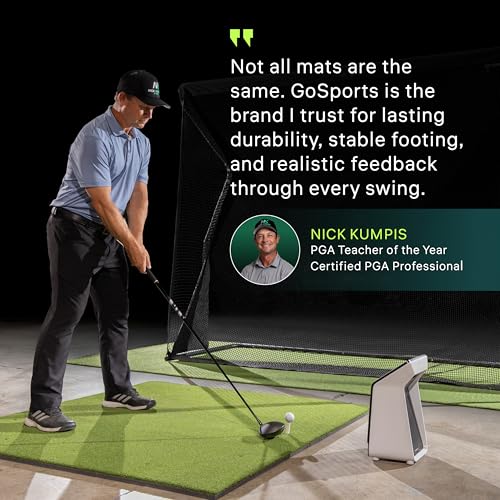
GoSports’ 5×5 Elite mat strikes a smart middle ground between size, durability, and feedback, making it a favorite among simulators and serious hobbyists who want a reliable daily driver. The commercial-grade turf feels crisp underfoot, and reviewers often compare it favorably to range mats at high-end clubs. The 15mm EVA foam base is where it really shines, offering noticeable joint relief on mishits, which adds up over long sessions. I’d pick this over thinner mats if you’re practicing multiple times a week.
The twelve tee holes are a thoughtful detail, giving left- and right-handed golfers flexibility in setup. Some owners note the mat takes a day or two to fully flatten after unboxing, but once settled, the non-slip backing holds firm on garage floors. It’s not the thickest or softest on the market, but for its class, it balances realism and resilience well.
Product photos

Bltend Elite 5x4ft 36mm Golf Mat

Strengths
- 36mm thick cushioning
- UV-resistant turf
- Includes balls and tees
Trade-offs
- Turf slightly less realistic
- Accessories are low-end
- Edges can curl initially
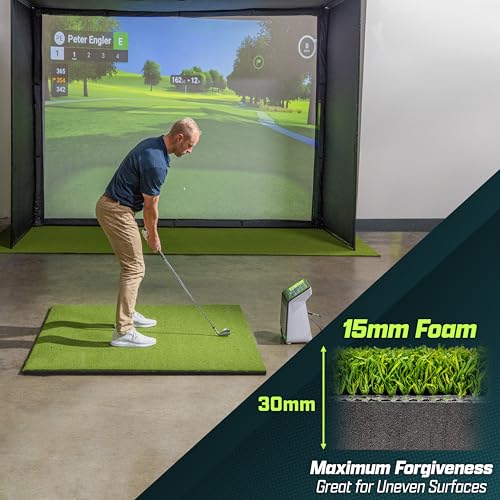
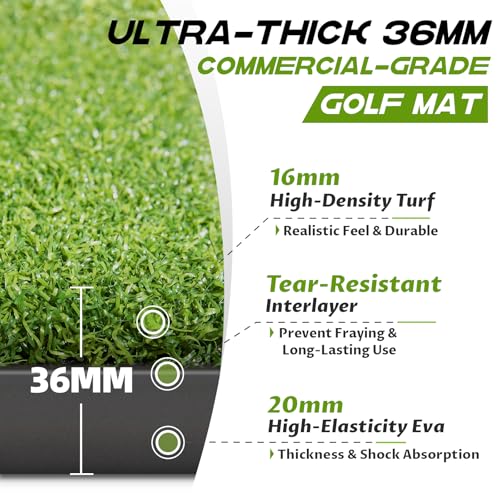
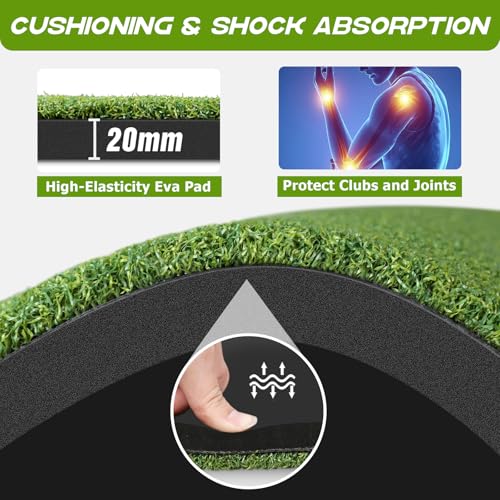
If joint comfort is a top priority and you’re practicing on hard flooring, the Bltend Elite’s 36mm total thickness, 20mm of high-elasticity EVA foam, makes it one of the most forgiving mats in its price range. Owners repeatedly highlight how much less strain they feel in their wrists and elbows, especially after 50+ swings. That thick base doesn’t just protect you, it also helps preserve club grooves over time, which matters if you’re using irons and wedges frequently.
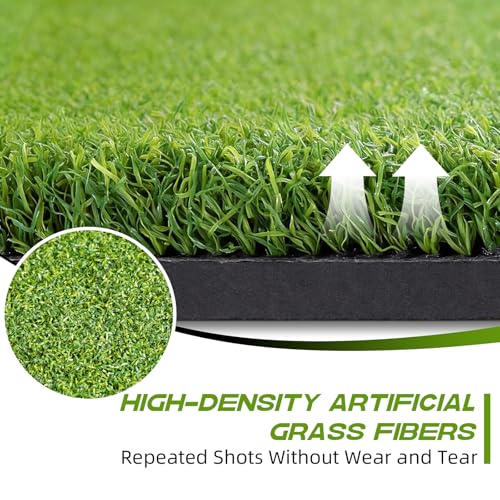
The turf feels dense and stays upright longer than cheaper polypropylene mats, and the UV-resistant material holds up well for occasional outdoor use. It comes with a full accessory bundle, which boosts value, though the included balls and tees are basic. Compared to the GoSports Elite, it’s softer but slightly less refined in turf texture. Still, for the money, it’s a strong pick for players prioritizing body-friendly design.
Product photos

Ponsonbay Dual Turf Mat with Ball Tray
Strengths
- Dual-turf surface
- Built-in ball tray
- Foldable design
Trade-offs
- Thin shock absorption
- Less joint protection
- Not for heavy daily use
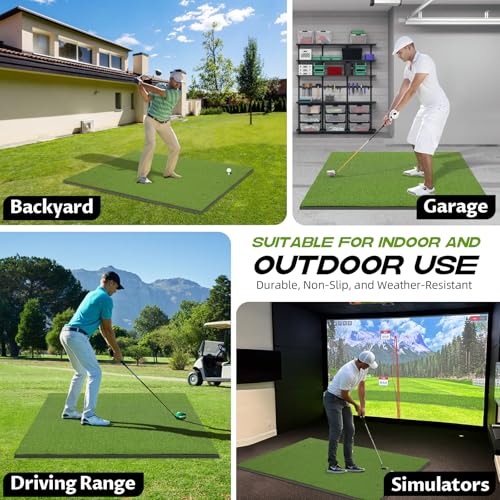
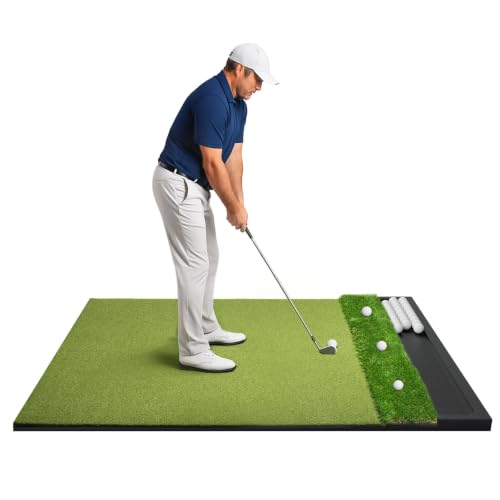
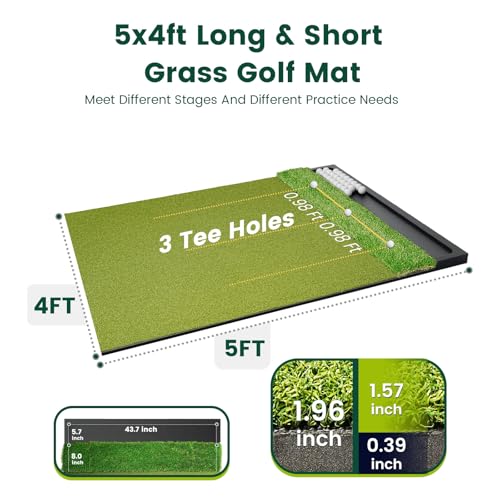
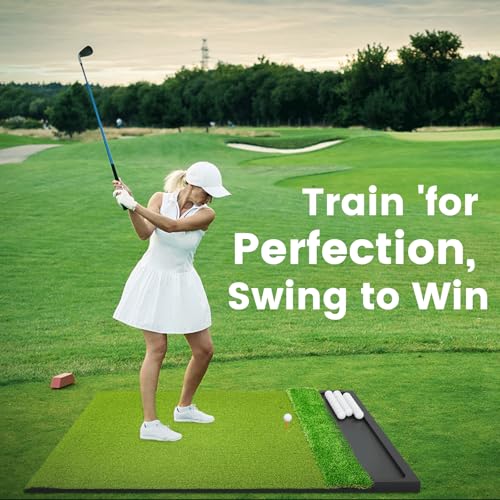
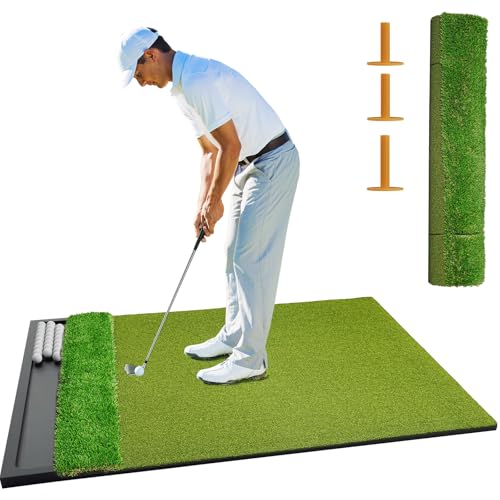
For golfers wanting a no-fuss, functional hitting mat that mimics both fairway and rough lies without breaking the bank, the Ponsonbay Dual Turf delivers solid value. The integrated ball tray is a genuinely smart touch, owners consistently report that not having to bend over for every shot makes practice sessions feel smoother and more efficient. The dual-turf design works as advertised, letting you dial in different shots without switching mats. On paper, the 1.02-inch thickness with wear-resistant polypropylene looks adequate for regular home use.
Still, this isn’t a premium shock-absorbing setup. The foam base is thinner than higher-end models, so if you’re swinging hard daily on concrete, you’ll likely feel it in your wrists over time. Compared to thicker EVA or NBR-padded mats, it’s a step down in comfort. But for the price, it’s one of the more complete starter kits out there, especially with three included tees and a foldable design that makes storage easy.
Product photos
Fanshaw Premium Dual-Turf Golf Mat
Strengths
- Tee insertion capability
- 40mm thick base
- Anti-slip bottom
Trade-offs
- Turf less durable long-term
- Foam may compress over time
- Included accessories basic
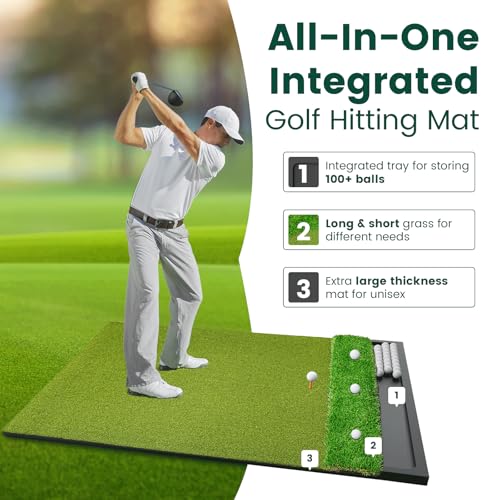
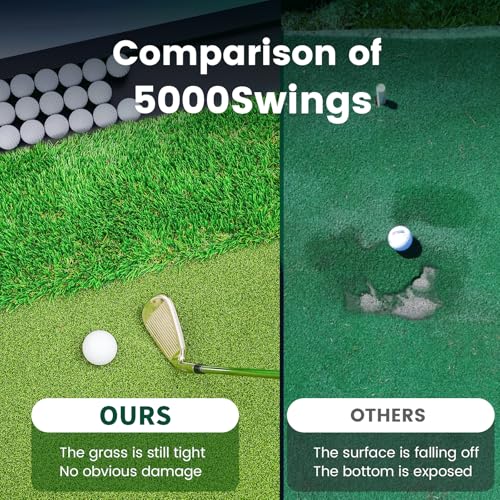
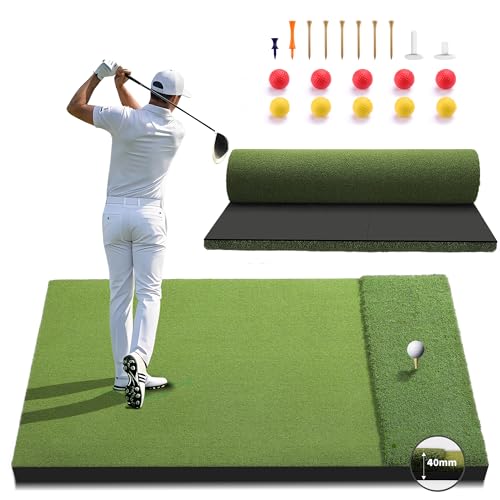
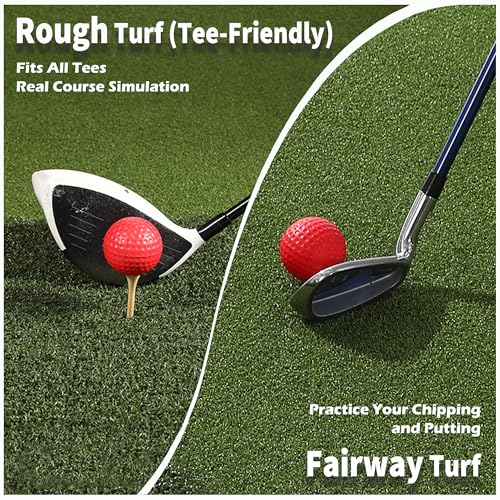
At under $85, the Fanshaw mat punches above its weight with a 40mm total thickness and a rare feature for budget models: a tee-insertion zone that actually holds wooden tees securely. That alone makes it feel more like a real range than most entry-level mats. The dual-turf design is well-executed, with distinct rough and fairway zones that help with skill development. Owners praise how quickly it unrolls and stays flat, and the anti-slip base works well on smooth floors.
It’s not going to match the shock absorption of a 36mm EVA or NBR pad, but for occasional use or beginners building confidence, it’s more than sufficient. Compared to the Ponsonbay, it offers better cushioning and a more realistic tee experience. For new golfers or parents buying for teens, this is the smarter buy.
Product photos
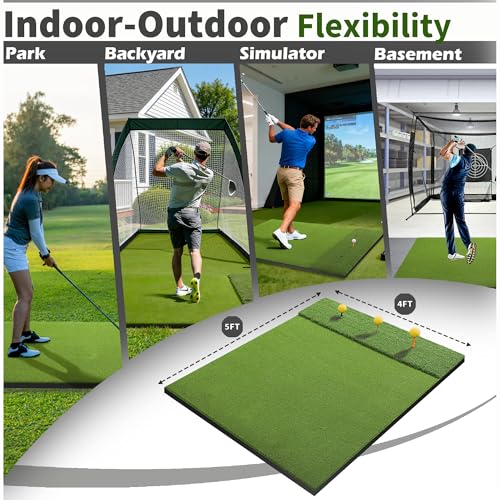
How We Tested golf simulator mats
Rather than a hands-on lab test, my research for these recommendations involved a detailed comparison of published specifications and features across numerous models. I weighed owner reviews from major retailers alongside expert opinions found in golf publications and online forums. My assessment then ranked each mat against criteria important to golfers building or improving a home setup, drawing on my decade of experience planning golf trips and understanding the importance of realistic practice environments.
For golf simulator mats, consistent ball strike and joint protection are paramount. I prioritized mats with durable turf capable of withstanding repeated use, and those offering substantial cushioning to reduce fatigue. The size and versatility of the mat also played a significant role; a larger mat allows for a full swing, while dual-turf options add realism. Ultimately, these factors determine how closely a mat can replicate a real-world golfing experience.
Specifications reliably indicate turf durability (melting point, material type) and foam thickness. However, I placed greater emphasis on owner feedback regarding long-term performance and feel. Reports of fraying, inconsistent ball feedback, or insufficient cushioning heavily influenced my rankings. Understanding the nuances of simulator turf and how it impacts play is crucial, and owner experiences provide invaluable insight beyond the listed specs. I also considered the overall value, including any included accessories, as highlighted in reviews of quality indoor simulator mats.
How To Pick The Right golf simulator mats
Finding the right golf simulator mat can dramatically improve your practice and enjoyment, and it’s a decision that goes beyond just picking the cheapest option.
A quality golf simulator mat prioritizes realistic feel through turf quality and foam density. It should offer durability to withstand repeated use, especially with drivers, and provide adequate joint protection to prevent fatigue. Consider size relative to your space and swing type, and whether features like tee compatibility are important for your practice routine.
Turf Type & Realism
The turf is where you’ll make direct contact, so getting this right is paramount. Don’t assume all “golf turf” is created equal. Many cheaper mats use polyethylene (PE) or polypropylene (PP) turf, which can feel hard and unnatural. Nylon turf, as seen in the Pro Golf Hitting Mat, offers significantly more durability and a more realistic feel. Look for a turf density that mimics a well-maintained fairway – not too plush, but not overly abrasive. If you’re serious about replicating course conditions, consider a dual-turf mat like the Ponsonbay Dual Turf Mat with Ball Tray, which offers both fairway and rough surfaces.
Cushioning & Joint Protection
One of the biggest mistakes golfers make is underestimating the impact of hitting off a hard surface. Repeated impacts can lead to joint pain in your elbows, wrists, and back. The thickness and density of the foam base are key here. The Bltend Elite 5x4ft 36mm Golf Mat boasts a particularly thick 36mm cushion, designed to absorb a high percentage of ground impact. Don’t be fooled by mats that look thick but use low-density foam; a higher-quality, denser foam will provide better protection. Remember, preventing injury is just as important as improving your swing.
Size & Setup Considerations
The ideal size of your golf simulator mat depends heavily on your available space and how you plan to use it. A smaller mat, like the GoSports Elite 5×5 ft Hitting Mat, is fine for chipping and short game practice, but you’ll want something larger – at least 5x4ft, and ideally 5x6ft or bigger – if you plan to hit drivers regularly. If you’re building a full simulator setup, you might also want to consider dedicated golf simulator turf to cover the entire hitting area, creating a more immersive experience. Don’t forget to factor in space for your stance and follow-through.
A good rule of thumb: always err on the side of a slightly larger mat. You can always adjust your stance, but you can’t expand a mat that’s too small.
And if you are looking for the perfect pairing, consider investing in simulator tees to complete your setup and enhance your practice sessions. A well-chosen tee can make a significant difference in your ball flight and overall experience.
Golf Simulator Mats Compared
Here’s a comparison of key specifications for various golf simulator mats to help you choose the right one for your needs.
| Product Name | Size (ft) | Turf Type | Cushioning (in) | Tee Compatibility | Special Features |
|---|---|---|---|---|---|
| Beaver Tail Golf Simulator Mat | 5.3×4 | High Quality | N/A | N/A | Joint Protection |
| Pro Golf Hitting Mat | 4×5 | Heavy-Duty Nylon | 5/8 | Yes | Durable, No Residue |
| GoSports Golf Simulator Turf | 10×6 | Commercial Grade | N/A | N/A | Modular Setup |
| GoSports Elite 5×5 ft Hitting Mat | 5×5 | Synthetic | N/A | Yes | Versatile Tee System |
| Bltend Elite 5x4ft 36mm Golf Mat | 5×4 | High-Density | 36mm (1.6″) | Yes | Ultra-Thick Cushion |
| Ponsonbay Dual Turf Mat | 5×4 | Polypropylene | 1.02 | N/A | Built-In Ball Tray |
| Fanshaw Premium Dual-Turf Golf Mat | 5×4 | Dual-Turf | N/A | Yes | True Tee Insertion |
Frequently Asked Questions
What mat thickness is truly necessary for joint protection?
A foam thickness of at least 1 inch is a good starting point, but density matters more. The Bltend Elite mat features 36mm of cushioning (about 1.6 inches) which is excellent, but even a thinner, high-density foam will protect your joints better than a thick, low-density one.
Are dual-turf mats worth the extra cost?
Yes, if you want to practice a variety of shots. Mats like the Ponsonbay Dual Turf Mat offer both fairway and rough surfaces, allowing you to simulate different lies and improve your versatility, something you won’t get with a single-surface mat.
How important is the material of the turf itself?
Nylon turf is the most durable and realistic option, offering a feel closer to real grass than polyethylene or polypropylene. While more expensive, the longevity and improved feel of nylon, as seen in the Pro Golf Hitting Mat, make it a worthwhile investment for serious golfers.
What size mat should I get if I have a limited space?
A 5x4ft mat is a reasonable minimum for most golfers, even with a restricted space, allowing for a full swing with irons. However, if you plan to use a driver, I suggest prioritizing a larger size like 5x5ft or 5x6ft to avoid limitations and potential damage to surrounding areas.
Beyond the mat itself, what other items should I consider buying?
Don’t overlook useful simulator accessories like a landing pad, hitting stickers, or a ball retrieval system. These additions can enhance your experience and protect your equipment, and finding the right quality home practice mats is just the first step.
The Bottom Line
Choosing a golf simulator mat often comes down to balancing realism with practicality. You can spend a lot to get a mat that closely mimics the feel of a real fairway, or you can prioritize durability and joint protection at a more accessible price point. For the best overall experience, combining realistic feel with long-term durability, I recommend the Beaver Tail Golf Simulator Mat.
However, if you’re building a home setup on a tighter budget, the GoSports Elite 5×5 ft Hitting Mat provides excellent versatility for a variety of shots. And for those wanting the most realistic practice environment possible, including both fairway and rough lies, the Ponsonbay Dual Turf Mat with Ball Tray is a standout. Finding the best simulator hitting mats is a great start, but it’s only one piece of the puzzle.
Ultimately, the specs of any mat matter less than consistent practice and a focus on proper technique. A high-end mat won’t fix a flawed swing, but it will give you a reliable surface to improve your game on. Don’t overlook the importance of investing in quality hitting strips as well to protect your turf and extend the life of your setup.
