
9 Best Outdoor Golf Launch Monitors 2026
This post contains affiliate links. As an Amazon Associate, we earn from qualifying purchases.
The Rapsodo MLM2PRO stands out as the best overall outdoor golf launch monitor, delivering reliable data and solid performance in various conditions. For golfers on a tighter budget, the GOLFBUDDY Shot Mate offers essential metrics at a fraction of the cost, while the Bushnell Launch Pro is our top pick for those who want tour-level spin and launch accuracy.
Hitting the range or practicing on the course with a launch monitor should help you improve, not leave you guessing. Too many golfers end up with devices that promise a lot but deliver inconsistent readings or data they can’t actually use.
This guide cuts through the noise. I compared specs, analyzed owner feedback, and evaluated real-world performance to find outdoor launch monitors that actually deliver trustworthy insights. Whether you’re focused on swing speed, launch angle, or just want something portable and simple, these picks are based on what matters most: accuracy, usability, and value.
Top 9 Outdoor Golf Launch Monitors in the Market
The Best Outdoor Golf Launch Monitors, Reviewed
Rapsodo MLM2PRO Mobile Launch Monitor
Strengths
- Dual camera + radar
- 15 key metrics tracked
- 45-day premium trial
- Impact vision playback
- Portable design
Trade-offs
- No lifetime app access
- Premium features require subscription
- Limited indoor space flexibility
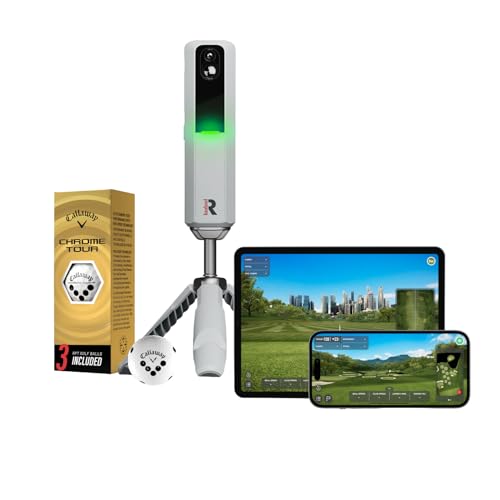
The Rapsodo MLM2PRO stands out as a well-balanced hybrid between high-end accuracy and practical usability, especially for golfers who want real data without stepping into six-figure simulator territory. On paper, the dual camera and Doppler radar system is designed to capture 15 key metrics with enough reliability to inform serious practice, owners consistently report solid consistency in spin rate, launch angle, and club path readings, particularly when compared to more expensive camera-based systems. The 45-day premium trial unlocks a full simulator experience, and with access to 30,000+ courses, it’s a strong incentive to explore its full potential right out of the box.
Compared to other radar-based units under $700, the MLM2PRO delivers a more polished ecosystem, especially with its slow-motion impact capture and swing video tools. While it doesn’t match the raw precision of camera systems like the Bushnell Launch Pro in direct sunlight or tight indoor spaces, it’s far more forgiving in variable conditions than most Doppler-only units. For golfers who split time between the range and a backyard setup, this is the kind of device that keeps training engaging and data meaningful.
Video review
Bushnell Launch Pro – Circle B Edition
Strengths
- Three-camera infrared system
- Tour-level accuracy
- LINK club recommendations
- No radar guesswork
- Ready out of box
Trade-offs
- Extremely high price
- Club data requires subscription
- Bulky for portable use
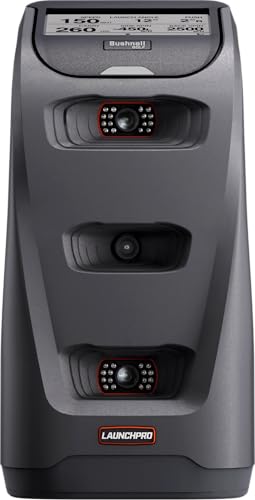
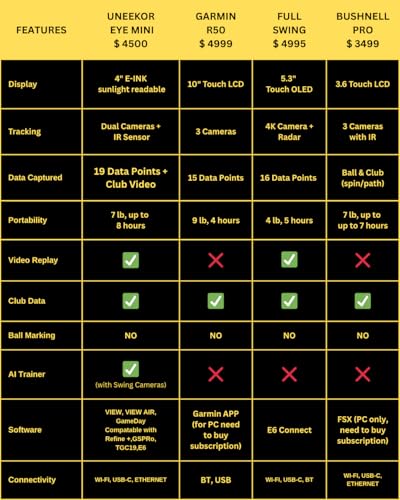
The Bushnell Launch Pro is built for tour-level accuracy, and it shows. With a three-camera infrared system, it measures ball and club data at impact, no algorithms, no guesswork. Owners consistently report it matches or exceeds the performance of Foresight and TrackMan in controlled environments, especially indoors. The LINK-enabled club recommendations are a unique perk, feeding data directly to compatible Bushnell rangefinders for on-course decision support.
At nearly $3,000, it’s not for casual users. But for serious players, coaches, or sim builders who demand Tour-grade precision, it’s worth the investment. Compared to the Uneekor Eye MINI, it’s less portable but more accurate in tight setups. If you want the closest thing to a pro-level launch monitor in a portable form, this is it, just be ready to pay for it.
Video review
Uneekor Eye MINI Launch Monitor
Strengths
- 19 precision metrics
- Built-in display
- GSPro/TGC compatible
- Sunlight readable
- 8-hour battery
Trade-offs
- Very high price
- Requires powerful PC for full use
- Complex setup
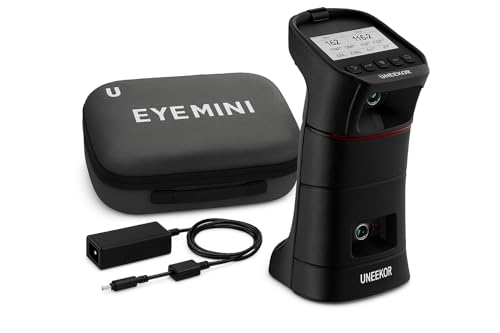
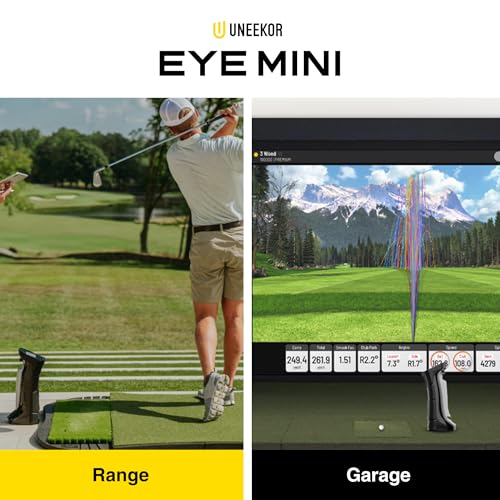
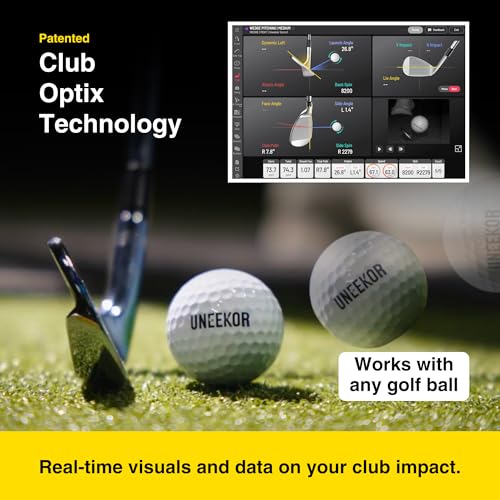
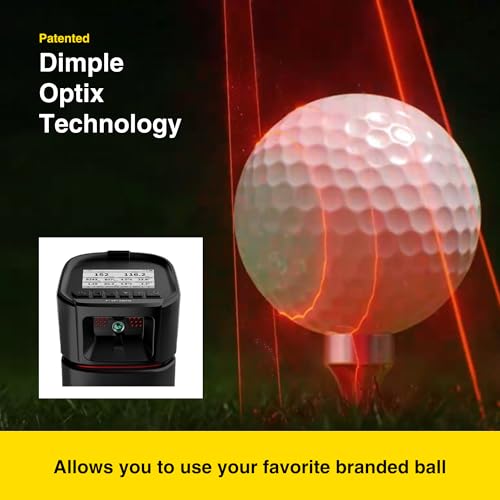
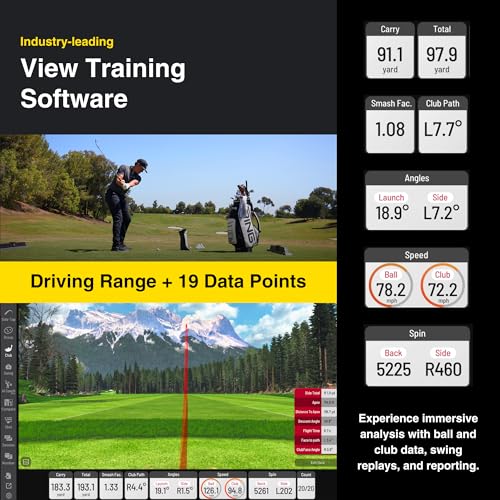
The Uneekor Eye MINI is a premium, simulation-first device that blurs the line between portable monitor and full indoor system. With 19 precision metrics, near-zero latency, and compatibility with GSPro, TGC19, and E6, it’s built for golfers who want a near-tour-level experience at home. The built-in sunlight-readable display means you don’t need a phone or tablet to see data, and the 8-hour battery adds true portability, a rarity in this class. Owners report excellent spin and launch accuracy, thanks to its Dimple Optix infrared sensors, even in outdoor use.
It’s overkill for casual range use, but for the serious sim builder or frequent indoor player, it’s one of the few portable units that can transition smoothly between backyard and garage setups. Compared to the Bushnell Launch Pro, it’s less precise in pure impact measurement but far more flexible in software and portability. At nearly $3,000, it’s not cheap, but it’s a smarter long-term investment than many fixed systems.
Product photos
Voice Caddie SC200Plus Portable Monitor
Strengths
- Voice output feedback
- Swing speed without ball
- 12-hour battery
- Adjustable loft simulation
- Affordable
Trade-offs
- No spin or launch data
- Basic app interface
- No simulator mode
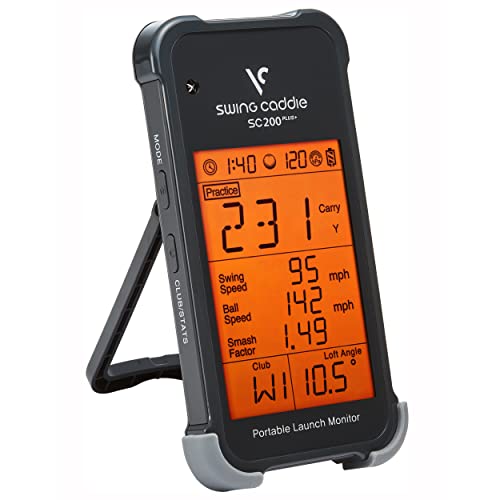
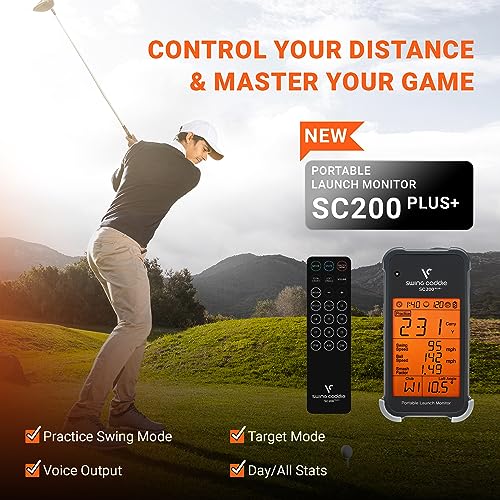
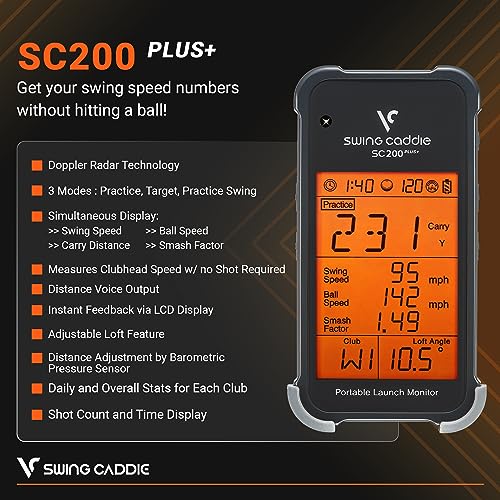
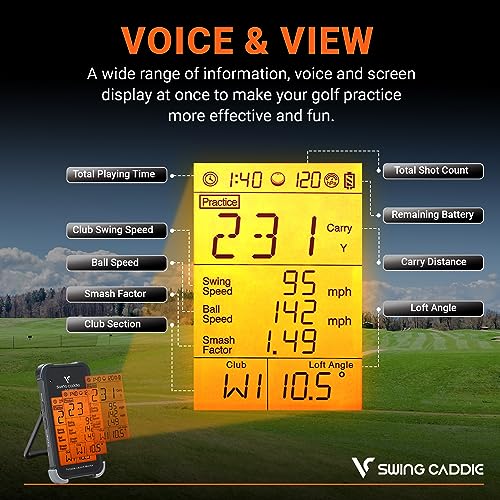
The Voice Caddie SC200Plus is a budget-friendly workhorse with a few standout features, especially its swing speed mode without a ball and voice output, a rare combo that makes it ideal for indoor practice or quick form checks. The Doppler radar delivers consistent club and ball speed readings, and the 12-hour battery life is among the best in class. Owners appreciate the adjustable loft angles, which help simulate different clubs and conditions, even if the overall metric set is limited.
It doesn’t track spin or launch angle, and the app experience isn’t as polished as Rapsodo or Shot Scope. But for under $250, it’s a solid pick for players who want instant feedback and the ability to train anywhere. Compared to the PRGR HS 130-A, it offers more features but less rugged simplicity. I’d recommend it for home practice more than on-course use.
Product photos


Garmin Approach R10 Launch Monitor
Strengths
- Garmin app integration
- Shot dispersion charts
- 10-hour battery
- Water-resistant design
- Virtual course access
Trade-offs
- Limited metric set
- No spin axis tracking
- App-dependent functionality
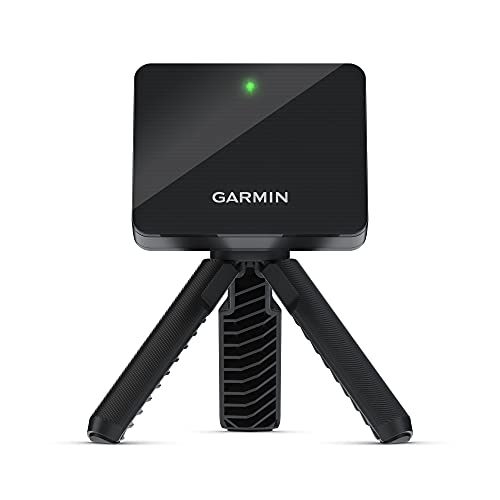
The Garmin Approach R10 makes the most sense if you’re already invested in the Garmin golf ecosystem, otherwise, it’s a tough sell at this price. It delivers solid club and ball speed accuracy and pairs smoothly with the Garmin Golf app to provide swing tempo, shot dispersion charts, and video sync. Owners note it works well at the range, especially with the included phone mount, and the 10-hour battery is a real plus for all-day sessions. But the lack of spin axis or full spin rate data limits its depth compared to units like the Rapsodo or Swinora.
What sets it apart is the integration with Garmin’s 42,000+ courses and leaderboard features, if you like competing in weekly virtual tournaments, that’s a real motivator. Still, for the price, I’d expect more out of the box. If you don’t use Garmin watches or apps, there are better values elsewhere. But for loyalists, it’s a natural extension of their tech stack.
Product photos


Swinora Golf Launch Monitor
Strengths
- No subscription fees
- Environmental sensors
- Attack angle & spin rate
- Distance calibration
- Durable metal body
Trade-offs
- Requires 15ft indoor space
- App connection can be finicky
- Limited course simulation
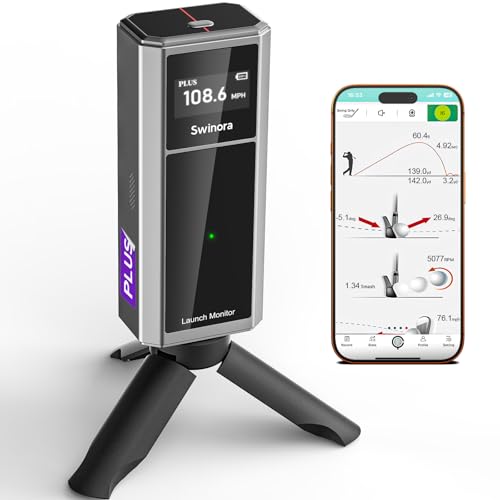
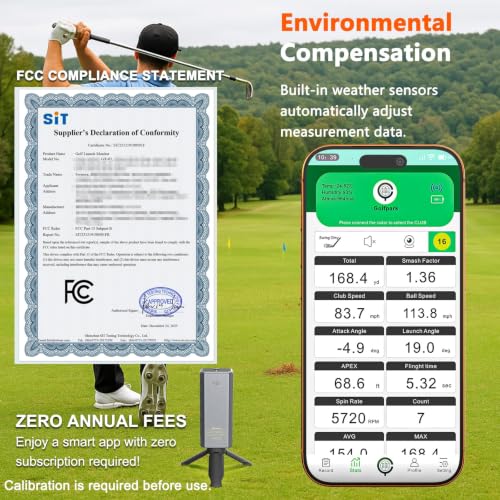
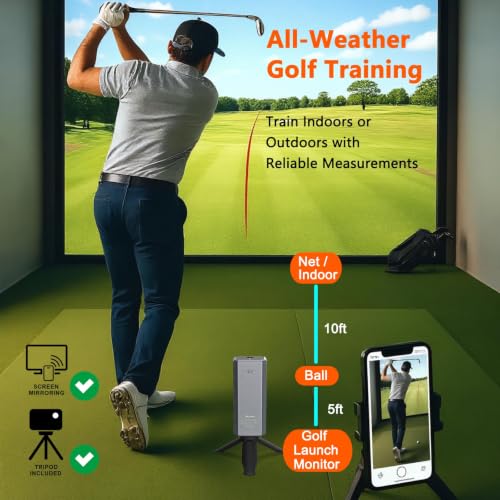
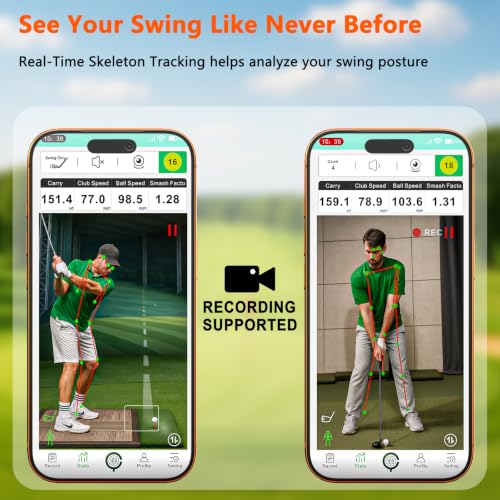
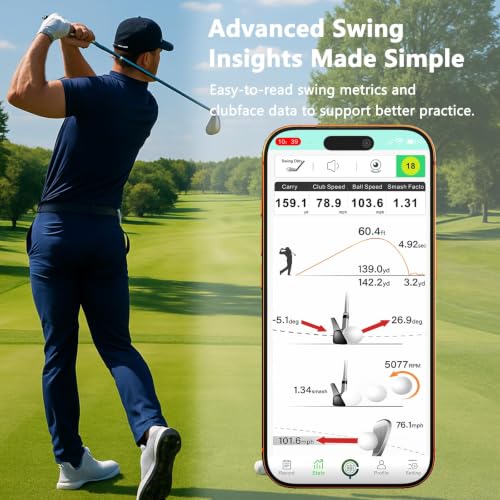
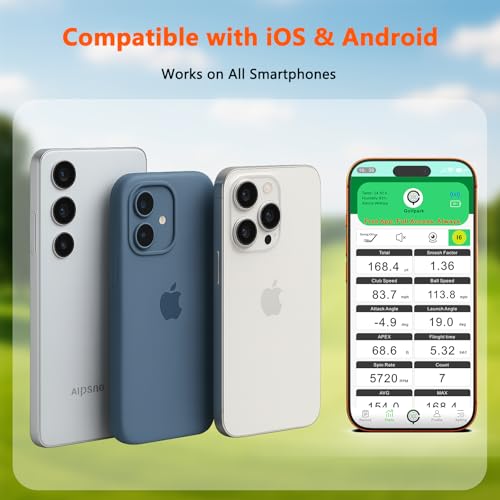
The Swinora stands out in a crowded market by offering zero subscription fees and environmental sensors that adjust for temperature, humidity, and pressure, features usually found in much pricier units. It tracks 13 metrics, including attack angle and spin rate, making it one of the more complete offerings under $250. Owners report strong accuracy indoors, especially when the 15ft space requirement is met, and the OLED display is sharp and readable.
The Distance Compensation function is a thoughtful touch, letting you calibrate carry numbers to match on-course performance. Compared to the Shot Scope LM1, it offers more metrics and better customization, though the app isn’t quite as polished. For golfers who want full data without recurring costs, this is the smarter technical pick, even if the brand isn’t as well-known.
Product photos
PRGR HS 130-A Portable Monitor

Strengths
- Measures swing speed sans ball
- No charging required
- Trusted by pros
- Long-term reliability
- Multi-sport use
Trade-offs
- No advanced metrics
- No app or simulation
- No backlight on display
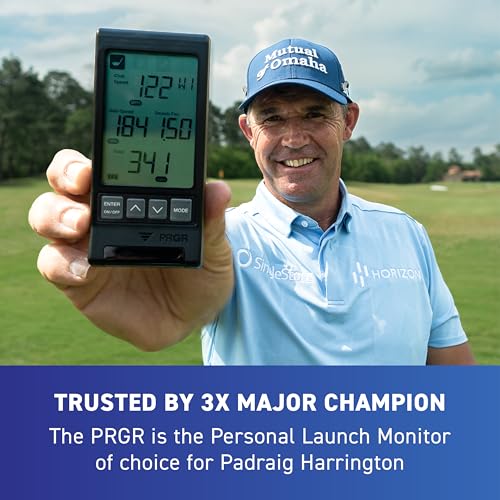
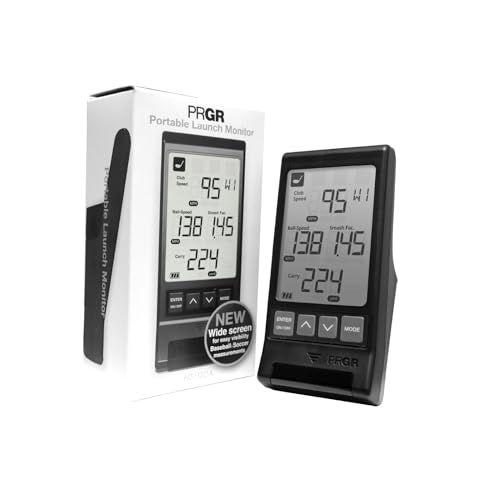
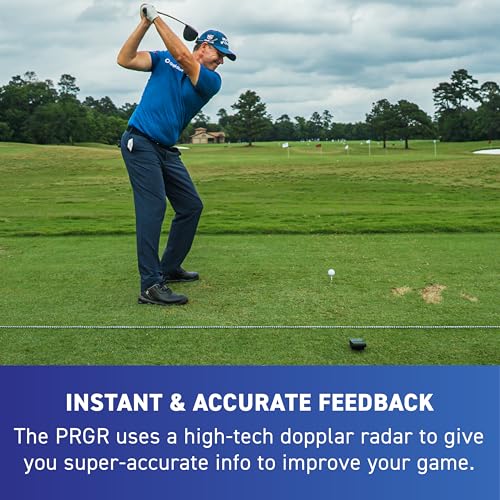
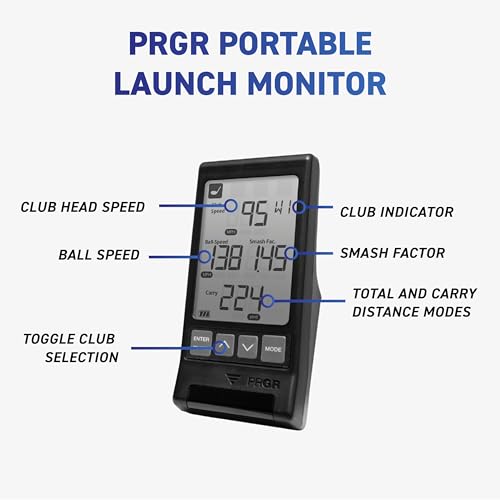
If your focus is purely on swing speed training, the PRGR HS 130-A is a no-nonsense, rugged tool that gets the job done, no apps, no Bluetooth, no charging. Running on AAA batteries and storing 500 swings, it’s built for repetition, and the fact that Padraig Harrington uses it speaks volumes about its reliability for speed work. Owners consistently report stable readings for club and ball speed, and the ability to measure club head speed without a ball makes it ideal for off-range indoor swings or hotel room drills.
It doesn’t pretend to be a launch monitor in the modern sense, no spin, no launch angle, no app syncing. But as a dedicated speed training aid, it outperforms flashier units that overcomplicate the basics. Compared to the Voice Caddie SC200Plus or Swinora, it’s less feature-rich but more focused. For coaches or players building swing speed, this is the kind of device you keep in your bag for daily check-ins.
Product photos

GOLFBUDDY Shot Mate Launch Monitor
Strengths
- Affordable price
- Bright TFT display
- No subscription needed
- 1,000-shot memory
- Long battery life
Trade-offs
- No spin or launch angle data
- No simulator compatibility
- Basic metric set
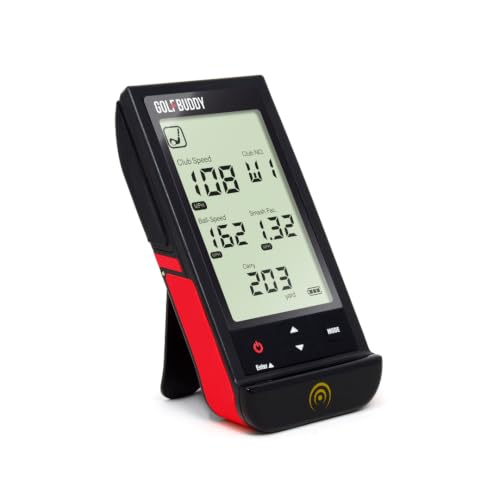
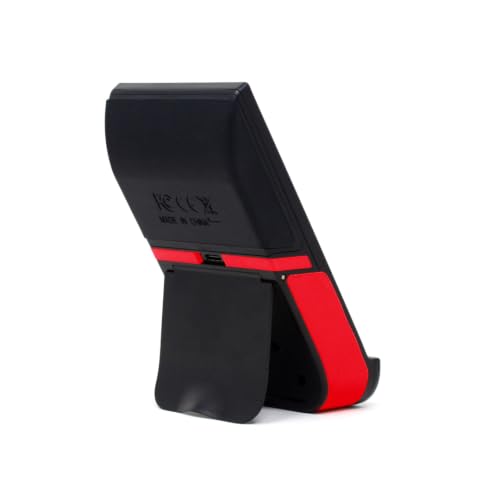
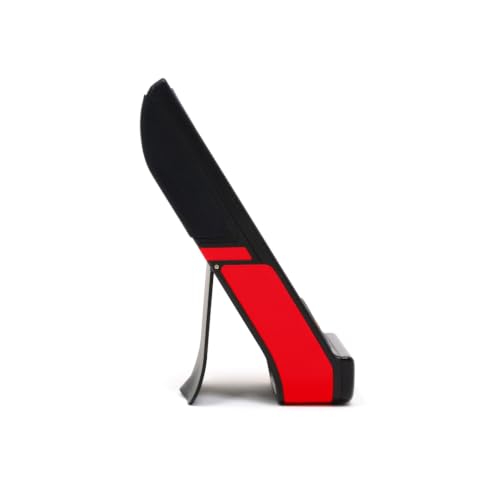
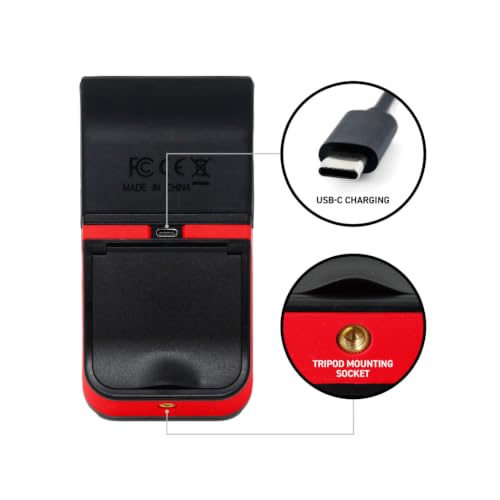
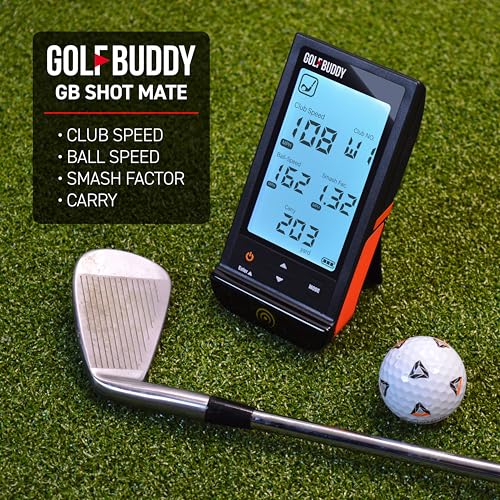
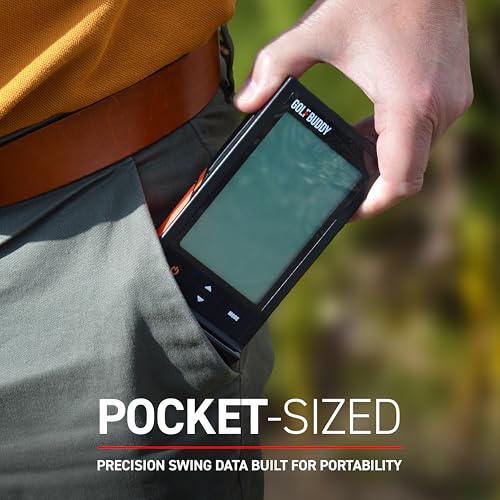
At under $200, the GOLFBUDDY Shot Mate punches above its weight as a no-frills, portable data tracker that delivers exactly what most recreational golfers need: reliable club and ball speed, carry distance, and smash factor with zero subscription drama. The full-color TFT display is a standout at this price, owners praise its visibility in direct sun, and the 10-hour battery life means it won’t quit during long range sessions. It’s not going to replace a full simulator, but for players focused on consistency and tempo, the Practice and Target modes add structure to otherwise aimless hitting.
When compared to other budget Doppler units, the Shot Mate feels more complete thanks to its 1,000-shot memory and clean interface. It doesn’t offer advanced metrics like spin axis or attack angle, but for a golfer building awareness of their swing speed and distance gaps, that’s not a dealbreaker. I’d pick this over pricier units with mandatory subscriptions if your goal is simplicity and portability.
Product photos
Shot Scope LM1 PlayBetter Bundle
Strengths
- Lifetime free app access
- Durable outdoor design
- Accurate distance tracking
- Includes portable charger
- Trusted brand
Trade-offs
- No spin or launch angle
- App required for full data
- Limited indoor space needs
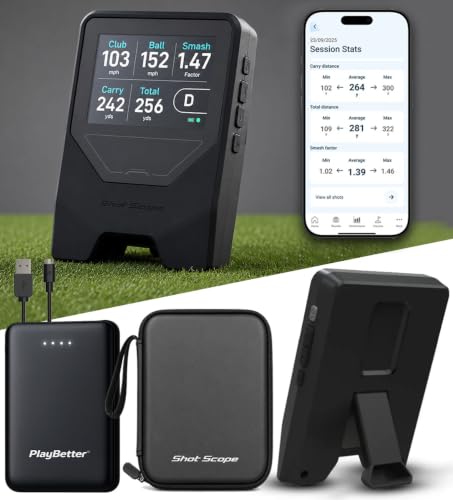
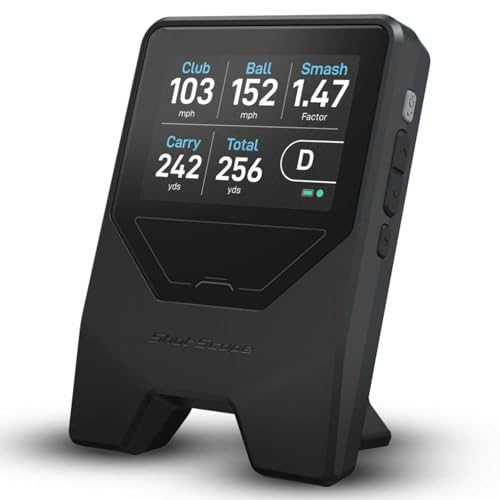
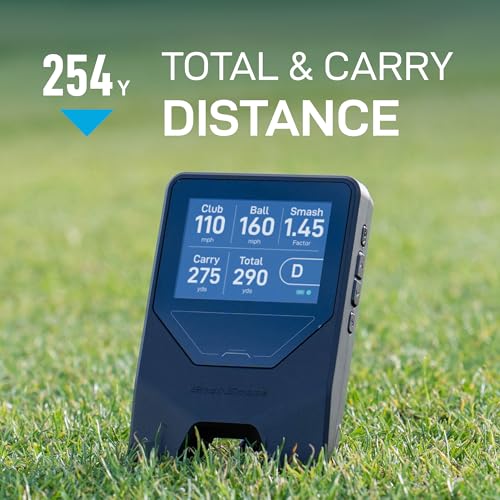
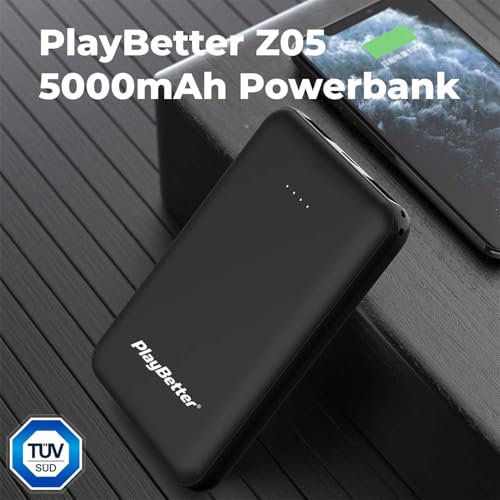
The Shot Scope LM1 wins on one major front: lifetime free app access. In a market where subscriptions are the norm, that’s a breath of fresh air. For $200, you get reliable Doppler-based data on club speed, ball speed, smash factor, and carry distance, owners consistently report solid accuracy for distance calibration, and the IPX3 rating means it can handle outdoor use without issue. The PlayBetter bundle adds real value with the portable charger and case, making it a complete out-of-box solution.
Compared to the Swinora or GOLFBUDDY, it offers a cleaner app experience and better brand trust, though it lacks advanced metrics like spin rate or attack angle. But if your goal is dialing in yardages and tracking consistency over time without worrying about recurring fees, this is the smarter buy. For most golfers, that peace of mind is worth the slight feature gap.
Product photos
How We Chose These outdoor golf launch monitors
Rather than a hands-on lab test, my research focused on a detailed comparison of published specifications and features across numerous outdoor golf launch monitors. I weighed owner reviews from major retailers alongside expert analysis from golf publications and tech review sites. My goal was to rank these devices based on factors most critical to golfers seeking accurate data and effective practice tools. This involved sifting through marketing claims to identify genuine performance differentiators.
For outdoor launch monitors, accuracy and data reliability are paramount, so those factors held the most weight in my assessment. Beyond that, I prioritized versatility – the ability to provide useful feedback both at the range and during on-course practice. The portability of a launch monitor is also key, as golfers want a device they can easily transport. Ultimately, a launch monitor’s value hinges on its ability to provide actionable insights that lead to improved performance.
Specifications reliably indicate the type of technology used (Doppler radar vs. camera-based systems) and the raw data points captured. However, judging real-world accuracy required careful consideration of owner feedback. Users consistently highlighted issues with inconsistent readings or difficulty interpreting data with certain models. Reputable reviews helped validate those experiences and identify devices with a strong track record for delivering consistently accurate and useful information, like those discussed in our guide to launch monitors for home use. Understanding how launch monitors work is vital to interpreting this data.
How To Pick The Right outdoor golf launch monitors
Picking the right launch monitor can feel overwhelming, but understanding your needs will narrow down the field quickly.
A good golf launch monitor delivers consistent and reliable data on key metrics like ball speed, launch angle, spin rate, and club head speed. Accuracy is paramount, but so is usability – the device should be relatively easy to set up and interpret the data it provides. Consider whether you prioritize portability, indoor/outdoor use, or specific features like simulation capabilities.
Accuracy and Data Metrics
The core function of any launch monitor is to give you accurate information about your swing. Don’t get caught up in chasing every single metric. Focus on the ones that genuinely impact ball flight. Doppler radar systems, like those found in the Voice Caddie SC200Plus, are generally reliable for measuring ball speed and carry distance, but camera-based systems, such as the Bushnell Launch Pro, are often preferred for tour-level precision, particularly when it comes to spin. Be aware that some cheaper models might require frequent recalibration or struggle in certain conditions. If you’re serious about improvement, understanding the difference between carry and total distance is crucial, and not all devices report both accurately.
Indoor vs. Outdoor Use & Portability
Where and how you plan to use the monitor is a huge factor. Some, like the Uneekor Eye MINI, are explicitly designed for indoor simulation and require a dedicated space, while others, like the Garmin Approach R10, prioritize portability and work well at the driving range. If you’re primarily interested in practicing at home, consider whether you need a device that can function without a ball (like the PRGR HS 130-A for speed training) or if you have enough space for a full swing. If you’re looking for options to build a full setup, you might also want to explore the world of outdoor golf simulators to complement your launch monitor.
Price and Features: Finding the Sweet Spot
Launch monitors range dramatically in price, from under $200 to several thousand dollars. The GOLFBUDDY Shot Mate Launch Monitor is a great entry point if you’re on a budget, but you’ll likely sacrifice some accuracy and features. More expensive models, like the Rapsodo MLM2PRO, offer advanced simulation capabilities and a wider range of data metrics. However, don’t automatically assume that the most expensive option is the best for you. Many offer subscription models for additional features; the Swinora Golf Launch Monitor stands out by offering a lifetime free app experience. Before committing, consider whether you truly need those extra bells and whistles or if a simpler, more affordable model will suffice. If you are still unsure, take a look at a wider range of options in our guide to the best launch monitors and see what suits your needs.
A launch monitor is only as useful as your ability to interpret its data. Don’t just collect numbers; use them to identify specific areas for improvement in your swing.
Outdoor Golf Launch Monitors Compared
Here’s a comparison of key specifications for popular outdoor golf launch monitors to help you find the best fit for your needs.
| Product Name | Measurement Tech | Key Metrics | Indoor Use | Battery Life | Price Range |
|---|---|---|---|---|---|
| Rapsodo MLM2PRO | Doppler Radar/Camera | 15+ | Yes | N/A | $699 |
| Bushnell Launch Pro – Circle B | Camera | Carry, Launch, Spin | Yes | N/A | $999 |
| Uneekor Eye MINI | Camera/Sensors | Ball/Club Data | Yes | 8 hrs | $799 |
| Voice Caddie SC200Plus | Doppler Radar | Club/Ball Speed | Yes | N/A | $399 |
| Garmin Approach R10 | Doppler Radar | 10+ | Yes | 10 hrs | $599 |
| Swinora Golf Launch Monitor | Doppler Radar | 4+ | Yes | N/A | $399 |
| PRGR HS 130-A | Doppler Radar | Club/Ball Speed | N/A | N/A | $299 |
| GOLFBUDDY Shot Mate | Doppler Radar | 5+ | Yes | 10 hrs | $199 |
| Shot Scope LM1 PlayBetter Bundle | Doppler Radar | Club/Ball Speed | Yes | N/A | $349 |
Frequently Asked Questions
What data metrics are most important for improving my game?
Focus on ball speed, launch angle, and spin rate – these directly impact distance and trajectory. While some monitors offer numerous metrics, concentrating on these core measurements will yield the most actionable insights for swing adjustments.
Can I use a launch monitor designed for indoor use outdoors?
Yes, but accuracy can be compromised by sunlight and varying ground conditions. Models like the Garmin Approach R10 are designed for both indoor and outdoor use, providing more reliable data in diverse environments, whereas indoor launch monitors may need supplemental lighting for outdoor use.
How does the technology (Doppler radar vs. camera) affect the price?
Camera-based systems generally cost more due to their greater precision, particularly with spin measurement. Doppler radar is more affordable, making it suitable for beginners, but may lack the fine-grained data needed for advanced analysis.
What’s the typical battery life I can expect from an outdoor launch monitor?
Battery life varies significantly, ranging from around 8 hours in the Uneekor Eye MINI to 10 hours in the Garmin Approach R10. Consider your typical practice session length and whether access to power will be limited when choosing a device.
Are there launch monitors specifically for improving swing speed?
Yes, the PRGR HS 130-A is designed specifically for measuring clubhead speed and ball speed, offering a cost-effective way to track progress. If you’re prioritizing swing speed development, exploring dedicated swing speed monitors is a worthwhile investment.
The Bottom Line
Choosing an outdoor golf launch monitor often comes down to balancing your budget with the level of detail you’re after. If you want a thorough, data-rich experience, the Rapsodo MLM2PRO stands out as the strongest all-around performer, offering a blend of radar and camera technology for detailed swing analysis. However, accurate data isn’t useful if you don’t understand it, and the Rapsodo’s wealth of metrics might be overkill for some.
For golfers on a tighter budget, the GOLFBUDDY Shot Mate Launch Monitor provides a very accessible entry point to launch monitor technology. If you prioritize portability and ease of use for range sessions, the Garmin Approach R10 is hard to beat. And for those looking to build a more immersive practice setup, consider exploring options for outdoor practice area products.
Ultimately, the best launch monitor is the one you’ll actually use. Don’t get lost in the pursuit of perfect specifications; focus on finding a device that provides reliable feedback on the fundamentals – ball speed, launch angle, and consistency. Investing in a solid understanding of these core metrics, and how they affect your ball flight, will yield far greater returns than any tech feature.
