
How to Overcome Putting Yips | The 4-Step Fix That Worked
This post contains affiliate links. As an Amazon Associate, we earn from qualifying purchases.
This post contains affiliate links. As an Amazon Associate, we earn from qualifying purchases.
To overcome putting yips, you must break the vicious circle of conscious control that disrupts your natural stroke. The fix is a four-step plan: first, correctly identify if it’s yips or nerves; second, retrain your mechanics with a grip or putter change; third, rebuild your mental process with pre-shot routines; fourth, practice under low-pressure conditions to re-automate the stroke. The goal is to stop the brain from interrupting a movement it already knows.
That circle starts with a single missed short putt. You overthink the next one. Your brain, trying to help, seizes conscious control of a movement that should be automatic. This introduces a second, conflicting movement program that manifests as a jerk, a twitch, or a freeze. The problem is that you’re now trying to putt on purpose in real time, which is impossible.
What follows is the breakdown of that cycle and the specific, sequential steps to break it. We’ll cover the biomechanical trigger (the AROT parameter), the equipment swaps that work (and why), the mental drills that stick, and how to structure practice so the fix survives the first tee on Saturday.
Key Takeaways
- Yips are a neuromotor conflict, not just anxiety. Your brain’s conscious control system interrupts the automated putting program, causing jerks.
- The AROT parameter (angular rotation acceleration) is a measurable biomechanical signature of yips, with thresholds over 4000 deg/s² indicating the problem.
- Changing your grip or putter type isn’t a gimmick; it works by providing novel sensory feedback that bypasses the corrupted movement pattern.
- A pre-shot routine is non-negotiable. It builds a firewall between your conscious mind and the start of your stroke.
- Practice must be low-stakes and repetitive to re-automate the stroke. High-pressure drill work makes the problem worse.
What Are the Putting Yips, Exactly?
The yips feel like a mechanical seizure. Your wrists lock. The putter head jerks inward or stops dead. For a task you’ve done ten thousand times, it becomes suddenly impossible. This isn’t choking. Choking is a global performance decline under pressure. The yips are a specific, task-dependent failure. You can stripe drives and hit crisp irons, but a three-footer looks like a canyon.
Research from Science&Motion pinpoints the mechanism. In golfers with heavy yips, face rotation and putter path become impaired and wildly variable at impact. The study suggests the original, smooth putting program is still in your brain. It’s just being “superimposed by a second and conflicting movement program” connected to the conscious fear of missing. Your body is literally fighting itself over direction control.
Where this goes sideways: Calling it “all in your head.” That framing makes golfers try to think their way out of it, which pours gasoline on the fire. The fix is to stop thinking, not to think differently.
Yips vs. Nerves: The Diagnostic Split
You need the right diagnosis. General performance anxiety requires strategies for handling nerves. The yips are more precise. | Symptom | Yips | Nerves / Choking | |———————-|——————————————-|——————————————–| | Trigger | Specific task (short putts, right hand) | General situation (competition, score) | | Physical Sign | Involuntary jerk, freeze, wrist lock | Tight muscles, rushed tempo, poor rhythm | | Conscious Control| High – you’re actively trying to steer | Low – you’re overwhelmed and scattered | | Fix Direction | Remove conscious control; change sensory input | Manage arousal; focus on routine |
If your miss is a violent pull or a stuttered jab, especially on left-to-right putts when using your dominant hand, you’re likely in yips territory. The technical measure is the AROT parameter, which quantifies rotational acceleration jerks. In novices, an AROT value over 4000 deg/s² signals the issue.
The Anatomy of a Yip: How the Vicious Circle Spins
Understanding the loop is how you break it. It doesn’t start with a twitch. It starts with a thought.
- The Catalyst: A missed short putt that “should” have been made. This creates doubt.
- The Overcorrection: On the next similar putt, your conscious brain intervenes. It tries to manually control the face angle and path to ensure a perfect strike.
- The Conflict: This conscious command conflicts with the smooth, automated motor program you’ve built over years. The two signals collide, resulting in a co-contraction of muscles—a jerk, a halt.
- The Reinforcement: The resulting miss confirms the fear. The cycle intensifies. Now, even the anticipation of the putt triggers the conscious intervention.
The study “The Vicious Circle Involved in the Development of the Yips” found that golfers with mild yips show longer backswing times and more variable timing. This is the smoking gun. Increased movement time is a hallmark of conscious control. Your brain is processing feedback in real-time, which slows everything down and destroys rhythm.
The kinematic analysis could also help to identify the Yips problems at an early stage. Most of the golfers who show mild Yips symptoms are not yet aware of a specific putting problem. They may only recognize some inconsistency in their putting.
That inconsistency is the entry point. The fix must attack the loop at step two: the conscious intervention.
The Four-Step Plan to Overcome Putting Yips
This is a procedural overhaul. You are retraining your system to bypass the corrupted file.
Step 1: The Correct Diagnosis and Mindset Shift
Accept that willpower is the enemy. Trying harder to make a smooth stroke is the problem. Your goal is to surrender control, not gain it. This means committing to a mechanical change so foreign that your conscious brain has no pre-existing “yippy” program to interrupt.
- Stop analyzing stroke flaws mid-putt. Your job ends once you start the putter back.
- Embrace a change. View a new grip or putter not as a failure, but as a necessary hardware update.
This shift is foundational. Without it, you’ll second-guess the solutions in step two.
Step 2: Retrain Your Mechanics – Grip and Equipment
This is the most direct way to break the neuromuscular pattern. You’re changing the sensory feedback to your brain.
Grip Changes:
- Cross-Handed (Left-Hand Low for Righties): This drastically reduces the dominance of the right hand, which is the primary culprit for most right-handed yippers. It’s the first change to try. Arnold Palmer regretted not switching to it.
- The Claw or Pencil Grip: This isolates the right hand entirely, turning it into a passive stabilizer. It’s exceptionally effective for eliminating the right-wrist jerk.
- Armlock or Broomstick: These longer putters anchor against the forearm or chest, physically restricting the unwanted wrist breakdown. Research shows a broomstick putter eliminated yips symptoms completely in study participants.
Putter Changes:
A heavier putter head can dampen small twitches. More radically, switching to a face-balanced mallet from a toe-hang blade changes the torque feel during the stroke, which can disrupt the flawed motor pattern. Don’t tinker. Make one decisive change and stick with it for a full evaluation period.
Step 3: Rebuild Your Mental Process – The Pre-Shot Routine
The routine is your firewall. It creates a script that occupies your conscious mind, allowing the athletic stroke to happen automatically.
A bulletproof routine has three phases: 1. Read and Commit: Use your fundamental green reading techniques behind the ball. Pick a specific spot an inch in front of your ball on the start line. The decision is now final. 2. Physical Setup: Walk in. Align your putter face to that spot first. Then set your feet and body relative to the face. This is where strong putting alignment fundamentals are critical. Take your grip last. 3. Trigger and Execute: Look at the target hole once. Look back at the ball. Your only thought is a trigger word (“smooth” or “tick”) or a focus on the sound of the strike. Start the stroke before doubt has time to return.
Practice this routine on every putt, even two-footers on the practice green. It must become non-negotiable.
Step 4: Re-Automate the Stroke – Deliberate Practice
You have a new motor pattern. Now you must ingrain it under zero pressure.
- Start at Home: Use a simple indoor putting mat to make hundreds of repetitive strokes focusing only on solid contact. The goal is boring consistency.
- No Results-Based Practice: On the practice green, putt to a tee, not a hole. Remove the success/failure feedback. Just work on the feeling of the new stroke and the routine.
- Graduate Slowly: Only when the stroke feels automatic from 3 feet, move back to 10 feet. Focus entirely on speed control, not holing. The moment you feel tension, go back to a shorter distance.
This type of practice rebuilds the automaticity that the yips destroyed. It’s the opposite of grinding over three-footers for your paycheck.
When to Seek Outside Help
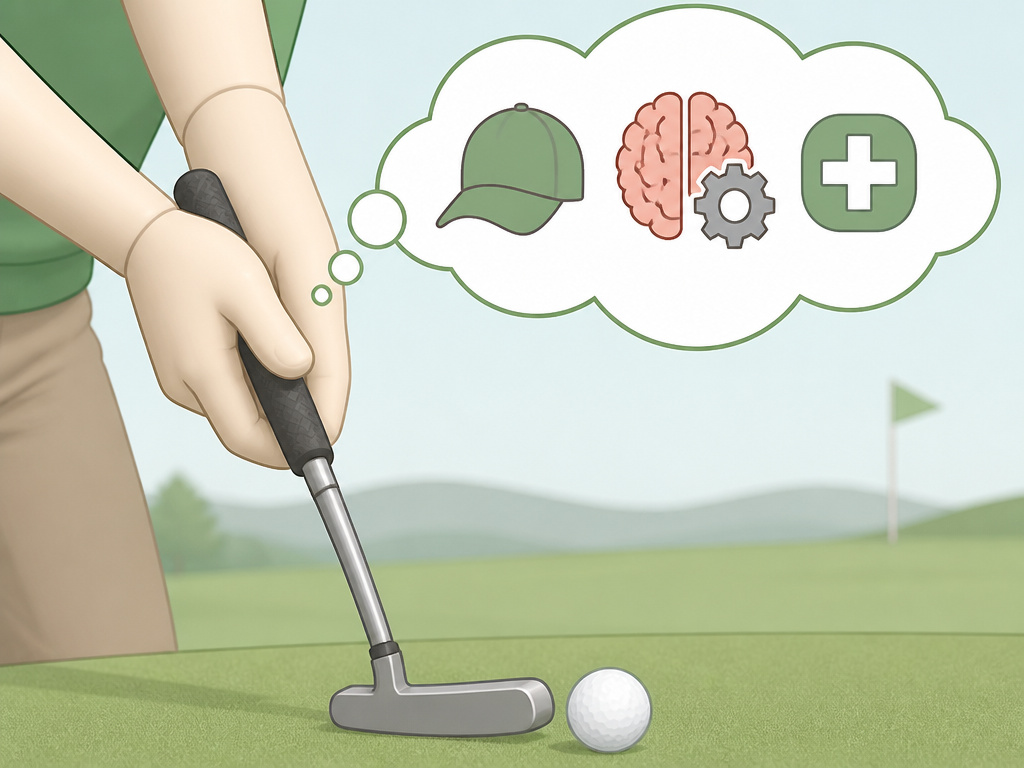
Self-help has limits. If the yips are severe and chronic, professional guidance is not a defeat—it’s a logical next step.
- A PGA Teaching Professional: Look for an instructor experienced in working with yips. They can objectively assess your new mechanics and ensure your putting fundamentals are sound, so you’re not fighting a technical flaw on top of the neurological one.
- A Sports Psychologist: They provide structured mental frameworks beyond simple routine. They can help with the underlying overcoming self-doubt that often fuels the cycle.
- Medical Evaluation: In persistent cases, consult a doctor. The Mayo Clinic yips diagnosis guide outlines when yips may be related to focal dystonia, a neurological movement disorder, which requires a different treatment path.
The part nobody mentions: Seeing a pro isn’t just about getting a lesson. It’s about having an authority figure give you “permission” to use your new, unconventional method. That external validation can silence the last voice of doubt in your own head.
Frequently Asked Questions
Can the yips be cured permanently?
Maybe not “cured” in the sense of never returning, but they can be managed into remission. The goal is to have a reliable process (grip, routine, practice) that you trust. If the twitch returns, you have a known playbook to fall back on, which itself reduces the panic that fuels the cycle.
Are the yips all mental?
No. They start with a mental trigger (fear, doubt), but they manifest as a real, measurable neuromuscular conflict. Treating them as purely psychological leads to trying to “think your way out,” which is ineffective. The solution is behavioral and mechanical—you change the input to change the output.
Will changing my putter grip ruin my overall game?
No. Your full swing and your putting stroke use different motor pathways. A cross-handed or claw putting grip has no bearing on your ability to hit a driver. Many tour players, like Jordan Spieth, use a cross-handed grip only for putting. Keep the changes confined to the green.
How long does it take to overcome the yips?
There is no standard timeline. It depends on severity, consistency of practice, and how well you adopt the new mindset. Using the research-backed method of guided imagery yips intervention, study participants saw significant reductions in yips that were maintained for weeks. Expect a period of awkwardness for 2-4 weeks as you ingrain the new pattern.
I only yip on short putts. Why?
Because short putts are where direction control is paramount and the margin for error is zero. The conscious brain feels the need to intervene to guarantee precision. On longer lag putts, where distance control is the priority, the conscious system often stands down, and the stroke can remain fluid.
The Bottom Line
The yips are a hijacking. Your conscious mind, in a well-intentioned but disastrous move, tries to take the wheel of an automatic process. The solution is to change the locks so it can’t get back in.
Make one decisive mechanical change—your grip or your putter. Build an immutable pre-shot routine that occupies your thinking mind. Then, practice with repetitive, low-stakes diligence to rewrite the muscle memory. This is a systematic reset. The freedom to putt without fear is found outside of a perfect stroke.It’s found in a process so reliable that you can finally stop thinking about it.
