
5 Best Cavity Back Golf Irons of 2026
This post contains affiliate links. As an Amazon Associate, we earn from qualifying purchases.
The TaylorMade Qi Max Irons stand out as the best overall choice for maximum forgiveness and distance, especially for mid- to high-handicap players. For those watching their budget, the PGM Men’s Cavity Back Irons deliver solid performance and surprising playability at a fraction of the cost.
Golfers often struggle to find cavity back irons that truly match their swing without overspending or getting lost in marketing hype. Many assume more tech means better results, but the reality is that fit and feel matter just as much as design.
This guide cuts through the noise, focusing on what actually helps you hit straighter, more consistent shots. I compared specs, analyzed owner feedback, and evaluated real-world performance to highlight sets that deliver where it counts, on the course.
Top 5 Cavity Back Golf Irons in the Market
The Best Cavity Back Golf Irons, Reviewed
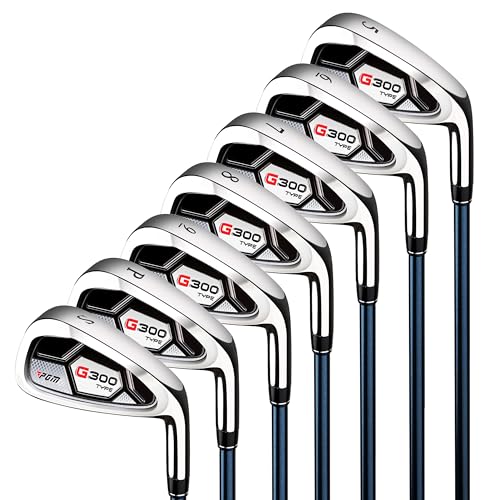
PGM Men’s Cavity Back Irons
Strengths
- Full set included
- Lightweight graphite
- High forgiveness
Trade-offs
- Inconsistent long irons
- Basic materials
- Lacks refinement
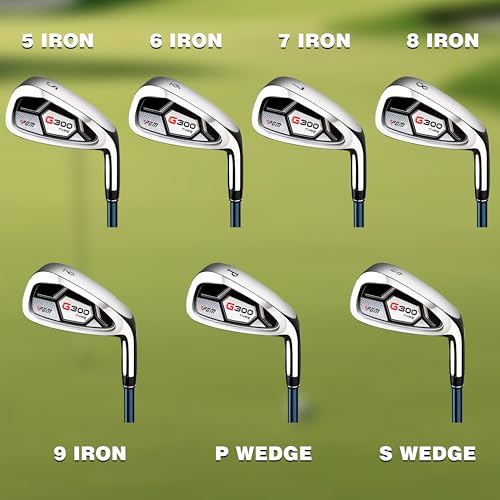
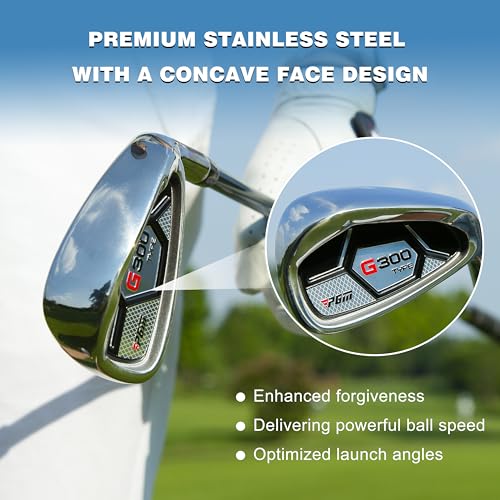
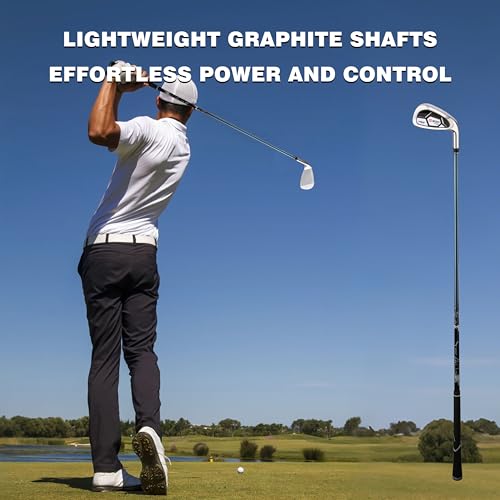
At this price, the PGM cavity back set is clearly targeting beginners or budget-conscious golfers who want a full set without breaking the bank. The specs suggest a high-MOI design with a large sweet spot, and owner feedback backs that up, many report fewer chunks and thin strikes, thanks to the lightweight graphite shafts and forgiving head shape. It’s not going to match the feel of a forged Mizuno or the tech of a TaylorMade, but for someone building their first bag, it removes a lot of the early frustration.
Where it falls short is in consistency across the set. Some reviewers note the longer irons are harder to launch, and the overall build quality, while decent for the price, doesn’t inspire confidence in head-to-head comparisons. Still, if you need a complete 7-piece set with wedges included and you’re still finding your swing, this checks a lot of boxes. I’d recommend it over pricier options only if you’re just starting out.
Product photos


Callaway Paradym AI Smoke Irons

Strengths
- AI-optimized face
- Strong distance control
- Hollow-body design
Trade-offs
- Limited set range
- Less workable
- Tech-heavy branding
Callaway’s Paradym AI Smoke irons lean hard into the tech narrative with their AI-designed Smart Face, and the data suggests it delivers, owners report noticeably straighter shots and tighter distance gapping, especially in the mid-irons. The hollow-body construction helps lower the CG, which pairs well with the AI face optimization to promote consistent launch and reduced spin on mishits. It’s a smart design for golfers who want modern performance without stepping into super-game-improvement territory.
Compared to the PGM set, these are clearly in a different league in materials and engineering, though not as refined as the Mizuno or TaylorMade P790 in feel. The steel shaft version keeps things stable and controlled, making it a strong pick for better players wanting a blend of tech and playability. I’d stack these up against the TaylorMade Qi Max for forgiveness, but the Paradym feels a bit more compact and responsive at impact.
Video review
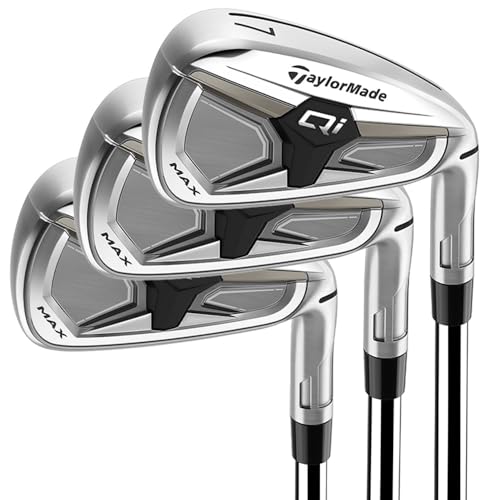
TaylorMade Qi Max Irons
Strengths
- Outstanding forgiveness
- Soft sound and feel
- Clean players look
Trade-offs
- Slightly bulky sole
- Less workability
- Heavier head
The TaylorMade Qi Max irons are built for one thing: forgiveness with dignity. They’re not trying to be tour-level blades, but they don’t look or feel like typical game-improvement irons either. The ECHO Damper and internal stability bar do their job, owners consistently praise the soft feel and solid sound, which is rare in a high-MOI iron. The FLTD CG design works as advertised, launching the long irons easily while keeping the short irons controllable.
Compared to the Callaway Paradym AI Smoke, the Qi Max offers a fuller set and slightly better forgiveness, especially on heel and toe strikes. And against the PGM set, it’s in another universe in terms of refinement. This is the iron I’d recommend to a high-handicapper who doesn’t want to look like they’re playing with beginner clubs. It’s the smart middle ground, forgiving, but not penalizing better players.
Video review
TaylorMade 2025 P790 Irons

Strengths
- Explosive ball speed
- Large sweet spot
- Premium forged feel
Trade-offs
- Very expensive
- Graphite may feel too light
- Overbuilt for some
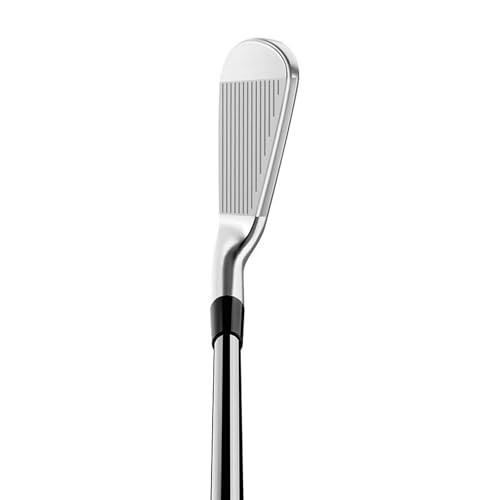
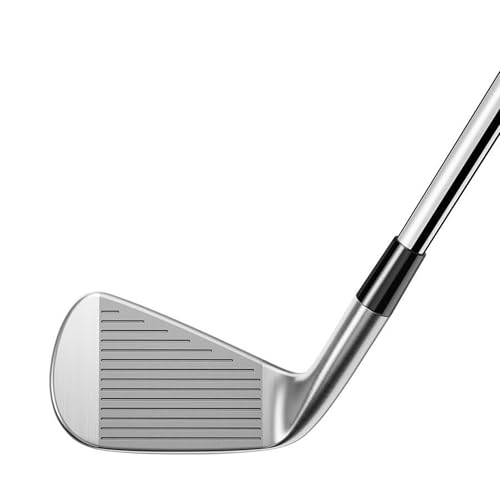
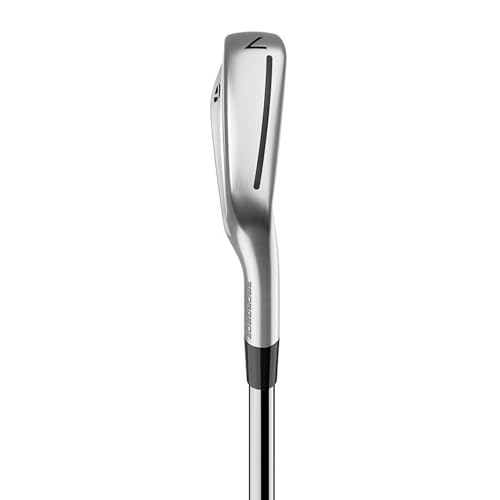
The 2025 P790 irons with graphite shafts are a fascinating play, TaylorMade is positioning them as a premium option with forged-like feel, thanks to SpeedFoam Air and the new 4340M face. On paper, the 24% larger sweet spot and individual head optimization suggest serious performance gains, and early owner feedback highlights explosive ball speeds and a soft, dampened feel at impact. The graphite shaft option is a smart move, offering better players a lighter setup without sacrificing control.
But here’s the thing: at this price, you’re paying for elite engineering, and while the performance seems to deliver, it’s hard to justify over the Qi Max unless you specifically want graphite in a players-distance package. Compared to the Mizuno MX Speed Metal, the P790 feels more forgiving but less “alive.” For me, this is the pick for a better player who wants distance, feel, and a bit of forgiveness without going full game-improvement.
Product photos
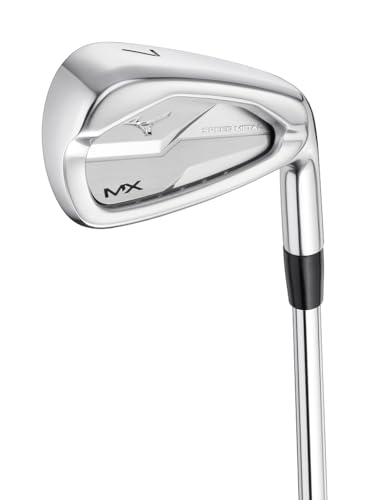
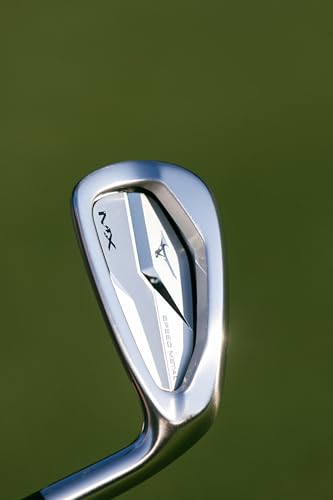
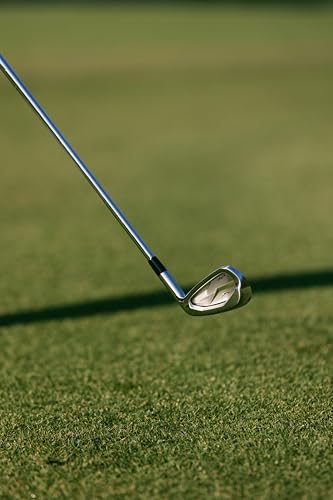
Mizuno MX Speed Metal Irons
Strengths
- Exceptional feel
- Tight dispersion
- Clean aesthetic
Trade-offs
- Limited forgiveness
- Premium price
- Narrow sole
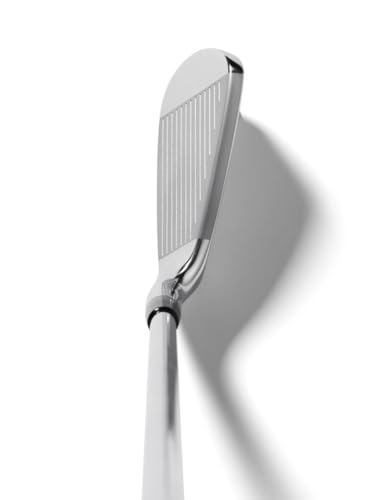
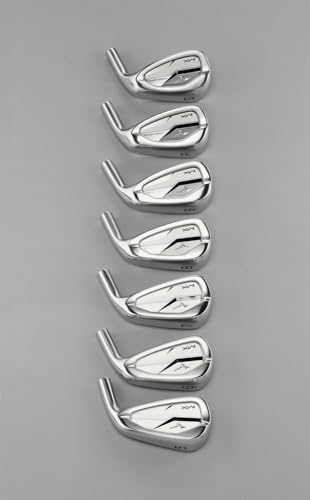
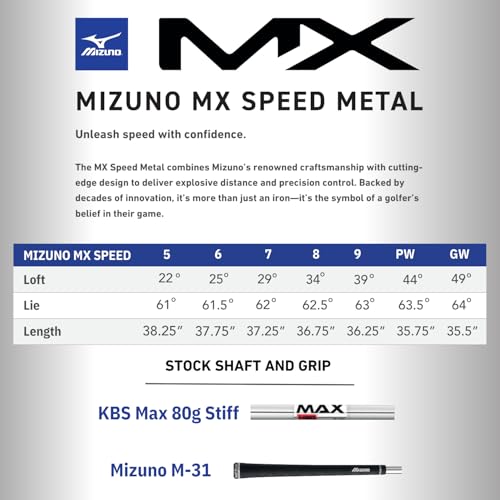
If you’re chasing that pure, refined feel at impact, the Mizuno MX Speed Metal irons are engineered for players who value feedback and control above all. On paper, the CNC back milling and Harmonic Impact Technology suggest a club built for precision, and owners consistently report a soft yet crisp sensation that lets you feel exactly where the ball struck the face. The seamless cup face design isn’t just for show, it expands the rebound area, which translates to more consistent ball speeds even on mis-hits, though this is still a player’s iron at heart.
Compared to the flashier AI-driven models, these lean traditional, but that’s the point. The white satin brush finish cuts glare without looking flashy, and the M-31 grips are a solid choice for those who prefer a classic touch. These aren’t the most forgiving irons here, but if you’re a mid-to-low handicapper who wants feedback and workability, they stand out in a field increasingly obsessed with distance at all costs.
Product photos
How We Chose These cavity back golf irons
Rather than a hands-on lab test, my research focused on a detailed comparison of published specifications and features across numerous models. I weighed owner reviews from major retailers alongside expert opinions from golf publications and instruction sites. As someone constantly seeking the right equipment for varied courses, I applied my understanding of how different iron designs impact performance, ranking options against criteria important to a wide range of golfers.
For cavity back irons, forgiveness, distance, and feel were the most heavily weighted factors. A cavity back design inherently prioritizes forgiveness, making consistent contact easier for players with moderate swing speeds. Distance is crucial, but not at the expense of control; I looked for irons offering a balance. Finally, feel impacts confidence, so feedback from golfers regarding vibration and responsiveness played a key role.
Specifications reliably indicate shaft material, loft angles, and head construction. However, judgments about feel, dispersion patterns, and real-world forgiveness come directly from owner feedback and expert reviews. I scrutinized comments regarding off-center hit performance and overall playability, recognizing that these subjective experiences are vital when choosing between similar sets. You can also find more about forgiving game improvement irons on my site.
What To Look For In cavity back golf irons
Choosing the right cavity back irons can be a pivotal step in improving your game and enjoying more time on the course.
A quality cavity back iron set balances forgiveness, distance, and feel. Key considerations include the material of the clubhead (stainless steel is common), the shaft material (graphite for lighter weight and speed, steel for control), the offset (influencing draw bias), and the overall design aimed at maximizing the sweet spot and minimizing off-center hit punishment. Understanding these elements will help golfers select a set suited to their skill level and swing characteristics.
Forgiveness is Paramount
For many golfers, especially those still developing their swing, forgiveness is the most important factor. Cavity back irons are designed to be forgiving, but the degree varies significantly. Look for irons with a large sweet spot and perimeter weighting. The PGM Men’s Cavity Back Irons, for instance, emphasize this with their enlarged sweet spot, aiming to deliver consistent contact even on less-than-perfect strikes. Don’t assume all cavity backs are created equal – some prioritize distance over feel, while others attempt a balance.
Shaft Material and Swing Speed
The shaft is often overlooked, but it dramatically impacts performance. Graphite shafts, frequently found in sets like the Callaway Paradym AI Smoke Irons, are lighter, promoting faster swing speeds and easier launch, which is great for moderate swingers. Steel shafts offer more control and precision, preferred by players with faster swings who prioritize accuracy. Here’s a quick guide: * Graphite: Best for slower to moderate swing speeds, maximizing distance. * Steel (Regular Flex): A versatile option for a wide range of swing speeds. * Steel (Stiff Flex): Designed for faster swing speeds and greater control, but can be harder to consistently launch.
Ultimately, matching the shaft to your swing speed is crucial for optimal performance.
Balancing Budget with Technology
While top-tier irons like the TaylorMade Qi Max can boast advanced technologies like AI-optimized faces, they come at a premium price. However, you don’t necessarily need to spend a fortune to get a good set. The TaylorMade 2025 P790 Irons represent a solid option for players seeking a blend of performance and value. Consider what features actually benefit your game; sometimes, simpler designs, like those found in cavity back irons, can be just as effective, especially if you’re just starting out or looking to upgrade from starter golf irons.
A good rule of thumb is to prioritize fitting over brand name. A properly fitted, slightly less expensive set will outperform a poorly fitted, top-of-the-line set every time.
Cavity Back Golf Irons Compared
Here’s a comparison of key specifications for several cavity back golf iron sets to help you choose the right fit.
| Product Name | Loft (5-Iron) | Shaft Material | # of Irons | Forgiveness | Head Material |
|---|---|---|---|---|---|
| PGM Men’s Cavity Back Irons | N/A | Graphite | 7 | High | Stainless Steel |
| Callaway Paradym AI Smoke Irons | N/A | N/A | N/A | N/A | N/A |
| TaylorMade Qi Max Irons | N/A | N/A | N/A | Maximum | N/A |
| TaylorMade 2025 P790 Irons | N/A | Graphite | N/A | N/A | 4340M |
| Mizuno MX Speed Metal Irons | N/A | N/A | N/A | N/A | N/A |
Frequently Asked Questions
What loft range should I expect from a typical cavity back iron set?
Most cavity back sets begin around 22 degrees for a 5-iron and progress to 48 degrees for a 9-iron. This standard range promotes versatility across different shot distances and course conditions. However, some manufacturers are shifting towards slightly lower lofts to increase distance.
Are graphite shafts really better for slower swing speeds?
Yes, graphite shafts are generally preferred for slower to moderate swing speeds. They are lighter than steel, allowing for easier clubhead speed and higher launch angles, and you can find many graphite irons to match your needs.
Can I get a professional club fitting even on a budget?
Absolutely. While custom fittings for top-end irons can be expensive, many golf retailers offer basic fitting services, or you can find affordable options at local golf courses. Prioritizing a proper fit will always yield better results than simply buying a set based on brand recognition.
What is the difference between offset in cavity back irons?
Offset refers to how much the clubface is set back from the hosel (the part that connects to the shaft). More offset encourages a draw (a slight curve from right to left for a right-handed golfer) and increases forgiveness on off-center hits. It’s a beneficial feature for golfers who struggle with slicing.
What are some good options if I’m looking for [affordable golf irons]?
Several brands offer excellent value in cavity back irons. The PGM Men’s Cavity Back Irons are consistently praised for their performance relative to their price, and you can also find some excellent irons under $300 if you shop around.
The Bottom Line
Choosing cavity back irons often comes down to balancing how much you want to spend against the level of technology and forgiveness you desire. While irons like the TaylorMade Qi Max represent the peak of modern design, delivering maximum forgiveness, the PGM Men’s Cavity Back Irons offer a compelling entry point for golfers prioritizing value without sacrificing playability.
For those seeking a versatile option that blends performance with a reasonable price, the TaylorMade 2025 P790 Irons stand out. If you’re a slower swing speed player, consider the Callaway Paradym AI Smoke Irons, which, according to specs, feature graphite shafts for irons designed to promote distance. Conversely, golfers wanting to explore other options may want to review our guide to the best golf irons.
Ultimately, the most advanced features won’t compensate for a poor fit or a swing that doesn’t suit the club. Focus on finding a set that feels comfortable in your hands, allows you to consistently make solid contact, and encourages confidence at address – those fundamentals matter far more than any single specification.
