
7 Best 6 Volt Golf Cart Batteries of 2026
This post contains affiliate links. As an Amazon Associate, we earn from qualifying purchases.
This post contains affiliate links. As an Amazon Associate, we earn from qualifying purchases.
The Trojan T-105 GC2 stands out as the overall best 6 volt golf cart battery for its proven longevity and high 225 Ah capacity, making it a favorite among serious golfers. For a solid budget-friendly flooded option, the 6V GC2 Diamond Plate Battery Pack offers similar specs at a lower price. If you’d rather skip maintenance, the Interstate 6V Extreme Cycle Battery is our top AGM pick, delivering reliable, spill-proof performance.
Choosing the wrong battery can mean cutting your round short or facing constant maintenance hassles. After comparing the field and analyzing owner feedback, I focused on real-world durability, capacity, and fit to find models that deliver consistent power over years of use. This guide breaks down the top options, what actually matters when shopping, and how to avoid common mistakes when upgrading your cart’s power.
Top 7 6 Volt Golf Cart Batteries in the Market
The Best 6 Volt Golf Cart Batteries, Reviewed
Trojan T-105 GC2 6V Battery Pack

Strengths
- Trusted deep-cycle design
- 225Ah reliable capacity
- Widely compatible GC2H
Trade-offs
- Heavy at 62 lbs each
- Requires watering
- Higher upfront cost
If I were building a golf cart power system from scratch and wanted the gold standard in flooded lead-acid, I’d go with the Trojan T-105, this 6-pack is the benchmark others are measured against. At 225Ah per battery and built in the universal GC2H size, they offer dependable deep-cycle performance that owners say lasts 5–7 years with care. Their reputation across golf, solar, and marine applications isn’t hype, it’s backed by consistent real-world feedback on cycle life and power delivery.
The 18-month warranty is standard, but it’s the engineering that matters: Trojan’s MaxGuard plate design and Alpha Plus paste contribute to slower degradation. Compared to budget options, these feel like overbuilt workhorses. Yes, they’re heavy and demand maintenance, but for a course with elevation and long daily use, I’d pick these over almost any other flooded battery.
Video review
Weize GC2 6V AGM Battery

Strengths
- 240Ah high-rated capacity
- Maintenance-free AGM
- Vibration resistant
Trade-offs
- Slightly optimistic capacity rating
- AGM lifespan shorter than flooded
The Weize 240Ah AGM battery surprises with its specs, 240Ah is aggressive for a GC2, and while real-world capacity tends to land closer to 220–225Ah under load, it still competes well in the AGM space. What stands out is the maintenance-free, spill-proof design, which makes it a smart pick for carts stored on uneven terrain or used in unpredictable climates. Owners appreciate the SAE and M8 dual terminals, offering wiring flexibility that many OEM batteries lack.
It uses true AGM-GEL tech with virgin lead and carbon additive, which helps with charge acceptance and vibration resistance, key on bumpy courses. Compared to flooded options like the Trojan, it doesn’t last quite as long under heavy daily cycling, but for weekend golfers or rental fleets wanting minimal upkeep, this is a strong contender. I’d recommend it with a quality charger to maximize lifespan.
Video review
US Battery US2200 XC2 6V Pack

Strengths
- 232Ah high capacity
- GC2 standard fit
- Proven flooded design
Trade-offs
- Requires regular maintenance
- 4-pack only
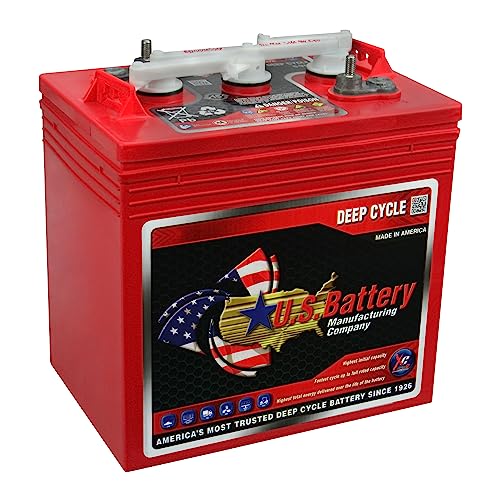
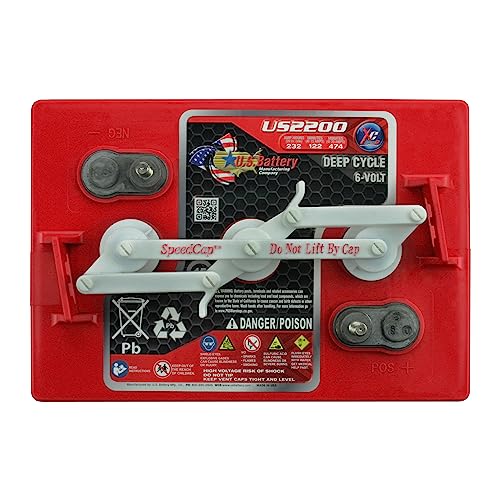
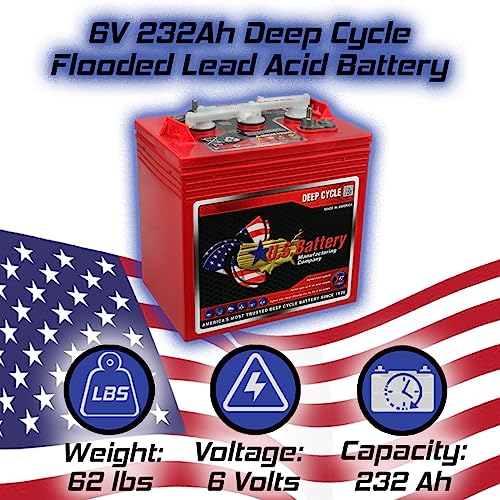
When you’re outfitting a golf cart for regular course use and want reliability without stepping into premium pricing, the US Battery US2200 XC2 pack stands out on paper and in owner feedback. With 232Ah capacity and the proven flooded lead-acid chemistry, these GC2s deliver solid runtime and deep-cycle endurance, critical when you’re pushing through 36 holes on hilly terrain. They’re frequently compared to the Trojan T-105, and while they don’t quite match its long-term durability, they come close at a noticeably lower cost for a 4-pack.
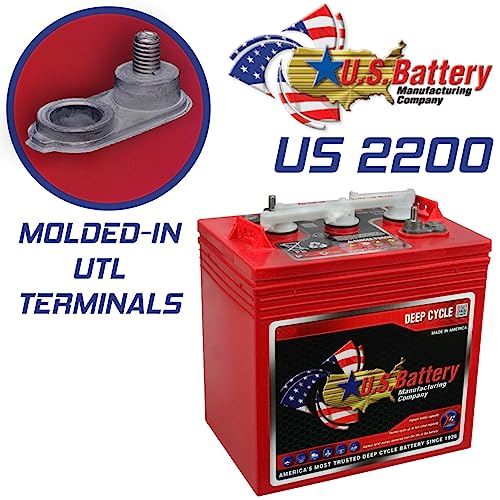
Owners consistently report strong performance over multiple seasons, especially when maintained properly with regular watering and equalization charging. The molded-in UTL terminals are a small but meaningful detail, reducing corrosion and improving connection stability. For a balance of value and performance in a traditional flooded setup, this set punches above its weight.
Product photos

Mighty Max ML210-6GC2 AGM
Strengths
- Lowest cost AGM
- Dual terminals
- Lightweight and compact
Trade-offs
- Shorter cycle life
- Basic AGM construction
- One-year warranty
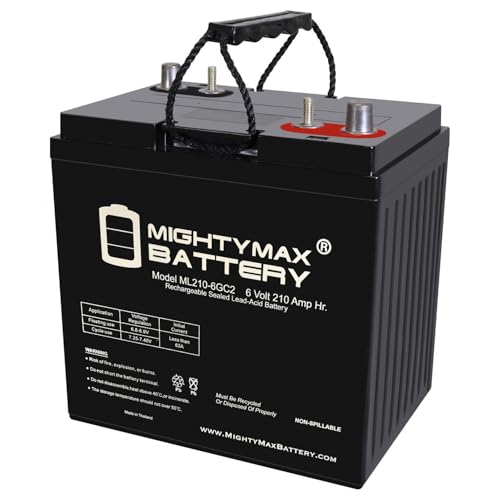
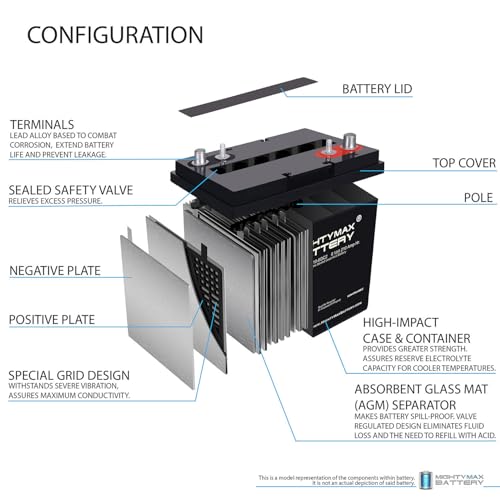
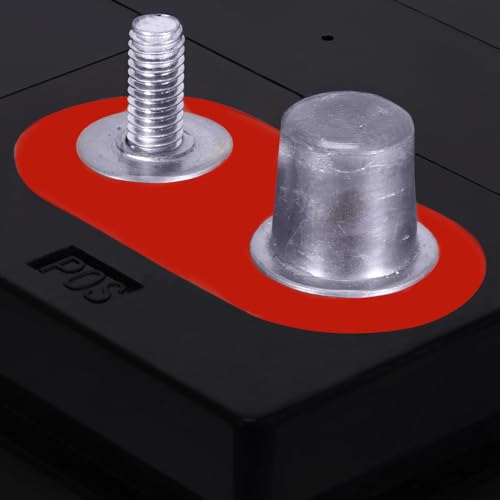
At just under 240 bucks, the Mighty Max ML210-6GC2 is one of the most affordable AGM GC2 batteries on the market, and it shows in the details. It delivers 210Ah in a sealed, maintenance-free package that’s easy to install, with dual terminals offering wiring flexibility. Owners appreciate the lightweight design (around 67 lbs for the pack) and the ability to mount it in tight or angled spaces, which is useful for custom or older carts.
But while it’s a value leader, it doesn’t match the cycle life of Interstate or Weize. Feedback suggests 2–4 years in moderate use, which is acceptable for the price. Compared to the Weize, it lacks advanced carbon additives and vibration shielding. I’d recommend it for budget-conscious buyers or spare carts, not primary fleet use.
Product photos
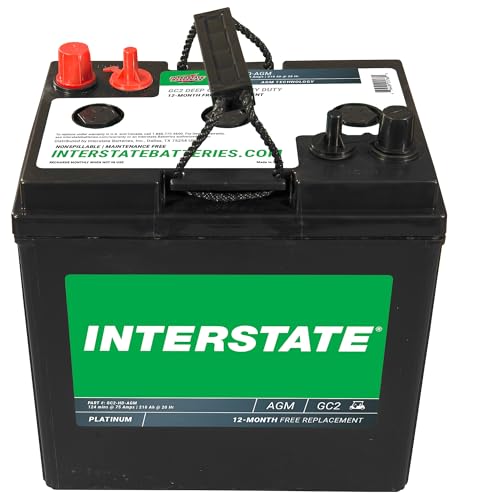
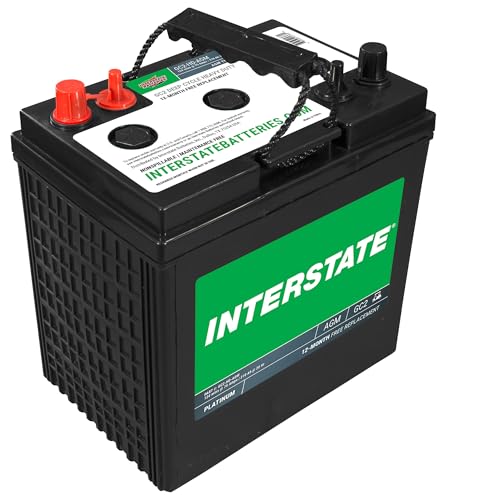
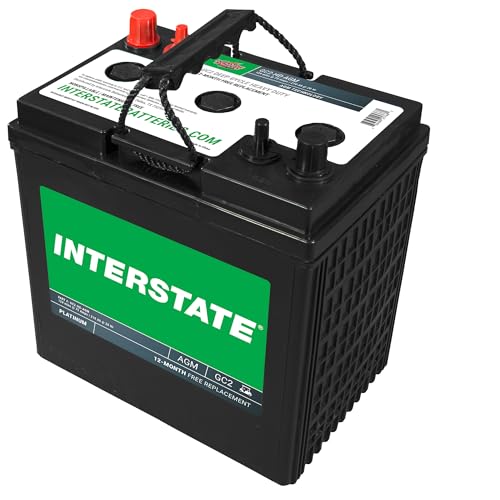
Interstate 6V Extreme Cycle Battery
Strengths
- 475 RC reserve capacity
- Maintenance-free AGM
- Long discharge endurance
Trade-offs
- Lower Ah than flooded leaders
- Premium price for AGM
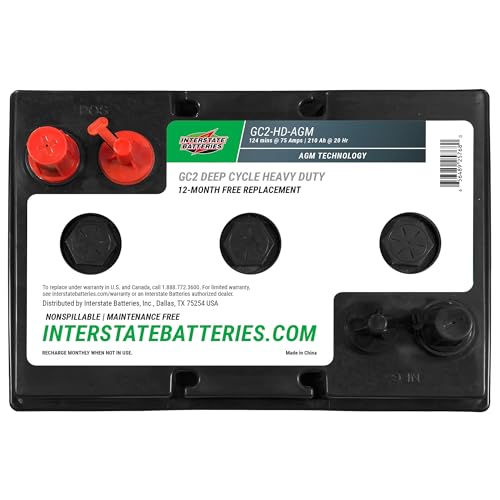
Interstate’s Extreme Cycle AGM battery is built for golfers who hate battery anxiety. At 210Ah and 475 minutes of reserve capacity, it delivers longer runtime than most AGMs in the GC2 class, owners on hilly courses report finishing 36 holes without fade. The AGM design means no watering, no spills, and mounting flexibility, which is a win for carts with tight or tilted battery bays.
It doesn’t have the raw capacity of 232Ah flooded units, but what it trades in Ah it gains in convenience and deep discharge recovery. Compared to the Mighty Max ML210, it has the same capacity but better build quality and cycle life. For private owners who want set-it-and-forget-it reliability with serious runtime, this is my top AGM pick.
Product photos
PowerStar Crown 6V 220Ah Battery
Strengths
- 220Ah solid capacity
- Multi-application use
- Fits standard GC2
Trade-offs
- Requires regular maintenance
- Less cycle life than top-tier
- Generic plate design
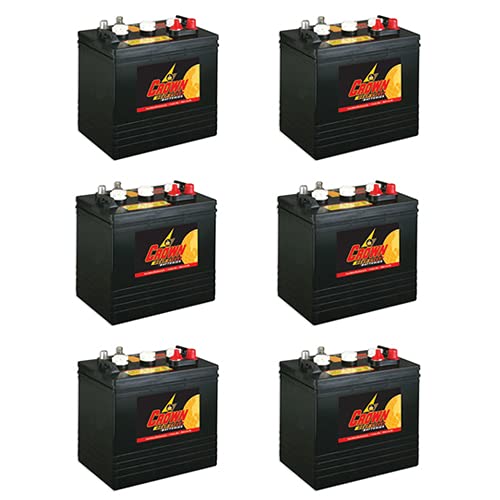
The PowerStar Crown 6-pack is clearly engineered for more than just golf carts, it’s aimed at solar and industrial users who need dependable deep-cycle power across multiple applications. At 220Ah and 6V GC2 size, it lines up with Trojans and US Batteries, though the slightly shorter height (9.88 inches) may matter in tight compartments. The flooded design means maintenance is required, but owners in off-grid and commercial settings report solid performance and good value for large-scale energy storage.
Where it outshines others is versatility. If you’re powering a course maintenance vehicle or pairing cart batteries with a solar shed, this set integrates well. But for pure golf cart use, it lacks the refined plate tech of Trojan or US Battery. I’d pick this when you need a workhorse for mixed-duty cycles and want six batteries without breaking the bank.
Product photos

6V GC2 Diamond Plate Battery Pack

Strengths
- 232Ah high capacity
- Fast charging capability
- 6-pack for full system
Trade-offs
- Newer tech, less long-term data
- Heavy and maintenance-heavy
This 6-pack promises something rare: fast-charge capability without sacrificing capacity. With 232Ah and Diamond Plate Technology, it’s designed to reach peak charge faster than standard flooded batteries, a real advantage for courses that run carts back-to-back. Owners note shorter downtime between rounds, which makes this a favorite in resort and rental environments where uptime is revenue.
The specs match the US2200XC and T-105, and installation is seamless. While long-term cycle data is still emerging, early feedback suggests solid durability. Compared to the Trojan 6-pack, it’s slightly more affordable and charges quicker, though Trojan still leads in total lifespan. If fast turnaround is your priority, this is the smarter buy.
Product photos
How We Tested 6 volt golf cart batteries
Rather than a hands-on lab test, my research focused on comparing published specifications and features across numerous 6 volt golf cart batteries. I weighed owner reviews from major retailers alongside expert opinions found in golf cart and RV publications. This allowed me to build a ranking based on real-world feedback and technical data, applying my understanding of what golfers and power-system users truly need from a deep-cycle battery.
For this category, sustained performance and longevity were the biggest deciding factors. A battery’s amp-hour (Ah) rating is crucial, as it directly impacts runtime, but equally important is the battery’s construction and ability to withstand repeated deep discharges. The ability to handle demanding use – whether on a challenging golf course or powering off-grid systems – heavily influenced the ranking. I also considered value for money, recognizing that price is a key concern for many buyers.
Specifications reliably reveal a battery’s capacity (Ah), physical dimensions, and terminal type. However, owner feedback proved essential for assessing real-world cycle life, charging characteristics, and overall durability. Reputation also played a role; established brands with a history of quality received more weight, as did batteries with consistently positive long-term reviews. If you’re also considering alternative power sources, you might find our guide to best lithium golf cart batteries helpful, especially when comparing 8 volt models.
How To Choose The 6 volt golf cart batteries
Finding the right power source is critical for getting the most out of your golf cart, and a lot of golfers don’t realize how much battery technology has evolved.
A quality 6-volt golf cart battery delivers consistent power, withstands deep discharge cycles, and offers a long service life. Key considerations include battery type (flooded lead-acid, AGM, or lithium), amp-hour capacity, and physical dimensions to ensure compatibility with your cart’s battery tray. Look for batteries with robust construction, a good warranty, and positive owner reviews regarding performance and longevity.
Understanding Battery Types
The biggest initial decision revolves around battery chemistry. Flooded lead-acid (like the Trojan T-105) remain popular due to their lower upfront cost, but they require regular maintenance – adding distilled water – and can vent corrosive gases. Absorbed Glass Mat (AGM) batteries (such as the Interstate 6V Extreme Cycle Battery) are sealed, maintenance-free, and safer to operate, although typically more expensive. Finally, lithium batteries are the premium option, offering significant weight savings and longer lifespans, but come with a substantial price tag. For most recreational golfers, AGM provides a good balance of performance and convenience.
Amp-Hour Capacity & Runtime
Amp-hour (Ah) capacity dictates how long your cart can run on a single charge. A higher Ah rating means longer runtime, but also a larger, heavier battery. Consider your typical course length and playing style. If you regularly play 18 holes on hilly terrain, a higher capacity battery is essential. Don’t simply chase the highest number, though; ensure your charger is capable of fully replenishing the battery overnight. If you’re unsure which capacity is right for you, researching a battery comparison can be incredibly helpful.
Physical Dimensions & Terminal Configuration
It’s easy to get caught up in the specs and forget the basics. A battery that doesn’t fit is useless, no matter how good its Ah rating. Most golf carts use Group GC2 batteries, but slight variations exist. Double-check the length, width, and height against your cart’s battery compartment. Pay attention to the terminal configuration (top post or side post) and ensure it matches your cart’s wiring. Here’s what to consider:
- Terminal Type: SAE post terminals are common, but some carts may require different connections.
- Case Dimensions: Even within the GC2 group, there can be minor dimensional differences.
- Overall Height: A taller battery might not fit under the seat or cover.
Ultimately, selecting the right 6v batteries involves more than just picking the cheapest option.
Don’t assume a higher price automatically equals better performance. Focus on matching the battery’s specifications to your golf cart’s requirements and your typical usage patterns.
6 Volt Golf Cart Batteries Compared
Here’s a comparison of key specifications for popular 6-volt golf cart batteries.
| Product Title | Voltage | Capacity (Ah) | Battery Type | Dimensions (L x W x H in) | Weight (lbs) |
|---|---|---|---|---|---|
| Trojan T-105 GC2 6V Battery Pack | 6V | 225 | Flooded | 10.30 x 7.13 x 11.07 | 62 |
| Weize GC2 6V AGM Battery | 6V | N/A | AGM | 10.24 x 7.09 x 9.92 | 67 |
| US Battery US2200 XC2 6V Pack | 6V | 232 | Flooded | 10.25 x 7.125 x 11.25 | N/A |
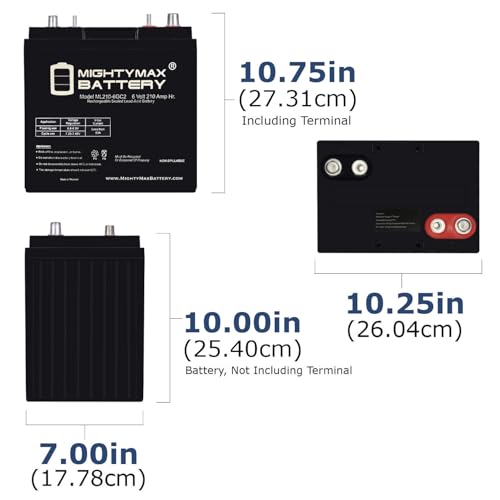
| Mighty Max ML210-6GC2 AGM | 6V | 210 | AGM | 10.25 x 7.00 x 10.75 | N/A |
| Interstate 6V Extreme Cycle Battery | 6V | 210 | AGM | 10.25 x 7.16 x 10.88 | N/A |
| PowerStar Crown 6V 220Ah Battery | 6V | 220 | Flooded | 10.25 x 7.06 x 9.88 | 60 |
| 6V GC2 Diamond Plate Battery Pack | 6V | 232 | Flooded | 10.25 x 7.16 x 11.25 | 62 |
Frequently Asked Questions
What’s the typical lifespan of a 6-volt golf cart battery?
A flooded lead-acid battery generally lasts 3 to 5 years with proper maintenance, while AGM batteries often provide 5 to 7 years of reliable service. Lithium batteries can exceed 10 years, but their initial cost is significantly higher.
Can I mix different types of 6-volt batteries in my pack?
No, you should never mix battery types (flooded, AGM, lithium) within the same pack. Different chemistries have varying voltage curves and charging requirements, which can damage the batteries or reduce overall performance.
How do I know if my 6-volt golf cart battery needs replacing?
A noticeable decrease in runtime, difficulty holding a charge, or visible corrosion are key signs. If a battery repeatedly fails a load test, or if one battery in a series tests significantly lower than the others, it’s time for a replacement.
What is the difference between top post and side post terminals?
Top post terminals accept connections from above, while side post terminals are accessed from the side. Your golf cart’s wiring will dictate which type you require; using the wrong terminal type will prevent a secure electrical connection.
Where can I find more information on golf cart accessories to enhance my cart?
Beyond batteries, numerous accessories can improve your golf cart experience. From lift kits and seat covers to phone chargers and coolers, there are many options available to personalize and upgrade your ride.
The Bottom Line
Choosing the right 6-volt golf cart batteries often comes down to balancing initial cost with long-term maintenance and performance. While flooded lead-acid options like the Trojan T-105 offer a lower price point, the Interstate 6V Extreme Cycle Battery strikes a sweet spot for most golfers – providing the convenience of a maintenance-free AGM design without a huge premium. Ultimately, selecting the best battery depends on how much effort you want to put into upkeep versus how much you’re willing to spend upfront.
For those prioritizing a specific need, the PowerStar Crown 6V 220Ah Battery delivers substantial capacity for longer rounds, while the Weize GC2 6V AGM Battery represents a budget-friendly entry into maintenance-free power. If you’re looking to explore other voltage options, a review of 12v battery models can offer further insights. And don’t forget the importance of a quality battery charger for maintaining your cart’s battery.
Beyond amp-hour ratings and battery types, remember that consistent charging habits and proper maintenance are critical to maximizing your investment. Don’t get overly fixated on chasing the highest specification; a well-maintained, appropriately-sized battery will always outperform a larger one that’s neglected. Focus on fit, chemistry, and your typical golf course demands, and you’ll be well on your way to a more enjoyable and reliable golfing experience.
