
7 Best Golf Cart Battery Chargers of 2026
This post contains affiliate links. As an Amazon Associate, we earn from qualifying purchases.
This post contains affiliate links. As an Amazon Associate, we earn from qualifying purchases.
The best golf cart battery charger for most people is the WAVLINK 48V Smart Charger, especially if you’re running lithium or want full peace of mind. For a solid budget-friendly pick that still delivers reliability, the 36V 18A EZGO TXT Charger stands out. If you’re after maximum versatility across battery types and brands, the FORM 36V Charger for EZGO is a smart choice.
Golf cart owners often overlook the charger until batteries start failing early or charging becomes a hassle. A bad or mismatched charger can shorten battery life fast, especially with modern lithium setups.
After comparing specs, durability, and owner feedback across dozens of models, I focused on compatibility, safety, and real-world reliability. This guide breaks down what actually matters so you can protect your investment and keep your cart ready to roll.
Top 7 Golf Cart Battery Chargers in the Market
The Best Golf Cart Battery Chargers, Reviewed
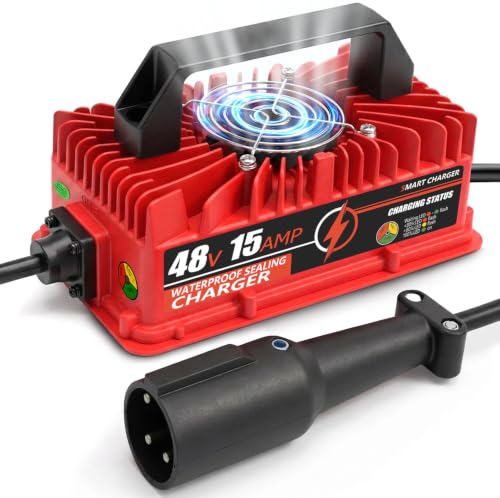
48V 15A Club Car Charger
Strengths
- 15A fast charging
- 0V battery rescue
- IP67 waterproof
Trade-offs
- OBC mod required for older models
- Not for lithium batteries
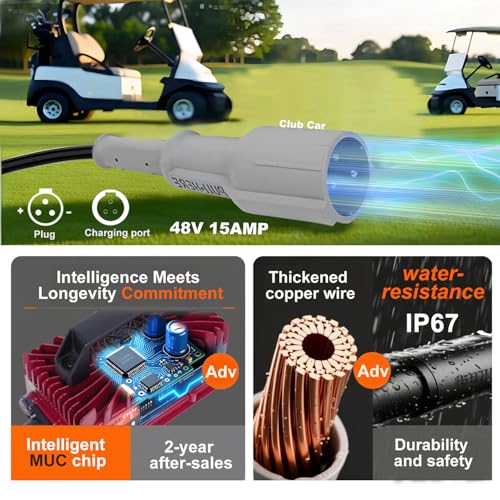
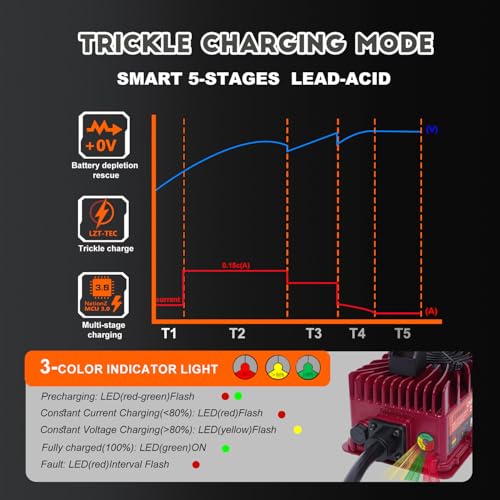
This charger hits hard on specs and owner feedback for Club Car owners, especially those with Precedent or DS models. The 15A output and 5-stage smart charging, including trickle maintenance, make it a solid performer for lead-acid setups, and the 0V battery rescue function is a real differentiator. Many owners report successfully reviving sluggish or deeply drained batteries that other chargers refused to touch, which can extend the life of a full battery pack. The 16-foot cable is generous, and the copper-core plug design improves durability over time.
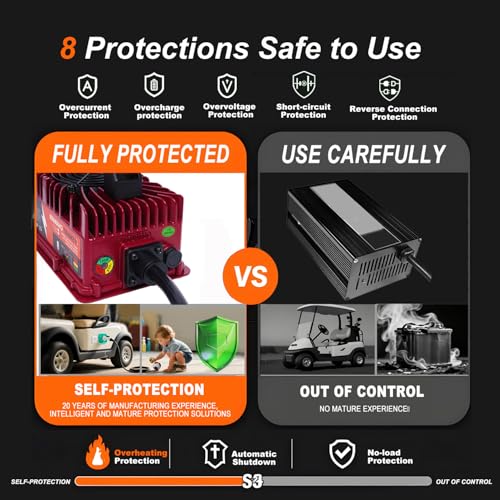
Its IP67 rating and internal waterproof coating mean it holds up well in damp garages or outdoor storage, and the eight built-in protections cover every major failure point you’d want guarded. The only caveat is the OBC bypass requirement for older models, some users found the wiring guide essential, and skipping it leads to frustration. If you’re on older Club Car hardware, be ready to do a little setup legwork.
Video review
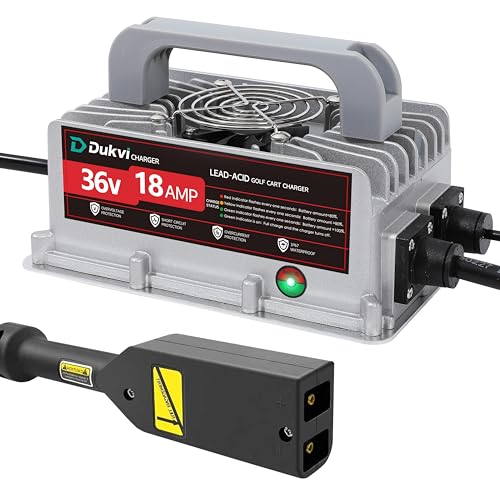
36V 18A EZGO TXT Charger
Strengths
- Fast 18A charging
- Durable aluminum build
- ETL certified
Trade-offs
- Not for lithium
- Heavier than compact models
This charger delivers a lot of performance for the price. With 18A output and IP67-rated aluminum housing, it’s built like a workhorse, ideal for daily drivers or fleet maintenance. The fast charging cuts downtime noticeably, and the 15-foot cable gives flexibility in tighter garages. Owners report consistent performance over months of use, and the ETL/FCC certifications back its reliability under load.
It’s not as fancy as the FORM model, but it doesn’t need to be. It lacks lithium support, but for pure lead-acid, AGM, or gel setups on EZGO TXT carts, it’s a rugged, no-nonsense option. The heat dissipation design keeps it cool even during full cycles, and the smart protection suite prevents common mistakes like reverse hookups. For courses or communities with multiple carts, this is the kind of charger that scales well.
Video review
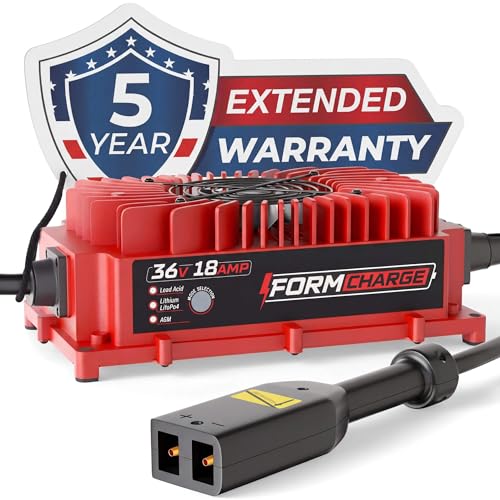
FORM 36V Charger for EZGO
Strengths
- Lithium compatible
- IP67 waterproof
- Fast 18A charging
Trade-offs
- High price
- Overkill for basic lead-acid
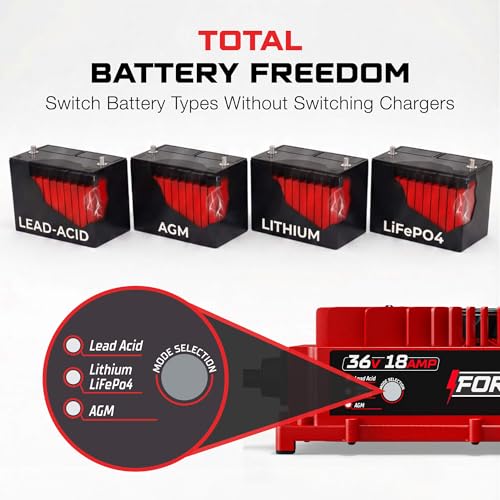
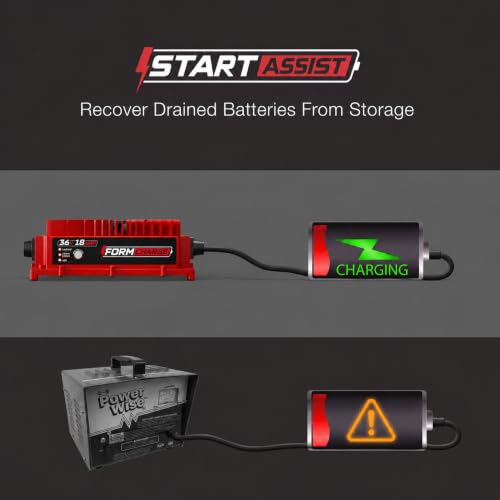
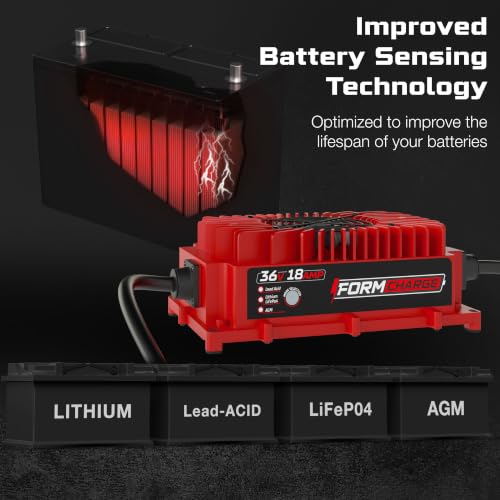
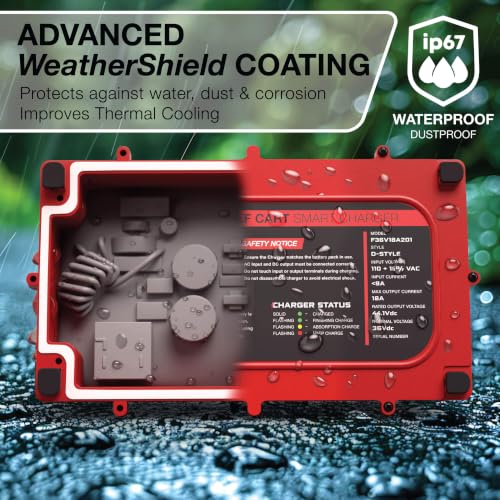
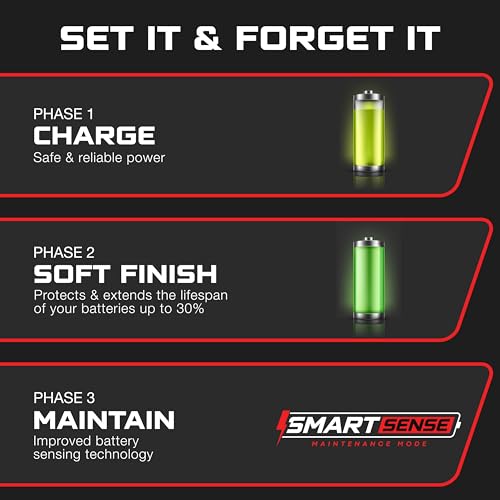
FORM’s D-Style model stands out because it handles lithium, LiFePO4, and lead-acid batteries, rare in this category. That flexibility makes it a future-proof choice if you’re planning a battery upgrade or already running lithium. The 18A output charges fast, and the ‘Set it & Forget it’ maintenance mode works as advertised, with owners reporting stable long-term battery health. The WeatherShield coating and IP67 rating deliver real-world durability, especially in coastal or humid climates where corrosion eats lesser chargers.
It’s pricey, but the build quality and smart tech justify it for lithium users. The 16-foot cable and lightweight design improve usability, and the USA-based support team is frequently mentioned in reviews as responsive and helpful. If you’re on lead-acid only, you might be overpaying, but for mixed or planned lithium setups, this is the smarter long-term buy.
Product photos
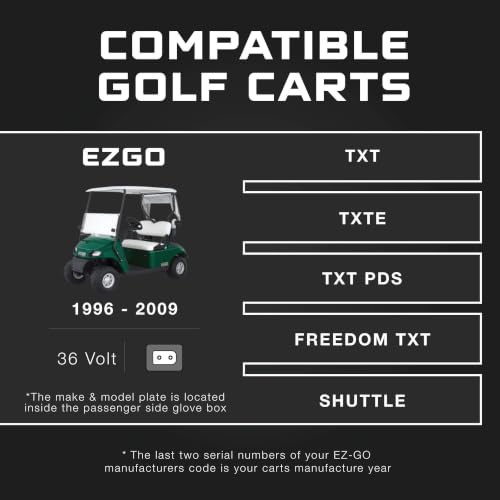
FORM 36V Charger for All Brands

Strengths
- Universal Crowfoot plug
- Fast 18A charging
- IP67 waterproof
Trade-offs
- No lithium support
- High cost for lead-acid only
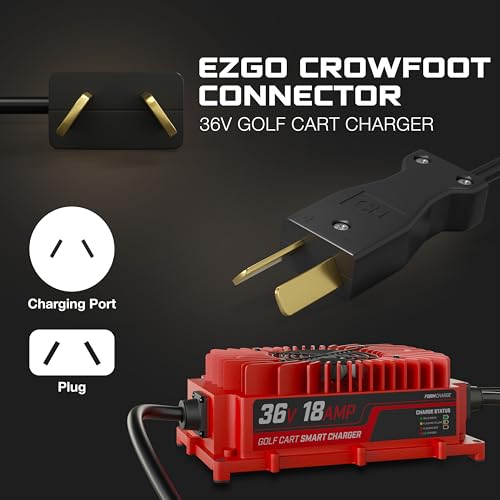
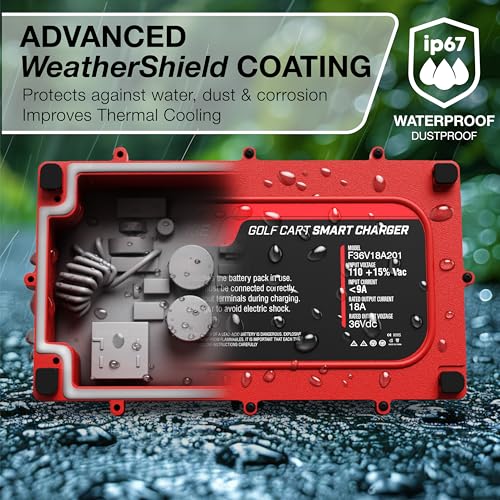
This is the universal plug-and-play solution for anyone managing multiple cart brands. The Crowfoot plug fits Club Car, EZGO, and Yamaha, no adapter needed, and the 16-foot cable adds convenience. At 18A, it charges quickly on lead-acid systems, and the maintenance mode keeps batteries topped off without degradation. FORM’s WeatherShield coating and IP67 rating mean it holds up in wet or dusty conditions, just like their other models.
It’s expensive, and like the D-Style version, it doesn’t support lithium, odd given the price. But for fleets or rental operations with mixed carts, that plug compatibility saves time and inventory hassle. Owners praise how few replacements they need, and the USA-based support is a real plus when issues arise. If you’re tired of juggling multiple chargers, this one simplifies life.
Product photos


WAVLINK 48V Smart Charger
Strengths
- Supports multiple battery types
- Global voltage input
- IP67 durable build
Trade-offs
- OBC bypass needed for older models
- Setup can confuse beginners
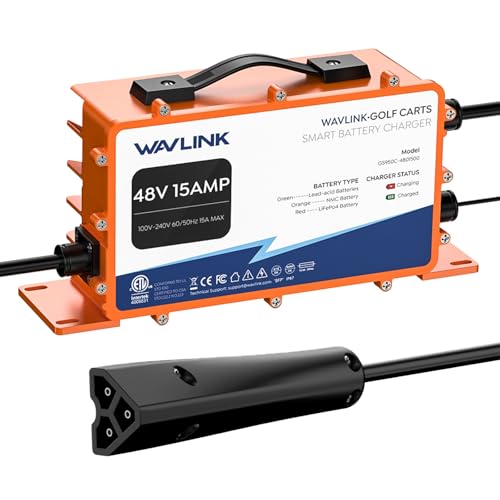
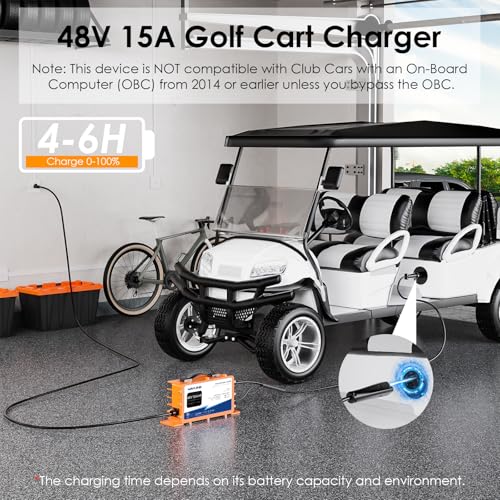
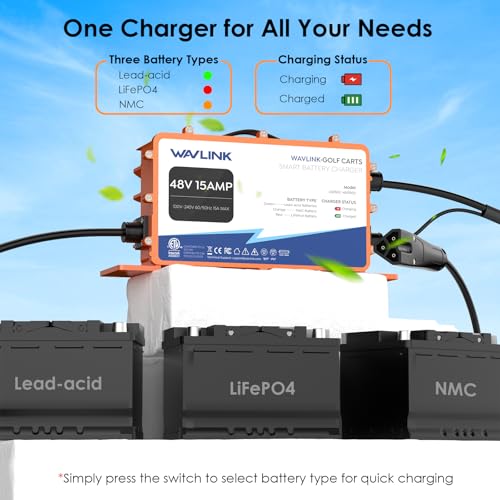
WAVLINK’s GS950C is the most versatile 48V charger here, supporting lead-acid, LiFePO4, and NMC lithium, a rare combo. That makes it a standout for mixed fleets or owners considering a lithium swap down the line. The smart CPU control adjusts dynamically, and owners note smooth transitions between charge stages with no voltage spikes. Its global voltage input (100–240V) is a bonus for international use or solar setups.
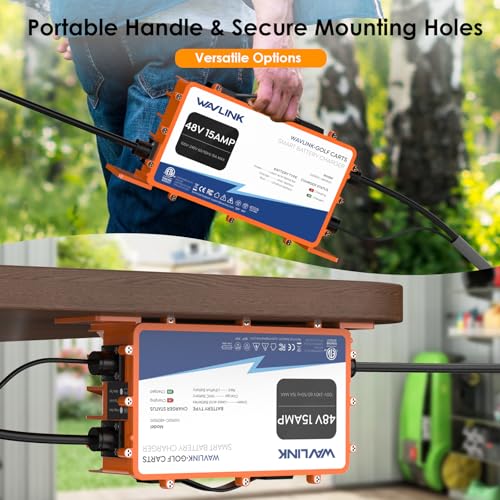
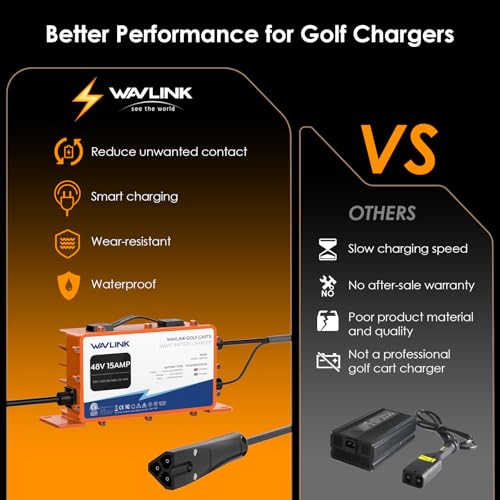
The IP67 aluminum case and rubberized cable improve longevity, and the cooling fan keeps temps low during extended cycles. But the OBC bypass warning is critical, pre-2014 Club Cars need modification, and skipping it leads to charging failure. If you’re not on an older Club Car, this is one of the most adaptable 48V options on the market.
Product photos

TSONDEKU 36V 5A Charger
Strengths
- Ultra lightweight
- Quiet operation
- Auto maintenance mode
Trade-offs
- Slow charging speed
- Shorter cable
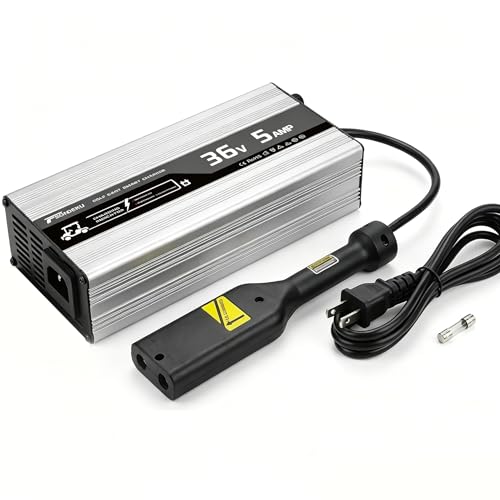
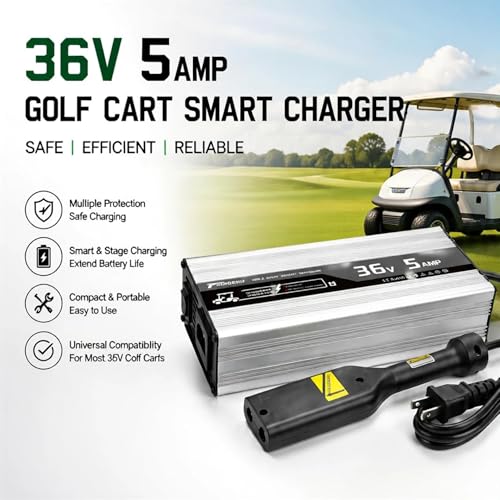
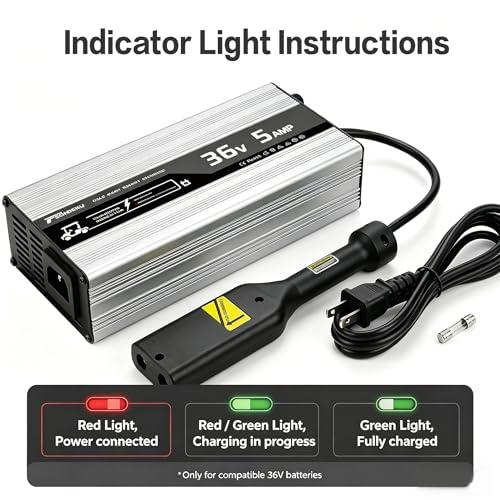
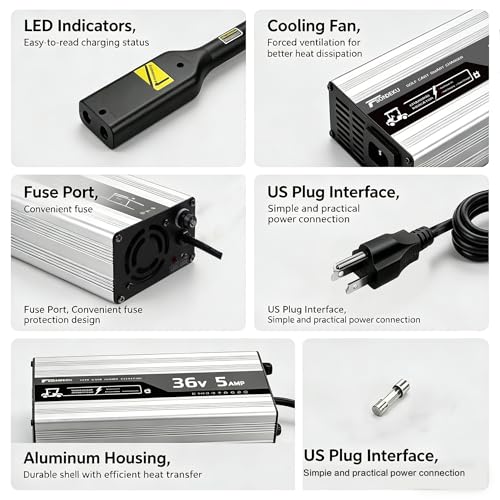
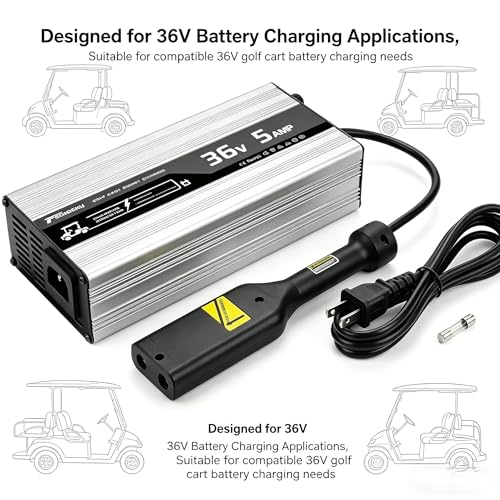
At under 2 pounds, this is the charger you grab when portability matters most, perfect for tossing in a cart bag or RV storage. It’s not the fastest, with a 5A output, but for light daily use or occasional maintenance on an EZGO TXT, it gets the job done without noise or heat issues. The 4-stage charging with float mode means it’s safe to leave connected, and owners consistently praise how quietly it operates and how clearly the LED indicators work.
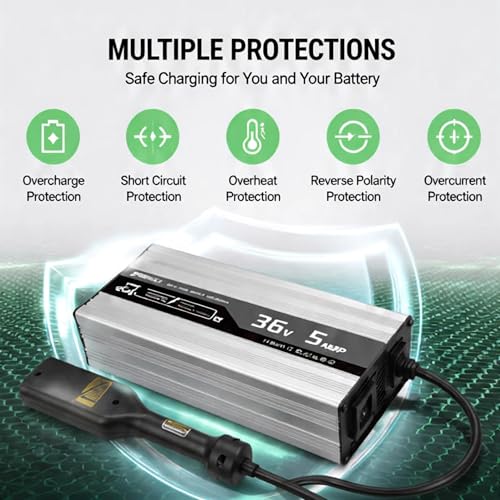
It won’t compete with 15A models in speed, but it’s one of the few truly lightweight 36V options that still includes solid safety features like reverse polarity and overheat protection. CE certification and responsive support add peace of mind. If you’re just topping off after a round or maintaining a secondary cart, this is a no-fuss, reliable pick.
Product photos
Lztsuply 48V Club Car Charger
Strengths
- Affordable 15A charging
- Battery revival function
- Long warranty
Trade-offs
- OBC mod required
- Manual could be clearer
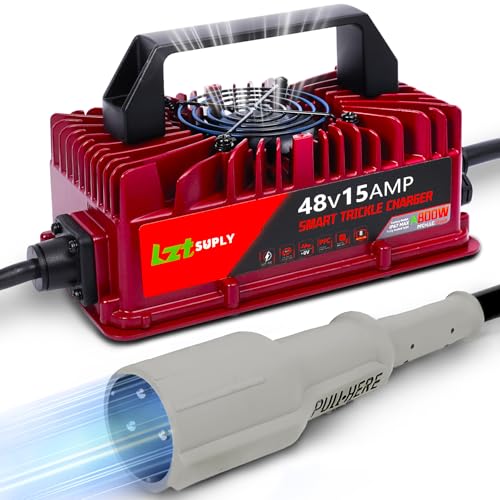
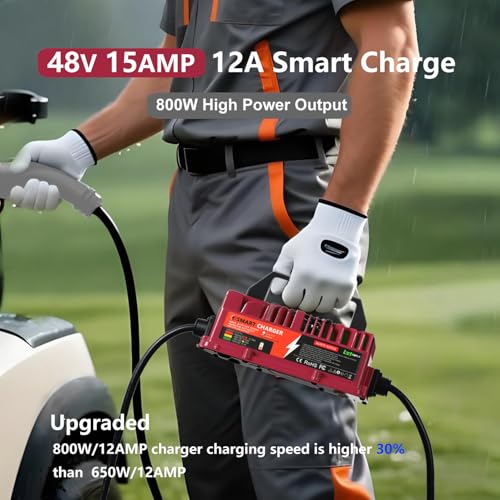
Lztsuply leans on its factory-direct model and 20-year R&D background, and it shows in the value proposition. For under $100, you get 15A charging, IP67 protection, and that same 0V battery revival feature seen in pricier models. The aluminum die-cast shell with glue-filled interior makes it resilient in rain or dust, and owners in humid regions report fewer corrosion issues than with standard units.
It’s nearly identical in function to the B0H29FCNJX model but without the emphasis on OBC wiring clarity. Some users noted the manual isn’t as detailed, which can be a hurdle for first-time installers. Still, for Club Car owners wanting high output and long-term durability without overspending, this is a strong contender. The 24-month warranty seals the deal.
Product photos

How We Picked These golf cart battery chargers
Rather than a hands-on lab test, my research focused on a detailed comparison of published specifications and features across numerous models. I weighed owner reviews from major retailers alongside expert opinions found in golf cart enthusiast forums and publications. Ultimately, I ranked chargers based on a set of criteria important to golf cart owners, considering both performance and long-term value.
For golf cart battery chargers, the most heavily weighted factors were compatibility – ensuring the charger worked with a range of battery types and cart models – and safety features. A charger’s ability to protect against overcharging, overheating, and short circuits is paramount to preserving battery health and preventing potential hazards. Durability and build quality also played a significant role, as these chargers are frequently used outdoors.
Charger specifications reliably indicate charging speed (amps) and voltage, as well as compatibility with different battery chemistries. However, I placed more emphasis on owner feedback regarding real-world reliability, ease of use, and the effectiveness of smart charging features. Understanding how well a charger performs over time, and whether it truly delivers on advertised promises, requires looking beyond the numbers and considering the experiences of other golf cart owners – especially when comparing golf cart batteries.
What To Look For In golf cart battery chargers
Selecting the right golf cart battery charger is crucial for maximizing the lifespan and performance of your power source.
A good golf cart charger delivers consistent power, offers protection against overcharging and other electrical faults, and is compatible with your specific battery type and cart model. Key considerations include voltage, amperage, battery chemistry support, and safety features like thermal protection and automatic shut-off. Ensuring compatibility and prioritizing safety will safeguard your investment and keep you on the course.
Battery Type Compatibility
One of the biggest mistakes people make is using a charger not suited for their battery chemistry. While many chargers handle lead-acid batteries (AGM, gel, flooded), lithium batteries require a very different charging profile. Attempting to charge a lithium battery with a lead-acid charger can lead to damage, fire risk, or reduced battery life. If you’ve upgraded to 48v lithium batteries – and more golfers are – you absolutely need a charger specifically designed for lithium-ion. Don’t assume a “universal” charger will cover all bases; check the specifications carefully.
Amperage and Charging Speed
Amperage dictates how quickly your batteries will charge. A higher amperage charger will, generally, reduce charging time, but it’s not always a simple equation. Overcharging can damage batteries, so a “smart” charger that automatically adjusts amperage is ideal. For a typical 36 or 48-volt system, 15-20 amps is a common range. Remember, though, that a higher amperage charger doesn’t necessarily mean better; it means faster, and only if your batteries can safely handle the increased current.
Here’s a breakdown to consider: * A low amperage (5-10A) charger is suitable for occasional use or trickle charging. * A mid-range amperage (15-20A) is ideal for regular use and a good balance of speed and battery health. * A high amperage (25A+) charger is best for quick turnaround times, like at a golf course rental facility, but only if your batteries and charging system are rated for it.
Value, Features, and Durability
Beyond the core charging function, consider features that enhance usability and longevity. A built-in cooling fan can prevent overheating, especially in warmer climates. Waterproofing (IP67 rating is a good benchmark) protects the charger from the elements. Look for safety features like overvoltage protection, short-circuit protection, and reverse polarity protection. A lightweight design and long charging cable add convenience. Don’t skimp on quality here; a reliable charger will protect your investment in golf cart batteries and keep you playing longer.
A charger’s lifespan is directly tied to its build quality. Aluminum housings and robust internal components are indicators of a charger built to withstand regular use and potential environmental factors.
Golf Cart Battery Chargers Compared
Here’s a comparison of key specifications for different golf cart battery chargers to help you make an informed decision.
| Product Title | Voltage | Amperage | Battery Type Compatibility | Plug Type | Waterproof Rating | Warranty (Years) |
|---|---|---|---|---|---|---|
| 48V 15A Club Car Charger | 48V | 15A | Lead-Acid | 3-pin Round | N/A | 2 |
| 36V 18A EZGO TXT Charger | 36V | 18A | Lead-Acid, AGM, Gel | D-Style | IP67 | 2 |
| FORM 36V Charger for EZGO | 36V | N/A | Lead-Acid, LiFePO4, Lithium | Powerwise “D” | IP67 | 2 (or 6 ext.) |
| FORM 36V Charger for All Brands | 36V | N/A | Lead-Acid | Crowfoot | IP67 | 2 |
| WAVLINK 48V Smart Charger | 48V | 15A | Lead-Acid, LiFePO4, NMC | Triangular/Round | IP67 | N/A |
| TSONDEKU 36V 5A Charger | 36V | 5A | Lead-Acid (AGM, GEL, Flooded) | Powerwise | N/A | 1 |
| Lztsuply 48V Club Car Charger | 48V | 12/15A | Lead-Acid | 3-pin Round | IP67 | 2 |
Frequently Asked Questions
What if I recently upgraded to lithium batteries?
You absolutely need a charger specifically designed for lithium-ion batteries. Using a lead-acid charger on lithium can cause damage or even create a fire hazard, so compatibility is critical when upgrading to lithium batteries.
How long does a golf cart battery charger typically last?
A quality charger, with an aluminum housing and robust components, should last five to ten years with regular use. Proper care, like keeping it dry and avoiding extreme temperatures, will extend its lifespan.
What amperage charger is best for my golf cart?
Generally, 15-20 amps is a good range for a standard 36 or 48-volt system, providing a balance between charging speed and battery health. However, always check your battery manufacturer’s recommendations to avoid overcharging.
What does an IP67 waterproof rating actually mean?
An IP67 rating indicates the charger is dust-tight and can withstand immersion in water up to one meter for 30 minutes. This is a valuable feature for outdoor use, protecting the internal components from the elements.
Are chargers for different golf cart brands (Club Car, EZGO, etc.) truly different?
Yes, they often are. While voltage is universal, the connector plug type varies between brands, and some chargers are programmed specifically for a brand’s battery management system. Ensuring you have the correct plug type is essential for a functional connection – and durable 8V battery brands deserve a compatible charger, too.
The Bottom Line
Choosing a golf cart battery charger often comes down to balancing upfront cost with long-term battery health and convenience. While many options exist, the FORM 36V Charger for All Brands strikes the best overall balance, offering broad compatibility and a robust, waterproof design. It’s a solid investment that will protect your power source for years to come.
For those seeking a budget-friendly option, the TSONDEKU 36V 5A Charger is a reliable choice for basic lead-acid charging needs. If you’ve recently upgraded to lithium – and increasingly, golfers are choosing 48v golf cart batteries – the WAVLINK 48V Smart Charger is the way to go, offering the correct charging profile to maximize the life of your investment.
Ultimately, the most important thing isn’t a specific amperage or feature set, but a charger that’s fully compatible with your battery type and consistently delivers a safe, complete charge. Don’t underestimate the value of quality construction and safety features (like overvoltage protection) when selecting a charger, and remember that even the best 6v batteries will suffer with a mismatched or poorly made charger.
