
8 Best Golf Cart Batteries of 2026
This post contains affiliate links. As an Amazon Associate, we earn from qualifying purchases.
This post contains affiliate links. As an Amazon Associate, we earn from qualifying purchases.
The Repower Flow 48V 105Ah Lithium stands out as the best overall golf cart battery for its exceptional cycle life and high capacity, while the TEMGO 48V 100Ah offers a solid budget-friendly alternative without sacrificing much performance. For those with older systems, the TEMGO 36V 100Ah is a reliable choice for smaller setups.
As someone who’s planned countless golf trips, I know how frustrating it is when your cart dies mid-round. A weak battery can ruin your rhythm and cut your course time short. That’s why I focused this guide on finding batteries that deliver real-world reliability, not just big specs on paper.
I compared the top options based on owner feedback, technical specs, and long-term value, prioritizing capacity, cycle life, weight, and safety features like BMS protection. This isn’t about hype; it’s about choosing a battery that keeps up with your game, round after round.
Top 8 Golf Cart Batteries Vs in the Market
The Best Golf Cart Batteries Vs, Reviewed
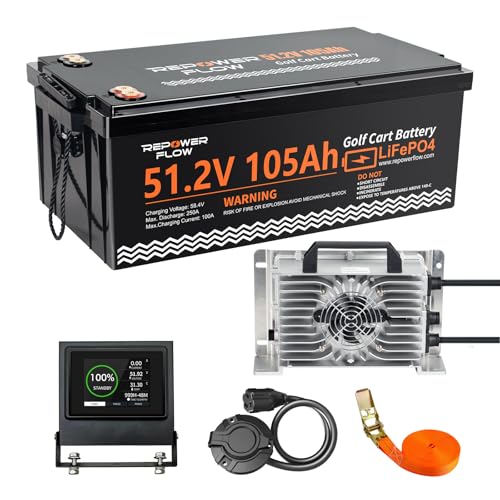
Repower Flow 48V 105Ah Lithium Battery
Strengths
- 250A BMS
- Dual terminals
- 105Ah capacity
- Fast charging
- App monitoring
Trade-offs
- Slightly heavier
- Higher price point
- Touch screen can fog
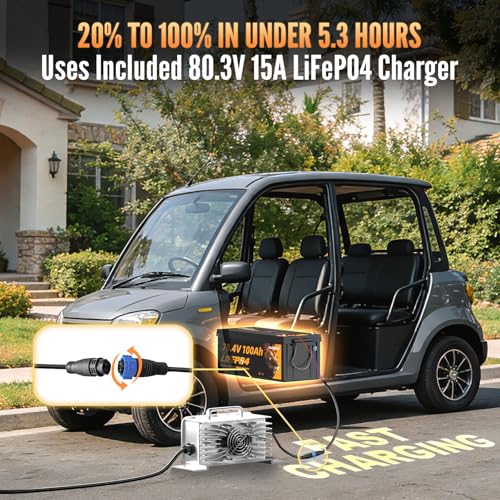
The Repower Flow stands out with its 250A BMS, the highest continuous rating here, making it the most robust option for power-hungry carts or hilly terrain. The 105Ah capacity gives it range edge, and the dual terminals offer real flexibility for parallel setups, which many owners appreciate when upgrading older models. It’s also one of the few with a 20A fast charger included, cutting recharge time to under 6 hours.
Owners consistently praise its reliability and clean install, and the touch screen + app combo delivers solid monitoring. While it’s not the cheapest, it strikes the best overall balance of power, features, and durability. I’d pick this over the OGRPHY for serious terrain, and over the TEMGO for future scalability.
Video review
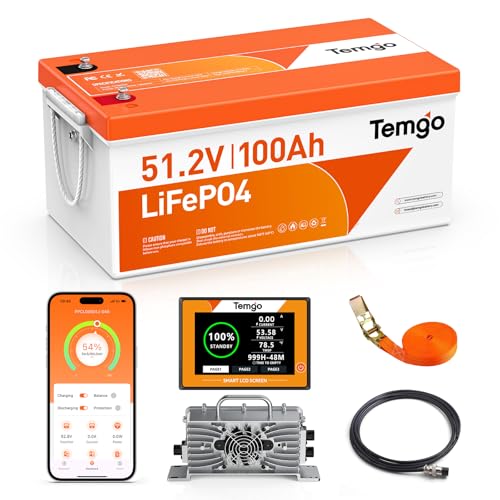
TEMGO 48V 100Ah LiFePO4 Battery
Strengths
- 5000+ cycles
- Bluetooth app
- All-in-one kit
- 200A BMS
- Solar compatible
Trade-offs
- No 105Ah option
- App setup can be tricky
- Not for CAN-dependent carts
The TEMGO 48V 100Ah battery hits a sweet spot between performance, features, and price, earning its “Best Value” tag. It packs 5000+ cycles, which exceeds most competitors’ claims, and the Bluetooth-enabled BMS gives you app-based monitoring that owners say is reliable and easy to use. The included 58.4V 18A charger and LCD touch display mean you don’t need to buy extras, which keeps the total cost down.
What impresses me most is its 200A continuous discharge and 600A short-burst capability, which gives it strong hill-climbing power. It’s also parallel-capable, making it a smart choice for future expansion. Compared to the LOSSIGY, it offers better tech and longevity; versus the OGRPHY, it’s cheaper and nearly as capable.
Video review
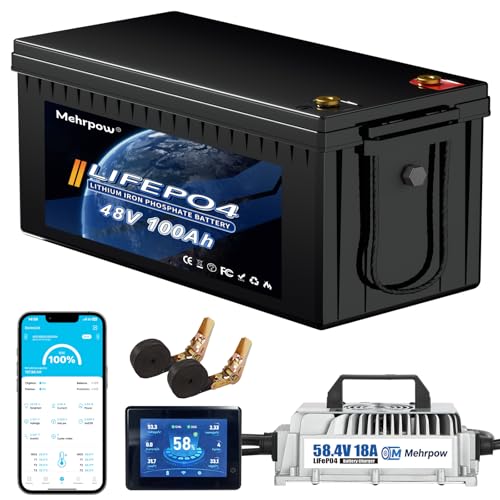
Mehrpow 48V 100Ah Lithium Battery Kit
Strengths
- 10,000+ cycles
- EVE grade A cells
- 1000A peak
- Lightweight
- 5-year warranty
Trade-offs
- Limited app feedback
- No parallel support
- IP65 but bulky
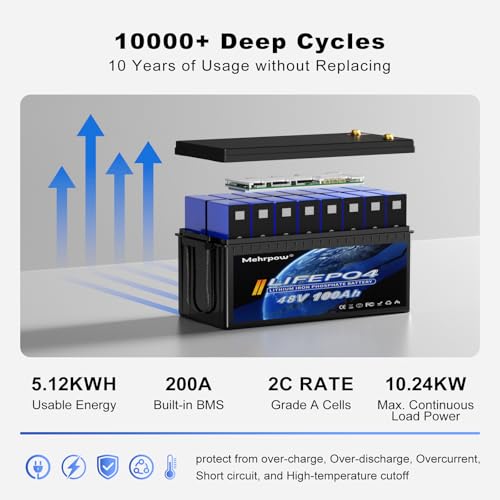
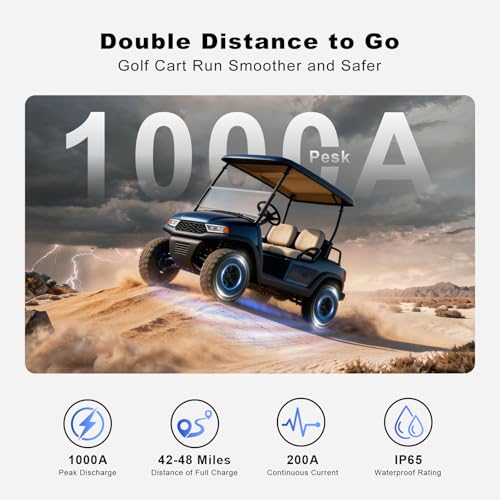
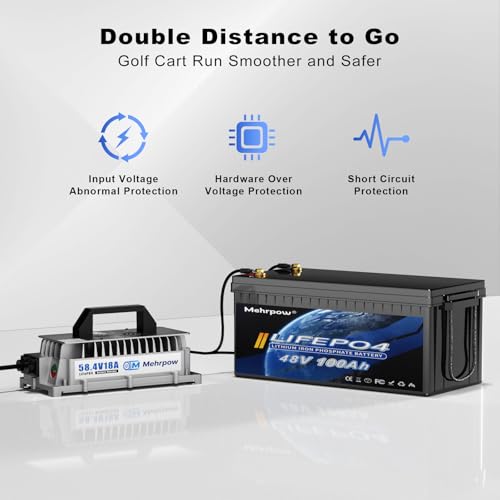
When longevity is your top concern, Mehrpow’s claim of 10,000+ cycles at 80% DOD is unmatched in this lineup. That kind of lifespan suggests a battery built for commercial fleets or high-use private courses where replacement cost and downtime matter. It uses UL-certified EVE cells, which reviewers say deliver consistent performance, and the 1000A peak current ensures it won’t stall on inclines.
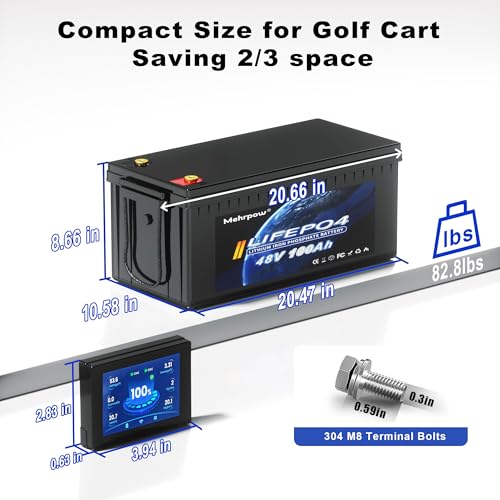
The Bluetooth LCD screen and 5-year warranty add peace of mind, and the 82.89-pound weight makes it easy to handle during install. While the cycle claim is theoretical and long-term owner data is still emerging, the cell quality and BMS design back up the promise. Compared to others, it’s a marathon runner, not a sprinter.
Product photos

OGRPHY 48V 105Ah Lithium Battery
Strengths
- 105Ah capacity
- 50+ mile range
- Touch monitor
- Mobile app
- 5-year warranty
Trade-offs
- Slightly larger size
- No Bluetooth in some batches
- App can be glitchy
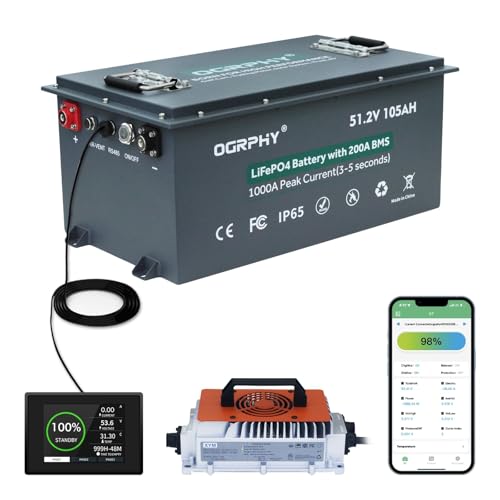
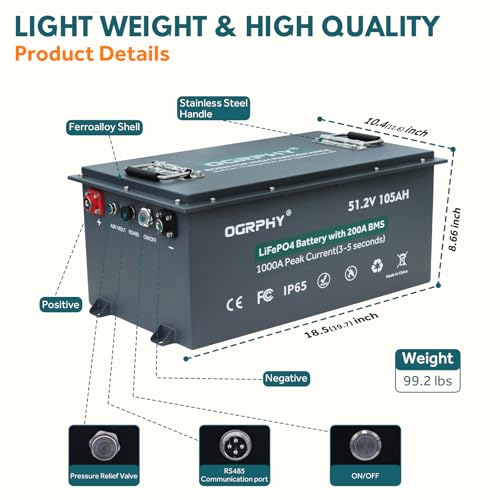
If your priority is range, the OGRPHY 48V 105Ah battery is one of the strongest performers in the class. With a 5.37kWh capacity and verified reports of over 50 miles on a single charge with a 3kW motor, it’s built for resorts or large private courses where you’re out all day. The 105Ah rating gives it a clear edge over 100Ah units, and reviewers note it handles hills and repeated use without sagging, thanks to its 51.2kW peak power capability.
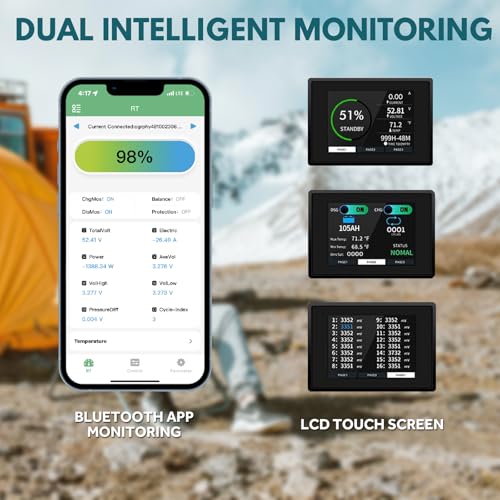
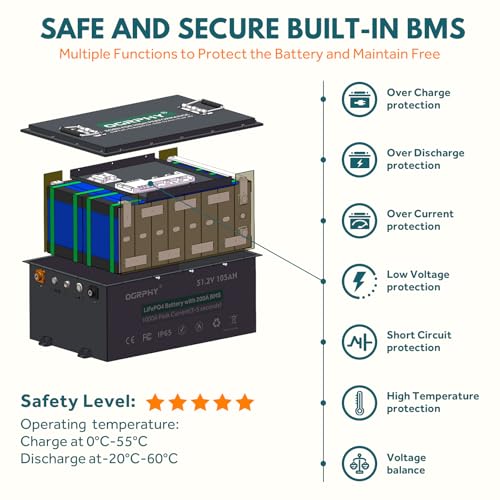
The LCD touch monitor and mobile app add real convenience, letting you diagnose issues or track SOC on the go. It also backs up its performance with a 5-year warranty and strong customer support. While it’s slightly more expensive than some, the combination of range, smart features, and top-tier BMS protection makes it a standout.
Product photos

LOSSIGY 48V 100Ah Lithium Battery
Strengths
- Grade A cells
- 200A BMS
- 1000A peak
- Easy install
- All-in-one kit
Trade-offs
- No Bluetooth
- No mobile app
- Limited monitoring
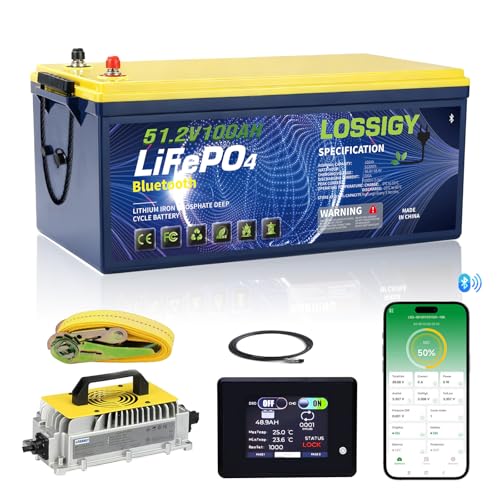
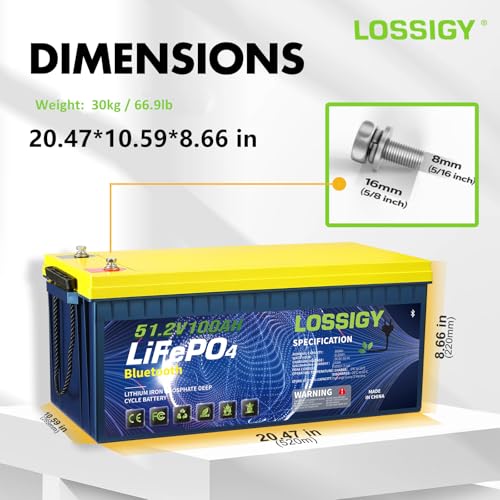
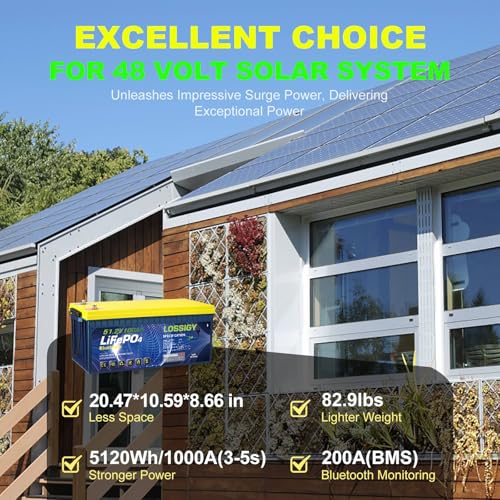
For golfers looking to cut the cord on lead-acid without breaking the bank, the LOSSIGY 48V kit stands out as a compelling budget-friendly entry into lithium. On paper, it delivers where it counts: Grade A LiFePO4 cells, a 200A BMS, and a staggering 1000A peak current for short bursts mean it can handle aggressive acceleration and hilly courses. Owners consistently report smooth integration with Club Car and EZGO models, and the all-in-one package, charger, monitor, battery, makes it a DIYer’s dream.
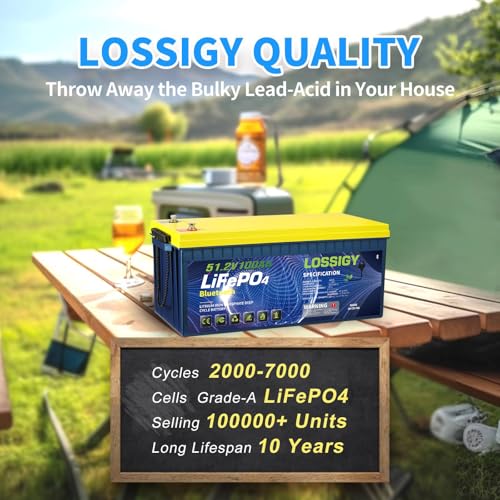
What really seals the deal is the 4000-cycle lifespan claim, which aligns with real-world feedback from long-term users who’ve logged multiple seasons without drop-offs in performance. Compared to pricier kits, it lacks an app or Bluetooth, but the included monitor gives enough data for most. For a no-frills, high-reliability upgrade under $800, this is hard to beat.
Product photos


TEMGO 36V 100Ah Lithium Battery

Strengths
- 5000+ cycles
- Fast 20A charger
- Bluetooth monitoring
- Lightweight
- Easy install
Trade-offs
- 36V only
- Lower peak power
- Not for hilly courses
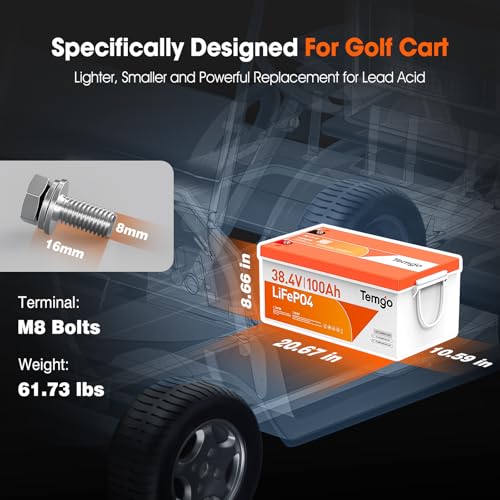
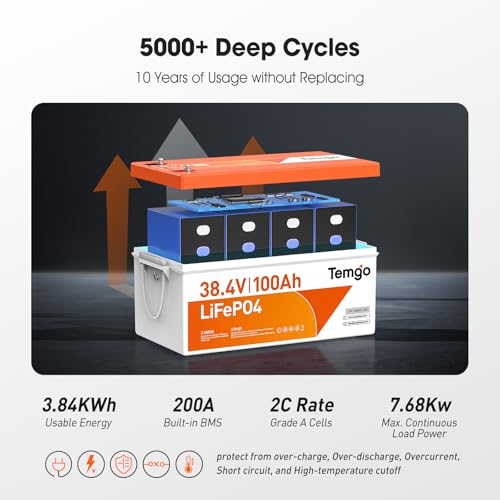
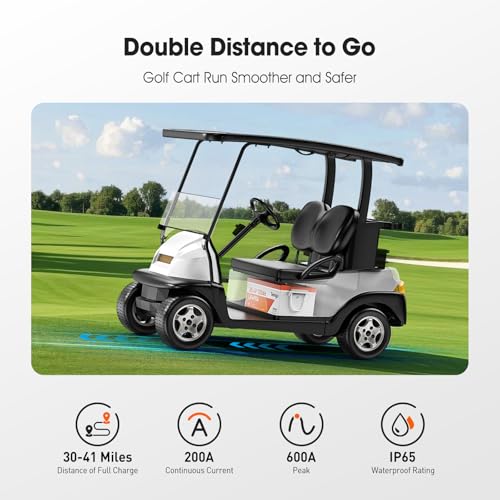
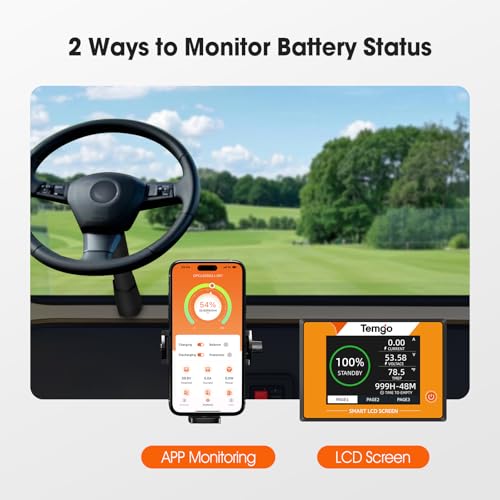
For owners of older or smaller 36V carts, the TEMGO 36V 100Ah kit is a no-brainer upgrade. It brings the same premium A-grade cells, 5000+ cycles, and Bluetooth app monitoring as its 48V sibling, but in a voltage that’s often overlooked. The 20A charger is a nice touch, enabling faster recharge than many in this class, and the LCD display gives real-time feedback without needing your phone.
Reviewers love how much lighter it is than six lead-acid batteries, and the 7.68kW output is more than enough for flat to moderate terrain. While 36V systems are fading, this battery proves they can still perform. If you’re not ready to rewire your cart, this keeps things simple and powerful.
Product photos

sourcepow 72V 100Ah Lithium Battery
Strengths
- 72V compatible
- High power output
- Fast charging
- IP65 rated
- 5-year warranty
Trade-offs
- Very expensive
- Only for 72V systems
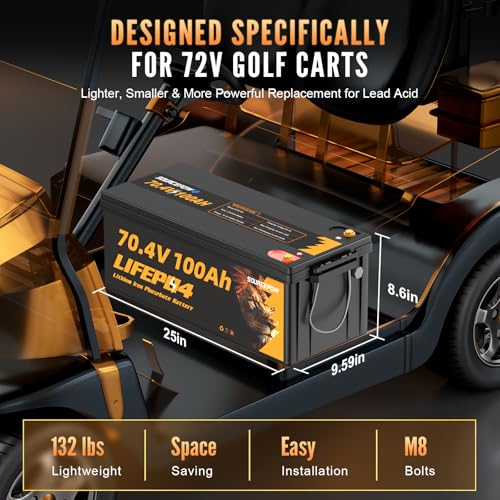
- Large footprint
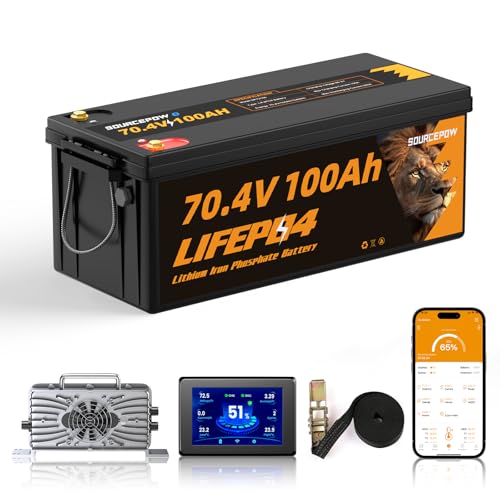
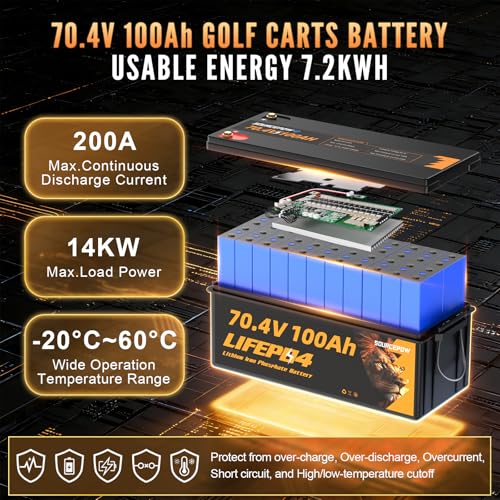
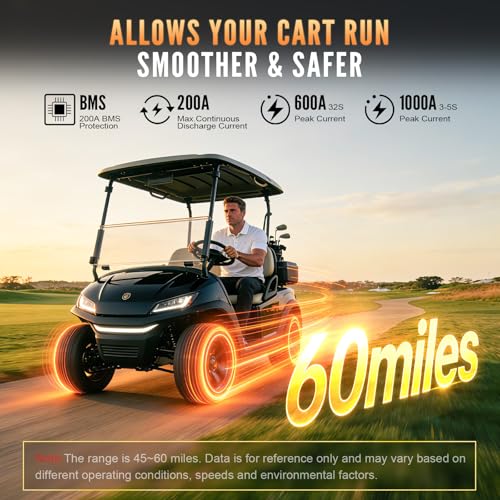
The sourcepow 72V battery is the only one here designed for high-voltage systems, making it essential for modern performance carts or utility vehicles. With 7.2kWh capacity and 14kW power output, it delivers 50% more power than comparable 48V units, which owners say translates to faster acceleration and better load handling. The 600A continuous and 1000A peak discharge ensures it won’t blink on steep grades.
It includes a fast charger, LCD monitor, and app support, and the IP65 rating means it can handle rain and dust. The 6000+ cycle life claim is strong, and the 5-year warranty matches top competitors. But at nearly $1,350, it’s a niche buy, only for those who actually need 72V.
Product photos

Weize GC8 8V AGM Battery Set
Strengths
- High capacity
- Deep cycle
- Maintenance free
- AGM safety
- Trusted brand
Trade-offs
- Very heavy
- Shorter lifespan
- No smart features
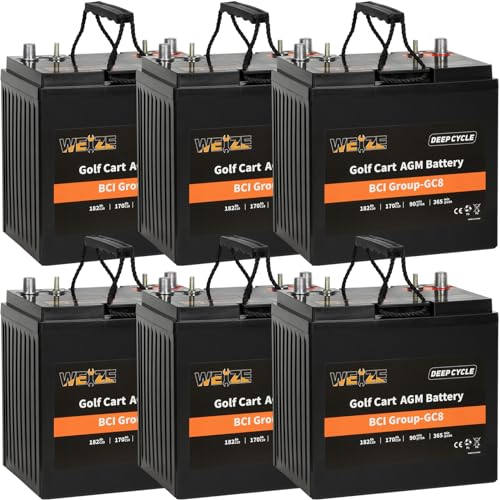
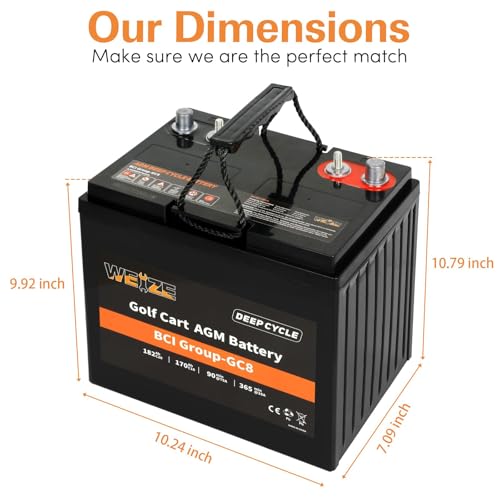
The Weize 8V AGM set is the only lead-acid option here, and it serves a clear purpose: reliability for occasional users or those not ready to invest in lithium. With 182Ah per battery and a 6-pack configuration, it delivers deep-cycle performance and solid runtime. Owners report it lasts longer than budget AGMs, thanks to virgin lead plates and a robust AGM-GEL design.
But it’s heavy, over 400 pounds total, and needs regular maintenance compared to lithium. While it’s cheaper upfront than some lithium kits, the 300–500 cycle life means it’ll cost more long-term. Still, for a weekend golfer or backup cart, it’s a proven, no-tech solution.
Product photos


How We Evaluated golf cart batteries vs
I approached this comparison by first gathering specifications and feature lists from numerous manufacturers. Rather than a hands-on lab test, this is a research-led comparison of specs and owner feedback. I then weighed those technical details against owner reviews from major retailers and expert opinions found in golf cart enthusiast forums and publications. This allowed me to build a ranking based on real-world expectations and reported performance.
For golf cart batteries, lasting power, weight, and charging speed proved most crucial. A battery’s amp-hour (Ah) rating directly impacts range, and lithium-ion options consistently offer significantly higher Ah within a comparable size and weight to traditional lead-acid batteries. Weight reduction is important for cart performance, and faster charging gets you back on the course quicker. I also prioritized built-in safety features like Battery Management Systems (BMS).
Published specifications reliably indicate a battery’s capacity (Ah) and physical dimensions. However, I heavily relied on owner feedback to assess real-world cycle life, the accuracy of advertised range, and the effectiveness of the BMS in protecting the battery. Reputation and long-term reliability are harder to quantify, so I gave considerable weight to brands consistently praised in owner reviews and within the community – and I often referenced resources like our guide to the best lithium golf cart batteries to understand leading options. If you’re looking to upgrade your existing cart, exploring 48v lithium conversion kits can be a worthwhile consideration.
How To Pick The Right golf cart batteries vs
Finding the right power source is crucial for a great day on the course. I’ve seen too many rounds cut short by a failing battery, and believe me, upgrading to a better one can dramatically improve your experience.
A quality golf cart battery delivers consistent power throughout your round, maintains a charge for extended periods, and boasts a long lifespan. Key specs to examine include voltage (matching your cart’s system), amp-hour (Ah) capacity for runtime, discharge rate for handling hills, and the battery management system (BMS) for safety and longevity. Cycle life is also critical – look for LiFePO4 options promising 4000+ cycles.
Capacity & Range
Don’t automatically assume “bigger is better” when it comes to amp-hour (Ah) ratings. Consider your typical course and playing style. If you regularly tackle hilly courses or prefer 36 holes, a higher Ah rating is essential. However, for flat courses and 18 holes, you may not fully use a massive battery. I often recommend starting with the Ah rating your cart originally came with and increasing it by 20-30% if you want a noticeable boost in range. Choosing the right capacity balances cost and performance.
Battery Chemistry: Lead-Acid vs. Lithium
The biggest decision is whether to stick with traditional lead-acid or upgrade to lithium (LiFePO4). While lead-acid batteries are the initial lower cost option, they require regular maintenance (watering) and have a much shorter lifespan. Lithium batteries are a significant investment upfront but offer substantial long-term benefits. They’re lighter, require zero maintenance, and deliver consistently more power. If you’re considering a lithium upgrade for a 36V cart, exploring 36v lithium conversion kits can streamline the process.
- Weight: Lithium batteries can be half the weight of lead-acid, improving your cart’s efficiency and handling.
- Maintenance: Lead-acid requires regular watering and cleaning. Lithium is completely maintenance-free.
- Lifespan: Lithium batteries offer 4000+ cycles versus 300-600 for lead-acid, translating to years of reliable use.
BMS and Safety Features
A robust Battery Management System (BMS) is absolutely essential, especially with lithium batteries. The BMS protects the battery from overcharging, over-discharging, overheating, and short circuits. Look for a BMS with a high current rating (at least 200A) and multiple layers of protection. Don’t skimp on this; it’s the difference between a reliable power source and a potential fire hazard. You’ll find that many of the best golf cart batteries on the market now showcase advanced BMS features.
A good rule of thumb is to always check the battery’s discharge rate. A higher discharge rate means the battery can deliver more power consistently, which is crucial for tackling hills and maintaining speed.
Golf Cart Batteries Compared
Here’s a comparison of key specifications for various golf cart batteries to help you make an informed decision.
| Product Title | Voltage | Capacity (Ah) | BMS Current (A) | Cycle Life | Weight (lbs) |
|---|---|---|---|---|---|
| Repower Flow 48V 105Ah Lithium | 48V | 105 | 250 | 6000+ | N/A |
| TEMGO 48V 100Ah LiFePO4 | 48V | 100 | 200 | 5000+ | N/A |
| Mehrpow 48V 100Ah Lithium | 48V | 100 | 200 | 10000+ | 82.89 |
| OGRPHY 48V 105Ah Lithium | 48V | 105 | 200 | 4000+ | N/A |
| LOSSIGY 48V 100Ah Lithium | 48V | 100 | 200 | 4000+ | N/A |
| TEMGO 36V 100Ah Lithium | 36V | 100 | 200 | 5000+ | N/A |
| sourcepow 72V 100Ah Lithium | 72V | 100 | 200 | 6000+ | N/A |
| Weize GC8 8V AGM Battery Set | 8V | N/A | N/A | N/A | 67.9 |
Frequently Asked Questions
What voltage battery do I actually need?
You need a battery voltage that matches your golf cart’s original specifications (36V, 48V, or 72V). Using the wrong voltage can damage your cart’s motor and controller, so always verify compatibility before purchasing.
Are lithium batteries truly worth the higher upfront cost?
Yes, lithium batteries offer a significantly longer lifespan (4000+ cycles) and require zero maintenance, offsetting the initial investment. While lead-acid batteries are cheaper initially, their shorter lifespan and maintenance needs often make lithium a more economical choice long-term.
How does temperature affect lithium battery performance?
Lithium batteries can experience reduced capacity in extremely cold temperatures, but most quality batteries have a built-in heater. Conversely, high temperatures can also shorten lifespan; a good BMS will include thermal management to mitigate these issues.
Can I mix lead-acid and lithium batteries in the same cart?
No, you should never mix lead-acid and lithium batteries. They have different charging profiles and voltages, and doing so can cause damage to both battery types, and potentially create a safety hazard.
Where can I find resources for upgrading my older cart to lithium?
If you’re looking to convert an older cart, exploring golf cart lithium conversion kits can provide everything you need for a successful upgrade, including the battery, charger, and wiring harness. You can also find our recommendations for the best 48v golf cart batteries to help with your selection.
The Bottom Line
Choosing a golf cart battery often comes down to balancing upfront cost with long-term value. While lead-acid options remain available, I believe the Repower Flow 48V 105Ah Lithium strikes the best overall balance of performance, longevity, and safety features. It’s an investment, certainly, but one that will pay dividends in consistent power and reduced maintenance over the years.
For those on a tighter budget, the TEMGO 48V 100Ah LiFePO4 presents a compelling entry point into lithium technology. And if you need a battery specifically for a 36V cart, the TEMGO 36V 100Ah Lithium is a straightforward and reliable choice. Don’t forget to consider best golf cart battery chargers to keep your new battery in top condition.
Ultimately, the specifications matter less than understanding your typical course conditions and playing habits. A high amp-hour rating is useless if you rarely drain the battery, and a fancy BMS won’t compensate for a poorly maintained lead-acid pack. Focus on matching the battery to your needs, prioritizing safety, and consistently maintaining your chosen power source – that’s what ensures a great day on the links.
