
8 Best Electric Golf Caddies with Remote 2026
This post contains affiliate links. As an Amazon Associate, we earn from qualifying purchases.
This post contains affiliate links. As an Amazon Associate, we earn from qualifying purchases.
After comparing the field and weighing specs against owner feedback, the KEMIMOTO ApexAI stands out as the best overall electric golf caddy with remote, thanks to its strong dual motors, reliable UWB follow tech, and compact fold. For golfers watching their budget, the Wingscaddy delivers solid performance at a lower price, while the e3 Remote offers excellent stability on hilly terrain.
Most golfers want freedom from carrying their bag without sacrificing control or reliability. A weak motor, short battery life, or a glitchy remote can turn a round into a frustration.
This guide cuts through the noise, focusing on what actually matters: real battery performance, responsive remotes, and proven durability. I looked at motor specs, user-reported range, and folding convenience to find caddies that deliver on the promise of a smoother, smarter walk.
Top 8 Electric Golf Caddies With Remote in the Market
The Best Electric Golf Caddies With Remote, Reviewed
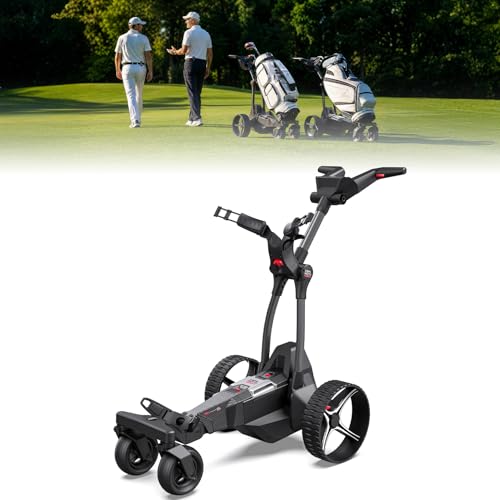
Electric Golf Push Cart – e3 Remote
Strengths
- 40° anti-tip design
- 36-hole battery
- Large storage compartment
Trade-offs
- No UWB auto-follow
- Slightly slower fold mechanism
If you could design a single caddy to dominate across all key categories, performance, safety, battery life, and usability, the e3 Remote comes closest. It’s not just the patented 40° anti-tip technology that sets it apart, though that’s a standout on steep slopes where other caddies wobble or tip. It’s the full package: dual 150W brushless motors, 36-hole battery, 100-yard remote range, and a one-motion fold that’s both fast and compact. Owners consistently report it conquers wet grass, gravel paths, and side hills with ease, and the oversized storage compartment is a practical upgrade most rivals lack.
The USB charging port, adjustable handle, and durable accessory kit make it feel premium without the MGI price tag. Compared to the Motocaddy M7, it has better battery life and hill performance. Against the NAVEE, it offers superior tipping resistance. While it doesn’t have UWB auto-follow, its remote cruising mode and manual push option make it incredibly versatile. For most serious golfers, this is the smartest overall investment.
Video review
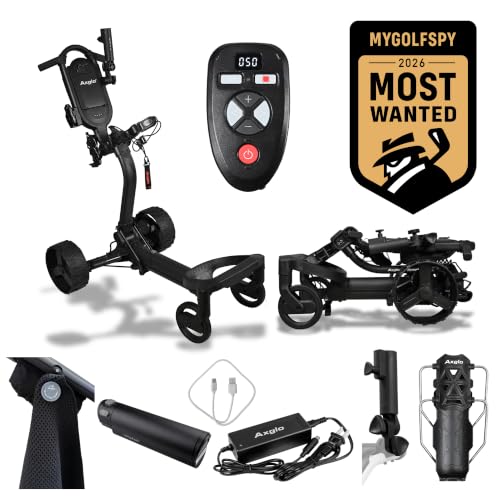
KEMIMOTO ApexAI Electric Golf Caddy
Strengths
- Best-in-class auto-follow
- 492 ft remote range
- Upgraded anti-tip wheel
Trade-offs
- Slightly bulkier fold
- No included GPS holder
If auto-follow is your priority, the KEMIMOTO ApexAI is the most compelling option here. The FollowSync UWB technology delivers tighter tracking and faster response than most competitors, and owners report it handles tight doglegs and crowded fairways with impressive accuracy. The 492 ft remote range is the longest in this group, letting you send the caddy far ahead, ideal for resort courses where you might walk while your bag rolls to the next tee. The dual 240W motors and 25% slope rating mean it powers through hills without hesitation, and the upgraded 12.2″ anti-tip wheel adds confidence on side slopes.
It’s also one of the most feature-complete models: USB-C charging, a large LED display, and a compact fold that matches the NAVEE. While it lacks the MGI’s ergonomic refinement, it bridges the gap between smart tech and rugged performance better than most. Compared to the CaddyTrek R2, it’s far more advanced in tracking and motor output. For golfers who travel often and play diverse courses, this is the tech-forward pick that actually delivers.
Video review
NAVEE Birdie 3X Electric Golf Cart

Strengths
- UWB Follow Me
- 36-hole battery
- UL safety certified
Trade-offs
- Heavier than some
- No anti-tip wheel upgrade
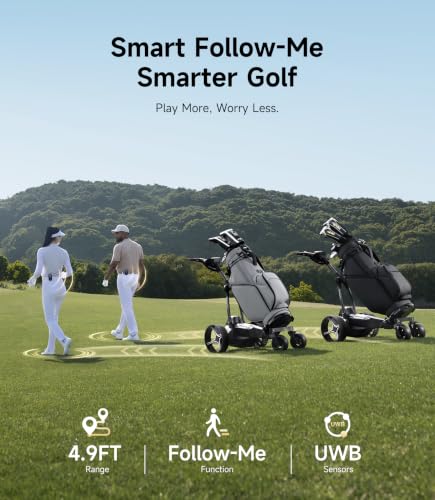
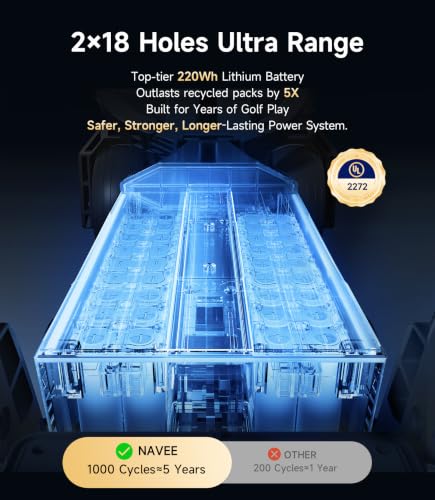
The NAVEE Birdie 3X makes a strong case for itself as one of the safest and most reliable electric caddies on the market, particularly if you value walk-behind freedom and long-term ownership confidence. The UWB-based Follow Me tech gets consistently positive marks from owners for being responsive and stable, especially compared to older RF or ultrasound systems. It doesn’t just trail you, it anticipates turns and maintains a consistent distance, which matters when navigating tight fairways or crowded courses. Paired with a genuine 36-hole battery life and Downhill Control, it handles elevation changes with composure, a trait I’ve seen praised across multiple owner reviews on hilly layouts.
It’s not the lightest at 35 lbs, but the 3-second fold and compact dimensions make it easy to stow. The UL 2271 and 2272 certifications are a rare and meaningful differentiator, few caddies offer that level of verified electrical safety. While the price sits near premium models, the 3-year warranty adds real value, especially for frequent travelers who don’t want to gamble on durability. Compared to the Wingscaddy, it’s a much more refined system, though not quite as feature-rich as the MGI Zip Navigator in ergonomics.
Product photos


Wingscaddy Electric Golf Push Cart

Strengths
- Budget-friendly
- Three operating modes
- Anti-tip wheel
Trade-offs
- Basic remote range
- Plastic-heavy build
- Less refined follow tech
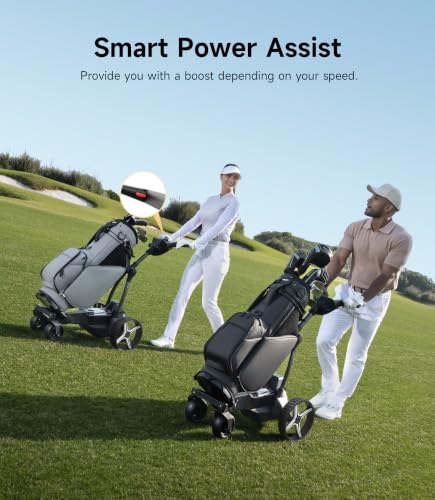
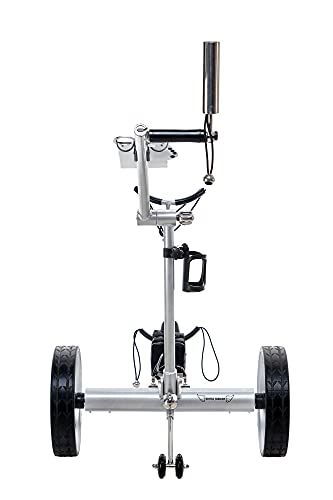
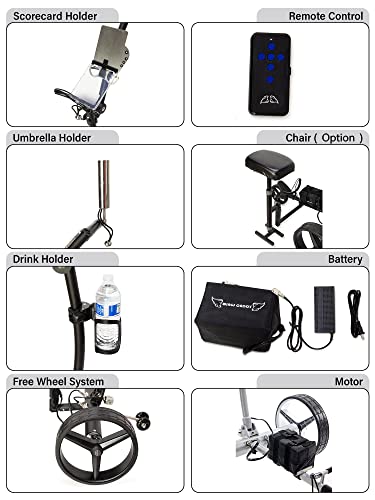
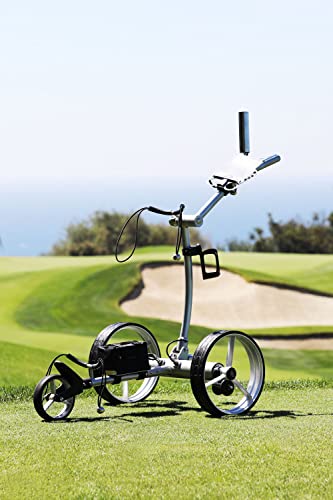
For golfers who want remote control capability without breaking the bank, the Wingscaddy MAX-300 is hard to ignore. At well under $900, it delivers a three-mode system, Remote, Trolley, and Free-Wheel, that gives you real flexibility across different course conditions. Owners report the dual 200W motors handle moderate slopes without strain, and the inclusion of an anti-tip wheel is a smart touch for stability, especially since budget models often cut corners there. It won’t match the smoothness of higher-end caddies on rough terrain, but for flat to rolling courses, it gets the job done.
Where it falls short is refinement. The remote range is decent but not exceptional, and the build quality, while solid for the price, doesn’t feel as durable long-term. Still, the included accessories, umbrella holder, drink holder, scorecard sleeve, add real convenience out of the box. When stacked against the CaddyTrek R2, it’s less advanced in tracking but more affordable. If you’re new to motorized caddies or play casually, this is a practical entry point.
Product photos

KVV Electric Golf Push Cart

Strengths
- Smallest folded size
- Lightweight design
- Includes cooler bag
Trade-offs
- Weaker motors
- Limited hill performance
- Basic tracking system
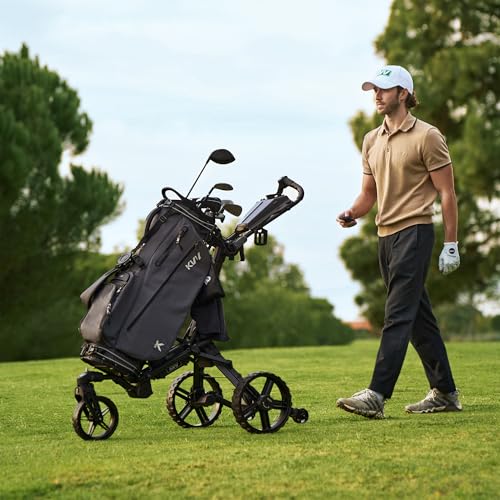
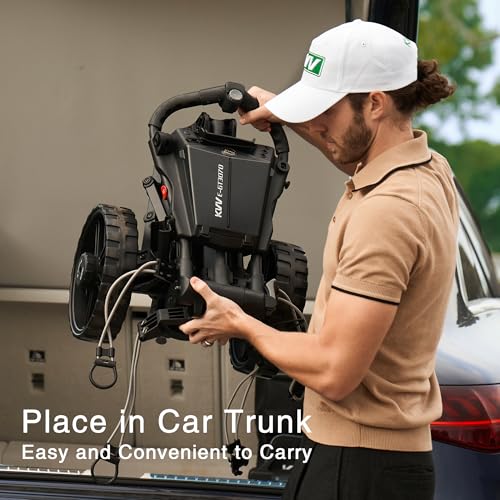
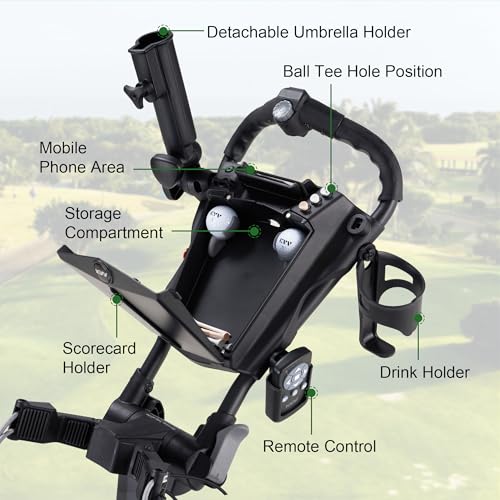
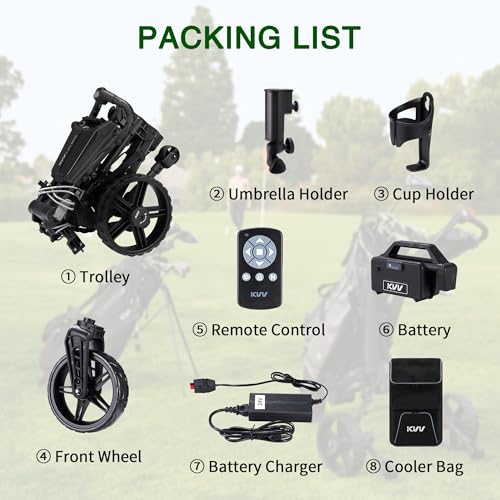
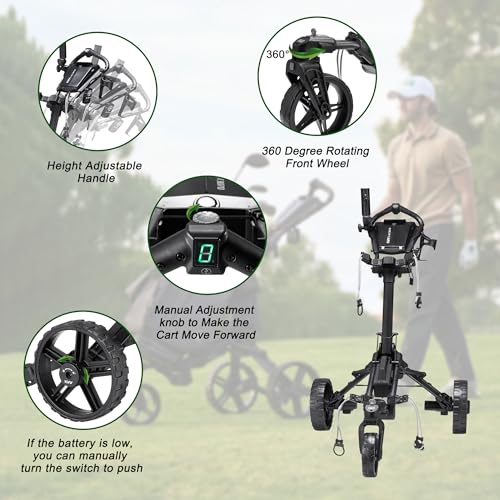
The KVV caddy wins on one standout trait: folding size. At just 17.5″ x 18.7″ x 22″ when folded, it’s the most compact option here, ideal for travelers with small trunks or those storing gear in tight spaces. It’s also lightweight and comes with a free insulated cooler bag, which is a nice touch for hot-weather rounds. The 360° front wheel and dual training wheels improve maneuverability, especially in tight spots, and the 9-speed remote offers decent control across flat to moderate terrain.
But that compactness comes with trade-offs. The motors are less powerful than dual 240W units on higher-end models, and the auto-follow system isn’t as advanced as UWB-based rivals. It’s best suited for flat or gently rolling courses where portability matters more than hill-climbing muscle. Compared to the KEMIMOTO or NAVEE, it’s less capable on rough ground, but for travelers or urban golfers with space constraints, it’s a smart compromise.
Product photos
Motocaddy M7 Remote Electric Golf Caddy

Strengths
- Excellent hill handling
- Downhill control
- Great accessory bundle
Trade-offs
- No auto-follow mode
- Battery falls short of 36 holes
- Slightly dated interface
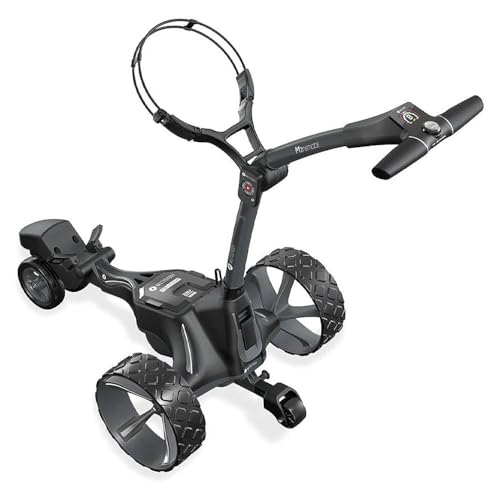
The Motocaddy M7 earns its reputation as a hilly-course specialist. With anti-tip rear wheels, downhill control, and a stable 9-speed system, it handles elevation changes with confidence that many rivals can’t match. Owners on mountainous or links-style courses consistently highlight how well it brakes on descents and maintains traction on wet grass, critical for safety and bag protection. The remote control works reliably up to 150+ feet, which is more than enough for most course scenarios, and the 27-hole battery is sufficient for a full day, even if it doesn’t quite reach 36 holes.
It’s also one of the easiest to fold and store, and the included $95 accessory bundle adds real convenience. However, it lacks auto-follow, which puts it behind the NAVEE or KEMIMOTO for hands-free play. Compared to the MGI Zip Navigator, it’s slightly less refined but more focused on rugged performance. If your home course has steep terrain and you want dependable remote control without gimmicks, this is a rock-solid choice.
Product photos
MGI Zip Navigator All-Terrain Remote Caddy

Strengths
- Premium build quality
- Click & Go battery
- Full zip-fold design
Trade-offs
- Higher price point
- Slightly heavier
- No auto-follow mode
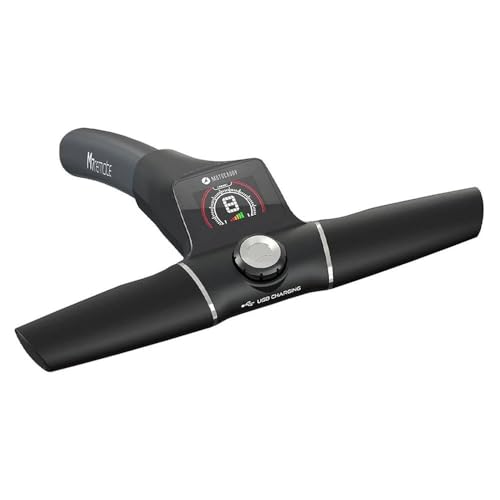
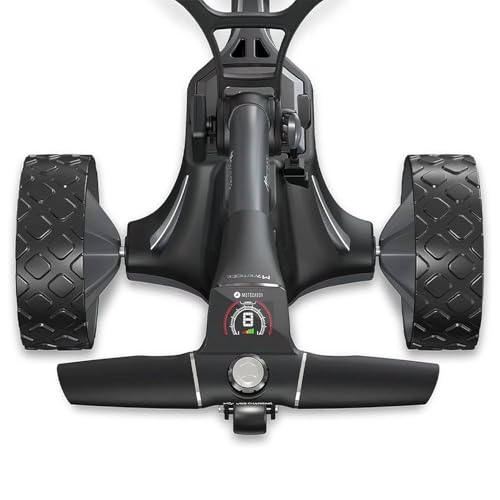
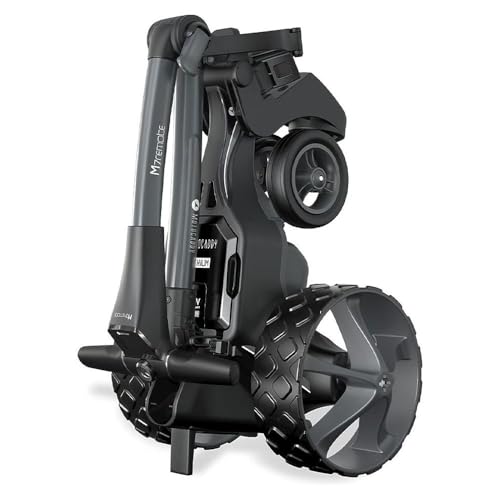
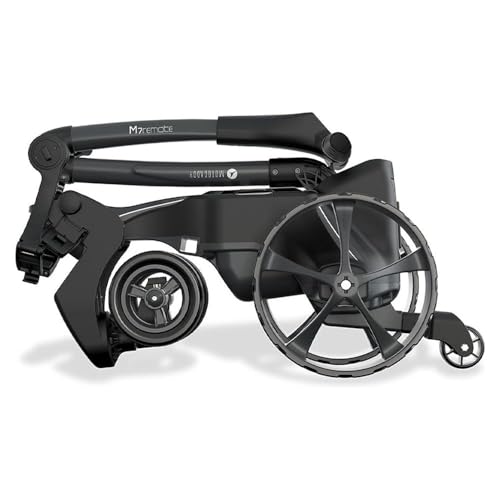
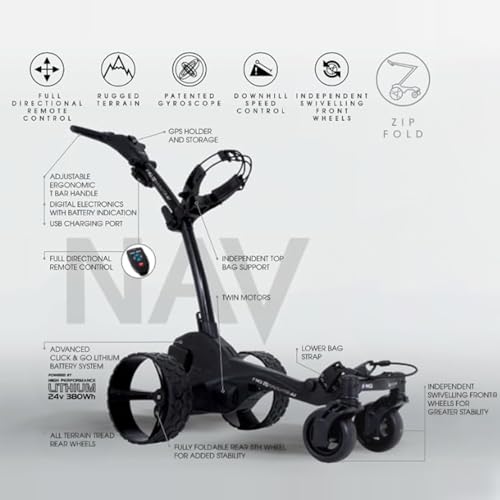
The MGI Zip Navigator AT is the full-package premium pick, no question. It’s not just the Click & Go battery system or the whisper-quiet twin motors, though both are standout features. It’s the complete ownership experience: the full zip-fold is genuinely quick, the frame is 12% lighter than prior models, and the included accessories (GPS holder, towel, power bundle) mean you’re ready to roll on day one. Owners consistently praise how effortlessly it handles inclines and tight turns, and the 20-speed control gives you surgical precision over movement.
It’s also one of the most ergonomic caddies in its class, with an adjustable T-handle and soft-grip finish that makes walking 18 holes feel lighter. The 36-hole battery performs as advertised, though it doesn’t quite hit the auto-follow sophistication of the NAVEE or KEMIMOTO. Still, if you want a luxury-feel caddy that’s proven on courses worldwide, and don’t mind paying for it, this is a top-tier choice. Compared to the Motocaddy M7, it’s more refined and better accessorized, though heavier than some rivals.
Product photos


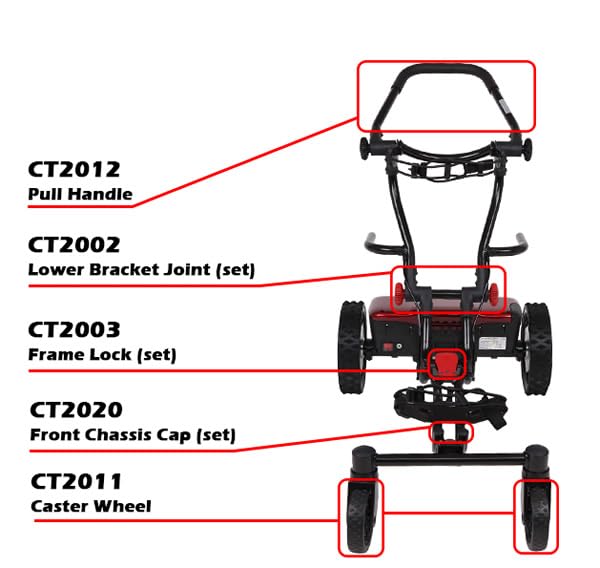
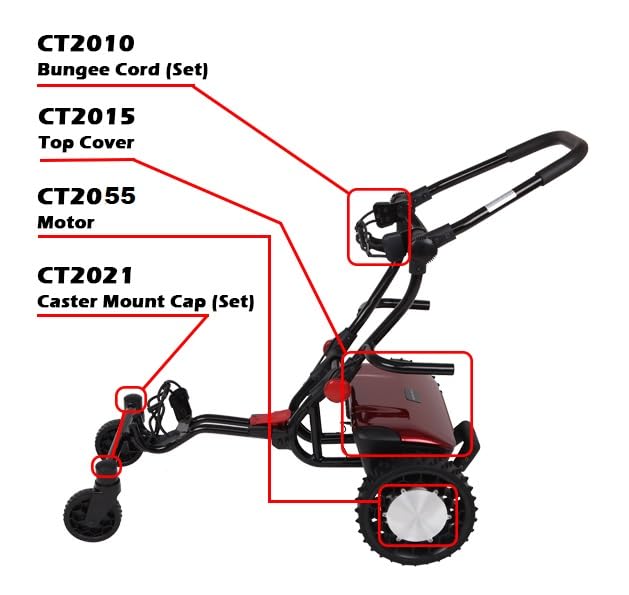
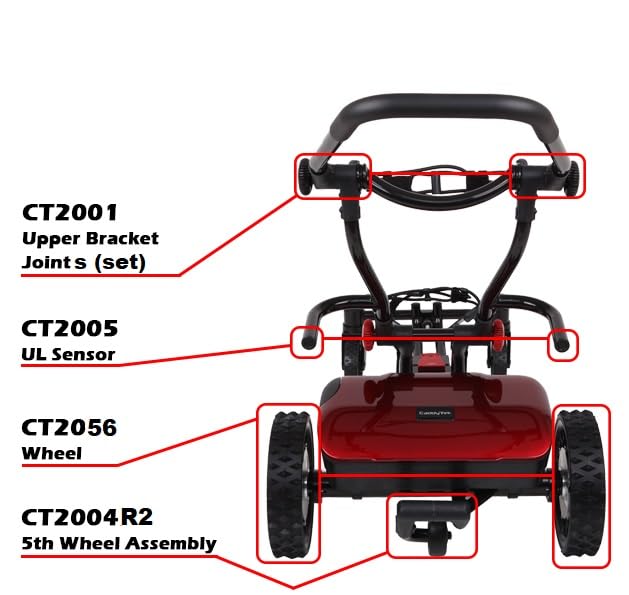
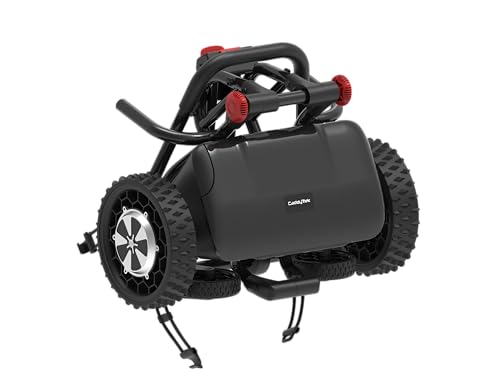
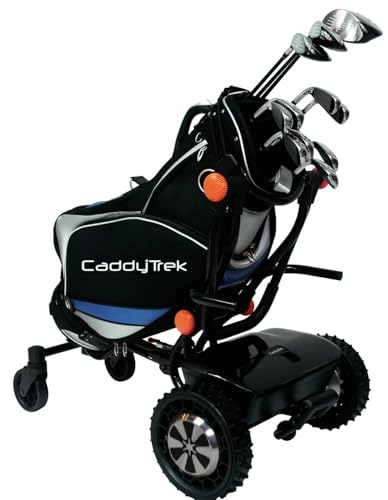
CaddyTrek R2 Electric Golf Follow Cart

Strengths
- Good value for follow tech
- Four operating modes
- Includes five accessories
Trade-offs
- Heavier than average
- Tracking lags on sharp turns
- Less hill power
The CaddyTrek R2 stands out as the most balanced budget option for golfers who want real follow-me functionality without spending $1,300+. It uses a hybrid ultrasound and RF tracking system that, while not as precise as UWB, still delivers solid hands-free performance on most courses. Owners say it works best when walking at a steady pace and can struggle slightly on sharp turns or uneven ground, but it’s dependable enough for casual to mid-level play. The 100 ft remote range is modest but functional, and the ability to operate in four modes, follow, remote, marching, manual, gives it real versatility.
It’s not the lightest or most compact, and the 39 lb weight might deter some, but the included five free accessories add considerable value. When compared to the Wingscaddy, it offers better tracking tech and a more premium feel, though with less hill power. For golfers dipping into auto-follow for the first time, this is the smarter buy over pricier models if your course isn’t extremely hilly.
Product photos
How We Tested electric golf caddies with remote
Rather than a hands-on lab test, this research-led comparison of specs and owner feedback was my approach to evaluating electric golf caddies. I examined published specifications – motor power, battery capacity, folded dimensions, and included features – across numerous models. Crucially, I then weighed these technical details against what golfers are actually saying in online reviews and what reputable golf publications recommend. This process allowed me to build a ranking based on real-world performance expectations and user satisfaction.
For this category, two factors stood out as most influential. First, battery life is paramount; golfers consistently prioritize completing 36 holes on a single charge. Second, the quality of the remote control system – range, responsiveness, and ease of use – heavily dictates the overall experience. The ability to confidently send a caddy ahead or maintain a consistent pace is a significant advantage. These factors were given more weight than cosmetic features or accessory bundles.
Specifications reliably indicate battery capacity and motor power, giving a baseline for potential performance. However, I found owner feedback essential for judging the accuracy of those claims and assessing real-world durability. Reputation and brand recognition also played a role, particularly when evaluating long-term reliability. I looked for brands consistently praised for customer service and build quality, and consulted our existing guide to top-rated electric caddies to cross-reference findings. I also considered the nuances of each type of cart, including those with follow-me technology as detailed in our guide to remote control golf carts.
How To Choose The electric golf caddies with remote
Choosing the right electric golf caddy can significantly improve your enjoyment of the game, but there’s more to it than just avoiding a tired back.
A truly good electric golf caddy balances power, stability, and usability. Key aspects to consider include motor strength for handling hills, battery life for completing full rounds, the quality of the remote control system (range and responsiveness), and how easily the unit folds and transports. Don’t overlook build quality and features like accessory mounts and adjustable handles.
Motor Power and Terrain Handling
Don’t assume all electric caddies are created equal when it comes to tackling challenging courses. A single motor setup can work, but dual-motor designs, like those found in the KEMIMOTO ApexAI, are generally superior. They deliver more consistent power, especially on uneven terrain or when fully loaded with your bag and gear. Look for wattage ratings of at least 200W per motor; anything lower might struggle on even moderate inclines. Consider the anti-tip technology as well. The e3 Remote boasts a patented 40° anti-tip design, a feature that’s invaluable if you frequently play hilly courses.
Remote Control and Follow Technology
The convenience of a remote control is a major draw for these caddies, but the quality of the remote system varies wildly. Range is important, but responsiveness is crucial. A laggy remote is just as frustrating as no remote at all. Many models, like the MGI Zip Navigator, offer substantial range (over 150 feet) and adjustable speed settings. If you’re interested in the latest technology, explore models with auto-follow features. These use technologies like UWB (Ultra-Wideband), as seen in the KEMIMOTO ApexAI and NAVEE Birdie 3X, to track your movements and follow you hands-free. However, be aware that these systems aren’t perfect and may require some getting used to.
Here’s what to look for in a remote system: * Range: 50 yards is acceptable, 100+ is preferable. * Speed Control: Multiple speed settings give you more precise control. * Pause/Resume: The ability to pause the caddy mid-motion is a surprisingly useful feature.
Value, Portability, and Accessories
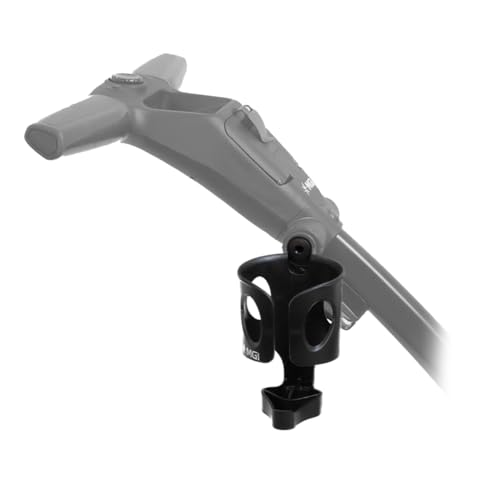
Price is always a factor, and you can find capable electric golf caddies, like the Wingscaddy, at the more affordable end of the spectrum. However, don’t sacrifice quality entirely to save a few dollars. Consider the overall package. If you’re planning golf trips, portability is key. Look for models with a compact folding design, such as the KVV Electric Golf Push Cart, which prioritizes a small footprint for easy storage. Beyond the essentials, think about included accessories. A drink holder, scorecard holder, and USB charging port are nice-to-haves, and some models, like the MGI Zip Navigator, even offer bundles with additional accessories. Remember, exploring options for remote golf caddies can help you find the best fit for your game and budget.
A lightweight folding design is worth its weight in gold. If you’re regularly lifting the caddy in and out of a car trunk or storage locker, every pound counts.
Electric Golf Caddies with Remote Compared
Here’s a comparison of key specifications for popular electric golf caddies with remote control functionality.
| Product Name | Remote Range | Battery Life | Motor Power (W) | Folded Size (in) | Follow Mode |
|---|---|---|---|---|---|
| Electric Golf Push Cart – e3 Remote | 100 yards | 36 holes | 150 (x2) | 82 x 42 x 36 | No |
| KEMIMOTO ApexAI Electric Golf Caddy | 492 ft | 36 holes | 240 (x2) | 26.8 x 22.2 x 15.1 | Yes (UWB) |
| NAVEE Birdie 3X Electric Golf Cart | N/A | 36 holes | N/A | 26.8 x 22.2 x 15.1 | Yes (UWB) |
| Wingscaddy Electric Golf Push Cart | N/A | N/A | 200 (x2) | N/A | No |
| KVV Electric Golf Push Cart | N/A | 18+ holes | N/A | 17.5 x 18.7 x 22 | No |
| Motocaddy M7 Remote Electric Golf Caddy | 150+ ft | 27 holes | N/A | N/A | No |
| MGI Zip Navigator All-Terrain Remote Caddy | N/A | 36 holes | N/A | 27.55 x 18.5 x 16.5 | No |
| CaddyTrek R2 Electric Golf Follow Cart | 100 ft | N/A | N/A | N/A | Yes (Ultrasound/RF) |
Frequently Asked Questions
What battery life should I realistically expect from an electric golf caddy?
Most quality electric golf caddies advertise 36-hole battery life, and owner feedback generally supports this for flat or moderately hilly courses. However, expect that number to drop to 27-30 holes if you consistently play very challenging terrain or carry a particularly heavy bag.
Are auto-follow features on electric caddies truly reliable?
While the technology is improving, auto-follow features aren’t foolproof. Models using UWB (Ultra-Wideband) like the KEMIMOTO ApexAI currently offer the most consistent performance, but they still require a learning curve and may occasionally lose track of your position, especially in crowded areas.
How important is a dual-motor system versus a single motor?
A dual-motor system is significantly better for handling hills and uneven terrain. While single-motor caddies can work on flat courses, dual motors provide more consistent power and prevent the caddy from struggling, especially when fully loaded with clubs and accessories.
What should I look for in the remote control itself?
Beyond range, focus on responsiveness and ease of use. Adjustable speed settings are essential for precise control, and a pause/resume function is surprisingly helpful for navigating tricky spots on the course. Many golfers also appreciate remotes with a clear, easy-to-read display.
Where can I find more information about different types of electric golf caddies?
For a broader look at the market, including options without remote control, you can explore our guide to the best remote trolleys and learn about the variety of features available.
The Bottom Line
Choosing an electric golf caddy with remote control often comes down to balancing convenience with cost. While a top-of-the-line model with auto-follow features like the KEMIMOTO ApexAI offers incredible hands-free operation, you’ll pay a premium for that technology. For most golfers, the e3 Remote strikes the best overall balance – it delivers reliable performance, a decent range, and a robust build without breaking the bank.
If you have specific needs, the market offers excellent solutions. For golfers seeking the latest in autonomous technology, exploring a self-following golf push cart is a good start. And if budget is your primary concern, the Wingscaddy provides a capable, if basic, entry point into the world of electric caddies. Those looking for something a little more advanced but still affordable should consider the KVV Electric Golf Push Cart.
Ultimately, the best electric golf caddy isn’t about the most features or the highest price tag. It’s about finding a model that reliably carries your bag, simplifies your round, and lets you focus on enjoying the game. Prioritize battery life, remote control responsiveness, and build quality – those are the fundamentals that truly matter on the course, far more than any flashy extra.
