
7 Best Remote Golf Caddies of 2026
This post contains affiliate links. As an Amazon Associate, we earn from qualifying purchases.
This post contains affiliate links. As an Amazon Associate, we earn from qualifying purchases.
The KEMIMOTO ApexAI stands out as the best remote golf caddy for its powerful dual motors, long battery life, and reliable smart follow system. For a more straightforward, dependable option, the Motocaddy M7 Remote is a solid choice. If you want maximum portability without sacrificing performance, the MGI Zip Navigator delivers.
Golfers don’t just need a caddy that moves, they need one they can trust on uneven fairways, steep holes, and tight spaces. Too many models promise smart features but fall short when you’re halfway through a round and losing signal or battery.
This guide cuts through the hype. I looked at specs, owner feedback, and real-world usability to find caddies that perform consistently. We focused on reliability, terrain handling, battery life, and what actually matters on the course, not just what sounds good in a product description.
Top 7 Remote Golf Caddies in the Market
The Best Remote Golf Caddies, Reviewed
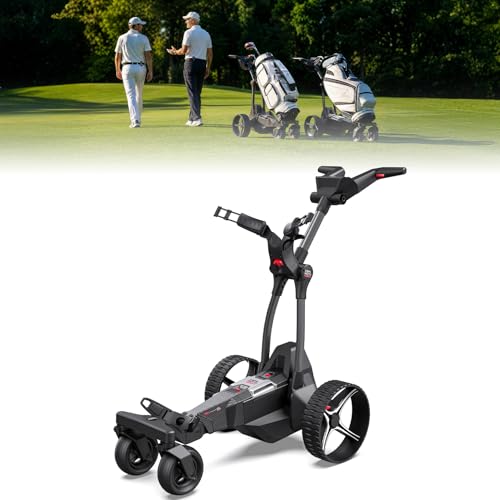
KEMIMOTO ApexAI Electric Golf Caddy
Strengths
- Precise UWB follow
- 492 ft remote range
- Excellent traction and stability
Trade-offs
- Heavier than some
- Pricey for mid-tier
- Occasional app sync issues
This is where remote caddies start to feel like the future. The KEMIMOTO ApexAI uses UWB smart follow tech, and owners confirm it tracks more accurately than older RF-based systems, fewer sudden stops or veering off line. The 492-foot remote range is best-in-class, and the Power Assist Mode is a standout for crowded courses, letting you push the cart like a trolley while still getting motorized help. On paper, the dual 240W motors and 25% slope rating match real-world feedback: it climbs reliably, even on wet grass.
The upgraded anti-tip wheel and rubber tires make a noticeable difference on uneven terrain, something many reviewers highlight after playing links-style or hilly layouts. Compared to the MGI and Wingscaddy, this one feels more stable and confident. My recommendation? If you want a single caddy that excels at both remote control and auto-follow, this is the smarter buy.
Video review
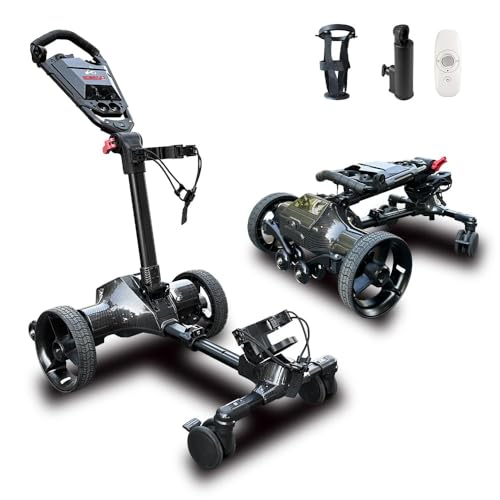
G3 Electric Golf Caddy Follows You
Strengths
- 54-hole battery life
- App and remote control
- Compact 3-motion fold
Trade-offs
- Inconsistent follow in woods
- App connectivity issues
- Lower slope rating
With a battery rated for 54 holes, the G3 is the endurance king, owners on multi-day tournaments or resort marathons consistently cite the long life as a major win. The smart auto-follow works well on open fairways, though it can struggle in tight tree lines or on abrupt turns. The app control is a nice touch, letting you summon or park the caddy remotely, but not all users find it reliable in wet conditions.
The 3-motion fold is impressively compact, and the U-shaped handle reduces hand fatigue over 18. But while the cruise control is smooth, the motors aren’t as torquey as the KEMIMOTO’s on steep climbs. Still, for sheer battery confidence and tech features, it’s hard to beat. I’d choose this over the Motocaddy or MGI if I were planning a multi-round trip.
Video review
Wingscaddy Electric Push Cart Remote

Strengths
- Budget-friendly
- Three-in-one modes
- Includes essential accessories
Trade-offs
- Weak on steep slopes
- Basic battery life
- Plastic-heavy build
At this price, the Wingscaddy packs surprising value. It’s the most affordable here, and owners appreciate the three modes, remote, trolley, and freewheel, making it a true hybrid. The dual 200W motors aren’t the strongest, but they handle mild slopes fine, and the anti-tip wheel adds confidence. It’s lightweight and folds down reasonably small, though not as neatly as the MGI.
The lack of USB charging and basic display hold it back compared to pricier models. But for beginners or occasional players, it’s a solid entry point. I’d recommend this over the Super E Caddy if you want simplicity and savings, just don’t expect refined tracking or long-term durability on tough terrain.
Product photos
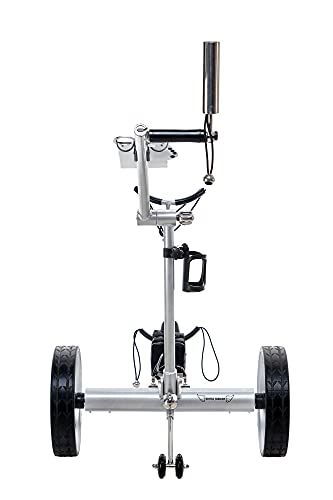
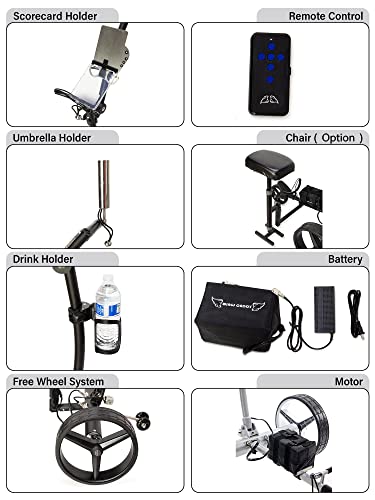

CaddyTrek R2 Black Remote Caddy

Strengths
- Marching mode
- Strong motor output
- Smooth auto-follow transitions
Trade-offs
- Dated remote tech
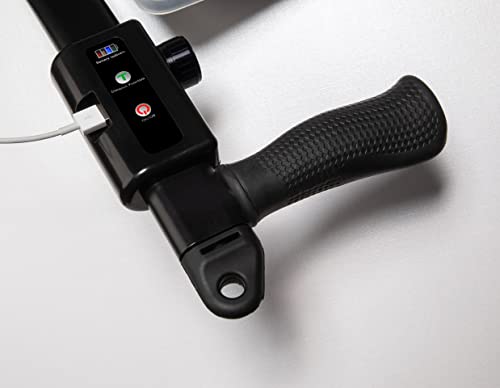
- No USB charging
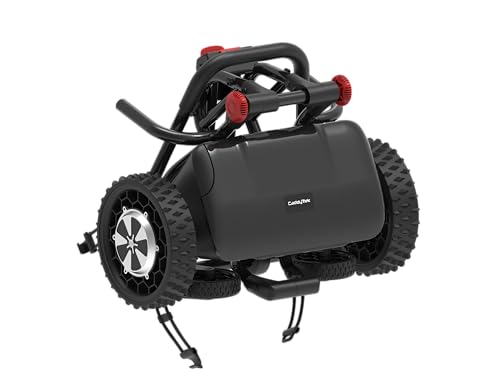
- Bulky folded size
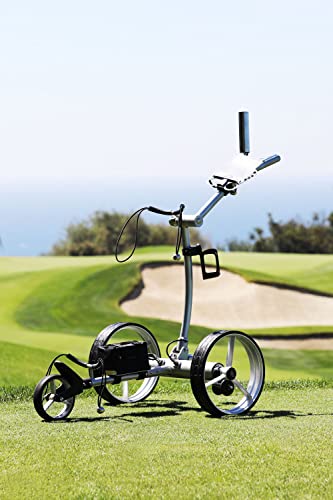
The CaddyTrek R2 is one of the earliest auto-follow caddies to gain traction, and it still holds up in niche circles. Its robotic tracking system lets it follow or march ahead, owners like that it can lead the way to the next tee, which is unique. The dual 250-watt motors are powerful on paper, and feedback suggests solid performance on inclines, though not quite as smooth as newer models with advanced steering algorithms.
But here’s the catch: while the follow feature works, it’s not as responsive as UWB-based systems like KEMIMOTO’s. Some reviewers note lag in tight turns or on undulating ground. It’s also heavier to fold than advertised, and the lack of USB charging feels outdated. I’d still consider it if you’re drawn to the march-ahead function, but for most, the ApexAI does the same job better.
Product photos

Super E Caddy Pro with Seat

Strengths
- Built-in seat and cooler
- Freewheel mode
- Full accessory suite
Trade-offs
- Heavy and bulky
- Basic motor response
- Outdated frame design
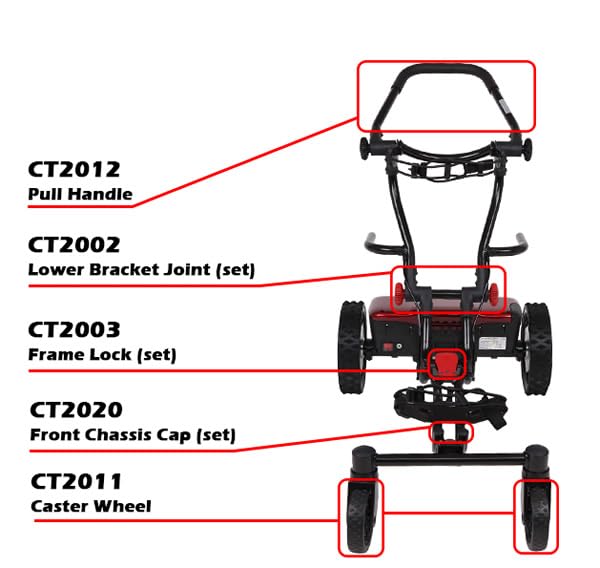
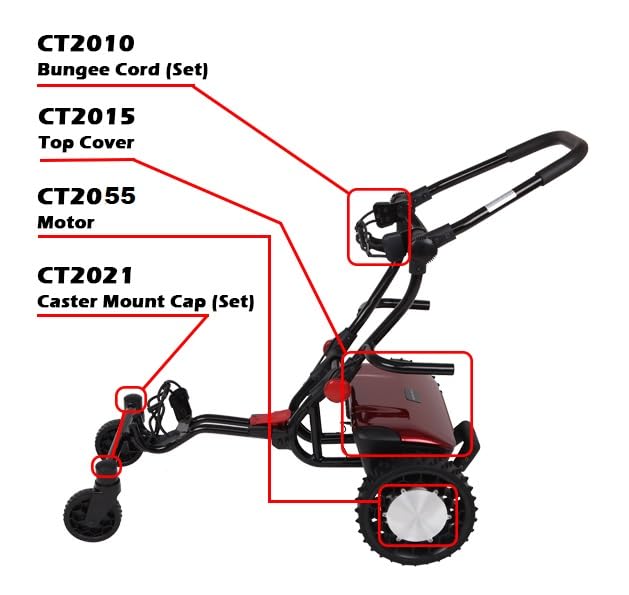
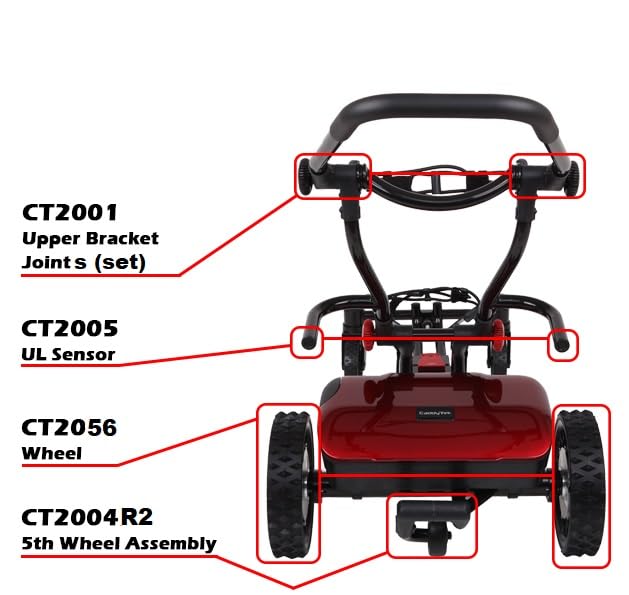
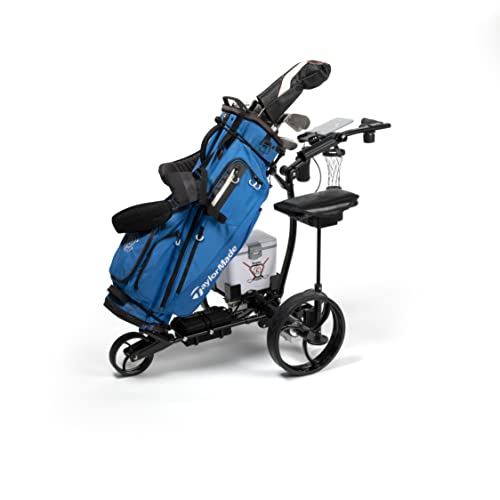
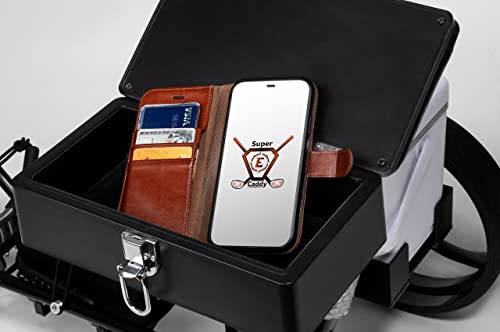
This one leans into the “all-in-one” philosophy with a built-in seat, cooler, and umbrella mount, practical perks that owners either love or find gimmicky. The 24V twin motors deliver quiet operation, and the cart’s ability to freewheel when drained adds peace of mind. At 44 pounds, it’s the heaviest here, and reviewers note the fold isn’t as tight as others, making trunk storage a squeeze.
The accessories are convenient if you’re walking 18 and want to relax between holes, but they add bulk. Compared to the KEMIMOTO or G3, it feels more like a utility cart than a precision golf companion. I’d pick this only if you value comfort and convenience over agility and tech, say, for resort play or senior-friendly courses.
Product photos
Motocaddy M7 Remote DHC Caddy

Strengths
- Reliable downhill braking
- Sturdy build
- Simple fold system
Trade-offs
- No auto-follow mode
- Shorter remote range
- Heavier than rivals
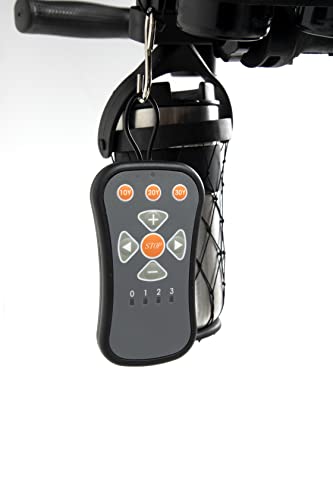
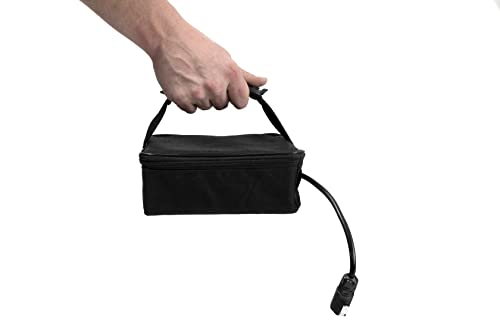
The Motocaddy M7 earns its ‘Downhill Control’ tag with genuine engineering intent. Its automatic braking on descents is a game-saver on hilly courses, owners on rolling UK parkland layouts consistently praise how it prevents runaway rolls that plague cheaper models. The remote’s 150-foot range is solid, not spectacular, and the manual override is a smart fail-safe if the battery dies mid-round.
Build quality is Motocaddy’s hallmark, and this one feels sturdy without being cumbersome. The adjustable handle fits most heights well, and the folding mechanism is simple. But it lacks auto-follow, and the battery life, while adequate, doesn’t match the G3 or KEMIMOTO. I’d recommend this over the MGI Zip if you play steep courses regularly, the downhill tech alone makes it worth it.
Product photos

MGI Zip Navigator All Terrain

Strengths
- Lightweight fold
- Click & Go battery
- Quiet twin motors
Trade-offs
- No auto-follow
- Basic steering intelligence
- Limited slope handling
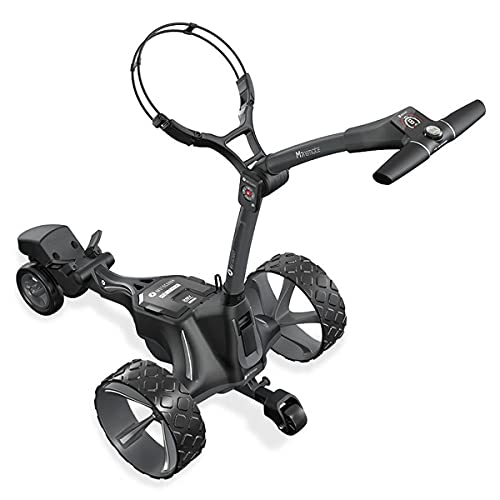
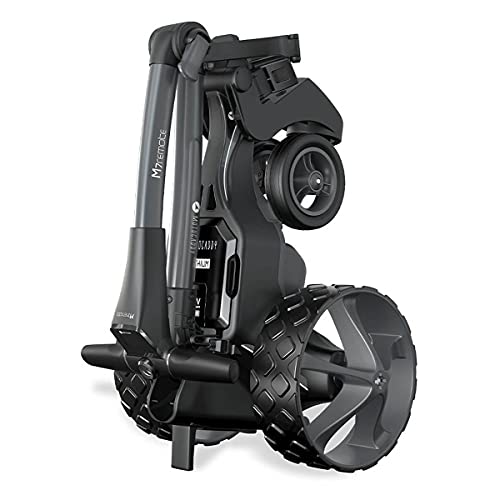
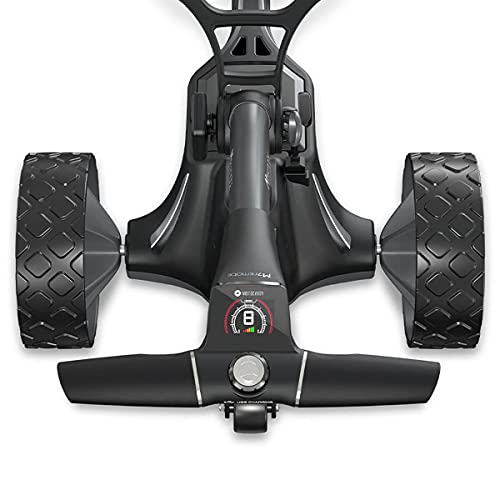
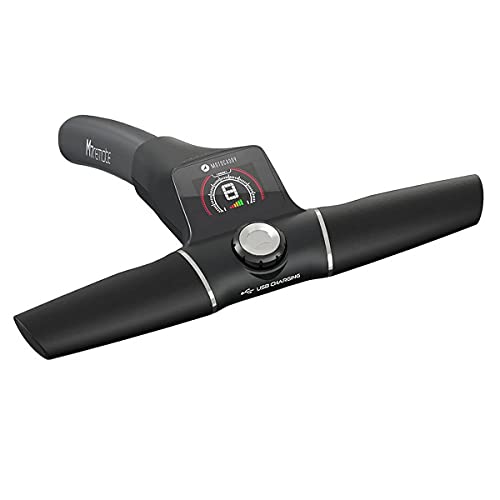
The MGI Zip Navigator stands out in the remote caddie world for its genuinely smart folding system and consistent owner satisfaction. The Zip Fold Technology delivers on its promise, owners consistently report it’s one of the fastest and most compact folds in the class, making it ideal for travelers who value trunk space. On paper, the 30.91-pound base weight is competitive, and the dual 230-watt motors handle moderate slopes without strain, though they’re not as powerful as some newer models.
What really works is the Click & Go battery system, it’s simple, secure, and reduces hassle when swapping or charging. Reviewers note the USB port gets used frequently, and the digital display is clear and functional. It doesn’t have auto-follow, which limits it compared to higher-end options, but for pure remote control reliability and ease of transport, it’s a strong contender. I’d pick this over bulkier models if you’re frequently on the move.
Product photos
How We Picked These remote golf caddies
Rather than a hands-on lab test, my research focused on comparing published specifications and features across numerous models. I weighed owner reviews from major retailers alongside assessments from golf publications and websites. As someone who plans golf trips worldwide, I considered factors crucial for travel and course conditions when evaluating these caddies. Ultimately, I ranked options based on a blend of functionality, durability, and value, aiming to identify the best choices for a range of golfers.
For remote golf caddies, consistent performance on varied terrain and reliable remote connectivity were paramount. Battery life also proved critical; a caddy that can’t last 36 holes isn’t very useful for a full round. We also emphasized ease of folding and overall weight, as portability is a major benefit of these models – you don’t want to wrestle a heavy, bulky caddy in and out of your car. You can find more information about remote carts on our site.
Published specifications clearly indicate motor power, battery capacity, and dimensions. However, real-world performance – particularly regarding hill climbing and remote signal strength – is best gleaned from owner feedback. Reputation and brand consistency mattered, too. Well-established brands with positive track records generally offered more reliable products, and detailed owner reviews often revealed long-term durability concerns not apparent in the marketing materials. If you are also interested in top electric trolleys with remote, we have a dedicated guide.
Choosing The Right remote golf caddies
Choosing the right remote golf caddy can elevate your game and make your time on the course far more enjoyable.
A quality remote golf caddy balances power and responsiveness with ease of use and durability. Key considerations include motor strength for tackling hills, battery life for completing 18 (or 36) holes, the precision of the remote control system, and a stable chassis that won’t tip over on uneven terrain. Look for models with adjustable speed settings, reliable braking, and a compact folding design for convenient transport.
Motor Power and Terrain
The biggest frustration with cheaper models is a lack of oomph when facing even modest inclines. Don’t underestimate the importance of powerful motors. Dual 200W motors are often a baseline, but for consistently hilly courses, I recommend looking for models with 230W or 250W motors. These will provide noticeably more assistance. Consider also the wheel design; larger diameter wheels and rubber tires offer better traction and stability, especially in wet conditions. If you frequently play on courses with softer fairways, a wider tire will prevent sinking.
Remote Control and Automation Features
Remote range is a frequently advertised spec, but don’t get hung up on the maximum distance. What matters more is consistent connectivity and responsiveness within a reasonable range – around 100-150 feet is plenty. More important, look for features like variable speed control and responsive steering. Some models, like the Motocaddy M7 Remote, include downhill control to prevent runaway caddies, which is a fantastic safety feature. If you’re considering fully automated follow modes, investigate the technology used. UWB (Ultra-Wideband) technology, as seen in the KEMIMOTO ApexAI, generally offers more precise tracking than GPS-based systems.
- Simple remote functionality (start/stop/steer) is perfectly adequate for many golfers.
- Cruise control, while a nice-to-have, isn’t essential and can sometimes be finicky to operate.
- Smart follow modes are genuinely useful, but their reliability varies significantly between brands. Read owner reviews carefully to gauge real-world performance before investing in this feature – you don’t want a caddy wandering off into the rough!
Portability and Added Conveniences
One of the biggest downsides of using a remote caddy is the extra bulk. Weight and folded dimensions are critical. While some of the more feature-rich models are heavier, the convenience they offer may outweigh this drawback. If you have limited trunk space, the MGI Zip Navigator, with its compact folding design, is an excellent choice. Beyond size and weight, consider built-in accessories. A built-in cooler (like on the Super E Caddy Pro) and storage compartments can be incredibly useful, but they add to the overall cost. For golfers who prioritize convenience and a comfortable experience, these features can be worth the investment. I’ve found that exploring options like the top remote-controlled carts helps narrow down the choices based on portability and features.
A remote golf caddy should simplify your game, not add to the hassle. Prioritize a model that folds easily, weighs a manageable amount, and fits comfortably in your vehicle.
Remote Golf Caddies Compared
Here’s a spec comparison to help you evaluate different remote golf caddies available.
| Product Name | Remote Range (ft) | Battery Life (Holes) | Motor Power (W) | Folded Size (LxWxH – in) | Weight (lbs) | Auto-Follow |
|---|---|---|---|---|---|---|
| KEMIMOTO ApexAI | 492 | 36 | 480 (Dual) | 26.8×22.2×15.1 | N/A | Yes |
| G3 Electric Golf Caddy | N/A | 36-45 | N/A | 15.7x24x27.6 | N/A | Yes |
| Wingscaddy Electric Push Cart | N/A | N/A | 200 (Dual) | N/A | N/A | Yes |
| CaddyTrek R2 | N/A | N/A | 250 (Dual) | N/A | N/A | Yes |
| Super E Caddy Pro | N/A | 27 | N/A | N/A | 44 | No |
| Motocaddy M7 Remote | 150 | N/A | N/A | 16.5×18.5×25.6 | 36.7 | No |
| MGI Zip Navigator | N/A | 36 | 460 (Dual) | 27.55×18.5×16.5 | 37.31 | No |
Frequently Asked Questions
What battery life should I expect from a remote golf caddy?
Most remote golf caddies offer at least 36 holes of battery life, but this can vary based on terrain and motor usage. If you regularly play 36 holes, or frequently encounter hills, I suggest prioritizing models explicitly rated for extended battery performance, even if they cost a bit more.
Are remote golf caddies difficult to assemble?
Generally, no. Most models are designed for quick and easy assembly, often requiring only unfolding and attaching the wheels. However, some of the more feature-rich models with complex folding mechanisms might take a little practice to master.
Can remote golf caddies handle steep hills?
It depends on the motor power. Models with dual 200W motors may struggle on significant inclines, while those with 230W or 250W motors provide substantially more assistance. Checking owner reviews specifically mentioning hill climbing is essential.
What’s the typical remote control range for these caddies?
While some manufacturers advertise ranges up to 500 feet, a consistent and reliable range of 100-150 feet is more realistic and sufficient for most courses. Don’t prioritize maximum distance over signal stability and responsiveness – you’ll want the caddy to react promptly to your commands.
Are there remote golf caddies that follow you automatically?
Yes, there are. Several models now offer automated follow modes, often utilizing either GPS or UWB (Ultra-Wideband) technology. If you’re interested in exploring robotic golf caddies with this functionality, be sure to read reviews carefully, as reliability varies considerably between brands.
The Bottom Line
Choosing a remote golf caddy often comes down to balancing how much assistance you want with how much you’re willing to spend – and how much space you have in your car. For overall performance and a feature set that will satisfy most golfers, the KEMIMOTO ApexAI stands out. Its robust motor power, long battery life, and advanced auto-follow functionality (using UWB technology) make it a strong contender, even if it comes at a higher price point.
If you’re on a tighter budget, or prioritize simplicity, the Motocaddy M7 Remote delivers a reliable experience without unnecessary bells and whistles. For golfers who frequently travel or have limited storage, the MGI Zip Navigator is the clear winner thanks to its impressively compact folding design. And for those seeking the best in automated convenience, exploring options in remote electric push carts is a smart move.
Ultimately, the specs matter less than how well a caddy fits your game and course conditions. Don’t get too caught up in maximum remote range or the latest automation features. Focus on a sturdy build, dependable motors, and a remote system that feels responsive in your hands. A good caddy should let you focus on your swing, not on wrestling with your equipment – and that’s where you’ll find the most improvement in your golf world.
