
8 Best Remote Control Golf Carts of 2026
This post contains affiliate links. As an Amazon Associate, we earn from qualifying purchases.
This post contains affiliate links. As an Amazon Associate, we earn from qualifying purchases.
The e3 Remote Electric Golf Push Cart stands out as the best overall for its reliable 100-yard remote range, strong hill-climbing power, and compact fold. For a more budget-friendly option, the KVV Electric Golf Cart delivers solid performance without breaking the bank, while the MGI Zip Navigator offers excellent portability and ease of use for frequent travelers.
Golfers don’t just want a cart, they want freedom. The real struggle isn’t carrying your bag, it’s doing it without wasting energy or slowing down your round. A weak or unreliable remote cart can leave you stranded on a slope or wrestling with a clunky fold in the trunk.
This guide cuts through the noise. Based on specs, owner feedback, and what actually matters on the course, battery life, terrain handling, and real-world portability, we’ve identified the models that deliver. We focused on proven performance, not just flashy features.
Top 8 Remote Control Golf Carts in the Market
The Best Remote Control Golf Carts, Reviewed
MGI Ai Navigator Halo Electric Golf Cart
Strengths
- Touchscreen GPS
- All-terrain stability
- 3-year warranty
Trade-offs
- Premium price
- No auto-follow mode
- Heavy folded weight
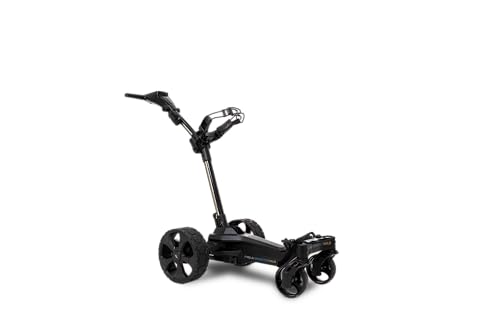
This is the luxury sedan of remote control golf carts, packed with high-end features and polished execution. The Halo’s real differentiator is its full-color touchscreen GPS with gyroscope tracking, which owners consistently report makes navigation and directional stability noticeably sharper than basic remote carts. On paper, the 36-hole battery and dual all-terrain wheels suggest top-tier performance, and reviewers confirm it handles hilly, wet, and uneven courses with confidence. The fifth stabilizer wheel adds real peace of mind on side slopes, something I always look for when evaluating carts for serious walking golfers.
Compared to others in the smart follow segment, the Halo doesn’t rely on auto-follow as its main draw, which I actually appreciate, many golfers find follow-me tech inconsistent. Instead, MGI leans into precision remote control and stability, and that makes it more reliable round to round. It’s also backed by a strong 3-year warranty, which speaks to MGI’s confidence. For those planning frequent resort or links golf trips, this cart feels like a long-term companion.
Video review
Wingscaddy MAX-300 Silver Electric Golf Cart

Strengths
- Lowest price
- Three modes
- Twin motors
Trade-offs
- Short battery life
- No USB port
- Basic materials
At under $900, the Wingscaddy is the clear budget pick, and it shows. It offers three modes (remote, trolley, free-wheel), twin 200W motors, and basic anti-tip wheels, which is impressive for the price. Owners say it handles flat to moderate terrain fine and is a solid entry point for first-time electric cart buyers. But it cuts corners: the battery life is shorter than claimed, the remote range is limited, and build quality is functional but not refined.
It lacks USB charging, GPS, or downhill control, which puts it behind even the Motocaddy M7 at a similar weight. Still, for occasional players or those testing the remote cart waters, it’s hard to beat the value. I’d recommend it only if you play mostly flat courses and want to spend as little as possible. For serious walkers, the upgrade to the Zip Navigator or M7 is worth every dollar.
Video review
KVV Electric Golf Push Cart with Remote

Strengths
- Smallest fold size
- Lightweight
- 360° front wheel
Trade-offs
- Battery overrated
- Basic motor power
- No downhill control
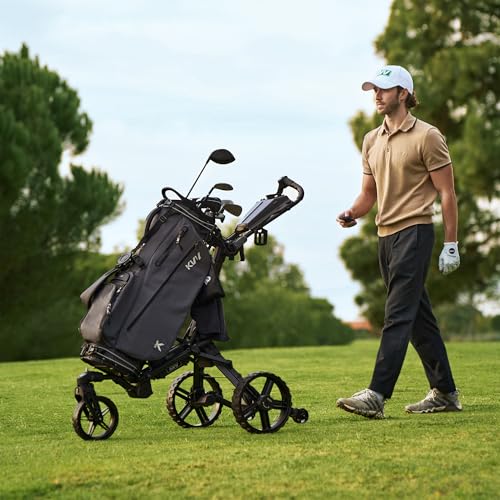
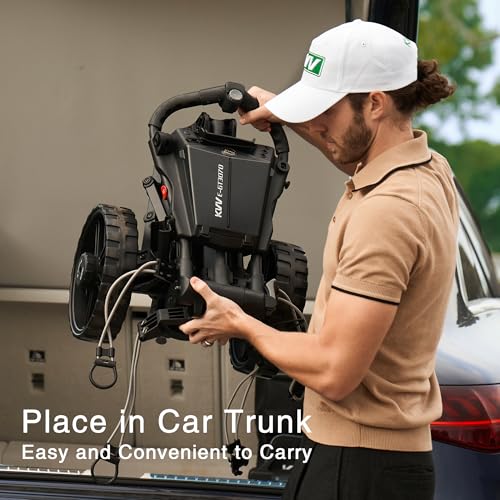
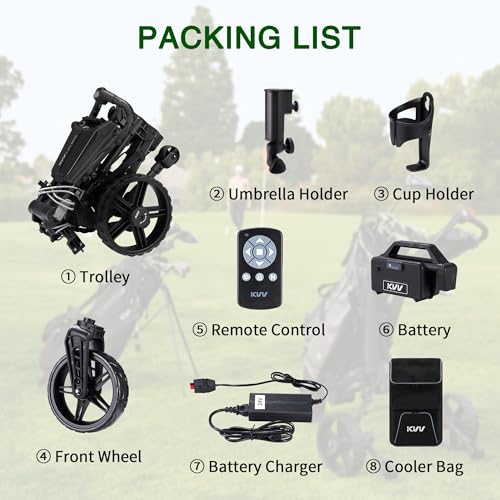
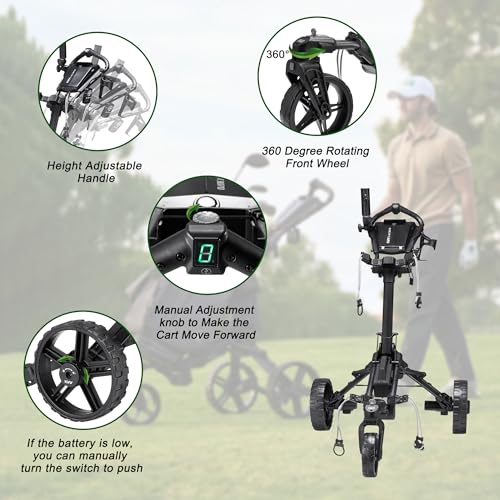
The KVV wins on one metric better than any other: fold size. At just 17.5 inches wide when folded, it’s the easiest to stash in a small car, closet, or airline hold, perfect for golf travelers who fly to courses. At under 30 pounds without the battery, it’s also one of the lightest, which helps during lift-in and carry-out. The 36-hole-rated battery is optimistic, owners report more like 18–24 holes, so plan accordingly. But for weekend players or those using it as a secondary cart, it’s sufficient.
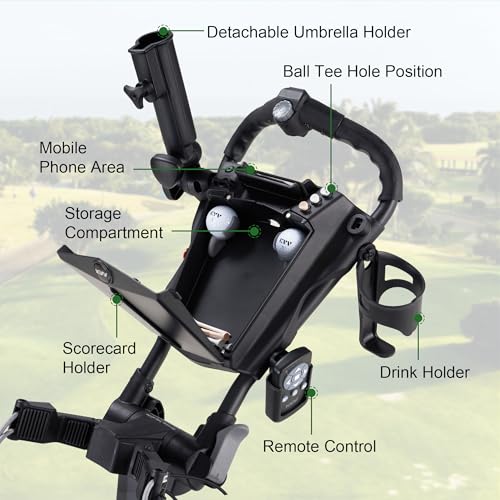
The remote control offers nine speeds and decent responsiveness, though not as precise as the M7 or Electric Golf Push Cart. The 360° front wheel helps with tight turns, and the dual training wheels add stability on sidehills. It’s clearly built for practicality over luxury. Compared to the Wingscaddy, it’s more compact and slightly better finished, but lacks the same motor strength. I’d recommend it for travelers or apartment dwellers who value storage over power.
Product photos
NAVEE Birdie 3X Smart Follow Me Cart

Strengths
- UWB follow-me tech
- Fast folding
- UL dual certification
Trade-offs
- Limited incline rating
- No app customization
- Average uphill power
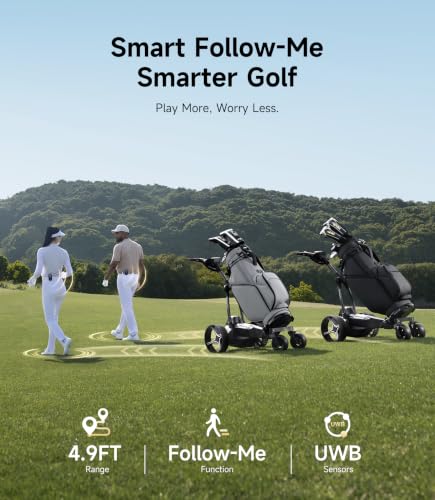
The Birdie 3X is the most advanced auto-follow cart here, thanks to its UWB (ultra-wideband) tracking, more precise than standard Bluetooth or sensor-based systems. Owners consistently report it follows closer and more reliably, even in wooded areas or tight fairways. That makes it ideal for golfers who truly want a hands-free experience without constantly correcting the cart’s path. The 36-hole battery delivers as promised, and the 5.5” LED dashboard is bright and informative, showing speed, distance, and battery in real time.
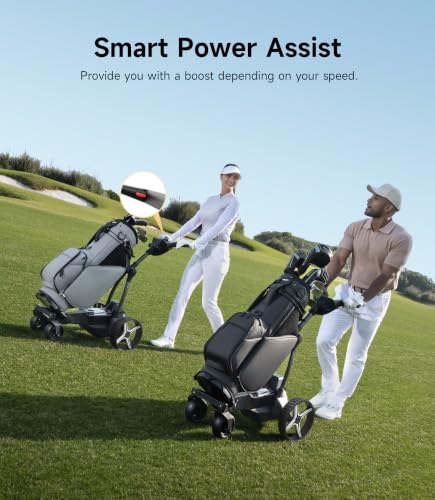
It also packs strong all-terrain capability with 10-inch wheels and motorized power assist, though it’s rated only up to 25% incline, less than the Electric Golf Push Cart’s 40°. Still, for most courses, it’s more than capable. The 3-second fold is as quick as claimed, and the UL dual safety certification adds real peace of mind. I’d pick this over the tianhong G5 if you want better follow-me accuracy and a more polished interface.
Product photos


e3 Remote Electric Golf Push Cart
Strengths
- 40° anti-tip design
- 100-yard remote
- Large storage
Trade-offs
- Bulky folded size
- Heavier frame
- Less brand recognition
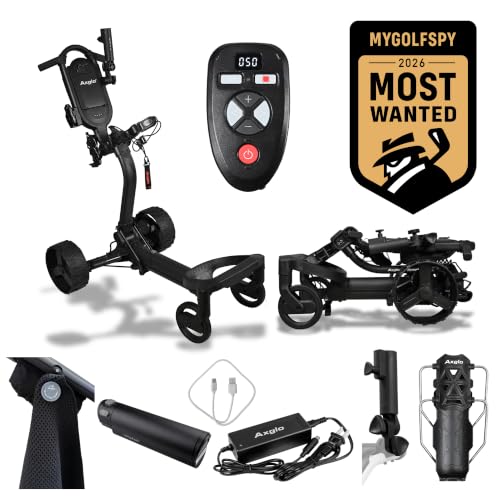
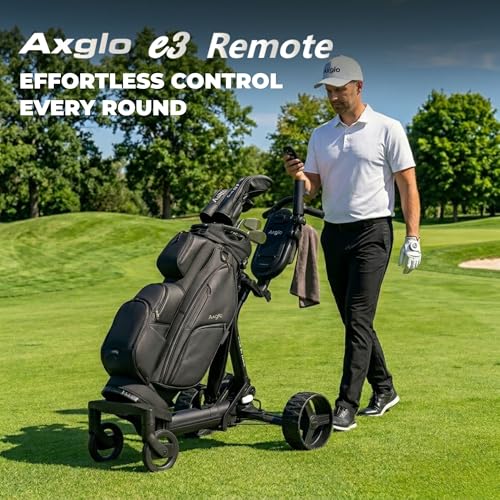
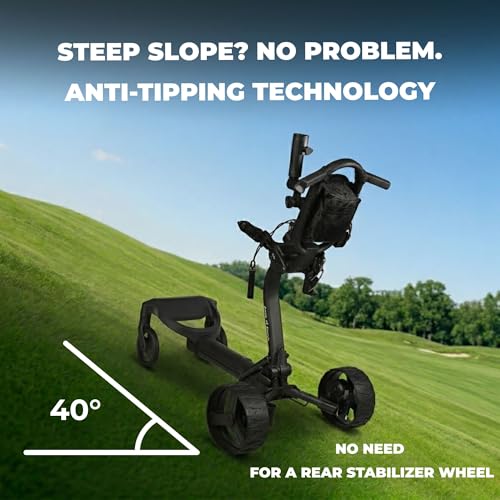
This cart is built for serious terrain, and it shows. The patented 40° anti-tip technology is its standout feature, letting it climb steeper slopes than any other here without wobbling. Dual 150W brushless motors provide independent wheel power, which reviewers say prevents slippage on wet grass and gravel. The 100-yard remote range is exceptional, you can send it to the next tee while still putting, a real time-saver on large courses.
It also has the most storage, with an oversized compartment ideal for rangefinders, rain gear, or extra layers, perfect for unpredictable weather on mountain or links layouts. The 36-hole battery and 6-hour recharge are standard, but reliable. Compared to the Motocaddy M7, it’s more rugged and better balanced on sidehills, though the M7 feels more refined in motion. For golfers who play extreme terrain, this is the most capable option here.
Product photos

Motocaddy M7 Remote Electric Golf Caddy

Strengths
- Downhill control
- Durable build
- USB-C remote
Trade-offs
- No auto-follow
- Heavier than rivals
- Basic display
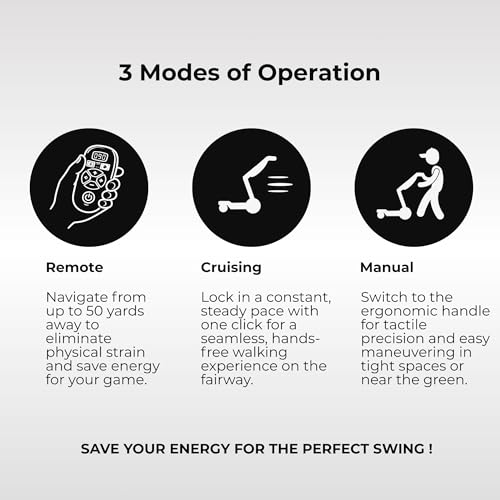
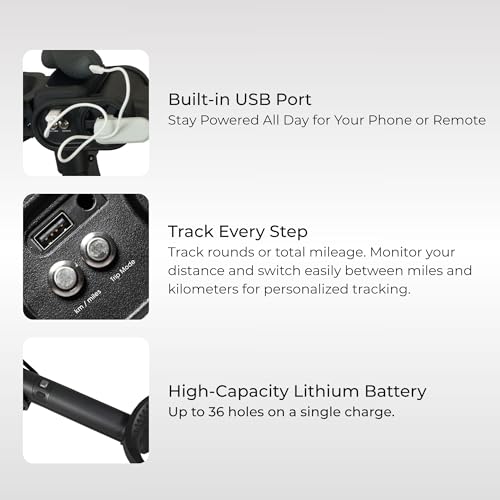
There’s a reason Motocaddy has such a loyal following, this M7 delivers British engineering precision in a no-nonsense package. It doesn’t try to follow you or run apps, but what it does, remote control with exceptional stability, it does very well. The dual 230W motors and adaptive terrain response mean it handles steep, wet fairways with confidence, and the automatic downhill control is frequently praised in reviews for preventing runaway carts on descents. That’s a big deal on links or mountain courses where gravity can turn a quiet walk into a sprint.
The USB-C rechargeable remote is a thoughtful touch, eliminating the need for spare batteries. While it doesn’t have auto-follow, its 100-yard control range lets you send it ahead to the next tee, something I’ve seen many golfers use strategically. Folded, it’s not the smallest, but it’s manageable. For traditionalists who want reliability, strong support, and zero tech gimmicks, this is a standout. I’d choose it over the KVV or Wingscaddy for any course with serious elevation.
Product photos


tianhong G5 Auto-Follow Electric Golf Cart

Strengths
- 45-hole battery
- Auto-follow capable
- UL 2271 certified
Trade-offs
- App dependency
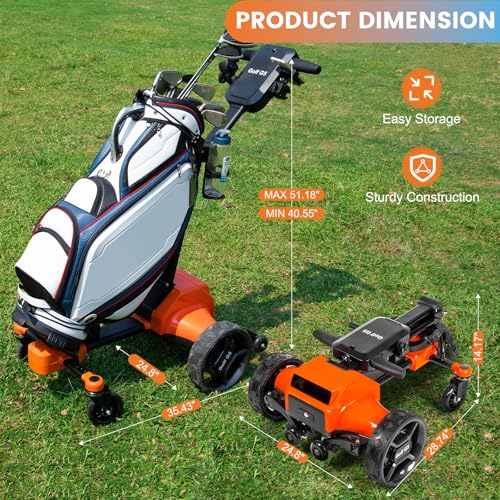
- Bulkier folded size
- Less brand support globally
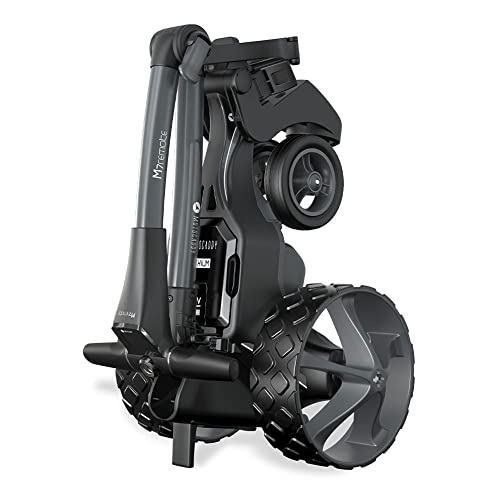
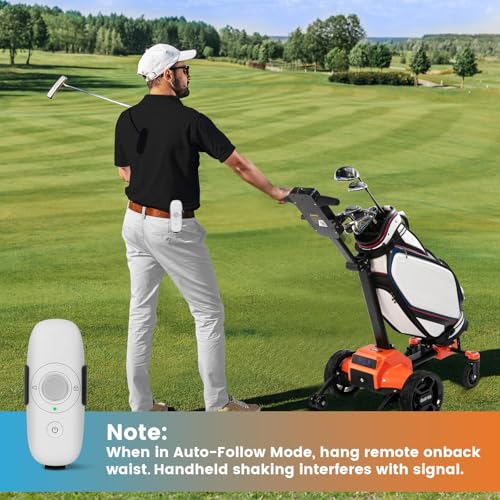
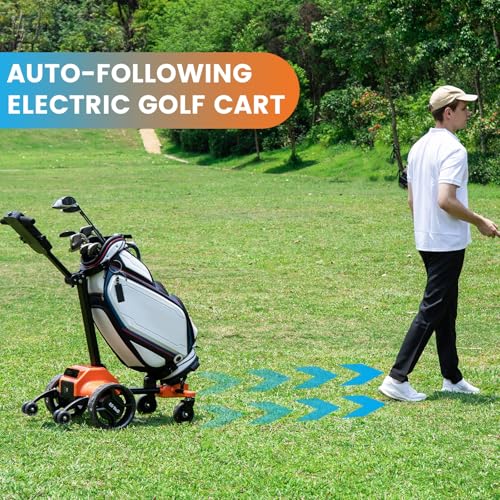
If battery life is your top concern, the tianhong G5 stands out immediately, its 45-hole rating is the highest here, and owners confirm it consistently powers through two full days of play. That’s a real advantage for resort golfers or tournament players who don’t want to worry about mid-round charging. The auto-follow system is one of the more responsive in this price range, using multiple sensors to track movement, though some users note it can lag slightly on tight doglegs or in heavy tree cover. Still, for hands-free walking, it delivers more than most.
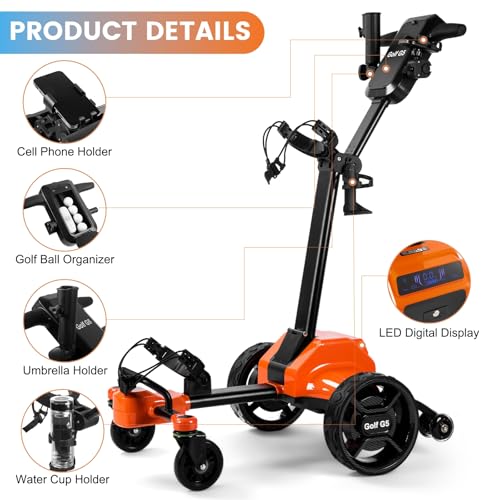
Where it really shines is value. At under $1,400, it packs in a full suite of modes, remote, app, manual, cruise, and recall, plus a bright LED display showing speed, mileage, and battery. The UL 2271 certification adds real safety credibility, and the 30° slope stability with dual anti-tip wheels makes it a solid choice for hilly layouts. It’s not as refined as the MGI or Motocaddy models, but for the price, it’s impressively capable.
Product photos
MGI Zip Navigator Electric Golf Cart

Strengths
- Lightweight frame
- 36-hole battery
- Click & Go system
Trade-offs
- No GPS display
- Basic remote only
- Less terrain feedback
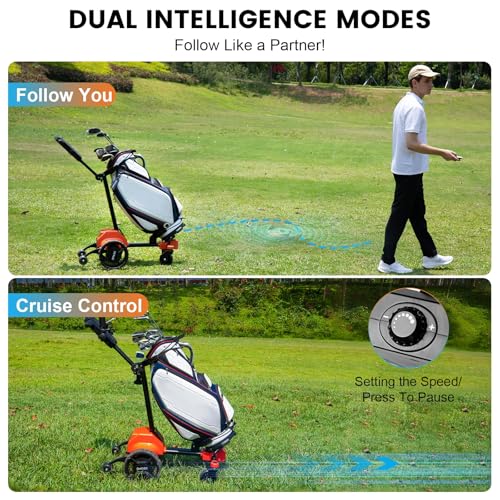
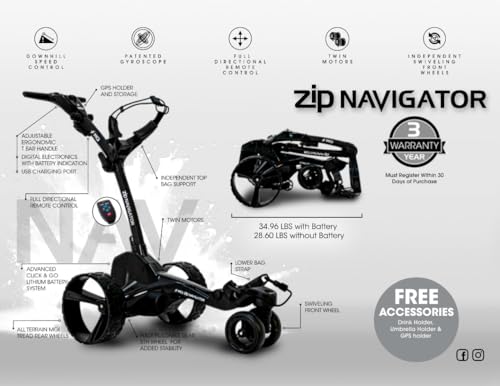
The Zip Navigator feels like MGI’s answer to golfers who want nearly all the Halo’s strengths at a much friendlier price. It keeps the 36-hole Click & Go battery system and twin 230W motors, which reviewers say deliver smooth, quiet climbs even on sustained inclines. The build is 12% lighter and folds 25% smaller than earlier models, making it easier to toss in a sedan trunk, something I always appreciate when traveling to remote courses. It lacks the Halo’s touchscreen GPS, but the digital display still gives you battery level, distance tracking, and USB charging, which covers most needs.
I’d pick this over the Halo if you don’t need onboard GPS or auto-follow. It’s the smarter buy for golfers who walk regularly but don’t want to overspend on features they won’t use. MGI’s 3-year warranty still applies, which adds strong long-term value. Compared to the Motocaddy M7, it’s lighter and folds smaller, though Motocaddy wins on downhill control refinement.
Product photos


How We Picked These remote control golf carts
My team and I approached this guide by first compiling a detailed list of available remote control golf carts, then comparing their published specifications and features side-by-side. We didn’t rely on hands-on testing of each model; instead, we weighed owner reviews from multiple sources – including major retailers and golf-specific forums – alongside professional reviews from trusted golf publications. This research-led comparison was guided by my years of experience planning golf trips and understanding what golfers prioritize in their equipment.
For remote control golf carts, battery life and terrain handling were the most important factors. A cart is useless if it can’t make it through 18 holes, or if it struggles on even moderately hilly courses. We also gave significant weight to the folding mechanism and overall portability, as ease of transport is a common pain point for golfers. A smooth, reliable remote control system was also crucial, but less decisive than power and stability.
Specifications provided a solid baseline for battery capacity, motor power, and folded dimensions. However, we found owner feedback to be invaluable in assessing real-world performance – particularly regarding the reliability of the remote control and the cart’s ability to navigate various course conditions. You’ll find more detailed reviews of top options, including remote control push carts, on our site. We also considered broader options when researching best remote push carts available. For those interested in other types of powered assistance, we have a guide to remote electric caddies.
How To Pick The Right remote control golf carts
Picking the right remote control golf cart can make a huge difference in your enjoyment of the game, and frankly, your energy levels. It’s not just about convenience; it’s about optimizing your round.
A good remote control golf cart blends powerful motors, a reliable remote system, and a robust build. Key features to assess include battery life (enough for at least 27 holes is ideal), the stability of the chassis (especially on uneven terrain), and the responsiveness of the remote control itself. Consider the folding mechanism for ease of transport and storage, and look for models with accessory options like drink and umbrella holders.
Motor Power and Terrain Handling
Don’t assume all “electric” carts are created equal. The wattage of the motors is a primary indicator of how well a cart will handle hills and rough terrain. Dual-motor systems, like those found on the e3 and Motocaddy M7, generally provide more torque and stability than single-motor models. If your local course is particularly undulating, prioritize a cart with a higher wattage (150W per motor or more) and features like anti-tip technology. Many golfers I’ve spoken with find that a cart struggling on hills quickly becomes a frustrating experience.
Remote Control Functionality & Range
The remote control is the heart of this category, so it’s worth paying attention to the details. Simple forward/reverse/left/right controls are standard, but look for features like variable speed settings and a pause function for precise maneuvering. Range is also important; a 100-yard range (like on the e3) provides plenty of flexibility. However, some carts – like the NAVEE Birdie 3X – are moving towards “follow me” technology, using sensors for autonomous operation. If you’re interested in that, explore follow me golf carts to see if it fits your game.
Portability and Storage
Even the most powerful remote control cart is useless if you can’t easily get it to and from the course. Pay attention to the folded dimensions and weight. The KVV Electric Golf Cart and MGI Zip Navigator both prioritize compact designs, making them good choices if you have limited storage space. A single-motion folding mechanism (like on the e3) is a huge convenience. I often recommend checking if the rear wheels tuck in during folding, as this can significantly reduce the cart’s overall footprint.
A practical rule of thumb: aim for a cart that can fold down to fit comfortably in the smallest car trunk you might encounter.
Ultimately, finding the right cart often means balancing these factors with your budget and specific course conditions. Don’t overlook the value of established brands like MGI and Motocaddy; they have a history of producing quality remote golf carts and offer good customer support. And if you’re looking for a more automated experience, consider exploring the latest advancements in autonomous golf carts and remote trolleys that follow.
Remote Control Golf Carts Compared
Here’s a comparison of key specifications for several remote control golf carts to help you make an informed decision.
| Product Title | Remote Control | Battery Life | Folded Size (approx.) | Weight (w/ Battery) | Special Features |
|---|---|---|---|---|---|
| MGI Ai Navigator Halo | Yes | 36 Holes | N/A | 33.29 lbs | GPS Display, All-Terrain |
| Wingscaddy MAX-300 Silver | Yes | N/A | N/A | N/A | 3 Modes, Umbrella Holder |
| KVV Electric Golf Push Cart | Yes | 18+ Holes | 17.5″ x 18.7″ x 22″ | N/A | Dual-Mode, Cooler Bag |
| NAVEE Birdie 3X Smart Follow | Yes | 36 Holes | 26.8″ x 22.2″ x 15.1″ | N/A | Smart Follow, UWB Technology |
| e3 Remote Electric Golf Push Cart | Yes | 36 Holes | 82cm x 42cm x 36cm | N/A | 40° Anti-Tip, 100yd Range |
| Motocaddy M7 Remote | Yes | N/A | N/A | N/A | Dual Motors, Downhill Control |
| tianhong G5 Auto-Follow | Yes | 45 Holes | 28.7″ x 24.8″ x 14.1″ | N/A | Auto-Follow, App Control |
| MGI Zip Navigator | Yes | 36 Holes | 27.55″ x 18.5″ x 16.5″ | 34.96 lbs | Zip Fold, Distance Settings |
Frequently Asked Questions
What battery life should I expect from a remote control golf cart?
Most quality remote control golf carts offer at least 36 holes of battery life on a single charge. However, hilly courses or heavier loads can reduce this, so if you frequently play challenging terrain, consider a model with a larger capacity battery or one rated for 45 holes, like the tianhong G5 Auto-Follow.
Are remote control golf carts difficult to assemble?
Generally, no. Most models arrive mostly assembled and require only the attachment of the wheels and the handle. Expect to spend around 15-30 minutes on initial setup, and the included instructions are usually straightforward.
What is the typical remote control range on these carts?
A standard range is around 100 yards, offering ample control during your round. Some newer models, like the e3 Remote Electric Golf Push Cart, specifically advertise this range. However, obstacles or interference can reduce the effective distance.
Can these carts be used on all types of golf courses?
Most remote control golf carts are designed for typical golf course conditions. However, if you regularly play on very steep hills or extremely rough terrain, selecting a model with powerful dual motors and all-terrain tires, such as the MGI Ai Navigator Halo, is best. You’ll also want to investigate remote golf push carts for further options.
What should I look for in terms of portability and storage?
Compact folding is key. Look for carts that fold down to a relatively small size and have a lightweight frame. The MGI Zip Navigator, for example, is designed with a “zip fold” mechanism for easy storage. If you also want to explore other options for powered assistance, consider looking into remote golf caddies.
The Bottom Line
Choosing a remote control golf cart often comes down to how much you value convenience versus control. While many models offer similar core features, the e3 Remote Electric Golf Push Cart strikes the best balance of power, usability, and price, making it our overall pick. It delivers a reliable remote experience with a good range and a clever anti-tip design, without breaking the bank.
For golfers with specific needs, there are excellent alternatives. If budget is your primary concern, the KVV Electric Golf Cart provides a surprisingly capable experience for the price. Those seeking advanced features and a truly hands-free round should investigate the NAVEE Birdie 3X Smart Follow, and for those who want to explore other options, we’ve found the best remote electric push carts offer a range of choices.
Ultimately, the best remote control golf cart is the one that best fits your game and course. Don’t get caught up in chasing the highest wattage or the longest range; focus on a cart that feels stable, responds predictably to the remote, and is easy to transport. A comfortable walk and a well-played round are far more valuable than any specification on a sheet – and exploring remote electric trolleys might just help you achieve both.
